Month: August 2021

  • Inshite miru: 7-kakan no desu gêmu [The Incite Mill] (2010)

    Inshite miru: 7-kakan no desu gêmu [The Incite Mill] (2010)

    (In French, On Cable TV, August 2021) Modern anxieties know no frontiers, and considering that “protagonists are unwitting participants in a Dark Web snuff show” has quickly become a 2010s horror cliché, it shouldn’t be surprising if the Japanese got there first in 2010 with The Incite Mill. Here, we have a few strangers walking in a strange facility and being told about the rules of a detective game. But don’t fret: Before long, the detecting focuses on actual murders, and the protagonists discover that (drum roll) they are unwitting participants in a Dark Web snuff show. As far as the narrative is concerned, The Incite Mill is messy — in-between the game organizers, traitors in their midst, opportunists and clearly defined protagonists to cheer for (plus a robot and an unexplainable Native American figurine explaining the rules of the game), director Hideo Nakata does lose control at times, never playing fair with the mystery nor being all that interested in rigour when there’s an Internet murder show to feed. I did like that, while the characters are often stereotypes with maybe one layer of complexity, they’re Japanese stock characters, meaning that they at least offer something more than Anglosphere films. (I particularly liked the older characters — both Katahira Nagisa and Kitaoji Kinya seem to ground the film in the middle of several younger characters, and that’s something I wouldn’t mind seeing in other horror movies.)  Still, it doesn’t help that The Incite Mill follows the usual narrative trajectory of bad-to-middling horror films: Beyond the intriguing premise, it can’t quite do justice to its own ideas and becomes more conventional in terms of structure, meaning that the beginning is vivid but the ending is forgettable. Perhaps slightly more thriller than horror (and that’s a good thing), The Incite Mill is certainly watchable, although not exceptional.

  • This Time for Keeps (1947)

    This Time for Keeps (1947)

    (On Cable TV, August 2021) While I like the idea of Esther Williams successfully transitioning from an Olympic medallist to a musical film lead, she wasn’t necessarily a compelling performer out of the water. Competent, sure, but not exceptionally beautiful, dramatically powerful or able to sing or dance at another level. But she did embody that idea of the girl-next-door with a special talent, and MGM liked it so much that they invested heavily in the things that made her special, including creating a very specific subgenre, the aqua-musical, around her. This Time for Keeps may not be a particularly good movie, but it’s a great example of the form: Here we have Williams as a swimming professional surrounded by far more talented vocalists as a way to introduce music in the film. This includes Jimmy Durante as an older family friend, who gets an excuse to play around the piano for performances of “A Little Bit This and a Little Bit That” (leading into his classic “Inka Dinka Doo”) and a fun performance piece called “I’m the Guy Who Found the Lost Chord” — his overall performance is more dramatic than in most films, but he lets comedically loose as soon as he approaches a piano. More serious performers include co-star Johnny Johnston, singing in a very conventional fashion, and opera signer Lauritz Melchior — leading to a blend of musical styles that may or may not be too heavy for the kind of melodramatic romance that This Time for Keeps is aiming for. Durante, in particular, seems torn between a desire to be in a dramatic performance and his natural talent as a comedic entertainer. The plot doesn’t do itself any favours by playing heavily on some tired ideas (like familial approval) or under-developing some ideas that don’t quite fit in the framework. But those issues should be familiar to MGM musical fans — the form typically meant mixing plenty of elements in a single film, in the hope that they would come together for broad appeal. It does not work as well here as in other films, probably because of the lesser emphasis on comedy to the benefit of a dubious melodrama. Oh well — Williams is fantastic in the water and likable outside of it, Durante is funny, you get to listen to some opera, and the setting is not without its forested rustic attraction. It could have been worse, but there is definitely better.

  • Bloodshot (2020)

    Bloodshot (2020)

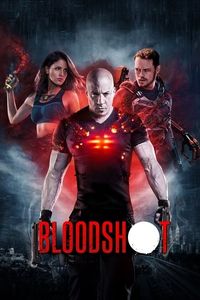
    (Amazon Streaming, August 2021) The risk in designing a film to overturn expectations is that first you have to play up expectations, and so many will have trouble making it through the first twenty minutes of Bloodshot, so completely does the film indulge in re-creating a kind of film we’ve all seen too many times before: the special operative left for dead, resurrected with high-tech means by a shadowy outfit dedicated to extrajudicial killing that aligns with his own revenge. Vin Diesel looks the part and plays the part, but this is such familiar territory presented without a shred of reinvention that some are likely to turn it off. But wait… because if Bloodshot doesn’t become a good movie, its second-act turn does make it an acceptable one. For, you see, our hero is manipulated through memory editing and selective briefings to become an unthinking assassin. Once the target is eliminated: memory reset, and implantation of a false revenge narrative for the next target, the rest of the team being in on the deception. That’s not, to be fair, an earth-shaking premise… but it’s better than the dreck served in the first fifteen minutes. It also allows the film to become just a bit more daring with its action sequences: By the time the climax hits, the elevator fighting sequence is actually kind of enjoyable. As for Diesel, well, this is the kind of meathead role that he’s typecast in: you do get his usual persona, but nothing much more. (Despite some provocative material at the edges of its premise, Bloodshot never goes for more than the emotionally obvious.)  Some of Dave Wilson’s direction is slick, albeit perhaps a bit too frenetic when it comes time to let his action sequences develop. The result is not that remarkable, but at least it avoids the trainwreck anticipated by the film’s opening moment.

  • The Social Dilemma (2020)

    The Social Dilemma (2020)

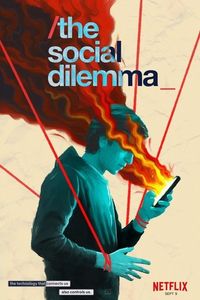
    (Netflix Streaming, August 2021) I actually agree with a version of the thesis espoused by director Jeff Orlowski’s The Social Dilemma: social media is not good for you, not good for your friends and family, and not good for civil society either. It exploits basic human desires to the profit of those without any noble instinct and it’s willfully manipulated to engage you at an unhealthy level. I’d need to qualify those statements with some nuance (for instance, I’m not advocating for the end of social media — properly used, it’s not necessarily evil), but you can certainly classify me as a social media skeptic. I practise what I preach: I’m on read-only mode on Reddit, I briefly check Facebook every two months or so when friends or family remind me, and my Twitter account is a mere one-joke placeholder in case I need it. I will support anyone questioning social media — such challenges are an essential part of how society regards innovations, and ultimately help forge not only a legislative framework, but a social contract that addresses the excesses. On the other hand, I really wish the filmmakers behind The Social Dilemma had done a better job. Not necessarily in substance, but in those weird extrusions that distract from the substance. A hard-hitting critical contemplation of social media illustrated by interviews with former remorseful employees, this is a film that cleanly exposes how social media uses clever algorithms, unimaginably all-encompassing data collection and an amoral approach to produce something new and uniquely suited to manipulation. The point is money, as always, and money only comes from engagement, whether it’s frequent (as in: scroll every time you’re bored) or acute (as in: get mad, post more). The interviews are generally solid, although some material definitely should have been trimmed: In reaching for spurious parallels, one interviewee confidently asserts that nobody objected to bicycles, which is such a ridiculous statement that it’s debunkable within seconds. All innovations get pushback, but that pushback is how we master those innovations — alas, very few people interviewed in the film have any kind of historical awareness, which is telling in itself. The Social Dilemma, however, loses the most points when it takes off from facts and opinions and starts dramatizing them: in awkward fictional segments, we see a family struggle with their social media addiction, and some fantasy scenes even literalize the platform algorithms by having actors dramatize those decision loops. It doesn’t work — and there’s even another documentary (the little-known 2017 Canadian production You’re Soaking in it) that does a far better job factually explaining how advertisement algorithms sell you to advertisers. It doesn’t help that, needing to generate attention for itself, The Social Dilemma gets apocalyptic at times, indulging in the fallacy that there’s never been anything like this and there’s nothing that can be done. I would gladly watch another documentary with an attention span longer than ten years because historical precedent will tell you that there have been many things like social media in the past, and that they were dealt with. Once upon a time, newspapers, radio and TV were new and seen as social nuisances, manipulating public opinion and earning vast profits for owners and advertisers. In every single case, enlightened jurisdictions developed and enforced laws and standards that reigned those innovations into something useful. (Yes, I hear your objections about American media, but then again, I did say enlightened jurisdictions — and there’s a lesson here in social media being the reflection of the society allowing them to exist.) In parallel, audiences eventually learn better than to believe everything the innovation brings to them. It’s an age-old pattern and it will happen again, although it remains to be seen how much damage will take place until that happens. In this light, even a flawed documentary like The Social Dilemma is useful because it helps create the memetic antibodies that we all need to develop in order to rein in the excesses of social media. You may not quite know what to do with all of that craziness, but don’t worry: your kids eventually will.

  • Navy Blue and Gold (1937)

    Navy Blue and Gold (1937)

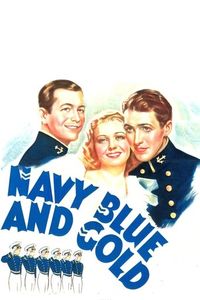
    (On Cable TV, August 2021) Despite being made in peacetime, Navy Blue and Gold check off many of the characteristics of the wartime propaganda films that became so prevalent during WW2. Its academic setting is tightly focused on one specific area of the armed forces — the US Naval Academy. It features three young men who go on not just to better themselves, but to understand and uphold the traditions of their branch of the service. The wrinkle, so to speak, is that the film combines this recruitment pitch with the ever-popular college football film tradition: Our three protagonists (including a young James Stewart, stealing the show in his usual aw-shucks manner) aren’t just recruits from various areas of society, but all enroll to play on the Navy team. The finale, being in peacetime, takes place not in combat but an ersatz of it — the Army/Navy game, won through theatrics that can only exist in Hollywood since its creation. Director Sam Wood makes sure that all the subplots (romantic, medical, academic) climax at or near the game itself. Navy Blue and Gold is not exactly a bad film, but its elements may be obvious to twenty-first century audiences. On the other hand, they still work… so what does that tell us about the value of a good formula?

  • I predatori di Atlantide [Atlantis Interceptors aka The Raiders of Atlantis] (1983)

    I predatori di Atlantide [Atlantis Interceptors aka The Raiders of Atlantis] (1983)

    (In French, On Cable TV, August 2021) No one will ever mistake Atlantis Interceptors for a respectable film and that’s certainly part of its charm. It starts big, as an American crew tries to raise a Soviet submarine off the coast of Florida. But what they didn’t plan on is that (and that should tell you all about the film itself) the radiation from the wrecked submarine causes the continent of Atlantis to rise from the seas, encased in a big globe. Meanwhile, Atlanteans living undetected in Florida decide to trash Miami, making it eventually look like the Phillipinese town in which the film was shot. Whew. But here’s the thing: the film is so eager to deliver one thrill after another than the preposterousness of the plot becomes an advantage. Director Ruggero Deodato has a long trash-tier filmography, but he has a good hand on pacing here. Alas, let’s not get too enthusiastic: the dialogues, acting, special effects and production values are all horrible. Not that this should be surprising: There’s an entire sub-subgenre of terrible 1980s Italian-produced, American-acted, Philipinese-shot science fiction movies out there ripping off every single halfway-original idea even put on screen by Hollywood during that period. It’s certainly not good. But occasionally, it can be a moderate amount of fun. Atlantis Interceptors has a modest cult following, and it’s not that hard to understand why.

  • Farm to Fork to Love (2021)

    Farm to Fork to Love (2021)

    (On TV, August 2021) Send help. I’ll do my part by saying that I’ve got a curiously soft spot for Lifetime/Hallmark romantic comedies, as formulaic as they can be — if they can revolve around a compelling hook (a military cruise, a pumpkin-growing contest, a writer’s block, to name three examples), then that’s enough to get me in. I’m not necessarily saying that I watch these films with undivided attention — one of their strengths is that you can leave for a few minutes and it will be right where you expect it by the time you get back — but they make great videogame background viewing or cleaning/cooking accompaniment. But this is getting ridiculous: One of my “this looks interesting” triggers is food, and it seems as if the networks are on to that: the new hotness is chef-centric romance, and Farm to Fork to Love is the third such film in as many months. Never setting foot in a farm, this is a film about a sous-chef re-hooking with an old flame (coincidentally rich, handsome, talented and related to a matchmaking culinary mogul putting together a context). There are rarely any surprises as to where director Sandra L. Martin is going with that script, although part of the intellectual suspense, I suppose, is seeing how the third act will introduce a meaningless complication out of nowhere, and how Farm to Fork to Love will dispense with the protagonist’s existing boyfriend, who seems to be a decent match. (In the end, they alter his personality so that he turns hilariously inflexible and controlling.)  It’s all, well, analogous to comfort food. Romantic comedies are supposed to be like that—but if I take a step back, I have to wonder why they’re not any better. It doesn’t cost much more to write better scripts and feature better actors — although the truth is that the economics of such films probably don’t allow for fine dialogue or actors that cross the dangerous line between good-looking and gorgeous. Viewers won’t stand for a challenging script or people who remind them of their imperfections. I already know all of this, so why am I watching those films? As I said — send help, or at least better movies.

  • Girl Crazy (1943)

    Girl Crazy (1943)

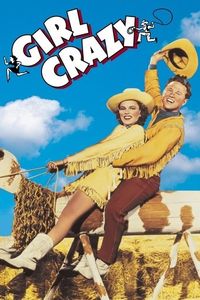
    (On Cable TV, August 2021) As much as we profess to dislike film formulas, they exist because they work. Once you’ve found something that works, why bother changing it? Of course, staleness is the constant danger, and there can be a time where the most entertaining thing about a film series is the way it keeps reworking core concepts in ever-wilder situations. Girl Crazy is the ninth and last film to co-star Judy Garland and Mickey Rooney, and the amazing thing about it is how, despite taking its actors to an isolated western ranch campus in twentysomething roles, it still manages to cram in the “let’s put on a show to save the orphanage!” plot of most of their earlier small-town backyard movies. It’s quite impressive in a way… and it comes later enough in the film that we’ve had a fill of new stuff to tide us over. As is often the case, this is a film of moments and musical pieces rather than a sustained narrative — adapted from a Broadway musical, it does have a few snappy numbers and the presence of Tommy Dorsey’s orchestra — “Treat me Rough,” “Fascinating Rhythm” and “I Got Rhythm” are notable standouts, with that last number being a typical Berkeley Busby spectacle before he was replaced as a director by more mild-mannered Norman Taurog. Style and setting of the film bring to mind an appropriate double-billing with Too Many Girls. Girl Crazy is not that good of a musical, but it’s watchable and arguably more interesting than many of the Garland/Rooney films in which the backyard premise was repeated too often without variation even as they were growing older.

  • Il était une fois le diable aka Devil Story (1986)

    Il était une fois le diable aka Devil Story (1986)

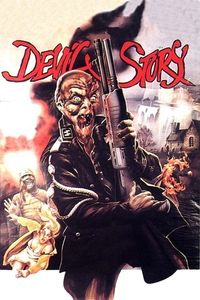
    (On Cable TV, August 2021) French-Canadian Horror TV channel FrissonTV currently airs “Nanarland,” a weekly summer showcase for terrible movies, accompanied by a half-hour show explaining and contextualizing what the heck we just saw. Even in this context, Il était une fois le diable is bad enough that it came with a disclaimer before the beginning of the film, warning viewers that watching the film to the end would be an ordeal. They were not kidding — Even by the standards of low-end horror films, it’s a wretched piece of nonsense, an incoherent blend of ill-fitting horror tropes, a thorough demonstration of directorial incompetence and a showcase for amateur “acting.”  Put together for French regional theatrical exhibition, it has terrible audio-visual quality on top of its lack of other qualities. The opening has some hilarious attempt at creating horror out of camping slaughter (with the director keeping the camera on a terrible blood-spurting effect), but never mind because soon enough we’re off to land pirates, mummies and Nazi killers, as well as an old man shooting at a black horse through the night and into the morning. There’s more, but the more it adds, the less it makes sense — here’s a review that ends with a flowchart to showcase the absurdity of it all. It’s really bad: so disjointed that it’s difficult to stay invested in this as something other than a collection of sequences shot by director Bernard Launois with minimal crew and inexperienced actors, and so terrible from a cinematic point of view that there’s little artistry or wonder. (Although I did like the landlocked ship.)  Il était une fois le diable is the kind of film fit to recalibrate your notions of what a terrible film can be: reading reviews taking pot shots at ambitious-but-misguided big-budget productions such as The Bonfire of Vanities is hilarious when you know how low the bottom of the barrel really goes. That, in the end, may be the greatest feat of wretched films: making us appreciate the better ones.

  • Highlander II: The Quickening (1991)

    Highlander II: The Quickening (1991)

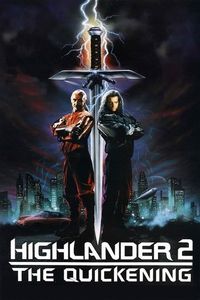
    (Second Viewing, Amazon Streaming, August 2021) I remember watching a version of Highlander II in the early-to-mid-1990s and not liking it at all — as a nerdy late-teenager, I was incensed that a sequel to Highlander would so thoroughly corrupt everything that was interesting about the first film. Aliens stranded on Earth rather than mythical immortals in a grand tournament? Blech. Considering that the timeline of my first viewing precedes the release of the reworked “Renegade Version” that recuts material in a (slightly) more coherent way to get rid of the alien factor, I must have watched the original theatrical version. Good news (?): that version isn’t available any more unless you scour old VHS tapes — all releases since 1995 have been of the Renegade Version, and since 2004 of an even-more-fixed Special Edition with a spackling of additional CGI. My second viewing is of the Amazon Prime Special Edition, so it’s probably not an accident if I found the film bad-but-not-that-bad. (Seeing it after a spate of very bad movies further recalibrated matters.)  The aliens may be gone from this cut, but what replaces them is still nigh incomprehensible, with warriors beyond time fighting under a shield protecting the Earth from Ozone depletion. (Obviously, the shield is now useless — Highlander II comes complete with a fight-dictatorship subplot and bright shining skies at the end.)  Christopher Lambert does his best in the lead role, with Sean Connery lending some of his charm to a largely useless character brought back in an even more arbitrary fashion. One thing I had unfortunately forgotten is that Virginia Madsen and her glorious mane of blonde hair also star in the film, adding further interest. The film, even in a special edition, is still a bunch of nonsense that molests a wonderful first film —which is really weird considering that they share the same director Russell Mulcahy, and it does have a few sequences that succeed at getting an appreciative nod. For instance, the scene in which Lambert fights off another immortal and regains his youthful powers is meant to impress and it does, even including a darkly funny “kiss” from an oil tanker. Connery gets to have some fun in a suit shop, and Madsen gets to look good in an otherwise underwritten character. Special Edition or not, Highlander II is more watchable than what I remembered, even at its worst — or it may be that I’m just getting more generous in my advancing age.

  • Underground (1995)

    Underground (1995)

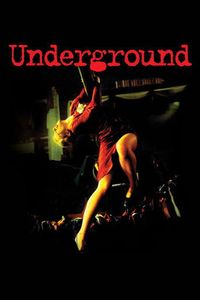
    (In French, On TV, August 2021) The weirdness of Underground is only matched by the weirdness of the commentary surrounding it. The premise already takes us somewhere unusual by supposing a group of people hiding underneath Belgrade as World War II rages on, but being kept ignorant of the end of the war for decades. There’s a lot more to it, though, and what writer/director Emir Kusturica ends up creating is a phantasmagorial blend of comedy and drama, with a strong dash of surrealism to keep things interesting. Trying to describe it is probably not possible if you’re not from around Belgrade, since so much meaning seems to rest on evasive cultural references. It’s often exhausting — at 170 minutes, it’s already a punishing sit, but even that extravagant length is condensed from an even longer initial cut. But all of this is even before getting into the thornier aspects of the film — if you recall your European history correctly, you’ll remember that the 1990s were not a pleasant time in that area, and the film does play off that tension. …and that’s when the reaction to the film kicks in, because looking up commentary on Underground is like stepping into a minefield of unimaginable complexity to us ignorant North Americans — commentators are quick and vicious in analyzing the film throughout the prism of Serbian war atrocities and intellectual philosophy. Whew. If you’re just looking for light entertainment, this isn’t it. In fact, Underground is probably more suggestive than pleasant in its own right — an intriguing piece of cinema, but not necessarily something you’d want to watch twice.

  • Crooklyn (1994)

    Crooklyn (1994)

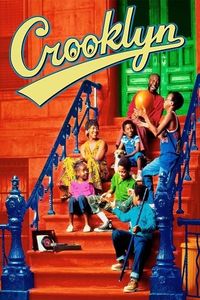
    (On Cable TV, August 2021) It’s not quite fair to call Crooklyn a kinder, gentler Spike Lee movie —it’s just as engaged as other films, but it turns its attention to domestic issues in presenting a semi-autobiographical tale about growing up in Brooklyn in the 1960s/70s. As a result, you won’t necessarily find as many guns as other Lee films (despite a title that promises crooks), as this one focuses on the pressures that a mother has in taking care of her five children in a cramped apartment. The surrounding neighbourhood is portrayed with a great deal of affection, and the period soundtrack is nothing short of terrific. It’s not as if Crooklyn doesn’t pack a punch of a different sort — much of the third act is driven by a sudden death. While I’m not always a big fan of when directors turn to autobiographical stories, I think it’s an essential part of cinema — unlike, say, a novel, films take so much money to put together that they rarely turn toward that kind of intimate biographical storytelling. It does show Lee being at ease in a different register, and does make a statement about a specific kind of black life in America. Not bad — but Crooklyn does ask viewers to switch gears and not necessarily expect the usual Spike Lee joint.

  • Pacific Heights (1990)

    Pacific Heights (1990)

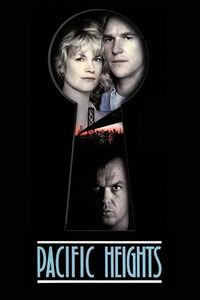
    (On TV, August 2021) As much as Pacific Heights tries to stack the deck in making us sympathize with its young couple of protagonists (they’re in love, they’re in debt, they’re expecting a baby!), I’m not sure that a thriller in which we’re meant to side with the landlords is going to find much of an audience in a twenty-first century defined by unaffordable housing. Ah well — 1990 was at the end of the ultra-capitalistic 1980s and renting was the ultimate achievement for middle-class bourgeois. Not that Pacific Heights particularly cares about the plight of the common man or even simple plausibility: not when the antagonist is a consummate conman who’s able to manipulate the laws of California to his advantage. Step one is getting the apartment; step two is doing whatever he wants, knowing that he can’t be evicted; and step three is ruining his landlord’s lives so that they either go to prison or bankrupt. (Since there are two of them, why not in prison and bankrupt?)  It’s particularly far-fetched, so it’s a good thing that the film has one lawyer character to explain the labyrinthine way in which our protagonists are trapped. It does feel like an unusually conservative film in-between glorifying yuppies, criticizing renters’ rights and justifying extreme violence from the landlords. It doesn’t help that the script is occasionally slapdash — the male lead (played by Matthew Modine) often explodes in violent confrontation in ways that could have been interesting to explore in their own right. I’m really not fond of Melanie Griffith most of the time, so having her become the protagonist of the film didn’t do it any favours. But there’s one bright spot, and that’s Michael Keaton playing the brilliant yet utterly deranged tenant who becomes the film’s deliciously cartoonish villain — Keaton plays against type here and does it really well. It’s not quite enough to make Pacific Heights a good movie, but it does take the edge of what could have been a much worse film.

  • A Quiet Place Part II (2020)

    A Quiet Place Part II (2020)

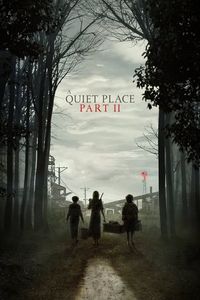
    (Amazon Streaming, August 2021) The first A Quiet Place was one of the unexpected solid hits of 2018 — a solid blend of careful moviemaking (with an unusual emphasis on the use of sound weaved into its premise), a stripped-down premise, some good suspense sequences and some great work on both sides of the camera for John Krasinski and his wife Emily Blunt. With sequel A Quiet Place Part II, the novelty effect is clearly lessened, but the effectiveness remains high. Once more, we follow a family in a post-apocalyptic setting as it deals with murderous alien invaders with the keenest of hearing. A single sound can mean death, and so once more writer-director Krasinski deftly plays with sound and the absence of sound (one character being deaf, which is not always an advantage). Krasinski himself does appear on-screen thanks to the magic of flashback in an opening sequence that shows how much more comfortable he is in featuring the aliens in dynamic broad-daylight sequences. More action-oriented than the first, A Quiet Place Part II doesn’t completely avoid some plausibility issues, but is confident enough that they don’t matter. Emily Blunt does good work, but the spotlight is on young Millicent Simmonds, who exceeds expectations. Cilian Murphy and Djimon Hounsou join the series. The dual-track ending is cleverly constructed and if the film can’t avoid a certain repetitiveness, it wisely keeps things short with an intense 97 minutes and wraps up satisfyingly, but not enough to preclude another sequel. Proving that the success of the first film wasn’t a fluke, Krazinski now has the credentials to take on just any project — hopefully, we’ll see something other than another film in the same series.

  • The Swan (1956)

    The Swan (1956)

    (On Cable TV, August 2021) At this point, I’m nearly convinced that tales of European royalty romance are only fit to bore me mildly. I simply don’t have the interest in whatever they’re playing off. It’s even worse in The Swan, which sets up a familiar tale of romance between a princess and a commoner… only to deliberately avoid the expected happy ending. Rather than make a point, it merely seems to be flaying about in confusion, just ending on a note of disappointment. Of course, The Swan is still being watched today for factors not entirely of the film’s own making. Here, Grace Kelly plays a princess in her next-to-last Hollywood movie before becoming… a princess. (The film was released on the day of her royal wedding, no less.)  Still, that doesn’t make Kelly’s performance any more animated — it’s easy to start rooting for Alec Guinness when he acts like an overgrown boy in a royal role, even as the film tries to have us sympathize with Louis Jourdan at the other extremity of the love triangle. I watched The Swan but I can’t say I have any definite feelings one way or the other. My expectations aren’t necessarily subverted by the anticlimactic ending — I just feel as if it’s missing something. Kelly looks like a princess but acts like a block of ice, whereas Guinness is an unexpected highlight. It’s clearly the film director Charles Vidor wanted to make, but I just keep on questioning whether it was a good idea at all.