Month: August 2021

  • The Sons of Katie Elder (1965)

    The Sons of Katie Elder (1965)

    (YouTube Streaming, August 2021) I’ve been scratching my head for a few minutes in order to find something to say about The Sons of Katie Elder, and it’s harder than you’d think. It’s a western, in colour, from a period in Hollywood history where the studios were running on empty — repeating familiar formulas without quite understanding why audiences were getting tired of them. The film, to be clear, is not a dud: it’s competently-made, with an effective hook (four brothers come back home for their mother’s funeral, and start fighting the resident evil businessman) and some big names on the cast. I’m not a fan of John Wayne, but there’s also Dean Martin to keep things interesting—plus George Hamilton and a young Dennis Hopper. On the other hand, The Sons of Katie Elder is a western film in a very traditional mould, riffing off some questionable frontier justice ideas. It’s watchable, but not particularly memorable. And that, perhaps, is the most lapidary review of all — what else is there to say when the result provokes so little reaction?

  • Beneath Still Waters (2005)

    Beneath Still Waters (2005)

    (In French, On Cable TV, August 2021) In horror, it’s not infrequent to find the setting and atmosphere taking over the plot to no one’s displeasure. Beneath Still Waters isn’t all that conventional in terms of story (it has something to do with someone destroying a town in order to prevent its great evil from escaping), but the most memorable element of the film is the flooded town in which much of the action takes place, as the characters dive underwater to discover all about the ancient threat it contains. Directed by horror legend Brian Yuzna, the film easily promises more than it delivers… but it does score a few remarkable images along the way. Unfortunately, Beneath Still Waters doesn’t completely cohere into something interesting: the plot remains subordinate to the visuals, and as a result the entire thing is flimsily justified, with some basic implausibilities that remain unanswered — and an ending that doesn’t satisfy. My standards for horror are so low these days that anything halfway interesting that’s not a slasher gets bonus points. I still think that Beneath Still Waters is more interesting than other 2000s horror films, but I won’t push my luck into claiming that it’s any better.

  • They Shoot Horses, Don’t They? (1969)

    They Shoot Horses, Don’t They? (1969)

    (YouTube Streaming, August 2021) It’s easy to be fascinated by the concept of 1930s dance marathons — well before reality TV invaded homes, there were weeks-long contests in which various hopefuls we asked to dance for as long as they could, and audiences paid to see such things. It sounds funny to us (dance marathons? For weeks?!?), but They Shoot Horses, Don’t They? takes us backstage for a particularly dark take on the concept. Venal producers, sadistic special events, manipulated plotlines — am I watching something modern or not? Compared to the setting, the story of the film is humdrum at best — a troubled young man and an equally-troubled young woman meeting on the gruelling dance floor, and being manipulated by the show’s producers… except that they have nothing to lose. The ending is particularly grim. Still, the setting is more than worth a look: director Sydney Pollack was clearly part of the New Hollywood at the time, and there’s a streak of nihilistic meanness that permeates the entire film. As contestants drop dead (this is not a figure of speech), the endurance contest becomes inhumane and our characters start looking for a way out. They Shoot Horses, Don’t They? is not a fun or easy film — some will even call it pointless with some justification. But there’s something both novel and familiar to the dance marathon that, to my knowledge, hasn’t been captured in another film. They may or may not shoot horses, but they don’t shoot movies like this one any more. Perhaps that’s for the best.

  • Robowar—Robot da guerra (1988)

    Robowar—Robot da guerra (1988)

    (In French, On Cable TV, August 2021) I did not suspect that there was such a thing as a low-budget Predator rip-off. But there is. To be specific, Robowar could easily be retitled “That scene in Predator where they machine-gun the entire jungle—The Movie,” considering how often our characters unload their entire arsenal at innocent flora. The pretext for their landscaping has something to do with a soldier robot out of control (bringing in the mix either Robocop or The Terminator) but you know the routine no matter the justification: A bunch of good guys against one bad guy, this time in the jungle. It’s about as good as you’d expect, which is to say — not very. Behind the scenes, the film is a mixture of Italian filmmaking, Philippines production values (at a time when the Marcos regime was only too willing to help movies shoot in the country) and American actors. Not that it matters when bad filmmaking transcends international borders: Robowar is just terrible. Bad actors, bad script, bad directing from Bruno Mattei, and bad production values — you’ve certainly spotted the common denominator here. It does have a rough sense of fun in terms of bad-movie watching, but the bad pacing kills off any of the energy that such a production could have had. If you want to sit through Robowar just to claim that you’ve finally seen an Italian Predator rip-off, well, I’m not going to stop you. But there are better things to do.

  • A Woman Under the Influence (1974)

    A Woman Under the Influence (1974)

    (Criterion Streaming, August 2021) I don’t particularly like A Woman Under the Influence, but I have to recognize that writer-director John Cassavetes has achieved something remarkable with the film, something as of yet not quite duplicated. It’s essentially a slice-of-life narrative of a housewife with a mental illness, but it defies any attempt to make the narrative (or the illness) fit in easy Hollywood conventions. Our protagonist, in a rather brave performance from Gena Rowlands, has a lot of problems, and they’re not the cute Hollywoodized version of a mental illness. It escapes easy categorization, and it’s not neatly resolved or even managed by the end of the film. Her husband, in another bravura performance by Peter Falk, is not the saint to her sinner — he’s ill-tempered, ill-suited to take over the kids when she is sent away, ill-prepared to deal with what’s going on with her. In other words, A Woman Under the Influence avoids most attempts to transform it into something that can be neatly squared away after the credits roll. There’s a painful realism to it, and while that still makes it a remarkable movie nearly fifty years later, it’s also the kind of film that gets practically zero repeat value: it ends on such a note that few will get the impression of a conclusion. Clearly a product of the New Hollywood, it’s practically impossible to imagine something this being backed by a major studio today — sure, I’d see independent films tackling something close to it… and then be ignored by nearly everyone.

  • The Man with Two Brains (1983)

    The Man with Two Brains (1983)

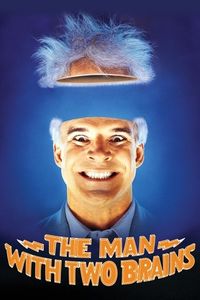
    (YouTube streaming, August 2021) I’m sure that I’ve seen parts of The Man with Two Brains at some point in the twentieth century — I still remembered the Merv Griffin gag, and some of the humour felt familiar. Of course, much of Steve Martin’s humour, in general, is based on the idea of familiarity — he tells you what he’s going to do, and then he does it in the most ridiculous way possible. In this film, dating from what we can call the golden age of his film career (those four films written/directed by Carl Reiner being the core of it, with the period extending from 1979’s The Jerk to 1991’s L.A. Story), Martin is as absurd as he can be in the framework of a silly story. He plays a neurosurgeon who falls in love with a disembodied brain that talks with him telepathically while trying to deal with his cheating spouse. While the plot is pretext to all sorts of dumb gags, it’s actually not too bad for such a film — there’s some narrative interest beyond the next laugh, and the subplots extend for more than the immediate scene. The proof of The Man with Two Brains’ success is in the laughs, smirks, grins and groans that it creates. It’s a shame that Martin retreated from this kind of humour in favour of more family-friendly fare later in his career — surely, I can’t be the only one bemoaning his “earlier, funnier films”?

  • Nostalghia (1983)

    Nostalghia (1983)

    (YouTube Streaming, August 2021) You wake up. The light is dim, the surroundings are shrouded in fog, the figures around you indistinct. You can only see shades of grey, except in those rare occasions where you think you see a dark shade of colour. There are people; ordinary-looking people, world-weary people; peasants without a shred of refinement to the way they look. The people speak another language, but even seeing subtitles under them merely prolongs your lack of understanding. Their dialogue is crafted, elusive and metaphorical even at the clearest of times. They are preoccupied with matters of some significance but no real importance. They torture themselves with meaning to the point where you wish anyone would crack a joke or even anything sounding like normal human conversation. Your attention is directed in long static shots, sometimes simply panning to something else. But you feel trapped in those long shots, those monochromatic compositions, those overworked expressions. And then it strikes you for its obviousness. You are trapped in a Tarkovsky film. This is all normal. But this is also eternal. Time stretches on to infinity. You will be here forever. This is Nostalghia.

  • Flight of the Navigator (1986)

    Flight of the Navigator (1986)

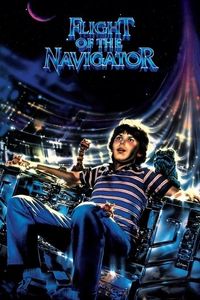
    (Disney Streaming, August 2021) I spent the first half-hour of Flight of the Navigator wondering why I hadn’t heard of the film before, and the rest of the film understanding why I hadn’t. It does start on an intriguing note, as (after many fake-out of UFOs not quite appearing on-screen) a 12-year-old boy of 1978 finds himself in 1986 without interruption or explanation. His home is inhabited by strangers, and the police struggle to figure out what to make of him until they find trace of him as a missing person… from eight years before. Things take a turn for the wilder side, as a strange UFO (well, UUO — Unidentified Unmoving Object) is taken in by NASA, an organization with a secure facility to keep kids locked in. (Albeit with the hottest 1986 toys.)  A young and cute Sarah Jessica Parker has a supporting role as a likable liaison, and our protagonist is soon revealed to have a lot of information locked away in his mind. At this point, we’re probably 35 minutes into Flight of the Navigator and there isn’t much to criticize: it’s a capable science-fiction adventure for 12-year-old boys, the likes of which (along Explorers, DARYL, and The Last Starfighter) were particularly robust in the mid-1980s. But it’s also the kind of film that the entire family can watch and enjoy. But then, well, the family can take a hike, because the level of the film drops down a few notches as soon as the boy gets inside the mysterious craft and makes friends with the ship. The dialogue, events and preoccupation become quite juvenile all of a sudden, and the plot almost entirely stops in favour of the now-UFO zooming around the place. There’s some interesting early-CGI special-effect work considering the limited technology of the time, but the plot really takes a break during that last half. Even the third act’s tension is an obvious cheat that will obviously be resolved using the most obvious way, which is to say, ”Never mind!”  I do like that first section of Flight of the Navigator. The second one, though… eh, a return to the norm and then some. Yes, I was almost 12 in 1986 and should have seen the film then — but I wasn’t watching first-run films at the time, and the tight grip of Disney (plus the film’s unabashed Americanism) probably explains why it didn’t make its way to French-Canadian TV.

  • The World to Come (2020)

    The World to Come (2020)

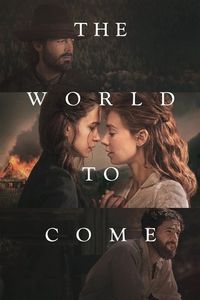
    (On Cable TV, August 2021) It would be fun to claim that I went in The World to Come completely ignorant of its nature, expecting a Science Fiction film along the lines of the classic Things to Come. But that would be a lie — I knew exactly what kind of film The World to Come would be because it’s not subtle about it. From the premise, poster and first few minutes, there’s no doubt about its nature: a “forbidden period romance” (i.e.: non-heterosexual romance in intolerant times) almost too eager to revel in the misery of its characters. Nothing that follows is surprising. Our narrating heroine is a young woman out of place and out of time: She’s living in a hardscrabble rural area of 19th century America, with her husband toiling the land as she keeps (pick one at random and repeat:) grieving her dead daughter; rebuffing her husband’s advances; bemoaning being stuck in the middle of nowhere; craving the companionship of equals; writing in her diary. You know — exactly like a twenty-first century urban lesbian would act in the same situation. But then, at long last in-between the deliberately spirit-killing scenes of rural farming, comes a new fiery-headed neighbour. This is followed by more waiting, as we wait for the same-sex relationship to blossom into a full-fledged love affair. (All during which the husband keeps toiling the land.)  Further playing along expected lines, our newcomer’s husband is clearly abusive and we all know what that means. Which the film obligingly follows. The ending was foretold from the start — especially considering the heavy-handed message of how unhappy the female leads are supposed to be except when each other. My sarcasm is puerile but not surprising: “forbidden period romances” are the new hotness in independent film and while I liked The Favourite, I’ve also seen Lady on Fire and a few others and can’t really muster up any more interest for a film whose main points have been done better elsewhere. You may be surprised, after the above, to hear that I did like some aspects of The World to Come: Vanessa Kirby is terrific as the object of fulfillment and desire, and she looks amazing in symbolic red curls. I’ve been wondering for a while if she’s about to become The Next Big Thing, and this is the kind of performance that nicely counterbalances a few striking turns in big-budget action films. I have some sympathy for the poor dumb hard-working farmer played by Casey Affleck, doomed to a perpetually unhappy wife/life and yet helping her out to get to the end of her journey. The cinematography is not enjoyable in its depiction of hardscrabble frontier living, but it is remarkably convincing. Despite being the furthest thing from The World to Come’s intended target audience, I still went into the film hoping that something would hook me. The result is not satisfying — sure, some fine acting and cinematography, but the rest is often obnoxious in its insistence on repeating an increasingly clichéd formula as if it was brand new. Given so, I’ll have a rewatch of The Favourite before I touch this one again.

  • The Verdict (1982)

    The Verdict (1982)

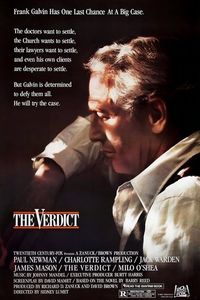
    (Disney Streaming, August 2021) The unsung hero of The Verdict is whoever who took the decision to cast Paul Newman in the lead role — what best way to portray a lawyer past his prime than to cast an aging movie idol? Newman still looks fantastic, of course (compare and contrast with how he looks in the roughly contemporary Absence of Malice), but the deliberate grey hairs, added fat and slower demeanour tell us everything we need to know, even before his character gets thrown out of a funeral in the opening scene. What follows, in keeping with the tone set early on, is an examination of justice with a jaundiced but not entirely cynical eye — as our burnt-out protagonist is handed an easy settlement but decides to push matters to a civil trial, and quickly gets enmeshed in dirty tactics and counter-tactics. If The Verdict remains compelling viewing today, it’s how it skirts the edges of an uplifting film with a gritty look at the less admirable aspects of civil law. Our protagonist isn’t above stealing mail; his opponent will spy on him; and in the film’s defining sequence, a slam-dunk testimony and piece of evidence that would, in another film, be the final blow are here (with some heavy dramatic license) judged inadmissible and struck from the record. But to get back to a crowd-friendly idealistic finale, it turns out that even inadmissible evidence can’t just be erased from memory. While the pacing of the film is a bit slow, especially at first, veteran director Sidney Lumet does keep good control over his material, gradually unfolding the layers of complexity in David Mamet’s narrative. (Unusually for Mamet, this first screenplay is adapted from existing material, and so his distinctive dialogue is not really present.)  Good supporting turns from Charlotte Rampling and the irreplaceable James Mason help round out the acting talent involved. The Verdict, then a box-office success and Oscar favourite from cerebral material and a strong narrative, is almost unusual today — but fret not, it’s still very enjoyable and the circa-1980 period has aged rather well… like its star.

  • Godzilla vs. Kong (2021)

    Godzilla vs. Kong (2021)

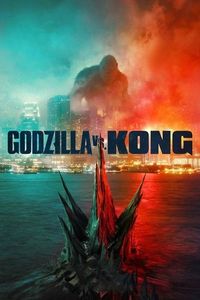
    (On Cable TV, August 2021) We’re now up to four movies in the modern “monsterverse,” and a pattern is already clear: odd entries disappointing, even entries better than expected. Godzilla was OK without being good; Kong: Skull Island was surprisingly well-done; Godzilla: King of the Monsters was an overstuffed disappointment but here is Godzilla vs. Kong to make up for it. Arguably the climax to the series, this entry has King Kong and Godzilla squaring off around the planet, then briefly teaming up to take on an even worse threat. I was rather amused at the willingness of the film to go for wild world-building all the way to a hollow planetary core, although that amusement was tempered by the bad decision to make conspiracy theorists the heroes of one subplot. Still, it takes a special kind of audacity to have Kong and Godzilla square off on the deck of an aircraft carrier, as if it was a too-little surfboard on which to fight. Director Adam Wingard is a long way from the modest horror films that first made his reputation, but he’s up to the task of orchestrating a modern special-effects spectacle: by the time the two titular monsters and their foe duke it out in brightly-lit Hong Kong, it’s clear that he’s making a play for the ultimate kaiju fight sequence. The flip side of that success is that the film becomes duller the longer it stays away from the monsters. I enjoy seeing Rebecca Hall in anything, even as a walking exposition device, but Godzilla vs. Kong makes some curiously bad choices when it comes to its human characters. We don’t need conspiracy podcasters as heroes, considering how many problems we’re already having in clinging to the truth. Most other characters are vapid or insipid — although the chief antagonist has a few solid motivations in his favour. I’m also not quite as happy with the delirious nature of the film’s inventions: everything seems to be taking place in an alternate reality with inconsistent fantasy science with antigravity reactors, planetary tunnels, a hollow planet on one side, and a giant ape strapped to a ship on the other. But then again— trying to find too much scientific plausibility in a film designed to have King Kong and Godzilla bash each other is expecting too much. We should just be happy that Godzilla vs. Kong exists and somehow holds together. I’m not sure where they can go after this, though. But that’s their job, not mine.

  • 3 Men and a Baby (1987)

    3 Men and a Baby (1987)

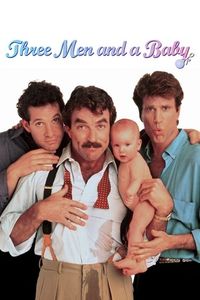
    (Disney Streaming, August 2021) Perhaps the most noteworthy aspect of 3 Men and a Baby now is outside the film itself, as an evocative example of box-office irrelevance. Upon release, it became the highest-grossing Hollywood movie of the year, outclassing such films as Full Metal Jacket, The Princess Bride, Predator, Lethal Weapon, RoboCop, Spaceballs, Evil Dead II or Wall Street. Of course, the irony today is that any of those movies are significantly better-known than 3 Men and a Baby, and for good cause: they all still have a daring, distinctive quality, whereas 3 Men and a Baby was always meant as a common-denominator kind of comedy, the type of film that families grudgingly compromise on seeing together, especially at Christmastime, which was the film’s savvily-targeted release season. To be fair, it’s not a bad film: The plot seems custom-made for the Christmas season as well, as three bachelors are abruptly forced to take care of a baby, the result of one of their casual romantic trysts. Directed by Leonard Nimoy (a fascinating piece of trivia by itself), 3 Men and a Baby makes good use of the charms of co-leads Steve Guttenberg (in one of his best movies), Ted Danson and Tom Selleck, who’s particularly good at selling the emotional core of the story. The dynamic opening sequence sets the tone of a bachelor’s utopia with a great apartment and a wild party — but the real fun begins as a baby is dropped on their doorstep and they need to figure out everything with minimal female supervision. I’m not sure I ever watched the entire film before, because even if some elements were familiar, the entire criminal subplot felt newish (and unnecessary, even if something had to bring the film to 102 minutes). Otherwise, 3 Men and a Baby is predictable, with big plot strings seen well in advance, and a feeling of comfort amply fulfilled by the big happy finale. You can see why it made so much money… and also why it slipped away from the collective unconscious even as its contemporaries have shown stronger staying power. Here is something to consider when you see dull or terrible films rake in the money even as some fan favourites languish: you can’t always tell what will endure and what won’t.

  • The Great Mouse Detective (1986)

    The Great Mouse Detective (1986)

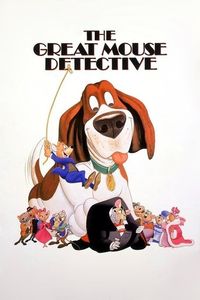
    (Disney Streaming, August 2021) The mid-1980s were not the best of time for Disney Animation Studios, but The Great Mouse Detective was something of a shot in the arm after the lack of success, critical or commercial, of 1985’s The Black Cauldron — and pointing the way to the renaissance sparked by The Little Mermaid three years. Later. Narratively, it does feel familiar — essentially a Sherlock Holmes remix featuring anthropomorphic mice, with a classic portrayal of mouse-Watson as a bit useless, and mouse-Holmes as the thinker who gets out of various scrapes. (The film takes pains to show that this isn’t an anthropomorphic world — the mice live in human-Holmes’s basement.)  There isn’t much to the plot or the running time at barely 74 minutes, although the film is notable for starting to integrate 3D computer imagery in an animated cartoon thanks to a climax set in the Big Ben clocktower. The Great Mouse Detective is not bad, but it did leave me wanting just a bit more — more of Watson being competent, more details about the mouse society underneath London and more substantial plotting. Still, the result is not too bad: it compares advantageously to many preceding Disney animated features, and to the less-than-stellar sequels that came out at roughly the same time. It’s fun, short and amusing to Holmes fans (albeit probably not as special now, considering the recent glut of Sherlockania in cinema and TV) and the animation quality is higher than some of the 1970s–1980s Disney films. The Great Mouse Detective is certainly not as memorable as other later Disney films, but it generally works.

  • The Rescuers Down Under (1990)

    The Rescuers Down Under (1990)

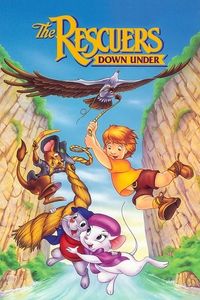
    (Disney Streaming, August 2021) Renaissances are not necessarily binary — it’s not because suddenly you get one hit that you’re on your way back, and sometimes it takes a while to get on track. Looking at the history of the Disney Animation Studio, for instance, everyone can agree that their Renaissance was sparked by 1989’s The Little Mermaid and everyone remembers 1991’s The Lion King. But in-between them? Not-so-fondly-remembered sequel (the first one in their history, notwithstanding the more recent hubbub about Frozen II) The Rescuers Down Under, taking its characters on an Australian adventure capitalizing on the Crocodile Dundee-led success of all things Australian in the late 1980s. As someone who’s not that fond of The Rescuers in the first place, I’m already not starting from a place of goodwill. That goodwill was further extinguished by a rather long and dull setup delaying the entrance of the titular Rescuers by nearly half an hour, and then a story that simply didn’t do all that much with the Australian setting. While the film feels slightly less dark than the original (which was remarkably dark for a Disney film), it’s still not a lot of fun and surprisingly mean-spirited at times. Put all of that together and you don’t exactly end with one of the hidden gems of Disney Animation Studios’ history. No wonder The Rescuers Down Under didn’t get much notice back then (although opening on the same day as Home Alone wasn’t a good idea) and gets scarcely more than a side glance when Disney historians talk about the transformation of the studio as the 1980s closed. It’s a lower-tier Disney, not helped in the least by its proximity to much-better movies.

  • The New Mutants (2020)

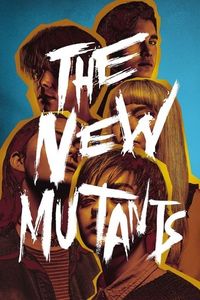
    The New Mutants (2020)

    (Disney Streaming, August 2021) Cinephiles waited more than two years to see The New Mutants — the delay between its initial release date (April 2018) and the time at which it finally ambled in theatres (August 2020). The wait was not worth it, something that nearly everyone expected, considering the lacklustre trailers, plans for extensive reshoots (which, worse of all, never took place), major corporate changes when Disney bought 20th Century Fox, and an ongoing pandemic sharply decreasing the attraction of any movie making it to big screens. For anyone outside the film’s teenage audience, the problem starts with the premise: What if we took the X-Men franchise, but sucked out all of the fun, iconic protagonists, affirmed themes or action scenes and replaced with teenage angst, paranoid plotting and unlikable characters? Putting X-Men in the typical Young Adult plotting blender maybe could have worked in better hands, but writer-director Josh Boone (despite promising credentials) is not one of them: The New Mutants staggers from one plot point to another without grace, remains grim-faced throughout and throws severe childhood trauma and a same-sex romance in the mix as if they were contractual obligations. It’s all exceptionally boring despite some interesting elements: it feels like a slog even only a few minutes into the film and that impression never lets up. As far as spinoffs go, it’s as if they managed to hit the trifecta of a bad premise, bad execution and bad polish all at once. Considering the pitiful result, it’s no wonder Disney decided to jettison the film in theatres (pushed more by contractual obligations than any kind of confidence in its prospects) before quietly releasing it on its streaming service. It’s a sad footnote to a series that had its ups and downs, but it’s not all bad news: the bad performance of The New Mutants virtually assures that there will never, ever be a sequel despite initial plans to make this the first in a trilogy. We have been given swill, but spared the indignity of having even more of it.