Month: September 2021

  • Soorarai Pottru (2020)

    Soorarai Pottru (2020)

    (Amazon Streaming, September 2021) Capitalists of the world will be reassured to find out that the pseudo-populist business tycoon biopic is alive and well, as evidenced by India’s Soorarai Pottru. Here we follow a young entrepreneur, a former fighter jet pilot, who gets the idea of a low-cost airline fit to compete with train travel for poorer Indians. Viewers familiar with such hagiographies will recognize the ways in which it’s dramatized for maximum impact — the personalization of opposition into one central figure, the truth-stretched dramatic events on which everything hinges, and the hard-headedness of the protagonist presented as a virtue. It’s all overdone to a point that skirts ridiculousness, something that’s not helped by some specific aspects of Indian cinema. The national style of blending musical numbers doesn’t quite match up with the hard-nosed business fable, the subpar CGI regularly breaks immersion, and the tagging of specific shots with text indicating that they do not reflect the procedures or opinions of Indian state organization clearly highlights the lack of independence between Indian filmmaking and Indian government. (Yes, I suspect that the text was the result of a contractual obligation in obtaining privileged access to state facilities for shooting — but there’s nothing quite so illustrative of social differences between here and there than finding out just how some facets of Indian society are excessively deferent to others.) Then there’s the truth-versus-fiction factor: It doesn’t take a lot of research about Deccan Air to find out just how fanciful writer-director Sudha Kongara became in adapting the story — in real life, our protagonist already owned a cargo airline before starting a low-cost passenger line, and that company merged with another one five years later. Despite those issues, some significant pacing problems throughout the film, and many unquestioned assumptions about capitalism and nepotism (hurray for giving catering contracts within the family!), Soorarai Pottru is generally entertaining to watch. It doesn’t pass muster in North America for the litany of reasons described above, but it can be a revelatory glimpse at a very different culture.
  • It’s All Gone Pete Tong (2004)

    It’s All Gone Pete Tong (2004)

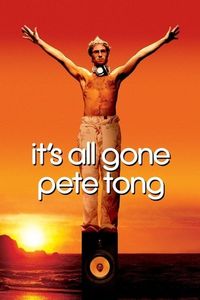
    (On Cable TV, September 2021) I’m half bemused by It’s All Gone Pete Tong, a film that doesn’t really knows what it wants to be and only moderately works in small bursts. Initially presenting itself as a mockumentary comedy about a star DJ, it ends up breaking nearly everything about that initial promise. Blending real-world DJ celebs with a fictional protagonist (Paul Kaye as a DJ demigod) in a pseudo-documentary format, it often means to be so excessive as to be ridiculous. But this is not a finely tuned film, and before long the deviations from its initial style become apparent. The mockumentary format is a mere pretence, as we’re quickly (and increasingly) presented with shots and sequences that can’t be explained by a TV crew filming the events. The comedy is also very uneven, with writer-director Michael Dowse inconsistently reaching for absurd humour and then drawing back into more mundane material. Even the overall genre of the film changes once the main conflict is introduced: After years of loud living, our protagonist is losing his hearing, and no amount of help or medical treatment will enable him to regain his hearing. It turns really dark at times despite the half-hearted attempts at comedy, and the parallels with the superior Sound of Metal (featuring a heavy metal drummer also losing his hearing) are perhaps a bit too raw to keep enjoying It’s All Gone Pete Tong as a comedy. Curiously (or appropriately enough for a film I find mediocre at best), the electronic music of the film is uneven, rarely taking advantage of the feast of opportunities that the early-2000s Ibiza scene presented. I’m left more disappointed than anything else by It’s All Gone Pete Tong: there is some good raw material and snippets in here, but it doesn’t cohere nor lead to a satisfying experience for the viewers.

  • Dead Man’s Switch: A Crypto Mystery (2021)

    Dead Man’s Switch: A Crypto Mystery (2021)

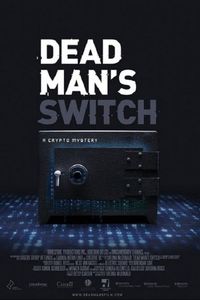
    (On TV, September 2021) I’m not sure if I can properly express my all-encompassing dubiousness at the concept of cryptocurrency, and it’s not a documentary like Dead Man’s Switch: A Crypto Mystery that will make me feel any better about it. Rest assured that it’s skepticism at all levels, starting with the idea that cryptocurrency is a libertarian (hence dumb) attempt to decentralize something that should not be — it’s an idea incompatible with civil society, and its scamful implementation managed to make it even worse. Never mind the environmental impact of it — even a decade in the cryptocurrency age, it’s an idea that doesn’t solve any existing problem. It’s something without practical value except as a financial speculation instrument, and that is the root of most of the other problems — as a form of gambling (at best) and deliberate deception (at worst), cryptocurrency continues to attract criminals, scammers and hustlers — and they all have very lengthy arguments about why we should give them our money to perpetuate this nonsensical bubble they plan on profiting from. Dead Man’s Switch gets interested in one of the worst scandals of Bitcoin’s history so far — the Canada-based QuadrigaCX scam and the sudden disappearance of its founder Gerald Cotten, leaving more than a hundred million dollars unaccounted for. The technical details can be complex, but the story itself isn’t: a threadbare scam clothing itself in techno-libertarian ideals to masquerade living a lavish lifestyle on investor money. When the sharks started circling, as they always end up doing, the owner went to India and died. Or should that be “died”? As the title of the film suggests, there are still plenty of unanswered questions about Cotten’s QuadrigaCX and writer-director Sheona McDonald patiently takes viewers through a years-long story of deception and fraud. What eventually emerges is familiar: A pair of men (one of them with a criminal past and two changed names) used to penny-ante scams are suddenly swept along the Bitcoin bubble and getting more money than they knew what to do with. Lavish spending explains where some of the money went, but the whole leaving-to-India-when-questions-arose thing remains open-ended, as the journalists interviewed for the documentary recount persuasive arguments for and against Cotten’s death over there. For all of the entertaining and clear-eyed explanations in Dead Man’s Switch, the most frustrating element of the film remains its lack of answers. Two of the people who would know are not talking, and an official investigation isn’t over yet. I can’t quite say I had a good time watching the film — the concept of cryptocurrency goes unexamined, and many of the interviewees are quite heavily invested in the concept. It’s also frustrating to leave so many questions unanswered, and watching the film so soon after its release offers none of the additional answers that will eventually emerge (Watch the Wikipedia article, I suppose). But as far as high-tech docs go, Dead Man’s Switch is more skillful than most in giving both a polished sheen to its cinematography and clearly explaining its topic. This being said, I’m still waiting for that anti-crypto takedown…

  • Young and Innocent (1937)

    Young and Innocent (1937)

    (On Cable TV, September 2021) Coming from the phase of Alfred Hitchcock’s career in which he was consistently hitting evermore ambitious marks in the United Kingdom, Young and Innocent features some familiar material for him — a couple on the run, trying to identify the real murderer even as the police are tracking them. You can already recognize Hitchcock’s showmanship here — a number of sequences go beyond the strictly necessary, whether we’re talking about a suspense scene in which the hero tries to rescue a woman from falling into a pit, or a much-lauded single shot that sweeps across a busy hotel lobby to zoom incessantly on the murderer finally located. It’s a competent thriller even today, and goes well with titles such as near-contemporary The 39 Steps and The Man Who Knew Too Much in illustrating why Hitchcock was, by the late 1930s, just about ready to board a transatlantic trip all the way to Hollywood.

  • Antropophagus (1980)

    Antropophagus (1980)

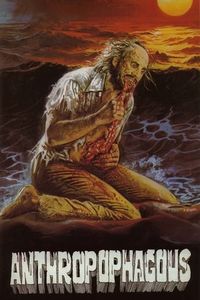
    (In French, On Cable TV, September 2021) Ugh — why am I torturing myself so? Sure, the point of being a cinephile is to learn as much as I can about as many film subgenres as I can, hitting the high points and taking a look at the landmark films. For better or for worse, Italian gore film Antropophagus ended up on some list of noteworthy horror films — best known for being one of those “video nasties”’ banned in the UK, it’s credited by some as marking a turning point of some sort of Italian horror, which would then spend much of the 1980s pushing the limits of on-screen gore. That’s not a legacy to be particularly proud of, but hey — I’m just someone who loathes the stuff. I also suspect that the lurid self-cannibalism poster had something with the film’s reputation and video-club popularity. The actual movie, though, is predictably lame and ugly — much of it has to do with a psychopath cannibal stalking, killing and eating half a dozen tourists unlucky enough to set foot on the wrong island. (One of them is a pregnant woman, so that should give you an idea of how low it’s going to go.)  Oh, it’s put together with some competence for the genre — director Joe D’Amato has enough experience in this kind of stuff. But that’s not much of a compliment. Antropophagus is 90 minutes but feels remarkably longer — fortunately, modern viewers will be able to check their phones whenever it gets interminable.

  • I’m Thinking of Ending Things (2020)

    I’m Thinking of Ending Things (2020)

    (Netflix Streaming, September 2021) I have seldom felt as strong an impulse to bail on a film as I did through the fifth-to-fifteenth minutes of I’m Thinking of Ending Things. Here I was, stuck in the exasperating mind of a young woman who is herself stuck in a car with her current but soon-to-be ex-boyfriend. “I’m thinking of ending things,” she endlessly ruminates and repeats, berating herself for coming along as she contemplates — nay, looks forward—to ending their six-week relationship that feels shorter than the film already. The monologue goes on and on in what feels like a straight adaptation of a stream-of-consciousness prose narrative straight to the screen. Fortunately, the film has other creepy weirdnesses in store once past that rebarbative opening — This being a film from iconoclastic writer-director auteur Charlie Kaufman, the surrealism and off-putting material keeps piling up until viewers realize that I’m Thinking of Ending Things is not interested in narrative as much as formal experimentation. Narrators change, perspectives shift, genres blur into each other, strange stuff happens and we just keep going to the next thing. There’s an explanation of sorts, but no one will be blamed if they just don’t want to play Kaufman’s games. There are a few interesting moments and plenty of pop-culture quotes (including swatches of repurposed dialogue) and I’m rather happy with Jesse Plemons’ persona-busting performance. I also liked Jessie Buckley even if her character is exasperating—but that goes for much of the film as a whole. It’s not particularly deep experimental cinema, but it’s not interested by conventional storytelling either, so you’re either along for the ride or you check out—and I’m Thinking of Ending Things is a ride that starts out slow enough to send less-patient viewers heading for the exits.

  • Can-Can (1960)

    Can-Can (1960)

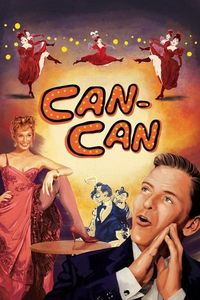
    (On Cable TV, September 2021) I never knew how badly I wanted to see a movie scene in which Frank Sinatra chats with Maurice Chevalier until I saw it right there in Can-Can, and it’s only one of the reasons why I liked the film so much. A classic 1950s musical that was released just ten weeks into 1960, it’s a mixture of familiar and fun Cole Porter songs, Sinatra crooning alongside Chevalier and Louis Jourdan, Shirley MacLaine dancing up a storm, and some delightfully chaste French debauchery as filtered through American Francophile sensibilities. MacLaine plays a Can-Can club owner trying to stay ahead of police raids against “lewd and lascivious dancing,” and having to pick between a lawyer (Sinatra) and a judge (Jourdan) while an older judge (Chevalier) is there to provide sage advice to all. It’s a lot of fun to see Sinatra and Chevalier, two crooners initially separated by decades and an ocean, chat about the meaning of love in Paris — if the scene didn’t exist, someone would have had to invent it. Jourdan is also quite good, singing and dancing pleasantly. Still, perhaps my biggest surprise of the film is liking MacLaine quite a bit as she credibly sings and dances — although I suspect that the long wig had a lot to do with it as well. The tone of the film is this kind of pitch-perfect blend between suggesting bawdiness without showing it (Khrushchev being easily impressed, there’s very little that’s risqué here) and falling back on an American’s idea of the relaxed French attitude toward love and marriage. It’s quite a bit of fun, and the soundtrack can rely on a few songs that can still be recognized. I’m fast running out of 1950s musical to see, but Can-Can is a decent addition to the corpus.

  • Exodus (1960)

    Exodus (1960)

    (On Cable TV, September 2021) There’s no denying that Exodus has a place in cinema history — it was a rare recent-history epic film in the 1950s tradition, it featured Paul Newman in an early role, and most importantly it marked the end of the Hollywood blacklist when director Otto Preminger, ever the iconoclast, publicly announced that the script was from the now-legendary Dalton Trumbo, who until then had been forced to work under pseudonyms. It also, perhaps more troublingly, heralded America’s one-sided support for Israel, blurring even then-recent history in order to play nice with everyone and eschewing the explosive complexities of Israel’s foundation. But historical importance doesn’t necessarily translate into enduring watchability, so let’s just say it: Exodus has aged poorly. Perhaps it was ill-conceived in the first place, trying to cram a thick historical novel into even an expansive 208-minute film complete with an intermission. One of the biggest problems is that it qualifies as an epic film through length rather than scope: As our protagonists romance themselves against the backdrop of Israel’s foundation, the result seems curiously lacking in thrills or even in ambition. It feels small but, fatally, empty — there’s no reason for the film to last this long and deliver such a trite message. The immersion in Israel’s founding years is not as captivating as I would have liked, and the ultimate message feels trite. Newman is still compelling no matter the circumstances (and it’s a harsher role for him than usual), but everything else feels dated and not in a good way: too-static camera angles, underwhelming special effects, stiff staging and the sense that Exodus is cutting away a lot of the novel’s depth without managing to condense what’s left into a cinematic work, which is rather vexing when it goes with an “epic” film.

  • Sette uomini d’oro nello spazio [Star Odyssey] (1979)

    Sette uomini d’oro nello spazio [Star Odyssey] (1979)

    (On Cable TV, September 2021) I’m not going to say much about Star Odyssey because I don’t really want to spend more time on it. Director Alfonso Brescia’s movie is a so-bad-it’s-good kind of cult classic, an incompetent and unsubtle Star Wars rip-off (complete with laser swords) coming from the late-1970s Italian cinema scene. The plot isn’t complex as much as it’s incomprehensible, and the production values are abysmal. As with other films of its ilk, Star Odyssey is either charming or exasperating depending on the mood you’re in, and you can guess in which one I was in from the curtness of this review.

  • The Right One (2021)

    The Right One (2021)

    (On Cable TV, September 2021) I’ve been enjoying a cinephile’s crush on Cleopatra Coleman since her supporting turn in James vs. His Future Self, but apparently I’m not the only one to find her so compelling because here she is now headlining romantic comedy The Right One. She here plays an author in need of inspiration and affection, as her efforts to turn in a new manuscript falter until she meets a very strange young man who seems to change name, identity, accent and profession every time she meets him. This is not quite your usual fluffy rom-com — as one can guess, our male lead (Nick Thune) has some issues to work through and while this propels the film’s mystery forward throughout its first half, it also eventually sends The Right One crashing into a wall. It’s not fun to talk about mental illness and while it’s a fundamentally important discussion, a romantic comedy is not necessarily the right vehicle for it. Not when, on the other side of the equation, you’ve got bubbly fun Coleman being utterly adorable in the lead role. It’s even worse considering that when the truth comes out, it leaves a hollowed-out male protagonist who’s not a whole lot of fun to be with, contrarily to his alter-egos. Thune gets the worst of the film’s crashing interest, as there’s an entire third act of psychological reconstruction missing. Credit being due, though, even a not-so-good movie is not enough to get me to disembark the Coleman fan train — she’s very charming here, with a great mix of attractiveness and likability. She ends up carrying the film on her shoulders all the way through the disappointing conclusion and there’s no question I’m going to watch the next film she’s going to feature in. Isn’t that the mark of a budding movie star?

  • Drive a Crooked Road (1954)

    Drive a Crooked Road (1954)

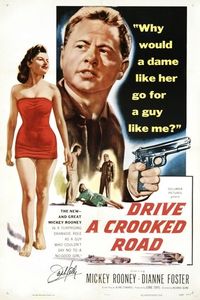
    (On Cable TV, September 2021) If a film like Drive a Crooked Road can feel so familiar, it’s probably because it shares its plot with many other films. The story of a young man with a talent for racing being recruited into a criminal gang to act as getaway driver for a heist is not unique, and it’s perhaps best executed in the 1964 remake of The Killers. What this earlier version of the idea has in its favour is the sight of Mickey Rooney in the awkward phase of his career when he was trying to reinvent himself in older-harsher roles than the teenage and young-adult heartthrob characters that initially made him famous. He’s generally but not entirely convincing as a tougher, rougher young man getting mixed up in heavier trade even as he dreams of racing cars professionally. As a noir, though, Drive a Crooked Road is very watchable: The script, from future comedy director Blake Edwards (who turns out to have a very respectable film-noir early resumé), steadily ratchets up the tension and the loneliness of the protagonist, and seeing Dianne Foster playing the femme fatale only makes it better. Taut, efficient and just long enough at 83 minutes, Drive a Crooked Road is not a noir classic, but it’s a decent one.

  • Rumble: The Indians Who Rocked the World (2017)

    Rumble: The Indians Who Rocked the World (2017)

    (On Cable TV, September 2021) I’m only too happy to learn more about underappreciated contributions to pop culture, and Rumble: The Indians Who Rocked the World draws an interesting and hitherto undocumented portrait of Native American contribution to rock music. As the title suggests, much of the film’s early moments are built around Link Wray’s power chords on “Rumble” (reportedly the only instrumental ever banned in New York and Boston). It’s a great hook, and much of the documentary consists in examining rock musicians of Native American ethnicity (including Jimi Hendrix and, stretching the definition of rock a bit, the essential Buffy Sainte-Marie), their lives and influence. There’s good music throughout, and the succession of talking heads with historical footage certainly gets the point across. I’m sure that commentators with deeper musical knowledge than mine will find nitpicks and omissions, but Rumble feels reasonably comprehensive, and it is perhaps destined to become a Volume One of further documentaries exploring Native American influence on music. [November 2023: Oof — Like nearly everything related to Buffy Sainte-Marie, Rumble has lost a few feathers following revelations of Saint-Marie having misled people about what turns out to be her non-First Nation ethnicity.]

  • Les Girls (1957)

    Les Girls (1957)

    (On Cable TV, September 2021) Just as I thought I had run out of high-profile Gene Kelly musicals, here’s one I had missed: Les Girls, an expensive production signed by none other than veteran director George Cukor that marks Kelly’s last MGM contract movie. The plot has to do with a tell-all exposé about a dancing troupe, leading to different versions of the same story. Kelly plays the troupe manager, with the three leading dancer roles filled by Mitzi Gaynor, a very funny Kay Kendall and a rather bland Taina Elg. Often heavier on comedy than music, the result nonetheless has some very good numbers — including Kelly riffing off Marlon Brando in a number with Gaynor. For Kelly, Les Girls had the opportunity to play with very familiar themes: ballet, Francophilia, choreography and portraying a bit of a cad. The result is fun, even if it’s not as memorable as many of his other musicals from earlier in the decade. Indeed, the late 1950s were the end of an era at MGM with contracts not being renewed and the Freed unit down to its last musicals. Les Girls marks another solid production — a step short of being a classic, but still wonderfully polished and enjoyable by itself. I have a feeling I’ll enjoy revisiting this one eventually, even if it doesn’t play as often as its more famous contemporaries.

  • Firestorm (1998)

    Firestorm (1998)

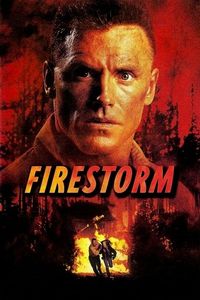
    (In French, On Cable TV, September 2021) As a filmgoer whose personal involvement in the development of the medium (i.e.: watching new releases without age restrictions) extends to the 1990s, I’m starting to get some perspective on the ebb and flow of cinematic styles, genres, tropes and fads. This being said: Wow, do I miss the action movies of the 1990s. Over-the-top, high-concept, not particularly concerned with plausibility yet often executed with good practical effects, they hit a note that hasn’t been reached since then. I saw most of them in theatres… or so I thought before coming across Firestorm, which, after a quick check of my archives, I hadn’t yet seen. But let’s not get excited: Even by the standards of action movies, now or then, Firestorm isn’t much of a film. Put together based on the desire to make footballer Howie Long into a movie star, the film did not have the backing of a major studio, a good director or a powerful producer — as a result, the expansive first draft (meant for Sylvester Stallone) got rewritten to be much cheaper, Stallone got replaced by Long and the entire thing became a B-feature. If I didn’t see it in theatres, it was probably because it got scathing reviews and crashed at the box office. Twenty-five years later, does it hold up? Well, not really — compared to its contemporaries, Firestorm is a rather limp affair. Taking place in the wilds of a forest fire and featuring sadistic criminals being pursued by a virtuous smokejumper (Long), the film is a rather sedate affair despite its action potential. The budget cuts clearly had an impact because the dramatic backdrop of a forest fire is underused and the plotting takes too much time. There are occasionally some gripping shots, but forest fire isn’t something that was all that easy to portray before CGI and the film suffers from it. Where it shines perhaps a bit brighter today than it did back then is in its now-retro approach to action, with dumb spectacular stunts made with the means of the time, meaning that there’s a degree of artificiality to the result that can be charming if you’re in the right mood for it. I’m certainly not saying I should have seen Firestorm earlier — in fact, right now may have been the best time so far. Just distant enough to be nostalgic, but not yet so old as to be carbon-dated.

  • Buddy Games (2019)

    Buddy Games (2019)

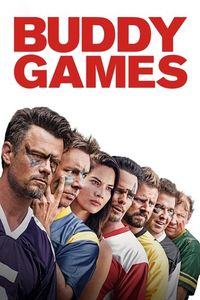
    (On Cable TV, September 2021) You can readily tell that Buddy Games is a movie made by immature males for immature males by its sheer density of jokes about testicles and their content. While there’s some rough potential in a film in which men bond to help one of their own through manufactured displays of strength and courage, it becomes clear within seconds that we’re not after any higher values here — just an overwhelming barrage of obnoxious juvenilia. No matter how low you think it’s going to go, think even lower. Writer-director-star Josh Duhamel gives himself the lead role and keeps things going at a steady pace, but it’s as a screenwriter that he falters most spectacularly, presenting one irritating character after another, and having them outdo themselves in offensiveness. There’s clearly a place for that kind of movie, but it doesn’t mean that I have to like it. This celebration of boys-being-boys (helped along by some suspiciously convenient plotting to ensure that they have all the money for their shenanigans) ends up on an extreme demonstration of bros-before-hoes that’s notionally funny but simply ends up falling flat considering everything that came before that point. Also, are you going to waste Olivia Munn in a role like this? The obvious point of comparison here (overgrown boys playing games to make themselves feel better) is Tag, but that other movie looks positively cerebral compared to Buddy Games. Oh, I did chuckle a few times throughout the viewing, but none of it was clever enough to make me feel any less unclean.