Month: September 2021

  • Blood and Sand (1941)

    Blood and Sand (1941)

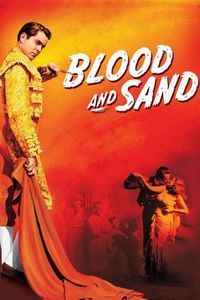
    (On Cable TV, September 2021) There is a melodramatic intensity to Blood and Sand that makes it as ridiculous as it’s hard to resist. It’s a drama that boldly heads to Spain to tell us about the dramatic life of a matador as he outdoes his dead father’s accomplishments, encounters initial success, and is then seduced and destroyed by the trappings of fame and power. There isn’t much in terms of ethnically authentic casting, but Tyrone Power does well in the lead role, with female co-leads going to the wholesome wife played by Linda Darnell and the seductive vamp given life by Rita Hayworth. It’s all very colourful in that early-Technicolor garishness, archly presented in a way that leaves no room for subtlety. There’s bullfighting, singing, dancing and high tragedy in the Greek sense of the term, with the hero defeated by his success. If Blood and Sand is often too unsubtle to be taken all that seriously, there’s some narrative rhythm to the story that backs up its vivid presentation, and the result is not quite as dull as you’d expect.

  • The Unforgiven (1960)

    The Unforgiven (1960)

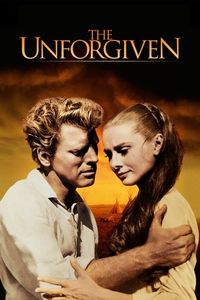
    (On TV, September 2021) In the pantheon of revisionist western movies, you could be forgiven for initially mistaking 1960’s The Unforgiven with 1992’s Unforgiven. But while both movies are independent from a storytelling perspective, they do share an intention to question some of the unexamined tropes of the genre. Clint Eastwood’s 1990s masterpiece was a deep meditation on violence that cleverly rifled through decades of doubts about impassible virtuous gunslingers, but if The Unforgiven isn’t anywhere nearly as successful, it does tackle the legacy of racism against Native Americans on film. But the way it gets there, though… can be problematic. Burt Lancaster ably stars as a rancher who learns that his sister (played by Audrey Hepburn) is, in fact, an adopted Native girl. That doesn’t go very well among the white settlers, and it doesn’t take a long time for them to become at odds both with their neighbours and with the Native Americans coming back to claim the girl as their own. It all climaxes in a scene that, for once, feels decently original — that of a dirt house being set on fire as Native Americans ride on the rooftop. The meditations on racism are atypical and rather welcome, considering the state of Native Americans in 1950s Hollywood, but the film itself is far from being as accomplished as one could have expected. Reading about its production history does help explain why, with enough behind-the-scenes drama (deaths, injuries, near-death experiences, and a disengaged director) to make a movie of its own. Suffice to say that the herky-jerky scene-to-scene rhythm of the film may not have been in the initial plans. Of course, there are other issues — as much as I love Audrey Hepburn and the lovely long hair she has here, she’s perhaps not the best pick for a Native American. Her performance bulldozes through objections of ethnically inappropriate casting, but it’s one more thing in a long series of issues with The Unforgiven. Lilian Gish and Audie Murphy are quite a bit better in supporting roles, each of them having a few standout sequences. Meanwhile, Lancaster provides yet another example of how he was willing to use his stardom to enable projects that poked at the kind of leading man he was supposed to play. In the end, The Unforgiven remains a provocative, big-budget revisionist western before it was cool to make revisionist westerns and in that, at least, it has appreciated from the underwhelming critical and commercial reception it got upon release.

  • Webs (2003)

    Webs (2003)

    (In French, On Cable TV, September 2021) You can almost introduce Webs in a way that makes it sound interesting: What if electrical workers in Chicago stumbled upon a forgotten nuclear-powered laboratory in a disaffected building, and triggered the equipment so that it sent them to a parallel dimension characterized by humans fighting for their lives against spiderlike aliens? I mean… that’s not high art, but it’s as interesting as your average summer blockbuster. But the trick, as they say, is in the execution and it quickly becomes clear that Webs is coming straight from the made-for-Syfy TV-movie factory. Indifferent filmmaking skills and a very low budget combine to create something that quickly reaches new levels of blandness. Intermittent flashes of interest merely make us long for a better version of the film, as what ends up on screen is a mix of third-rate actors, terrible special effects, cost-cutting tricks and unremarkable directing from David Wu. I suppose that the result could have been worse, so at least there’s that. But otherwise: Webs is better left untouched.

  • Hour of the Gun (1967)

    Hour of the Gun (1967)

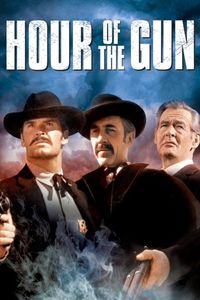
    (On Cable TV, September 2021) Hollywood’s determination to make an endless number of movies about the O.K. Corral gunfight is no match for my determination to not care about any of them (well, maybe except for Tombstone). In Hour of the Gun, we find ourselves once again at the Corral — but taking a slightly different direction, the film begins with the shootout, then follows the aftermath of the events as the Clanton gang is run down. Much of the films’ interest comes from featuring James Garner as Wyatt Earp and Jason Robards as Doc Holliday — as a capable duo of actors, they can hold our interest longer than the script. Otherwise, much of Hour of the Gun feels like a feature-film length epilogue to another story, and one that’s powered more by American West mythology than intrinsic storytelling qualities. I’m sure that within a few decades, machine learning will be good enough that we’ll be able to point a moviemaking engine to the dozen O.K. Corral movies and generate a mash-up combining the best elements of all. That will probably be more interesting than watching the source movies themselves.

  • Pan-Americana (1945)

    Pan-Americana (1945)

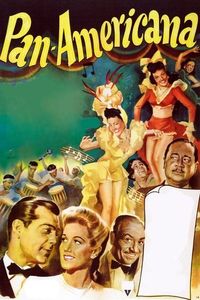
    (On Cable TV, September 2021) American WW2 propaganda movies took many forms, and one of them could even be to exemplify the FDR administration’s “Good Neighbor” policies, which promoted friendship with Latin American nations. What this means in the context of a rather silly romantic comedy is that the protagonists of Pan-Americana follow a beauty contest featuring the lovely ladies of Mexico and southward — and that the film is crammed with Latin music and dance. Veteran writer-director-producer John H. Auer’s intention proves nobler than his execution — clichés and stereotypes abound in this film, clearly playing on American prejudices about what south-of-the-border beauties could look like. As a low-budget effort largely shot on Hollywood soundstages, Pan-Americana never could have been shot in colour and that’s regrettable given the costumes and musical numbers featured here. Still, the stereotypes are not mean-spirited, and the film can boast of some better-than-average repartee between the antagonistically romantic couples. Furthermore, let’s not minimize the unique appeal of the music — few movies were focused on Latin American performers at the time, and it manages to capture some entertainers rarely seen elsewhere in Hollywood history. While few will claim that Pan-Americana is a great film, it does offer something special compared to other movies of the time and gets at least a footnote entry for that alone. (Reaching for a dual-bill companion, the best I can do are the Latin American birds of the animated Disney film The Three Caballeros.)

  • Never Too Late (2020)

    Never Too Late (2020)

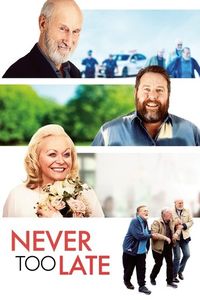
    (On Cable TV, September 2021) The premise of Never Too late should feel familiar, because it plays into the recent trend of movies that exist to give aging actors one more entry in their filmographies as elderly men of action asked once again to ply their special skills. In this case, we have James Cromwell playing a Vietnam-era operative now shuffled to a retirement home for veterans, where he meets fellow men of action and starts planning to break out of the locked-up facility—for love! It’s supposed to be a comedy and often is, but it does have its share of dark moments as well — especially the segment in which the protagonist is sedated into a coma in order to prevent further escape attempts. Shot and set in South Australia, the film does remain accessible throughout — albeit some of it being downright American in its elder abuse. Despite amusing monikers of “geezer comedies,” it’s a good thing that movies can accommodate plots and protagonists at all ages — and for all of its comic content, Never Too Late is clearly aiming for older audiences rather than playing up the comedy for younger viewers. It does make the viewing easy enough despite some rough patches, and does make for a fine late-career entry in Cromwell’s filmography.

  • The Hoodlum Saint (1946)

    The Hoodlum Saint (1946)

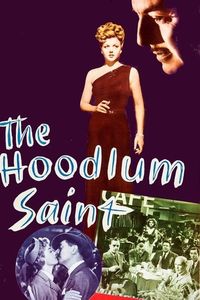
    (On Cable TV, September 2021) Contemporary reviews of The Hoodlum Saint greeted the film with some suspicion — after all, both headliners William Powell and Esther Williams here play characters that noticeably part from their usual screen persona, in a story that’s not fun and games. Williams never sets foot in water — she plays a rather conventional love interest as a foil for Powell’s character — who’s an amoral conman who occasionally sees the light of doing good. Again, it’s not one of his usual roles: he’s a bit too cold, too hard, too criminal for it to qualify as a role fit for Powell’s persona. (Meanwhile, more contemporary viewers may be surprised by Angela Lansbury playing a nightclub singer who turns evil in the last act.) The story itself spans more than a decade as our two leads meet, fall for each other, see their paths diverse and then converge again. It takes us from the aftermath of The Great War all the way to the early 1930s, with an interesting portrayal of exuberant financial speculation in the lead-up to the Great Crash of 1929. Some of the plotting gets arbitrary and melodramatic, but the finale puts all of the pieces back in place. The Hoodlum Saint is not a terrible film: there’s usually something interesting going on, and Powell as a conman without his usual suaveness makes for a darkly compelling variation. Even in a conventional role, Williams proves herself to be more than an aqua-musical bathing beauty, while Lansbury gets a few good moments. But you can see the limits of the film and why it dangerously toys with expectations along the way. It probably plays better today than it did then, but it’s still not quite as good as it could have been.

  • Human Desire (1954)

    Human Desire (1954)

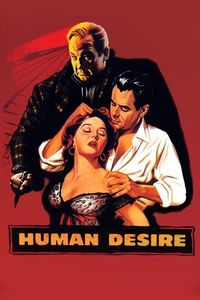
    (On Cable TV, September 2021) Fritz Lang directed what seems like a dozen film noirs and I’m slowly making my way through them. Human Desire is roughly up to the quality level of his other ones. It certainly plays with some of the big guns of the genre: a dangerous psychopath (Broderick Crawford in fine gruff form), a hero who struggles with temptation (Glenn Ford, bland but likable) and the femme fatale who orchestrates mayhem to her benefit (Gloria Graham, quite good). The stylistic interest of the film largely comes from a focus on railroads and trains that provide much of the visual and auditory motifs. There aren’t many wholesome characters to be found here, but in-keeping with noir standards, that’s the way we like it. Much of the rest is about as bland as the title. Human Desire is not necessarily a great noir, but it is a representative one — clearly in that tradition and satisfying to those who like the subgenre.

  • The Golden Mask aka South of Algiers (1953)

    The Golden Mask aka South of Algiers (1953)

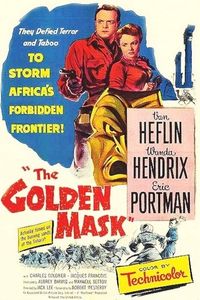
    (On Cable TV, September 2021) This obscure Van Heflin vehicle is perhaps most amusing for a plot summary — archeologist finds precious relics and is pursued by villains—that could (and has) fuelled dozens of big-spectacle action movies. Alas, this specific take on the high concept is a somewhat dull affair, with Heflin spending most of his time looking intensely at ruins. He tepidly avoids the bad guys, keeps the mask, and romances the girl — all familiar elements executed without much excitement. Given those lacklustre adventure elements, perhaps the best reason to watch the film today is a relatively restrained depiction of pre-revolution Algiers in the early 1950s, shot in colour with plenty of location footage. (Alas, the surest mark of the film’s obscurity is the terrible state of the copy shown on TCM — faded, blurry and clearly in need of restoration.)  The setting is unusual enough — although, inevitably, the movie’s inherent colonialism is frequently irritating. The Golden Mask is not a terrible film, but even Van Heflin fans will have trouble deciding whether the viewing time was worth it.

  • For Colored Girls (2010)

    For Colored Girls (2010)

    (On Cable TV, September 2021) Adapting a theatrical play that relies on the strengths of that medium to the big screen in a risky exercise, and writer-director Tyler Perry doesn’t make things easy for himself in choosing to impose his vision on a fiercely feminist work. You can certainly feel the clunkiness at play when the film shifts gears from a rather straightforward (if harsh) melodrama to flights of eloquent soliloquies as the characters give voice to their innermost thoughts. As an ensemble movie with many ongoing subplots, For Colored Girls gets both the benefits of the form and its drawbacks — it can boast of a stellar cast in Janet Jackson, Loretta Devine, Thandie Newton, Kerry Washington and Whoopi Goldberg, plus a pre-stardom Tessa Thompson… I mean, wow. On the other hand, with no less than ten lead characters, the development of the subplots can be abrupt and sketchy. Coupled with Perry’s intentional lack of directorial flair and sometimes on-the-nose writing, it does make the film creak in places, and the accumulated melodrama (which gets absurdly dark in places) flirts dangerously with unintentional amusement. The biggest irony is that the film truly becomes magical in its most theatrical moments, as the women give voice to the stage soliloquies and unload the meaning of the stage play’s original title for colored girls who have considered suicide / when the rainbow is enuf. (You can read some of the soliloquies, but they’re far from being as effective as when heard from actresses who get the cadence of the words.)  If nothing else, the film will make you wonder if you can find and listen to the original. It would be easy to focus on the film’s structural and directorial shortcomings — there’s something in Perry’s traditionalism that feels out of place (it’s hard not to notice that the film’s sole gay character is a self-loathing liar who gives AIDS to his wife — yikes) even as the film is a powerful progressive work by itself. Some of the weirdness even comes from the original play — it makes sense for all of the male characters (at one minor exception with little screen time) to be evil and destructive, considering the intent of the work to focus on women’s lives at their lowest point. Still, I rather like the result: It’s a wonderful showcase for the actresses involved, and when the film takes flight, it does carry the power of the original work. Even a decade and many more black-women-focused films later in a far more diverse cinematic landscape, For Colored Girls still packs some punch.

  • Sl8n8 [Slaughter Night] (2006)

    Sl8n8 [Slaughter Night] (2006)

    (In French, On Cable TV, September 2021) As far as slashers go, Sl8n8 is slightly better than most. Blending an unusual environment (an abandoned mine with plenty of macabre legends) with a plucky heroine and some fast-paced direction, it remains firmly within the bounds of the familiar formula but executes things semi-competently. Coming from the Netherlands (the title makes more sense once you know that it’s a stylization of Slachtnacht), it offers a slightly different take on the usual. A rather slow start seems paralyzed by indecision whether it’s going to go for psycho slasher or supernatural thriller. In the end, it doesn’t matter very much, as writer-directors Frank van Geloven and Edwin Visser follow the codes of slashers all the way to the heroine remembering something said earlier in the film and using it to slay the villain. Slightly overlong at even just 90 minutes, Sl8n8 nonetheless avoids most of the pitfalls of lesser slashers, but without quite distinguishing itself from the pack. It’s not my kind of film, though.

  • Campanadas a medianoche [Chimes at Midnight] (1965)

    Campanadas a medianoche [Chimes at Midnight] (1965)

    (On Cable TV, September 2021) The idea of Orson Welles taking on Shakespeare’s Falstaff as writer-director-star is almost irresistible. Seeing him show up as a grotesquely rotund lead (underscored with the roundest armour suit even seen) is a good start, and his intention to combine plays, deliver an ambitious battle sequence and blend a bit of comedy with the drama is laudable. The problem is: I have to be in a very specific frame of mind to appreciate Shakespearian dialogue (I have written about this before — I find Shakespeare more approachable in French translation), and today was not one of those days. I made it to the end, but reluctantly. I think I can see enough reasons to come back to this later on, but for now I’m going to rate the film as not quite interesting enough.

  • Tennessee Johnson (1942)

    Tennessee Johnson (1942)

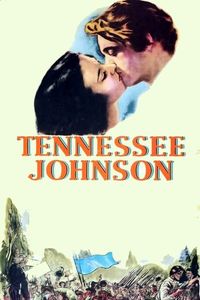
    (On Cable TV, September 2021) I firmly believe that Hollywood movies can be very educational about history, but not by watching them — that would be silly. True education is attained only by fact-checking the Hollywood film against other sources. In the grand tradition of biopics, Tennessee Johnson sets out to produce a proudly nationalistic biography of Andrew Johnson, the first American president to be impeached (but not convicted). For political junkies with a historical bent, it’s weird to see Van Heflin take on the role of Johnson in the middle of a script that can’t stop praising him. After all, Johnson is not particularly well-regarded these days — the expression “one of the worst presidents” is often associated with him for good reason: Acceding to the presidency after Lincoln’s assassination, he mishandled the post-Civil War Reconstruction era. While he managed to keep the nation together after its trauma, his blunt racism led to continued white supremacy in the southern states. His reputation has sailed the ebbs and flows of American racism: After some damning assessments in the early twentieth century, he was partially rehabilitated in the 1930s–1950s as American racism rose, only to be re-condemned following the Civil Rights era. Tennessee Johnson is clearly from the crest of his better-regarded period — he’s heroically portrayed as coming from very humble origins, learning to read late in life, gathering popular support, making a mistake during his inauguration (in real life: showing up drunk after self-medicating typhoid fever with alcohol –a then-common practice—and making a spectacle of himself), avoiding assassination and then stepping up as president after Lincoln’s death. Then the film focuses on his impeachment, focusing its anger toward a clearly defined antagonist trumping up charges against him and having Johnson make an impassioned speech in its own defence (which never happened). Once not convicted, the film blips forward to show him returning to the US Senate after the end of his presidential term. If the film ends there, it’s because there isn’t much more to say: he died after a few months as a senator. But what’s missing from this? Then entire racial question, for once — the very reason why he’s widely reviled as the president who won the war but failed to enact any meaningful change in the southern states, thus prolonging southern segregation for nearly a century. This is Hollywood at its most hypocritical in whitewashing biographical figures, ignoring the worst, making excuses for the dubious and hyping the rest. I had a severe case of cognitive dissonance watching the film: Johnson is best seen, even today, as a complex man who had good traits but made terrible decisions and that would make a fascinating miniseries, as a film is probably too short to do justice to its topic and leads by design to unsatisfying results. Taken at face value, Tennessee Johnson is not that bad a movie: in the heroic-biopic mould, it clearly presents its subject, cleanly gives reasons why he’s admirable, and goes through the historical (or, ahem, pseudo-historical) events with some steady rhythm. Heflin does well in a role that asks him to go from peasant to president, and the film becomes even better once Lionel Barrymore makes an entrance as Johnson’s opponent. But I don’t quite believe in assessing films at face value, especially when they deal with specific, well-documented history. Watch Tennessee Johnson if you want, but make sure to keep Wikipedia nearby as you do.
  • Nightmare Alley (1947)

    Nightmare Alley (1947)

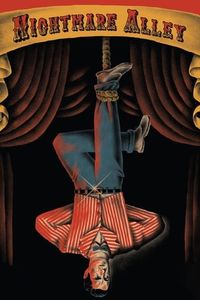
    (On Cable TV, September 2021) Among film noir fans, Nightmare Alley is perhaps best known for being a rare A-list production with first-rate stars and a decent budget — most crime thrillers we now associate with the noir tradition were B-grade productions, not meant for prestige nor posterity. But this film had one of the most famous actors of the time, Tyrone Power, and the production crew required to do justice to its ambitious setting, from the underworld of carnival shows to Chicago high society… and back. If the essence of noir was poking at traditional American values and pressuring its characters until they did unspeakable things, then Nightmare Alley couldn’t be more representative — our hero chooses to be a conman and associate with others who share his lack of morals. This all backfires a few times, and the film clearly patterns itself along the lines of a classical rags-to-riches-to-rags tragedy, the hero doomed by his own personal failings. Power is better than average here, with such notables as Joan Blondell, Coleen Gray and Helen Walker providing good supporting performances. It’s not pleasant stuff (although the ending isn’t quite as dark as it could have been) but the heightened nature of the carnival environment does lend a welcome off-kilter quality to the result. The other role of the carnival is to create parallels between it and larger social issues — viewers will easily make the parallels between the carnival’s naked artifice and how it’s more honest than Chicago high society about its deceptions. It’s not surprising to learn that the film was not a hit upon release, but that its critical reputation has considerably improved since then. It remains somewhat harsh and merciless, which is a flavour of cinema that’s better digested today — not to mention that only confirmed classic Hollywood fans know much about Power these days. In any case, the film remains worthy of a look, and is set in the coming months to get a big-budget remake as an enduring homage.

    (Second viewing, On Cable TV, March 2022) The streaming debut of the 2021 Nightmare Alley remake was not only an occasion to watch a new Guillermo del Toro film, but also have another look at the classic original film, often hailed as one of the best film noir of the classic era.  Much has been written about the film’s unusually respectable pedigree: Lead actor Tyrone Power was one of the top box-office draws of that era, and he wanted something much more interesting than the matinee idols he had been playing until then.  His passion project was an adaptation of a gritty novel detailing the seedy underbelly of con-men and carnival swindlers – and how that mind-set could be turned against far more respectable targets than the rubes.  The result is, indeed, a film that stands the test of time: It’s remarkably glum about American society, fully embracing its film noir nature to an almost sweeping degree.  It’s not without its faults – I found the last few minutes too long for their own good, even if I’m curiously favourable to the not-entirely-bleak ending tacked on by the studio.  Still, I found Nightmare Alley even better this second time around – knowing that it doesn’t neatly slot into the noir framework and better anticipating the film’s steady descent.


  • Love Me Tonight (1932)

    Love Me Tonight (1932)

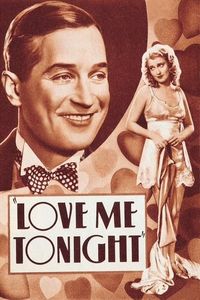
    (On Cable TV, September 2021) If you’re looking for the state-of-the-art of what musicals were in the early 1930s, there’s Love Me Tonight to offer a counterpoint to the Broadway revue musicals that were also in vogue (and, alas, about to send the genre into eclipse due to overexposure). The always-compelling Maurice Chevalier stars in a story of a commoner falling in love with royalty, with the usual deceptions and complications that this kind of romantic fantasy usually entails. Jeanette MacDonald ably goes up against Chevalier as the princess, with Myrna Loy in a supporting role. This film was reportedly a technical marvel at the time, with one musical number cutting through several characters and locations. More significant is the film’s place in history as the first “integrated musical” where the songs are tightly integrated in the plot. (Something obvious to us now, but not quite as practised at the time.)  Director Rouben Mamoulian would go on to direct many more musicals, and Chevalier would star in several funnier films, albeit not necessarily better ones. Still, Love Me Tonight has lost some of its lustre: It doesn’t have the immediate appeal of the comedies that Chevalier would make with Lubitsch et al., and the wow-factor of the Broadway revues isn’t there either — as a result, many of the innovations pioneered by the film now go unnoticed. (Although that opening sequence is still really good.) But Chevalier is a charmer no matter the film, and that alone still justifies seeing Love Me Tonight.