Month: September 2021

  • The Professionals (1966)

    The Professionals (1966)

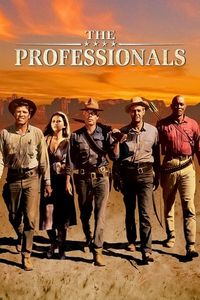
    (On TV, September 2021) I’ve seen too many undistinguished westerns lately to expect much from yet another one, but The Professionals gradually won me over. The casting certainly gets things rolling in the right direction: with Lee Marvin and Burt Lancaster sharing the lead as mercenaries going into Revolutionary War Mexico, you’re in good hands — but then throw in Claudia Cardinale and Jack Palance and it just gets better. The film also cranks up the action by featuring an explosive-heavy plot with a demolition expect (Lancaster, looking suitably ragged-down) as a rich American asks them to go south to rescue his wife (Carnivale, lovely) from a Mexican warlord (Palance). Many explosions pepper what happens next, plus a slightly-twisty plot that could have been taken from a film noir. This already sets the film apart from so many other westerns, but the execution more than supports the premise. There are really interesting parallels to be made between The Professionals and the spaghetti westerns that were emerging as renewal engines for the western genre — A Fistful of Dollars had come out in 1964, but the clearest parallels in terms of explosive Mexican Revolution action are with the later A Fistful of Dynamite (1971). Still, compared to many American westerns of the 1960s, The Professionals has more energy, more distinctiveness and more fun to it. No wonder I liked it a lot more than the usual western of the time.
  • Saturday’s Heroes (1937)

    Saturday’s Heroes (1937)

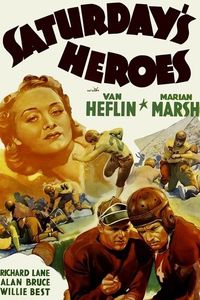
    (On Cable TV, September 2021) At a length of barely 60 minutes, I’m not sure that Saturday’s Heroes should be called a movie — I’m sure it must have been commercially viable back then (perhaps as part of a double-bill?) but by today’s standards it straddles the line between feature and featurette. There are two reasons to watch it, though: The first being Van Heflin in one of his earliest starring roles as a star college football player. Heflin is in good form here, showing some of the quiet assurance bordering on arrogance that would mark some of his best turns later during his career. But it’s the second reason to see the film that’s perhaps more interesting. Rather than offer a sanitized, unquestioning, wholesome picture of American college football as the pride of the nation, Saturday’s Heroes gets interested in the exploitation of amateur student-athletes (barely able to survive without scalping tickets) even as the university makes plenty of money from their efforts. That’s a contemporary viewpoint far more modern than the football pictures at the time, and there’s some quiet surprise in encountering a 1937 film that is already poking at that thorny issue. Otherwise, well, it is a 60-minute film: not quite enough to do justice to its various subplots and characters. Still, this is a great pick for Heflin fans looking at the actor’s earliest featured roles.

  • Three on a Couch (1966)

    Three on a Couch (1966)

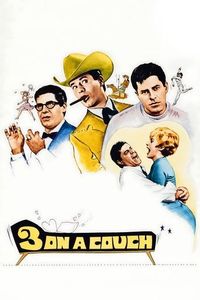
    (On Cable TV, September 2021) One of the lesser-known Jerry Lewis vehicles of the 1960s, Three on a Couch sees the shameless comedian play five roles — or rather an artist who starts impersonating fictional people in a convoluted attempt to get his girlfriend to come spend a year in Paris. The complications arise from the fact that the girlfriend (played by Janet Leigh) is a psychiatrist with three female clients and she can’t leave them until they’re cured of their hang-ups about men — so naturally his best course of action is to impersonate their ideal mates, get them cured and then they can go to Paris. As I said: convoluted. Inevitably, the identities converge and the whole scheme explodes, but in the meantime, we get Lewis play four other roles spanning a variety of archetypes, plus some cross-dressing thrown in for good measure. The 1960s sex comedy aspects have not aged particularly well, but it’s hard to get worked up about it when it’s such a transparent way to get Lewis up and impersonating. Lewis isn’t just an actor here — he also directs and must shoulder some of the blame for the lacklustre result. It’s not that Three on a Couch isn’t funny; it’s that it’s not funny enough: given the premise, the talent and the era of much better sex comedies, Three on a Couch feels like a limp effort, so determined to get its plot points in order to the big role-switching finale that it doesn’t seem to have thought about the moment-to-moment fun of the film. It’s watchable enough if your tolerance for Lewis’ mugging and showboating is up to it. But I can think of half a dozen comedies of the time (some of them also starring Lewis) that are significantly more entertaining.

  • We’re No Angels (1989)

    We’re No Angels (1989)

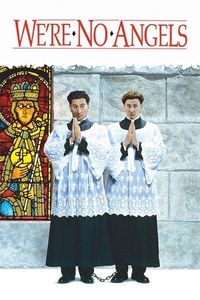
    (On Cable TV, September 2021) On paper, We’re No Angels sounds unusual enough to be interesting. A remake of a 1955 film I’m unfamiliar with, it stars Robert de Niro and Sean Penn as two convicts who, during the 1930s, travel north to Canada but end up in an upstate New York monastery (shot in British Columbia) through a set of unusual circumstances, where they are mistaken for priests and develop a conscience. The big names are on the creative side as well: script from David Mamet, directed by Neil Jordan, with the female lead played by Demi Moore and an unbelievably young John C. Reilly in a minor role. Alas, the result quickly becomes underwhelming. Shot in dull shades of brown to assert that they’re not romanticizing the period, We’re No Angels feels duller, dumber and far less interesting than it should be. It’s not quite a religious film and yet not a religious film either. For a putative comedy, it feels slow, laborious and (fatally) unfunny. It meanders like its characters, vaguely bidding its time until only so many minutes are left before the epiphany that announces the ending. We’re No Angels is too slickly produced to be terrible, but it’s still not all that good.

  • The Divided Brain (2019)

    The Divided Brain (2019)

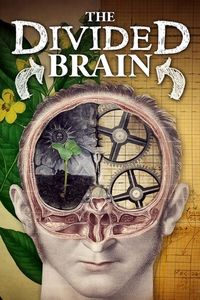
    (On Cable TV, September 2021) Extraordinary claims require extraordinary evidence, so when The Divided Brain takes its intriguing findings about the left/right hemisphere divide and starts applying them to society at large, the leap from evidence to conclusion is just too high to follow comfortably. Much of the film is adapted from the works of psychiatrist Iain McGilchrist (specifically his book The Master and His Emissary). McGilchrist is notably not a neuroscientist but his review of available evidence should be familiar enough: The left hemisphere of the brain is focused on details, while the right hemisphere is focused on the whole. The film (unlike, apparently, the book) doesn’t spend a lot of time on those neurobiological fundamentals — it’s far more interested in the second and far less convincing part of McGilchrist’s thesis: That western society, in general, has grown far too detail-centred at the expense of looking at the whole picture, and that state of affairs is squarely to be blamed on… wait for it… the divided brain. Now, I’m open to new ideas — I have a regrettable tendency to latch on to new cool concepts and apply them indiscriminately to all sorts of different areas as long as they give me the impression of knowing something that others don’t yet. (Fortunately, I have resisted most conspiracy theories so far.)  But there’s a leap in The Divided Brain that I find suspicious — and it’s reinforced by some curious choices that make the thesis seem all the more superficial. By the time the interviewees blame all of western society’s ills on the divided brain (while predictably praising other modes of more primitive thought), they all sound like cranks moaning and complaining about what they don’t like about life, and latching on this single idea as a universal explanation. Adding John Cleese as an interviewee and colour commentator makes the film funnier but not necessarily more credible when it’s already dubious. I may end up being more favourable to the thesis if ever I read the book, but I’m not feeling like it: Having looked at my general impression of the film rather than focusing on its details, I’ve come to an intuitive whole-picture skepticism about The Divided Brain.

  • Thrill of a Romance (1945)

    Thrill of a Romance (1945)

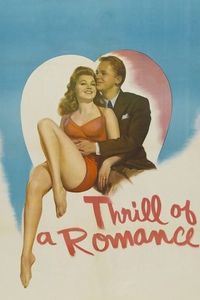
    (On Cable TV, September 2021) If my notes are correct, Thrill of a Romance is the first film in which MGM had a better idea of what to do with swimming sensation Esther Williams — after being introduced in Bathing Beauty, she here had the benefit of being a proven quantity: an Olympian-level athlete who looked good enough to headline in a new and very specific genre: the aqua-musical. Accordingly, she’s here paired up with Van Johnson (in the first of four films together) and you can see the specific elements of her subgenre being put together. Other than the swimming sequences, the film is a comedy with a few songs added to please musical fans. Opera signer Lauritz Melchior shows up (he’d pop up again in This Time for Keeps), there’s a handsome military officer to act as love interest, and the film goes to the luxurious hotel Monte Belva for much of its shenanigans. Williams herself is captivating under water, acceptable enough above it — she’s not bad (an achievement by itself considering that she wasn’t trained as an actress) but several other stars at the time could have given more personality to the role. Still, it’s an agreeable enough musical — made as World War II was wrapping up, so still very much intent on raising morale on the home front. It’s pleasant and amiable, with Johnson and Williams proving an effective pairing. On the other hand — Thrill of a Romance is not particularly memorable, especially if you’re in the middle of a Williams marathon where they all start feeling like the same movie.

  • The Sea Wolves (1980)

    The Sea Wolves (1980)

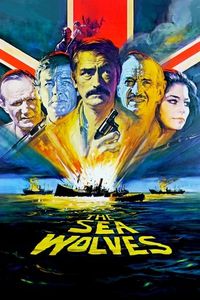
    (On Cable TV, September 2021) There’s an unmistakable aura of nostalgia surrounding The Sea Wolves, both in concept and execution. Not only taking 1980 Great Britain audiences to the glory days of World War II, it also features a variety of actors who peaked years before. Oh, sure, Roger Moore was at the mid-Bond tenure prime of his career at the time — but he was well into his fifties, and the other players in the film are none other than Gregory Peck, David Niven, and Patrick Macnee — all great actors, but all running on past glories. The plot has to do with older and semi-retired military personnel taking on Nazi radio transmissions off the coast of India, under the guise of being lost fishermen. The presence of Moore, not really playing much of a variation on his debonair persona, does lend some additional sense of adventure to the film, but it’s the older actors who are asked to carry much of the humour and adventure. There’s even a little bit of post-colonial wistfulness in taking in the Indian setting. While the story is adapted from a relatively obscure real-life incident, everyone will acknowledge the rather large liberties taken with the fact. The Sea Wolves does amount to a decent WW2 adventure in a somewhat classical mould — virtuous allies, perfidious Nazis, stiff upper-lip and a rather happy ending without anguish. It fits the bill for pleasant, not-too-demanding viewing, echoing other, somewhat better works from the actors involved.

  • Our Man in Marrakesh aka Bang! Bang! You’re Dead! (1966)

    Our Man in Marrakesh aka Bang! Bang! You’re Dead! (1966)

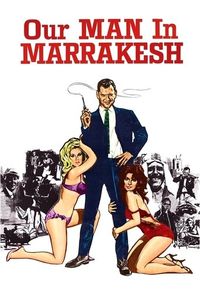
    (On Cable TV, September 2021) James Bond derivatives were hot properties during the 1960s — as other studios tried to match the debonair secret agent, they went for imitations, comedic takes, parodies and outright Bondsploitation. The complement of that was the kind of thriller (often tragic) about innocent men abroad getting caught up in intrigue and discovering substantial inner strength. Our Man in Marrakesh stars Tony Randall playing slightly against type as an ordinary tourist getting caught up in a spy operation in (where else?) Marrakesh. Executed with a slightly comic tone that avoids veering into parody, the film is clearly meant for mass-market fun rather than moral lessons, and so we get the usual overlapping plots, romantic interest, action sequences and other standard components of the genre. Rather good Moroccan scenery is defeated by the not-so-good image quality of the version I saw. Surprising character actors fill up the cast, going all the way from the blonde menace of Klaus Kinski to the joviality of Terry-Thomas. I suspect that the film isn’t as remarkable today given decades of variations on similar approaches, but it does offer a touch of 1960s exoticism, Randall in fine form and enough adventure plotting to keep you busy until the end credits.

  • Basket Case 2 (1990)

    Basket Case 2 (1990)

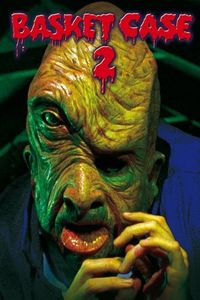
    (In French, On Cable TV, September 2021) I approached the first Basket Case as a slasher horror film and was surprised to find that it was much weirder than that, with a final revelation taking the film into body horror. By the time I sat down to watch the sequel, I had figured out in-between Frankenhooker and Bad Biology that writer-director Frank Henenlotter was after outrageous fare. Basket Case 2 clearly shows that trajectory when measured against its prequel: it’s weirder, funnier, slicker, and gorier. It multiplies the deformed freaks (paying homage to the 1930s film along the way) in landing the protagonists of the first film into an environment where they are welcomed, and then have to defend it from the outside. It’s honestly not that great of a film, but it’s quirky and outrageous in the fun way that happens when horror fans let loose for their own enjoyment. Basket Case 2 feels a bit scattered at times, with makeup effects taking precedence over the story. I’m not sure I’ll rush to see it again, but it’s not that bad—especially if you’re up to what Henenlotter is going for.

  • The Love Parade (1929)

    The Love Parade (1929)

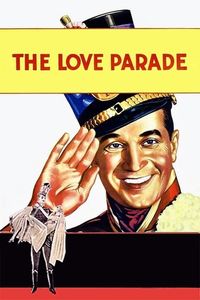
    (On Cable TV, September 2021) Perhaps the fairest assessment of The Love Parade is that it feels like a prototype for better films by director Ernst Lubitsch and star Maurice Chevalier. It’s certainly not a bad movie: The plot manages to cram a few musical numbers within a story about a man falling in love with a princess, only to discover that the life of a consort is annoying to a man used to taking the lead. Pampered within the palace, he eventually rebels, threatens to walk out… and unconvincingly reconciles five seconds before the end. (It’s reconciliation through submission, which is not nearly as amusing now than then.)  The musical aspect of the film does feel ahead of its time, with nine numbers weaved into the plot (one of the first, if not the first, film to do so rather than adopt the revue approach of other early musicals) and even one duet shown in cross-cutting editing that showed how competent Lubitsch was. The European aspect of The Love Parade is usually described as “sophisticated,” which was a word often used for Lubitsch’s work –an approach that tried to go beyond the obvious. An incredibly young Maurice Chevalier remains the best reason to see the film: his incredible charisma shines event through the production values of the early sound era, and his singing is quite enjoyable as well. Both men would collaborate again on two other pictures, One Hour with You and The Smiling Lieutenant, which would both show improvements, both technical and artistic, on their first film. Still, you can see in The Love Parade all of the building blocks that Lubitsch and Chevalier would use over the next few years: The sexual permissiveness possible in the Pre-Code era, Lubitsch’s knack for high-minded comedy about crass topics, Chevalier’s megawatt charm and the possibilities of sound cinema. As good as The Love Parade remains, it would lead to much better.

  • The Mating Game (1959)

    The Mating Game (1959)

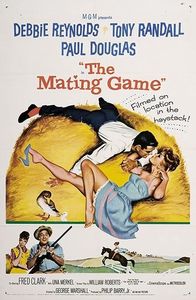
    (On Cable TV, September 2021) We don’t usually think of IRS agents as potential leads for romantic comedies, but if there was one actor who could make it work, it was Tony Randall — his strait-laced buttoned-down comic person being ideal for the role he was meant to play in The Mating Game. Here, he finds himself as an accountant sent on the farm of a man who’s never paid income taxes — and, worse, barters for everything he needs. Stuck there to assess how many back-taxes are owed, he can’t help but notice the farmer’s daughter, played by Debbie Reynolds… and there’s the rest of the movie, along with a few tax code shenanigans for comedy. (Yes, really.)  As far as 1950s MGM romantic comedies go, The Mating Game is fine without being particularly great. The rural environment is a change of pace, and the tax comedy angle remains distinctive, but the film seems stuck in this strange zone between a musical and a true comedy: Without songs nor strong jokes, it just comes across as middling. It’s amiable, with Randall and Reynolds being put to good use, but The Mating Game doesn’t get to the next level, where it would be genuinely funny.

  • Grand Central Murder (1942)

    Grand Central Murder (1942)

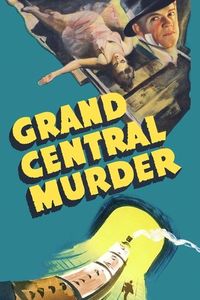
    (On Cable TV, September 2021) Oh, what a fun film Grand Central Murder is. The 1930s, and to a lesser extent, the early 1940s (before film noir took over) were big on short silly murder mysteries, usually featuring amateur sleuths taking on investigations in cozy locations. Grand Central Murder is not quite like that, but it’s very much in this lineage. It begins with the murder of a gold-digging actress in a train car inside Grand Central Station, and the film is quick to round up the usual suspects in a small police office, including a private investigator who starts matching wits with the assigned detective. Van Heflin is in fine form as the protagonist, playing a role equally comic and quick-witted. There’s an amusing number of fisticuffs, structural quirks, twists, railroad operational details, snappy dialogue and characterization in the film’s breezy 73 minutes — thanks to director Sylvan Simon, it’s seldom boring. It’s impressive how many characters the script is able to sketch in a few moments, with some credit going to the actors — including the young Betty Wells, whose handful of credited roles doesn’t stop her from doing a great job as “Baby” Delroy. Patricia Dane is quite good as the antagonistic victim (mostly seen in flashbacks), while the ever-beautiful Virginia Grey is largely there for comic relief as the protagonist’s wife looking askance at his flirtatious detecting. The script is more interesting than usual, as the murder investigation takes place in flashbacks, including a flashback immediately contradicted by another character — not quite Rashomon, but more ambitious than many other films. The dialogue is often very funny, and the rapport between the two male leads (Heflin and Tom Conway) is interesting: at one point, they even crack themselves up right before a quick cut. Short and satisfying, Grand Central Murder is the kind of nice little surprise that pops up ever so often on TCM — echoes of a Hollywood system that cranked out hundreds of films per year, with many of them actually being quite entertaining.

  • The Alphabet Murders (1965)

    The Alphabet Murders (1965)

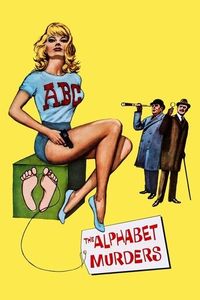
    (On Cable TV, September 2021) Tony Randall is best remembered for strait-laced comedic foil roles, but as a leading man he could (and did) break out of that persona in various ways. 7 Faces of Dr. Lao is a case in point, but there’s a similar case to be made about The Alphabet Murders, which stars Randall in an overtly parodic take on Hercules Poirot, spouting bon mots and doing a bit of slapstick in service of a comedy that stops just short of cartoonish gags. Loosely adapted from Agatha Christie (who reportedly had issues with early version of the script), it transforms Poirot into a brilliant bumbler à la Clouzot, which was a hot property at the time. Randall’s French accent is far more tolerable, though. What’s more hit-and-miss is the comedy: It starts firmly in metafictional territory with Tony Randall introducing himself to the camera as Poirot, but the rest of the film is more hit-or-miss, sometime absurd and sometimes not. Director Frank Tashlin (who also led Randall in the much funnier Will Success Spoil Rock Hunter?) does try his best to keep things interesting, but he can’t quite patch up a lacklustre script. I’m not sure Randall’s the best choice either — he does better than you could expect from many of his other films, but to be blunt about it, Peter Ustinov was almost funnier than Randall in his turn in Murder on the Orient Express. Still, The Alphabet Murders isn’t a bad watch, especially for murder mystery fans… even if it doesn’t quite nail the absurdity of what could have been.

  • Avalanche Express (1979)

    Avalanche Express (1979)

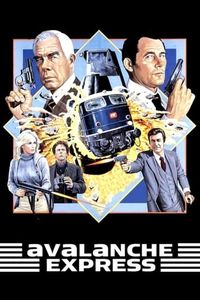
    (On Cable TV, September 2021) It’s fun to go back to Cold War thrillers and experience the paranoia of the time. The era is rife with movies in which the heroes are clearly Americans and the villains are clearly Soviets, with no less than a credible nuclear war hanging in the balance. Seldom have the spy-versus-spy tropes been so complex and variations so elaborate. In Avalanche Express, a familiar starting point veers into a somewhat original premise, as an important defector is put on a transcontinental train going to western Europe, and the Soviet empire targets the train to eliminate the defector by all means necessary, all the way to causing an avalanche. The existence of such a train is nonsense, and so is much of the plot — but it’s the thrills that count. Accordingly, there are a few good elements at play here: The premise has juice, the cast is led by Lee Marvin’s exemplary tough-guy persona, and you can see here the elements that could have been used for a strong film. Unfortunately, the execution doesn’t quite match the early expectations. Once past the necessary bits of plotting required to get everyone aboard the train or in pursuit of it, the joy very quickly goes out of Avalanche Express. Some of the incoherence comes from production issues: both director Mark Robson and star Robert Shaw died during the making of the film, and we can only imagine what impact that must have had on the production. Other issues, though, are more fundamental to the screenplay: There’s a useless romance, for instance, that gums up the pacing of the film. The various incidents across the train trip are not very well structured, and for all of the good-for-their-time special effects used for the avalanche sequence (which is, surprisingly, not the climax of the film), the sequence itself isn’t particularly exciting. Of course, we’re looking at this from the perspective of audiences used to decades of technical refinements — a modern version of Avalanche Express (not a bad idea!) would use digital effects and time-tested structure. But even contemporary films did better with similar elements — I’m specifically thinking of Von Ryan’s Express, from the same director fifteen years earlier, which crammed a lot more characterization and action out of a train-bound journey. Even the final shootout seems curiously anticlimactic, visually flat and dramatically inert. Too bad — I think that there’s a better movie trying to get out of Avalanche Express. It’s just a shame that we couldn’t get it.

  • Hyde Park on Hudson (2012)

    Hyde Park on Hudson (2012)

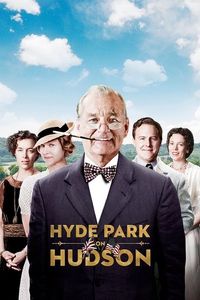
    (On Cable TV, September 2021) As much as I can determine, nine years after its release, Hyde Park on Hudson’s most enduring claim to fame is that this is the film in which American President Franklin Delano Roosevelt, played by Bill Murry, gets a delicately-implied handjob from a (distant) cousin played by Laura Linney. (Nearly every review mentions it, so this one won’t be any exception.)  This happens early enough in the film to be counted as an establishing moment, especially as their family relationship is once again underlined right after his climax. That scene is a very, very curious choice because it leads viewers to expect paths that the subsequent film isn’t ready to follow. It’s not a comedy, not much of a romance, certainly not an attempt at historical realism and this fuzziness ends up being one of the defining characteristics of the film. Following FDR’s summer retreat of 1939 and the tangled web of relationships (marital or otherwise) surrounding him, it’s a film that struggles to justify its existence. Much like the equally-annoying Sunrise at Campobello, it relies on FDR worship, but unlike other films, it seems half-heartedly determined to undermine the historical character as well. The film obsesses about the president’s affairs and British royalty eating hot dogs but — a reminder — it isn’t a comedy. Murray’s not bad when he’s not portrayed as receiving sexual favours, but his very presence as a comedian contributes to the film’s problems, like not quite knowing what it’s about. In other words, Hyde Park on Hudson is a weird film with entirely self-inflicted problems. If it was meant as an Oscar contender, it certainly didn’t succeed: the Academy Awards ignored it, like most audiences did. It’s hard to fault them. Although there is a very funny film to be made about FDR, horndog president…