Month: November 2021

  • There Was a Crooked Man… (1970)

    There Was a Crooked Man… (1970)

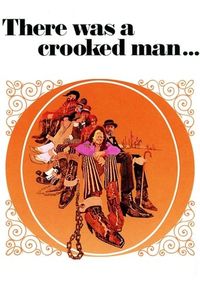
    (On Cable TV, November 2021) I’m far from being the world’s biggest movie western fan — it’s a genre that easily falls into repetition and cheap dumb machismo. But hearing that There Was a Crooked Man was a creation of witty urbane dialogue-heavy director Joseph L. Mankiewicz definitely had me interested, an interest that only grew once Kirk Douglas and Henry Fonda (and Hume Cronyn) showed up in leading roles. The plot is a blend of hidden treasure thriller, prison procedural and ensemble drama all wrapped up in lighthearted direction except when people start dying. Douglas is particularly interesting as a bespectacled ruthless thief, and him going up against Fonda is a good screen pairing. Still, while There Was a Crooked Man has its moments of interest, the overall impression isn’t quite as strong as its pedigree or elements would suggest — it fades away more easily than you’d think, and doesn’t do enough to distinguish itself from so many other westerns. Too bad — I can see, here and there, how a better western could have been put together with those elements. Douglas and Fonda remain worth a look, though.

  • Tristana (1970)

    Tristana (1970)

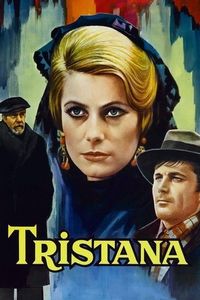
    (On TV, November 2021) I know just enough about Luis Bunuel’s filmography to expect the unexpected — from the wild surrealism of his earliest films to the more controlled comedy of his last, to the melodrama of his Mexican period and the satire of his Spanish years, who knows what you’ll get with each new film? In Tristana, I certainly got bits and pieces of nearly everything else in his career: intense melodrama with perverted material, social critique, distasteful cruelty, a battered protagonist, and restrained direction despite the lurid subject matter… it’s a surprisingly quiet (even glacially-paced) film but it has quite a bit of material to chew on. Catherine Deneuve is interesting here, zigzagging her own image as a beautiful woman in various ways that run counter to what viewers may expect. I can’t say that I liked Tristana (can one really like Bunuel films?) but it’s intermittently interesting and certainly one of the purest expressions of Bunuel’s lifelong obsessions as put on film.

  • My Favorite Wife (1940)

    My Favorite Wife (1940)

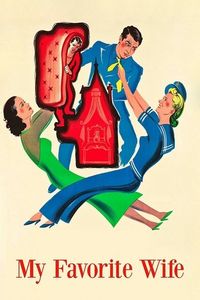
    (On DVD, November 2021) At this point, I’ve seen most of Cary Grant’s post-stardom filmography, and that’s no cause for celebration: it just means that there are fewer and fewer of his films left to appreciate his screen presence and comic timing. Due to some strange rights issues, My Favorite Wife often features on the TCM American schedule but not the Canadian one — as a result, it was one of the last well-known Grant vehicles that I hadn’t seen, and it took some grey-market ingenuity to import an American DVD edition. I’m happy I did — while it’s not a first-tier Grant vehicle, it contains enough good laughs and able demonstrations of Grant’s comic timing to make anyone happy. Its comedy all stems from a simple but ridiculous situation: what if, after getting his missing wife legally declared dead so he can marry another woman, a lawyer saw his first wife walk in perfectly healthy? (Played by Irene Dunne, no less.) It’s the kind of thing that classic Hollywood comedies could easily milk for 90 minutes, and that’s indeed where My Favourite Wife takes us, from misunderstandings and feeble attempts to hide the truth to more heartfelt reunions and a wild second courtroom sequence where no one will blame the judge from being confused. There’s a notable lull toward the end, where (in a fashion typical of many comedies of remarriage) the high energy takes a back seat to a much slower-paced bedroom reconciliation, but that’s not enough to harm the film. Tangentially: My Favorite Wife is often used by queer-cinema commentators to illustrate the matter of the Cary Grant / Randolph Scott relationship (roommates, or more?) and there’s a sequence in there that appears hilarious in bite-sized gifs (read this — all of it)—but it’s even funnier in context given that it’s meant to illustrate Grant’s character taking in Scott’s character as a formidable romantic rival for his first wife’s affections. It adds just a bit more interest in the film for Grant fans and those who read his latest biography.

  • A Nightmare on Elm Street: The Dream Child aka Nightmare on Elm Street 5 (1989)

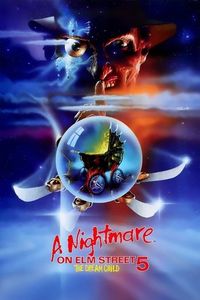
    (On Blu-Ray, November 2021) By this point in the Nightmare on Elm Street series, five instalments deep, the films were almost operating on autopilot, and so will my review. Once again in The Dream Child, Freddy Krueger is slaughtering an entire finishing class of students brought forth as slasher fodder. Once more, a plucky heroine triumphs over near-impossible evil. Once more, the film’s strongest moments (and the series’ chief claim to distinction in a crowded 1980s slasher-horror field) come from the disturbing oneiric sequences where reality and dream logic crash into gory sequences. Once more, the film undermines its own potency by having antagonist Freddy Krueger spout a stream of nonsensical one-liners, simply stringing puns one after the other — it’s hard to make a credible horror film when the antagonist acts like a terrible stand-up comedian. It all combines to create something that is frustrating, but admittedly still more interesting than most of the slasher horror films of the time — a mixture of special effects, gothic weirdness, call-backs to the series’ mythology and some darker imagery to go with the provocative pregnancy motif of the film. Still, you have to be a fan (or at least tolerant) of the series to make it all the way to The Dream Child — it’s more of the same.

  • Held (2020)

    (On Cable TV, November 2021) For the past few days, I’ve been overdosing on single-location horror films featuring a cast of a handful… so it’s not an exaggeration to say that I wasn’t particularly happy with Held, as it featured, once again, a minimal cast in a single house. The action gets going when a married couple on a last-ditch getaway wakes up to find themselves implanted with pain-causing implants, and led by a mysterious voice (and some electroshocks) through a sadistic couple’s therapy. Even the dullest viewers will notice that the “therapy,” especially at its bloody climax, only serves the husband’s interest — leading to an entirely expected third-act twist tying Held to The Stepford Wives. It’s not a terrible film — some images are quite nice, and there’s an effective element of set decoration (especially accompanying the twist) that shows that, from a technical perspective, the filmmakers are on to something. Alas, this is not always reflected elsewhere, and looking at the cast and crew does offer a clue: Of the three featured cast members, Jill Awbrey wrote the script, Travis Cluff co-directed and yet Bart Johnson is the most likable actor of the three of them. Awbrey’s lack of screen charisma aside, I’m very disappointed by her script — by the time the obvious twist is confirmed, the film stops making any effort as we default to the woman (an adulteress, the reasons for which are not really explored) being the plucky heroine in mortal danger and the husband flipping personalities to be a complete psychopath. (Plus, an infomercial to drive the point that, in this film’s reality, all men are complicit and no one ever notices women featuring rictuses of mortal terror.)  I can appreciate a good feminist thriller any day of the week, but you have to put some effort into it rather than lazily fall back on familiar genre tropes, and there’s a sense that Held is conceptually slapped together with clichés and received ideas that are never questioned. Even a better ending wouldn’t have excused the awkward first act, or the tediously repetitive second act. In the end, Held still manages to avoid complete failure, but it stays obnoxious in how it claims righteousness without earning it.

  • Spell (2020)

    Spell (2020)

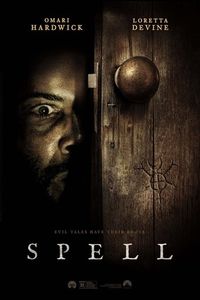
    (On Cable TV, November 2021) There’s something almost interesting in Spell’s blend of folk horror, evil hoodoo and deep-Appalachian setting. After some rather meaningless throat-clearing, the film starts in earnest after a small plane crash brings a middle-aged black family man (Omari Hardwick, nod bad) into the care of a backwoods witch doctor (Loretta Devine, surprisingly good) who places a lot more emphasis on being a witch than a doctor. This is all very spooky, of course, especially considering that the man’s family (which was also in the plane) is nowhere to be found, that he’s got a debilitating foot injury and that our witch doctor seems to have perfected the art of dark magic. The result does have its moments (including two gruesome scenes of body horror —ugh, that nail—that harken back to the obvious Misery comparisons) but they remain moments — there’s some horror, some dark humour, some suspense, and some drama, but they feel like bits and pieces of a first draft before the work begins to make the entire thing cohesive and tonally consistent. While it’s almost a relief to see the all-black cast evacuating the racial question, the result is so limp that you have to wonder if Spell would have benefited from some obviousness, or being more daring in tackling social issues. There’s this impression that director Mark Tonderai is barely holding all of this together, so scattered does he seem to be going from one element to another without a focal point. The repetitiousness of the middle act doesn’t help and the ending seems curiously familiar, not really bringing any of the plot threads to a satisfying conclusion. (Bizarrely, the script is from Kurt Wimmer—who’s usually a far more energetic writer.) In other words, the promising elements of Spell never comes into focus, and the result is disappointing no matter which angle you prefer. There’s a much better film to be made out of this, but this isn’t it.

  • Funhouse (2019)

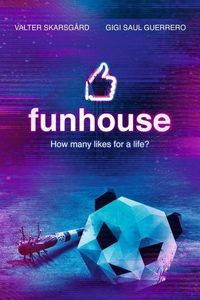
    (On Cable TV, November 2021) As much as movie reviewers would like to claim that they approach every film fresh and on its own merits, that’s almost never the case. Sometimes you’re not feeling in a specific mood, and sometimes you’re fresh off a run of similar films that get you thirsting for something else. So it is that Funhouse is the fourth film in my 2021 “Blood in the Snow” (BITS) mini-festival, as facilitated by Super Channel. Alas, BITS specializes in low-budget Canadian productions, and that often means small casts, tiny budgets and consequently restrained productions. We’re literally talking about single-location shoots, less than a handful of characters and an intimate approach to small-scale topics. It’s often interesting… but after a few of those, you start thirsting for more. So while Funhouse is largely a single-location shoot, it does feature nearly a dozen characters and most crucially it goes well beyond its single location through stock footage, reaction shots and news reports meant to expand the scope of the story being told from inside a hidden bunker. The essential plot is not that original: In the past ten years, there have been many horror films about darknet snuff reality shows, so Funhouse doesn’t strike new ground when it brings together a bunch of reality-TV celebrities in a bunker for a violent last-person-standing web-broadcast. But its execution often compensates for familiarity in other areas: the script is rather good in its moment-to-moment execution, keeping us interested in what’s going to happen next and how the predictable rhythm of a show where people are killed every three days is going to be upset by the next plot development. It also helps, at least for male viewers, that the cast has been selected for attractiveness — Initially picking favourite characters on look alone (while waiting for the character development to kick in), I was pleasantly surprised to see Khamisa Wilsher and Amanda Howells have more to do than expected in the film’s third act. It’s also a great idea to regularly get out of the bunker for world-wide reaction shots, cable-TV reactions and stock footage expanding the universe of the story to a global perspective. Now, let’s be careful — I don’t think Funhouse is all that good. It’s overly gory, not quite as upsetting as it could have been in its depiction of people kept alive by popular approval (although there’s a predictable hidden factor here that makes this moot), a bit schematic in how it presents its characters and suffers from a dull coda that lands with a so-what thud. Writer-director Jason William Lee does well, but he could have done better. Still, compared to many other films of its class, Funhouse is more fun, more expansive, sexier, and more interesting to watch from one scene to the other. Obviously, I was coming to it with a specific mindset… but it felt good to break away from three-people-in-a-house movies with even something just slightly more ambitious.