Month: November 2021

  • Liebe ist kälter als der Tod [Love is Colder than Death] (1969)

    (On Cable TV, November 2021) Oh well. It looks as if I’m going to have to add Rainer Werner Fassbinder to my list of writers-directors that are formally interesting, but not particularly fun to watch. Love is Colder than Death, his debut film, is often mentioned as part of New German Cinema and is clearly reminiscent of other New Waves across the globe:  The bare bones of the story are a blend of romance and crime elements, but it’s the execution that sets the film apart — in this case stark black-and-white, with moments of sparse cinematography: actors shot against a pure white background, or an uninterrupted camera following petty criminals as they shop and shoplift in a supermarket. Violence is used in between tepidly paced romantic twist and turns — clearly the kind of film debut meant to impress by a responsible use of a limited budget, simple genre elements and an overall artistic vision. Love is Colder than Death is not uninteresting, but I gather that it’s more interesting to Fassbinder devotees or students of the various New Waves of cinema across the globe.

  • The Phantom Tollbooth (1970)

    The Phantom Tollbooth (1970)

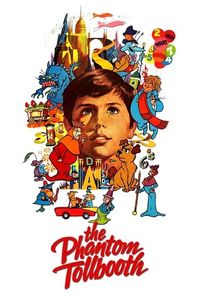
    (On Cable TV, November 2021) There’s an admirable intellectual ambition to The Phantom Tollbooth that does much to set it apart from other ordinary animated films aimed at younger audiences — a love of knowledge, fun with wordplay, and ideas that reach above the usual family movies. There’s a live-action framing device to go around the animation, and much of the plot has to do with a boy trying to reconcile a fantastical kingdom divided in words and numbers. It doesn’t make the result a phenomenal film nor even one worth revisiting: the animation is TV grade and doesn’t have much charm, while some of the writing seems without grace. Still, it’s unusual enough to be interesting. Don’t ask me to compare Norton Juster’s book with the film adaptation, though — I read the novel more than twenty years ago, and don’t remember much beyond it being unusual and clever. That’s likely to be my assessment of the film in a few years as well.

  • Christmas Encore (2017)

    Christmas Encore (2017)

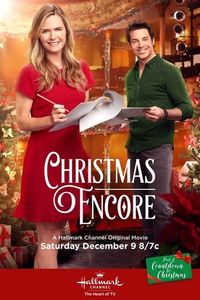
    (On TV, November 2021) Cinema, most of the time, aims to share its values with the widest possible audience. The morality of mainstream film is basic, uncomplicated and comforting in its obviousness. But, from time to time, audiences may have their own idiosyncratic reactions to innocuous fare, and as Christmas Encore unspooled, I felt myself annoyed that the heroine was making all the wrong choices. Of course, this is a Christmas film, and a Hallmark Christmas film at that — realism or even pragmatism are not part of its vocabulary. So when, in the opening moments, we see a young woman (Maggie Lawson, only slightly better than Hallmark heroines usually are) clearly having no success at all as an aspiring actress in Manhattan, an offer from a best friend (the very cute Mercedes de la Zerda) to get a safe corporate job back home in Chicago seems like the obvious choice — you go, girl, have a nice life and make your own happiness. But no: this is a film about art and following dreams and chasing the dragon of success atop the boom-and-bust model of fickle theatrical productions. (It gets worse once the financial backer of her latest production pulls out, putting the entire thing in jeopardy, at which point we’re all there shouting, “TOLD YOU SO.”)  One more thing that doesn’t work in Christmas Encore’s favour is that it has so little going for it in terms of direction, dialogues or acting that even milquetoast objections loom larger and more crucial. Of course, it all gets resolved at the end — her colleague turns into a lover, her uncaring patron turns out to be generous (one last time?), the play is a success and nobody dwells on how it’s all to be repeated as soon as the seasonal production wraps up (especially since we get very few hints as to her longevity in a business where young actresses go out of style very quickly). Yes, I know: The point of such romances is to avoid thinking about any complications. Even an actress coming up with a Christmas play concept after Thanksgiving is somehow not a problem. But Christmas Encore doesn’t have the spark needed for such a sleight of hand. The protagonist isn’t the only one making all the bone-headed choices:  The romance is perfunctory, the lead actor feels bored, director Bradley Walsh’s execution is unremarkable and the entire thing is far closer to annoyance than innocuousness. In the absence of anything interesting, even the usual flaws of its subgenre become surprisingly effective irritants.

  • Eskimo (1933)

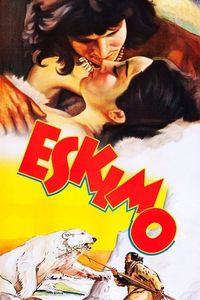
    (On Cable TV, November 2021) It’s tempting to see Eskimo (their word, not mine) as a talkie remake of Nanook of the North. Indeed, there are numerous points of similarities between both movies, and they all run along the lines of other remakes:  The story remains an exploration of Inuit communities up north as they live their lifestyle and meet Caucasian people. The film is presented with an anthropological intent, as we follow the characters living in the arctic circle, going hunting and taking in the unusual landscape. But the two films are not particularly alike once you look closer. Clearly coming from another source (a novel), Eskimo heads for Alaska rather than Hudson’s Bay, and seems put together with a Pre-Code lasciviousness that doesn’t spare a lot of time in highlighting the looser sexual mores of the “primitive” people (their word, not mine) and how sexual favours are routinely traded for material goods. Truth in cinema, for sure, but the angle is more exploitative than the rest of the film. In terms of inclusivity, Eskimo does about as well as any film could have been expected in the early 1930s. Much of the dialogue is not in English, and it is presented through title cards rather than subtitles. The Inuit characters are portrayed by director W. S. Van Dyke as having agendas and personalities, with the Caucasians not coming across are particularly likable. Still, the film rankles from the title onward, clearly presenting an exotic, sometimes exploitative vision of “the other.”  Obvious rear-projection work damages the effectiveness of some hunting sequences, while taking a look at the cast list belies the idea that this is in any way authentic. There are ample reasons to prefer Nanook of the North.

  • One Crazy Christmas (2018)

    One Crazy Christmas (2018)

    (On TV, November 2021) The only thing better than a BET-broadcast romantic comedy is a BET-broadcast dysfunctional family holiday dramedy, and there’s just enough of that in One Crazy Christmas to make it worth an undemanding look. The story starts on a weird footing, as we’re introduced to a divorced lawyer presented as a de facto protagonist without making us care for her — even her hatred of her ex-husband seems contrived without much of a rationale. Events accumulate, she spends the weekend with a much younger man and that’s that — the story skips ahead a few weeks. While inelegant, this first act sets up the ludicrousness of the rest of the film as Christmas rolls around, her daughter comes to visit and the boyfriend she brings along is… the man she slept with. Like a good theatrical play, the tensions and dissimulation keep piling up until a glorious conflagration, with all supporting characters having their say in the proceedings. There’s a solid core to One Crazy Christmas, but it’s not necessarily supported by a competent execution. The dialogue is blunt, the writing is sloppy and the acting doesn’t rise much above the workmanlike directing or cinematography. Even the entertaining supporting characters (or the beautiful Terri Abney in a too-small role) only hint at the potential of what the film could have been in better hands. Writer-director Greg Carter gets the story going but doesn’t do much to get it past the finish line: there’s little style, not enough wit and a clear lack of audacity in developing such a premise into something that could have been fully satisfying. At least the tone is amiable, and the Christmas atmosphere is almost custom-designed to disarm reviewers who would like to be too harsh about it. It’s clearly within the usual levels of BET-broadcast films, and their audience would be happy with One Crazy Christmas.

  • Saturday the 14th Strikes Back (1988)

    Saturday the 14th Strikes Back (1988)

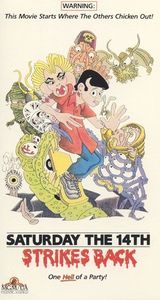
    (In French, On Cable TV, November 2021) No one in their right minds is going to call Saturday the 14th Strikes Back a good movie, and even describing it as funny would be a stretch — for a parody of early 1980s movies, it’s not witty, not very well executed and seldom laugh-out-loud funny. The low budget of the product is immediately obvious, and while the script does wrap up its parodies and homage into something of a real story, it doesn’t score any particularly good jokes along the way — other than the impromptu vampire musical segment, that is. While it’s a sequel to Saturday the 14th, it’s not really necessary to have seen the first film. Still, what Saturday the 14th Strikes Back manages to create — and this isn’t as obvious as it may sound — is a good-natured goofy atmosphere in which everything and anything is just off-the-wall crazy. The casually amusing lines are tossed off without grace, but they create a film in which absurdity reigns and is executed with a great deal of earnestness. While the laughs are infrequent, the smiles are almost constant, considering that the film does its best to entertain without quite managing to take it to the next level. It leaves a slightly better impression than the first film did, and writer-director Howard R. Cohen just keeps cranking up the goofiness until a climactic supernatural battle that’s quite unlike anything else. I’m not saying that you should have a look at Saturday the 14th Strikes Back. But if you do, well, chances are that you will be intrigued by its craziness.

  • Marius (1931)

    Marius (1931)

    (On Cable TV, November 2021) Unusually enough, it’s Marius’ remake Fanny that makes the original adaptation of Marcel Pagnol’s play both interesting and disappointing. As a romance set on Marseilles’ waterfront, Marius still carries some appeal, at least for French speakers: the very distinctive accent and slow-paced lifestyle espoused by the characters are still rather charming. Much of the story is set in a small bar overlooking the Mediterranean, and as the characters focus on their small-scale romantic troubles, it makes for an immersive plunge into a quasi-mythical way of living. Alexander Korda became far better-known as a producer, but his directing here is pretty good for the time. Alas, those who have seen Fanny will be disappointed by its progenitor: Not only is Maurice Chevalier missing, but so is the last and more interesting half of the story told more efficiently in the remake. (The explanation for this is that the remake adapts two linked stories, whereas the original only adapts the first.)  Much of the dramatic interest of the remake is replaced by a far more linear and simplistic love story — Marius is not bad, but not quite to the level set by the remake. Still, it’s not a bad watch nor a bad listen if you’re able to distinguish the melodic accent from more traditional French.

  • Follow Me aka No Escape (2020)

    (On Cable TV, November 2021) I don’t usually think that “dated” is a particularly good criticism — especially when you take the long view and see films years or decades later, causing the whole question to collapse on itself as “dated” becomes “period.” But in the here-and-now of 2021, a film like No Escape lands with a tired thud because it often feels like a mash-up of once-trendy elements and plot points stuffed into an overly familiar mess. Consider the premise in which an {influencer} goes to {eastern Europe} to participate in an {escape room} where he discovers that it’s {not a game} and tries to save himself and {his friends}. If you’re tired just reading these keywords, well, you haven’t seen the perfectly predictable ending, nor the nothingness that the film does with this obvious revelation. At this time, those past-prime trendy buzzwords are more annoying than anything else, and they’re not really excused by what will remain a lacklustre execution from writer-director Will Wernick. No Escape feels like a sad copy of the “vacationing Americans are stuck in a house of horror” subgenre, except with more emojis. (In other words, don’t expect viewers from 2050 to react any better to the film even if the “dated” element is made historical by accumulated decades. Although maybe they’ll laugh.)  There’s a modest amount of fun to be had watching in the film’s first act, as Keegan Allen plays an influencer with a decent amount of charisma, having fun in Moscow before the games begin. But once the characters are stuck in the usual industrial warehouse with the usual traps, No Escape’s already shaky interest disappears completely all the way to its wet thud of a conclusion. Technical credentials and visual quality are slightly higher than you’d expect from a low-budget horror rip-off, but make no mistake: this is still a horror rip-off.

  • 8-Bit Christmas (2021)

    8-Bit Christmas (2021)

    (On Cable TV, November 2021) As the cultural zeitgeist slowly moves to 1990s nostalgia according to the thirty-year window, we’re probably in the last gasp of the late-1980s homages and so 8-Bit Christmas takes us to December 1988 for a tall tale of how our adult narrator (Neil Patrick Harris, on the other side of a Wonder Years setup) got his much-coveted Nintendo after an eventful holiday period. The framing device has him telling his story to his daughter, leading to more than a few CGI-enhanced disconnects between the tale and what we’re shown. Much of the story plays off trials and tribulations of a young teenager, with plenty of era-appropriate (or era-adjacent) cultural references meant to immerse (or possibly drown) viewing in a past generation. Surprisingly enough, it rather works: Once you get past the signposts and references of the era and the prodigious Nintendo product placement, it becomes not just a nostalgic throwback, but a Christmas film and a heartfelt generational drama. The conclusion is both more comically devious and dramatically strong than anyone would have expected from the beginning of the film. 8-bit Christmas makes for decent-enough Christmas viewing with a more effective wrap-up than the film’s direct-to-TV pedigree (if that still means something) would suggest.

  • Pig (2021)

    Pig (2021)

    (On Cable TV, November 2021) On a conceptual level, there’s something that looks like a heavy parodic intent to Pig’s overarching plot: Here we have Nicholas Cage going on a rampage after his truffle-sniffing pig is stolen, straight into the underworld of the Portland restaurant scene — and all for naught at the end. It sounds like a dark parody of John Wick’s dog-avenging quest, with a final subversion at the end. But there’s nothing funny about Pig on a moment-to-moment basis: Directed with melancholic sadness by Michael Sarnoski, the potentially silly premise becomes a character study of grief wrapped in loose genre clothing. Executed with some precision, it’s undoubtedly a slick film from someone who knows what he’s doing. Whether it works will depend on your tolerance for such a thing: in Cage’s filmography, this is closer to Joe than Mandy, even if Cage does get to go from a finely dramatic performance to a bit of a late-film freakout. The slow, glum pacing frequently runs at odds with the plot’s genre demands — and the intentional disappointment of the conclusion will deflate whatever interest the film will have to audiences not quite expecting Cage to go as dramatic as usual in a deliberately misleading film. At least Pig remains a welcome reminder that Cage can still be an unpredictable and dependable actor — unlike many of his generation struggling for relevance, he’s still going from one wildly different thing to another, and still giving it all he’s got.

  • Back to the Goode Life (2019)

    (On TV, November 2021) Urban protagonists moving back to their childhood hometown are a staple of romantic comedies, and Back to the Goode Life plays the trope to the hilt. This time, our heroine is a New York executive who finds out that her latest promotion lands her squarely in the target of a fraud investigation. (If that feels like a familiar set-up, maybe you’d seen Madea’s Witness Protection recently.)  Her accounts frozen and seeking a way to stay out of the spotlight, she heads back to the Georgian countryside to live with her parents, hook up with a past flame and save the local restaurant from going bankrupt thanks to her business skills. Like, you know, half of daytime romantic comedies on the air these days. The Hallmark formula is spreading everywhere, and the only half-sane response is to sit back, let the familiar plot wash over us and focus on the performances and the details of the execution. Writer-director Tamika Miller doesn’t bring much to it, though: the script is lazily put together (to the point of barely connecting the narrative, relying on dumb “I can explain!” moments such as the shitless restaurant office scene, and not doing much more with the formula than strictly required. Lead actress Kyla Pratt similarly delivers a disappointing performance — enough to hold the film together, but not particularly funny, engaging or sexy. (The supporting actresses are more interesting to look at, although to their credit they only usually have to walk in, do something more outrageous than the heroine, and walk away.)  The plot is loose to the point of incompetence with a six-month skip that copies one of the worst tendencies of the formula that it so slavishly (but badly) apes. To be clear, I didn’t hate Back to the Goode Life — it’s just sweet and good-natured enough to be not worth any hate. Hey, you can even smirk once in a while as you’re watching it as background noise. But this is a disappointing showing even in its subclass.

  • It! The Terror from Beyond Space (1958)

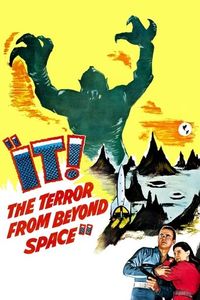
    (On Cable TV, November 2021) Few films have been perceived so differently over the year as It! The Terror from Beyond Space. Upon release, it was a fairly ordinary Science Fiction film featuring astronauts battling a monster in a spacecraft — a hermetic, claustrophobic version of the typical 1950s monster movies, not executed with any kind of sophistication by director Edward L. Cahn, but good enough for drive-in thrills. By the early 1970s (if it was seen at all at an age prior to home video), it must have been a quaint relic at a time of New Hollywood, as movies became increasingly realistic and the rift between what audiences expected and the shoddy execution of the 1958 film became more apparent. But then something very strange happened: Alien, a film that pushed horror where it had never gone before by borrowing quite a lot from It! The Terror from Beyond Space. Consider the crew of a spaceship landing on a strange planet and carrying back a dangerous visitor within the confines of their ship. Attempts to kill it through conventional means fail, as it keeps killing crewmembers, forcing the survivors to flush it out of the airlock. Isn’t that Alien or what? After a few decades in which comparisons must not have been kind, watching It! The Terror from Beyond Space is surprisingly fun now because we’re probably approaching it from the other end: What if Alien had been made in the 1950s? Well, it’s not a thought experiment or a retro-pastiche: Here we have the real thing, an authentic vintage interpretation of one of the ur-stories of horror/SF cinema. It’s almost enough to make you want to send modern movies back in time to see what they would have done with the concept, the limited means and the self-censorship prevalent during the 1950s. Oh, I won’t qualify It! The Terror from Beyond Space as conventionally good: there’s a fair bit of ironic distancing going on while watching the film, and Alien really should be a prerequisite to watch. Our “blue collar” crew plays chess, really… But movie experiences are not always the ones intended by the filmmakers, and if a modern reading uses other sources to create enjoyment, well, that’s better than no enjoyment at all.

  • La femme aux bottes rouges [The Woman with Red Boots] (1974)

    (On Cable TV, November 2021) In watching a Buñuel movie, I expect weirdness, and weirdness is what I got with La femme aux bottes rouges — although I didn’t get the Buñuel I expected. Writer-director Juan Luis Buñuel is the son of Luis Buñuel, but you wouldn’t necessarily be able to tell the difference considering how closely does this film seem to stem from the same place as Le Charme Discret de la Bourgeoisie. Having the beautiful Catherine Deneuve in the lead reminds us of Belle de Jour, and the controlled surrealism of the film clearly owes much to Buñuel père. The story, as much as can be gathered without an explanatory guide, has to do with a young woman (Deneuve) being courted by an elderly rich gentleman (Fernando Rey, remarkable), leading to rifts with her current lover, lust from another man who ends up shooting his wife in a hunting accident, and artists gathering at a retreat. But that’s not the weird part yet, because our heroine is a woman with the power to change reality, to make others do her bidding and create passageways out of paintings. What’s rather charming in La femme aux bottes rouges as it flirts with fantasy is the decidedly low-tech approach to its magic: Things appear, disappear or change after editing cuts: a low budget, low-effort approach that does enhance the eeriness of the fantastic by leaving the magical unseen. It’s really up to the viewers to pay attention and realize unnatural changes even though there are no showy special effects calling attention to themselves. (Speaking of special effects, I had to laugh at one scene in which Deneuve’s character briefly reveals herself naked to the elderly gentleman — she’s wearing a “naked” flesh-coloured bodysuit, and not a subtle one at that.)  As for the rest, well, weirdness abounds: Rey plays his mysterious character with quiet panache, while Deneuve remains enigmatic throughout. It’s a trip throughout art, dreams, semi-pretentious dialogue and people acting bizarrely. Frankly, it took me two attempts to get through La femme aux bottes rouges: I started the first attempt expecting something I could watch out of the corner of my eye and was mystified when the film resisted such a divided-attention approach: it worked much better when watched carefully, especially given what happens in between its cuts. It’s not necessarily recommended for everyone, but if you’re at the end of the Buñuel père’s filmography, consider this one a bonus.

  • Bill & Ted Face the Music (2020)

    (Netflix Streaming, November 2021) Bringing back a movie franchise after a decades-long hiatus is always a risky prospect, no matter how many commercial imperatives and fannish demands justify it. Bill and Ted being such a creation of their circa-1990 era, bringing them back nearly thirty years later -in an environment saturated with nostalgia—seemed wrong. But Bill & Ted Face the Music isn’t like most thirty-year-later remakes — perhaps the single key difference being that the core creative team behind the franchise is also back: crucially screenwriters Chris Matheson and Ed Solomon (who became a celebrity screenwriter in the meantime), but also Alex Winter and Keanu Reeves in the two lead roles. This probably explains why the film is so comfortable taking the story thirty years later, with our visibly aged protagonists having daughters and struggling with a life that has not lived up to their youthful expectations. When further time-travelling shenanigans suggest that the fate of the universe rests on a crucial music performance, it’s off to the races in recapturing the charm of the earlier films. It, surprisingly, generally works: There’s a certain wit to the script, some funny takes on time-travel elements, and the two leads recapture their performances with some gusto. Better yet, the film’s secret weapons are Samara Weaving and Brigette Lundy-Paine as Bill and Ted’s daughters, each of them clearly taking after their fathers. Lundy-Paine is particularly amusing channelling Reeves’ specific tics as Ted. The rest of Bill & Ted Face the Music has ups and downs: recruiting past musicians is a good idea, as are the visits to increasingly older and more desperate version of themselves, but some of the other material is more laborious — a subplot involving a terminator robot with serious self-esteem issues sputters as often as it works. Fortunately, it does build to a rather nice conclusion that wraps up Bill and Ted’s story while opening the door just widely enough for the next generation to take over. Not that they have to — sequels aren’t mandatory, after all.

  • The Fuller Brush Man (1948)

    The Fuller Brush Man (1948)

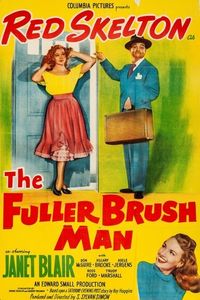
    (On TV, November 2021) At some point in the future, I will be tempted to get all of the Red Skelton movies of the 1940s I can get (or maybe wait for a TCM marathon) and see if my impressions of a repetitive streak are correct. In how many titles does he play a good-natured semi-simpleton dragged into a crime comedy? I realize that’s not exactly a weird premise nor much of a stretch from his usual persona, but The Fuller Brush Man has, beyond the unusual nature of its titular job, some overly familiar elements. Of course, this is a film that came well into Skelton’s career, so playing to his strengths was the natural course of action. Now, I do like Skelton’s shtick most of the time and this film does it quite well — although I like him just a bit better when he’s not handicapped by an overly naïve protagonist: in Ship Ahoy, or the Whistling series among others. The Fuller Brush Man ends up being a decent but unspectacular effort for him — pleasant enough to watch, but not necessarily a highlight. He does what he does well, and that’s not bad.