Month: December 2021

  • Lust in the Dust (1984)

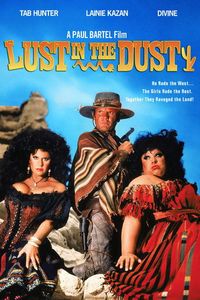
    Lust in the Dust (1984)

    (On Cable TV, December 2021) As far as western comedies go, Lust in the Dust hits a very specific and rather sweet spot of camp flamboyance, ribald naughtiness and over-the-top absurdity. Divine stars as a rotund dancehall girl lost in the desert, where she encounters a taciturn cowboy (Tab Hunter, no less) and goes treasure hunting with the help of strategically tattooed maps. As comedies go, this one combines a dumb premise with weird characters, unusual situations and good one-liners even if the rhythm is uneven throughout. Still, Divine does well as the unravishable heroine (and the cross-dressing aspect hasn’t aged as badly as you’d think), while Lainie Kazan and Gina Gallego provide much of the nudity and raunch that make the film even funnier. By the time the film works itself off to a mutual stand-off above a treasure, well, we’re satisfied. Director Paul Bartel’s filmography is all over the place when it comes to comedy (Everything from Cannonball to Eating Raoul) and Lust in the Dust doesn’t clarify anything about his approach. While the result can’t be called a great comedy, it’s watchable and funny enough to be worth a look.
  • The Tender Trap (1955)

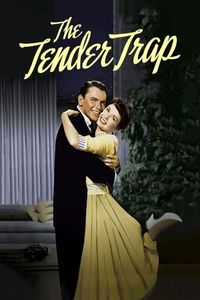
    The Tender Trap (1955)

    (On Cable TV, December 2021) Even from sixty-five years later, it’s easy to see the hook of The Tender Trap. No, not the catchy title song that became a Frank Sinatra signature tune, but the concept of a proto-sex-comedy opposing legendary womanizer Sinatra with pure-as-snow Debbie Reynolds in a battle of the sexes on the way to matrimony. Sinatra plays the bachelor of many men’s dreams, with a high-paying job allowing him to afford swanky clothes and a killer Manhattan bachelor’s pad. Such is his appeal that when a friend decides to leave his married Midwestern life behind, he immediately heads over there to crash as he figures out what to do, and takes advantage of a few female friends feeling neglected by the protagonist. Said protagonist is only too happy juggling numerous conquests, except when one of them, an ultra-organized monogamous gal (Reynolds), seems worth giving up everything. It’s all pleasant enough in a Mad-Men-inspiration vein — even for a film explicitly dealing with an unrepentant bachelor and a wayward husband, the tone is so resolutely restrained that it seems almost likable. There’s an interesting line to draw from The Tender Trap to the more freewheeling sex comedies of the 1960s — in fact, many viewers may have trouble believing it’s not a 1960s film. Sinatra is just as compelling as usual, and there’s a rather good scene in which Reynolds, then Sinatra, then Reynolds again take on the title song, each time making it richer and more interesting in its delivery. David Wayne (looking a lot like Daniel Craig!) is also a highlight as the married man taking a holiday — although the film certainly does not dwell on what he’s up to when he takes one of his friend’s regulars on late-night dates. It’s all quite amusing (as long as you can buy into the fantasy of a Manhattan playboy, that is), bolstered by Sinatra and Reynolds at their most charming and some clean crisp 1950s colour cinematography. The Tender Trap certainly paved the way for more daring films to follow, and fits comfortably in the string of New York City-set sex comedies of the following decade and a half.

  • Adam Had Four Sons (1941)

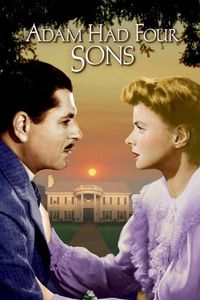
    Adam Had Four Sons (1941)

    (On Cable TV, December 2021) No one will ever mistake Adam Had Four Sons for anything but the straight-up domestic romantic thriller it aimed for — with a lovely governess (Ingrid Bergman, looking gorgeous) filling in for a dead mother and sniffing out a gold-digging harridan putting her claws into an easily flummoxed son. The story stretches over a few years, although much of the second and third act settles down in a shorter period after an extended opening featuring a great-looking Fay Wray as the soon-to-be-deceased mother. Then Susan Hayward takes centre stage as the adulterous, deceiving, booze-swilling, money-grubbing outsider who comes to steal the family fortune and seduce whoever she can to fulfill her role. (Meanwhile, our heroine is utterly chaste — but she does, as expected, ends up with the family patriarch once everything has been cleared up. The three lead actresses are unusually attractive here, but even that doesn’t do much to make up for the rather obvious script. This being said, there’s still some fun to be had even when knowing where it’s going: Hayward is deliciously evil here, and anticipating the melodramatic (melodomestic?) plot beats is almost as much fun as being surprised. Adam Had Four Sons is all rather pleasant in the end, with the bonus of seeing Bergman in an early Hollywood role—playing a Frenchwoman!

  • Eye of the Cat (1969)

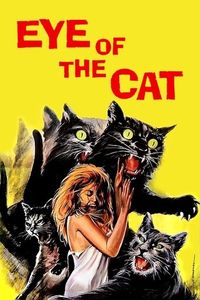
    Eye of the Cat (1969)

    (In French, On Cable TV, December 2021) As a very happy cat owner, I’m always dumbfounded when otherwise-likable people profess not liking cats — how can you not? But as it turns out, cats are probably the scariest of common pets and movies like Eye of the Cat certainly play on it, with the result outdoing a number of horror films of the era. The decently-budgeted production takes place in San Francisco, and at least one scene takes full advantage of the location, with director David Lowell Rich pitting a wheelchair-bound character against the steep hills of the city. Otherwise, the script plays with familiar elements — rich eccentric cat lady planning to give her inheritance to her cats; money-hungry relatives hungry for the inheritance; and groups of cats intent on killing bad humans. It’s ridiculous to see the usual tricks being used to make the cats look evil, and the script doesn’t rise much above some obvious material. It may be worth a look by cat-haters and cat-lovers alike, but just one: it’s more interesting as a diverting curio than a conventionally good film. Considering that Eye of the Cat wasn’t the first nor the last cat horror film, there’s probably a filmography to put together for feline friends and fiends.

  • Calamity Jane (1953)

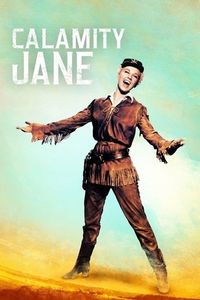
    Calamity Jane (1953)

    (On Cable TV, December 2021) A common criticism of classic Hollywood westerns and musicals alike is that the most average of them all blur together in one indistinct mass. That’s certainly an issue in the first act of Calamity Jane — even in its specific niche as a western musical focused on a female sharpshooter, it feels almost too much like Annie, Get Your Gun (whose commercial success directly led to this film) to be wholly distinct — something reinforced by the tomboy presentation of both brassy heroines and male romantic interests coming from the same factory. It does get slightly better as the film goes on, as it focuses on an actress visiting a small western town and getting into shenanigans with Jane. Clearly comic and certainly not historically accurate, Calamity Jane eventually acquires its own distinction — especially, as other commentators have pointed out, when the film’s two female lead characters start cohabitating and we find ourselves in proto-queer cinema territory. More conventionally, Doris Day is fine (but no more) as the lead, while Howard Keel is surprisingly bland as the male lead and Allyn Ann McLerie gets one of her most noteworthy roles as a maid passing herself off as an actress — she does look terrific onstage. Some comic set-pieces work well, even if the film feels too long (especially in the first act, before all characters are introduced). By the end, Calamity Jane has done enough to distinguish itself and even pass itself off as a middle-tier musical. I doubt, however, that I’ll revisit this one any time soon, except if I forget that I’ve seen it in the first place.

  • Rebecca (2020)

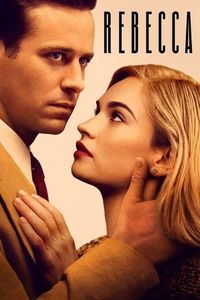
    Rebecca (2020)

    (Netflix Streaming, December 2021) As someone with a surprising fondness for the original Daphne Du Maurier novel Rebecca and some admiration for the 1940 Alfred Hitchcock film, I was curiously ambivalent about the idea of a remake. Maybe there should be a statute in the Academy Awards that Best Pictures should not be remade. Maybe, on the other hand, a modern look at the classic gothic romance would be interesting in itself. This 2020 version of Rebecca, as it turns out, is somewhere in the middle. Director Ben Wheatley established himself as a director of oddball projects, so he wasn’t necessarily a bad choice here… but the result seems beneath what one could expect from him. I have some appreciation for how the film adapts and changes its tone and visual language as the story advances — surprisingly light, sunny and colourful in the first act as our heroine meets a rich man and falls in love with him during a whirlwind vacation romance. Then, as the story moves to the unsettling Manderley domain, everything gradually darkens and becomes grimmer, all the way to the late film’s murder and incarceration subplot. By the third act, we’re deep in gothic suspense, queer cinema subtext, our heroine doing her best to free the man she loves and the final, celebrated finale. Rebecca works and doesn’t betray the original novel, but the result is likely to be forgotten remarkably quickly — it’s decent but hardly exceptional.

  • Ningen no jôken [The Human Condition I: No Greater Love] (1959)

    Ningen no jôken [The Human Condition I: No Greater Love] (1959)

    (On Cable TV, October 2021) There’s a lot to like in The Human Condition I: No Greater Love — at least in theory. The story of a Japanese pacifist being recruited as an instrument of warfare during the early days of WW2, it’s a story that works best in detailing the efforts he makes to improve the conditions of the prisoners, even going against his superiors in order to do so. The fragile peace he brokers involves prostitutes, prisoners, work quotas and the support of his loving wife. As I said — interesting stuff… if it wasn’t for the backbreaking, patience-sapping three hours and a half running time, half of it redundant or useless. But director Masaki Kobayashi is not interested in snappy storytelling: he’s halfway into art-film territory here, with a focus on the leisurely examination of the themes of the novels from which the story is taken. As the title suggests, this is the first part of a nine-hour trilogy — and things are not set to improve for our protagonist. I’m sure I’ll see the other films… but I’m not in a hurry to do so.