Month: December 2021

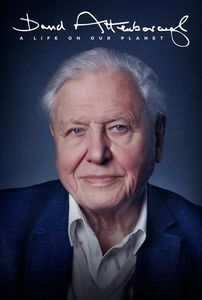
  • David Attenborough: A Life on Our Planet (2020)

    David Attenborough: A Life on Our Planet (2020)

    (Netflix Streaming, December 2020) If read about public speaking, you will inevitably run into the axiom that emotion trumps logic in convincing audiences. But there’s something that trumps even the most emotional speakers, and that’s authority. You will inevitably pay more attention to someone with solid credentials (especially if you’re already familiar with them) than J. Random Individual. (So, what are you doing getting movie reviews from me?) Accordingly, when none other than nature-documentary authority David Attenborough himself decides to headline a documentary feature outlining the environmental degradation that he has witnessed over his very long career, he’s got immediate credibility. Fortunately, he’s also able to supplement this authority with emotion and, yes, some cold facts and logic as well. The story he’s telling in A Life on Our Planet is now new and it’s not comforting. It’s an overview of how, in Attenborough’s 90+ years of life, the Earth has become increasingly more crowded, hotter, polluted, and less hospitable to wildlife. The impacts of human-driven global warming may be irreversible, upsetting the delicate balance that has fostered human civilization. For much of its duration, it’s a justified tale of gloom and degradation, as Attenborough tells us that what he saw back in the 1960s as a working documentarian simply does not exist any more. There’s an uplifting fillip at the very end of the film, but it’s not enough to take away from the remarkably glum assessment of the film and its exhortation to take action now in order to save ourselves and future generations from the worst of it. Attenborough makes a genial companion to dark predictions: he speaks plainly, can show his own historical archive footage and doesn’t have much to lose in convincing audiences. After all, he could be spending his nineties in retirement — and he’s not going to be the one suffering much longer from the ongoing ecological collapse. When speaking about elders and their advice, A Life on Our Planet does seem like an exemplary showcase: it’s clearly from personal experience, and it manages to reach audiences in a slightly different way than many other similar documentaries. Few people have as much authority on the topic as Attenborough, and it’s an eloquent legacy to pass on his own experience to younger generations.
  • The Half of It (2020)

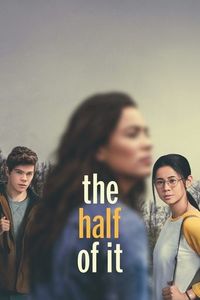
    The Half of It (2020)

    (Netflix Streaming, December 2020) Cyrano de Bergerac kind-of-goes Midwestern gay high-school romance in The Half of It, as the story focuses on a young woman with a crush on another female teenager who gets to express her affections by ghostwriting the romantic communications of a friendly guy. Of course, adherence to the classics only goes so far, and the film eventually acquires its own quality when the jock character proves to be a great platonic friend, the object of her affections isn’t necessarily interested, and the entire thing becomes a way for our protagonist to realize what she really wants. The Half of It gets sloppy in part — the third act seems unsupported by what precedes it, as new subplots are quickly introduced and discarded, the focus shifts to some supporting characters and the carefully deliberate pacing of the first part of the film seems abandoned to deliver a conclusion that hasn’t quite figured out how to be as precise as earlier moments in the film. Fortunately, Leah Lewis is very likable in the lead role, clearly portraying the desperation of being a bright urbane young person stuck in a very small and narrow-minded town on the edges of nowhere. Writer-director Alice Wu does get most of it right — but it’s that missing fraction, the late-movie messiness and unfocused plotting that hold back The Half of It from being as exemplary as it could have been. As a result, it may not be as much of a crowd-pleaser as many similar films — it’s fun all right, but there are other better movies if you’re in a hurry. But then again, being in a hurry isn’t exactly a match with The Half of It’s overriding sensibilities.

  • Drive (2020)

    (On TV, December 2021) Some films have the flaws of their qualities, and documentary Drive is both fascinating and frustrating for the same reason: While justified by a single good idea (what will happen to the act of driving when cars become automated?), it then goes off driving in all directions at once. Becoming a grab-bag of loosely connected sequences more than a coherent argument, Drive is about disabled people getting the means to drive themselves; celebrities reminiscing about childhood drives; a staunch advocate of human driving; fancy “art cars” showing that they’re more than about getting from point A to point B; a pair of very likable teenagers sharing their feelings as they learn to drive; a short history lesson about the impact of personal mobility in North America; and plenty of other things. I’m not really begrudging the highs of writer-director Scott Harper’s film: Hearing Jully Black belt out an impromptu acapella cover of Gary Numan’s “Cars” is an unqualified delight. But somewhere along the way, Drive seems to lose itself in a meander of sidestreets. The journey is clearly more important than the intention at the onset of the trip, because a good chunk of Drive could exist without any mention of its starting doubts about driving automation. Is that a problem? Well, it could be if you were still hankering for a sustained argument around the consequences of automated driving. (And preferably one that goes beyond knee-jerk nostalgia and rote techno-skepticism — Drive isn’t really interested in what automated driving means beyond not handling the wheel.)  As it is, it does feel like a bait-and-switch from a clear compelling premise to whatever the filmmakers accumulated during shooting. Its success will clearly hinge on whether you’re willing to stay on-board once it starts taking detours.

  • Ice Castles (1978)

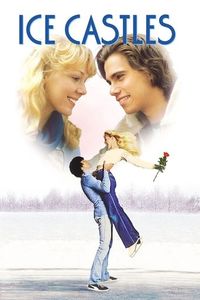
    Ice Castles (1978)

    (On Cable TV, December 2021) Sometimes, there just isn’t much to say: Ice Castles is a movie about ice skating and… well… that’s that. It’s the story of a young girl who wants to be a figure skater, encounters adversity in the form of sudden blindness and eventually achieves her goals by the end of the film, but not before reuniting with the man in her life and staying true to her values. So brave, so heartfelt and yet so ordinary. The disability angle is clearly there to earn sympathy in a schematic manner, but the film makes it work. At least the lead actors aren’t bad — Lynn-Holly Johnson was a figure skater before turning to acting (most notably here and in a later James Bond film), while Robby Benson is not bad as the boyfriend. Under writer-director Donald Wrye, Ice Castles is executed competently by late-1970s standards, meaning that it will appeal to its target audience. Otherwise, what else is there to say?

  • #Saraitda [#Alive] (2020)

    #Saraitda [#Alive] (2020)

    (Netflix Streaming, December 2021) I wasn’t expecting much from #Alive — zombie films are overplayed, and it takes more than a slightly askew premise (such as a young man stuck in his apartment as the rest of the world goes crazy) to get beyond the genre fatigue. Still, there is something in the way the film approaches its premise that just happens to match recent real-world pandemic experience: the sense of isolation as illness sweeps the world outside, the fragile domestic bubble only valid as long as we don’t try to get out. #Alive get a lot of mileage out of this — the first half of the film, easily the best, doesn’t upset this spatial unity even as the apartment’s surroundings are presented in detail. Things get slightly weirder and less cohesive once our protagonist ventures outside, makes an ally and has to physically battle hordes of zombies weeks into the crisis. But that’s inevitable in a script that creates an atmosphere of claustrophobia without necessarily being hermetic in its presentation. One of the big advantages of #Alive over other lesser zombie movies is that it does take the time to clearly show the protagonist’s environment, allowing viewers to invest themselves in what-if-I-was-in-this-situation scenarios. Like it or not, the COVID pandemic will alter our conception of extraordinary events for the rest of our lives, and zombie films (as exemplars of the genre) will come to take many of the cues explored during that time. The South Korean origin of the film isn’t as much of a barrier as many would think — thanks to writer-director Cho Il-hyung, the film is accessible and compelling for wide global audiences. While it’s too early to see how well it will age (there’s a real chance it will be dated rather than enhanced by its timeliness), #Alive does rank well in an overexposed genre.

  • Gunjan Saxena: The Kargil Girl (2020)

    Gunjan Saxena: The Kargil Girl (2020)

    (Netflix Streaming, December 2021) There’s something very familiar in The Kargil Girl’s premise and execution, as a young girl fascinated with flying becomes one of the first female pilots in the Indian Air Force, but not after a considerable amount of disappointment, discrimination and verbal abuse. It’s squarely in the same vein as many other inspiring ceiling-smashing films, no matter whether they’re from India or elsewhere. Writer-director Sharan Sharma’s execution is fluid, with some exemplary editing taking us across several years — although the film itself does remain slightly too long and repetitive at 112 minutes. The advantage of its subject matter is that it enables the filmmakers to talk about female empowerment while throwing it a climactic war sequence, combining into broad appeal. It’s reasonably entertaining even if the melodrama does get intense at times. Still — The Kargil Girl is better than many other recent Indian films, and not as annoying in its execution as many others.

  • I Want You (1951)

    I Want You (1951)

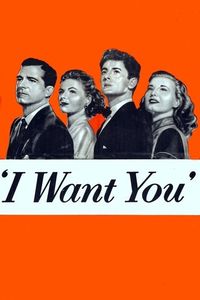
    (On Cable TV, December 2021) There’s a clever double sense to I Want You’s title that hints at its dual nature — an expression of romance, of course, but also an exhortation to enlist: “I want you for U.S. Army,” says Uncle Sam. And that, in a nutshell, is what the film is about — small-town romantic drama as the Korean War heats up and American men are once again asked to go back into combat despite knowing exactly what this means this time around. This film is very much of its time, and that’s perhaps what’s most interesting about it: it’s a slice-of-life dramatization of what must have been an overwhelming topic of conversation across American circa 1950 and the film’s decidedly low-key approach makes it feel more convincing than an overblown melodramatic approach. Director Mark Robson can depend on decent performers (Dana Andrews and Dorothy McGuire in the lead) to get the film’s rather delicate drama across. It’s probably not the kind of film that you want to sit down for thrills and laughs, but it’s a remarkable film for its own specific reasons — capturing America at a specific time, not a dramatic one but still a pivotal one.

  • Hide-Out (1934)

    Hide-Out (1934)

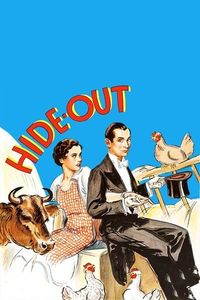
    (On Cable TV, December 2021) As much as I’d like to say something interesting or enlightening about Hide-Out, it’s the kind of film that’s good enough to escape snarky comments about its shortcomings but not good enough to get ringing praise. The plot isn’t that complex, as a wounded womanizing mobster ends up on a farm and spends his recovery time falling for the farmer’s daughter. There’s clearly a lot of comedy to be mined in how our urbane protagonist has to adapt to the farm — and some obvious romantic material with the daughter as well. It works more often than not — director W. S. Van Dyke clearly knows what he’s doing even with a middle-of-the-road script, and the acting benefits from the professionalism of Robert Montgomery and Maureen O’Sullivan — as well as an early role for Mickey Rooney. Hide-Out is entertaining even if not particularly memorable — and it ends on a sweet high note, ensuring a nice finish for the audience.

  • Hallelujah (1929)

    Hallelujah (1929)

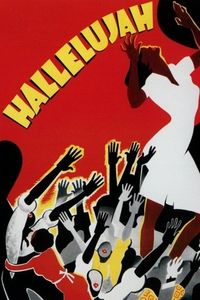
    (On Cable TV, December 2021) The history of black representation in Hollywood is long and embarrassing — and it usually gets more problematic the farther back you go. It’s understandable to approach Hallelujah with some wariness: After all, the 1920s were not always a hotbed of film progressivism, and the idea of a white director tackling an all-Black musical could have been terrible. Fortunately, that director ends up being King Vidor, one of the best and most humanistic directors of the time and someone who had some experience with the film’s topic. As a result, while Hallelujah is clearly stereotyped in the ways a privileged white director could portray an “other,” it’s also an uncommonly sympathetic portrayal of deep-south rural black communities, and a remarkable document chronicling approximations of black culture at the time. (It’s sobering to think that, even two years earlier, it would have been filmed as a silent film and been much poorer for it.) It’s moralistic in the ways most movies were at the time, but there’s an empathy built into the execution that makes the result interesting despite its flaws. I did like Nina Mae McKinney quite a bit in the thankless of the seductive fallen woman. Perhaps the most negative thing to be said about Hallelujah is that it probably influenced decades of less-than-inspiring depictions of black characters in Hollywood… but that should not be held against a film that’s still more impressive for what it does than for what it doesn’t.

  • The Babysitter: Killer Queen (2020)

    The Babysitter: Killer Queen (2020)

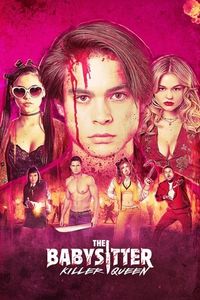
    (Netflix Streaming, December 2021) Well, I suppose that’s where we are in Netflix’s evolution as a content creator: greenlighting sequels to anything of theirs that even looks like a success, no matter how justified those sequels can be. The Babysitter was, to its credit, a fun film: a comedy featuring a teenager, his babysitter and an evil satanic plot to sacrifice him. While overly violent and profane, it did harken back to some 1980s-style horror films, with McG’s dynamic writing and directing being a good fit for the material. This sequel picks up two years later, with our protagonist still dealing with the aftermath of the events. While older, he still can’t get anyone to buy into his version of events and remains a social outcast. The film begins as things get wild once again: a weekend outing lands him in another satanic plot, and there’s only the creepy new girl to help him out… or will she? Clearly taking after its predecessor (all the way to a memorable title card as the film abruptly flips into horror), Killer Queen doubles on the profanity and gore even when it shouldn’t, but is on firmer ground in extending the story. It’s not always harmonious: bringing back much of the previous film’s cast feels somewhat useless (especially when they die almost immediately) and the first half doesn’t fully justify the sequel. Things thankfully get more convoluted and interesting in the back-half, with a returning character coming back in a slightly different role and reinforcing the bridge between both movies. Pacing is an issue, with the film taking too long to get to its destination. But while Killer Queen is not great and arguably not even good, McG’s execution can camouflage some of the issues in his screenplay and it’s entertaining enough if you’ve seen the first film.

  • To all the Boys: P.S. I Still Love You (2020)

    To all the Boys: P.S. I Still Love You (2020)

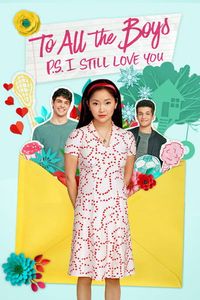
    (Netflix Streaming, December 2021) Romantic comedies should not have sequels. They cheapen the climax of the previous film, break the illusion of a happily ever after and often simply drag on meaningless romantic tension longer than it should. Now that Netflix is getting into the YA romance genre, it’s also greenlighting adaptation of trilogies and what’s the point of that? Still, there are always exceptions and while To all the Boys: P.S. I Still Love You may have the year’s most unwieldy title, it’s also an interesting argument in favour of romance sequels. As you may recall from the previous film, our story picks up soon after our very likable high-school heroine’s first romantic kiss. But given the age and inexperience of the protagonist, there’s a lot of ground to cover — indecision, jealousy, new romantic prospects and more! For older viewers, there’s something half exasperating, half endearing about the way our protagonist overcomplicates relationship questions that older people have learned to deal with: for high-schoolers, everything is new and fresh and extreme and terrifying and that’s perhaps the part of the film that works best as a sequel. Free of the origin story of the characters, To all the Boys: P.S. I Still Love You is free to poke at the complications that come after the romantic climax. Some of the material is overdone, obviously: the heroine’s lack of maturity can be irritating and the contrivances put in her way often veer into the melodramatic. Still, much of the film’s ability to overcome those issues stems from some decent writing and a sympathetic protagonist played by Lana Condor. The flip-side of that is that if you’re not already invested in the characters, it’s going to be a much longer sit. Still, it works in spite of my prejudices against romantic sequels. (But not all Netflix YA romantic sequels-in-a-trilogy are made alike — if you want something worse, there’s always The Kissing Booth 2.)

  • A Madea Christmas (2013)

    A Madea Christmas (2013)

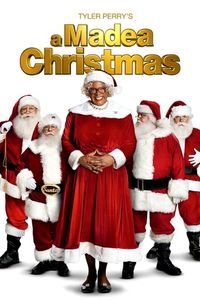
    (On Cable TV, December 2021) Tyler Perry goes Christmasy with A Madea Christmas, heading to a small town that is having problems putting up a Christmas show, and to a newlywed interracial couple receiving their parents for the holidays. While the guests include two jovial white redneck parents (one of them played by Larry the Cable Guy) and one black mother, Perry makes an interesting choice in having the mother being the one with racist issues preventing her from appreciating her daughter’s happiness. There’s a Big Lie to unravel along the way (the white husband initially being presented to her as “the help”) and some perfunctory anti-corporate rhetoric to unravel in town, but the rest of A Madea Christmas is rather straightforward. Occasionally highlights include the comic upmanship between Perry-as-Madea and Larry the Cable Guy: You wouldn’t think that two comic personas would mesh well—but they do, and I have a feeling (bolstered by the end credits outtakes) that Perry was unusually generous in letting the other actor ad-lib some of the best replies. (There’s also an unusually witty scripted line in “When she had them dreams, was they in color or black-and-white?”)  Perry’s approach here is very familiar, with Madea used rather well in a supporting role that allows her to play the troubleshooter. The family drama is usually more interesting than the fights with other neighbours or the small-town attempts to put on a Christmas show. Tika Sumpter looks terrific as one half of the interracial couple, but other than Larry the Cable Guy, this is not a film that plays in elaborate casting. A Madea Christmas is far too often too blunt to be any good, but it gets to its Christmas-spirit through an unusual path, and at this point I’m such a Madea fan that “more of the same” sounds like a good deal to me, especially in the indulgent lead-up to Christmas.

  • Dead of Night (1945)

    Dead of Night (1945)

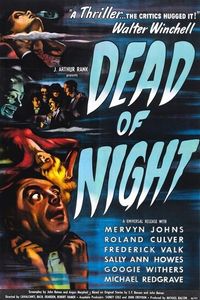
    (On TV, December 2021) If Dead of Night feels just a little bit too obvious and familiar today, it’s because it has proven to be so influential — as an anthology of five eerie stories, it clearly inspired many, many imitators — to the point where its best ideas (such as a ventriloquist controlled by his murderous doll) now seem to be clichés. But horror circa-1945 was far more sedate than today’s genre films, and so Dead of Night’s impact on its intended audiences (especially as a relatively rare example of 1940s British horror) cannot be properly appreciated by twenty-first century viewers. The result may feel a bit bland today — the five segments can be mildly interesting, with a decent framing device to tie it up together. (Amazingly enough, the framing device is said to have partially inspired astrophysicist and SF writer Fred Hoyle in his theory of a steady-state universe.)  While most segments are straightforward eerie narratives (more spooky than scary, in keeping with the standards of the time), the fourth segment does for a more comedic approach. While best appreciated as a historical piece, Dead of Night still carries some entertainment value: the premises may now have crossed into cliché, but their execution is not bad and the period atmosphere can be intriguing in itself.

  • Ludo (2020)

    Ludo (2020)

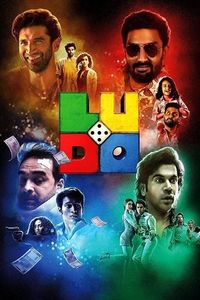
    (Netflix Streaming, December 2021) I still have a lot of Indian films to watch before making sweeping statements about the nation’s cinema(s), but I have more often than not been disappointed in what I’ve seen. The Indian films I’ve seen, especially those that consciously avoid the masala tradition, are often stuck in a paternalistic context — overly deferential to authorities, needlessly apologetic for innocuous material, and heavily conservative even when highlighting their progressivism. Indian films don’t speak to audiences at their own level, and they would be significantly better if they did. Well, here’s Ludo to bolster my assertion: As an ensemble black comedy dealing with criminals, complex criss-crossing fates and just a little bit of magical realism, it’s one of the most enjoyable Indian films I’ve seen lately, and it’s executed in a style that addresses modern moviegoers with all of the sophistication, wit and energy that they can expect. The framing device has two supernatural beings philosophizing about life, death, fate, and morality as encapsulated by the game of Ludo, while they witness the increasingly wild events to consume the story’s four main characters. Taking inspiration from the game board, each of them is colour-coded for our convenience — something that goes from their clothes to the dominant colours of the scenes in which they’re featured. Writer-director Anurag Basu has a lot to do in blending a complex story in 150 minutes — Ludo is a touch too long, but not unjustifiably so. The four strands of his story take place in a semi-comic criminal underworld, but some of them are funnier (or more tragic) than other strands, giving a result that is differentiated without being incoherent. It’s vivid, colourful and energetic, with some flashbacks to fracture the story even more. As someone with a thing for cute bespectacled curly brunettes, it was hard to pick between Sanya Malhotra and Pearle Maaney — but all of the actors have something to do here, no matter whether they deal with Internet pornography, reuniting with their estranged daughter, suitcases of money, or rising above being supporting characters. Comparisons with the British school of dark crime comedies à la Guy Richie are lofty but not entirely unfounded. The plotting gets a bit too contrived in the last third, and some judicious editing (especially at the script level) could have helped the film feel more cohesive. Still, I had a great time watching Ludo — far more than better-known Indian films of recent vintage, and I hope that it announces more enjoyable examples of Indian cinema than what I’ve seen recently.

  • ’Til Death Do Us Part (2017)

    ’Til Death Do Us Part (2017)

    (On Cable TV, December 2021) You never know what hornet’s nest you’re going to uncover when you do research on a film to inform a review. I was going to open this capsule with “the only thing funnier than a BET-original comedy is a BET-original thriller” and riff from there, but a look at writer-director Chris B. Stokes’ filmography and assorted news items revealed that he’s the one behind some of the most disappointing films of the channel, and that his non-Wikipedia search results are a wild ride of a very lengthy filmography, a previous music career and more tabloid-worthy articles than I care to care about—none of them mentioned in what reads like a scrubbed-clean Wikipedia page. It’s so interesting that I’m having a struggle getting back to the movie ’Til Death Do Us Part, and some of that is due to a lack of interest in the film itself. Why does Stokes, with a filmography of over thirty productions spanning multiple genres, remain so inept at putting a film together? I understand production limits (simply getting movies done on time and on budget will get you far in the industry), but considering that BET keeps hiring him as a writer-director-producer, I’m flummoxed at why the results aren’t better. I’m not saying they’re terrible: there’s usually a spark of lurid interest in most of his films, but that seldom translates into an effective execution. Much of that is true for ’Til Death Do Us Part: As the film begins with the wedding of a picture-perfect couple, it doesn’t take a lot of time for the husband to turn abusive for some reason. What follows is a blend of thrills and romance, as the wife fakes her death, moves away, meets a much better man but then has to contend with a third act in which the husband tracks her down and does the usual attempted-murderous thing. It ends very much like you’d expect. Some of it plays well, although much of the plotting remains arbitrary and clunky. Other elements simply seem melodramatic and contrived, such as having a new mother (and an infant!) battling an intruder in a surprisingly large house. But I won’t begrudge the wildness of the ride, as it’s often the biggest reason to watch, even as everything else is just dumb or trite. Having an excuse to look at Stoke’s filmography, I’m left more bemused than anything else: churning out an average of two movies per year (now with miniseries!), he doesn’t seem able to go beyond a fairly basic level of filmmaking. He does have good actors backing him up in this case (Annie Ilonzeh is not bad, and Taye Diggs brings his usual charm to the supporting role of the better man) but his cinematography is pedestrian and his scripts show clear signs of being slapped together from obvious plot points. The results are perhaps best appreciated at some distance. I’m not saying that ’Til Death Do Us Part is worth a look, but I’m not saying that it’s to avoid either.