Author: Christian Sauvé

  • Primer (2004)

    Primer (2004)

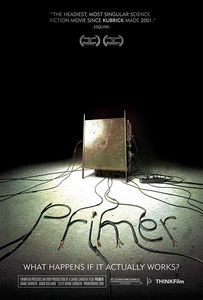
    (In theaters, January 2005) Heh! I’ve always said that you can make a real science-fiction film with just two guys in a kitchen, but I never expected any film to embody this wisecrack as literally as Primer. Shot on a ridiculous US$7000 budget, Primer certainly sounds like a low-budget effort (pray that the DVD has subtitles!) and looks like a half-decent Digital Video film. But beyond the grainy look and the inaudible soundtrack lies an authentic work of science-fiction, told in a wonderfully elliptical fashion with enough fascinating ideas to keep your mind running for a while. The cheap look and feel of the film actually helps it in some ways: it looks so unpretentious and, well, cheap that suspension of disbelief is achieved without any trouble. It helps that writer/director/producer/etc Shane Carruth’s script goes where higher budget fear to tread: there is a quasi-documentary rawness to the dialogue that makes it compelling even as you desperately want the production qualities to improve. Just make sure to tough it out until after the thirty-minutes mark: It gets much much better as it goes along. I’m still not convinced that the plot makes complete sense (the sudden appearance of a third, um, traveller is still a head-scratcher, and so it the lack of a follow-up on both that and the sudden bleedings) but it makes enough sense to enchant. During a year where big-budget SF crashed and burned so miserably, it’s something of a wonder that what looks like two guys in a garage came up with a story about two guys in a garage that come up with… oh, but why spoil it? Just see it. With subtitles. I hate to harp on this, but you’ll agree with me after seeing the film.

  • On The Nose aka Delaney’s Flutter (2001)

    On The Nose aka Delaney’s Flutter (2001)

    (On DVD, January 2005) There is a whole universe of slight comedies out there on the “straight-to-video” shelf, and this one is no different than most. Featuring solid actors (Robbie Coltrane, Dan Aykroyd) in low-profile roles, a competent script without too much flash and an interesting idea or two, it’s exactly the kind of film completely unsuited to the massive Hollywood marketing machine, which would probably end up creating false expectations anyway. In fact, it’s best to come to this film without any preconceived notions. How else to enjoy a tale of a compulsive gambler who comes to discover the secret to infallible horse-picking through the preserved head of an aboriginal in a jar? (It naturally gets more complicated as the head becomes an object of interest for parties such as the mob.) No, you’ve never heard of the film, and neither have any of your friends. But that’s all right: just have a look. The story is no worse than any of the blockbusters, and the oddly unassuming charm of the production is a strength in itself. Not too bad, despite the thin and laid-back comedy.

  • The Partner, John Grisham

    Island, 1997 (1998 reprint), 468 pages, C$10.99 mmpb, ISBN 0-440-22604-X

    Ever since John Grisham started hitting the best-seller lists, critics have been saying terrible things about his fiction: His stuff repeats itself, deals in easy populist clichés, lacks stylistic flair, etc. For a long while, I bought into the anti-hype: After an indifferent reaction to Grisham’s first four novels (A Time to Kill, The Firm, The Pelican Brief and The Client), I took a long break. It took the movie adaptation of The Runaway Jury to make me interested in Grisham’s fiction again, with pleasantly surprising results. Picking up The Partner and being equally entertained may be the beginning of a renewed appreciation for the author.

    It starts as if it was a sequel to The Firm: After years spent running and hiding from his old life, ex-lawyer Patrick Lanigan is captured by men hired to find him. His crime? Faking his death, stealing ninety million dollars from crooks and slipping away. As you can guess, criminals can do many unpleasant things to get that much money back. Torturing Lanigan to find out the location of the money is one of the first things that comes to their mind once he’s safely handcuffed. But Lanigan has an accomplice, one that will engineer his transfer to lawful authorities and provide his defence lawyer with enough legal ammunition to keep things interesting.

    As the story moves back to Mississippi, everyone is only too happy to welcome Lanigan with a flurry of lawsuits. His wife files for divorce; insurance companies sue him for fraud; everyone wants the money and the state charges Lanigan with murder to explain the fact that a body was certainly buried in his place… Welcome back, Patrick; this way to the courthouse, please.

    Tortured, detained, swamped in unfriendly lawsuits, you’d think that Lanigan is merely a few courtroom scenes away from a crispy spot on the electric chair. But don’t be so sure: As the story of Lanigan’s disappearance is gradually revealed, there’s a lot more to this story than you may think. Maybe not much more than you’ll be able to guess, but more than enough to keep you interested.

    Entertainment is what Grisham is all about, after all. The Partner is a page-turner of frightening efficiency, which is all the more remarkable when you consider that most of the book consists of exposition thinly disguised as conversations between lawyers. Lanigan’s capture is the defining action moment of the story, but The Partner often spends more time explaining, in painstaking detail, the way Lanigan got away with his fabulous escape plan four years earlier. Before long, it’s not hard to guess where the novel is heading. (I certainly had an early lock on the big final revelation, though the last-page twist caught me by surprise.)

    From a technical perspective, Grisham often slips viewpoints between character without the adequate breaks, a sloppy lack of control that may annoy a number of readers. It’s not the book’s worst flaw: From the audience’s point of view, The Partner flounders a long time in search of a protagonist. Lanigan may have the lion’s share of the scenes, but he’s so secretive, even to the reader, that he’s more akin to an interesting phenomenon (a genius-level legal escape artist, one is tempted to say) than a sympathetic protagonist. Readers may come to rely on friendly defence lawyer Sandy McDermott as a stand-in, but even he is just another one of the supporting characters revolving around the bed-ridden mystery that is Lanigan. Too bad… but then again, if this is a procedural legal thriller, maybe it’s best to consider the convoluted escape plans as the book’s true stars.

    But no matter, because it’s difficult to stop reading once the The Partner gets going. Frankly, it takes a lot of guts and skills for Grisham to immobilize his main character in a hospital room, set most of his action in a series of meetings and still manage to deliver a novel that reads at two hundred pages per hour. The writing may be featureless, but it’s perfect when it’s intended to keep the reader around for “just one more chapter”.

    You could dissect The Partner until you’d be left with yet another populist southern-lawyer thriller written for speed over style, and you’d end up missing the point of the book: It’s fun, it’s surprisingly interesting and it leaves a good impression. Maybe even reason enough to pick up Grisham’s other novels.

  • Mystery, Alaska (1999)

    Mystery, Alaska (1999)

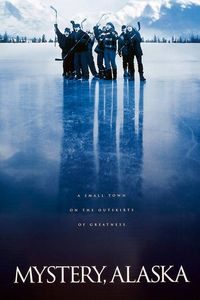
    (On DVD, January 2005) Starring a pre-megastar Russell Crowe, this movie tells the story of a hockey-obsessed Alaskan town that finally gets the chance to see its home-grown team face off against a pro NHL lineup. If you’ve taken screenwriting classes in the past ten years, you can plot the story yourself: The soap opera romances, the father-son conflicts, the small-town-boy-does-good, and so on. Marry it with a sports drama all leading up to a big final game, and you’ve got it all pre-packaged. To its credit, the film is almost invariably amusing. On the other hand, there isn’t a whole lot of originality to it. The dialogue is slightly better than average for this type of film (thanks to David E. Kelly) and the casting even gets some mileage out of Burt Reynolds. Not bad, except for the fact that we all know that it should have taken place in Northern Ontario.

  • Diarios De Motocicleta [The Motorcycle Diaries] (2004)

    Diarios De Motocicleta [The Motorcycle Diaries] (2004)

    (In theaters, January 2005) Funny, dramatic, historically important and occasionally moving, this “Young Che Guevarra” adventure is the sort of thing that would be worth watching even if the protagonist wasn’t a man who would become a generational icon. You don’t have to be a pamphlet-carrying Marxist to enjoy this series of events as Guevarra and his best friend Alberto Granado try to cycle their way through South America. Chances are that you’ll laugh as they behave like ordinary horny young men, looking for silly adventures with pretty girls and ending up forging their philosophy for the rest of their lives. The script is a bit forceful, especially with you compare it with Guevarra’s own written diary of the events. Events are shaped and dramatized to be a lot more meaningful that they appeared to Guevarra at the time but, hey, this is a movie. On the flip side, this infusion of meaning also gives a far more accessible structure to Guevarra’s trip. I was sorry to see some his adventures stay on the page, but generally pleased by the way some things were best explained in a visual fashion. (And then I saw the credits, which state that it’s based on Alberto Granado’s book about the same trip; some material may be from this other source) As a gateway into life as it was known in South America (and still probably is, for all I know), it’s exceptional.

  • Million Dollar Baby (2004)

    Million Dollar Baby (2004)

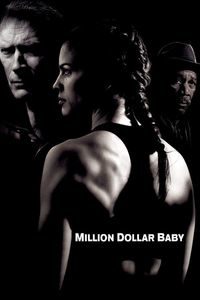
    (In theaters, January 2005) Oscar season is once again with us, and that means a slew of painful movies about impossible odds, plucky heroes, heavy drama, famous old actors playing what may be the last great performances of their careers, and that type of stuff. It’s as if every year included its quota of such film made for the above-fifty contingent that makes up most of the Academy, and so Million Dollar Baby fits in this year’s slot. Oh, it’s not as bad as you’d expect. The boxing scenes (for it is a film about a woman boxer breaking into the scene though sheer self-determination… oh, you’ve heard this one before) are good, and I suspect that this film will teach more about the technical side of boxing than any other work of fiction. Efficiently directed by Clint Eastwood, this film plays it simply, slips up only occasionally (mostly in its depiction of a hillbilly family) and moves without any fuss. I suppose that it should be commended for an unpredictable third act, but the truth is that the said third act feels very long and pointless after that came before: The sports film veers abruptly into straight-up Oscar-bait drama and never recovers. The last ten minutes feel like a stretch of the inevitable. Bah. You know that the usual crowd will go nuts for the film; people like me barely have the luxury of complaining.

  • Here’s To Life! (2000)

    Here’s To Life! (2000)

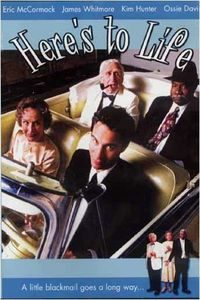
    (On DVD, January 2005) I know; if you’re not yet 65, there are few things less appealing than a comedy starring retirement-age actors on a self-discovery trip. And yet, given the chance, Here’s To Life! manages to be something worth watching for the entire family. Eric McCormack stars as the young guy kidnapped by an elderly trio intent on one last wild trip while they still can. That they’ll discover stuff, pass on some of their wisdom and maybe even expire on the way isn’t in doubt, but the film itself has a bunch of good moments and enough material to sustain interest during its entire duration. Fortunately, the film can depend on its veteran actors and lush British Columbia scenery. All told, it’s just a very very nice film. And that’s all there is to it.

  • Broken Angels, Richard Morgan

    Gollancz, 2003, 400 pages, C$24.99 tpb, ISBN 0-575-07324-1

    Few SF readers were left unimpressed by Altered Carbon, Richard Morgan’s enviable debut novel. A dazzling mixture of pitch-black detective fiction and hard-edged extrapolation, Morgan’s first book immediately announced the arrival of a promising new author, one who could build upon the genre’s traditions and bring them forward in the twenty-first century. While Broken Angels is a conventional side-step in a different genre, it offers plenty of rewards to anyone who won’t mind a bit of action-packed futuristic adventure.

    Takeshi Kovacs, the hero of Altered Carbon, is once again the star of this follow-up novel, but whereas his first adventure was modelled on crime fiction, this one is straight-up military SF served with a touch of treasure-hunting. Stuck on a remote planet fighting a war he never believed in, Kovacs begins the novel in rehab after a particularly nasty battle. He’s soon contacted by a man with a tall story of alien artifacts and a lost starship. Pages later, Kovacs can be found leading the retrieval effort, making deals with amoral corporations and training his crew of intrepid special forces soldiers.

    It’s no insult to Morgan to call him a white-knuckled writer of upscale men’s adventures. Altered Carbon‘s mix of hardboiled sex and violence made even jaded reader wince in shock. Broken Angels follows in the same path, even finding (not always successfully) a surprising amount of sex into a situation custom-made for action. Mercenaries, traitors, body-destroying weapons and humans sins are the norm in this thrill-a-chapter roller-coaster.

    Perhaps the best thing about Broken Angels is how it builds on the hints left in Altered Carbon (Martians!) to create a far more complex universe featuring a long-lost alien race, dirty wars galore, complex power plays between governments and corporations, factions within factions and enough grittiness to make it all feel real despite the plot contrivances. Clearly, Morgan has made himself a playground rich enough to serve as the setting for a few more novels if he so chooses. (Early word suggests that Kovacs will return in 2005’s Woken Furies) Kovacs himself is far more in his element here as a gun-for-hire, thanks to top-notch UN Envoy training and tons of hard-won experience. You can’t ask for a better narrator, even despite his tendency to keep the emotional side of what he does carefully locked away from his tough-guy personae. (Which often works at the novel’s disadvantage —especially when he flips out and starts shooting in chapter thirty-nine.)

    Perhaps just as interesting is Morgan’s explicit political positioning. After a number of rather heavy hints in Altered Carbon (where only the rich can exploit the advantages of “sleeve” technology, etc.), Kovacs’ reluctant-warrior reflections place Morgan squarely alongside other newish writers (Miéville, etc.) whose left-of-centre politics fully inform their fiction. Some will undoubtedly find this tiresome, but in many ways it’s a welcome shot in the arm for a genre who should be asking questions and upsetting the status-quo. In Broken Angels, the merciless portrayal of the corporations running the show is as nasty as the worst cyberpunk had to offer, but it’s partly influenced by the new anti-globalisation movement and developed with a great deal more skill and complexity. (More on this in the singleton Market Forces… at least if I understand the cover blurb correctly.) Despite the sex, the violence and the big guns, Broken Angels doesn’t have much in common with stereotypical military-SF nuke-em-ups. Imagine cyberpunk spliced into an anti-war novel.

    Cynics will be quick to point out Morgan doesn’t innovate much when plotting Broken Angels: “Explorers of various backgrounds banding together to explore an alien environment” can date back all the way to Burroughs’s The Lost World and earlier. But Morgan succeeds reasonably well in updating this template to current standards. Every weapon description is peppered with enough techno-jargon to make you see the serial numbers. The last chapter has as many twists as an entire noir novel. As alluded above, even the generic “war is awful and corporations are bad, m’kay?” message is developed with enough skill to be palatable, maybe even engaging.

    Nothing in Broken Angels is broken. Familiar, maybe, but in the end, what’s left is a fine slick read, with steady forward momentum and enough action to satisfy anyone looking for faster SF. Yes, Broken Angels suggests that Morgan could become a one-trick action/adventure writer if he so chooses. But it’s too early to tell: In the meantime, Broken Angels is a whole lot of fun, especially for reader who like stuff blowing up, but can’t face the prospect of yet another generic Baen military-SF book.

  • Inosensu: Innocence [Ghost In The Shell 2: Innocence] (2004)

    Inosensu: Innocence [Ghost In The Shell 2: Innocence] (2004)

    (In theaters, January 2005) As a rabid fan of the first Ghost In The Shell, I had high expectations for the sequel, all of which were dashed. In a bizarro reversal on the strategy of playing up a first film’s strengths, Innocence revels in the first film’s worst traits and forgets nearly everything that made it so good. In a nutshell, Innocence is a simplistic fifteen minute film stretched over more than an hour and a half. The rest of the time is spent spouting nonsense at tediously low bandwidth. While Major Kusanagi is good for a cameo voice appearance, Batou simply isn’t strong enough as a protagonist: He is adrift without a strong anchor, and the hound dog doesn’t cut it. Innocence is not without its good moments; the last fifteen minutes, once the action starts again, is good in ways that remind us of the first film, and some odd scenes here and there (the intro; the barely-coherent convenience store shootout; the repeated sequences) have at least the potential to be interesting. Plot-wise, though, this film is a mess (yeah, just go in and start shooting the Yakuzas… that’ll work), and it doesn’t even try to cover up its worst problems through fast pacing. Worse is the philosophy: Unless something went horribly wrong in translation, you could find more philosophical insights in the third Matrix film (yes, the third) than this one. Yikes; don’t be surprised if the endless droning just drives you to sleep. On the visual front, the CGI is much nicer than in the original film, but the traditional character animation now clashes with the background more than ever, a problem that is only becoming more jarring as animated films keep depending on this half-and-half technique. Go rent the original again and temper your expectations again regarding this sequel.

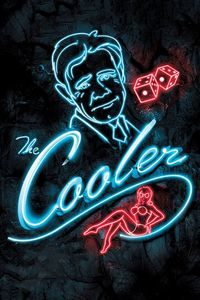
  • The Cooler (2003)

    The Cooler (2003)

    (On DVD, January 2005) Don’t be surprised if you start wondering, twenty minutes in the film, how much more of the protagonist you can take. William H. Macy stars as Bernie, a fantastically unlucky man who works a low-rent Vegas casino as a cooler, a man whose bad luck is so contagious it evens up the odds in favour of the house. As you may suspect, this uninterrupted streak of bad luck doesn’t stop at gambling: Romance is similarly impossible, and there is a basic pathetic quality to Bernie’s existence that overwhelms everything else. Bernie is a loser mostly because he’s never learnt to be anything else, and his trouble start once he begins to turn things around. Stuck with an unbearably evil boss (Alec Baldwin), his budding romance with a friendly waitress (Maria Bello) may be his salvation or his doom… depending on where Lady Luck decides to take him. As with most movies dealing with the element of chance, the plot can often be an accumulation of improbable coincidence. But the film gradually improves out of its initial humdrum beginning, using its low-life Vegas locale to good effect. It’s not a spectacular film (despite odd moments of good direction) nor is it something you’ll start cheering for, but it’s the kind of movie that leaves a good impression once the first act is over.

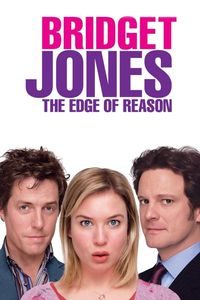
  • Bridget Jones: The Edge Of Reason (2004)

    Bridget Jones: The Edge Of Reason (2004)

    (In theaters, January 2005) The first rule of happy romantic comedies are that they end at the right moment. There is no rational reason for them to have sequels, given that the ending is already pre-ordained and all you get is ninety minutes of needless complications. What’s worse in this case, however, is that this sequel raises anew the question “What does he see in her?” and fails to offer any good answer. What’s left is a series of “oh, isn’t she adorably stupid!” moments, of which we had quite our share in the first film. Gaah. (And I liked the first film.) Fans of the book will be both pleased and saddened by the considerable changes wreaked on the plot line: No more incompetent handyman, no more interview with Colin Firth, no more uncomfortable suicide attempt. More of Hugh Grant as Daniel Cleaver. More of Colin Firth as the unflappable Mark Darcy. Much more of Renee Zellweger as Bridget Jones. (She looks a lot more curvaceously attractive here, extra pounds and all, than the featureless stick-like waif she played in Chicago.) I suppose that undemanding viewers will enjoy more of the same. For the rest of us, though, enough is quite enough. No reason, no edge either. Hey, who knew Thai prisons were so entertaining?

  • Lost in a Good Book, Jasper Fforde

    NEL, 2002, 372 pages, C$14.99 tpb, ISBN 0-340-73357-8

    Jasper Fforde made quite a splash with his 2001 debut novel The Eyre Affair, a dazzling mix of humour, alternate fantasy, thriller and romance in a world where barriers between fiction and reality aren’t quite as solid as anyone would think. This assured debut quickly won him the favour of book-lovers around the world, and the least one can say about the sequel Lost in a Good Book is that it won’t disappoint any of his fans.

    Fforde leads us once more into his madcap alternate reality via the narration of detective Thursday Next, a woman of uncommon abilities and unparallelled contacts. Her father is a time-traveller, her colleague is a supernatural slayer and her pet is a dodo. Given that her enemies range from criminal masterminds to the Goliath mega-corporation, it doesn’t take half a book before her husband is erased from history. Next step? Recruitment by a very special policing force and the impending end of all life as we know it.

    Oh, yes, all the fun of Fforde’s first novel is to be found in Lost in a Good Book, and much much more. This sequel deals heavily with the reality/fiction transgressions that shined so brightly in the first book, playing well to his established crowd of book-loving readers. Picking up scant weeks after the events of The Eyre Affair, Lost in a Good Book fulfils the first requirements of a good sequel by confronting its protagonist with the consequences of her earlier actions.

    Once more, Next has to defy the odds against her and navigate through impossible adventures to make it alive at the end of her novel. What’s new in this volume are her added powers and responsibilities as a junior member of Jurisfiction, an organization dedicated to keeping literature free from tampering. You see, all books in history are kept at the Grand Library, most novels have lives of their own and Jurisfiction is the agency that keeps it all in order…

    This particular subplot leads to one of the best scenes in the entire novel: As Next greets her compadres in literary enforcement, she recognizes them easily from classic works. But then…

    “Welcome to Norland Park, Miss Next. But tell me, as I am not so conversant with contemporary fiction – what book are you from?”

    “I’m not from a book.”

    Upon which her interlocutor “looked startled for a moment, then smiled even more politely” [P.265]

    Heh. And if you don’t think that’s mildly clever, just wait until Next uses decreasing levels of entropy to her advantage.

    But one could quote favourite bits for ages without touching upon how Lost in a Good Book lives up to the expectations raised by its title: There isn’t much in this book that isn’t tons of fun, from the daily details of the protagonist’s life to neat ideas (such as communication through footnotes) and an increasingly sophisticated mythology featuring all, er, creation. Readers should rejoice, because Fforde is writing catnip for bibliomaniacs. (From the title of the third book of the series, The Well of Lost Plots, I’m guessing we’re not done exploring meta-fiction. Particularly absent is the role of the authors in this fictive cosmology, which is probably being kept in reserve for a latter instalment)

    This being said, Lost in a Good Book comes with its share of dark moments, characters being eliminated and a finale that is more of a temporary respite than a conclusive victory, suggesting that this is only a middle tome of a continuing series. While few would designate this series as anything but a comedy, I suppose that every character will have to take a few hard knocks until the grand happy ending.

    But don’t let this discourage you: If you enjoyed The Eyre Affair, it won’t take much to convince you to race through the rest of Thursday Next’s adventures. I myself am rationing all Fforde Ffiction to one per month, and there are regrettably only two more to go. Know simply this, though: During Lost in a Good Book, I never peeked at the page number to gauge my progress through the book. Not once.

  • Salt, Adam Roberts

    Gollancz, 2000, 248 pages, C$34.95 hc, ISBN 0-575-06896-5

    Having been favourably impressed by Stone, my quest in reading the whole Adam Roberts back-catalogue properly begins with his first novel Salt. Even without the benefit of more than two data points, I can see a few trends in the entire Roberts oeuvre.

    The first is, obviously, Roberts’ fondness for weird planetary environment. Salt‘s main claim to distinction isn’t the story (an early-colonization tale of war between cities of different cultures) but the environment in which it takes place. As the title suggests, the human colonists of Salt end up on a planet covered in deserts of fine salt. There are only two main water bodies to provide essential fertile ground and we’re constantly reminded of the difficulties in colonizing what remains a hostile planet. Life on Salt is dominated, well, by salt. Howling winds that can sand-blast everything through fine grains of NaCl. An atmosphere containing mostly chlorine. Vegetation that isn’t much more than an organic salt arrangement. Undrinkable water. High levels of solar radiation. It’s not particularly convincing (you’ll have to suspend your disbelief for a while as the colonists manage to raise the oxygen content of the atmosphere from zero to fifteen percent in a few years, and believe a world map with only a few distinguishing features) but it’s a fine and original playground for a short novel.

    The second of Roberts’ distinctive traits would be a tendency toward gentle stylistic experimentation. Salt‘s tale of strife is told, alternately, by Petja and Barlei, two representatives from opposing sides. The Alists are anarchists without a central government, organized only through strong motherhood rights and computer-selected work rotas. The Senaarans, on the other hand, are ultra-capitalist fundamentalists with an absolute belief in hierarchy and military power. You can see the basic problem between those two factions, and it doesn’t take a long time (say, half the book) before shots are exchanged. Roberts chooses to tell the tale through self-serving alternating viewpoints, with both sides colouring events and perceptions to suit their own beliefs. (With sometimes curious ironies: Petja, we quickly learn, is an anarchist who takes up leadership quite naturally) As with Stone‘s “translation footnotes”, Barlei’s manuscript is occasionally interrupted by vocabulary notes from a transcription machine, raising the possibility of built-in censorship in between the teller and the receiver. It’s easy to be fascinated by the alternating viewpoints, which makes the structure of the book more than an empty trick.

    Unusual world-building and gentle structural/stylistic experimentation are both admirable in a Science Fiction book, and they do much to gain goodwill amongst hard-core fans of the genre. Fortunately, Salt benefits from a certain innate interest beyond those two characteristics: I’m a sucker for colonization stories and so the nuts-and-bolts details of how Salt is tamed into (slight) submission were almost endlessly fascinating. Later, the details of the military engagements between Als and Senaar are similarly interesting, without falling in the usual military SF tediousness. Some may have problems with the pacing (and I do have issues with the last tenth of the book) but hard-SF fans should breeze through Salt.

    But easy reading and a bunch of good ideas aren’t all it takes to deliver an above-average reading experience. In fact, they may make obvious fundamental problems that wouldn’t be so glaring in a badly-written novel. In Salt‘s case, what quickly becomes obvious is that the opposing factions are so unspeakably dumb that all pretences of a realistic conflict are erased. The “negotiations” between the two groups have no basis in reality as we know it; even the most elementary political rudiments are ignored. Heck, all of Salt‘s decks are stacked: think “ADD-addled Hippies” versus “Fundie Patriarchs” and reflect on how such political structures could exist. They can’t (and neither could such monolithic ideologies stay pure in a population numbering at least hundreds) and so Salt feels a lot like a contrived moral lesson.

    And what’s the lesson? Wars are pointless. Many die. Wow. Good thing that the book is only 250 pages long, because as it peters out to its weak ending (including a last twenty pages that tells nothing new), I may have been frustrated by the novel’s lack of a stronger point. Oh, wait, I am.

    No surprise, then, if Roberts’s debut is such a mixed bags of impressions. It fulfils a basic level of expectations, but at the same time contains such fundamental flaws that it’s hard to take seriously as a contemporary piece of SF. As a fable, it may have worked back in the sixties. But with the amount of serious details and sophistication, it simply invites a degree of real-world scrutiny that it can’t withstand. Oh well; on to Roberts’ next novel then.

  • Light, M. John Harrison

    Gollancz, 2002, 320 pages, C$24.99 tpb, ISBN 0-575-07026-9

    I seldom check other reviews of a book before I write the first draft of my own reviews: doing so could compromise the integrity of my thoughts as they’re initially set down. (I have no such qualms checking other reviews between the first and final draft, if only to see if I haven’t missed anything, so it’s not as if I’m a purist about this.) The exception in this case is that I read a lot of reviews about M. John Harrison’s Light well before purchasing the book. It was hard not to, given how the book was uniformly lauded by just about every member of the online SF critic community. From Cheryl Morgan to Matthew Cheney, sfsite to scifiweekly, Light scored reviews that read a lot like “Buy it, read it, it’s the best book of the decade, in fact it’s so good that I’ll never read anything as good, aaargh, I might as well kill myself now.”

    Wow. How do you resist such unanimous applause? So I chose not to.

    But a caveat came attached to just about every recommendation: Light was a difficult book. A stylist’s book. A stylistic hologram where every sentence was linked to some other part of the novel.

    Now this is exactly the kind of warning that would mollify my enthusiasm. I’m not a very patient reader, nor much of a stylist. In fact, years of reading have revealed that I have something like a tin ear whenever prose quality is concerned: I’d rather wade through journalistic prose to get to a dozen ideas than to read twelve finely crafted sentences containing a single concept.

    So I set aside an afternoon and waded in Light with a certain amount of apprehension. I ended up satisfied and relieved, though I fear that my own take on the book will prove to be a lot less enthusiastic than the Big Boys (and Girls) of SF Criticism.

    Light is made of three strands of story. The first stars a physicist who murders more people than he does science. The second is all about a starship pilot who, in essence, is so melded to the ship that she barely qualifies as human (and flippantly kills even more people than the physicist). The third is about a burnt-out explorer who lives on the run from the mob. The last two story lines take place in 2400; the first in 1999. But they’re all related, oh yes.

    The first few pages make it clear that we’re in for a long read despite the book’s short length and big typeface: the density of the prose is quite amazing, and Harrison had honed the prose for maximum efficiency. It’s a style that requires some unpacking, so don’t be surprised to rewind and read a few sentences a few times to understand what’s going on.

    And yet, it’s not a bad read. Despite my own problems with fine writing, I had no problems making my way through the book, despite the unpleasant characters, tortured psychodramas and alternating viewpoints. I grew worried that the three strands of the narrative wouldn’t mesh together beyond the obvious ironic value, but the last few pages managed to bring everything in a satisfying whole.

    But as I closed the book, I found myself wondering if that was it. Competent, sure. Satisfying, yes, but hardly worthy of all the hype. Re-reading the raves, I belatedly noticed that most reviewers had far more affection for the previous works of Harrison than I did (whereas I approached it as, essentially, a first novel by an unknown author), which probably had something to do with it.

    But at the same time, I would myself agreeing with some of the most laudatory statements about things I may have dismissed too easily upon first reading. Light increasingly seems like one of those novels that appreciate with time: You find yourself reflecting on what had seemed like an easy trick at the time and realizing that it was, in fact, fiendishly clever of him. Harrison makes it all appear effortless, even matter-of-fact, but isn’t that the mark of great art; to make it seem natural?

    Clearly, my opinion of the book is shifting upward even as I write this. Should Light come bundled with a reader’s guide? Maybe reading a few other reviews could help…

  • A Year at the Movies, Kevin Murphy

    Harper Collins, 2002, 362 pages, C$22.95 tpb, ISBN 0-06-093786-6

    Ask two cinephiles about a certain movie and you’ll get at least three different opinions. This is, mind you, before the cinephiles use the films as branching point for discussions about life, the universe and everything. Soon enough, you will find that every film can lead to hours of free-ranging discussion, and it doesn’t take much (“So, hey, how was the last Spielberg?”) to unleash the average cine-geek.

    We’re like that. And I say “we” self-consciously, because it’s a bit useless to deny any association with cinephiles when I consider my weekly movie theatre habit, my movie-reviewing column, my obsessive reviewing and/or my own tendency to use movies as intellectual springboards to just about everything else. So when I saw Kevin Murphy’s A Year at the Movies, I didn’t have to make any particular effort to understand what he wanted to do.

    And his particular premise for the book is simple, insane and admirable: For the entire year of 2001, Kevin Murphy (best known as “Mystery Science Theater 3000’s “Tom Cervo”) saw at least one movie per day. And no cheating: At least one movie per day in theatres, with a backup plan that included a portable movie projector. Whoa.

    It’s a quest that would take him on at least three continents to visit theatres big and small, hot and cold. Assorted challenges (such as seeing the same romantic comedy seven times with seven different women) are included in the mix, and the book takes a chapter-per-week (roughly) approach at telling Murphy’s odyssey. Every chapter begins with an itemized list of movies seen, and usually takes the form of a short essay on this or that aspect of cinema-going. From the onset, it’s obvious that Murphy isn’t interested in the films themselves than in the cinema-going aspect. He seldom discusses the merits of specific films, preferring a broader approach suggested by the week’s experience. In short, this is a book for moviegoers, not critics.

    The first few chapters strike an intentionally jarring note. As Murphy bitches and moans about the sorry state of Hollywood movie-making, doubts begin to creep in: is the entire book going to be like this? Saddled with gratuitous slams at mainstream cinema? It doesn’t help that there are contradictions: more artistically challenging films are alternately praised and dismissed, proving that Murphy has as many conflicting opinions as the rest of us. Then there’s the supplemental amusement value in reading Murphy complaining about modern audience’s talkback and ironic detachment… after spending so many years on MST3K.

    But Murphy’s initial snobbishness proves to be an integral part of the book’s main dramatic arc. By the time new year’s eve rolls in, Murphy has learnt to appreciate cinema once more, with perhaps a little bit less condescension. Still, he suffers for his art: his travels take him to googolplexes and the world’s coldest theatre (in Canada, obviously), from Australia’s outback to the long Scandinavian day. It is, indeed, a moviegoer’s odyssey, and from what I could gather from the narrative, he only missed his self-imposed objective once, stuck deep in Italy with a broken projector.

    As a fellow movie geek with plenty of stories to tell (2001 was also a big cinema year for me, from plenty of free screenings, movie dates, first movie-reviewing column, 9/11 at the movies, to breaking out of mild depression during ZOOLANDER), it was remarkably easy to cheer for Murphy one the initial unpleasantness rubbed off. In a year that included JOE DIRT, FREDDY GOT FINGERED, CORKY ROMANO and PEARL HARBOUR, I kept saying: Oh, poor you! But imagine my whoops of laughter as Murphy managed to smuggle an entire Thanksgiving dinner to a screening of MONSTERS incorporated, or his fabulous adventures at the world’s classiest theatres.

    I may be considerably softer on the commercial imperatives of the movie industry (I would love, for instance, to spend time at the business side of Sundance or Cannes) and my threshold for entertainment is far more lenient than Murphy, but there’s no denying that we’re part of the same tribe of cinephiles. A Year at the Movies is an example of great film writing. Read it and cheer. Heck, no, Murphy and I don’t have the same opinions, but that’s how it should be… and I certainly enjoyed disagreeing.