Author: Christian Sauvé

  • House of Leaves, Mark Z. Danielewski

    Pantheon, 2000, 706 pages, C$29.95 tpb, ISBN 0-375-70376-4

    Reviewing books on this site for the past few years, I’ve said plenty of ignorant and silly things about a mythical group of “literary types” who would (I imagine) snottily read pretentious literature, pooh-pooh genre fiction and cling to their English Literature degree as if it had any real-world relevance. As I grow older, weaker and softer, I’m ready to admit that this confrontational attitude may not be the best, and that I do no one any favours by opposing the worst clichés of “mainstream literature” to an idealistic image of “genre fiction”. In the real world, isn’t it all middle ground anyway?

    Certainly, books like House of Leaves do a lot to bridge the gap between the two mythical groups I have the unfortunate tendency to oppose. At its heart a horror story merged with a suburban romance, Mark Z. Danielewski’s debut novel also earns the distinction of being one of the most playful literary experiment I’ve ever read, all categories combined. A dazzling mixture of book design, subtle jokes, mixed storytelling and erudite writing, it’s also devastatingly effective as a horror novel.

    Where to begin to describe the unique features of the book? How about this: all mentions of house in the book’s 706 pages (in all languages) are printed in blue. It has footnotes, footnotes within footnotes, circular footnotes, “transparent footnotes”, sidenotes and endnotes. It purports to be a manuscript studying an eerie film about an impossible house, commented by the discoverer of the manuscript, further commented by the editors of the book. It consciously mixes fonts according to the author, features struck-out passages and accelerates the pacing through fewer words per page during action scenes. Pages are printed sideways, at an angle and upside-down. It includes pictures, letters, manuscripts and tons of spurious references to things that don’t exist.

    It is, in short, a book that you can’t read passively. It’s constantly playing along with the audience, daring it to follow as it gets weirder and weirder. One of House of Leaves‘s best aspects is how it gradually reveals its madness, up to a paroxysm where you have to flip over the book frantically to keep up with the action. Wonderful!

    What is perhaps more amazing for genre readers is how the low-key terror of the book ends up being far more effective than pure out-and-out gore horror fiction. The uneasiness is introduced so seamlessly in the course of the character’s ordinary life that a 5/16” discrepancy in measurements is almost unbearable. Then delicious shivers start as shelves don’t meet the walls. Latter scenes featuring a multiplicity of closing doors and (later) a wall dissolving in nothingness produce reactions that have everything in common with the best shock horror movies. There’s never been such a haunted-house story before, and there’s seldom been more efficient ones. But you’ll have to read the book to find out why a line like “Ftaires! We haue found ftaires!” [P.414] can produce an audible “whoah!”

    It’s not all effective, mind you: As playful as it is, House of Leaves often gives the impression that it’s just screwing with the readers for the author’s own perverse pleasure. Most footnotes are supremely gratuitous, but few are so useless as the ones extending for pages on end, simply enumerating names, places and things that are or aren’t of relevance at this point in the story. Sadly, the book is also overwritten: As a big believer in the “Less is more” philosophy, I could have lived quite well without most of the Johnny Truant passages, or some of the most self-conscious passages that exist solely to demonstrate the author’s erudition.

    But it’s easy to forgo even those problems when considering the overall impact of House of Leaves. As a stylistic experiment, it’s not just impressive: It’s compulsively enjoyable. This may not be the most fun you’ll get from a novel this year, but it’s almost guaranteed to be the most fun you’ll have with a novel. (I’m also fascinated by the idea that House of Leaves may be just about impossible to replicate satisfyingly in electronic form for years.) As a genre novel (romance or horror; take your pick), it’s quite good. As a bridge between mainstream and genre, it’s just about perfect. What do you know,maybe it extends forever…

  • The John Varley Reader, John Varley

    Ace, 2004, 532 pages, C$23.50 tpb, ISBN 0-441-01195-0

    Let’s make this very simple: If you have never read anything by John Varley, you should get this book. If you have read everything by John Varley, you should get this book.

    If you even nominally consider yourself a Science Fiction fan, I don’t have to explain Varley to you. How he was the Larry Niven of the late seventies; how his short fiction effortlessly slapped around the rest of the genre through limpid writing, audacious concepts and relentless optimism; how vital he was at a time where SF was still trying to sort out the fallout of the New Wave. He combined mature gender politics with Heinleinian verve, anticipated cyberpunk (never being properly credited for it) while writing SF that was decades before its times, shocking and delighting contemporary audiences. His combined body of short stories is, even today, an amazing piece of work. And now The John Varley Reader brings a lot of it together: Seventeen tales spanning thirty years of writing, including three Hugo-Award-winning stories.

    If you haven’t read Varley yet, this is the best place to start: His short-story collections are woefully out of print (Heck, I had to read The Barbie Murders in French translation, and I’ve never seen a copy of Blue Champagne to this day) and trying to accumulate his fiction on a piecemeal basis is an exercise in frustration. (Especially when you consider his sporadic publishing history, with novels published in clusters half a decade apart.) This anthology presents a dynamite assortment of stories that have not lost one whiff of relevance even decades later. This last point seems particularly important, so allow me to rephrase it: The is no nostalgic value in The John Varley Reader: Every one of these tale is as current and hip today as they were when they originally appeared. Even now-historical pieces such as “Press Enter []” have an immediacy that remains current to this day.

    And this goes to everyone, including non-SF readers. John Varley is one of the rare SF writer I would confidently recommend to any sufficiently daring non-genre reader. Now you can just give them a copy of The John Varley Reader and wait until their minds explode from all that accumulated pure-SF goodness. How do you explain something like “The Persistence of Vision”? As the description of an alien society made out of humans? As a realistic piece marred by the inclusion of an explicitly SF element at the very end? Heck, Varley’s take on gender roles alone (what with casual gender-switching so prevalent in his “Eight Worlds” universe) is still amazing today, not to mention his gentle brand of optimistic let-live philosophy. He’s not just an excellent SF writer; he’s -in many ways- the example of what a SF writer should be. His stories are readable, clever and provocative: true models of the short Science Fiction form.

    But for die-hard Varley fans, The John Varley Reader includes another bonus in the form of lengthy autobiographical passages. Varley hasn’t led an easy nor a conventional life, and the autobiography that emerges is both heartening and surprising. As he describes his adventures, we’re privileged to get a glimpse behind the fiction and be amazed once again, this time not at the fiction but at the writer. But wait; there’s more. There are previously-uncollected stories, such as the nifty “Just Another Perfect Day” or “The Bellman”, rescued from the time-capsule that is Harlan Ellison’s mythical The Last Dangerous Visions.

    I bought the book planning to read only the introductions and the stories I hadn’t yet read. But I found myself sucked into the whole thing, even the classic stories, re-reading all once more just for the sheer pleasure of it (Ah, “The Barbie Murders”, ah, “The Phantom of Kansas”).

    Hopefully, this collection also signals a return to form for Varley, whose output has been marked by lengthy periods of quiet followed by bursts of excellence. And maybe it’ll even lead new readers to his other work, from the succinct brilliance of The Ophiuchi Hotline to the wide-screen eccentricity of Steel Beach and The Golden Globe. Every half-decade or so, SF critics collectively say something like “thank goodness John Varley is back”. Now let’s hope he’s back to stay.

  • Pen Pals, Olivia Goldsmith

    Dutton, 2002, 360 pages, C$35.99 hc, ISBN 0-525-94644-6

    With the untimely demise of Olivia Goldsmith in early 2004, we can expect her literary output to become a finite set (allowing for the usual posthumous publications). As a reader who likes to make sweeping generalizations about one’s life work, this places me in an advantageous position: I just have to “complete the collection” and I’ll be ready for a scathing assessment. I’m not there yet, but Pen Pals ends up being Goldmith’s last novel published in her lifetime (with Dumping Billy already in the publishing pipeline), leading to a cautious preliminary assessment.

    Unfortunately, the pattern of Goldsmith’s book follows the typical downward arc. From her capable debut with The First Wives’ Club (1992, adapted in a movie, etc.), Goldsmith toned down the “female revenge fantasy” aspect of her first novel to produce a trio of rather moralistic-but-enjoyable docu-fiction studying different industries, from fashion (Fashionably Late) to TV/cinema (Flavour of the Month) to the publishing world (The Bestseller) As the nineties grew to a close, she went back to (poor) female revenge fantasies with Young Wives (2000). Pen Pals ends up being a mixture of both female revenge fantasy and docu-fiction.

    This time around, poor Jenifer Spenser is the victim of a plot hatched by her male bosses: She takes the rap for corporate malfeasance, goes through what is anticipated to be an abortive trial and walks away free in exchange for future considerations. Alas, as you may guess, things don’t go as planned and she ends up serving three-to-five in the pen. Ideal conditions for a revenge plot and a study of the carceral environment? Why, of course: Within pages, Jennifer meets her crew, suffers through the American prison system, engineers a corporate takeover, toughens up and ends up punishing her no-good traitorous boyfriend. Good times, good times.

    As pure entertainment, Pen Pals sustains interest much better than Young Wives (which got old really fast), providing at least the basic requirements of that sort of books. But it’s not quite as fascinating as her previous docu-fiction because the sense of wilful deceit is far greater than it was in, say, Flavour of the Month: Despite a few bad moments early on, prison life turns out to be a blast once snappier outfits are delivered. If we were to believe Goldsmith’s characters, most women in prison are victims of the system, innocent wallflowers that either killed their men when they deserved it, or got lifelong sentences for selling pot to their ailing kids. The few violent and mentally disturbed prisoners can be safely isolated in their own wing (they, of course, are nothing like the heroines of the novel.) Once prison management gets its act together, all can live in peace and harmony.

    Pardon me as I raise an eyebrow.

    Now, it is true that I don’t know much about the subject, but it doesn’t take a genius to figure out that writing a feel-good novel in a prison environment just begs for selective vision. Even Goldsmith acknowledges as such in the after-word. What compounds this basic problem, of course, is Goldsmith’s knee-jerk repetition of the female revenge theme. While there are ways to make it palatable and not too derivative (see her docu-fiction trilogy for examples), it doesn’t even take ten chapters for Pen Pals to fall into familiar plot templates.

    Goldsmith should be applauded for at least trying to raise awareness of problems related to the modern justice system, the increasing privatization of prisons and the plight of prisoners in an overburdened, underfunded environment. But really, the vehicle she has built to share her concerns actively works against what she’s saying: Whoever remembers Pen Pals weeks after reading it won’t recall an impassioned plea for better prisons: They’ll either remember a heart-warming tale of female empowerment, or a bad novel.

    What’s equally worrisome is that Goldmith’s latter work itself will be remembered more as bad fiction than good entertainment.

  • Starship Troopers 2: Hero Of The Federation (2004)

    Starship Troopers 2: Hero Of The Federation (2004)

    (On DVD, December 2004) Hmmm. Given how much I hated the first film, and how brutally the straight-to-video low-budget sequel was reviewed in and out the genre critics, you may be expecting a savage put-down. And yet, while I’m ready to concede that this is no high art, there are a few noteworthy things in this pure B-grade film. (And that’s without mentioning the occasional nude scene). First, it’s unabashedly cheap and unpretentious, embracing its own low-grade nature like few other low-budget films ever do. Second, it works really well as a testing ground for what I assume were fairly cheap and dirty special effects. While you may see the “Puppet Masters” plot coming from a mile away, the actual bloody revelation of the creature is hands-down one of the most effective such Special Effects sequence I’ve ever scene. Wow. The rest of the effects also work well, culminating in an apocalyptic finale. Generally speaking, the whole film gets better as it advances: from the cringe-worthy first few scenes, Starship Troopers 2 gets more and more confident as it advances, keeping its best cards for the end. A particularly ugly assault scene works as intended (as exploitative as it is), setting up a fantastic payback a few minutes later. A nicely ironic coda concludes the film with a nice little kick. No, this isn’t a complete waste of time. But you’ll have to be lenient.

  • Ocean’s Twelve (2004)

    Ocean’s Twelve (2004)

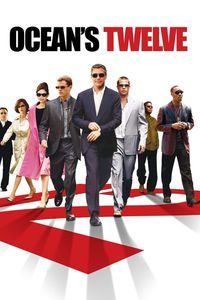
    (In theaters, December 2004) There are two Steven Soderbergh, and the wrong one directed this sequel. The first Sonenberg is the cheerfully commercial director, the one who did Erin Brockovich and Ocean’s Eleven. His movie may not have much depths, but they’re fun and slick. The second Soderbergh is the artiste. He makes Hollywood home movies like Solaris and Full Frontal, which excite film geeks but leave audiences yawning in their seats. And so it goes with Ocean’s Twelve, a wannabe crime caper that looks and feels as if it was a collection of outtakes for a more coherent film. Shot with the usual artistic grain, featuring elliptical dialogue and experimental direction, Ocean’s Twelve is artsy because it thinks it can get away with it. (From the box-office receipts, it sure looks as if it’s right.) But what it really does is screw with a story simple enough to bore schoolchildren. The hook of the “thief’s underworld” is quite nice, as is the developing competition between Danny Ocean and François Toulour. But the rest feels like a waste of time, from cryptic appearances by Robbie Coltrane to a dumb scene with Major Hollywood Stars pretending to be themselves. Imagine our deep and abiding interest as an audience. Catherine Zeta-Jones seems to be working with only a fraction of the charm she has, and that also goes for the rest of the players. Oh, there are enough satisfying scenes here and there to stave off outright dissatisfaction, but one impression remains: We, the audience, are paying for this superstar Hollywood vacation film.

  • For us, the Living, Robert A. Heinlein

    Pocket, 2004, 329 pages, C$11.99 mmpb, ISBN 0-7434-9154-8

    Wonders are all around us if we know where to look, and so that’s how the wonderful capitalistic system conspired to allow me to buy, in very late 2004, a paperback copy of a brand-new Heinlein novel at the local grocery store. Imagine that.

    I may never fully understand what possessed me to got check out the paltry selection of books at the neighbourhood Loblaws during an uncharacteristic salad-dressing-and-soy-sauce buying expedition, but there it was, in a smart hip cover: For us, the Living, by Robert A. Heinlein, “the author of Starship Troopers”. Imagine my thrill at dropping the novel onto the conveyor belt at the checkout. “Found everything you were looking for?” asked the clerk as per store guidelines. Yeah, I was tempted to answer, I’m buying a brand-new Heinlein paperback and it tickles me.

    It’s not as if I hadn’t heard about For us, the Living previously. The unexpected discovery of a copy of the original 1939 manuscript, shortly before the 2003 Worldcon, was widely discussed in the SF&F field. Reviews seemed unanimous in saying that it wasn’t a very good novel, but it was a mesmerizing piece of work for all Heinlein fans.

    I quickly found out what they meant by that. Yes, For us, the Living is a shoddy novel. A study of a 1939 man somehow thrown in a weird and wonderful new future, it’s not dissimilar to the utopian musings of H.G. Wells’ The Sleeper Awakes and Edward Bellamy’s Looking Backward. Structurally, it’s what I’d call a walkthrough novel, designed to show the audience the achievements of a new age: the plot is loosely arranged to allow the hero to explore facet after facet of Heinlein’s imagined 2086, a world where everything seems to be working remarkably well.

    As fiction, thus, For us, the Living isn’t a marvel of plotting, or even of characterization: Our protagonist is designed to be a bland stand-in for the readers. The heroine is saddled with -believe it or not- a three-page footnote explaining her life history. (Yikes!) Dialogue is often of the “As You Know, Bob” variety. (Or, more accurately, “Bob, you ignorant twentieth-century dweeb, this is what you should know.”)

    This being said, the fiction may not be gripping, but there’s no mistaking Heinlein’s gift for compelling prose. Even at its most didactic (and believe me, few things are more didactic than a chess game being used to demonstrate the fundamentals of Social Credit), For us, the Living retains an essential interest: It’s just plain fun to read. And some predictions ended up hitting surprisingly close to the mark. Take a look at this quote, for instance: “…if those bankers who were killed in the raid on Manhattan had expected to be bombed and gassed, there wouldn’t have been any war, But they didn’t. They thought the war would be fought far away by the professionals.” [P.88] Hmm!

    For Heinlein fans (and I classify myself as only a mild one), For us, the Living is a virtual treasure chest of early discoveries. Pay attention, and you’ll find the early outline of Heinlein’s “Future History”. Nehemiah Scudder is mentioned by name, as is Coventry. Rolling roads are introduced. Open marriages caps off the novel’s last chapter. If none of these things mean anything to you, well, you’re not the target audience for the book.

    No, the target audience for the book is composed of SF fans who just want a look at Heinlein’s first finished manuscript, and who will nod in agreement when Spider Robinson, in his introduction, refers to the novel as Heinlein’s “literary DNA.” The kind of SF fans who, upon reading the last line of Robert James’ excellent afterword, “A clean sweep at last.”, will know exactly which of Heinlein’s law of writing is being invoked, and what it ultimately means. The kind of SF fans who, in considering the meaning of “a clean sweep at last”, will feel a rush of blood to their heads and maybe even a dab of salty water in their eyes. A clean sweep at last.

    Oh yes, marvels all around us.

  • The Life Aquatic With Steve Zissou (2004)

    The Life Aquatic With Steve Zissou (2004)

    (In theaters, December 2004) By now, director Wes Anderson’s uneasy pairings of silly comedy with awful melodrama is fast approaching cliché, and this film doesn’t do much to correct this impression. On one hand, it’s more technically ambitious than either Rushmore or The Royal Tenenbaums (look at that: CGI! A cutaway set! Action scenes!) and doesn’t leave as bad a taste once it’s over. On the other, well, the death of some characters doesn’t mean much, the quirkiness seems too cultivated to be effective and there’s always the sense that Anderson’s films are a grab-bag because he lacks the ability to focus on a coherent objective. Too bad, also, that the editor of the trailer has a better sense of humour than Anderson himself: by selling this film as an outright comedy, the studio isn’t making itself any friends. Fortunately, acting credits are top-notch: Bill Murray reprises his soulful loser personae in yet another attempt to recapture an Oscar while the rest of the players struggle in his shining magnificence. All well and blah, but maybe it would be time for Anderson to do something else?

  • A Series Of Unfortunate Events (2004)

    A Series Of Unfortunate Events (2004)

    (In theaters, December 2004) No, Tim Burton didn’t direct this film… but other thank the annoyingly static camera setups you wouldn’t guess that its relative unknown Brad Silberling is responsible for this delightfully Gothic kid’s film. Not that it’s any kind of conventional film for the young ones: Dark and twisted enough to be the delight of all older moviegoers, this first Lemony Snicket often surprises by oddball plot twists and ghoulishly awful fake-outs. Jude Law’s dead-pan, almost sorrowful narration sets the tone, but the film rests squarely on the shoulders of Emily Browning and Liam Aiken as the two eldest Baudelaire children whose lives are afflicted by this series of unfortunate events. A who’s-who of other actors revolve around them, most annoyingly Jim Carrey, whose ham-fisted delivery is somehow supposed to be in character. No matter; the film thrives without him, revelling in a series of convoluted gags and weird sets. It is, all in all, surprisingly enjoyable for a film that seldom makes anyone laugh.

  • Flight Of The Phoenix (2004)

    Flight Of The Phoenix (2004)

    (In theaters, December 2004) Curse the lack of restraint of modern directors with an AVID editing station in their hands: Flight Of The Phoenix is a perfectly respectable old-school adventure, and it calls for a classic tone. For most of the film’s duration, that’s indeed what we get. But from time to time, the film segues into gratuitously wierd jump-cuts, dream-like sequences and other assorted modern trick that simply don’t work. Those moments don’t do much to compensate for the pedestrian dialogue and the iffy geographical coherency of the location. (My favourite moment is when they walk away from the side of the plane and end up in debris having fallen out of the plane earlier… which would place them behind the plane wreck! And that’s saying nothing about how the plane is at a handy distance away from dunes, nomad camps and natural runways.) Other annoyances abound; the look and development (“That’s my watch!”?) of the nomad camp encounter; the ridiculously extreme drama of some scenes and the jarring inclusion of “Hey Ya!” as a montage song. Still, there’s also enough to like in the film for everyone looking for a little adventure, from a spectacular plane crash that ensures that this will never be an in-flight movie to a refreshing lack of sexual tension between the protagonists and the lone woman in the team. Some of the desert cinematography is a thing of beauty, Randy Quaid delivers a good gruff performance and there’s a remarkable purity in the premise of the film. But it’s easy to see how The Flight Of The Phoenix could have been improved, and it’s a shame that it wasn’t.

  • The Eyre Affair, Jasper Fforde

    NEL, 2001, 384 pages, C$14.99 tpb, ISBN 0-340-73356-X

    Every book has an intended audience, and it’s not hard to see that The Eyre Affair is best dedicated to hard-core book lovers, avid readers and English Literature majors. Who else could appreciate this mixture of romance, adventure, mystery and fantasy in an alternate universe where the Crimean war still unfolds in 1985, where time travel is not unheard of, where the written word is still the dominant form of entertainment and where people can travel in and out of novels?

    Oh yes, Jasper Fforde’s fiction is aimed straight at the intellect of people who wish that coin-operated Shakespeare quoting booths were installed in every train station. That Richard III showings had the popularity of camp ROCKY HORROR PICTURE SHOW revivals. That there would be such a thing as a “literary detective”, ill-paid would it be.

    In the meantime, we can live vicariously through the adventures of the capable Thursday Next, a SpecOps agent with curious family relations, much historical baggage and a messed-up sentimental life. A classified assignment with SO-9 quickly turns ugly as arch-criminal Acheron Hades (such a great character name!) kills off her partner and escapes in the wilderness. It gets more complicated when the original manuscript of Jane Eyre is stolen and Hades starts messing with the novel, changing all copies of the book worldwide…

    Oh, what a charming alternate universe is weaved by Fforde in this first volume of what looks like an open-ended series (three more volumes have been published so far; reviews forthcoming). Satiric and believable, with enough hooks to allow further development if needed, Thursday Next’s universe is a book lover’s fondest wish come true. Barriers between fiction and reality are malleable, the written word reigns supreme and one never quite knows what’s going to happen next.

    As you may guess, the reading pleasure derived from The Eyre Affair is considerable. Narrator Next is a capable heroine with just enough problems to make her sympathetic and even the avalanche of convenient coincidences (let’s see: her father is a renegade time-traveller, her uncle is a genius inventor, she’s an ex-student of Hades and all of those things come into play as the plot unfolds) doesn’t do much to dampen our amusement.

    Perhaps the best thing about it is the sense that this is unabashedly high-brow comedy. I may not have caught all the literary references, but it doesn’t change the comfortable sense of being in an imagined universe that’s utterly sympathetic to hard-core readers. References fly high and low, but catching them all isn’t necessary in order to derive considerable enjoyment out of the whole tale.

    Also worth noting is the easy way Fforde mixes and matches genres in order to develop his story. While a thriller template forms the backbone of The Eyre Affair, it also features a substantial romance and borrows the atmosphere of classic comedy. The alternate universe in which Thursday Next operates is introduced through techniques borrowed from the Science Fiction and Fantasy genres, leading to a book you can equally lend to SF fans and mainstream readers.

    Some will say that this book could only have been written in Great Britain, and they’re probably right: It co-exist comfortably alongside the dry wit of series such as Douglas Adam’s The Hitchhiker’s Guide to the Galaxy and Terry Pratchett’s Discworld sequence while possessing its own distinct identify.

    What else is there to say in order to convince you to go out and buy this book? You know you you are. You already know if a trip to an alternate universe in which books are wildly popular appeal to you. If not, what are you doing reading this review?

    (Sequel: Lost in a Good Book)

  • Bubba Ho-Tep (2002)

    Bubba Ho-Tep (2002)

    (On DVD, December 2004) Whatever your expectations for this film, they’re likely to be challenged. Billed as a comedy in which Elvis and John F. Kennedy battle an evil Egyptian mummy in their retirement home, Bubba Ho-Tep also ends up being a surprisingly effective dramatic meditation on old age and getting the most out of life. Who would have thought? The low budget takes its toll on the film (especially at the end, and in the clumsy way it’s all edited together), but the able performance of geek-legend Bruce Campbell as the ageing Elvis is worth the price of a rental by itself. Otherwise, well, it will take a complex audience to appreciate all of Bubba Ho-Tep. Funny and moving, silly and tragic, realistic and fantastic, it somehow manages to keep everything together as it progresses from scene to scene. If you find a quirkier film this year, I congratulate you. Cult movie, you say? Well, obviously.

  • Blade: Trinity (2004)

    Blade: Trinity (2004)

    (In theaters, December 2004) Sigh. As a big fan of both prequels, I guess I’m the only one to blame for my heightened expectations for this third instalment of the series. But after the high standards set by Stephen Norrington and Guillermo del Toro, director David Goyer (who, shockingly enough, also wrote all three film) seems only too happy to deliver the kind of by-the-number B-grade film we see all too often on straight-to-video shelves. Wesley Snipes seems bored by the undead material, or annoyed that the spotlight is off on two younger vampire hunters. Indeed, Jessica Biel has the requisite moves and Ryan Reynolds steals the show with motor-mouth action, but neither of them can do much to rescue Blade III from the doldrums. The dumbing-down trend of the series’ writing continues unabated in this third film, what with a hand-to-hand fighter forgoing her sense of hearing for trip-hop, one of the most boring Draculas in recent memory, useless characters and lame gags all around. Alas, whereas the first two films could rely on some dynamic action, David Goyer’s first effort merely wastes CGI dollars and recycles Hong Kong action moves with no flair. How bad is it? Well how about this: Françoise Yip is in the movie, but her total screen time is measured in seconds. Outrage! See this film out of a sense of duty if you must, but don’t expect much. A sequel is doubtful; maybe it’s better that way.

  • The Aviator (2004)

    The Aviator (2004)

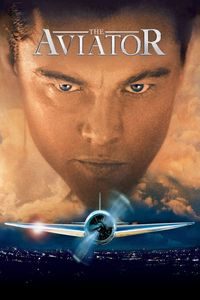
    (In theaters, December 2004) It’s always a pleasure to see Martin Scorsese at work again, and he does much to please both fans and general audiences with Howard Hughes biography The Aviator. Leonardo DiCaprio may not be such a good casting choice as Hughes (he look too frail and, later, far too young), but his performance is impressive. Mogul in most sense of the terms, the historical figure of Hughes is unequalled when it comes to the richness of available dramatic material: His love life was a parade of celebrities, his legal battles were legendary and his personal problems were, shall we say, gigantic. The Aviator is seldom as absorbing as when it races through Hugues’ good days as a fascination with Hollywood leads him to a life-long passion for airplanes and then on to the civil aviation business. The script has its weaknesses, but they’re often paved over by a Casino-strength Scorsese ably assisted by top-notch editing. The Aviator runs into repetitive sequences later on, as Hugues’ descent in Obsessive-Compulsive Disorders gets the better of a grander-than-life character. Many sequences then run too long, and keep on making a point long after which it’s been understood. (Ironically, the film focuses too much on Hughes’ disorders to give a more complete picture of his personality as a businessman, a playboy and an inventor: I wonder if it hadn’t been better to stick to the accepted chronology of Hughes’ life, in which his worst OCD episodes developed much later in life) Still, The Aviator still leaves an impression of superior film-making. Blame Cate Blanchett, whose dynamite interpretation of Katharine Hepburn deserves both an Oscar and a separate biopic of its own. (Kate Beckinsale’s Ava Gardner is also quite good, but Gwen Stephani is over-hyped as Jean Harlow) Blame the seamless visual effects. Blame the Beverly Hills crash sequence, itself a spectacular action scene. Blame the lavish production. But perhaps best of all, blame a director who understands how to portray a character who finds deep joy while flying in a film titled, indeed, The Aviator.

  • America (The Book), The Daily Show (and Jon Stewart) presents…

    Warner, 2004, 227 pages, C$34.95 hc, ISBN 0-446-53268-1

    Reading America (The Book), I kept flashing back to historian J. Barlett Brebner’s saying that “Americans are benevolently ignorant about Canada, while Canadians are malevolently well informed about the United States.” I mean; here I am, good little Canadian, reading a parody of an American civics book and laughing at American politics as if they were my own.

    But when you’re in a country sharing a border with the elephant known as the United States of America, there’s not much of a choice: We Canadians know that even the slightest American tremor will have repercussions everywhere else in the world, starting here. Watching America isn’t just a Canadian pastime rivalling hockey: it’s sheer national self-defence. The USA may not care too much about Canada, but we’re still the ones getting shoved around when the elephant gets prickly.

    Hence our national amusement at TV shows like The Daily Show, a blistering look at American politics front beneath a veneer of silly humour and parody. Hence (I imagine) the good sales figures of an America-centric humour book north of the 49th parallel. Some of us know the American political process better than most US citizens. Part of our national pride (I hate to say) is based on not being part of it.

    What the writers of America (The Book) intended was a picture-perfect parody of your usual Civic Education textbook, down to the full-colour hard cover case binding, wide layout and abundant use of photo clip art. There’s even class exercises and a topical supplement covering the 2004 presidential election. Physically, it’s a wonderful design job. Fortunately, the content is up to the presentation.

    America (The Book) is a sarcastic look at the American political process, from its historical origins (“For purposes of this chapter, ‘person’ still means ‘white males’ up until 1870, then ‘males’ until 1920, then ‘all people but really still just white people’ until 1964” [P.62]) to its current implementation. There’s usually one or two good gags per page, and two or three audible laughs per chapter.

    But as you may guess, it’s not all gags and giggles for the masterminds writing the book: America (The Book) is at the same time a sharp criticism of the less-salient aspects of the US political process, starting with the influence of lobbyists, the way amendments are grafted upon unrelated bills and the structural factors discouraging anything but a two-party system. There’s plenty of serious material in the book, as long as you’re willing to see past the jokes. (Sometimes, you don’t even need to: The pixelicious “Third Party Graveyard” [P.110-111] is worth framing by itself.)

    Ironically (or not), the only let-down offered by America (The Book) happens once it starts looking outside its borders. Canada is gratified with recurring and appropriately self-depreciative “Would You Mind If I Told You How We Do It In Canada?” segments, but passages like “All governmental business is conducted in both French and English, because a small minority of Canadians, called ‘Québécois’, never wanted to learn English, and we thought it was rude to ask them to.” [P.59] don’t exactly betray a witty understanding of the situation. Still, it a comfort to realize that all other countries fare worse; Chapter 9 (“The Rest of the World: International House of Horror”) tries to satirize the appalling isolationism of some Americans, but it merely comes across as a lamer, less funny section. Oh well. Also worth noting as a weaker element is the appearance of some Daily Show regular characters, an inclusion that could puzzle readers who aren’t familiar with the TV show.

    But never mind the above: as self-effacing Canadians, we’re just grateful to be able to buy your wonderful books and find mentions of our country in them. It would never occur to us to have the nerve and write, in bold capitals, FOR THE SAKE OF YOUR DEMOCRACY AND THE FATE OF THE REST OF THE WORLD, BUY THIS BOOK AND UNDERSTAND THE POINTS IT’S TRYING TO MAKE BEFORE YOUR BIPOLAR POLITICAL DISORDER ENDS UP LEADING TO THE DEATH OF THOUSANDS OF INNOCENT FOREIGNERS!!!

    Oh no. Never. We’ll just read the book and laugh respectfully. Tee-hee.

  • Guts, David Langford & John Grant

    Cosmos Wildside, 2001, 173 pages, C$20.00 tpb, ISBN 1-58715-336-X

    Horror novels got you down? Can’t stomach yet another exotic supernatural threat to humankind? Won’t stand the dour pretentiousness of King wannabes? Trust David Langford and John Grant to churn out the most awfully hilarious parody of the entire splatter-shock sub-genre and make you like it!

    There is no cover plot description for Guts and you won’t need one as long as you know cheap horror novels: If, say, you see a horror novel named The Rats, does it take a rocket surgeon to figure out what’s the big concept of the book? In fact, when half the novel on these particular shelves are named The [Something], do you need a plot description other than the classic “[Something], which you thought was harmless and maybe even useful, turns out to have an evil mind of its own and start killing just about everyone in the world”?

    I don’t think so. Hence the previous spoileriffic “spoiler-free” paragraph.

    But onward; suffice to say that Langford and Grant have delivered the ultimate horror novel parody. It combines elements of bad SF, awful writing and wickedly sharp satire for what may very well be an unforgettable reading experience. Silly characters (including clueless scientists, cheap bimbos, broad stereotypes and a journalist who just won’t die) are nice, but it’s the consciously over-the-top nature of the writing that makes Guts such a success. I haven’t yet been disappointed by a Langford book yet and Guts is no exception: If you’re a fan of horror and British comedy (and especially British horror that cries out for comedy), this is the book for you.

    “Warning: Offensive Content!” says the brown-bagged cover, and it’s not kidding. Sensible minds and weak stomachs may be best-served by avoiding this book forever. Langford and Grant pull no punches in serving funny horror on a dripping plate of blood and gore. Perhaps the best scene of the book comes along in Chapter Five, which includes the single best parody ever written of those interminable that-guy-should-be-dead knock-down drag-out brains-hanging-out fights between protagonist and unspeakable horror. It’s as bloody disgusting as it’s compulsively hilarious, and that’s exactly the kind of effect Guts is looking for. It’s so over the top that it’s impossible to mistake for anything but self-conscious satire. If you think that DEAD ALIVE and the EVIL DEAD series were a bit on the wussy side, Guts is what you’re looking for.

    Unfortunately, like most humour novels, it’s not lacking in weak moments. The novel is front-charged with good stuff; the latter sequences leading to the explosive ending (involving a sentient cheese, though that’s already saying too much) are a bit of a let-down. Not all plot-lines are equally compelling; I was a bit underwhelmed by the neo-Nazi segments myself. (Don’t worry; this is a perfectly understandable statement in the context of the book.)

    Published by small-scale house Cosmos Wildside, you can bet that Guts won’t be available at your local chain bookstore anytime soon. If the idea of a splattery horror parody appeals to you, if you’re already familiar with Langford’s typically dry British wit, if you love self-conscious take-offs of bad fiction, you can probably figure out if Guts is likely to appeal to you. It’s a wonderful take-off on a sub-genre that has long deserved some humorous disgrace, and a savvy comment on the tools of lazy horror writers. That it’s unbelievably funny is just a bonus.

    Somewhere, an owl hoots (for you).