Author: Christian Sauvé

  • Some Girls Do (1969)

    Some Girls Do (1969)

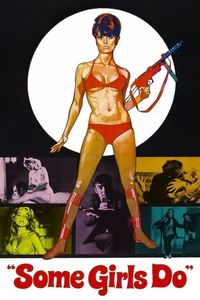
    (On TV, November 2021) You would think that a late-1960s lighthearted spy movie comedy involving fembots, ultrasound destruction, a supersonic airliner prototype and a dapper secret agent would be a lot more fun than Some Girls Do. It certainly starts on a promising note, with a title credit sequence that mixes a bouncy pop tune, some comic mayhem, and more late-1960s cute girls than even Bond would find sufficient. (Most of them are killer robots in service of a madman, if that makes it any more acceptable.)  It’s after that opening that the film starts to erode, or perhaps never finds its cruising altitude. The film’s spy spoof is ludicrous but not always supported by an execution that doesn’t take advantage of its own opportunities. There’s a heaviness to the film (in its staging, dialogue, and editing) that extinguishes the jokes meant to be funny, leaving a tone that’s not quite deadpan nor overly comic. Richard Johnson is not bad as protagonist Bulldog Drummond, but he has what I’d call the Lazenby problem: He’s all right, but being merely all right in a role that demands extraordinary charisma is not enough. I’m not saying that Some Girls Do is terrible. After all, I’ll be enough of a cad to admit that the film’s unabashed male gaze and its gallery of beauties may be a thing of the past, but it’s an almost refreshing past. Occasionally, you can even see the elements that a far more successful film would have been able to exploit (and indeed, you’d see fembots pop up again in the Austin Powers series) and some of the sequences manage to score a chuckle or two. Heck — Some Girls Do is the sequel to Deadlier Than the Male, and I’ll eventually watch that. But there’s a sense of many missed opportunities, and a result that barely scratches what could have been.
  • The Rain People (1969)

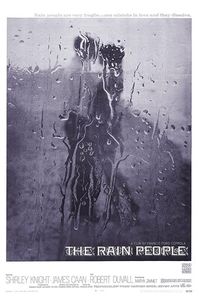
    The Rain People (1969)

    (On Cable TV, November 2021) As an aging movie reviewer who’s accumulating what’s laughably called “maturity,” I’ve gotten much better at not calling movies “boring and dull and pretentious” — there’s usually something good about everything and it’s my job to find what it is (or which audience it would serve best). But the fact that it doesn’t happen as often is not a guarantee that it doesn’t still happen and so, well: The Rain People is boring and dull and pretentious. There’s a reason for that:  Coming from writer-director Francis Ford Coppola in the burgeoning years of the New Hollywood, it gets to play with things that Classic Hollywood would not have allowed: An unsympathetic character leaving her loving husband out of sheer wanderlust; a gritty filmmaking style aping realism and delivering drudgery; an inconclusive conclusion without much in terms of character development. These, obviously, are the tools of literary fiction but in the characteristic zeal that marks, well, much of American history, the New Hollywood filmmakers went far overboard and later generations can only suffer through those early releases. There’s clearly a footnote in film history for The Rain People — not only as an early work from a major American director, but also a film featuring both James Caan and Robert Duvall prior to The Godfather. There’s an audience for those non-formulaic films with closer ties to written character drama than genre pictures — but even aging movie reviewers have their preferences, and I’m throwing my lot with the genre-obsessed plot-dominant camp that does not settle for boring and dull and pretentious.

  • Most Dangerous Man Alive (1961)

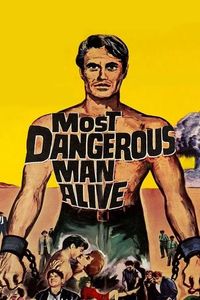
    Most Dangerous Man Alive (1961)

    (On TV, November 2021) Low-budget science fiction films are nothing new, and neither are far-fetched premises. Case in point: The very 1950s-style (shot in 1958, released three years later) Most Dangerous Man Alive, in which a semi-hoodlum wanders through an atomic testing field and gets the power of having his skin turn invulnerable, like metal. Obviously a quick and cheap exploitation film, it’s a shoddy production built on top of a nonsensical script that doesn’t really care about how to get there, as long as a wild premise is up on the screen. If you’re feeling generous, you can point at Most Dangerous Man Alive as a precursor to superhero films, to cyberpunk body modification, to more elaborate genre dramas in which the burden of extraordinary abilities is examined. But you have to be quite indulgent to see the thematic roots of a film in which a chaotic script (yeah, let’s have the hero murder someone in the first ten minutes…) is coupled with bare-bones execution. It is, trivially, the last of chameleonic director Alan Dwan’s filmography — not much of a capstone to a storied career but, on the other hand, it does lend a bit more interest to an otherwise fairly dull film that’s most charitably called an exemplar of Atomic Age filmed Science Fiction.

  • Minari (2020)

    Minari (2020)

    (Amazon Streaming, November 2021) It’s easy to see why Minari would get the attention of the Academy in selecting its Best Picture Awards nominations — it’s the kind of progressive character-driven picture that uses an intimate story to tackle a large-scale social issue. (It’s also one of those movies that further drives apart the public from the Academy, but let’s not rehash that again right now.)  The film takes us to 1980s heartland America, where a Korean family has purchased a farm with the intent of launching a produce-growing operation. But that only scratches at the cultural shock, family strife and business frustration that follows, as finding water is hard, the mother-in-law comes to stay, and there’s never anything to be taken for granted in agriculture. Writer-director Lee Isaac Chung draws upon his own experiences in creating Minari, but more importantly doesn’t miss on the small telling details that give life to it. It’s handled in a frequently funny fashion and avoids many of the obvious plot beats that viewers could have expected from the time and place. (Yes, some of the racism is there, but it doesn’t take as much space as you’d dread.)  The farming sequences are quite satisfying to see unfold over a year, and the actors do well — with specific acclaim for Youn Yuh-jung’s Oscar-winning performance. There’s some inherent interest in watching a rural American film being more than half in subtitled Korean, and the entire thing manages to be quite charming. Minari remains a small and subtle film, not overly spectacular but likable where it counts.

  • The Dam Busters (1955)

    The Dam Busters (1955)

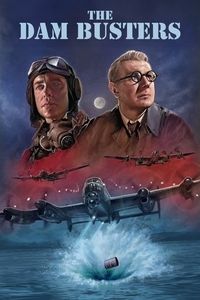
    (On TV, November 2021) As a kid in the mid-1980s, one of the games I played a lot on my Commodore 64 was The Dam Busters, a videogame in which you fly Lancaster bombers deep over German territory to drop a bomb meant to shatter a dam. That game was definitely inspired by the film of the same name, and that familiarity was probably why I was unusually looking forward to watching the film. It generally doesn’t disappoint: As the film begins, our protagonist is a WW2 British military engineer faced with an intractable problem that doubles as an opportunity: If he can figure out how to destroy a few dams in the German industrial heartland, he can cause significant damage to the Third Reich’s war effort. But figuring out how to execute this plan consumes much of the film’s first half, as conceptual approaches are developed, tested, refined and tested again. Initially more of a very entertaining engineering fiction than a wartime thriller, The Dam Busters takes us through the details of the preparation of the raid before going through the raid itself, and abruptly becoming a wartime action movie. The Oscar-nominated special effects are still remarkably immersive, giving up an unusually credible glimpse at what it must have been to be in the cockpit of those planes as they went bombing deep over the German heartland. (The film reportedly influenced the Star Wars climax, and that’s a plausible claim.)  I wouldn’t mind a remake, though: the pacing isn’t always as snappy as it could have been, and the naming of a dog the N-word (historically accurate, and sadly not unheard of even recently) is a jarring grating element in an otherwise amiable picture. (The closed-captioning subtitles call the dog “ninja,” which is hilariously anachronic but not quite as irritating.)  There’s also some faintly disturbing dissonance, as the closing moments of the film mourn the English flyers who didn’t come back, but say very little about the 1,500-some German civilians killed by the raid — a rather common lack of empathy back in the victorious mid-1950s that would no longer be tolerated in the more distant 2010s. Still, there’s some mesmerizing material in The Dam Busters that more than lives up to my memories of playing (and repeatedly losing) the videogame — it’s quite a wartime yarn, and it’s one that can talk engineering as much as it shows fighting.

  • Best Foot Forward (1943)

    Best Foot Forward (1943)

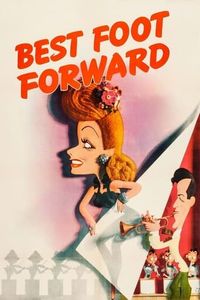
    (On Cable TV, November 2021) Conventional wisdom has it that Lucille Ball was moderately famous throughout the 1940s, but truly became an icon with I Love Lucy in the 1950s. Best Foot Forward, considering Ball’s starring role as herself and its superb colour cinematography, may lead you to believe that it is a 1950s musical comedy looking back at the war years, but not so: Released in 1943, it was meant to highlight Ball’s status as one of MGM’s newest contract stars, with the red hair kept from the striking example set in her previous (and first MGM) film Du Barry Was a Lady. The plot revolves around her as she travels from Hollywood to a small northeastern military academy as a promotional stunt, answering the call of a starstruck cadet. Once there, the musical aspect of the film comes to the fore, as various musical numbers and interludes lead to small-scale romantic subplots for the other members of the cast. The result is fine without being particularly good (this being one of producer Arthur Freed’s earliest efforts, you can see the roots of his method that would lead to his first big success the following year with Meet Me in Saint-Louis and then to the streak of terrific musicals culminating in Singin’ in the Rain and The Band Wagon), but few numbers stand out:  Harry James and his Orchestra do good supporting work, with a highlight being a spirited version of “The Flight of the Bumblebee” (immediately followed by the film’s standout number “The Three B’s”). While Ball is also good-but-not-great in the lead role, the film’s scene-stealer is Nancy Walker as a short and spirited “plain” young girl who gets some great lines and a very funny duet dance number in “Alive and Kickin’.”  The result is very much in the solid average of the WW2 military musicals and is perhaps best remembered as a stepping stone in the careers of Ball, Freed and future musical star June Allyson. Even if it’s in the lower tier of Freed musicals, Best Foot Forward is not a bad watch — and it feels like a later film.

  • Algiers (1938)

    Algiers (1938)

    (On TV, November 2021) Having seen French classic Pepe le Moko a few weeks ago, I was unaccountably happy to see its Hollywood remake, Algiers, show up on the TV schedule, even if it was the battered public domain version complete with low-contrast audio, washed-out video and frequent scratches. The remake sticks so closely to the original that it’s not as if I had to pay attention to follow along: Almost a scene-for-scene remake with a few accommodations for language and American censors (the biggest one being at the end of the film, although it doesn’t affect the result all that much), it very much feels like the same film. Considering how similar it is, it’s tempting to directly compare each actor in their roles:  Charles Boyer is no Jean Gabin, but the outsider’s spin he puts on Pepe Le Moko’s character was striking enough to inspire Looney Tunes lothario Pepe Le Pew. Hedy Lamarr, in her Hollywood movie debut, is a clear upgrade over the original actress in sheer sex-appeal, and matches far better with Sigrid Gurie as her romantic rival than in the original. (In Pepe le Moko, the two women are so different that it’s a dull-blonde-versus-exotic brunette scenario, whereas the American remake has them looking very similar, significantly changing the meaning of the triangle to its thematic essence.)  Then there’s Joseph Calleia, who does surprisingly well as the slimy inspector Slimane, something I would not have expected given the very specific appeal of the actor playing the character in the original film. But then again — legend has it that Algiers’ director John Cromwell showed scenes of the original film to the remake’s actors and instructed them to hit the same marks. Amazingly enough, and cinematographer James Wong Howe gets all the credit for it, the film was entirely shot in Hollywood, with a few inserts very cleverly used to give some sense of place to the studio production. The result, though, is distinctive enough in the details. Made for mass appeal rather than poetic realism, Algiers is almost as good as Pepe le Moko, but focused more on straightforward entertainment than cinematic art. The differences are slight, but they’re fascinating to study in their cumulative impact. If forced to choose one for a second viewing, I’d probably go for Algiers… but only for Lamarr and Gurie.

  • Freddy’s Dead: The Final Nightmare (1991)

    Freddy’s Dead: The Final Nightmare (1991)

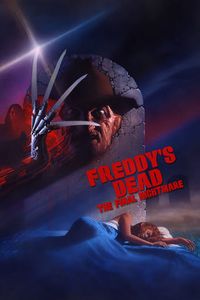
    (On Blu-Ray, November 2021) By this sixth instalment in the Nightmare on Elm Street series, the flaws of the movies are as annoying as its strengths are well practised. Effectively the end of the first cycle of the series (the follow-up 1994 New Nightmare instalment was meta-commentary, while the 2010 reboot operated in its own continuity), Freddy’s Dead does have the decency to end on an unusually decisive tone — New Line Cinema having decided to put their resources in other franchises. Unfortunately, even being definitive about Freddy Krueger’s death doesn’t lift the film out of the series’ doldrums — as usual by this point, the effective, disturbing dream imagery is sabotaged by the even more deliberate intention to turn Krueger into an inveterate jokester, with puns replacing coherent dialogue and going to the extent of throwing in cartoonish moments of pure comedy. Plot-wise, the film is slightly better than many previous instalments, foregoing the tired “new crop of high schoolers getting slaughtered” premise for a more interesting battle between psychiatric patients (echoes of the third instalment) and a cornered Krueger. The surrealism is often pushed and occasionally better-executed than many previous instalments, but it’s the series worship of its antagonist that grates as much as the way he was transformed into a comedy prop. In that regard, the much-maligned 2010 remake did have the right idea: no jokes, just terror. Freddy’s Dead is definitely at its best when it’s unsettling, but it frequently undercuts its own strengths by shifting to a tone it has no business having. At least it ends on a conclusive note, which is quite infrequent when it comes to long-running horror series.

  • Frankenstein meets the Wolf Man (1943)

    Frankenstein meets the Wolf Man (1943)

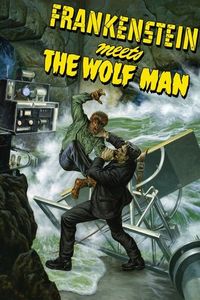
    (On Blu-Ray, November 2021) By the mid-1940s, the eldest members of the Universal Monsters series were clearly running out of steam — the monsters having been introduced in the early 1930s, the series was past the origin stories and their first few sequels, leading to the idea of combining two monsters in the same film. (The Abbott and Costello parodies were only five years away.)  Frankenstein meets the Wolf Man dares to combine Lou Chaney Jr.’s then-new Wolfman (introduced in 1941) with the almost-teenaged Frankenstein’s monster (introduced in 1931). It takes a while to get there — much of the first hour is spent getting the Wolf Man back up to speed (considering that he died in the previous film) and then send him on a quest to find the monster for reasons. It takes until the last five minutes of the film for them to fight, and even then, you’ll be wondering such questions as “who builds a dam above a castle, really?”  Still, the point of Frankenstein meets the Wolf Man, perhaps clumsily made, is to start playing around with the monsters, wringing out a bit of fun and profit from established franchises — a reminder that commercial exploitation has always been part of Hollywood’s DNA. Frankenstein meets the Wolf Man is not that good, but it does have some of the same fun as other films in the cycle, and does get the titular monsters interacting. Good enough!

  • Twice Bitten (2021)

    Twice Bitten (2021)

    (On TV, November 2021) Aw yeah — pandemic lockdown oblige, I’ve become a bit of a BET romantic comedy addict in the last few months and now I’m turning into something of a BET thriller addict as well. To be clear, they are not very good movies: bluntly written and perfunctorily directed, they’re low-budget films that use big plot strings and even bigger emotional levers in the hope of thrilling their viewers. But they can amount to right-sized trash in the right circumstances, and Twice Bitten is adequate in its chosen niche. The plot revolves around an irresistible conman (Kevin A. Walton, with swagger to match the part) who targets rich women for substantial payouts, pretending to be a real-estate mogul and getting them to invest (via check) before disappearing. But he’s not a particularly good conman, as demonstrated by relying on a single source for marks, operating in a too-small area, calling his next target from the current woman’s bathroom, and getting stabby in a hurry whenever things don’t turn his way. Meanwhile, we’ve got our heroine (LisaRaye McCoy) slowly getting suspicious that something is not right, and teaming up with his past victim to trap him. There are complications, many of them ludicrous: a common acquaintance (whom I initially took as a family member) linking the victims, a supporting character just happening to live next to the conman, and a murder to abruptly raise the stakes. Shot in Los Angeles, Twice Bitten moves from one implausibly high-end location to another, but that’s part of the fantasy being shown here: Attractive people, murder, danger and suspense. That the script doesn’t sustain scrutiny in its thriller mechanics isn’t all that much of a slam because Twice Bitten delivers on what viewers can expect: a simple, slightly trashy suspense film scratching at the audience’s anxieties and delivering an upbeat finale. (Well, except for that character who died, may her sacrifice not have been in vain.)  Director Patricia Cuffie-Jones could have used a better script and a larger budget, but she delivers what BET was expecting here — undemanding but satisfying low-end thrills.

  • We Belong Together (2018)

    We Belong Together (2018)

    (On TV, November 2014) As far as trashy psycho-woman thrillers go, BET-broadcast We Belong Together manages to put together the essentials, but doesn’t go beyond them. The plot couldn’t be more familiar, as a divorced man is seduced by a dangerous young woman who then goes on a rampage to ensure that he remains hers and only hers. There’s a poor Teaching Assistant who has to die in order to establish how psychotic our antagonist truly is, but otherwise much of the film is spent steadily moving toward its climax, in which the protagonist’s ex-wife becomes the final target. Even a low-budget thriller, We Belong Together never punches above its weight: writer-director Chris Stokes is, as in other films of his, not particularly ambitious nor skilled. His script is clunky and only occasionally reaches the heights of straightforwardness (“I am your serpent in the tree” is a real piece of dialogue from the antagonist trying to be sexy while pouring liquor down a chained recovering alcoholic’s throat) while his directing feels lazy most of the time — as clearly shown by an underwhelming climax that fades to black before anything too expensive is shown. Charles Malik Whitfield is merely adequate as the protagonist, but if the film has one single asset, it’s clearly Draya Michele in the antagonist’s role: She’s perfectly sexy evil as the femme fatale, mesmerizing for her looks (amply underscored by the camera) as much as her screen presence. She brings a lot to an underwritten character that relies too much on easy clichés (she’s a psycho — we’re done here) than anything like credible characterization. There’s nothing in We Belong Together — no plot development, no individual story beat — that can’t be predicted, but that’s almost to be expected considering the film’s straight-to-TV pedigree. It’s still not too terrible, especially as background material. Michele is worth a look, though.

  • Gutterballs (2008)

    Gutterballs (2008)

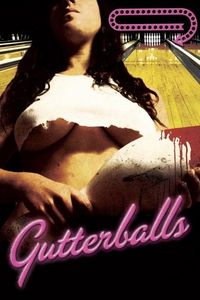
    (In French, On Cable TV, November 2021) I really didn’t like Gutterballs, but it’s far from the worst horror film I’ve ever seen for one reason: In its quest to re-create the trashy slasher movies of the early 1980s, it spares no dirty tricks and fully commits to its trashiness. Still, don’t expect much: Announcing its colours early on, the first act of Gutterballs features an excruciating gang-rape sequence that’s meant to justify all of the following killings. To say that it feels exploitative is underselling it — the graphic nature of the five-minute-long scene (both in violence and nudity) is grotesque, and clearly underscores writer-director Ryan Nicholson’s intention to make a film for the basest class of horror fans. But since Gutterballs is a rape-revenge slasher film, well, it’s not as if this is atonal: Far gorier bloodshed and nudity follow for the entire film’s duration. Some cleverness points go to making every kill bowling-related (whether it’s bowling balls, pins, shoes, or waxing machine — and you can tell how proud the filmmakers felt about that last one by the amount of time spent showing it), although those cleverness points are immediately taken back by a script that decides that there’s so little difference between right and wrong that it liquidates the entire cast, no matter their involvement in the initial outrage. So much for morality — but then again, the only moral choice is not to see the film. Not that you’d be missing much in terms of technique: below average directing, awful acting, terrible image quality, garish colours, grimy atmosphere and ugly cinematography are only some of the lowlights here, and that’s before getting into the repellence of an old-school slasher not aiming any higher than thrilling the gore-hounds. There’s an obvious pun here about Gutterballs and minds in gutters, but I have a feeling that’s not the slam I would intend it to be.

  • The Sauce of Love aka Cooking with Love (2021)

    The Sauce of Love aka Cooking with Love (2021)

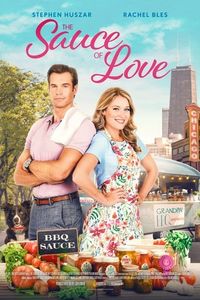
    (On TV, November 2021) I’ve seen a lot of food-based romantic comedies lately — they’re comfort films in more ways than one, and the best of them can almost be called delicious. Unfortunately, that’s not going to be the case for Cooking with Love — even by the relaxed standards of the subgenre, it feels obvious and lazy to such a degree that it barely justifies its own plot. Even from the get-go — as a talented cook gets fired for being a bit too ambitious in a presentation to the Big Boss — it never quite feels organically plotted. It does things because it needs to do them to satisfy the narrative, and doesn’t lay down the groundwork to make it work. The love interest ends up (predictably) being the Big Boss — rich but not evil (as per his establishing scene, clearly showing his kindness to dogs), good-looking and inexplicably interested in the protagonist despite having no really good reason to be so. (Meanwhile, a much better romantic suspect is introduced, but quickly dismissed as being interested in the protagonist’s best friend. He’s not wrong — Kathryn Davis is more charming than Rachel Bles in look and character — but it’s a dismissal emblematic of the script’s lazy instincts.)  To supplement the obvious romantic arc, the food-based drama has to do with our protagonist inventing a terrific (and healthy!) BBQ sauce and going on to compete in a food truck contest while her old company goes about trying to steal her sauce. But the execution constantly undermines even the limp premise: subplots are lazily advanced, the characters run on stereotypical inertia, nothing is really convincing and the threads are wrapped up even before they become too interesting. Even the food aspect of Cooking with Love (I’m sorry, I can’t call it The Sauce of Love without cracking up) isn’t particularly well-developed, short-changing another sure-fire draw.

  • The Queen’s Corgi (2019)

    The Queen’s Corgi (2019)

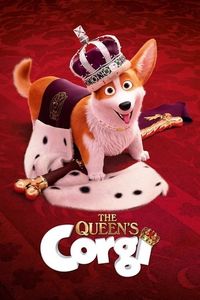
    (In French, On TV, November 2021) As far as animated family movies featuring talking animal characters go, The Queen Corgi feels too dull-yet-unpleasant to be worth a look. The first fifteen minutes are both too weird for an all-age film and easily better than the rest of it, as the Queen of England inexplicably makes her newest Corgi the designated favourite, and then the President of the United States comes by for a visit. Obviously meant to be the previous guy in the job (although humanized through a love of dogs that runs contrary to all real-life evidence), the visiting presidential couple also bring their own female corgi, and much of the initial comedy has to do with her pursuing the protagonist despite his obvious lack of consent. This is beyond inexplicable for a kid’s film, so it’s almost a relief when the film goes on to something far more innocuous. That is, if you think a rival Corgi getting rid of the protagonist to usurp his place as the Queen’s favourite is any better. The adventure that follows takes us in the London dog underworld (complete with a canine fight club) before getting back to the palace in time for the climax. The Queen’s Corgi, by way of an explanation, is a production of Belgian animation studio nWave Pictures, whose animated output has been steadily substandard for nearly a decade before managing something of a half-success with The Son of Bigfoot. The Queen’s Corgi is clearly a step back, and I’m skipping over many of the film’s most dumbfounding moments (some of them thankfully softened by the French dubbing: “grab them by the puppy”? Oh dear.) on my way to an overall assessment: Skip it. Don’t show it to the kids. The Queen’s Corgi has nearly no entertainment value, and whatever interest it has is in wondering how anyone thought that the finished product -or its most inane moments—was a good idea.

  • Woman in Motion (2019)

    Woman in Motion (2019)

    (On Cable TV, November 2021) As someone who started watching Star Trek as a kid, I’ve had a crush on Nichelle Nichols for decades now, and Woman in Motion is merely fuelling it even more. Aiming for a retrospective of her life that wisely spends more time on her STEM outreach than her Trek role, director Todd Thompson brings together interview clips from her entire career, plenty of archival footage, interviews with friends and admirers (including such diverse notables as John Lewis, Neil deGrasse Tyson, Al Sharpton, Pharrell Williams and Vivica A. Fox) and some on-screen text to make a simple case: Beyond her role on Star Trek, Nichols’ biggest influence has been in her outreach to new audiences in diversifying the American astronaut roster. As Woman in Motion explains, the NASA effort to recruit Shuttle astronauts in 1977 was not reaching audiences beyond the white males who had been, until then, the face of the space program. Reaching for a well-known spokesperson, NASA recruited Nichols, who then spent a few hectic weeks convincing diverse audiences that they, too, could become astronauts. The effort paid off, and numerous former astronauts appear on-screen to testify about it. Nichol’s life and Trek career are given some time (including a gripping retelling of the famous encounter between her and Martin Luther King Jr. that convinced her to remain with the show), but the refreshing focus here is on her impact on the course of the American space program, and the debt that many people jostle to acknowledge here. It’s all quite entertaining, effective, and at times even emotional — it’s hard to listen to the much-missed John Lewis pay tribute to Nichols without getting caught up in the significance of it. Even in a crowded field of documentaries about Star Trek, Woman in Motion stands out by paying tribute to something that has had real significance well outside the realm of entertainment. Don’t stop watching once the end credits roll — Nichols then gets to sign “Fly me to the Moon” in a very charming coda.