Author: Christian Sauvé

  • Hollywoo (2011)

    Hollywoo (2011)

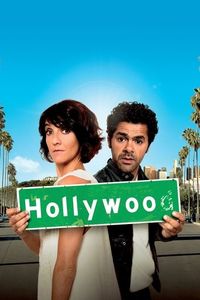
    (On Cable TV, November 2021) Hollywood loves to talk about Hollywood, but French film Hollywoo is a look at Los Angeles moviemaking that could only have come from outsiders. It begins in Paris, as the voice actress dubbing an insanely popular TV show actress sees her livelihood threatened by the abrupt retirement of the actress. (Sidenote speaking from French-Canada: In real life, this doesn’t happen, as nearly all dubbing actors are specialized professionals with a portfolio of roles.)  Since this is a silly comedy, our protagonist does what no one else would do: fly off to California to try to convince the actress to un-retire. But realism does make a return for comic impact once it becomes obvious that no one (not even a French dubbing actress) can simply walk in to see a famous actress — complications repetitively emerge as various approaches are rebuffed. Then Hollywoo is off to a series of quests leading to other quests, eventually involving another French citizen and then, hilariously, a French-Canadian character presented as antagonist. (The biggest laugh in the film, at least for me, is when the purely European-French protagonist tries imitating the French-Canadian character, complete with swear words.)  The result is uneven: even swallowing the whopping insanity of the premise, the annoying emphasis on the character played by Jamel Debbouze is more a function of his circa-2010 popularity than something that serves the film. (His popularity has, since then, considerably waned — perhaps as a result of the over-exposure he received, as demonstrated here.)  Florence Foresti isn’t immediately likable here, but the film eventually warms up to her as she gets gradually saner over the course of the film and scores a few victories in her quixotic quest. As a look at Hollywood, Hollywoo is clearly an outsider’s rant — there’s almost as much reverence for an outdated idea of how it works as a gentle satirical jab at the people living there. Still, it’s almost refreshing to get non-Americans having fun in Los Angeles: Hollywood, for better or for worse, has not belonged to the Americans for a very long time. Everyone gets to say what they think of it.

  • The Edge of Seventeen (2016)

    The Edge of Seventeen (2016)

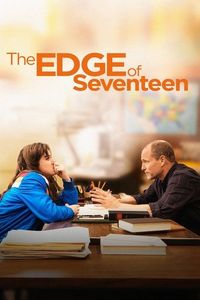
    (In French, On Cable TV, November 2021) Alas, I must classify The Edge of Seventeen in the “films I should not have missed” category. It happens — there are more new movies released every year than anyone can claim to see, and some will slip through the crack. An affectionate look at a seventeen-year-old high-school senior with many problems, it’s a film that navigates a fine line between dark humour and sympathy for its protagonist. Hailee Stenfeld does have a lot to do with how the many aspects of her character end up working well, with some able supporting work from Woody Harrelson as a sarcastic-but-supportive teacher and Kyra Sedgwick as a mother who’s clearly a lot to handle for a teenager with self-esteem issues. Writer-director Kelly Fremon Craig navigates some tricky material throughout, but keeps the result largely light and entertaining. Various hijinks (including what’s possibly the most embarrassing text message ever imagined) and subplots make the final victory taste even sweeter. It’s a great script directed decently enough, and the result is among the better teenage movies of the 2010s. I’m sorry I missed it the first time around.

  • Ararat (2002)

    Ararat (2002)

    (On TV, November 2021) As I’ll never get tired of pointing out, everything I’ve ever heard about the Armenian genocide has been because of Turkish militants’ attempts to pretend it didn’t happen. From the Serdar Argic Usenet spam of the mid-1990s to modern attempts to silence filmmakers tackling the topic, it’s not an exaggeration to say that I got interested in the issues because some people tried really hard to pretend it wasn’t an issue. The Promise thus begat a documentary about its shooting, and one that interviewed Canadian filmmaker Atom Egoyan about his troubles with Ararat — including a meticulous campaign to discredit his work accompanied by a book-sized dossier on his film’s failings. As a good Canadian cinephile, of course I had heard of Ararat — but not being much of a fan, I hadn’t sought it out. That changed after the documentary, and that’s how I ended up learning even more about the Armenian genocide. In a way, it’s good that I saw Ararat after The Promise, as the two logically flow into each other: The Promise is a historical re-creation, while Ararat plays with the making of a film much like The Promise, as it affects circa-2002 characters. It’s scattered and filled with subplots (many of them metatextual), but there’s a sense that Egoyan, himself of Armenian descent, is not trying to convince viewers as much as he’s taking the genocide as a fact and musing on its reverberations. (At least one 2002 review goes about it the other way and complains that the genocide is not given enough attention.) A good and eclectic ensemble cast includes Charles Aznavour, Christopher Plummer, Eric Bogosian, Bruce Greenwood and the lovely Arsinee Khanjian (Egoyan’s wife, in a Genie-winning performance). I found Ararat scattered but interesting, and an interesting addition to the Armenian genocide filmography in that it presents a world in which the recognition has happened, but not the reckoning. (Canada formally recognized the genocide in 2006, while the United States recognized it in 2021.)

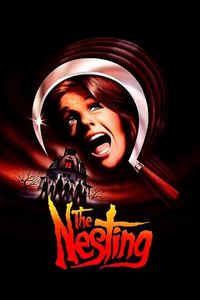
  • The Nesting (1981)

    The Nesting (1981)

    (In French, On Cable TV, November 2021) The early 1980s were uneven years for horror, with the worst slashers sharing theatre marquees with the best. But there was also plenty of average material, and that’s where we find The Nesting: an occasionally promising gothic horror story that can’t quite figure out what it’s doing, goes on dumb tangents and ends up overstaying its welcome. I’m a sucker for gothic manors and that’s what we get at the beginning of the film as a novelist moves to the country to unblock herself and take in some fresh air. Alas, it won’t go according to plan: strange things start happening, strange dreams plague her night and strange people roam about. As the scares accumulate, then don’t necessarily explain themselves nor fit in some kind of explanation: The Nesting’s writer-director Armand Weston clearly belongs to the school of horror that says that it doesn’t matter if it makes sense as long as it’s spooky. Unfortunately, even being spooky is usually beyond the rest of the result: tepid concern is the best that the film can do. By the time the conclusion reveals that the entire thing was no coincidence, well, what else is there to say? The only thing worse than making too little sense is making too much of it. In the end, it still amounts to a mediocre result.

  • The Oak Room (2020)

    The Oak Room (2020)

    (On Cable TV, November 2021) There’s a substantially more interesting movie dying to get out of The Oak Room — if only it didn’t end at the moment when it was getting interesting. I do like the way the film made the most out of its limited means, with interlocking bar stories set one within each other, a handful of snowbound characters who are all revealed to have a connection, and a dialogue-heavy style that creates as much atmosphere as exposition. There’s an appreciable irony to the film’s concluding moments, as disconnected pieces of the puzzle come together to reveal… a ghastly mistake. The theatrical origin of the story is obvious, but even then, there’s cause to wonder why the film couldn’t have leaned further on its strengths. Better dialogue could have helped. Better characterization as well. But mostly — following up on the third act revelation because otherwise The Oak Room feels like a film that spends more than an hour clearing its throat before saying something interesting — and then it’s already over rather than continuing in that vein. It’s too bad — as a Canadian film, it does have a very specific setting and does quite a lot with what it has at its disposal. But it never quite shifts in the horror that director Cody Calahan’s tone promised, nor does it impress through the sheer impact of its dialogue. I liked it, but it could have been much better.

  • In the Heights (2021)

    In the Heights (2021)

    (On Cable TV, November 2021) As a big, convinced, unabashed fan of movie musicals, it warms my heart to see something as joyous as In the Heights being given the big-budget, special-effects-showcase treatment. Much of it has to do with Hamilton’s runaway success, of course — while Manuel-Lin Miranda didn’t write or direct In the Heights (and only has a supporting role), his involvement as the co-creator of the original stage musical is enough that you can certainly see the similarities between the two — down to the cadence and writing style of the lyrics. A free-flowing look at the Dominican immigrant experience in upper Manhattan, the film juggles an ensemble cast but is largely structured around the final days of a shopkeeper in New York, as he is about to pack up his things and go back to the Dominican Republic, where he has bought his father’s business. But there’s a lot going on around him, from romance to summer jitters about returning to school, a massive power blackout and the frailness of an elderly character. In the best musical tradition, it’s all an excuse for spectacular dance numbers, the most impressive of them balancing all the stories, featuring hundreds of dancers in a poolside setting, or getting across a great joie de vivre. And that’s not mentioning the technical showpiece of the film, a sequence in which two characters are so in love with each other that they dance on the side of an apartment building. (The principle is the same as in the old Batman TV show, but the computer-massaged execution is still a wonder to behold.)  It’s all quite joyful (albeit with one affecting character death), getting us back in the classic Hollywood musical mould with no apologies about it. Suffice to say that I liked In the Heights a lot — it’s the kind of film I’d consider buying on UHD-4K just to get the best possible audio and video and be able to re-watch on a whim. I’m dismayed that it was a box-office disappointment: I’d love for musicals to remain a fixture of American cinema, and we can’t have that if they fail commercially despite great reviews.

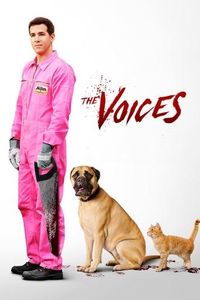
  • The Voices (2014)

    The Voices (2014)

    (In French, On TV, November 2021) Dark comedy is a tricky genre, and it doesn’t take much to send it flying into distasteful territory. Of course, The Voices goes far beyond “just a bit too much” in depicting the last few days of a schizophrenic serial murderer as he goes about stabbing female co-workers, dismembering them and keeping their decapitated heads for conversation. It’s about as funny as it sounds, which is to say — not much. Comic book artist turned director Marjane Satrapi (far better known for more wholesome fare) does play into the material as written — the film is strange in unpleasant ways, with the absurdity of the protagonist discussing morality with his pets (the dog — good; the cat —evil) and the heads of his victims. Perhaps the most interesting thing about The Voices does remain the lead performance of its star Ryan Reynolds: As an awkward young man troubled by mental health issues, Reynolds dials down his usual charm to deliver a borderline-repellent performance that we are very unlikely to see again since he has now ascended to nice-guy superstardom. Gemma Arterton and the ever-lovable Anna Kendrick also show up in supporting roles—but don’t ask what happens to their characters. Everyone in the film is clearly working in the same direction, delivering about as good a take on the written material as it was possible to do. But the point remains that I don’t really care about humanizing a serial killer, nor do I get any enjoyment at all from seeing young women turned into dismembered corpses. The Voices is terrifyingly dark and no amount of humour will remove the queasiness of the premise. Reynolds completists (even those with a liking for the rude-and-crude Deadpool) may have an even harder time than others making it through this.

  • Finding Love in Mountain View (2020)

    Finding Love in Mountain View (2020)

    (On Cable TV, November 2021) Having given relatively good grades to Finding Love in San Antonio, I was curious to see if its stablemate Finding Love in Mountain View would be equally charming. To save you from any harmful suspense (considering that this is a kind of film that does not believe in suspense), let me begin by saying that there is no common character, plot point, thematic intention or structural gimmick in common between the two romantic comedies:  As best as I can determine, they’re similar titles given by the production company for marketing purposes and that’s it. Having acknowledged that, perhaps the most noteworthy thing about Finding Love in Mountain View is how, in the grand tradition of Lifetime/Hallmark romantic films, it works overtime to systematically de-dramatize plot elements that would power entire other melodramatic films. As the story begins, for instance, our architect protagonist receives the news that her cousin has suddenly died, entrusting her two children to her. The subdued, almost inexistent, grief in those early scenes is noteworthy — this is not a film that wants viewers to wallow in pain. The thrust in abrupt motherhood has been used elsewhere as premise for entire movies, but here it’s mere backdrop for the protagonist moving back to her childhood home in Mountain View (unusually shot on location — perhaps that’s the point of the “Finding Love in…” series: location shooting rather than a Canadian production) where the real and familiar story of her rekindled romance with a past boyfriend gets going. This is, as usual, innocuous material: we know how it’s going to play out, and having the kids around simply adds more sweetness to the foregone conclusion. But even in the very rigidly defined subgenre of Hallmark romances, Finding Love in Mountain View struggles for distinction. Lead actress Danielle C. Ryan is unremarkable (trying to pass her off as a musician is a stretch when she can’t convincingly fake playing a guitar) and the use of location scenery is disappointing. But Finding Love in Mountain View is the kind of film that makes for a specific, unadventurous audience — blandness is an asset, and being able to predict plot points (such as the no-good boyfriend totally ignoring her while speaking on his phone!) is expected. For everyone else, though, Finding Love in Mountain View is hardly worth the trip.

  • Zardoz (1974)

    Zardoz (1974)

    (On DVD, November 2021) For years, Zardoz taunted me from my unseen-DVD shelf. A gift from a definitely mischievous friend, the film’s reputation fascinated and repelled me in equal measure. The early 1970s were not the best years for big-screen Science Fiction: New Hollywood only had a use for SF as a post-apocalyptic backdrop, and if you only had 1970–1976 to pick from, you would quickly understand why mainstream audiences and pop-culture commentators positively hated SF prior to Star Wars: films both naïve and downbeat showing a tiny flash of the genre’s possibilities, seemingly designed either for kids or masochists. Zardoz, seen from one angle, is exactly that. It’s stupid, untrustworthy of its audience, wallowing in brain-dead clichés and stealing everything from other better films. It has Sean Connery in a red leather thong outfit, and it doesn’t take five minutes for the immortal quote “The gun is good. The penis is evil.” to gobsmack any audience. Writer-director-producer John Boorman goes for some truly strange yet bland material here, taking a dull dystopian story and wrapping it up in weird surreal execution. Which ends up being the film’s saving charm, because despite the considerable silliness of its premise, Zardoz is often rescued by its over-the-top ridiculousness or from some genuinely interesting moments of craft. Boorman wasn’t a neophyte even at that early stage of his career, and that often shows in some still-interesting visual effects, oddly compelling scenes, fractured storytelling and audacious bets that don’t quite pay off. The film is bookended by an intriguing opening narration and a rather effective flashforward coda, but what’s in between varies quite a bit. The images are often of the I-can’t-believe-I’m-seeing-this (“Connery, how could you?” only rivals “Charlotte Rampling, how could you?”) and while that doesn’t make Zardoz a good movie, it does lend it an unforgettable quality that does elude many of the better Science Fiction films of that era. Now seen, I’m shifting Zardoz to the seen-DVD shelf… but it’s not done taunting me.

  • Taking Tiger Mountain (1983)

    Taking Tiger Mountain (1983)

    (On Cable TV, November 2021) Well, that’s a weird one. TCM Underground can be pedestrian and repetitive at times, but once every so often it comes up with a genuine curio, and that’s how to best interpret Taking Tiger Mountain. Taking the experimental film clichés (black-and-white grainy film, constant voiceovers, dystopian world, bizarre plotting, and clunky integration of wider concerns over plot) to their fullest extent, it’s a film that loosely tells us about a feminist militant cell’s attempt to brainwash a student (a young Bill Paxton, in his film debut) to kill the minister of prostitution. It’s all grim, with barely understandable material meant to surprise as much as to tell a story. Bizarrely, it’s an adaptation of a William S. Burroughs story named “The Blade Runner,” linking it to that other film in surprising ways. I can’t say that I liked Taking Tiger Mountain — it’s a kind of filmmaking I find intermittently interesting for playing with the grammar of film, but quickly exasperating — but it’s certainly different, and well-worth taking out of mothballs once in a while to expand the usual definition of what a science fiction film was circa 1983.

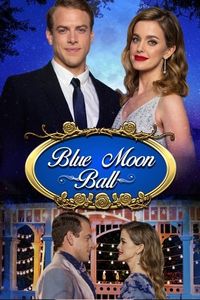
  • Blue Moon Ball (2021)

    Blue Moon Ball (2021)

    (On Cable TV, November 2021) As of this writing, Blue Moon Ball is a nonentity of a film. First broadcast on Canadian TV in November 2021 after a world-wide premiere in the small town of Camarillo, CA, where much of the film was shot, it’s still listed at IMDB as a 2022 film (we’ll see if they accept my documented update) and as such has no reviews, no votes, and no measurable commentary beyond various PR pieces written about the film by the filmmakers and exhibitors themselves. (No, the “Dove review” doesn’t count when it’s meant to reassure sensitive viewers that it’s an all-age film.)  As a reviewer, it’s thrilling to be in such terra incognita, writing a review without competing with dozens/hundreds/thousands of other takes on the material. On the other hand, well, Blue Moon Ball is not much of a film. It faithfully follows the usual Hallmark romance plot template of sending an urban professional back to their hometown, where they meet a past flame and they rekindle their romance while finding a reason for the protagonist to remain in town FOREVER. The plot variations are slight. Here, our protagonist is a romance novelist lacking inspiration for her next novel, and moving back to her hometown allows her to reconnect with her first love while working on saving a historical building from being torn down to make way for modernity. There are other disposable love interests that are eventually dispatched to make way for the film’s one true couple. The execution is competent, but that’s not saying much: director Tara Cowell-Plain doesn’t try to do much here except present a straightforward story in a straightforward way. I was drawn to the film because it featured a novelist as a protagonist, but this aspect is handled just as perfunctorily as the rest: it makes being a romance novelist seem like an artistic endeavour complete with writer’s block, whereas your average romance novelist (considering the economic imperatives of the market) is intensely familiar with genre formulas and able to churn them out professionally. But that would be adding more complexity than what the fairy-tale nature of the film would be able to tolerate. The saving grace of Blue Moon Ball, and other similar films, is that even at their blandest, they’re still pleasant to watch: there’s nothing to get angry about, nothing to challenge a predetermined notion of a happy ending for all. That does have some value, even as a break from more challenging fare.

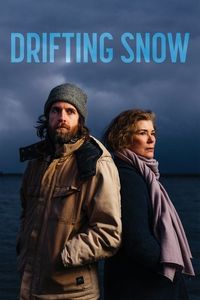
  • Drifting Snow (2021)

    Drifting Snow (2021)

    (On Cable TV, November 2021) As someone proudly born-and-raised in eastern Ontario, any movie billing itself in the TV Guide log-line as being set there earns a spot on my DVR. Alas, I’m not sure I’ll ever recommend Drifting Snow as a good look at my native land: Executed with an overwhelming dourness, it seems focused on pointing out how far the characters are from everything, how cold everything is, and how dull rural life can be when compared with (sigh) the all-consuming TORONTO where most of the cast and crew probably comes from. Other than a few longing references to the cities that define the boundaries of Eastern Ontario (with a side slam to Ottawa— geez, filmmakers, are you going overboard to get me to hate your movie?), there’s nothing here to distinguish Drifting Snow from being set in Generic Rural Canada, especially as the wintertime setting overwhelms any geographical distinction with a suffocating blanket of snow and cold. The script itself is no better: revolving around a chance meeting between two very different people following a car accident, Drifting Snow is one of those languid conversation-heavy dramas where characters complain about their lives and where they’re stuck — have I mentioned how much distance the Eastern Ontario tourism organizations are going to put between themselves and this film? There are, to be fair, a few good moments in the film: Tess Girard’s wintertime cinematography is cold but occasionally interesting, while such notables as Colin Mochrie and the ever-compelling Jess Salgueiro show up in minor roles. But the rest is almost deathly dull. Looking around the web, I see that most of the film’s positive reviews have commented on Drifting Snow’s emotional appropriateness during the pandemic lockdown, to which I say — never mind low-budget isolation, I want epic productions with a cast of thousands. But mostly I want a film set in Eastern Ontario that doesn’t spend its time complaining about being set in Eastern Ontario. Would that be so hard?

  • Doom: Annihilation (2019)

    Doom: Annihilation (2019)

    (In French, On Cable TV, November 2021) I’ve been playing Doom or its sequels even since the original’s 1993 debut on then-BBSes, so I was surprised to find out that an entire movie based on that franchise had slipped unnoticed past me. Although, thinking of it, it’s not as if Doom: Annihilation called attention to itself in the first place: A low-budget film from the “Universal 1440” direct-to-video division (whatever this means now in a streaming-first age), it’s a stablemate with an amazingly long list of sequels and spinoffs whose very existence will surprise you. Minimal effort is the commonality between all of the Universal 1440 productions and Doom: Annihilation is no exception. Put together with threadbare means and the most basic elements of Doom’s mythology (Mars-based research opening a portal to hell — yup, we’re done here), it’s a film that moves through rote and boring scenes all the way to an amazingly botched non-conclusion. There’s a willingness to do something different in making the protagonist of the film a female lieutenant rather than the mute faceless doomguy, but that’s roughly all that’s worth noticing about writer-director Tony Giglio’s bland execution. The videogame creators were not involved in the production, and the entire thing feels like a rethread of other films with a Doom label slapped on the result. The special effects are plentiful but generic, and the same goes for the character interactions — none of which raise the film above mediocrity. I did like Katrina Nare, but considering that I’m down to complimenting the looks of an actress in a marginal supporting role, that should give you an idea of how far away Doom: Annihilation is from anything worth watching by itself. I suppose that eventually, we will get something like a good Doom film. Or not — it’s not as if we need a film to appreciate the games.

  • Black and Blue (2019)

    Black and Blue (2019)

    (In French, On TV, November 2021) I’m sure there was a profound and dramatic drama to be made out of Black and Blue’s premise — a black policewoman placed under grave danger when asked to pick her loyalties between corrupt colleagues and unfriendly civilians. But that intention disappears a few minutes into the film as the gears shift and we find ourselves in a ludicrously overcooked blend of paranoia film tropes set in a deeply corrupt New Orleans. As our heroine sprints over hurricane-ravaged neighbourhoods, constantly watching her back for a police force ordered to shoot her on sight, Black and Blue becomes a familiar paranoid thriller more than an intriguing exploration of contemporary issues. Of course, there are the changing tides of public opinion to consider: what could have been quite acceptable as a genre thriller in 2019 is woefully incomplete once past 2020’s reckoning of unchecked police abuse. This makes the subject matter of the film far more familiar, but also far less credible due to sudden familiarity with the issues. None of the film’s shortcomings should be attributed to Naomie Harris, a perennial favourite who acquits herself quite well in a role combining drama with action — the title’s double meaning means that she’s bruised and battered by the end of the film. The New Orleans backdrop feels as run-down and hopeless as the plot, so there’s something to director Deon Taylor’s credit in the film’s atmosphere. It does wrap up neatly — probably too neatly for such a messy topic. And that’s Black and Blue in a nutshell — a rather average film that (unwittingly?) courts greater scrutiny of itself than it can sustain.

  • Boogie (2021)

    Boogie (2021)

    (On Cable TV, November 2021) I wasn’t expecting much from Boogie, and my expectations kept dropping further down as the first few minutes rolled by and the film established itself as a familiar, slow-paced, gritty-to-the-point-of-ugliness drama about a high schooler born of Chinese immigrants, gifted at basketball but struggling to fit in when so much hope has been placed on his shoulders. But as more minutes went by, I started warming to the results. Sure, the film is slow, small-scale, and often too painfully realistic. But it does earn some respect as it goes on — a romantic subplot pulls in the very likable Taylour Paige, while Taylor Takahashi proves himself in the lead role. It doesn’t quite get Boogie across the finishing line as a particularly enjoyable piece of work, but at least it avoids the gloom and dourness that the first few minutes presage. Boogie does have something to say about the Chinese immigrant experience (although that’s getting to be a crowded place these days, in between The Farewell, Lucky Grandma and many others I haven’t seen yet) and the heavy expectations placed on talented kids. I just wish it wouldn’t have been so leaden in its initial approach.