Author: Christian Sauvé

  • Chained (2020)

    Chained (2020)

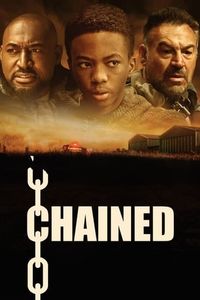
    (On Cable TV, November 2021) I was never convinced by much of Chained, as the film can’t even figure out that it wants to be exploitation thriller. Let’s see: What feels like a dull-as-dirt urban teen drama (complete with a disadvantaged black kid striving to improve himself in a context of an abusive father, neighbourhood bullies and an unsympathetic school environment) suddenly becomes interesting when our 13-year-old protagonist investigates an abandoned warehouse to discover a chained man and a key-bearing corpse just out of reach. Rather than hand over the key to the survivor and running as fast as he can, our supposedly brilliant protagonist ends up keeping him there, feeding him and making conversation until he figures out what happened. If that’s unlikely enough, consider that much of the Chained’s second half is concerned with the protagonist turning to the dark side, retrieving a very large amount of money and using it to buy a farm where he intends to grow restaurant-grade garlic. It’s not a bad business plan, but geez… are we still watching the same film? Suffice to say that as things escalate, viewers are liable to wonder where they’re going with all of this. Writer-director Titus Heckel somehow leads this as a straight (read: not inherently laughable) premise, removing even the advantage that a campy or exploitative approach may have carried. As a result, Chained feels disjointed and ludicrous for its entire duration, an approach at odds with its deathly serious tone. The evolution of the likable plant-growing protagonist into an outright villain is something that could have been dramatically fascinating, but it here feels forced and unwanted. The cinematography and other production values are not bad for a low-budget Canadian film, but it’s the tone in which the story is told that simply doesn’t work.


  • Silk Road (2021)

    Silk Road (2021)

    (On Cable TV, November 2021) As someone whose experience of the Internet goes back to the very early 1990s, I’ve had the chance to change my mind about it as it evolved. My early quasi-libertarian enthusiasm for the utter freedom of speech (and significant freedom of action) of the Internet’s early days has been tempered by some unpleasant realizations about social dynamics, epistemological tribalism and the need to behave as members of communities. As such, I have an axe and a half to grind about the spectacularly dumb idea of cryptocurrencies, the abuse of technology for illicit pursuits and communities that don’t incorporate at least some kind of moderation. All of which to say — I enjoyed Silk Road’s depiction of the eponymous dark web site’s foundation, but never so much as when it showed how the result blew up in its creator’s face. As it happens, I was at least semi-familiar with the broad outlines of the plot, having read the original article on which the film is based. As it sets up both a technological whiz-kid and a grizzled veteran cop as antagonists, I kept waiting for the unusual twist I remembered from the article. Still, the film doesn’t too badly as an Internet procedural, detailing in bite-sized doses what made Silk Road so special and why it evaded consequences for a while. Nick Robinson is suitably irritating as a young man with lofty misguided ideals who ends up realizing he’s not better than a common hoodlum, while Jason Clarke does get a nice turn as a traditional policeman who keeps up with the latest in online crime. (Meanwhile, Alexandra Shipp is eye-catching as the somewhat ineffectual voice of morality trying to get through to the tech-obsessed protagonist.)  There’s a steady forward rhythm and some darkly amusing sequences on the way to the third act… which is where it all comes down uncontrollably. Perhaps hampered by an overly slavish adhesion to the facts of the case, the climax of Silk Road seems to run out of steam rather than build to a dramatic climax. (It’s made even worse by a framing device that tells you where it’s going and doesn’t add too much to the initial impression.)  There doesn’t seem to be much made of the lead characters’ relationship, and you can almost sense the missed opportunities for a far more aggressive approach in handling the material, not to mention engaging in a confrontation between naïve ideals and real-world consequences. But maybe I’m asking too much of a film built as a run-of-the-mill cyber-thriller: Silk Road is too afraid to go beyond the facts of the case and start asking questions that we need to discuss.

  • Lolo (2015)

    Lolo (2015)

    (On Cable TV, November 2021) As a fluently bilingual Francophone, I have a privileged perch from which to consider Julie Delpy’s career — not only from the American side, but also the French one. Lolo, for instance, has Delpy as writer-director-star, and goes straight for high-concept comedy rather than the more subtle material elsewhere in her filmography. Featuring leading French comedian Danny Boon as a divorced man who meets and romances a divorced woman (Delpy), this film soon takes a dark turn when her possessive adult son does his best to sabotage their relationship. Anyone familiar with Boon’s other films could be forgiven for thinking that he wrote or directed it, so closely does it follow several of his other films. But what sets Lolo apart from many other comedies is how deeply it becomes stuck in the son’s dangerous possessiveness, and how it can’t get out of the pit it digs for itself — by the time the young man is revealed to be an utter psychopath, there’s no definitive ending, no way out of this bad situation… and the comedy of the film is seriously threatened. It doesn’t help that Lolo goes for maximum humiliation comedy whenever it can, scarcely leaving any dignity to Boon’s character as he’s manipulated into increasingly more embarrassing (eventually dangerous and criminal) behaviour. It does suggest a fundamental problem at the film’s core — a lack of understanding of how far you can go with comedy and still have it remain a comedy. Directorially, the film is fine without being remarkable — the tone is a lot of mainstream comedy without much in terms of impact. In other words, Lolo works but not completely, and it has enough weak moments and bone-headed decisions to confound. I do like Delpy a lot as a performer (and this is one area in this film where her work is irreproachable), but as a writer-director, Lolo doesn’t strike me as particularly successful.

  • Petrified (2006)

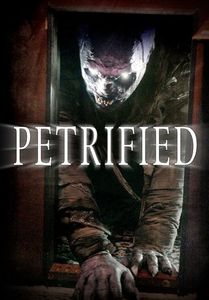
    Petrified (2006)

    (In French, On Cable TV, November 2021) At some point, I will go back in my archives and trace the arc of my changing opinions about Charles Band’s Full Moon films. What’s not up for discussion is the fact that he goes for low-budget sensations: Horror movies with intriguing premises hampered by terrible plots and acting, but with some fun and nudity in its execution. Petrified, which seems happy simply riffing off the traditional Mummy tropes (albeit with a thoroughly unconvincing science-fictional rationalization), is very much of the same cloth: As the mummy kills and kills again, we find the action moving to a clinic for… nymphomaniacs. Yes, really. But not really if you’re expecting wall-to-wall nudity and suggestive situations: While the film is thoroughly dedicated to the male gaze, Band doesn’t do much with the possibilities of his own premise in that area. Which is how much of the film goes: Despite some potentially interesting elements here and there, Petrified’s shoddy script doesn’t know what to do with its own ideas, and is just as likely to grind the action to a halt (within a can’t spare-any-moment 71 minutes-long film!) to half-develop something than to go digging into its own potential. It’s a bit goofy fun if you don’t expect much, but it’s frustrating under almost any other point of view. It does strike me that when Full Moon Pictures succeed at being entertaining, they almost do so in spite of themselves — not out of a master plan, but because all the elements seem to pile up in a slightly more entertaining way. The problem with that is that if luck ends up being the main determinant of what succeeds, there’s just as many chances for the pieces to fall down badly, and that seems to be the case with Petrified.

  • 5 Steps to Danger (1956)

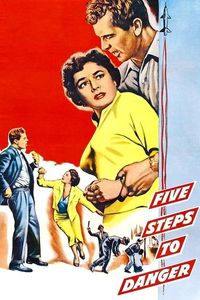
    5 Steps to Danger (1956)

    (On Cable TV, November 2021) While 5 Steps to Danger may begin as a film noir in the Detour tradition, it soon turns into a cold war thriller when our everyman protagonist becomes involved with a plot to steal American nuclear secrets. Sterling Hayden stars as our likable hero, with Ruth Roman playing what initially looks like a femme fatale, but ultimately becoming not much more than a standard love interest in a lovers-on-the-run suspense film. Writer-director Henry S. Kesler moves his pieces without too much fuss, but 5 Steps to Danger is perhaps best appreciated as a representative first-generation Cold War thriller than a particularly good example of the form. It evokes plenty of other better films, especially when our lead couple goes on the run to find the truth among so many lies and deceptions from Soviet agents. Some sequences still work well — perhaps most notably a confrontation deep inside a military base in which enemy agents are flushed out. The southwestern desert makes for an effective backdrop, but 5 Steps to Danger seems self-limiting in how lazily it uses its own best elements. While the result is still very watchable, there’s little doubt that a better filmmaker would have been able to do much better.

  • The Pajama Game (1957)

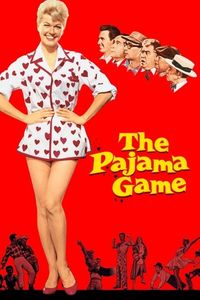
    The Pajama Game (1957)

    (On Cable TV, November 2021) The more you dig into the history of the Hollywood musical, the more you find some… unusual material. I’m consciously not using the word “weird” here because The Pajama Game is about as conventional as musicals go: With Broadway roots, Stanley Donen directing and Doris Day in the lead, it’s about as innocuous as these things are. But here’s the unusual thing: The Pajama Game is a romantic comedy musical in which a union takes on management for a pay raise and wins. By 2020s standards, following the regrettable erosion of union power and public perception thereof, this would almost certainly brand the film as socialist propaganda in some of the nuttier American circles — what do you mean, unions as the good guys? It’s become such a fleeting sentiment that pro-union films have become about as rare, remarkable and subversive as it’s possible to get in recent American discourse. (I’m allowing for some distance here because one of the better consequences of the early-2020s COVID crisis recovery has been far more power taken back by employees. But I digress.)  I don’t particularly enjoy that The Pajama Game has so much political baggage now (and I’m writing this from a unionized Canadian’s perspective), but there we go — the 1950s reaching us about progressivism. As for the film itself, there’s not as much to say in strict moviemaking terms: it’s competently handled, with tunes that are snappy without being memorable, and dancing that’s competent without being awe-inspiring. (This being said, it was Bob Fosse’s first major film as choreographer.)  Day is wholesomely bland but still good in the lead role, while the film does have fun making light of a topic matter that led to much darker films. (If you want to make a double feature with this and quasi-contemporary On the Waterfront, hey, go ahead.)  The Pajama Game ranks in the solid middle of 1950s musicals, but I don’t expect it to come up all that often in discussions, except for mentioning the pro-union sentiment.

  • Meet the People (1944)

    Meet the People (1944)

    (On Cable TV, November 2021) Don’t mind me, since I was watching Meet the People just for Virginia O’Brien — as her biography goes, she was playing in a local revue of the same name when she was discovered by MGM recruiters and thus got her movie contract. It must have been a return to roots of sorts when, a few years later, she was selected to play in the movie adaptation… even if I gather than the film and the revue don’t have much in common other than the title and a few numbers. O’Brien doesn’t have much of a role here, as the film is a musical comedy featuring Lucille Ball and Dick Powell: she does get a standout musical number (“Say That We’re Sweethearts Again,” a darkly funny song about the decidedly unfunny topic of homicidal spousal abuse — and she even sings the song without her usual deadpan tone) and assorted small comic bits, but she’s once more a supporting player. The rest of Meet the People is a very comfortable wartime musical, designed to both bolster the war effort and provide crowd-friendly entertainment. The plot has to do with a shipyard worker (Powell, before becoming a film noir fixture) becoming a Broadway writer, and getting involved in subsequent hijinks. It’s paced to allow for musical and comedy numbers, pulling the film closer to the 1930s Broadway revues as much as 1940s wartime comedies. It’s funny enough to be watchable, although the blatant propaganda is more interesting than inspiring nowadays (a good chunk of the first fifteen minutes is about characters selling war bonds). Unlike similar films of the era, there aren’t many top musical acts in Meet the People, although Ball is a perfectly charming presence as a showbiz star getting mixed up with blue-collar steelworkers. It probably doesn’t add up to much of a film for those who don’t have a specific affection for the era (or Ball, Powell and O’Brien), but it’s not unpleasant to watch, and it does have its highlights.

  • Tanin no kao [The Face of Another] (1966)

    Tanin no kao [The Face of Another] (1966)

    (On Cable TV, November 2021) While The Face of Another is not quite presented with the trappings of genre horror or science fiction, there’s a lot more to this story of facial disfigurement than just another drama. There are a considerable number of thematic concerns brewing under the surface of a story about a man getting a lifelike mask after receiving facial burns, and using the mask as an excuse to live another life. There are clear musings on identity, on the face we present to the world versus true selves, and what happens when accountability-through-identity is stripped away. The plot itself doesn’t make much sense on a logical level (despite insistent nuts-and-bolts realism, especially in the first part), which must have infuriated critics of the past fifty years. On the other hand, the film becomes far more poignant as an allegorical piece in which ideas are made literal through Science-Fictional devices. The Face of Another’s classification as a piece of Japanese New Wave cinema finds its meaning in the way the film eventually becomes stranger and weirder as it goes one, blending in another story, leaving realism behind and presenting a somewhat glum picture of humanity once individuals are freed of their identities. (I’m not saying that writer Kōbō Abe and director Hiroshi Teshigahara are wrong, especially after the past thirty years spent on the Internet — but it’s not a happy film by any means.)  I can’t say I liked the result, but it did keep me far more interested in the proceedings than purely realistic Japanese cinema of the same era, so consider this more than a half-hearted recommendation. See it alongside Les Yeux Sans Visage for more masking fun.

  • Lassie Come Home (1943)

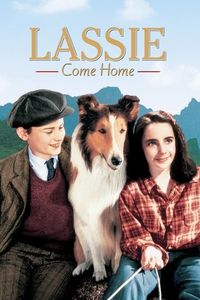
    Lassie Come Home (1943)

    (On Cable TV, November 2021) While I won’t try to pretend that Lassie Come Home is a bad film, let’s point out that it plays heavily on two very emotional notes that will either reach you or leave you unmoved. I, to put it bluntly, am not really a dog person and my Anglophilia is more urban-centric than made of a fascination for Brittania’s rural life. So, when this first Lassie film comes along, self-intoxicated by its depiction of a canine protagonist and wallowing into the clichés of the British countryside shot in California (along with the typically pronounced accents), I remain very much unmoved by a film doing backflips for specific viewers. (Just the opening scroll is enough to give a sugar rush to some.) On the other hand, “Lassie” has become such a shorthand for “movie dog, smart and kind” that it’s almost refreshing to have a look at the movie at the start of it all, as it adapts the 1940 novel and director Fred M. Wilcox leaves the starring role to the canine character. (As funny as it sounds, I never made the link between “lass” and “Lassie” until watching the film, so that’s a small mystery cleared up.) Otherwise, Lassie Come Home is roughly the kind of family film you could expect from 1943, pushing the rural Anglophile angle as war morale booster and delivering something that could play in Midwestern theatres for all to enjoy. As I said — not a bad film, but clearly made for a dog-loving audience. I am not really looking forward to watching the five (!) other films in the series.

  • The Hot Flashes (2013)

    The Hot Flashes (2013)

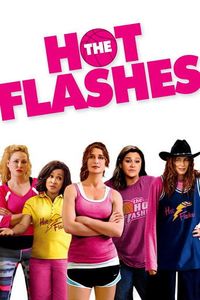
    (On TV, November 2021) Older stars don’t quietly fade away in supporting grandmother roles any more: In the best cases, they get vehicles that openly acknowledge their age and take advantage of it. So it is that The Hot Flashes reunites a number of middle-aged actresses and get them to play their age as an impromptu basketball team competing against high-schoolers to raise money for a breast cancer detection truck. (Yes, it sounds far-fetched, but those are the stakes that this small-town comedy goes for.)  Brooke Shields stars as the hobby-seeking housewife who tries to correct a lapse in judgment by leading the fundraising effort, but she regularly gets outclassed by the supporting cast:  Wanda Sykes remains a reliable scene-stealer as a woman wondering what basketball will do for her mayoral campaign, while Camryn Manheim incarnates a cannabis enthusiast and Virginia Madsen plays the town trollop (or so others say) with a considerable amount of charm. This being a film focused on women, it’s not surprising if nearly everyone gets a self-empowerment dramatic arc, from the lead character confronting her no-good philandering husband (an inglorious turn from Eric Roberts) to the lesbian character coming out, to characters regaining their confidence and beating down the arrogant teenagers. It’s not meant to be a very deep film — the clichés fly fast even when they’re being subverted (the small town is called “Burning Bush,” for goodness’ sake) and director Susan Seidelman is more interested in an accessible middle-of-the-road comedy than anything else. The Hot Flashes feels very familiar, even in its occasional hints of so-called subversion: the idea of older people embracing young people’s things has been frequently exploited over the past few years, and the feminist message of the film is not particularly progressive nor well-executed. But there’s something to be said for older actresses finding good solid age-appropriate roles even as Hollywood tries to discard them as past decades’ flavours — those films may be familiar, but they can be worth a look.

  • Never and Again (2021)

    Never and Again (2021)

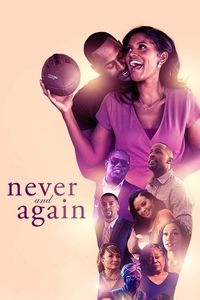
    (On TV, November 2021) As someone who sees a wide variety of films, new and old, I’ve learned to approach different subgenres with specific expectations and measure the films against them. When it comes to BET-broadcast romantic movies, my expectations are clear and reasonable: I want an attractive heroine, a likable male lead, a solid happy ending and some bits of pieces of interest even in cliché plots. I got what I was looking for in Never and Again — not a great movie in the grander context and still very much a formula film made-for-order for TV broadcast, but an amiable example of the genre, and something that won’t disappoint fans of the genre. Writer-director LazRael Lison is going for something specific here, pairing up a football-loving teenager and a musically-talented heroine, while following up with them fifteen years later to see if they can repair their broken teenage romance. Denise Boutte looks really nice as the disillusioned adult she’s become (with some assistance from Denise Garcia playing the younger character), while Jackie Long keeps up as the football player turned sports agent. Their reunion is intercut with their teenage relationship and their disappointing breakup. Clearly heavier on the drama than comedy, Never and Again does have a few unintentionally funny moments when the plot threads are showing — that scene in which an old flame pops up at his place, then asks if she can take a shower? Yeah, there’s no way this will not backfire and Cymphonique Miller, playing the temptress, does a great job selling the self-assured bitchiness of her brief appearance. Those moments are the reason to watch Never and Again even as it plays along very familiar lines. Still, it’s all fun and comfortable when the two leads do finally get back together in a last-minute finish — one of the best things about romance being that they deliver the happy finish that life seldom does.

  • Nightmares (1983)

    Nightmares (1983)

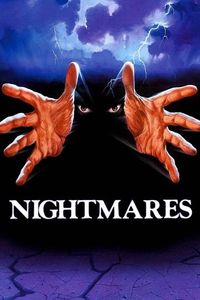
    (In French, On Cable TV, November 2021) As yet another horror anthology film, Nightmares remains in the honest average for the subgenre — uneven stories, some striking moments, a few notable cast members but a lack of cohesion that makes it little more than a collection of short films rather than a deliberate build-up to something bigger. The anthology film is distinctive for being the work of a single director Joseph Sargent rather than several ones, but its origin as a TV series pilot does explain some of the restraints in those segments. The first story is a dull retelling of the killer-in-the-back-seat urban legends, not really setting a promising note for the rest. The second tale is far more ludicrous, and concludes on seeing Emilio Estevez using an arcade laser gun to shoot at a creature escaped from a videogame — it’s silly stuff, but I liked the throwback to the early days of videogaming. The third segment is a more sombre Duel-inspired affair involving a faithless priest, played by Lance Henriksen, confronted with a pickup from hell (yes, you read that right), but it does conclude on a decent car stunt. Finally, the film wraps with a story in which a family confronts a rodent of unusual size in their basement, with Veronica Cartwright playing the mom. All stories work themselves up to a moral of some sort and are mild on the thrills, so that’s a contrast from some of the more gore-oriented horror anthology films out there. Still, you may forget Nightmares faster than you’d think.

  • Two Smart People (1946)

    Two Smart People (1946)

    (On Cable TV, November 2021) My disappointment at Two Smart People is not without precedent if I look at the less-than-impressed reactions about the film collected upon release and ever since. It’s even worse considering the promise of a Jules Dassin-directed film featuring Lucille Ball — Dassin’s later filmography showed a skill for noir, while Ball’s mid-1940s career was on a comic upswing. But there’s little of those skills in evidence here, as a mixture of overlapping confidence games and a cross-country train trip do little to entertain or amuse. Ball’s comic persona is muted, and the blend of crime and comedy doesn’t quite gel. The title suggests wit and sophistication, but the result is a clear notch under that — at best, Two Smart People is an amiable crime romance but one that’s generally featureless and forgettable. There’s a slight uptick of interest in the end, but it’s really not enough to lift the result out of the doldrums.

  • Ladies of the Chorus (1948)

    Ladies of the Chorus (1948)

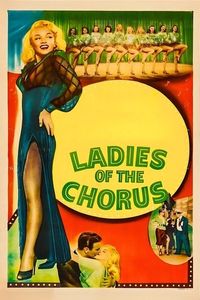
    (On Cable TV, November 2021) If you ever wonder what happens to a film when one of its secondary actors strikes it big, then Ladies of the Chorus is one of the exhibits for your edification. A rather ordinary showbiz romantic comedy musical, it just so happened to feature Marilyn Monroe in a supporting role as a burlesque dancer. The original top billing went to Adele Jergens (now a Classic Hollywood footnote at best), but when Monroe struck it big, the film was re-issued with revised opening credits, putting Monroe above the title, which remains the definitive edition of the film. (Just so we’re clear: Monroe’s role is significant here — it’s not a case of trying to hype a two-scene supporting appearance.) This kind of thing is not uncommon (especially in the direct-to-video, now streaming world where metadata reigns supreme) but it’s still an amusing anecdote about a film that, frankly, wouldn’t otherwise warrant much discussion. Ladies of the Chorus is, Monroe aside, a pleasant and familiar film of its genre: it’s got a few musical numbers, a few romances, a look at the thrills (and the backstage) of live performance, and goes about delivering a happy conclusion for everyone. There are at least a dozen very similar films… but only one of them features Monroe in her singing-and-dancing debut.

  • The Wizard of Gore (2007)

    The Wizard of Gore (2007)

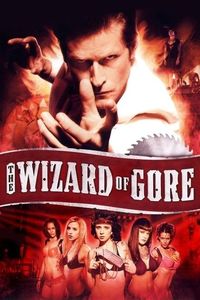
    (In French, On Cable TV, November 2021) I know, I know — it makes no sense for me, who strongly dislikes gore films, to go watching something called The Wizard of Gore. To my defence, however, I thought I was going to watch the 1970 version of the film, which has been called a reference in the field of horror cinema (hence something to check off the list of the movies I should be seeing, if only once). It quickly became obvious that this was not the 1970 version, but seeing Crispin Glover’s name in the opening credit kept me watching, and looking up the cast to see a mention of “Suicide Girls” (a pin-up aesthetic I often like) didn’t hurt either. First up: yes, there is gore, as much of the film is about a stage magician bloodily “murdering” young women on a stage show, only for those girls (apparently unharmed by the end of the show) to die horribly hours later. The plot, such as it is, has to do with a journalist investigating the mystery and, obviously, getting sucked into this vortex of splatter. But the set-pieces of the film are about bodies being sliced open, internal organs taken outside, blood spraying everywhere and an appalling disrespect for the sanctity of the human body. I did not like the scenes of extreme violence, obviously, but was still hooked by some of the surrounding material. Set in downtown Los Angeles, this is a film that revels in the dirty, grimy, off-putting side of things — nearly every shot of the film is off-kilter, with terrible things lurking in the numerous shadows of the frame. The characters are all damaged, delusional or pupeteered by director Jeremy Kasten, as he seems intent on delivering as nightmarish a vision as he can. There’s some skill in the way the images are put together that definitely raises the film from the bottom tier of schlocky horror. Still, praising a gore film for not being quite as terrible as expected is not exactly high praise: it’s far from a recommendation. Still, this The Wizard of Gore remake is not quite as terrible as it could have been, and I’m going to stick to that as my assessment.