Author: Christian Sauvé

  • Red Rabbit, Tom Clancy

    Putnam, 2002, 618 pages, C$39.99 hc, ISBN 0-399-14870-1

    It’s no accident if Tom Clancy has decided to incorporate under the name “Jack Ryan Ltd.” His fictional protagonist has starred in no less than eight best-selling novels since 1984 (with cameo roles in two others) as well as four blockbuster films. This is nothing compared to some mystery writers who are still churning out series novels decades after inventing their lead protagonist (Robert B. Parker and his “Spencer”, for instance), but unlike them, Clancy has been willing to make his characters evolve. From a humble intelligence analyst in The Hunt for Red October, Jack Ryan has become, post-Debt of Honor, nothing less than the President of the United States. After dealing with what was almost a nuclear war in The Bear and the Dragon, there isn’t much left for Ryan to do: Step down —or die heroically.

    While that particular story might be told in Clancy’s next opus, [September 2003: Alas, no] that hasn’t prevented him from squeezing out one more Ryan adventure out of his imagined universe. With Red Rabbit, he takes us back sometime between Patriot Games and The Hunt for Red October to tell us of his involvement in countering an assassination attempt on the Pope.

    Now this attempt is part of the historical record; in May 1981, Pope John Paul II was severely wounded by a Turkish terrorist named Mehmet Ali Agca, who was using a weapon obtained in Bulgaria. Since then, various rumours have credited the KGB with this attempt. Red Rabbit is a peek behind the Iron Curtain, a fictionalization of the events surrounding this event.

    It’s an unusual novel for Clancy; an attempt at meshing historical fact and fiction (he has written “historical” novel before –Without Remorse-, but it didn’t attempt to integrate itself with any known historical fact), a simpler plot than the previous novels (notice how the book is “merely” six hundred-odd pages long) and a curiously non-violent book too: The only shots fired are part of the historical record, and the body count equals exactly one —and that takes place off-screen at the very very end of the book.

    It’s also unusual in that it’s Clancy’s purest “spy” story so far. Whereas The Cardinal of the Kremlin contained a substantial touch of spycraft, this novel is packed with what feels like authentic descriptions of real-life spy stuff. Even the low thrill-factor of Red Rabbit works at evoking real-world danger here; By toning down the spectacular, Clancy makes even a simple playground conversation seem tense. Surely real spies do not behave like James Bond!

    Instead, we’re treated to a historical drama made more prescient with the benefit of twenty year’s hindsight and declassified material. The role of the papacy in the fall of communism is now fairly well-documented, and Clancy can draw upon these new revelations to solidify his story.

    On the other hand, he can’t resist the temptation to give his protagonists almost perfect foresight. Jack Ryan is almost cocky when he confidently asserts that the Soviet Empire will soon crumble upon itself. Other more serious anachronisms abound, mixing dates between 1980 and 1982. As a teenage Transformers fan, I was rather shocked to catch Clancy referencing the cartoon series at least three years before it was aired. Gotcha, Tom!

    This laziness doesn’t stop there: on a sentence-per-sentence level, Red Rabbit is as sloppily edited as Clancy’s latest few novels. Anachronistic expressions abound, and so does a certain repetition of terms (most egregiously the infamous “pshrink”), though nowhere as bad as in The Bear and the Dragon. I have noted previously that Clancy needs an editor who will not be swayed by his best-selling status, and this is still true; you could lop at least one hundred pages off this novel without undue harm.

    On the other hand, the novel as it stands right now is still fun for Clancy fans or spy novel buffs. The meticulous description of spycraft establishes an engrossing atmosphere of authenticity. While this is in no way an essential Clancy novel nor even a particularly well-integrated one (unlike Patriot Games, no mentions of the events in Red Rabbit are ever uttered anywhere in the series, which is unusual for Clancy.), it’s a pleasant read, certainly a better one than any of Clancy’s sharecropped ghost-written novels. It’ll do until Ryan’s next (and probably last) adventure.

  • Adaptation. (2002)

    Adaptation. (2002)

    (In theaters, January 2003) Brilliant at times, unsatisfying at others, Adaptation is a frustrating film that either mishandles a boffo premise, or exploits it in a way that won’t please everyone. Yes, I get the joke, that a screenwriter struggling with an adaptation wrote a script as if written by two screenwriters about the process of two screenwriters adapting a book. (Whew!) Yes, I know where reality and fiction leave off. Yes, I realize that the third act is written by “Donald” the lovable hack. But somehow, the last third also forgets to have fun and for such an amusing premise, it’s surprising to see how much Adaptation takes itself seriously at times. What could have been full of winks to the audience instead feels sloppy and unfocused. It is a deliberate artistic choice, of course, but is it the most appropriate one? Would this have been a better film if “Donald” had written the first two-third, and Charles the rest? What if the dual-personality sub-theme had been explicitly exploited? As someone with (amateur) screenwriting experience, I like anything about the creative process and love even more “wacky” movies, and yet found myself wishing for more, more, more in the latter third of the film: You’re screwing with the audience, Charlie, but why not push it even further? Was the coda truly necessary in light of the “mess up the audience” manifesto? What about the insufficient exploitation of the alternate meaning of “adaptation”? Couldn’t anything more be done with this? Where’s Robert McKee when you need him?

  • About Schmidt (2002)

    About Schmidt (2002)

    (In theaters, January 2003) One of Niven’s Laws (From SF writer Larry Niven) states “Think before you make the coward’s choice. Old age is not for sissies.” However glamorous or easy it may appear, being old sucks. Being retired is even worse. That seems to be the message of About Schmidt, a profoundly depressing look at a man who comes to realize he’s a complete failure. OK, OK, it’s not as bad as that, and Writer/Director Alexander Payne makes darn sure there’s a ray of hope somewhere. It still doesn’t make the film more enjoyable. This is the type of story built around a series of humiliation vignettes: situations are set up where the only suspense is in knowing how the protagonist will make a fool of himself. Jack Nicholson is good in one of his least Jack-Nicholsonish roles yet. But few are sympathetic in this story, and that includes one of the most obnoxious daughter role in recent memory. Older viewers will probably get much more out of this film than I did; I just couldn’t care less.

  • The Care and Feeding of Books Old and New, Margot Rosenberg & Bern Marcowitz

    St. Martin’s, 2002, 190 pages, C$32.95 hc, ISBN 0-312-30067-0

    I love books. I really do. I could go on and on about how many books I read and own and cherish and how I once almost went over a table to stop someone from dog-earing a book, but just take my word for it; I love books.

    The first time I saw The Care and Feeding of Books Old and New in bookstores, I knew it was something I had to get. Sagacious advice about cleaning, keeping and repairing books? Hey, I need this stuff. What Rosenberg and Marcowitz have put together is nothing short of a manifesto for serious bibliophiles. Inside its delightfully retro-looking dust jacket, there is enough advice to allow any book-lover to put his or her own library back into shape.

    These two booksellers have plenty of real-world experience and their delightfully practical wisdom amply demonstrates it. Wrapped in a commonsense prose, reading this is a lot like spending a few hours with two quirky librarians with a lot of stories to tell. Take notes, because you won’t find this advice anywhere else. Most of it is simple common sense, but the rest is illuminating. This is a Complete Idiot’s Guide to Book Stewardship by another name.

    This is a book that goes well beyond simple how-to advice. Some its best passages are simply about books. What they mean, what they can do, why we love them so much and why someone who is not kind to books is someone who doesn’t deserve any pity. Serious bibliophiles will read this book and feel their spirits soar through the roof of their library; it’s nothing short of a love letter to their favourite subject. There’s plenty of quotable material here, and twice as many passages to reflect upon. Expect to re-read passages every so often.

    The best complaint anyone can make about this book is that it’s not long enough. It’s a shame to see it end. What’s more serious, though, is the lack of illustrations. It would have been useful to be shown some of the repair methods explained here, compare before-and-after images and quickly associate specialized terms with their visual equivalents. The authors spend so much time extolling the visual, odoriferous and tactile pleasures of books, it’s a shame to see at least the visual aspect given short thrift.

    I must also confess that, as a cat-person (or, more accurately, a no-pets kind of person), the authors’ constant references to dogs, dogs and more dogs got a bit tiresome. Granted, their “real” job is selling dog books (go visit them at www.dogbooks.com). It is also true that this is, in fact, their own book (if I’m not happy, I just have to write my own). Still, it gets somewhat ironic to see them grumble against ill-mannered book handlers while scrupulously avoiding any mention of volume-chewing dogs. I have no doubts that their own dogs are particularly well-trained in this regard… but such is not the case with all pets and kids. On the other hand, this eccentricity gradually becomes charming, reinforcing the very human aspect of this book.

    And ultimately, this is what The Care and Feeding of Books Old and New is all about; the connection between books and humans (canines not excluded). Beyond the cleaning-up of books, the careful storage of volumes and the ethics of book-lending, this is about the happy life of bibliophiles, the peace of reading, the beauty of written thoughts and the satisfaction of communicating. In short, it’s an essential purchase for anyone who loves books.

  • Media Virus!, Douglas Rushkoff

    Ballantine, 1996, 344 pages, C$16.95 tpb, ISBN 0-345-39774-6

    As someone who started reading Adbusters! magazine in high-school during the early nineties, media jamming and memetic theory aren’t much of a discovery at this point in time. Still, “Hidden agendas in popular culture” is a tagline that’ll get me every time, so it’s no surprise if I picked up Media Virus.

    Culture commentator Douglas Rushkoff wants to do two thing with this book. First, to show how media, far from being a fearsome monolithic entity that that tells everyone what to do, is in fact controlled by the public. Second, to give specific examples of how individuals can manipulate media to transmit ideas they have created and optimized for maximum impact.

    At least, that’s what I was able to gather. Media Virus is so scattered, so free-wheeling that it’s hard to constrain. Like a channel-hopping teen wired on Jolt Cola, Rushkoff switches from one theme to another with a breathless energy, telling good stories but seldom bothering to pull them together. “Media Virus! Media Virus!” he shouts here and there. Well, okay: ideas can be propagated through the mindspace like their biological counterparts, but what happens then?

    To be fair, though, you won’t spend too much time worrying about the unity of the book as you rush through it, thrown from one field of interest to another with scarcely a moment’s pause. Media Virus! is an exhilarating read even six years (and a full Internet revolution) after publication. (Unfortunately, some cultural references now need a footnote or two, and this caveat will only grow worse with time.) Highlights include a wonderful analysis of the 1992 presidential election and explanations of the cultural significance of Ren and Stimpy, Peewee’s Playhouse and The Simpsons. Rushkoff shows us a television rushing toward greater realism fully four years before the reality show craze. (What did he write about “Survivor”?)

    From a certain perspective, Rushkoff also shows us a society ready for the Internet. His forays on the Internet circa 1994 take on a nostalgic quality, but clearly show a society only a click away from Kazaa, ICQ and virulent political chat boards.

    Oh, the first half of the book is more interesting than the second—mostly because after reading “Media Virus!” so many times, it’s easy to be bored. (We’re the MTV generation, Rushkoff. Our brain assimilates information more quickly. Don’t you forget it.) It’s also an unfortunate effect of his chosen field of study -media theory- that he has to rely on anecdotal “evidence” and personal interpretation of facts rather than harder numerical data in the form of, say statistics and survey. Media theorists have to apply, essentially, the tools of historians to subjects that haven’t even had time to cool down. This makes his speculations fun and interesting to read, but rather less than convincing from a purely objective perspective.

    But it may be a mistake to apply scientific thought to this subject. Maybe it’s more accurate to consider Media Virus! as a bunch of ideas and thoughts half-way corralled in book form. That a lot of them are obvious would only mean that Rushkoff either did his research or was dead-on in predicting the prevalent Media Viruses of 1995-2002.

    In any case, Media Virus! is great good fun. Even limiting itself to anecdotal evidence, it manages to explain (and defuse) the success of such latter pop icons as Eminem, Teletubbies, Survivor and a whole bunch of other things. As maybe the last book about the pre-Internet media, it may even be a historical curio of sort. In any case, this is a splendid thought-piece, a book to read whenever the success of the latest pop sensation looks too bizarre to be believed.

  • The Voices of Heaven, Frederik Pohl

    Tor, 1994, 280 pages, C$30.00 hc, ISBN 0-312-85643-1

    Frederik Pohl hasn’t become the living embodiment of a science-fiction professional for nothing. When even his average efforts like The Voices of Heaven end up being more fun to read that most SF published that year, it’s a sign that the man knows what he’s doing.

    It’s not as if this novel has any particularly original element. Bring together a maniaco-depressive protagonist, a love triangle, a suicidal cult, a far-away colony, barrels of anti-matter, musings about religion, mix well and… there you have The Voices of Heaven.

    It’s not immune to some of the traditional Stupid Stuff that contaminates so much quickly-written SF, mind you: Pohl’s assertion that political parties would be eliminated in favor of religious voting blocs is so silly it’s hard to know where to begin. But given that this is Pohl’s Religion Novel, some slack must be cut.

    He certainly knows how to bring us in the story, as an unnamed questioner interrogates our narrator about his life leading up to the “present”. Who is asking the questions? What is at stakes? The answers are ultimately disappointing, but it doesn’t matter when it comes to make us read the novel.

    This narrator, Barry di Hoa, is a technical specialist, an antimatter loader living a hard but comfortable life on the Moon, working in the only antimatter production facility in the solar system. Everything seems to be going well for him. He’s even thinking about marriage when he’s drugged by a rival and put on a colony ship headed light-years away. When he wakes up, he finds himself shanghaied on a faraway solar system. Without his beloved. Without the medication that keeps him stable.

    The colony is not only ill-prepared to receive him, but it’s also helpless against most things. Accidentally established in an earthquake-prone region, the colony has been so far unable to develop, stagnating at the same level for decades. It doesn’t help that fully a quarter of the colony’s population are Millenarists, a cult that openly encourages suicide as a way to atone for all past sins.

    Yikes.

    Well, if you actually find such a belief sustainable.

    But stranger things have happened.

    Barry, as a can-do type of guy, finds himself with precious little to do there. Naturally, it gets worse when he starts cycling through his manic-depressive roller-coaster again…

    It’s a short book, and a fairly simple plot, but Pohl’s got too much professionalism to turn it into just another SF novel. He infuses his narrator with a gradual amount of empathy, making the book far more interesting than you’d expect. Barry, for all his faults and shortcomings, is someone we can really cheer for. Ironically, his greatest moment of triumph is related in an offhanded, almost embarrassed tone of voice, as he seems reluctant to take responsibility for actions committed when he was in the maniacal half of his cycle.

    In short, The Voices of Heaven, despite unsubtle anti-religion shortcuts, predictable developments (oh, can’t you predict part of the conclusion whenever it’s obvious that our hero will remain virtuous?) and generally unexciting plotting, manages to be a worthwhile read. The writing is clear and enjoyable, the characters are well-defined and it ultimately amounts to a good time.

    A true professional’s job.

  • The Accidental Theorist, Paul Krugman

    Norton, 1998, 204 pages, C$34.99 hc, ISBN 0-393-04638-9

    I don’t know all that much when it comes to the science of economics, but I do love a good argument.

    Paul Krugman wrote The Accidental Theorist for me.

    It’s a vulgarization book about economics, or more accurately a collection of essays that aim to dispel some of the most prevalent myths about the economy. In here, Krugman takes on the effects of globalization, the trickle-down economy, currency speculation, unemployment and much more. His favorite target is the type of empty rhetoric propagated by right-wing icons who don’t understand the issues they’re discussing… and I can’t think of any more deserving targets.

    Readers of Microsoft’s slate.com magazine should be familiar with Krugman, as several of the articles reprinted here were originally published on the site. Not being a Slate reader, though, this was all new material as far as I was concerned.

    And pretty good material too. Krugman’s got everything he needs to be a good communicator: not only a thorough knowledge of his own field and the ability to make it understandable to the public, but also a set of strong beliefs and a passion to share them. His writing style is compact (don’t be fooled by the low number of pages; this book packs more ideas than other works twice the size), exact, to the point and often devastatingly funny.

    Yes, funny. Economics and humor. Stranger things have happened.

    Krugman also has the requisite disdain for people who ignore or ignore the truth. His step-by-step deconstruction of Richard Armey’s The Freedom Revolution [“An Unequal Exchange”, P.52-61] is utterly convincing: Armey must have intentionally mis-quoted freely-available statistics in order to sustain an untenable point to his readers. This kind of dishonesty is inexcusable, and there’s ample room for Krugman to make his point in exposing it. The Accidental Theorist really hits its stride when debunking bad economics.

    Mind you, bad economics are prevalent across the political spectrum. Blaming Krugman for “taking sides” would be inappropriate, even if he seems to be an avowed liberal: he takes on sacred cows from both sides of the fence. Supply-side economics and globalization on one side, government size and currency control on the other.

    [December 2003: In twelve short months, Krugman has, through a series of lively weekly opinion columns, emerged on the American political scene as a vigorous opponent of Bush II’s economic practices. Vilification by the right ensued in the best tradition of polarized debate. How dare one “liberal” argue for smaller government and balanced budgets!]

    All and all, it’s a heck of a read. Krugman does more here to raise the profile and reputation of economists than anyone else I’ve ever read. He convinced me that this can actually be a fascinating field. I found myself, thanks to Part 5 of the book, enthralled by currency trading scenarios. Imagine that!

    Though all of The Accidental Theorist, Krugman proves to be a witty, affable and constantly interesting commentator. He obviously loves his field and can’t wait to share this enthusiasm with others. It works; I found myself asking questions I never thought about before, and watching the financial news with renewed interest. His interests go beyond simple economics matters, especially in the last section where he applies the tools of his trade to matters such as environmentalism, health care and traffic jams with conclusions you might not necessarily expect. Krugman loves to play with ideas, and that’s an attitude I can only respect. The last essay of the book alone contains enough ideas for a full-fledged science-fiction novel… if anyone is bold enough to screw around with what “common sense” has been telling us for the past few years.

    All in all, even though I accidentally picked up The Accidental Theorist without too much attention to the author, I’m now suddenly curious to find out what else Krugman has written. In the meantime, this collection is staying on my shelves besides Sagan and Pellegrino, smack-dab in the scientific vulgarization section.

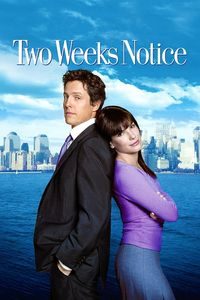
  • Two Weeks Notice (2002)

    Two Weeks Notice (2002)

    (In theaters, December 2002) It’s trite and shallow, but it deserves to be said: This film succeeds purely on the charm of Sandra Bullock and Hugh Grant. I’d like to poo-pooh “star power” as much as any other average nebbish intellectual film buff, but that proves impossible when a so-so romantic comedy is rescued from complete lack of interest by a feisty brunette and a floppy-haired Englishman. It’s not as if the first hour of Two Weeks Notice is completely worthless: Some of the gently antagonistic dialogue plays a lot like the classic romantic comedies of the black-and-white era. Bullock is charming as the long-suffering assistant/counsel/hen-mother to the hedonistic Grant. But the film hits a brick wall at the party sequence, and never fully recovers, as it changes gear from an understated romantic comedy to a more explicit romance. (Tangentially, I wonder if my lack of interest was triggered by Bullock’s character’s progressive transformation into the more standard romantic heroine, away from her feisty liberal persona) Thankfully, the charm of the leads manages to hold everyone in their seats even as the predictable conclusion finally rolls by. There are several things wrong about this film, from the incongruous toilet humor to the lack of dynamism of the supporting characters, but those flaws aren’t as obvious when Grant and Bullock are on-screen. Otherwise (or, if you just happen not to like those two actors), this is a strictly routine film, nothing to see…

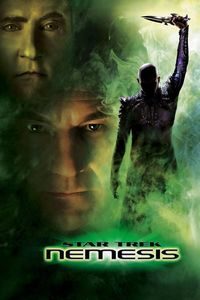
  • Star Trek: Nemesis (2002)

    Star Trek: Nemesis (2002)

    (In theaters, December 2002) Dull. Boring. Useless. Those were my reactions watching this tepid tenth instalment of the Trek Series. Not only does it break the even/odd rule, but it presents a strong argument for scrapping the series altogether. I mean: Dune-buggy racing? Yet another Data clone? Worf reduced to a drunken idiot? The lamest firefights ever shown on the silver screen? Put the franchise out of its misery, already. Not only did they rip off the plot from The Wrath Of Khan, but they did it in such a way that they sucked all the energy out of it. “The crew of the USS Enterprise confronts its most dangerous threat so far: A surly teenager!” Even Patrick Stewart can’t save the flat dialogue. Even the great special effects (Ooh! Two ships collide!) can’t save a script that is bound to the traditions of the low-budget series. Heck, even plenty of cleavage can’t excuse a script so stupid that it features a matter-of-fact psychic violation (“…and if you can tolerate another, that would be helpful. Thanks for your support.”) that leads to… wait for it… psychic weapon targeting! Gaah! Star Trek: Nemesis doesn’t work for casual audiences, who will find it pretty dumb, doesn’t work for non-obsessive fans, who will also find it pretty dumb, and sure as heck won’t work for die-hard fans given the truly wretched ways the characters are wasted. (The unaffecting death of a major character brought back all sort of unwanted memories of Generations. Such a waste…) This horse is dead, Jim. Shoot it.

  • Duct Tape Forever aka  The Red Green Show: The Movie (2002)

    Duct Tape Forever aka The Red Green Show: The Movie (2002)

    (On DVD, December 2002) Fans of the CBC show probably know what to expect, but even if they’re really indulgent, chances are that they’ll be disappointed by this feature-film adaptation of Steve Smith’s comedy genius. For one thing, the TV show depends on a very rigid formula that is impossible to translate in a movie. For another, the film relies on a very classical structure that will be instantly familiar to anyone who’s seen a film where underdogs win a contest. There aren’t nearly enough displays of mechanic cleverness that made the reputation of the show. Some moments are pretty dumb. The conclusion grates. And yet, fans of the show will get to see their favorite characters act outside the TV box for a while, against a moving camera and a three-dimensional environment. As far as Canadian comedies of 2002 go, Men With Brooms still rule, but Duct Tape Forever is okay. If you want. I guess.

  • Original Sin (2001)

    Original Sin (2001)

    (On DVD, December 2002) Savvy movie buffs have come to dread the expression “erotic thriller” as shorthand for “the story wasn’t interesting without nudity”. In this case, the casting is enough to tempt even the hardened skeptics: Antonio Banderas and Angelina Jolie are among the world’s Beautiful People, so how bad can it be? Well, Original Sin doesn’t turns out to be particularly bad, but it does end up being long and preposterous. This film doesn’t work because it goes everywhere, abandoning dramatic focus until we don’t care either where or how this couple will (or won’t) end up. Improbably plot twists don’t shock as much as they inspire sighs of derision from a bored audience. Few characters are sympathetic here, whether it’s Jolie’s morally ambiguous character or Banderas’ dim-bulb protagonist. Even more shocking is the discovery that Jolie’s nakedness is vastly overrated; she definitely looks better clothed (and padded a la Tomb Raider) than nude. So say goodbye to your last remaining reason to rent Original Sin: download the naked clips from your favorite P2P network tonight, and spend your good money elsewhere.

  • Ad Nauseam: The Onion, Volume 13, The Onion

    Three Rivers Press, 2002, 264 pages, C$26.00 tpb, ISBN 1-4000-4724-2

    Looking for Christmas presents? The helpful folks at The Onion can rescue everything by rolling out their newest volume in time for gift-wrapping season.

    Unlike the previous three Onion books, (two best-of selections and one book of original content), this is a true collection. All 44 issues of The Onion published between November 1st 2000 and October 31st 2001 are contained here, reprinted from the original paper version of the humor periodical. Yes, that includes the famous September 27th 2001 “HOLY F—ING S—T: Attack On America” issue, which tackled the September 11 events well before the rest of America was ready to deal with it.

    Compared with their latest best-of collection Dispatches from the Tenth Circle, there’s no denying that Ad Nauseam is, overall, not quite as funny. The Onion can have weaker issues like any other periodical, and this collection also includes those. Still, sifting through the pages, there’s still plenty of amusing material.

    Highlights include “New Girlfriend Tests Poorly With Peer Focus Group”, the special “Mayhem 2000” election edition, “I’m Like a Chocoholic, but for Booze”, “Romantic-Comedy Behavior Gets Real-Life Man Arrested” (also found in Tenth Circle, mind you), “Everything in Entire World Now Collectible”, “Girlfriend Changes Man Into Someone She’s Not Interested In”, “Bush Regales Dinner Guests With Impromptu Oratory On Virgil’s Minor Works”, “Author Wishes She Hadn’t Blown Personal Tragedy On First Book”, “Gore Upset that Clinton Doesn’t Call Anymore”, “Stephen Jay Gould Speaks Out Against Science Paparazzi”, “Toaster-Instruction Booklet Author Enraged That Editor Betrayed His Vision” and an article I wish I’d have written; “Everybody Browsing At Video Store Saying Stupid Things”

    All of this should be enough to make you laugh for a while. Noticeably thicker than its three predecessors, Ad Nauseam compensates quality by quantity. Even as a cash-grab endeavor, it’s still more than a worthwhile buy for fans of The Onion.

    Two things emerge from a linear read of a year in the life of The Onion, though, things that may not be obvious from reading The Onion on their web site:

    The first is the developing stories of the “Community Voices” columnists. While I had traditionally considered the recurring columns to be among the weakest sections of the periodical, reading a bunch of them in short succession can really help in making those “columnists” being interesting. I even came to feel a strange affection for Jim Anchower’s “The Cruise”, Hertbert Kornfeld’s tales’o’tha’Accountz Reeceevable Bruthahood and even -gasp- Jean Teasdale’s formerly insufferable “A Room of Jean’s Own”. Go figure.

    The second is strictly an accident of history: Reading months of Onion-accentuated silliness before the September 11th 2001 events is a lot like witnessing a nation whistling on its way to a good solid mugging. “A Shattered Nation Longs To Care About Stupid Bulls—t Again” [P.241] indeed. (Fortunately, even recent history shows that America is resilient and does, indeed, care again for stupid stuff.)

    One nice side-effect of the “include everything” mission of Ad Nauseam is that I got to re-read one full year’s worth of those terribly sarcastic one-liner “Horoscopes”, which has become one of my favorite features in The Onion over the past few months. Those hadn’t been included in previous collections.

    An annoying detail, proving that nothing is perfect: I loathed the splitting up of stories over two, sometimes even three pages. Even though I understand the production constraints leading to that decision, no amount of rationalization could make it look good.

    Enthusiasts of The Onion need to encouragement to rush out and grab a copy of this book. Newbies would be best-advised to pick up Our Dumb Century or Dispatches From The Tenth Circle as an introduction: Though there’s nothing specifically wrong about Ad Nauseam, it doesn’t reach the dizzying heights of the first two books.

    So… can we hope for Volume 14 next year?

    [March 2005: Annual volumes 14 and 15 are out, and if they do deliver hard doses of The Onion‘s trademark type of satire, they’re not books fit to be read all at once and they don’t measure up to the dramatic arc leading to and stemming from 9/11. Recommended, but only for those who already are familiar with The Onion.]

  • Me Myself I (1999)

    Me Myself I (1999)

    (On DVD, December 2002) Crossing Sliding Doors with Bridget Jones’s Diary, this gentle British romantic comedy features a woman who gets a glimpse (and then a full-blown part) in her alternate life thanks to a bit of fantasy wish-fulfillment. It’s cute. It’s funny. (Some scenes are humorous in a brutally frank way.) Rachel Griffiths is wonderful in the dual title roles; hot when she has to be, motherly when she must and adorably confused at all other times. The role-switching conceit is original enough, and the treatment works more often than it doesn’t. What doesn’t work as well is the extended second half, which seems a touch too long. (There is also one adultery plot twist too many that remains curiously unsolved whenever normalcy is restored.) The lack of resolution, choice or conclusion is a bit predictable when the point of the film is that you can be happy any way you chose (and yet be very curious about the path not taken.) Worth a look if you’re interested in a slightly offbeat look at single women’s bugaboos once they hit a certain age.

  • The Lord Of The Rings: The Two Towers (2002)

    The Lord Of The Rings: The Two Towers (2002)

    (In theaters, December 2002) The neatest thing about this film was being able to buy the ticket in absolute confidence. Peter Jackson is a god of cinema; the first volume of the trilogy was all we’d asked for. What could go wrong? As it turned out; presssciously little. The Two Towers is so close to The Fellowship Of The Ring in terms of pure cinematic quality that it doesn’t even matter discussing which one is better; it’s all good. Sure, there are more liberties taken here with the source material, but that’s because the second volume needs those liberties in order to be told in an engaging manner. The result is surely worth it, with one of the best medieval-era battle ever put to film, some scenes of astonishing beauty and an awesome variety of great images. Good action, a dash of horror, a stunning CGI performance by Sméagol/Gollum and some pretty amusing comic relief. What can I say? 2002 top ten material, must-buy DVD and quasi-instant classic. The Two Towers only reinforces the certitude with which we’ll buy tickets to The Return Of The King a year from now.

  • Head Over Heels (2001)

    Head Over Heels (2001)

    (On DVD, December 2002) Mixed bag that stuffs too many different things in one single container. Let’s run it down: Smart single art restorer with relationship problems: Okay, that works as far as I’m concerned (Monica Potter looks like a cuter Julia Roberts to me). China Chow as her lesbian colleague? More, more, more! The premise that she’s “forced” to take up residence with four supermodel room-mates? Funny stuff, that. Freddie Prinze Jr. as the center of female attention? I can deal with that. The slide from quirky romantic comedy to bathroom humor? Eh… not too sure. The further slide in comedic thriller territory? Eek. Ultimately, the writers throw together too much stuff. Some of it sticks (the supermodel humor) and some of it doesn’t (like the cops-and-gangsters plotline). Some of the humor is just too juvenile to be effective. But I’ve seen worse. This year. Heck, this month.