Author: Christian Sauvé

  • The Rules Of Attraction (2002)

    The Rules Of Attraction (2002)

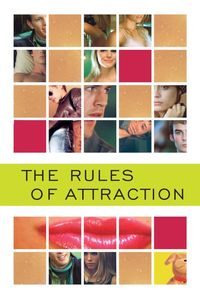
    (In theaters, October 2002) There are many things that don’t work in this film, but maybe the most offensive of them all is that for all the drug abuse, sexual perversions, loud music and overall hedonism of the story, it’s just not much fun. Too few naked coeds, scant enjoyment of illicit substances and sucky music combine with annoying characters and a lame “message” to produce what may very well be one of the most boring films of the year. The fault doesn’t lie with the actors, who do their best (though Shannyn Sossamon’s role is her weakest to date), but with writer/director/yadda Roger Avary, who mishandles some very promising material. I’m not talking about the original novel, which is reportedly quite different and rather loathsome if I’m to believe my Spy Notes on the book. Even with radical structural changes and simplifications, this adaptation feels directionless, meaningless and, yes, worthless. There are a few cute camera tricks, but don’t get too excited yet, because they don’t do much to support the story, nor add to them. It’s like if a film student wanted to try a whole lot of new (not-so-cool) tricks without having an idea why he should do so. The film lacks spark, energy and simple coolness. Doug Liman’s 1999 film Go outshines this film on all levels, from the soundtrack to the understated perversion, from the nihilism to the filmmaking. Too few, too late, too lame (“Nobody can really now another person?” Is that the best you can do for a moral?), there’s no real reason to see The Rules Of Attraction. I don’t even predict a cult following.

  • The Ring (2002)

    The Ring (2002)

    (In theaters, October 2002) It had been a long, long time since we’d seen a true horror film in theatres, after years of winky “satires”, insipid serial killers and cold-hearted attempts at Special Effects scares. (The Haunting, anyone? Does anyone still remember that one?) It’s a bit of a bother that Americans had to remake a Japanese horror film in order to come up with something good, but look at it this way: It’s not only a creepy film, but it’s also a decent adaptation. How scary is that? Horror films should work both in-theatre and some time after you’ve seen it, and The Ring scores twice, first by causing chills and then by working on your mind. The result might depend on a lot of cheap tactics (jump cuts, quasi-subliminal frames, loud noises and nightmarish images) but oh, does it work…! (Do note, however, that one of the best chills of the entire film comes from a very simple dialogue scene… “She never sleeps”) Sitting close to the screen in a loud theatre for The Ring is a lot like being clobbered on the head by a 2×4 throughout the film. The film might lose its potency on a small-screen setup. Or it may not: The Ring mixes familiar technology with supernatural horror to produce not only evil VHS tapes, but something that works specifically on jaded horror junkies. Performance-wise, props go to Naomi Watts and to the kid, who manages to be all-knowing and pathetic-looking while still being interesting. Nobody expected Gore Verbinski (The Mexican… eh…) to deliver something like this. I don’t care if he ripped-off half the original film: his version works, and it works very well even if you can figure out the tricks he’s using. Horror fan rejoice, and enjoy!

  • Red Dragon (2002)

    Red Dragon (2002)

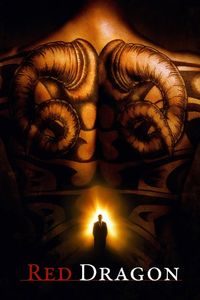
    (In theaters, October 2002) To be entirely truthful, I never thought Red Dragon was a project worth doing. Thomas Harris’ original novel Red Dragon had already been adapted to the screen by Michael Mann as Manhunter, so why re-visit? The attraction, naturally, was money, with the success of the two “sequels” with an entirely new cast. Fortunately, this remake/prequel doesn’t screw it up, either as an adaptation or as a thriller. It is remarkably faithful to the novel save a few updated details (for a video-camera age), more attention to superstar Hannibal and a (slightly) more upbeat ending. The star power exhibited here is impressive, but truth be told is that most of them only turn in workmanlike performances. (Particular bravos to Ed Norton and Emma Watson; particular ehs-of-indifference to Philip Seymour Hoffman and Harvey Keitel) The film is stylistically far more accessible than Manhunter, and will probably age much better than Mann’s work. The earlier film has a few stronger areas: some of the acting is more memorable -though maybe not better-, and the toll taken on Will Graham is much more visible in Manhunter. The winks to the “latter” The Silence Of The Lambs and Hannibal are obvious from the first scene on, and so help form a trilogy that may not be completely seamless, but should flow together fairly well. As a simple standalone thriller, Red Dragon is a slick piece of entertainment, not without tics and annoyances, but much better than average.

  • Iterations, Robert J. Sawyer

    Quarry Press, 2002, 303 pages, C$35.00 hc, ISBN 1-55082-295-0

    Whenever possible, I try to preface reviews of authors I’ve met with a short but pointed disclaimer. In this case, the disclaimer might be more necessary than usual. I know Robert J. Sawyer, I’ve interviewed him, and I’ve met him at local conventions and SF bookstores. Chances are that he even remembers me, which sorts of ruins the whole author/reader chasm that’s one of the underlying assumptions of my reviews.

    Do understand that while I can recognize several annoying deficiencies in Sawyer’s work, I really do -generally- like what he writes. Despite the repeated themes and characters, mechanistic writing techniques and occasional cookie-cutter plotting, Sawyer strikes me as a professional’s professional, a career-minded writer who happens to understand and love the genre like few others. I could quibble endlessly about the repetitive and unoriginal nature of some of his books, but keep in mind that I’d do so even as I own most of his books in first edition, usually in hardcover.

    Buying Iterations, his first short story collection, was a must. But enjoying it, well, that was another matter. Some writers are best suited to short story lengths. Others thrive in the extra space allowed in a novel. Sawyer definitely falls in the second category, and Iterations demonstrates it.

    The principal problem is Sawyer’s quasi-mechanical approach to writing. In a novel, this works well given that the characters, ideas and overall narrative drive can sustain our attention even though the writing doesn’t. At the very least, one can say that the writing doesn’t interfere with our reading. But things don’t work like that in a short story, where the strings of mechanical writing are too obvious. While I wasn’t overly bothered by this, I’m usually tone-deaf to this kind of stylistic issues, and yet I noticed it in the course of the book.

    Okay, this being out of the way, on to the blow-by-blow account: The book begins with the strong “The Hand You’re Dealt”, a formulaic but interesting murder-mystery set against a libertarian background. Sawyer loves mysteries and you can feel the fun he’s having doing a hybrid story. Other standout stories in the volume include the title-story “Iteration” (despite a horrid “I Wish” plot device), the whimsical “Lost in the Mail”, “Just Like Old Times”, and the closing story “On The Shoulders of Giants”. I could “but…” most of these stories, but they’re the best the volume has to offer.

    There are more “eh?” stories whose point seems too lame to discuss. “The Peking Man” reads as the first chapter of a longer novel; all setup, no resolution. “The Blue Planet” is one of the most useless short stories I’ve ever read, even on a second read. It might have been best-written with an explicitly humorous story, but Sawyer’s track record as a writer of droll stories isn’t particularly better: “The Contest” will have you looking for a punchline, and that’s an impression shared by a few of the other stories in the volume, as readers collectively ask “Is that it?” There are quite a few duds here; not disasters, but stories that never build up to something interesting. “Where the Heart Is” strikes me as a perfect example of a short story about three times as long as it should be, a story driven mostly by the obvious authorial manipulation of a protagonist who should know better.

    Again, please remember that all of the above comments are coming from a tone-deaf Hard-SF fan who does actually like Sawyer’s fiction. I’m so certain that your mileage will vary that I actually hesitate to recommend the book to you even though I found it, overall, worth my while.

    Sawyer writes on page 156 that “since 1992, I haven’t written any short fiction without a specific commission; I just don’t seem to find the time for short work otherwise.” You may infer what you want from that statement, but I think that it illuminates the rest of the book.

  • Punch-Drunk Love (2002)

    Punch-Drunk Love (2002)

    (In theaters, October 2002) I really wanted to like this film, but the problem is that film doesn’t want to be liked. It reminded me (slightly) of The Shining, in which an intellectual director takes on a “popular” genre without having much respect or affection for the said genre. The result may be a brilliant deconstruction of romantic comedy clichés, but if you’re looking for a good time, you might as well go back to the usual popular stuff. It’s easy to be impressed by elements of this film, mind you: Adam Sandler’s character is a direct reference to his usual screen personae, a dysfunctional moron whose childlike rages here do not go unpunished. As an actor, it’s definitely a step up for him… but it doesn’t make him likeable. P.T.Anderson’s direction is sparse and relatively breezy, but it’s also deliberately sloppy and unpolished in an attempt to lend it some art-house credibility. A few moments are genuinely amusing (I’m thinking here of the “backlit kiss”, deliberately marred by what looks like a parade of visual distractions), but most of the film plays like nails on chalkboard, an impression heightened by the deliberately intrusive soundtrack that does an effective job at putting us in the mind of a loathsome protagonist. I wasn’t impressed by any of the “romantic” elements, which seem glossed over for no good reason at all; in his rush to deconstruct, Anderson has forgotten to construct. Once again, even though Punch-Drunk Love is at least an hour shorter than Magnolia, it still feels loose and self-indulgent. But then again, self-indulgence has been a hallmark of Anderson’s work since the very beginnings. What’s not present here, though, is a reason to like this film, not simply admire it.

  • Lung foo fung wan [City On Fire] (1987)

    Lung foo fung wan [City On Fire] (1987)

    (On DVD, October 2002) Yes, this is the film that inspired Quentin Tarantino’s Reservoir Dogs, a fact that will be obvious to viewers only five minutes before the end of the movie. Fans of Hong Kong action cinema might want to temper their expectations a bit before watching City On Fire, though: It’s far more of a straight-up criminal thriller than an out-and-out action film. As a film, it succeeds almost purely on the strength of lead Chow Yun-Fat’s charisma. While he plays a horny, cocky and slightly unlikeable character, Yun-Fat does it with such charm and coolness that it’s hard not to be attached. Otherwise, this is standard Hong Kong cops-and-criminals stuff, with the typically dark ending made even more poignant by our attachment to the protagonist.

  • Kung Pow: Enter the Fist (2002)

    Kung Pow: Enter the Fist (2002)

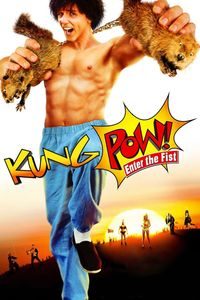
    (On DVD, October 2002) Let me be frank: This isn’t a very funny film. It starts from one joke (hey, let’s re-dub an old kung-fu film, insert a character in them, add new scenes and be really silly!) and doesn’t add much more to it. The humour is often juvenile and repetitive (oo-ee-oo-ee!) Even so, I ended up grinning through most of the film and laughing like an idiot every five minutes or so. Don’t ask me why, because I’m as baffled by it as you are. It’s probably the sheer silliness of it all that got to me, as cows, squirrels and woodchucks are used as weaponry and evil French Aliens try to take over the world. (Mm. That was a rather huge spoiler.) Good silly fun, nothing more. The DVD contains a bunch of extra scenes (most of them are just lame) and a few more language tracks (French, Spanish, Commentary, “original dialogue” and a “book-on-tape” dry English narration that’s hilarious for about five minutes.)

  • Knockaround Guys (2001)

    Knockaround Guys (2001)

    (In theaters, October 2002) Kept in the studio’s vaults for a while and released in theatres mostly to cash in on Vin Diesel’s popularity, this film is slightly better than the usual straight-to-video, but not by much. My biggest problem with the film is the way it smothers a rather fun mob comedy with a wrapping of intense drama. Your mileage may vary, but it’s far more fun to see a gang of slick New York mobsters deal with a sleepy Midwest town than to hear the constant whining of a pretty Mafioso’s son. The ending is lazy, killing everyone in sight in an attempt to solve plot problems. Acting-wise, Diesel is as good as usual, but doesn’t stretch his range much. Barry Pepper continues to atone for the Battlefield Earth debacle. Along with 2002’s We Were Soldiers, maybe we can forgive him now. Seth Green is misused, but John Malkovich is just right. This is the kind of film you can rent without too much guilt. But then again, it’s nothing special.

  • Ten Thousand Bullets: The Cinematic Journey of John Woo, Christopher Heard

    Lone Eagle, 2000, 269 pages, US$15.95 tpb, ISBN 1-58065-021-X

    Even though the cumulative effect of some of his movies is often disappointing (WINDTALKERS, anyone?), I really do like John Woo’s work as a director. His eye for action choreography is unmatched, and even when he’s hampered by practical constraints, his visual style stands tall above the work of most of his colleagues. It’s no accident if I happen to consider films like HARD-BOILED and FACE/OFF to be minor classics.

    So, obviously, a book like Ten Thousand Bullets would be naturally interesting. While I know a fair bit about Woo’s work since the late eighties, the earlier part of his life isn’t commonly discussed in the media, and it seemed to me that this biography could shed some light on that part of his life. Fortunately, it delivers. Unfortunately, it doesn’t do much more.

    Ten Thousand Bullets is, logically enough, arranged in chronological order. Starting at his birth in 1946 and ending in pre-production for MISSION IMPOSSIBLE 2 in 1999, this biography details most of the thirty-odd films of Woo’s career, with a particular attention to the eight last action films that followed his 1987 breakthrough A BETTER TOMORROW. More information is offered as the book goes along, for reasons that will become clear in a moment.

    I noticed that Ten Thousand Bullets was written by Christopher Heard only after I had bought the book. I don’t think that this would have influenced my decision had I known beforehand, but the name still rang alarm bells: Heard is the author of Dreaming Aloud, a biography about James Cameron that I’d read some time ago. Though I did like the book, I was concerned, at the time, about the derivative nature of Heard’s work, a book that read as if it had been cribbed from a few magazine articles, along with multi-page summaries of Cameron’s films. Would it be the same thing with Ten Thousand Bullets?

    Well, not quite as bad, but pretty much, yes. On a technical level, Ten Thousand Bullets is workmanlike, presenting basic information in a suitably accessible style without panache or great insight. If you want a quick biographical sketch of Woo’s life, this is the book for you, a highlight reel of his career along with very basic biographical information. As a work discussing Woo’s motifs, motivations and work methods, though, it’s a recipe for disappointment. While material like Woo’s Catholicism is briefly mentioned, it’s not referenced in the index nor discussed in any meaningful length.

    True, Ten Thousand Bullets seems to rely on more sources than Dreaming Aloud (wow, count’em: six books and seven articles), but once again, Heard seems to be writing from second-hand sources. Woo’s life is narrated, but we seldom get a glimpse into the reasons why it’s happening this way. Coverage of his work seems to increase in proportion to the number of material published in the United States. Save from an interview with Chow Yun-Fat (heavily featured as “Appendix A”, even though the link with Woo isn’t integral), there isn’t much of a sense that Heard wrote much more than a collage of previously-published works, minor interviews and personal impressions. As such, it’s a pretty good read, but it may be more appropriate to beginners and casual Woo fans rather than his aficionados. There remains a place on the marketplace for a book delving deeper in Woo’ life and passions. For the rest, well, there are plenty of web sites.

    This being said, I’m still not too disappointed by the book: It’s a fast read, it does a basic job at describing the life and work of John Woo and it brings together information from many sources in one convenient package that fits comfortably on my reference shelf. It’s a bit of a bother that it stops short of Woo’s biggest hit MISSION IMPOSSIBLE 2, but -hey- that’s the problem with paper books. On the other hand, maybe it’s a relief that Heard’s breathless narrative stopped short of his latest two American films. Seeing how he bends himself out of shape trying to compliment HARD TARGET, it would have been embarrassing to see him try to praise WINDTALKERS on anything but a purely visual level…
  • Histoire De Pen [Prison Story] (2002)

    Histoire De Pen [Prison Story] (2002)

    (In French, In theaters, October 2002) Prison dramas are, by now, a well-established kind of crime stories, and Histoire De Pen plays on familiar ground when telling this story. All the requisite elements are there, from the schizoid comic relief to “the hole” to the intimidation on prison grounds to homosexual violence and the callousness of “the outside world.” Not much is new here, especially when you consider that the overall story arc feels a lot like writer/director Michael Jetté’s previous Hochelaga. But Histoire De Pen is raw and (mostly) un-romanticized. This is far from The Shawshank Redemption in that pretty much all of the characters are unlovable, unrecoverable and rather stupid to boot. There is a certain impressive visual polish, especially given that it’s a low-budget French-Canadian production, and few dull moments mar the narrative. But the dialogues of the film are striking by their inappropriateness, scarcely sounding as if they really come from the hardened protagonists; a more consistently street-level dialogue style would have worked better. The ending is also a bit loose, taking the resolution out of the prison context, which strikes as kind of a cheat. This isn’t a pleasant film, but it’s an interesting one for most of its duration.

  • Hedwig And The Angry Inch (2001)

    Hedwig And The Angry Inch (2001)

    (On DVD, October 2002) It’s unfortunate that my interest for (trans)gender issues is almost precisely equal to zero and that my musical tastes are more driven toward hard rock and dance-electronica. Because, frankly, I didn’t go nuts for this musical about a transsexual soft-rock singer. Oh, it’s not devoid of amusing moments and cute sight gags, but there’s just not much there to interest me. As the film progresses, curiosity takes a back seat to ennui as the film slows down and finally turn out a gratuitously symbolic finale. Your mileage will undoubtedly vary. The DVD contains stuff like a making-of and a director’s commentary, but I couldn’t be bothered to watch any more of it. Eh. Go figure.

  • Hannibal (2001)

    Hannibal (2001)

    (On DVD, October 2002) I have always suspected that Thomas Harris’ Hannibal was a practical joke played by the reclusive author on the too-rabid fans of The Silence Of The Lambs. Grotesquely overblown with flamboyantly evil characters, it seemed to thoroughly pervert the character of Clarice Starling, laugh at the readers’ expectations of gory horror while overwhelming them with an exasperating array of meticulously-researched details. The film doesn’t appear to be as bad, but it’s still kind of a dark comedy when you look at it from a detached point of view. On some levels, it plays a lot like the most expensive, most pretentious splatter-film ever made: the quality of the visuals and the acting effectively masks a story that comes straight out of a “Weird Tale” pulp story. Director Ridley Scott uses all sorts of tricks to make everyone look better than the material… and it works! Julianne Moore is a respectable replacement for the decade-older Clarice, and Anthony Hopkins looks as if he’s having some fun as the evil Lecter. The over-the-top final scene is effective in a Grand Guignol kind of way, being blackly amusing even as it’s repulsive. All in all, the film works much better than I would have expected, if only for the technical polish: It’s may very well be garbage, but it’s impeccable garbage.

  • Freaks (1932)

    Freaks (1932)

    (On VHS, October 2002) Let’s face it: most movies of 1932 have now blissfully sunk out of popular memory. But this one has endured, even gaining a small cult following in horror circles. Part of the appeal comes from the originality of the premise, even 70 years later: Here, we follow a group of circus freaks, from retarded pinheads to men-babies to a man without a lower torso (think Kenny) and another without arms or legs. Compared to them, the dwarves and bearded lady are positively normal. Keep in mind, though that these are all real freaks, without CGI trickery or faked costumes. Their acting isn’t very good (the squeaky voices of the leads can be hard to understand especially given the low quality of the audio) but the authenticity is enough to give pause (and unease) to any viewer. The thin plot is ridiculously simple, featuring a gold-digging shrew marrying and poisoning the protagonist to inherit his money. The revenge of the freaks is terrible, and indeed the shot of them crawling through the mud toward the evil woman, holding knives, is something that’ll stay with you for a while. But even then, the sympathy of the film rests firmly with the freaks (“Gobble-gobble, we accept you, you’re one of us!”), which -I guess- was a bit of a shocker back. As it turns out, it is this sensibility that ensures that the film can still be watched even decades later. A curio.

  • The 51st State aka Formula 51 (2001)

    The 51st State aka Formula 51 (2001)

    (In theaters, October 2002) If “Samuel L. Jackson in a kilt” doesn’t raise your eyebrow and your interest, that’s fine, move along, nothing to see here… but for everyone else, Formula 51 is a fun little crime comedy. Dynamically directed by Hong Kong action maven Ronny Yu, this film follows the adventures of a very American chemist (Jackson, wearing a kilt throughout) stuck trying to make a drug deal in Liverpool, UK with the help of a reluctant sidekick (Robert Carlyle) while under the gun of a hired assassin (the unspeakably cute Emily Mortimer). Oh, there’s also Meat Loaf, as “The Lizard”. I’m not going to pretend that this is a classic for the ages, but there are quite a few fun moments here and there, from a dynamic opening credit sequence to a golf-club whuppin’ to a car chase (where both leads go “aaah!” at the same time, thereby fulfilling a basic requirement of buddy comedies) to plenty of double-crosses. It’s crunchy good fun, though there’s a bit too much spilt bodily fluids to be clean fun. There’s some amusing material on British/American differences, which is fitting for a Canada-Britain collaboration, I suppose. Younger fans of action/crime comedies should consider checking this one out. More mature viewers may wish to pass…

  • Fung wan: Hung ba tin ha [The Storm Riders] (1998)

    Fung wan: Hung ba tin ha [The Storm Riders] (1998)

    (On DVD, October 2002) Interesting: A rather cool Chinese fantasy film stuffed with fights and special effects. It’s a discovery of sorts for western viewers, as it presents more thrills and visuals than almost all of the American so-called “fantasy” epics of the last decade. Fans of period kung-fu films probably know what to expect, what with a feudal-era Chinese lord, his daughter (Shu Qi, very cute) and the young warriors vying for her affection. A lot of fighting ensues, but with the marvels of digital special effects, The Stormriders crams what looks like hundred of special effects in the various battle scenes. Jaded Special Effects addicts might want to check the film only for that reason. Alas, the direction is a bit too chaotic to be effective, seldom offering a coherent, sustained view of the action. But then again, the gonzo approach of some of these fights might be enough to tide you over a first viewing. The R1 DVD reviewed here sadly offers only an indifferent dubbed English version (sacrilege!) with neither an original Chinese audio track, nor even English subtitles (bastards!). Swordfights, cute Chinese girls, magic spells and tons of CGI… can it get any better? Golden Monkey says no!