Author: Christian Sauvé

  • Le Pacte Des Loups [The Brotherhood Of The Wolf] (2001)

    Le Pacte Des Loups [The Brotherhood Of The Wolf] (2001)

    (In theaters, June 2002) I really should have liked this film. On paper, it sure sounds like a winner: An action-packed monster movie set in medieval France, starring a libertine scientist, his Mohawk kung-fu master, Monica Bellucci as a courtesan and a villain played by Vincent Cassel? With wire-fu action scenes inspired and staged by Hong Kong martial artists? Mixing political intrigue and religious conspiracies? I’m there! Unfortunately, while Le Pacte Des Loups has fascinating components, it never manages to put everything together seamlessly. The film jumps from one emotional register to another without smooth transitions and uses various cinematic tricks without seemingly understanding why they should be used. The result is a loud, incoherent mess that ironically feels very, very long. (It doesn’t help that the last forty minutes are repetitive and essentially useless.) This is a film by technicians, not storytellers; the plot is weak and senseless, whereas the images are often gripping. (I laughed out loud at a cheeky transition pan shot that neatly dissolves from Monica Bellucci’s curvy naked body to a CGI shot of hills and valleys.) There is a palpable sense of missed opportunities amidst the stunning scenery, the expensive special effects and the interesting back-story. It’s just too bad that nothing more intriguing has been done with it.

  • The Nightmare Before Christmas (1993)

    The Nightmare Before Christmas (1993)

    (On DVD, June 2002) This is a mind-boggling film: Not only for the intricate step-motion animation work that has gone into it, but also for the freedom of imagination and wit the filmmakers were allowed in making this film a reality. I don’t think anyone has ever seen anything like it before, and that in itself is sufficient to make it a solid recommendation. The art design is awesome, the characters are well-defined and the whole film has the feel of an instant classic. Kids will love it, sullen teens will love it and parents… well, they just might. It’s difficult to imagine anyone not loving it.

  • Minority Report (2002)

    Minority Report (2002)

    (In theaters, June 2002) The notion of being able to foresee crimes before they occur is nicely pulpish; not based on any scientific theory, but sufficiently interesting to make us say “what if…?” The problem comes when you try to fit this pulpish notion in a believable “real” world, in which case the incongruities between story conceit and execution become more and more uncomfortable. That’s a lot how I feel about Minority Report, an excellent SF film that takes itself so seriously that the seams holding it together become nearly intolerable. The original story by Philip K. Dick is interesting but abandoned midway through (as the whole “Minority Report” concept becomes merely a MacGuffin), and the film’s attempt to provide authenticity through a “real” future becomes increasingly ridiculous. The vertical highways clash with the film’s other levels of technology, the “precog” concept seems non-scalable and non-renewable, the logical loops become more and more convoluted… Even worse, the procedural aspects of the film are simply untenable, a fatal flaw in a film that spends a lot of time setting them up; a would-be victim is left alone after an aborted crime; the process “witnesses” disappear as soon as they should be important; the security measures of a top-secret facility are laughably deficient… I wouldn’t pick apart such flaws in James Bond movies or dumb SF films like Starship Troopers, but Minority Report is so seductive in its willingness to imagine an original, plausible future that it’s almost asking nit-pickers to double-check. And it fails the test of scrutiny. Or does it? Despite my multiple reservations, I realize that it’s one of the best SF films I’ve seen in a long time, and is likely to remain on my Top-10 list at the end of the year. It’s packed with great action scenes, posits fascinating questions and features some wonderful special effects. What it doesn’t do is damning, but what it actually does is impressive. Despite multiple problems and flaws, Minority Report remains one of the must-see films of 2002, a solid, provocative blockbuster that’s almost better than it deserves to be.

  • Life Or Something Like It (2002)

    Life Or Something Like It (2002)

    (In theaters, June 2002) There isn’t much to tell about this film, mostly because it’s so vacuous. The premise is familiar and short enough to be explained away in a thirty-second trailer, but the resolution is given away in the very first shot of the film, leaving the rest as little more than an exercise in filling in the numbers. Okay, so Angeline Jolie, Edward Burns and Tony Shaloub are talented actor who can rise above the material they’re given, but sadly, the screenwriter isn’t particularly gifted, and Life Or Something Like It flops around, goes through the motions and generally delivers what we expect from it, which isn’t much given that it’s a romantic comedy. I wish we could have had a longer glimpse of Jolie-as-a-teen-rocker (With glasses! Whoaah!), but that’s just me; the film does nothing with it. And so should we.

  • Jason X (2001)

    Jason X (2001)

    (In theaters, June 2002) After two years on the shelves, the latest installment of the Friday The 13th series is finally unleashed in theaters, with a title change and what I guess is an attitude change. After years of derivative knocks-offs, Jason X offers something (slightly) new; a rampaging serial killer… in spaaace! Well, okay, it’s not new after Hellraiser: Bloodline and Leprechaun 4: In Space, but it’s certainly a step more original than anything the series has had to offer before. Alas, the irritating porn-like slasher film structure is still left untouched. But the film exhibits an amusing self-awareness (“Do you want to have pre-marital sex? We love pre-marital sex!”) and even (gasp) some degree of SF literacy (take your pick; cryogenic death, nanotechnology or a funny riff on the whole Alien/Terminator concept). For us guys, it’s a shame that three of the lead actresses look alike and that, alas, the nudity is limited to a few all-too-brief seconds. Even though I generally loathe that type of horror film, I found a few things to like in Jason X, enough to generally enjoy myself for the duration of the film. It’s no classic, but it may be worth a look.

  • Branch Point, Mona Clee

    Ace, 1996, 310 pages, C$6.99 mmpb, ISBN 0-441-00291-9

    As a literary genre, Science-Fiction nowadays is large enough to accommodate a vide range of views on certain subjects. Nuclear weapons, for instance, have been used in a variety of ways by different authors. From the nuke-happy rhetoric of the most extreme military-SF to the wide-eyed horror of the post-apocalyptic segment, there’s been a divergent attitude about the current nec plus ultra in sudden energetic release. Most SF writers have accepted nuclear weaponry as a necessary evil or even as a useful dramatic tool from time to time.

    Mona Clee’s first novel, Branch Point is definitely not ambivalent about nuclear weaponry. The hook of the novel is how an intrepid group of time-travelers painstakingly avert one nuclear war after another. The anti-nuke discourse is strong and strident, up to a point -as we’ll see- that it harms the novel’s overall credibility.

    Branch Point is set up with a minimum of fuss and believability. We are to believe that by 1962, the US government was able to build a secret facility in California named “The Bunker”, designed to protect the best and the brightest of American scientists. The facility is activated when the October Crisis goes nuclear. A hundred years later, the dying facility has perfected time-travel (uh-huh) and is about to send three teenagers to avert the war. All three happen to be half-American, half-Russian, which is weakly justified (Visiting Soviet scientists were in The Bunker when the missiles flew, and they were far more interested in procreation than their nerdy American counterparts) but rather handy when, later, the teenagers will have to go to Russia.

    Within a few dozen pages, the October crisis is avoided. But it’s not the end of the adventure for our three protagonists: years later, four preeminent American politicians are assassinated and missiles fly again. As it turns out, our protagonists have “three more tries” by which to avoid nuclear war, and they’ll avoid that one too, bringing history closer to the one we’re familiar with.

    But the cycle starts anew as the 1990 Soviet putsch (in our timeline) diverges in yet another nuclear war, which our protagonists mop up once again. The universe of Branch Point then diverges in “our” future. Naturally, missiles will fly again in the early 2020s, and this time our heroine must use her last chance to avoid nuclear war ever again…

    Her solution is rather curious, which is to say that she travels back to a time where Russians could have colonized California, and manipulates them in doing so. It’s an interesting conceit (suggested in the first two pages of the novel, so don’t worry about me spoiling the novel) and interestingly executed.

    What I didn’t like as much is the way Clee goes out of her way to suggest that nuclear weapons will forever be banned in her “final” future. Physics go a certain way, and it seems highly doubtful that alternate sciences will not re-create nuclear weapons ever again. In this light, a lot of Branch Point seems highly convoluted. (And let’s not speak of the parts of the novel which are convoluted, such as seeing an old flame of the protagonist pop up at exactly the right moment.) Knee-jerk condemnation of nuclear weapons isn’t nearly as credible or interesting as coming to grip with a responsible usage of them… short of global thermonuclear war, naturally.

    Rabid Republicans might also howl at the hero-worship representation of both John F. Kennedy and Bill Clinton as minor characters in Branch Point. Baby-boomers are liable to be impressed. Others, like me, are more likely to be amused.

    But even despite these problems, big and small, Branch Point remains an interesting novel, more in terms of execution, ideological standpoint and historical Easter Eggs than in terms of overall plot. Certainly, it’s a bit more memorable than other time-travel thrillers, and maybe even a bit more desperate. How much of Clee’s own pet likes and dislikes show through this novel? I’m sure some enterprising thesis author will try to find out at one point.

  • The Bourne Identity (2002)

    The Bourne Identity (2002)

    (In theaters, June 2002) Don’t worry if you don’t remember much from the original Robert Ludlum novel: There’s scant resemblance to the original story beyond the premise of an elite secret agent who’s lost his memory. This remake is a solid thriller; perhaps too much so: There’s a definite sense of deja-vu here, as the film laboriously puts together what may be one of the blandest, least imaginative thrillers in recent memory. All of it is familiar by-the-numbers spy stuff. I could hand you the film’ premise and you’d develop a story roughly similar to this incarnation of The Bourne Identity. Matt Damon is decent as the hero, but not particularly noteworthy. The same can be said of director Doug Liman, who does the job with a very occasional flourishes but seldom any sustained panache. I drifted off midway through, bored by a second or third repetition of the same plot structure (Agent is sent to kill Bourne. Bourne kills agents, learning tantalizing clue. Agent dies before telling more) and I’m not sure I missed out on anything. Well-done but bland. There’s a nice little care chase, though.

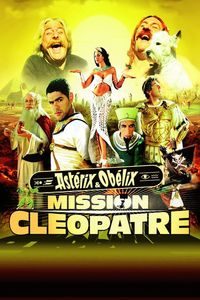
  • Astérix & Obélix: Mission Cléopâtre (2002)

    Astérix & Obélix: Mission Cléopâtre (2002)

    (In theaters, June 2002) The second cinema adaptation of the classic “Asterix & Obelix” comic book, and it was a risky proposition: Not only is the first (animated) movie rightfully considered a classic (ooh, those musical numbers… “Quand l’appétit va, tout va!”), but the first live-action Asterix and Obélix wasn’t very well received critically. This second live-action film is better than the lackluster Astérix et obélix contre César and falls short of the insane greatness of Astérix et Cléopatre, but still results in a rather good historical fantasy-comedy. The style is often frenetic, with plenty of sight gags, multiple anachronisms, some good dialogue and a constant sense of fun. Mission Cléopatre is so packed with jokes that even though non-French-European viewers (including French-Canadians) might not understand half the gags, there are still more than enough left to amuse. It relies a lot on pop culture, though (including a reference to Star Wars), so I wouldn’t be surprised if it’s not nearly as good in ten or fifteen years. In the meantime, enjoy the performances, the jokes and the visual effects.

  • Army Of Darkness (1992)

    Army Of Darkness (1992)

    (Third viewing, In theaters, June 2002) Some movies somehow never lose their charm. This is one of them; a short (81 minutes) horror/comedy hybrid with inconsistent effects but a solid sense of fun. I’ve been watching this one yearly for about half a decade and it’s still as cool as it was. What more can I say? If you haven’t seen it yet, go!

    (Fourth viewing, On DVD, August 2006) There are few movies that I’ve watched more often that this one, but happily enough I’m still not bored by it. Bruce Campbell has the role of a lifetime in this film, and the constant creativity of the direction keeps piling the laugh deeper and deeper. There’s more stuff in this 85-minutes film than in some three-hour epics I’ve seen. The bare-bones DVD isn’t particularly interesting: surely there must be something better out there?

  • The Modular Man, Roger MacBride Allen

    Bantam Spectra, 1992, 306 pages, C$5.99 mmpb, ISBN 0-553-29559-4

    There are no surer ways to inflame a crowd of Science-Fiction geeks than to try to define the “mission” of the genre. Some will argue that there is none; others will use this as a tangent to discussing the definition of SF; others will simply sneak away for more snacks.

    As with many other experienced SF geeks, I tend to be amongst the group that slinks away for more food. Not only because I’m a hungry fellow or because the debate tends to be invariably circular, but mostly because I’ve made my peace a long time ago with what SF should be. And that, constant reader, would be a literature of ideas.

    Of course, SF should be well-written, packed with vibrant characters and constant entertainment. But that’s not the point. You can walk into any mall bookstore, head for the general fiction section and pick non-genre novels that do all that. But what other literature can seriously examine the human impacts of technological change? Which other literature always starts with “What if?” (Well, okay, Fantasy is the other one) Where else can you read accessible book-length dramatization of future issues that will soon preoccupy us? In Science-Fiction. Purely and simply.

    Certainly, the good old school of SF understood this: A standard template for an Analog magazine story was to find a scientific issue, derive a consequent problem with the power of affecting human lives, discuss the issue and then offer a solution to the problem. Hundreds, thousands of stories have been written to that specification. Some were good, some not-so-good, but most of them were unabashed SF.

    It’s in this techno-problematic tradition that we must place Roger MacBride Allen’s The Modular Man. There isn’t much of a plot (dying scientist downloads self in machine, political interests try to convict the robot, courtroom drama ensues), but the novel certainly features a thorough examination of the upcoming blur between humans and cyborgs, along with euthanasia, immortality, wealth hoarding and other such philosophical trifles.

    Fortunately, The Modular Man is explicit in what it tries to do. Fourth in the short-lived “The Next Wave” didactic SF series (published in the early nineties by Bantam Spectra), the book comes packaged with an after-word on “Intelligent Robots” written by none other than Isaac Asimov. It’s a good piece, though the novel naturally offers most of the same ideas in a more entertaining (albeit longer) fashion.

    What MacBride Allen sets up in his narrative is nothing else but an excuse to explore the legal nuts-and-bolt issues that might one day surround the artificial enhancements of humans. The Modular Man isn’t set particularly far in the future, and the writing style of the novel is much closer to legal thrillers than to more stereotypical SF. There’s certainly a lot of reasonable-sounding realism throughout the book, even though there may be too many issues to untangle simultaneously. But that’s what happens when all of your subplots relate to your central theme.

    As fiction, The Modular Man isn’t much of a show-stopper. The characters are serviceable, but their places in the narrative are clearly delimited. (And yet… and yet… you’d be surprised at how moving some passages of the book are.) The plotting all leads up to the predictable Big Courtroom Victory, though there are a few twists here and there. The writing style is brisk and businesslike.

    But as idea-fiction, The Modular Man is nearly exemplary. Ever chapter raises and interesting question or two, and even offers sort of a proposed solution, or at least a path worth exploring. There’s a definite pleasure in peeking in the future in that fashion; barring significant progress in nanotech, the increased reliance on artificial body parts is inevitable… and so will be the legal issues surrounding extended life-spans, artificial minds, non-humanoid bodies and such. So why don’t to get a conceptual head-start on everyone else and start studying tomorrow’s headlines now?

  • The Complete Idiot’s Guide to Sunken Ships and Treasures, Stephen Johnson

    Alpha, 2000, 452 pages, C$24.95 tpb, ISBN 0-02-863231-1

    I really do like the “for Dummies” and the “Complete Idiot’s” series of non-fiction books. Despite their title, they usually offer a clever introduction to a variety of subjects. A glance at their catalog is usually good for a giggle or two (Elvis for Dummies?!), but the truth is that there are few other better ways to get a quick primer on a given subject than to settle down with one of their books. The Guide to Sunken Ships and Treasures is a primer on the exotic -but compelling!- field of, well, sunken treasures. This Guide offers a general primer on shipwrecks, underwater exploration, treasure-hunting and a few related subjects like pirates, nautical lore and salvage law. Most of the book is dedicated to a series of short primers on famous shipwrecks, from the antiquity to the cold war.

    There are certainly a lot of good stories in this Guide. The most fascinating section of the book are undoubtedly parts 3 to 5, which describe the event leading up to fifteen famous shipwrecks, from the 1622 Spanish treasure fleet to the USS Scorpion, without forgetting such famous names as the Bounty, Lusitania, Andréa Doria and the unavoidable Titanic. Even if you think you know a lot about some of these stories (like many of us are likely to do after seeing TITANIC), there’s a lot of interesting information presented in an accessible fashion. Furthermore, each of those fifteen chapters also highlights when and how the shipwrecks were later found and salvaged by modern treasure-hunters. It usually makes for fascinating reading, especially if you absorb it in small doses, one shipwreck per evening.

    Alas, the rest of the book isn’t as tightly focused. The first section of the guide, for instance, hops left and right, constantly repeating information on various subjects without a clear outline and a steady progression from one point to another. It really starts to grate after a few chapters, as the author sometimes refers to past pages, and just as often breathlessly re-introduces the same concept yet another time. The book’s overall organization is a murky mess: Part 6, which follows the “famous shipwreck” section, is about pirates and modern treasure-hunters; it’s unclear why it had to be segregated to the back of the book when it fits more naturally with a general introduction to the subject.

    This lack of organization is most visible at the page-per-page level of the book. The sidebars, which fit so naturally well in other Complete Idiot’s Guide books, here seem excerpted almost verbatim from the main body of the text. The Complete Idiot’s Guide series also ends its chapters with a brief recap of the chapter’s most essential points. Not so here, where “The Least you Need to Know” endbar goes fishing for the most trivial points of the chapters and passes them along like essential facts. I stopped reading them half-way through.

    All of the above leads me to wonder if Stephen Johnson’s manuscript was maybe written on spec as a stand-alone book, only to be retro-fitted later as part of the Complete Idiot’s Guide series. It would explain many of the highly annoying flaws of the book, especially when compared to the overall pleasant flow of the text. (The other reasonable explanation is that Johnson, a newspaper journalist, isn’t completely at-ease when structuring a longer work).

    It’s a shame, really, when considering the intrinsic interest of such an unusual and fascinating subject. The movie TITANIC did a lot to revive interest in shipwrecks (let’s not fool ourselves; it probably sparked the writing of this book too), but it’s not the only wreck out there and there is a lot more to learn about the field than simply deep-water submarines expeditions. Pick up this Guide to Sunken Ships and Treasures to learn more… but prepare for some frustration along the way.

  • Van Wilder (2002)

    Van Wilder (2002)

    (In theaters, May 2002) Ryan Reynolds has a good turn as protagonist van Wilder and Tara Reid can be luminous when she wants to, but Van Wilder generally sputters from lame gags to vile gross-outs. No wonder the film tanked at the box-office, yet another sign that teen comedy has once again moved beyond the simple eeew! phase. Otherwise, there isn’t much more to say. It’s a dumb campus film that can’t be saved by the grins of its lead actors, however sympathetic they may be. Quote of the film: “Are you stalking me? Because that would be super!”

  • Triangle of Death, Michael Levine & Laura Kavanau

    Dell, 1996, 490 pages, C$8.99 mmpb, ISBN 0-440-22367-9

    Much as most of the angry black hip-hop music is bought by white suburban kids, I’d be willing to bet that most of the military fiction out there is bought by comfortable suburban professionals like yours truly. As a law-abiding white-collar citizen, there’s an undeniable vicarious thrill in reading about fictional exploits of manly heroes who have sworn to defend our contemporary way of life by all means necessary.

    Triangle of Death is a military adventure in the same vein than the Rogue Warrior books supposedly co-written by ex-supersoldier Richard Marcinko. Flavorful first-person narration “by the author”, believable authenticity, disregard for non-operative authority and movie-like heroics are the norm here. Like the Rogue Warrior series, Triangle of Death seems almost custom-made to show us civilians how we really have no clue about the sacrifices needed to protect our freedom.

    Certainly, Michael Levine has traveled the same rough professional road than Marcinko: Both have served their country for a quarter-century (Marcinko as a SEAL, Levin as an undercover operative for the DEA), got shafted by their superiors, left the service in disgust, wrote best-selling non-fiction (Marcinko’s Rogue Warrior and Levine’s Deep Cover) and then turned not only to the conspiracy fringe, but also to fiction-writing. As of this writing, though, Marcinko seems to be the only one of the two who still regularly publishes fiction.

    As a novel, Triangle of Death is good tasty fun. The novel grabs you by the throat early on and rarely lets up as we follow the protagonist/narrator “Michael Levine” through a deep unauthorized undercover mission to rid the world of a potent new sex drug that could do no less than shake up civilization as we know it. The no-nonsense prose is filled with macho posturing, fascinating “authentic” details, a roller-coaster series of events and an overall sense of, yes, fun.

    It’s a hugely enjoyable read, especially as Levine battles impossible odds, hops around the world, gambles big, contacts friends in high places, spouts some Asian philosophy, undergoes specialized training and eventually pieces together a conspiracy involving the US government. Breathlessly exciting stuff, told in a spot-on style.

    You can read Triangle of Death as a straight-ahead novel and like it a lot. If you liked the first few volumes of Marcinko’s series (before noticing that it repeated itself), this novel is the closest thing to it. As a thriller, it’s more engaging than most of its brethrens and its aura of authenticity is only too rare.

    But there’s also a second level of entertainment that kicks in late in the novel, as the “Levine” protagonist announces his intention to publish a novel about the events of the story, hence blurring the line in between fiction and reality. That’s when readers with some time to lose might want to boot up their computers and do some serious research on Levine and his career.

    It’s fascinating stuff, especially given that it takes us to the fringes of the conspiracy-nut memesphere. We can find traces of Levine’s radio show, dedicated at exposing the government’s incompetence and corruption. From there, we find links to documents alleging massive conflicts of interest in between the government’s official “war on drugs” and the realpolitiks of international trade and policing work. Governmental interference in police works? Say it isn’t so!

    That particular brand of paranoia doesn’t serve too far-fetched or unbelievable, which makes the truth-or-fiction game even more fascinating. Triangle of Death thus becomes a veiled introduction at some serious thinking about the war on drugs, even from the point of view of someone who abhors criminals and addictive substances like Levine. What’s true and what isn’t? Maybe truth is once again stranger than fiction…

  • Undercover Brother (2002)

    Undercover Brother (2002)

    (In theaters, May 2002) It had been a long time since the last successful film genre parody, but here’s a perfectly satisfying take-off on blacksploitation movies. Undercover Brother may be a laugh-a-minute silly comedy, but it’s also a gentle satire of race relations that does more through laughter than others films will though pure anger. Eddie Griffin is da man (though not “The Man”), Denise Richards turns in one of her best (or rather, most appropriate) performances, Aunjanue Ellis is a revelation and Chris Kattan isn’t nearly as annoying as usual. Stay for the credits, as they contain what may be the film’s biggest laugh. Undercover Brother is thankfully devoid of gross-out gags and will probably stand the test of time adequately well. It’s solidly in the same vein than the first Austin Powers. Super soundtrack. Clean laughs. Pure fun!

    (Second viewing, In theaters, July 2002) Holds up admirably well a second time around, though the pacing is not as sustained than during the first viewing. Eddie Griffin’s performance is excellent and the rest of the actors do quite well too. After Austin Powers‘s continued descent in self-referential tripe, it’s great to find a new approach to parody, especially given the racial social message hidden at the core of the film. Good stuff. Funny stuff.

  • The Sum Of All Fears (2002)

    The Sum Of All Fears (2002)

    (In theaters, May 2002) As a big fan of the source Tom Clancy novel, I can’t help but grimace at some of the changes and simplifications made to the original novel. But even I have to recognize that the film adaptation is much better-paced than the original. Even the idea of casting a younger Jack Ryan works splendidly. In fact, the only problem I have with the film adaptation is that one of the novel’s most thrilling threads (which eventually forces Ryan to start a constitutional crisis) is abandoned. But there’s so much good stuff in the end film that it’s almost ungrateful to complain (heck, even Pat Foley is in there!): For maybe the first time in recent memory, we have a film version of a true techno-thriller. (I could have done without the warehouse fight, though). Anyone looking at the film as an action movie is bound to be disappointed; this is a thriller, with intelligence and cleverness as the main weapons. There are weak moments (who couldn’t predict that the French ex-conspirator would be killed almost immediately?) and dull stretches, but overall, the film is true in spirit to the book, and the book was a fantastic story. Cheers, relief and hurrahs: This one’s worth a look.

    (Second viewing, On DVD, January 2003) Filmed Thrillers are not rare, but filmed techno-thrillers certainly are. So are filmed thrillers that take The Big View, dealing knowledgeably with affairs of states from the perspective of the states: Cinema simply doesn’t have the depth required to make such stories believable. And yet, The Sum Of All Fears, despite the radical simplifications of the original novel’s plot, works splendidly. It’s a thoughtful, professional film that makes interesting artistic choices and then sticks to them. (No countdown? Audacious!) It holds up really well to a second viewing, though the similarities to Jack Ryan’s previous adventure The Hunt For Red October are harder to ignore given his once-again role as the rookie analyst plunged in action. (This is not a sequel, but a new first chapter in another series, we’re told). The DVD contains a few informative supplements, plus a wonderful commentary track with director Phil Robinson and author Tom Clancy: “Hi, my name is Tom Clancy. I’m the author of the book they ignored while making this film.” Clancy is a grouchy good sport, calling out “this is bullsh*t” several times on scenes he judges implausible. Director Robinson repeatedly catches him off-guard with some new information, though. Good fun, good movie.