Author: Christian Sauvé

  • Callahan’s Legacy, Spider Robinson

    Tor, 1996, 217 pages, C$29.95 hc, ISBN 0-312-85776-4

    Asking me to review Callahan’s Legacy is akin to ask a priest to judge a wet T-shirt contest. Sure, it might be enjoyable but does he really agree with this stuff? No chance!

    Robinson’s “Callahan” series is usually about places (bars, two times out of three) where people come in to feel better, be witty and indulge in adult pleasures. (sex, drugs and alco’holl). There is an assorted gallery of wacky characters, wackier situations, and the wackiest wordplay you’ll find anywhere. Everything is told from an impeccably delightful narrator’s voice, probably the wittiest 1st-person-POV this side of Heinlein. In short, it’s a blast.

    But as it so often happens with this kind of light-hearted fiction, our enjoyment goes out when the plot comes in. The first half of the book is almost completely fun: Only a first chapter marred by tasteless pregnancy/urine/sex jokes diminishes the fun. Once Mary’s Place (the bar) opens for the night, the book really gets in gear.

    So the roof is removed by a tornado (only to be replaced by another almost immediately afterward) and the first irregular comes in, opens a guitar case full of hundred-dollar bills and begin shaping paper airplanes out of them, only to throw them into the fire. (Every good bar has a fireplace, of course.) More wordplay ensues and then the weird stuff happens.

    But when Mary Callahan and her husband time-teleport in the middle of the bar, the Earth’s very existence is suddenly in peril and the novel’s jolly (harmless) tone changes to something slightly more bitter. Before long, one of the bar’s regular is describing his homosexual experiences (told in dialect, no less!) the narrator’s wife is giving birth, everyone’s linked in a oh-so-sensual group consciousness and the world’s biggest threat is knocking at the door. Add the use of recreational drugs in the mix (I hope you don’t mind the orgy taking place in the background, sir?) and I’m beginning to get seriously annoyed.

    Which is, I believe, Robinson’s intent: How straight is the world today! How many problems are we creating for ourselves by rejecting free love and a few good joints! Quick, Batman, let’s go back to the sixties!

    What makes it irritating is the smug, no-discussion-is-allowed tone the book takes. Much like it’s impossible to disagree with Heinlein, any difference of opinion with Robinson is a sign of a traumatized existence.

    Reading a book review is sometime as revealing of the reviewer than it is of the book. The last paragraphs are doubtlessly the product of a closed mind, will mumble a few. So be it.

    Yet, despite my objections to elements of the book’s conclusion, Callahan’s Legacy is fun. While the puns aren’t all equal (a few of them are downright obscure… and the fact that English is my second language doesn’t really help.) there are a few good ones and the initial atmosphere of the bar is pleasant. One almost wishes that somewhere, there is such a thing as Callahan’s. While the effect may lessens after a while (I’ve seen a few jaded reader comment that Callahan’s Legacy was inferior to the other books.) this is a novel that will leave you smiling at the fun and groaning at the puns. Readers beware!

  • Contact, Carl Sagan

    Pocket, 1990 (1997 reprint), 434 pages, C$7.99 mmpb, ISBN 0-671-00410-7

    A better movie than the book. A smart summer flick. A motion picture where the science at least tries to be exact. A smart, beautiful, atheist heroine.

    Compared to these four impossibilities, alien contact seems almost pedestrian. Yet, CONTACT achieves all of them. The mind wobbles. Only the supervision of the great late Carl Sagan could make it possible.

    When a female astronomer (Ellie Arroway) discovers an alien message embedded in a radio signal from Vega, it’s up to her to convince the world of the importance of her discovery. Along the way, she’ll have to face up to the death of her father and the entwined nature of science and religion…

    I thought that Contact the novel wasn’t exceptional. Sure, the message detection sequence was superb, as were the various steps toward the construction of the Machine and the selection of the candidates. However, the novel simply tried too hard to reconcile religion and science, the Josh Palmer character was unsympathetic, Ellie Arroway didn’t really grab me and the conclusion, while memorable, (they find an unambiguous message from God in Pi=3.1415…) didn’t quite fit with my atheist convictions. While Sagan was being more or less even-handed, he did so in a very subtle manner. When I heard that a movie was in the making, I first despaired: Subtlety isn’t Hollywood’s greatest strength, and I was ready to see an adaptation with all the craftiness of an elephant in a chemistry lab. Oops.

    I went alone to see CONTACT, more out of unfortunate consequences than any desire to see it alone. I even sat in the middle of the fourth row, in complete defiance to usual movie-going behaviour. Waited impatiently as the usual crowd of high-school morons settled around, more interested in smooching than expanding their minds. And then the movie started.

    The good news are that CONTACT is the purest, hardest science-fiction movie… ever. The bad news is that it’s good, but not great. As much as I wanted to love the movie, at best I could only like it. As expected, there was too much of a senseless debate on science versus religion. (With no clear winner according to the movie… but it had to cheat badly to do so: The senate hearing scene at the end is completely boffo. I was busy coming up with hard arguments against the “theory” while Ellie’s character simply followed the screenwriter’s direction to play dumb as not to ruin the movie’s point.) It’s no 2001: A SPACE ODYSSEY, but 2001 is the only motion picture it can be compared to.

    But never mind what the movie does wrong. What’s more important is what the movie does right. An exceptional female protagonist. A blind astronomer. Savvy movie-making. Stunning “invisible” digital effects. A solid grasp of science. Effortless scientific vulgarization. In short, smart (if misguided) SF.

    Zemeckis has managed the proverbial good science-fiction movie. For this only, I am in awe. CONTACT is a solid contender for the Oscars. While I would have rather have had seen THE MOON IS A HARSH MISTRESS, it is comforting to think that at least, CONTACT has been made.

  • The Seeds of Time, Kay Kenyon

    Bantam Spectra, 1997, 513 pages, C$7.99 mmpb, ISBN 0-553-57681-X

    Metals. Petals.

    The debate rages on: Should SF focus on the hardware or the software? Is Hard-SF inherently soulless? Are characters studies doomed to be scientifically laughable? Is scientific obsession the path to environmental bliss or collapse? Kay Kenyon’s first novel, The Seeds of Time, makes good use of these themes, and offers a compelling read.

    Clio Finn is one of the select few able to pilot spaceships through time. The goal is nothing less than to save the Earth: All flora is dying out, and the only hope is to find another planet with compatible, resistant biology. (Other planets by time travel: As you know, solar systems move through space and time…)

    Of course, a lot of things will happen to Clio between page 1 and 513. She’s not exactly the kind of meek, slavish heroine so prevalent everywhere. Nor is she an imperturbable ice queen: Brash but vulnerable, she’s one of the most engaging protagonist in recent memory.

    A memorable heroine isn’t the only good thing about The Seeds of Time: The novel can boasts of a fast-moving plot enhanced by a completely readable style. Unlike other books that wander aimlessly around the main plot, this book stays focused: Events quite simply happen. Chapter after chapter, characters die, sleep together, or beat up the heroine. Or so it seems.

    The future(s) described by Kenyon is depressing: In 2018, Earth is dying, extreme paranoia against AIDS (we presume) is the source of severe repression against deviant social behaviour, a Nazi-like institution rules over the United States… Experienced readers are already shaking their heads in déjà-vu, not to mention the unlikeliness of such social drastic changes in 20 years (even if stranger things have already happened.) But wait! Before long, alternate realities are brought into the plot and everyone can shake their heads, at least contended that there is a rational explanation.

    The last hundred pages are unsatisfying, a case of “too much too fast”, but the ride up to then is quite a blast. Besides the heroine, most characters are sharply drawn and despite a large cast of supporting characters, no one is confused. (Although a few names are unintentionally suggestive: This reviewer couldn’t help but imagine Harlan Ellison in Ellison Brisher’s role, and Rene Russo playing the eponymous “Captain Russo” character.) There is also a fair amount of melodrama in The Seeds of Time but to Kenyon’s credit, it didn’t appear forced or too annoying.

    More about the conclusion: The alternative offered to Clio seemed a bit too… radical. A compromise would have worked better on several levels, not the least of them being the metal/petal debate, which seems too sharply divided to allow for real shades of opinion. SF isn’t about easy answers… and this seemed like one.

    A superior protagonist, a fast-moving plot and competent storytelling makes The Seeds of Time a good book, and an excellent first novel. Despite a few reservations, one could do worse than buy it.

  • Spawn (1997)

    Spawn (1997)

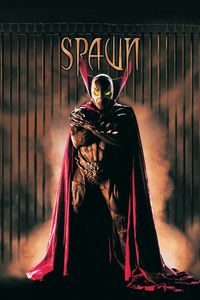
    (In theaters, July 1997) This adaptation of the comic-book series is more or less faithful to the original, and is surprisingly entertaining provided you enter the theatre with the right frame of mind. A dark and stylish (if sucky) story combined with some great (and not-so-great) cartoonish CGI makes this a nice, un-ambitious matinee. Standout performance from John Leguizamo as “The Clown.” Spawn sometimes feels like an expensive pilot for a TV series… hopes are that the presumed sequel will be superior.

  • The Piano (1993)

    The Piano (1993)

    (On TV, July 1997) Just a hint: If you ever have to watch this movie, don’t do it half-heartedly, with an eye on the TV and another on the computer screen. If you do, you run the risk of thinking during most of the movie that the husband in this tale of (righteous) adultery is a decent, if uncommunicative, fellow, who’s absolutely right to be angry when his wife goes to sleep (among other things…) with another man. (The end of the movie permits no ambiguity, of course.) Furthermore, you risk being more than unimpressed by the “erotic sensuality” of the hole-in-stocking scene (didn’t do much for me, really) and generally bored by everything. One scene (you’ll know it) shook me, but the remainder… is to be watched with undivided attention, I guess.

  • Nimitz Class, Patrick Robinson

    Harper Collins, 1997, 411 pages, C$35.50 hc, ISBN 0-06-018755-7

    Have you ever bitten in a tasty apple, only to discover that it was rotten at the core? How about at book that degenerates as it goes on? Michael Crichton’s Sphere is one of those rotten apples, beginning with a competent SF mystery, continuing with a good underwater thriller, but ending with a deus ex machina too insulting to even contemplate again. (And so they decided it was all a dream! And soon to be a movie!)

    With Nimitz Class never approaches the stinky depths at which Sphere sank, it remains that the sum of the novel doesn’t fulfil the promise of the first two hundred pages.

    It starts promisingly enough, with a good, ominous description of one of the most formidable war machine ever built: A Nimitz-class aircraft carrier. A few characters are efficiently set up… but then the rug is pulled from under out feet: Before the second chapter is over, all the aforementioned characters are vaporized, along with the carrier. A tad over 6,000 deaths. Accidental nuclear explosion, or deliberate attack?

    Enters Bill Baldridge, nuclear engineer. His brother Jack was on the carrier when it was destroyed, and Bill doesn’t quite think it was accidental. The hunt for the culprits begins.

    As mentioned, the first two hundred pages of Nimitz Class are first-rate military fiction. The plot is developed nicely, and Bill Baldridge is sufficiently different from the usual military hero to be interesting. Author Robinson takes us places we couldn’t otherwise visit: In this case, the British submarine base where the Perisher course is given.

    But then the novel goes awry.

    Just as Baldridge begins to have a clear idea of who could possibly sink the carrier, the narrative goes on an unexpected direction. This fifty-page detour would have been interesting (and is at times very spectacular) if it would have been integrated in the fabric of the plot. But it’s not, or not enough. Then the novel goes on another tangent. Another exciting scene follows. Then, as things finally seem to pull in together, when our heroes are about to piece up the mystery and find out where the evil terrorist is hiding… They get an anonymous tip, follow the tip and blow up the bad guys.

    Very anticlimactic. Add to this an unconvincing romantic thread and the result is a novel that’s more than a little disappointing. I’ve rarely seen an author lose control of a plot so much: Come on, I don’t want a man-to-man fight between the hero and the antagonist, but at least give me a satisfying finish! Cut the SEAL action, crop the channel scene, give the hero a believable romantic interest, but sheesh…

    Technically, the prose is okay despite more than a few odd bits of exposition in dialogue. Robinson loves to have his characters talk in multiple paragraphs. (At random: Page 114… same page which contains my favourite excerpt of the book: “Sh*t”, said the President. (after three paragraphs of exposition. The following two paragraphs are more exposition, and then: “J*s*s Chr*st”, said the President. Pop quiz: Is the President under stress?) Okay, so I have low thresholds for favourite exerts.)

    Nimitz Class’s faults are even more disappointing in that they torpedo (ha-ha) what could have otherwise been an exceptional military thriller. As it stands now, Nimitz Class is barely worth a library loan. In paperback.

  • Men In Black (1997)

    Men In Black (1997)

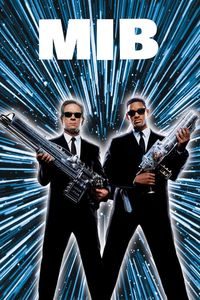
    (In theaters, July 1997) In retrospect, disappointment was almost inevitable. Men In Black (the movie) is 1997’s Independence Day: Massively promoted escapist flick, with big special effects, creepy aliens, one-liners and Will Smith. Anticipation for it ranked somewhere between another Beatles concert and the Second Coming. The problem was that the premise was almost too good: Assume an organization checking up on all the (assumed) aliens on Earth. Then treat the subject with a hip, sarcastic attitude and dry cool wit. Then cast Tommy Lee Jones and Will Smith in the title roles. And bring in ILM for the Special Effects. As I said, expectations can be too high. So, it’s somewhat of a surprise if Men In Black manages to be the movie that Independence Day and Mars Attacks! combined couldn’t be. Part of its success lies in the deadpan satiric take-off of America’s current psychosis (that’s one up on Independence Day) and another part of it lies in a more balanced script (take that, Mars Attacks!). Of course, one can’t deny the incredible charm and charisma of the Jones/Smith duo and the top-notch effects by Rick Baker and ILM. It’s a solid hour and a half of summer entertainment, without the plot holes and stupid character mistakes that have been the latest norm in Hollywood. In short, it’ll make millions. [January 1998: It did.] Peering closer, though, (or seeing it a second time) flaws appear: The script loses energy toward the end. Linda Fiorentino is grossly under-used. The basic story is a clear case of déjà-vu. Like fast food, Men in Black fills but never nourishes. Still, it remains the essence of coolness, summer’97-style. While unsatisfying, and far from completely exploiting all the facets of the exceptional premise, the story at least offers competence, something that has been missing from recent summer offerings. Go see it.

    (Second viewing, On DVD, August 2002) Even as Barry Sonnenfeld’s more recent efforts have faltered in lazy, laugh-free big-budget embarrassments, the original Men In Black remains almost as fresh today than when it first came out. A savvy blend of comedy and conspiracy, this original installment zips along quickly, uses the charm of its two lead actors to their fullest potential and is rather nicely shot too. The DVD is a joy to explore as it covers most facets of the production. Alas, the director’s commentary quickly reveals that Sonnenfeld is a moron, which explains his later duds such as Wild Wild West. But if you tune him out and concentrate on the other participants, it’s not as bad. Men In Black is worth another look on DVD, especially if you haven’t seen the film in a while.

  • The Late Shift (1996)

    The Late Shift (1996)

    (On TV, July 1997) This made-for-TV movie tells the tale of the events following Johnny Carson’s retirement as the anchor of “The Tonight Show.” In NBC’s wings: Jay Leno and David Letterman, both determined to get Carson’s job. We already know how it turned out, but this movie makes a fascinating 90 minutes of TV business drama. Both Leno and Letterman are likable, and the result is an even-handed show. Fans of either (or both) talk-show hosts will like this one.

  • Fei ying gai wak [Armour of God 2: Operation Condor] (1991)

    Fei ying gai wak [Armour of God 2: Operation Condor] (1991)

    (In theaters, July 1997) The first Jackie Chan movie I’ve seen… and I’m impressed. It’s not as polished as Hollywood productions, but it’s got tons more of energy: I saw it in a near-deserted theatre (about 40 patrons) and yet, there was a lot more crowd reactions than when I saw The Fifth Element in a packed theatre. Jackie Chan is Erroll Flynn, Charlie Chaplin and Steven Seagal all rolled in one: His goofy good-boy manners make him one of the most charismatic screen personas in recent memory. Forget the sometime incoherent plot: Operation Condor is frequently funny when it counts, and the action is so impressive that it shines and amazes. Not great stuff, but definitely worth the video rental.

  • Contact (1997)

    Contact (1997)

    (In theaters, July 1997) A better movie than the book. A smart summer flick. A motion picture where the science at least tries to be exact. A smart, beautiful, atheist heroine. The good news are that Contact is the purest, hardest science-fiction movie… ever. The bad news is that it’s very good, but not great. As much as I wanted to love the movie, at best I could only really like it. As expected, there was too much of a senseless debate on science versus religion. (With no clear winner according to the movie… but it had to cheat badly to do so: The senate hearing scene at the end is completely boffo. I was busy coming up with hard arguments against the “theory” while Ellie’s character simply followed the screenwriter’s direction to play dumb as not to ruin the movie’s point.) It’s no 2001: A Space Odyssey, but 2001 is the only motion picture it can be compared to. But never mind what the movie does wrong. What’s more important is what the movie does right. An exceptional female protagonist. A blind astronomer. Savvy movie-making. Stunning “invisible” digital effects. A solid grasp of science. Effortless scientific vulgarization. In short, smart (if misguided) SF. Zemeckis has managed the proverbial good science-fiction movie. For this only, I am in awe. Contact is a solid contender for the Oscars. While I would have rather have had seen The Moon Is A Harsh Mistress, it is comforting to think that at least, Contact has been made.

  • Air Force One (1997)

    Air Force One (1997)

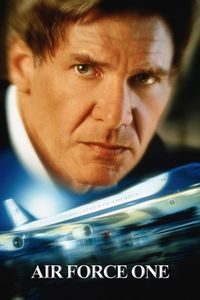
    (In theaters, July 1997) Harrison Ford is perfect as a butt-kicking president in this good -but not great- thriller. When terrorists take over Air Force One, it’s to the president himself to kill the bad guys and free his family. Will he survive automatic weapons, the White House switchboard, shoddy dialogue and three climaxes? (Cinematic climaxes, not the other kind.) Average performances from the rest of the actors, the directing is fine, the special effects are okay but the editing could have been better, and the film shorter. The script, however, needs an overhaul: One villain’s motivation (or absence thereof) is especially irritating and the president overtly betrays his own ideals in a scene quickly glossed over. Jingoistic flag-waving makes parts of this movie ridiculous to non-US audiences. A worthy video rental, but you might want to rent Executive Decision again for a (slightly) better big-plane thriller.

  • Frameshift, Robert J. Sawyer

    Tor, 1997, 347 pages, C$32.95 hc, ISBN 0-312-86325-X

    Ideally, a reviewer’s subjectivity should be as “pure” as possible, if such a thing is possible. Shallow, transient things like the weather, sentimental problems and temporary physical discomfort aren’t supposed to affect judgement on artistic ventures. The very worst sin, of course, is to let monetary matters affect judgement: Reviewers aren’t supposed to calculate things like money/enjoyment ratios.

    And yet, that was what happened while reviewing Frameshift.

    Robert J. Sawyer is one of the most exciting authors of the nineties. His seven previous books compose an impressive body of work: His sixth book, The Terminal Experiment won a Nebula and was nominated for a Hugo. The seventh, Starplex, also garnered both nominations. Yet, all of Sawyer’s books had been published in paperback until Frameshift, his first hardcover publication from Tor.

    Frameshift begins in mid-plot like the two latest Sawyer novels, when a creepy assailant attempts to kill protagonist Pierre Tardivel. Sharp-eyed readers will already pick up a few unsettling details in this prologue, but before anyone can catch their breath, flashback and we’re back in linear time again. The time and place: Treblinka Concentration Camp, August 1943.

    Before long, we’re back in then nineties and Nazi war criminals, insurance company hijinks and genetic diseases are converging toward an exciting climax. The plot is complex but fast-paced: Frameshift is an exceptional book to take along to the beach. Sawyer’s style remains economical and pleasingly clear. Hard-SF fans will be pleased to note that the scientific content of the novel seems exact, and there is rather a lot of genetic jargon. Finally, the conclusion is satisfying. Closing the book, one can’t help but thinking that this was time well-spent.

    But, if Frameshift is such an entertaining novel, why the disappointment? Part of the answer lies with the fact that Frameshift is Sawyer’s less science-fictionish book yet. Only one element (albeit a big one) stops the novel from being classifiable as a techno-thriller.

    Also disappointing is the almost preachy angle of the book: Genetics, Sawyer tells us, can really mess up your life. To demonstrate this, it seems that almost every supporting character has a genetic problem of some kind. This quickly gets tiresome, like a talented musician always playing the same melody with only a few variations.

    Then there is Pierre Tardivel, another one of Sawyer’s typical protagonists. Granted, he is much more vulnerable than the others, but the mold is the same: Adult well-educated white male, etc… The protagonist is not the only thing reminiscent of Sawyer’s other novels: His emphasis on theology and marital problems (Read: Adultery) also comes back, albeit in a less-central role than in The Terminal Experiment. The plotting is also awfully convenient at times…

    As a French-Canadian, it was pleasant to see -finally!- a French-Canadian protagonist in a Science-Fiction novel written by an Anglophone author. Yet, a few things didn’t quite ring true: Few self-respecting Québécois would be caught dead shouting “Morceau de Merde!” (A literal translation of “Piece of s…!”) when a good old “Enfant de Chienne!” (literally; “Son of a b….”) does so well… But that’s a detail.

    Even devoted Sawyer fans might want to think twice before buying Frameshift in hardcover. Others will certainly want to take a look at it as soon as it comes out in paperback.

    [January 1998: I was skittish bout not liking this over as much as Sawyer’s others novels. However, I’m heartened to find that I’m not the only one to think along the same lines…]

  • Brother Termite, Patricia Anthony

    Ace, 1995, 261 pages, C$6.99 mmpb, ISBN 0-441-00187-4

    (The roomful of journalist quietens as the White House Press Attaché enters the conference room)

    Attaché: Ladies and gentleman, the press conference will begin soon. Christian Sauvé will read a short statement, and then answer your questions. Please welcome The Reader of Rockland.

    (Christian Sauvé enters the room, goes to the podium and clears his throat. He shows a paperback edition of Brother Termite to the audience)

    Reader: The book discussed today is Brother Termite, by Patricia Anthony. To resume it quickly: The premise of the novel is quite fascinating, since it’s about a White House chief of staff who’s really an alien. Unfortunately, the book never quite lives up to that promising slogan: In the world Miss Anthony postulates, all his alien buddies are running things in the background with the full approval of the world’s governments. We get implausible extrapolation, validation of the most popular alien-conspiracy theories, a thoroughly unsympathetic alien protagonist and an overall atmosphere of gloominess. I do not recommend the purchase of this book, and considers it one of the least interesting work of fiction I’ve read this year. Now, on to the questions. Yes?

    Man: Bernstein, Washington Post: What do you mean by “alien-conspiracy theories?”

    Reader: Well, in the novel we eventually learn that the alien “hero” -I use the term loosely-, named Reej, was close to presidents since Eisenhower, arranged to have Kennedy killed, in addition of being closely implicated in abductions, human experiments and the like. What Anthony does, really, is say “Okay, so all the conspiracies are true. What now?” I mean, just look at the cover art! Isn’t that the prototypical Grey?

    Man2: Stine, for Analog: Could you comment on the implausible extrapolations?

    Reader: Sure. The novel takes place at fifty years in the future, yet absolutely nothing has changed. People are still eating McDonald’s Happy Meal, having AT&T install their telephone lines, driving Jaguars, booting up computers. In fact, this future even appears retrograde, since there’s nothing even approaching the Internet, or any sophisticated technology that we have right now. Anthony tries to cover up everything by saying that the aliens just blocked everything related to progress, but that’s unbelievable! I don’t think humanity could tolerate such a stagnation, and I’m speaking from an intellectual, cultural and economical viewpoint all at once. Our civilisation -our economy!- depends on change and growth. Yet Anthony more or less assumes the same world… (Noticing the impatience of journalists) Yes?

    Woman: Vonarburg, for Solaris: Aren’t you missing the point, here? Isn’t Brother Termite a satire?

    Reader: Oh, absolutely! But there’s a difference between being satiric and being stupid. The tone of the novel is dark, serious and mostly humourless. Reej spends most of his time brooding and feeling sorry for just about everyone. By page 100 you wish he’d die, by page 200 you wish everyone would die. When the novel start bringing up things like a president who’s been president for fifty years, or his successor being President Kennedy as channelled by a medium, or some sort of mythical alien group consciousness… Well, enough is enough! I like satiric SF when it’s well-done, but in this case, it just ain’t. Next question?

    Man: Cronkite, Columbia Journalism Review: What is the place of media in Brother Termite?

    Reader: Pitiful. Miss Anthony believes you’re a bunch of degenerate dolts who accept everything told to them like holy gospel, and ask idiotic questions about Kennedy’s affair with Marilyn Monroe instead of -keeping in tone with the novel- investigating an alarming drop in birth rates.

    (Uncomfortable shifting in the journalistic audience.)

    I mean, I wouldn’t expect you to believe everything I say at face value: Who knows, perhaps I’m the only one on this planet who hates the book? Yes?

    Woman: Karman, from Womyn Will Win: A Question and a follow-up: Reading your past reviews, I was struck by the fact that you dislike a lot of women SF writers. Weren’t you biased against Brother Termite?

    Reader: I certainly was. Aside from Lois McMaster Bujold, very few women SF writers are writing what I like to read. They either write literary stuff I can’t stomach, or else they commit new-age crap like Ammonite that’s not even worth the effort of discussing again. Your follow-up?

    Woman: How come all the critical questions asked in the review are from women?

    Reader: So you caught on to that? Good… Yes?

    Man: Krishnamurti, Journal of Applied Philosophy: Your rejection of Brother Termite seems more holistic than factual. Is there some basic assumption in the book that goes completely against your perception of the world?

    Reader: Yes, as a matter of fact. You know, I’m of the John Campbell/David Brin school of though: We humans are good, in both sense of the term. We’re smarter, more adaptable, more able to take care of everything than anything around us. Despite everything you may hear on the news, and the self-depreciating pop philosophy that’s fashionable nowadays, humans have made incredible progress, sociologically speaking, in the last decades toward non-aggression, peaceful understanding and compassion. We have laws, and almost everyone obey the important ones. Physically disadvantaged people, (touching glasses) me included, are now living long productive lives that would have been impossible in any other time. And that’s not the ET’s influence: That’s something we managed ourselves. The greatest thing about us humans is that we’re never satisfied: We just have to keep on coming with better solutions. To strive, to seek and not to yield-

    Man: That’s Tennyson!

    Reader: -that’s the spirit. And what does Anthony make of us in Brother Termite? Wimps! Amoebas! Idiots who don’t mind a fifty-year break of progress? Preposterous! I hate to steal a line from Ursula K. LeGuin, (*) especially one that I don’t agree with, but Anthony has diminished the human race for the sake of one lousy story, and that, is unforgivable.

    (A Pause)

    Woman: So, did you like it?

    (Laughter, even the Reader is amused)

    Reader: No, I’m sorry to say I didn’t. I really hope this isn’t Miss Anthony’s best novel, because that’s not very impressive. I don’t think you should read it, period. In a way, it’s a schizophrenic book: UFO-freaks aren’t smart enough to catch on the subtle political and SF details, while those smart enough to do so won’t be able to suspend their disbelief because of the UFO elements. In case you’re wonderi
    ng, I’m so critical that I hated everything.

    (More laughter. The Reader looks at the clock.)

    Reader: Well, I’m holding up your deadlines. See you next time!

    (Exits Reader)

    (* Bibliographical notice: In Playground of the Mind, Larry Niven states that Ursula K. LeGuin doesn’t like his “Inconstant Moon” because Niven was essentially willing to wipe out half the human race for the sake of one love story. Of course, LeGuin herself was willing to transform the whole human race in insensitive oppressive savage (male) exploiters in her “The Word for World is Forest.” As you all see, opinions differ.)
  • Children of the Mind, Orson Scott Card

    Tor, 1996, 349 pages, C$29.95 hc, ISBN 0-312-85395-5

    The four-book cycle concluded by Children of the Mind is remarkable: The first volume, Ender’s Game, was one of the best books of the eighties. Critics will forever argue whether it was designed to be popular, or just ended up being an exceptionally-well written power fantasy, with just enough guilt at the end to make the reader realize that while destroying another species is fun, it’s not without consequences.

    The second book, Speaker for the Dead, sent the series in a whole new direction. Andrew (‘Ender’) Wiggins is trying to atone for his crimes, and his new purpose in life is to Speak for the Dead. (ie: Make fancy eulogies at funerals.) While Ender’s Game was hyperkinetic, its sequel is reflective, quieter but not without interest. In addition to winning the Hugo, it was a remarkably enjoyable novel on many levels.

    Xenocide wasn’t so unanimously praised. The events set up in Speaker for the Dead are further developed in this third tome, but one seemingly deus-ex-machina event left a sour impression in most reader’s minds, as did a completely new focus on Japanese culture.

    Children of the Mind is a better novel, but builds heavily of the weaknesses of the third book. The threads introduced in the previous books are tried up together in a satisfactory manner and if a possibility for a sequel still exists, it is evident that this is the end of Ender’s story. [Newsflash! Card is preparing a prequel! Aaaarrgh!]

    The prose is mostly readable, at the exception of a few needlessly sophisticated scenes on a beach. Card’s talent at dialogue is impressive: We’re hanging on to every reply, each more sagacious and penetrating than the one before. Children of the Mind almost approaches in this respect the incredibly sophisticated multileveled dialogues of the Dune series, with layers of hidden meanings and single phrases that send the conversation in a new direction. What Card masters and Herbert didn’t, however, is the amusing touch: Even in the most serious, dramatic exchanges, there’s always a humorous reply, a hilarious comment that puts the conversation in perspective. As the old movie slogans go: “You’ll laugh! You’ll cry!”

    Children of the Mind gets high marks for character development, managing to turn a few characters inside-out, to kill a few of them and to marry the rest. (Wasn’t it Mark Twain who said that a comedy concluded by a marriage and a tragedy by a funeral? Then what is Children of the Mind?)

    Speaking of conclusions, Children of the Mind kicks in overdrive somewhere past half-point. Threads are resolved in almost every chapter, relationships stabilize, galactic issues are settled. No villains remains at the end, an interesting characteristic of this series. The book could have easily been a few hundred pages longer, but sense prevailed over length, and the result is a good, medium-sized book, unlike Xenocide, which was a good 200 pages longer.

    The author’s after-word is curious, talking mainly about a small aspect of the fourth volume instead of global thoughts about the entire series. Disappointing, and this from an after-word fan.

    This book is highly recommended to fans of the series, but builds so heavily on the previous volumes that it’s not a good singleton choice. This might not be a problem: Given the excellence of the first two books, it’s a fair bet to say that not many readers will try to read Children of the Mind as a stand-alone.

  • Fallout, Kevin J. Anderson and Doug Beason,

    Ace, 1997, 306 pages, C$7.99 mmpb, ISBN 0-441-00425-3

    Craig Kreident is back!

    The High-tech FBI special agent, after a moderately entertaining debut in Virtual Destruction, makes a stronger appearance in Fallout, the second is what will probably become a series comparable to Cussler’s “Dirk Pitt” sequence.

    This time around, the plot doesn’t hinge around virtual reality, or mentally deficient nuclear workers. Instead, Anderson and Beason takes us deep into two of America’s most secret installations: The Nevada Nuclear Test Site and Area 51, the Air Force’s shadowy research installation.

    This book also has a different tone that the first tome: While a murder still has to be solved, Kreident must now deal with a right-wing extremist terrorist group: The book opens with the FBI trying to prevent an explosion at the Hoover dam. The result is a techno-thriller much closer to “thriller” than to the mystery genre.

    Fallout is more exciting, more interesting, and (if possible) readable in even less time than Virtual Destruction, which was already quite a page-turner.

    Otherwise, character development is only adequate, at the exception of Kreident-subordinate agent Goldfarb, which figures prominently in a few action sequences. Despite everything, Kreident remains likable, and it’s a joy to root for government guys once in a while.

    This is no surprise, since both authors have worked in government offices (Beason is an Air Force officer). Jabs at INDEPENDENCE DAY are thrown, and other UFO-freaks beliefs are equally skewered. The background has a distinctive “authentic” feel to it, which marks a nice change to the usually unbelievable thriller setups.

    On the other hand, the final terrorist motivation is quite laughable. This is probably intentional by Beason and Anderson, but any thriller fan knows that plausibility has a quality of its own. Terrorist motivation is not the only disappointing aspect of the finale: Paige Mitchell (the almost-girlfriend character) is also terribly passive, falling back too easily in the so despicable “helpless female” role. However, the other aspects of the resolution are suitably well-handled, and suspense runs fairly high.

    Fallout would make an interesting movie, but is probably too smart for that. It remains to be seen whether the next volumes of the series will manage to be as interesting as this one. Especially fascinating is the problem of being able to involve Paige Mitchell in every Craig Kreident investigation. That should be interesting to watch.

    Even when considered absolutely, and not only in comparison with its predecessor, Fallout fares pretty well. It had the required action, stupid mistakes, evil terrorist groups and other hallmarks of the genre. Since it’s readable in a blink, it might be a better choice to loan it at the library rather than buy it full-price.

    Craig Kreident can come back any time he likes.

    * * *

    Briefly: Anderson and Beason’s Ill Wind is even better, something predictable given the catastrophic and post-catastrophic theme of the book (this time: anti-polymer microbes ravage the world’s oil and plastics) and the fact that it’s a one-shot novel. Points given for realistic science, clean prose and likable characters. I’ll quibble that the novel ends too soon (Sequel possible? Oh no!) for any sense of durable consequences. Good reading for fans of the sub-genre and/or the authors.