Author: Christian Sauvé

  • Designing Woman (1957)

    Designing Woman (1957)

    (On Cable TV, September 2021) At this point of my cinephile journey, I’ve seen the landmark movies, the classics, and the box-office sensations. All that’s left is a deeper and more scattered journey through the rest. That’s not necessarily a bad thing: “the rest” includes a number of solid commercial and critical successes that many people have enjoyed, even if they haven’t necessarily remained references throughout the decades. From time to time, you even get something that’s a lot of fun. Such is the case with Designing Woman, a cleverly subversive romantic comedy that pokes at 1950s clichés and offers enjoyable second-tier performances by a well-known cast. In this case, we have Gregory Peck and Ingrid Bergman (stepping in for, we’re told, Cary Grant and Grace Kelly — a downgrade for Grant-to-Peck, but an improvement for Kelly-to-Bergman) as a sports writer who meets an alluring woman while covering a golf tournament in California. They get married within a week (as often happens in classic Hollywood) only to then discover upon returning to New York City who they are. Or, crucially, that she’s a fashion designer with more money, class, clout and well-connected friends than he does. The resulting loss of panache from the male protagonist is very amusing, and the rift only gets bigger once they start entertaining their respective circles of friends (his: working-class schlubs; hers; insanely well-connected artists) in her (now their) apartment. That’s more than enough to fuel the first half of the film—the rest is taken up with old flames and threats from mobsters that have him lie and flee to protect her, and her suspecting the worst from his lies and his disappearance. Director Vincente Minelli can’t quite manage to make the second half as convincing and amusing as the first (especially with an ending that’s too abrupt to be satisfactory), but the entire film does work quite well. Peck sells the undermining of masculinity in hilarious fashion, while Bergman is an icon of elegance throughout. The framing device of “talking” to the characters after the fact does add a bit more comedy and suspense to the story, further showing that this was a film with clear and bold intentions. In other words, Designing Women is worth recommending — it’s another proof that the 1950s were far more self-critical than we think, and a great example of a Technicolor romantic comedy with more bite than expected.
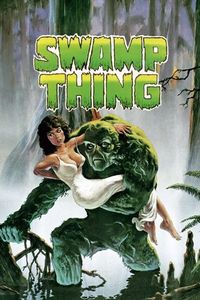
  • Swamp Thing (1982)

    Swamp Thing (1982)

    (Second Viewing, In French, On Cable TV, September 2021) I dimly recall seeing Swamp Thing on French-Canadian TV as a kid, but revisiting the film decades later is a very different experience. It’s nowhere near as scary as it felt, for instance, and Adrienne Barbeau is far more interesting than she was then. On a larger level, the film is now noteworthy for adapting a comic book superhero after Superman but before the twenty-first century boom of the genre. It remains a Wes Craven film even if not being much in terms of horror—except perhaps in its nods toward The Creature from the Black Lagoon. Much of the story is going to be very familiar — scientists studying an unusual creature, industrialists trying to weaponize their findings, the protagonists falling in love, action and adventure as the beast helps the beauty, etc. — and you can draw a few parallels with the (much later) Oscar-winning The Shape of Water. The atmosphere of Southern-USA swamps is very nicely portrayed, and the somewhat campy tone of the film is often more interesting than an overly serious take on the story could have been. Still, Swamp Thing feels like a more ordinary film than I remembered: whether that’s due to me being far less impressionable in middle age or the film remaining of the 1980s, I can’t say.

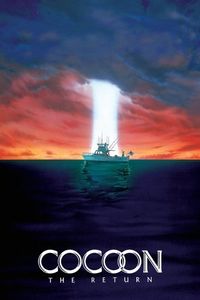
  • Cocoon: The Return (1988)

    Cocoon: The Return (1988)

    (In French, On Cable TV, September 2021) The worst sequels are those that end up negating the point of their predecessors, and Cocoon: The Return does come perilously close to doing that at times. It’s clear that the money-making imperative is the only thing driving this sequel forward because within minutes (and a strangely tasteless “comic suicide” attempt) the retirees who definitely-completely-absolutely-no-backsies left Earth in the first film are all back and enjoying the sights, giving them another opportunity to change their minds, and some of their friends to have a go at leaving with the aliens. Meanwhile, one of the alien cocoons has been found by a research institute and Steve Gutenberg is bringing down the sequel to his usual level of quality. Many of the performances from elderly actors are quite good, but there’s not denying the feeling of repetition and uselessness of Cocoon: The Return, which is merely another drive around a very familiar block.

  • Population 436 (2006)

    Population 436 (2006)

    (In French, On Cable TV, September 2021) There’s a moderately intriguing premise at the heart of Population 436 that, sadly, never gets fully realized. It’s right there in the title: a rural town in the American Midwest in which the population has remained at 436 inhabitants for a century. Jeremy Sisto plays an unlikely hero of a census worker sent over there to clear up the mystery when data analytics flag this consistency as suspicious. As it turns out, they have no idea how suspicious it is, because once our protagonist is stuck in town thanks to a car breakdown, he gradually comes to pierce together the horrible truth: that, through a mixture of supernatural phenomena or citizens taking matters into their own hands, the population is made to stay at 436. Unfortunately, the film doesn’t quite know where to go after that — maybe it’s a curse, maybe it’s a deal with the demon, maybe it’s folk horror, maybe it’s something in the ground, maybe it’s the inhabitants taking matters too seriously. Singer Fred Durst shows up in a minor role, but his performance feels like stunt casting in order to get the picture made more than an appropriate choice. Fortunately, the film remains interesting despite not going to the conclusion of its premise: there’s a nice rise of hysteria as the protagonist pieces together the occult conspiracy and it does conclude with a few shocks. Still, file Population 436 under intriguing premises with mediocre execution.

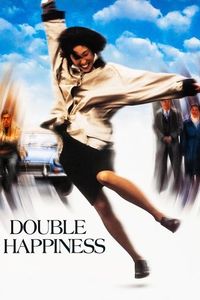
  • Double Happiness (1994)

    Double Happiness (1994)

    (On Cable TV, September 2021) As someone who’s had a movie crush on Ottawa-homegirl Sandra Oh for a while, it naturally took about half a second for me to record Double Happiness on the DVR, considering that it’s one of the few films in which she holds the leading role, and if often considered her breakthrough performance. Here she plays a Chinese-Canadian young woman (never mind that Oh is of Korean ethnicity) torn between her traditional upbringing and more western cultural values, trying to please her parents and find her own way. This isn’t groundbreaking material — although it was considerably more novel back in 1994—but the affectionate execution makes it all worthwhile. Writer-director Mina Shum clearly knows what she’s going for, and manages to deliver a film that still feels reasonably fresh even decades and many similar movies later. Oh herself is the film’s biggest asset, delivering a great performance that asks a lot in presenting a double life. If you’re one of her fans, this ranks as one of her essential performances — fairly early in her career, and yet already self-assured.

  • Vox Lux (2018)

    Vox Lux (2018)

    (On Cable TV, September 2021) All right, Vox Lux: You have all the rights in the world to be as unpleasant as possible from the get-go (that is: graphic footage of a likable teacher getting gunned down in a school shooting during the film’s opening scene) and then being all mysterious and incoherent until the end… but that doesn’t force me to like you. Writer-director Brady Corbet certainly aims high enough to be considered pretentious, with a two-act structure that seemingly leaves much of the story in the backstory. Part one, beginning in 2000, has to do with a school shooting survivor becoming a national sensation for a song penned in the aftermath of the attack and then becoming a star. The second act picks up sixteen years later as our protagonist (now played by Natalie Portman), in her full-blown egomaniac mode, prepares for a concert and goes lunching with her daughter. It ends at a concert with the possibly-supernatural revelation that our protagonist made a deal with the devil for survival in exchange for perverting the world. Now that’s a premise… too bad it’s a tossed-off line after what feels like an hour of prologue and forty-five minutes of tangents. There are many fascinating things in Vox Lux, from the slightly alternate reality it plays with, to William Defoe voicing an unsettling narrator, to some visual ideas and directorial panache in setting up single-shot sequences. Too bad that it’s so incredibly scattered — thematically, narratively, visually, the film goes everywhere and nowhere at once, not quite understanding the power of focus… or even in following up with the ideas it has. Want to do a film about a deal-with-the-devil singer ruining the twenty-first century? I’m so there. But gallivanting in small-scale fame-building (albeit with Jude Law!), describing a European trip that turns out to be meaningless, glancing off September 11 as a personal tragedy, skipping over much of the dramatic meat of a decaying sororal relationship, playing with the idea of terrorism being inspired by her work, stopping to take a look at diva-like behaviour… Vox Lux is so undisciplined that it begs the question as to what purpose the film intended for itself. It’s just messy, overlong, underwritten, and afraid to poke at its own demons. It’s unconventional all right, but that means that the safety zone for a successful landing is practically non-existent.

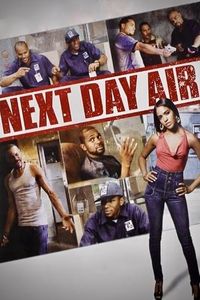
  • Next Day Air (2009)

    Next Day Air (2009)

    (On Cable TV, September 2021) I have some fondness for those small low-budget comic thrillers with mostly black casts — they’re often a lot of fun to watch even if they’re hardly essential, and it’s that category that I’d place Next Day Air, alongside such titles as All About the Benjamins, Bait, Blue Streak and a few others. The plot is more convoluted than complex, but it deals with an important package being delivered to the wrong address and the efforts of various groups to find it again. A few moderately known names (Donald Faison, Mike Epps, Mos Def) anchor the cast, but much of the film lives on the script rather than the performances. Director Benny Boom apparently has some fun managing the proceedings, although he seems hesitant to either go big on the comedy or the action. There are still a few good moments (including a crime-speak translation) and an eye-catching performance from Yasmin Deliz. Moving briskly at less than 90 minutes, Next Day Air works fast and works well as long as your expectations don’t run particularly high.

  • Doll Graveyard (2005)

    Doll Graveyard (2005)

    (In French, On Cable TV, September 2021) As I’ve mentioned before, I’m steadily going through horror writer-director Charles Band’s filmography, and I’m at the point where I’m recognizing various motifs. The creepy-doll thing, for instance, is so prevalent as to qualify as an obsession in his work, showing up in at least seven of his movies. In Doll Graveyard (and no one will be blamed if we’re confusing them), a family is besieged by a supernatural menace from beyond the grave, possessing four dolls (or action figures) that kill people in a variety of creative ways. If you’re familiar with Band’s Full Moon catalogue, you know the drill: premise better than the execution, but still with a kernel of interest. The mood is not overly sombre considering the subject matter, although few will be tempted to call it a comedy. Doll Graveyard is mildly entertaining (perhaps best as background viewing) without being all that good which, in the horror genre, qualifies it as more of a success than you’d guess.

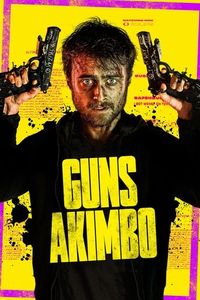
  • Guns Akimbo (2019)

    Guns Akimbo (2019)

    (Prime Streaming, September 2021) I quite liked writer-director Jason Lei Howden’s debut feature Deathgasm, so my expectations ran high for his follow-up Guns Akimbo. It does not disappoint too much. Set in the same irreverent, gory, raunchy and fast-paced style as the previous film, Guns Akimbo focuses on a young video-game developer (Daniel Radcliffe, not bad at all) who, after going troll-hunting on the comment section of a popular deadly livestream series, wakes up to find two guns bolted to his hands and a featured role in the next instalment of the series. Pitted against an extraordinarily competent assassin, he quickly realizes that there’s no one else to turn to. It’s probably useless to complain (even as a formality) that the result is far too violent for its own good. Still, the breakneck pacing of the rest of the film helps in making up for it. Howden gets to the action quickly and lets his camera fly to keep us involved: it’s all frantic in trying to keep up with the convoluted plotting, but the approach will make videogame fans feel right at home. There’s a valid criticism that the film is a lot of flash and not much substance, but then again — Guns Akimbo is more comfortable on a shelf next to Crank and Hardcore Henry than anything else more respectable.

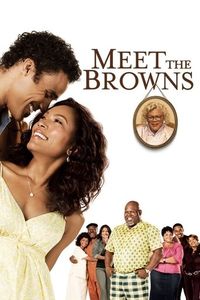
  • Meet the Browns (2008)

    Meet the Browns (2008)

    (On Cable TV, September 2021) As is customary for early Tyler Perry movies, there are a lot of familiar elements at play in Meet the Browns: A single mother struggling to keep her kids out of trouble; a suddenly deceased father; a return from Chicago to the south in order to reunite with a family she didn’t know; a tall-dark-handsome romantic prospect with a troubled past; an ex that just won’t stay in his place; street gang drug dealing; and Madea for not much more than a cameo. In execution, it all feels slap-dash: the tone jumps from comedy to drama to romance, the film fails to capitalize on many of its assets (the house renovation, which could have been a powerful thematic device in other hands, is here completely glossed over) and the dialogue can be dryly ordinary. But that’s not necessarily the case throughout: For instance, a sequence in which the patriarch enumerates all of the deceased father’s “hoes” is their scandalous diversity in front of his surviving family is a delightful comic highlight. Angela Basset looks amazing and gives life to her role as the lead; and the morals of the film are in the right place. Sofia Vergara also shows up in a pre-stardom role. I did like the ensemble of characters quickly sketched in straightforward scenes, and the romance is crudely effective in its own way. It makes for likable if imperfect viewing, the kind of thing that works best in a series (as in: “Tyler Perry movies”) than by itself, where it feels slightly too small and incomplete. Case in point: The Madea cameo feels gratuitous and disconnected by itself, but is meant as a lead-in to the next film in the series. On to the next one, then…

  • Lucky Grandma (2019)

    Lucky Grandma (2019)

    (On Cable TV, September 2021) One of the best compliments I can make about a film is praising the way it immerses us in another way of living, rarely shown on screen — maybe a historical period, maybe another country, maybe a marginalized group. This praise is usually understood to be an accessory to a sustained narrative: that it complements the story. Lucky Grandma chooses to invert the proportions: It’s primarily a character study, and then only accessorily (and disappointingly) a story. Our protagonist is an unusual figure in American cinema: an elderly woman of Chinese ethnicity, living in New York City’s Chinatown. She speaks English but prefers Cantonese, lives by herself despite her progeny’s concerns, and gets her thrills by going on group outings to Atlantic City casinos. In keeping with writer-director Sasie Sealy’s desire to keep the camera on its protagonist (Tsai Chin, in a remarkable performance) as long as possible, the plot gets going fairly late, as she comes into possession of a duffel bag filled with mob money after an unsuccessful gambling run. She gets involved in a bit of a mob dispute and it ends more realistically than you’d expect. Still, the point here is an American film set in NYC and featuring a majority of Chinese dialogue, in which the English-speaking characters are usually portrayed as intrusions. It’s an unusual mixture — By most standards, it feels slack, slow, and not as much fun as expected. But Lucky Grandma wasn’t designed to be either fast, tight or fun. It does get the atmosphere right, though.

  • Nell (1994)

    Nell (1994)

    (In French, On Cable TV, September 2021) There are a lot of Hollywood dramatics in Nell, the story of two researchers investigating what could be a feral child following the death of her mother. Liam Neeson and Natasha Richardson play the slowly-falling-in-love researchers in likable performances (as far as I can determine, the shooting of the film roughly coincided with their real-life wedding), but Jodie Foster hogs all attention as the not-so-feral-child around which the rest of the film revolves. It’s a ferocious, daring performance, especially given how much of it is in a quasi-invented language. The rest of Nell is very much aligned with the usual tropes of outsiders being taken in by so-called normal characters. There are many plot contrivances along the way, but it ends like it should with everyone being reasonably happy. It’s generally interesting throughout, and there’s more nudity from Foster than anyone would expect (it’s not a scene meant to make anyone feel good). Neeson is very solid in a role that expects him to be an anchoring presence. Much of the film takes place in well-photographed nature, making it even more alien when the film briefly retreats to a courtroom in time for a trial. Familiar but executed reasonably well, Nell isn’t meant for surprises.

  • Atanarjuat [Atanarjuat: The Fast Runner] (2001)

    Atanarjuat [Atanarjuat: The Fast Runner] (2001)

    (With French Subtitles, On TV, September 2021) In the pantheon of Canadian movies, Atanarjuat comes with exceptional acclaim. It was a global sensation upon its release, won Cannes’ Golden Camera award, ranked high at the Canadian box-office, heralded First-Nation filmmaking and regularly turns up on various Canadian best-of lists since then. There’s some substance behind its enduring popularity: As the first Inuktitut-language film, entirely shot in Nunavut, it represented a new branch of cinema even a century into the art form. It’s definitely something fresh to watch even today: taking us back thousands of years and into the arctic circle, it has immense documentary value in showing the traditional Inuit lifestyle — from building igloos to icing sleds to preparing food, director Zacharias Kunuk takes pain to bring viewers somewhere else entirely. Some magnificent arctic imagery also shows something new, not merely ice floes but the land in the brief arctic summer, and other unusual vistas as well. In recounting an ancient legend, it also presents something quite unlike anything else. So far so good — but Atanarjuat can also suffer from its own hype. When the film was crowned “Greatest Canadian film of all time” by the Toronto Film Festival in 2015 (most likely a methodology artifact — every critic polled will have different opinions about the greatest Canadian movies, but many will include Atanarjuat somewhere in their top-10 list), it also exposed itself to some contrarian opinions. It’s not as if the film is perfect, or has aged as well as you’d think. Shot at the dawn of digital cameras as a viable filmmaking tool, Atanarjuat now looks uglier than ever on high-definition screens. The low resolution and blown-out picture are now actively irritating in that it places an obstacle between what’s being shot and how it’s shown to viewers. The muddy, indistinct shapes of the image are disappointing, and the quality of the camera movement breaks immersion. This is not helped by a directing style that is better intentioned than fluid: strange and inappropriate choices in close-ups, medium shots and long shots frustrate more than they charm, and the film seldom flows well from one image to another. But it’s the narrative quality of the film that frustrates more than anything else: coming from a different storytelling tradition, the narrative feels jumbled and frankly interminable at more than two hours and a half. The acting is tough to gauge — except when moments of it feel intensely annoying. There are still some great moments, though: Lead actor Natar Ungalaaq deservedly earns our respect for being willing to run for extended periods of time barefooted, bare-naked (with plenty of frontal nudity) on wet ice in the film’s action climax. There’s a lot more sex and violence to Atanarjuat than you’d guess, and it’s hard to put into words the wonder of watching something so alien on-screen. But at the end of it (bruised and battered from the extended running time and the film’s shaky narrative drive), I found myself more disappointed than exhilarated from it all. Landmark film? Absolutely. Great film? Let’s talk.

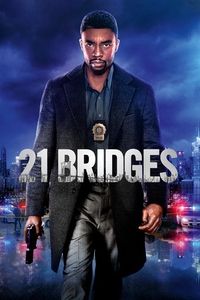
  • 21 Bridges (2019)

    21 Bridges (2019)

    (Amazon Streaming, September 2021) As much as standalone thrillers have gone out of favour compared to superhero movies or fantasy films, there will always be an audience for them, and 21 Bridges is a decently entertaining example of the form. (Considering that the film was produced by Marvel directors Joe and Anthony Russo, this line from superhero films to this thriller isn’t as tendentious as you’d think.)  The titular idea has The New York Police Department shutting down the 21 bridges connecting Manhattan to the rest of the world to contain and catch two suspects who have been involved in a deadly firefight with a group of police officers. NYPD is rabid about cop-killers, and our lead character is a cop with a history of shooting suspects — that makes him a trusted man to complete the assignment. The clock is ticking (the bridges can’t stay closed once the morning commute starts) and the suspects are moving, but there’s just one detail that doesn’t add up: Why would two small-time criminals stumble upon 300 pounds of cocaine at the same time as a group of heavily armed police officers? The answer to that propels the last and most interesting act of the film. Headlined by one of Chadwick Boseman’s final performances, 21 Bridges isn’t quite a perfect film: After a strong opening, it meanders for a while before coming back in focus in time for a good third act. J. K. Simmons also turns in a reliably good performance, although it’s just a bit too easy to guess much about where the film is going to end based on a flashy scene early in the narrative — why would someone of Simmon’s stature be there for a walk-on role? The subject matter of the film isn’t anything we haven’t seen in other corrupt-cop thriller, but it has its moments. What doesn’t quite work as intended, though, is the decision to make the protagonist a habitual suspect-killer: Attitudes toward abusive cops have thankfully changed in the past two years, and there’s a cloud of ambiguity over the story that probably wasn’t meant to be quite as pronounced upon release. Still, director Brian Kirk can bring things to a boil when it counts, and fans of corrupt police thrillers are likely to appreciate the result.

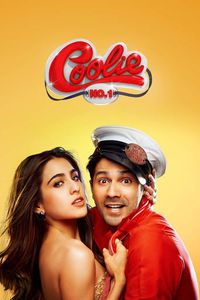
  • Coolie No. 1 (2020)

    Coolie No. 1 (2020)

    (Amazon Streaming, September 2021) Profoundly silly but often very entertaining, Coolie No. 1 is a comedy that takes us to an Indian train station, where our protagonist works as a porter — but not just any porter: the best one, the number one. His life suddenly becomes more complicated when he gets a glimpse at a local beauty whose rich father is trying to marry — and there’s a disgruntled marriage broker ready to engineer events for maximum chaos. Varun Dhawan is quite good in the lead role, able to reach the romantic, comedic and even the action requirements of the role. The script quickly gets down to classic dual-identity shenanigans, with the lead character pretending to be his richer twin brother, and characters either being fooled or not at all. Meanwhile, Sara Ali Khan makes for an excellent love interest (although I did like Shikha Talsania more as the female lead’s sister) and other characters provide the comic chaos required by the script. A handful of colourful musical numbers enliven things considerably, my favourite being the poppy “Mirchi Lagi Toh” set against a bright pastel square. Coolie No. 1 is not great or witty cinema: it mugs for the audience too often, relies on familiar material and falters with a climax that just goes slightly over the top. But it’s funny, likable, bouncy and colourful. That can be hit or miss, but it was a definite hit after a streak of watching so many serious films.