Author: Christian Sauvé

  • Rumble: The Indians Who Rocked the World (2017)

    Rumble: The Indians Who Rocked the World (2017)

    (On Cable TV, September 2021) I’m only too happy to learn more about underappreciated contributions to pop culture, and Rumble: The Indians Who Rocked the World draws an interesting and hitherto undocumented portrait of Native American contribution to rock music. As the title suggests, much of the film’s early moments are built around Link Wray’s power chords on “Rumble” (reportedly the only instrumental ever banned in New York and Boston). It’s a great hook, and much of the documentary consists in examining rock musicians of Native American ethnicity (including Jimi Hendrix and, stretching the definition of rock a bit, the essential Buffy Sainte-Marie), their lives and influence. There’s good music throughout, and the succession of talking heads with historical footage certainly gets the point across. I’m sure that commentators with deeper musical knowledge than mine will find nitpicks and omissions, but Rumble feels reasonably comprehensive, and it is perhaps destined to become a Volume One of further documentaries exploring Native American influence on music. [November 2023: Oof — Like nearly everything related to Buffy Sainte-Marie, Rumble has lost a few feathers following revelations of Saint-Marie having misled people about what turns out to be her non-First Nation ethnicity.]

  • Les Girls (1957)

    Les Girls (1957)

    (On Cable TV, September 2021) Just as I thought I had run out of high-profile Gene Kelly musicals, here’s one I had missed: Les Girls, an expensive production signed by none other than veteran director George Cukor that marks Kelly’s last MGM contract movie. The plot has to do with a tell-all exposé about a dancing troupe, leading to different versions of the same story. Kelly plays the troupe manager, with the three leading dancer roles filled by Mitzi Gaynor, a very funny Kay Kendall and a rather bland Taina Elg. Often heavier on comedy than music, the result nonetheless has some very good numbers — including Kelly riffing off Marlon Brando in a number with Gaynor. For Kelly, Les Girls had the opportunity to play with very familiar themes: ballet, Francophilia, choreography and portraying a bit of a cad. The result is fun, even if it’s not as memorable as many of his other musicals from earlier in the decade. Indeed, the late 1950s were the end of an era at MGM with contracts not being renewed and the Freed unit down to its last musicals. Les Girls marks another solid production — a step short of being a classic, but still wonderfully polished and enjoyable by itself. I have a feeling I’ll enjoy revisiting this one eventually, even if it doesn’t play as often as its more famous contemporaries.

  • Firestorm (1998)

    Firestorm (1998)

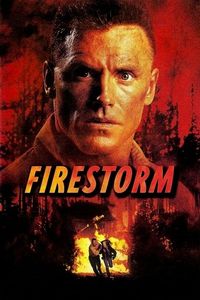
    (In French, On Cable TV, September 2021) As a filmgoer whose personal involvement in the development of the medium (i.e.: watching new releases without age restrictions) extends to the 1990s, I’m starting to get some perspective on the ebb and flow of cinematic styles, genres, tropes and fads. This being said: Wow, do I miss the action movies of the 1990s. Over-the-top, high-concept, not particularly concerned with plausibility yet often executed with good practical effects, they hit a note that hasn’t been reached since then. I saw most of them in theatres… or so I thought before coming across Firestorm, which, after a quick check of my archives, I hadn’t yet seen. But let’s not get excited: Even by the standards of action movies, now or then, Firestorm isn’t much of a film. Put together based on the desire to make footballer Howie Long into a movie star, the film did not have the backing of a major studio, a good director or a powerful producer — as a result, the expansive first draft (meant for Sylvester Stallone) got rewritten to be much cheaper, Stallone got replaced by Long and the entire thing became a B-feature. If I didn’t see it in theatres, it was probably because it got scathing reviews and crashed at the box office. Twenty-five years later, does it hold up? Well, not really — compared to its contemporaries, Firestorm is a rather limp affair. Taking place in the wilds of a forest fire and featuring sadistic criminals being pursued by a virtuous smokejumper (Long), the film is a rather sedate affair despite its action potential. The budget cuts clearly had an impact because the dramatic backdrop of a forest fire is underused and the plotting takes too much time. There are occasionally some gripping shots, but forest fire isn’t something that was all that easy to portray before CGI and the film suffers from it. Where it shines perhaps a bit brighter today than it did back then is in its now-retro approach to action, with dumb spectacular stunts made with the means of the time, meaning that there’s a degree of artificiality to the result that can be charming if you’re in the right mood for it. I’m certainly not saying I should have seen Firestorm earlier — in fact, right now may have been the best time so far. Just distant enough to be nostalgic, but not yet so old as to be carbon-dated.

  • Buddy Games (2019)

    Buddy Games (2019)

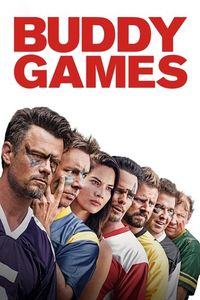
    (On Cable TV, September 2021) You can readily tell that Buddy Games is a movie made by immature males for immature males by its sheer density of jokes about testicles and their content. While there’s some rough potential in a film in which men bond to help one of their own through manufactured displays of strength and courage, it becomes clear within seconds that we’re not after any higher values here — just an overwhelming barrage of obnoxious juvenilia. No matter how low you think it’s going to go, think even lower. Writer-director-star Josh Duhamel gives himself the lead role and keeps things going at a steady pace, but it’s as a screenwriter that he falters most spectacularly, presenting one irritating character after another, and having them outdo themselves in offensiveness. There’s clearly a place for that kind of movie, but it doesn’t mean that I have to like it. This celebration of boys-being-boys (helped along by some suspiciously convenient plotting to ensure that they have all the money for their shenanigans) ends up on an extreme demonstration of bros-before-hoes that’s notionally funny but simply ends up falling flat considering everything that came before that point. Also, are you going to waste Olivia Munn in a role like this? The obvious point of comparison here (overgrown boys playing games to make themselves feel better) is Tag, but that other movie looks positively cerebral compared to Buddy Games. Oh, I did chuckle a few times throughout the viewing, but none of it was clever enough to make me feel any less unclean.

  • Desperation (2006)

    Desperation (2006)

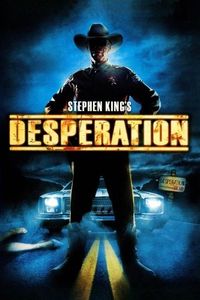
    (In French, On Cable TV, September 2021) It’s easy to admire the way Desperation begins — adapting a weighty Stephen King tome isn’t easy, especially within the limitations of a TV movie, but veteran writer-director Mick Garris (an old hand at King adaptations, albeit not all of them successful) does give it a half-effective try. The opening sequence is not bad at all, as a young likable couple is arbitrarily arrested in the middle of the Nevada desert by a creepy policeman. One of them won’t even survive to detention… and then we cut back to another couple heading in the same direction. It’s a well-handled setup, and it gets us invested in the overall mystery of a small town called Desolation, empty of human life except for that crazy cop locking up everyone and killing a few more along the way. A much grander conspiracy is eventually revealed (most notably through the use of a faux-silent film meant to portray historical events) and a supernatural villain revealed. At that point, seasoned horror viewers won’t really be surprised to realize that Desperation loses whatever uniqueness it had to become a far more generic hero-versus-monster third act. Horror films, alas, are unusually prone to the convergent-premise problem where, no matter how wildly inventive the opening can be, the ending usually boils down to a handful of formulas. Too bad — but there’s still some mildly effective material before then. In the pantheon of King adaptations, Desperation feels ambitious but ultimately just average: perhaps not such a disappointment considering the scope of the original book and the means through which Garris was working with, and still a reasonably effective film.

  • The Arrangement (1969)

    The Arrangement (1969)

    (On Cable TV, September 2021) I don’t remember much about reading Elia Kazan’s The Arrangement nearly twenty-five years ago, but my contemporary notes suggest that I found it overlong and sporadically funny. That actually turns out to be a remarkably good take on the film adaptation as well — with writer-director Kazan adapting his own novel to the screen. The film version of The Arrangement does have the advantage of casting, though:  I’ll watch Kirk Douglas in nearly everything, and here he is as a California-based ad man going through a psychotic break in which he (the only sane man of the story, or so we’re told) starts rethinking the various social obligations that bind him. Suicide attempts, affairs, insulting clients, dying parents, arson, psychiatric confinement and pop-philosophy about the meaning of life in a modern world are what The Arrangement is made of. It’s… sporadically funny. Douglas is often much more compelling than the material, and the same goes for Deborah Kerr (who plays his wife) and Fay Dunaway (his mistress). It’s rather amusing to see Hume Cronyn play a dying man considering that he still had another forty years ahead of him as an actor. Still, despite the jokes and performances, there’s not much to like in The Arrangement. Self-indulgent and convoluted, it can’t be bothered to get to the point: it wanders in a quest to score fake epiphanies that feel trite today and can’t quite maximize its humour into something more cohesive. This may be Kazan at his most self-indulgent, as the result often seems to score goals against an unseen and uninteresting opponent. Oh well — it’s one more Douglas performance worth watching even in a film that’s not necessarily worth the trouble.

  • The Driver (2019)

    The Driver (2019)

    (On Cable TV, September 2021) There are premises that seem hard to mishandle — for instance, having a father and young daughter do a road trip to safety in the middle of a zombie epidemic, even as the father has been bitten. Even better, having the pair being played by real-life daughter-and-father Noelani and Mark Dacascos, the latter of whom is a solid (if not always well-used or well-directed) low-budget action performer since the 1990s. But the ways in which a film can screw up are far more numerous than the ways a premise can be execution-proof, and so The Driver ends up being a singularly limp and forgettable affair. The zombie element is (at infrequent exceptions) a background noise rather than an existential threat. The action elements are far fewer than expected, and the film is closer to straight-up drama than an outright action movie. Then there’s a fundamental problem with the premise in that zombies are not, as a rule, very good drivers — so the kinetic aspect of a drive does not incorporate a chase. This limits the film in a way that the rest of the execution fails to improve. The Driver is simply dull, the characters fail to come to life and the ending is disappointing, especially as it sucks the life of a film whose better moments are toward the beginning. The change of scenery of shooting a film in Thailand doesn’t matter as much as anyone would think, and even the slick cinematography from director Wych Kaosayananda can’t save an overlong result. I still think that there’s a good film to be made about core premise… but it’s not going to be The Driver that does it.

  • The Cobweb (1955)

    The Cobweb (1955)

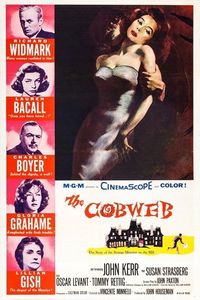
    (On Cable TV, September 2021) Unlike many other psychiatric institution movies, The Cobweb isn’t solely concerned about the therapy of its residents. Oh no — this film is about nearly everyone involved with the institution — patients, doctors, administrators and their spouses, as a question of drapes manages to ignite a near-vicious power struggle for the well-being of the institution. (The film is bookended by two title cards: “The trouble began” and “The trouble was over.”)  Richard Widmark stars as a workaholic doctor who gets involved in the trouble, and has to juggle patients, faculty infighting and marital troubles. The supporting cast is probably more interesting than you’d expect, what with the ever-beautiful Lauren Bacall and Gloria Grahame, a matronly Lilian Gish as well as an Oscar Levant as a patient. (Legend has it that Levant was incredibly difficult to work with, which feels entirely unsurprising.)  The Cobweb isn’t exactly a high-octane film — for all of the strife that it works toward, it all feels mild-mannered, even academic. Levant is underused in a role unusually close to his persona, while Bacall doesn’t have all that much to do either. Still, the film does offer a glimpse into mid-century mental health attitudes without quite delving into the usual clichés of the genre. It’s not that good but not that unbearable either, although careful viewing is required to remain invested in the ongoing story before it heats up to serious drama.

  • News of the World (2020)

    News of the World (2020)

    (On Cable TV, September 2021) Considering that News of the World is a film about a travelling newsman delivering newspaper stories to backwoods communities in the late nineteenth century, it’s inevitable that viewers would interpret much of the film through modern notions of communication networks. Tom Hanks here plays a travelling packet of information, the Internet of his days moving from town to town at a horse’s unhurried pace. His business model is simple: grab newspapers in big cities, then go to small (largely illiterate) cities and charge for an entertaining recitation of the news. But you can’t make an entire film out of that, so the plot gets in high gear once he encounters a young Native American girl and gives himself the mission to get her “home,” as nebulous a concept as that may be. The road to their destination won’t be simple, what with bandits, enemies and prejudice along the way. It’s a western with a slightly unusual angle — already an achievement—and the execution from writer-director Paul Greengrass (taking a break from frenetic subject matter and camera movements) is just good enough to keep even Western skeptics engaged. Hanks is obviously the main draw here, with a father figure performance kept on edge by some action sequences and one quasi-oneiric sequence in a sandstorm. Helena Zengel makes for an intriguing newcomer as well. News of the World is not that great of a movie, but it goes down easy despite the touches of violence. More significantly, it’s a western that resolutely anticipates the twenty-first century.

  • Complete Unknown (2016)

    Complete Unknown (2016)

    (On Cable TV, September 2021) When filmmakers set out to create character studies, it’s far more interesting when they pick aberrant characters. Someone weird is more interesting than someone ordinary, and that’s probably where writer-director Joshua Marston’s Complete Unknown most clearly distinguishes itself. Its first spark of interest comes when our married protagonist recognizes the new flame of his friend as an ex-girlfriend of his — one that simply disappeared in mysterious circumstances, never giving sign of life until now. As the film advances, it becomes clear that the female lead is leading a life of regular reinvention — lying convincingly in order to invent a new personal history for herself, and moving from city to city once the weight of her new life becomes too oppressive. There isn’t much more of a story — this is simply a sentimental touch-point for her and an expiation of old demons for him, but she’s not going to stop shedding identities and as the film ends, she moves on to something else. But the real worth of the film is in making viewers question the value placed on identity permanence — that we keep the same name, that our knowledge has developed over several years, that we remain accountable to people we’ve met earlier, that our history shapes us. The mysterious protagonist at the heart of Complete Unknown makes an argument against a principle that many would consider a bedrock of personal identity and even civil society. (And if you want to stretch the argument past the point of the film, I’d argue that fixation on identity permanence explains much of the discomfort around “coming out” or transitioning genders — once the person you thought you knew makes or expresses such a change from their established identity, many become very uncomfortable until that identity is re-established.)  While Complete Unknown doesn’t make its identity-shifting protagonist an object of sympathy, it does manage to create a rough understanding of her motivations, even if we’re left to complete the judgment. Good actors help the film go through its ideas — Rachel Weisz is more interesting than usual as the fluidly-named female lead, while Michael Shannon hits just the right wounded notes as a counter-argument that she’s hurting a tremendous number of people as she sheds identities. I don’t quite like many of the film’s sequences (the one where the two leads pretend to be doctors is thematically important, but feels slightly off) and I am this close to being outraged at the idea of someone casually shedding identities, but Complete Unknown does present a rarity: an unusual argument for something off-the-wall. I think that another take on the material could have been even more insightful, but, in the meantime, it’s a far more interesting film than you’d suspect from a cursory description.

  • Coherence (2013)

    Coherence (2013)

    (Amazon Streaming, September 2021) It would be amusing but untrue to claim that the biggest problem with Coherence is its incoherence. Upon reflection, its biggest problem is its slackness, and that issue comes straight from the intersection between the film’s subject matter and the way it was put together. But let’s back up a bit. Coherence is, in most ways, a freak success. Shot with a micro-budget and improvisational techniques at the house of its writer-director James Ward Byrkit, it has, since 2013, been hailed as a triumph of no-budget Science Fiction, often hailed in the same breath as Cube, Primer or The Man from Earth. It has earned a surprising amount of attention over the past decade, and a consequent amount of hype to go with it. I’m a latecomer to the film — I saw it creeping up the voting charts, but didn’t get around to watching it until, well, now. I may have waited too long — My viewing was more skeptical than anything else, and that skepticism only grew as the film lost control of itself. The premise is not that complex: During a dinner party, friends discuss the passing of a comet and then start noticing strange details that suggest several parallel universes intersecting. If you were hoping for scientifically plausible Science Fiction, look elsewhere: the comet excuse in hand-waving, and the mechanics of the parallel-worlds superposition is pure dramatic hokum. It’s meant to set up an atmosphere of paranoia and suspicion as characters leave and come in, diverging from the original dinner party group. As the characters discuss their situation, there are call-forwards and call-backs, all slackly justified by the whole “parallel universes!” excuse. Suppositions teeter on top of a stack of suppositions, everyone turns violent at the drop of a hat, and the stakes of this madness are not too clear. It feels raw and unpolished, which finds an explanation in Coherence’s improvisational production, where actors were encouraged to riff off some notes. Improv does make for an unusually striking no-budget feature, but it’s a noticeable drawback when trying to plot a complex tangle of overlapping realities and characters. The contrivances are excessive and the ending feels rushed after an hour of repetitive happenings. My contention is that such tight premises have to be scripted very precisely—to the comma if needs be. Coherence isn’t: it’s chaotic, far-fetched, dubious in its interpretation of human nature and ultimately underwhelming in how it mishandles a few good ideas. The result isn’t too bad for the investment — and another proof that special effects aren’t always required for Science Fiction. But it’s a mumblecore home movie writ large, and while it’s more interesting than its straight-drama counterparts, it falters when measured to the more rigorous standards of science fiction. And that’s a case of spotlight rot if I ever saw it: when it’s overhyped, a better-than-average hidden gem becomes the target of criticisms it’s not meant to sustain.

  • Half Brothers (2020)

    Half Brothers (2020)

    (On Cable TV, September 2021) Like many films of its ilk, Half Brothers seems torn between two movies and falters by trying to have it all. In one moment, it tries to become a semi-serious film about a dead father with two families, two sons who don’t know about each other, and a state-wide treasure hunt meant to tell them the truth about him. At other times, it tries to be a silly comedy with two men getting into scrapes and getting out of them through sheer chutzpah. The mixture doesn’t always take. I suppose that one of the biggest stumbling blocks to Half Brothers’ success is a premise so fantastically unlikely (a devoted Mexican father travelling to the United States to make money, but somehow never coming back and instead starting a new family stateside, and neither mom nor first son knowing about it) that it doesn’t inspire confidence in the rest of the film’s ideas. There are plenty of other rough plotting spots in the result — the treasure hunt conceit alone is predicated on a series of unlikely actions spanning years of preparation, and the more preposterousness the film piles upon itself, the less credible it is. (The goat thing is, well, the goat thing: unexplainable and useless.)  But there’s worse—the back-and-forth between dumb comedy and heartfelt statement on borders and disunited families is not always well-mastered. By the time the film makes parallels between US immigration policy and the plight of its characters (without a passport, you’re going to be treated along racial lines), it’s hard to miss the point, but also hard to avoid thinking that it could have been better. At least the lead actors make it just a bit better: Luis Gerardo Méndez is good as the responsible Mexican brother, while Connor Del Rio is annoying but not exasperating as the wilder American brother. Half Brothers is certainly watchable, but it can’t quite navigate the valley between the spectacular and the credible.

  • The Crucible (1996)

    The Crucible (1996)

    (In French, On Cable TV, September 2021) If the COVID-19 pandemic has made one thing clearer than ever, it’s that the veneer of contemporary education and knowledge is often an illusion. Basic scientific fact gets ignored the moment it confronts political ideology or personal comfort, and it doesn’t take much more than a dumb Facebook post to get people acting in self-destructive ways. The parallels with witch-hunt drama The Crucible, in other words, remain evergreen. Here we have several young women, led by a highly motivated leader, making up accusations of witchcraft against people they don’t like. By definition unfalsifiable, those accusations spread like wildfire through the small New England community, condemning people to death for not good reason. Made from a script by Arthur Miller, adapting his own classic McCarthy-era play to the big screen, The Crucible does have a timeless quality in-between its period setting and powerful themes. It helps that the infuriating subject matter is handled by powerhouse actors — In-between Daniel Day-Lewis, Paul Scofield and Joan Allen, Winona Ryder looks like an amateur despite doing very well for herself. The period recreation is credible, and the cranking of the tension to its inevitable end is effectively done. Clearly meant to provoke crowds, The Crucible remains very effective today. Alas.

  • Fanny (1961)

    Fanny (1961)

    (On Cable TV, September 2021) There’s an undeniable tension in becoming an aging playboy — what sounds cute as a young man pursuing equally young women curdles and turns creepy when it’s the same older man still hitting on just-as-young women, and if you want to talk about the enduring flaws of Hollywood, that’s a big one. I would hope that the recent readjustment in tolerance for sexual harassment will lead to change in this area, but, in the meantime, we still have decades of examples to contend with. One of the chief exhibits in this field would be Maurice Chevalier — a perfectly charming young premier in the 1930s who, by the 1960s, found himself back in Hollywood as a much older man. The traditional way to address this is to go the look-but-don’t-touch route, with older men dispensing love wisdom and memories of past romances to younger men, while still looking appreciatively at the younger women around them. In the Oscar-nominated Fanny, however, we get a much more complex take on a similar idea, as Chevalier (then 73) plays a rich older man in French coastal Marseilles, who overtly courts a much younger woman (Leslie Caron, then 30) for marriage. But there are complications — the biggest being that the young woman loves an equally young man who has left to sea after impregnating her. The April-October romance becomes more acceptable as a way for her (and her father, and the village) to save face. But there’s a lot more in store, and much of the interest in the middle section of the film is in those unpredictable plot developments popping up to make things more complex, and chip away at the male fantasy of an old man marrying a younger woman. The ending gets us back to where this was all going (with age-appropriate romantic partners) but the way to get there is more picturesque than expected. The film has other assets — the seaside Marseilles atmosphere is often very likable, and Chevalier gets to spar on-screen with long-time friend and fellow French expat Charles Boyer. Caron simply looks timelessly beautiful with long hair, and having Chevalier in one of his last decent romantic roles goes better than expected. Fanny, rather than leave the creepy older-man/younger-woman romance unexamined, squarely engages with the trope and gets a lot of dramatic mileage out of it: it’s really not as distasteful as you’d expect.

  • Pepe (1960)

    Pepe (1960)

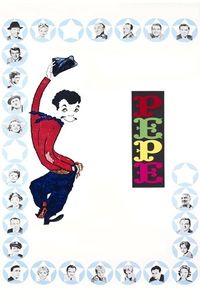
    (On Cable TV, September 2021) Whenever you’re a movie producer putting together a star vehicle, you must be amazingly confident that your star can sustain the film, otherwise, well… Putting together a star vehicle for Mexican comedian Catinflas wasn’t an obvious exercise back in 1960 — while the diminutive, hyperactive actor has earned good notices for his turn in Around the World in 80 Days and was a world-wide sensation outside the United States, Hollywood didn’t quite know what to do with him. This clearly shows in how it approached Pepe — first, by passing off the then-50 years old as a youngster searching for his beloved horse in Hollywood, then stacking the film with so many cameos from known actors of the time that even if you don’t like the lead, you can still find something entertaining in the result. This is really not the best way to be introduced to Cantinflas — his comic persona is deadened by a silly script, unrealistic expectations and a mismatch of comic styles. The film predictably makes him out to be a holy fool of sorts, his simplistic rural assumptions wowing the sophisticated Hollywood types with their homegrown wisdom. This is trite even by circa-1960 standards, and your liking for the film is likely to pair up with your tolerance for that kind of comedy. (Tellingly, this kind of protagonist is funny-friend rather than boyfriend material for our white female lead, as the conclusion makes clear.)  So, what’s left? The cameos, of course — Catinflas aside, Pepe does make up for a quick tour of its era’s celebrities, and you’ll get more out of it the more you know about the time. Bing Crosby pleasantly croons his way past our protagonist at the studio gates, while Dean Martin plays cards with him in Vegas. Jack Lemmon shows up in full drag (then out of it, then back into it) as a big nod to the previous year’s Some Like It Hot, but in colour — and so does his co-star Tony Curtis in a separate but amusing scene. Sammy Davis. Jr. sings “Hurray for Hollywood,” while the classic instrumental “Tequila” gets a dreamlike segment. Maurice Chevalier sings “Mimi” and trades love tips with Catinflas, Judy Garland is heard but not seen, and Kim Novak provides jewelry advice. If you know those names and don’t object to celebrity walk-ons, then Pepe probably still has something for you. If you’re a bit lost as to who these people are and why they’re worth seeing on-screen, you may want to wait until you do before watching the film. Pepe is not that enjoyable as a standalone comedy, but it is substantially better as a late-era satirical look at classic Hollywood through celebrity cameos, not dissimilar to 1949’s Doris Day comedy It’s a Great Feeling or the earlier star-studded Canteen films of WW2.