Author: Christian Sauvé

  • The Outlaw (1943)

    The Outlaw (1943)

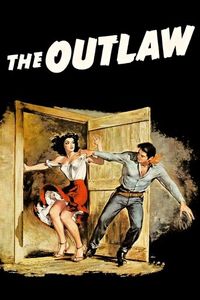
    (On Cable TV, August 2021) There’s plenty to be said about Howard Hughes’ various failings and eccentricities in all the facets of his personal history. Even as a film director-producer, his filmography is an amazing collection of disasters: decent movies that came out years after production because he wouldn’t stop tinkering with them (Jet Pilot); movies where he, as a producer, would rapidly clash with directors and go through several of them (also Jet Pilot, but others too); films in which he let his interest in specific actresses dictate aspects of the film (The French Line), and other wonderful stories in which he deliberately courted scandal. But he was primarily an entertainer, and films like The Outlaw (even if Howard Hawks secretly co-directed) show his first-rate instinct. As a story, The Outlaw is a hodgepodge of familiar western elements, centred around one of the most overused common grounds for American Westerns: Lincoln, New Mexico and the associated legacy of Billy the Kid and Doc Holliday. Little of the film is meant to be based on fact, and as it moves forward, it’s clearly written around popular entertainment rather than accuracy. Hughes was a billionaire, but he was also a first-class female form appreciator, and that’s how The Outlaw is often mentioned as a spectacular showcase for Jane Russell’s sex appeal. There’s no way to see the haystack scene and not be impressed — in fact, The Outlaw’s release was delayed for two years, as Hugues tried to deal with the censors throwing apoplectic fits over Russell’s presence in the film. That, as you can imagine, does provide a distinctive flavour to The Outlaw — in a genre often concerned with asexual machismo, it’s a bit of a surprise to see Russell being so blatantly presented as an object of desire. Coupled with the entertainer’s instincts of both Hughes and Hawks, the result is a bit more than yet another dreary rerun through the Billy the Kid mystique. As someone who keeps being fascinated by Howard Hughes and nearly everything surrounding him, I found The Outlaw more captivating than expected, especially for an early-1940s western.
  • Freaked (1993)

    Freaked (1993)

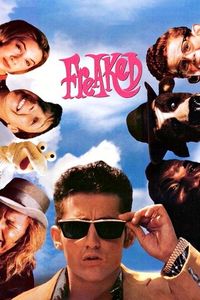
    (In French, On Cable TV, August 2021) As someone with a specific affection for spoof comedies that lean into absurdity, I have to admit that Freaked was a discovery — it’s a horror comedy that doesn’t have a single qualm about going for big dumb jokes, and it completely flew under my radar. Sure, the production values are on the lower-end of things (makeup budget excepted), and that was never intended to be a production with class — but the tone is often very close to some of the spoof comedies of the 1980s, even if writers/directors Tom Stern and Alex Winter don’t quite manage the same attempt-to-hit joke ratio. Wonderfully weird, it opens with a framing device in which a backlit “disfigured” former child star recounts to a TV show hostess how he got involved in a body-mangling freak show in South America, a situation that shifts into fighting corporate malfeasance by the time the climax rolls around. It’s all weird and unabashedly designed for laughs — there’s scarcely a joke left on the table, especially if you don’t mind the deliberately gross makeup effects used through much of the film. Freaked is not a great movie by any means, but it’s a nice surprise: the film’s production history shows that its budget was abruptly cut toward the end of the shooting by new executives, and that shows most in the lack of polish in the post-production areas. Still, Freaked was never going to be much more than a niche comedy for horror fans and it’s perhaps better than it has remained an underrated curiosity.

  • The Comedians (1967)

    The Comedians (1967)

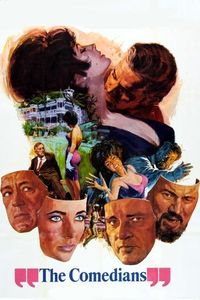
    (On Cable TV, August 2021) To answer an obvious question: No, The Comedians is not a comedy. It’s really at the other end of the scale, since it’s a brutally convincing portrayal of Haiti under the murderous Duvalier regime, with its unrestrained tonton macoutes enabling a reign of terror over the island. Like many French Canadians, I have an above-average awareness and affection for Haiti, and wasn’t expecting a 1960s American film to be so effective into portraying a regime of terror that endured well into the 1980s, overlapping with my childhood memories of then-current events. Much of the darkness of the film clearly comes from Graham Greene’s original novel, writing squarely in his usual “white man goes to a poorer country; terrible things happen” mode. This time, the white man is portrayed by Richard Burton, with then-wife Elizabeth Taylor playing his married mistress. The plot is a downbeat mixture of British operatives, American businessmen, Haitian oppressors, diplomatic personnel and homegrown resistance. It really, truly, definitely does not end well. Still, there’s quite a bit to like here: Burton plays world-weariness like few others and he shares a few good sequences with Taylor. Alec Guinness brings some dark comedy to the cast, with Peter Ustinov also contributing some flair to a supporting role. Some black American actors of the time, such as James Earl Jones and Cicely Tyson, also get supporting parts due to the setting of the film. Downbeat tone aside, The Comedians suffers most in its pacing — at a punishing 160 minutes, it’s too scattered, too leisurely and too inconsistent as well to be truly effective. Probably too faithfully to its source (Green adapted his own novel without concision), its lack of concision does its topic matter no favours. I still found it interesting, largely for Burton and the portrayal of Haiti (even if filmed in now-Benin), but I can think of several ways in which the result could have been better.

  • Tunnelen [The Tunnel] (2019)

    Tunnelen [The Tunnel] (2019)

    (On Cable TV, August 2021) There’s something really interesting to see when typically American movie genres are taken up by filmmakers in other countries — the mixture of genre formulas with national sensibilities can be quirky by North American standards, and what works in a context can be a harder sell in others. So it is that The Tunnel hails from Norway and cleverly uses a distinctive national feature — its kilometres-long tunnels allowing for road traffic through the country’s numerous mountains—as backdrop for a pure catastrophe thriller. After a perfunctory but efficient opening sequence, the mayhem begins when a truck crashes deep inside a nine-kilometre-long tunnel. No problem — everyone just has to turn back and get out, right? Well, no: Even discounting the snowstorm holding back the rescue at one of the ends of the tunnel, it’s not quite so simple as driving out. Not only are the cars, buses and trucks stuck in the tunnel confident that things will get moving again and wait in place, the situation gets deadly when the crashed truck explodes, transforming the tunnel into a burning oxygen-free death zone. Stakes get personal when our protagonist (a wonderfully stoic Thorbjørn Harr) realizes that his daughter is in the tunnel, and the ensemble cast also gets involved in various ways. The American tradition of an escalating situation is obvious enough, although some will quibble that director Pål Øie starts slow and doesn’t quite build up neatly to an over-the-top finale. But the Norwegian touch is what makes the film special. Compared to the usual formula, The Tunnel often zigs and zags. There’s a loathsome supporting character who doesn’t get stuck in the tunnel, for instance — and whose dramatic arc is to appreciate that he’s not dead and neither is his son. There’s a goofy character in the first act who becomes a figure of grief by the end of the film. And then there’s the wonderfully restrained heroism of the coolly efficient Norwegian rescue workers as they confront the disaster with a minimum of histrionics, trying to make the best out of a fatal situation. Even for Canadian viewers used to the snow and the cold, there’s some exceptional exoticism out of something that has no equivalent here, and the support mechanisms that those tunnels require. I do have issues with bits and pieces of the conclusion, about how the film is sometimes very cold-blooded about its characters’ deaths, and how some obvious questions from non-Norwegians are not always answered very quickly. But it’s original enough to be worth a look for thrill-seekers open to unusual disasters in unusual places. Make it a triple feature with The Wave and The Quake for a strong dose of large-scale Norwegian disaster movies.

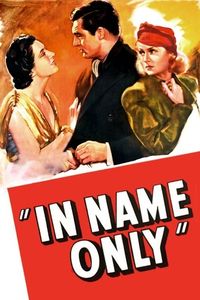
  • In Name Only (1939)

    In Name Only (1939)

    (On Cable TV, August 2021) Despite coming from a time in which Cary Grant was fast ascending as a Hollywood superstar and following an impressive succession of solid hits that made his reputation, In Name Only is seldom named as a Grant favourite — in fact, it usually struggles in the bottom tier of the actor’s filmography. The reasons for this become clear as the morass of the main plot becomes apparent: Grant plays an unhappily married man who falls for another woman, except that his current wife will not make any kind of divorce quick or easy. Grant has the great good fortune of being flanked by both Kay Francis (as the wife) and Carole Lombard (as the mistress aspiring for more), both of them beautiful and legends of 1930s comedy. But the film itself is not meant to be funny — clearly aiming for romantic drama rather than any kind of comic mayhem, the film trudges along gently on the charm of its co-leads, and ends up roughly where we expected after ninety minutes of repeating the obvious. There are now-odd moments (such as a drunk character falling asleep in front of an open window and getting a potentially fatal illness out of it) that don’t help. It all amounts to a frustrating film — three actors playing against type in a film that can be read as a repudiation of the screwball comedies that took marriage so lightly. Lombard, of course, would have a career shortened by a tragic plane crash three years later, making the thought of missing another great comic performance from her all the more poignant. To be clear, In Name Only is not a terrible film, but it goes through its downbeat premise as expected, wraps up things in time for a happy ending seen from far away and seemingly wastes the considerable comic timing of its actors without giving them much in terms of dramatic acting performances. Casting lesser actors would have improved it.

  • La planète sauvage [Fantastic Planet] (1973)

    La planète sauvage [Fantastic Planet] (1973)

    (On Cable TV, August 2021) I am aware that La planète sauvage is widely hailed (as per Wikipedia) as a Science Fiction classic, an alternative animation landmark, a strongly allegorical counter-culture reference and all sorts of superlative monikers. But for someone who grew up reading metric tons of written SF, it feels like a naïve, blunt, ugly piece of psychedelia with little internal coherency and even less real-world relevance. Adapted from a 1957 Stefan Wul novel by writer-director René Laloux, La planète sauvage feels like baby’s first conceptual breakthrough SF allegory, obvious to the point of exasperation. Consider for yourselves: It’s about humans living on a world dominated by blue giants —Traags-—that usually regard humans as pests, with the exception of a curious youngster who takes on a baby human as a pet after the mother is killed by three young Traags playing at “boys will be boys.” The plot develops once the human escapes and rejoins fellow humans trying to mount a resistance to be considered as equals. So that’s one thing. The other is the animation, taking place almost exclusively on a 2D plane. It’s clearly meant to be stylized, but it’s ugly to the point of repulsion — it takes a special kind of aesthetic to find any of it beautiful, and when combined with the naïve script, it doesn’t leave much space for any kind of affection for the result. I can see why La planète sauvage was such a critical hit in the 1970s, but these days… it’s best seen as a historical curiosity.

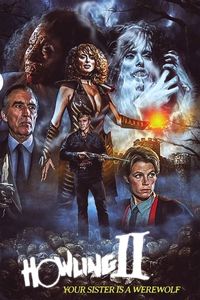
  • Howling II: Stirba—Werewolf Bitch aka Howling II… Your Sister Is a Werewolf (1985)

    Howling II: Stirba—Werewolf Bitch aka Howling II… Your Sister Is a Werewolf (1985)

    (In French, On Cable TV, August 2021) I’m not going to claim that werewolf thriller The Howling is a wonderful movie (I found it a bit dull), but it’s vastly more ambitious than this lazy attempt at a sequel, which heads almost immediately from Los Angeles to the cheaper shooting realms of eastern Europe for a mixture of folk horror, bland leads, vampire-inspired plot elements and people in hairy makeup passing themselves as werewolves. Fortunately, Christopher Lee is here to keep our interest as a werewolf hunter— but he can’t be in every scene of the film when he’s in a supporting role. There’s quite a bit of sex and nudity here, with no one claiming that it’s there for artistic merit: it’s very much in the exploitation vein all the way to an end-credit sequence in which the same shot of an actress baring her chest is repeated seventeen times in-between reaction shots of other characters taken from elsewhere in the film. If that’s not damning enough, I’m not sure what is. (B-movie queen Sybil Danning reportedly limited filmmakers to one nude shot as per her contract, and that’s what they did with it.)  It does give Howling II a crass and dirty feel — while the East European shooting location does allow the film to punch above its weight in terms of visuals, the script is the same kind of tripe that low-end horror sequels did so often in the 1980s. It’s not, to be fair, actively painful to watch: there’s a ridiculousness to it that makes up some unintended entertainment, the main song is catchy, the actresses are attractive (if you dig a bit, the film will give you a splendid excuse to read all about the extraordinary life of Marsha Hunt, of The Rolling Stones’ “Brown Sugar” fame) and even a performance by Lee in a terrible film is something to be appreciated.

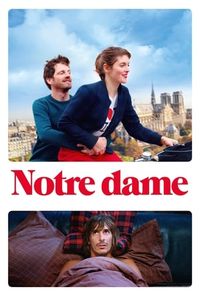
  • Notre Dame (2019)

    Notre Dame (2019)

    (In French, On TV, August 2021) On paper, there’s something interesting about Notre Dame and its premise — a neurotic architect with plenty of personal issues is selected as the winner of a national contest to shape the parvis of the Notre Dame de Paris cathedral. (Because you’re wondering: The film’s production preceded the devastating April 2019 fire even if the film’s release didn’t.)  But there’s a severe tonal unity problem that goes on to plague the rest of the film, as well as many exasperating choices made along the way. Never quite figuring out whether it wants to be an absurd farce, a piece of magical realism, a relationship drama, a character study, a social critique or a media satire, Notre Dame and its writer-director Valérie Donzelli both careen from one extreme to the other, never quite smoothing out the transitions through a solid core or a controlled screenplay. It plays like a series of scenes somehow starring the same actors with the same character names, but not really belonging in the same film. Some bits play out like excerpts from Amélie de Montmartre, some other bits revel in complicated relationship issues, second-act bits go for dumb social-media outrage and the end attempts legal farce, only to fall flat on its face, even in-universe. It makes for an exasperating film that wastes whatever it has at its disposal, with some curious choices (one of the teenage actors was just immediately unlikable) creating additional complications. There are a few good moments, but it would be nice if they belong to a coherent whole. Heck, there’s even a narrator that suddenly pops up well into the film and suggests yet another potentially-unifying layer that quickly goes nowhere. I suspect that most viewers will be interested to the film for the glimpses of a pre-catastrophe cathedral, but everyone should be warned — the building deserved far better than this film.

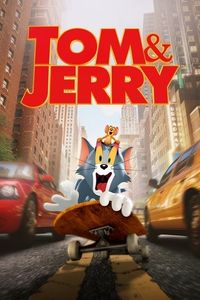
  • Tom & Jerry (2021)

    Tom & Jerry (2021)

    (On Cable TV, August 2021) With the wonders of modern digital animation, there are many, many ways to do live-action movies of classic cartoon creations — but not all of them feel equally natural. Constrained by tradition and IP requirements, some choices are weirder than others, and the bet that Tom & Jerry makes in incarnating all of the film’s animals in a flat cell-like fashion set against live-action actors and backdrops isn’t necessarily the most harmonious to look at. Of, sure, they do look like classic Tom and Jerry: that’s the point. Even the menagerie of supporting characters is familiar, although I’m really not all that up-to-date in my Tom and Jerry mythology. Looks aside, the setting for the film is designed to allow both animal leads to create a maximum amount of mayhem: A posh hotel in central New York City, with an entire menagerie and an impending high-society wedding converging. Chloë Grace Moretz plays a resourceful hustler who manages to get herself hired by the hotel on false pretence, with Michael Peña being his usual scene-stealer as the resident event manager. Alas, critics may struggle to find anything else to say about the result. Like many live-action films incorporating animated animals, it’s very much aiming low and cluttering its running time with dull human interactions in-between the animated showpieces. Director Tim Story struggles with tonal unity, as some sequences seem far more imaginative or stylistic than what surrounds them (case in point: the interrogation sequence, which seems to come from another more interesting film). Obviously, Tom & Jerry works when it seeks close adherence to its source material, and doesn’t quite work as well when it doesn’t — despite the weirdness of 2D-shaded animal characters, these are recognizably Tom and Jerry… enough so that the kids won’t mind. But unlike true family films, this one may bore anyone above eight.

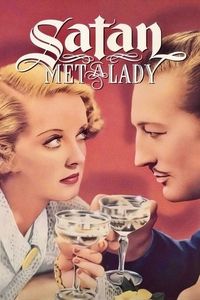
  • Satan Met a Lady (1936)

    Satan Met a Lady (1936)

    (On Cable TV, August 2021) It’s hard to argue that Satan Met a Lady is an interesting film by itself — while it features a killer title (especially for a film released so soon after the enforcement of the Hays Code), it’s executed like many jocular detective movies of the 1930s, and there are far better examples of the form than this one. But where Satan Met a Lady becomes truly special is in the exemplary lesson it offers in how tone can reshape a film adaptation. For this is, amazingly, an adaptation of Dashiell Hammett’s The Maltese Falcon, five years before the John Huston adaptation that would help ignite the film noir genre and launch Humphrey Bogart to superstardom. The protagonist here, played by a twinkle-eyed Warren Williams, couldn’t be farther away from Bogart — he’s a smooth romantic operator and a constant one-liner generator who barely takes himself seriously. Not that he is the most outrageous deviation of the adaptation, which takes so many liberties with the source material than even viewers with fresh memories of the 1941 version will have trouble spotting the similarities. But the frankly comic tone is where the film is most distinctive, and perhaps most enjoyable as well. It’s not a good movie — Bette Davis, one of the film’s lone bright spots as the femme fatale, famously rebelled and refused to show up on set for the first few days of shooting—but it becomes fascinating when you put it against the film noir style of telling roughly the same story. Then again, film noir wasn’t even in the cards in 1936 — amateur sleuths and high-society escapes from the Depression were the vogue, and Warner Brothers was clearly aiming at chasing trends of the time. Despite a plot that becomes unpalatable late in the film’s brisk 74 minutes, Satan Met a Lady is not an unbearable watch, but it’s far best appreciated as the second feature in a Maltese double (or triple) bill.

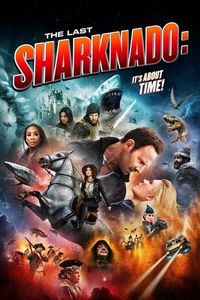
  • The Last Sharknado: It’s About Time (2018)

    The Last Sharknado: It’s About Time (2018)

    (In French, On TV, August 2021) The best jokes play on brevity, and at a sixth instalment, there’s clearly a sense in The Last Sharknado: It’s About Time that enough is enough. Obviously designed as a meta-riff on the Sharknado series’ absurdity (and after five instalments, there’s a lot of it), this last film in the series starts in the prehistorical past and gets its characters to time-travel through a series of comic sketches before landing in the future for a big finale that brings the series to a full close. It’s really silly — but to be honest, I’ve seen maybe three of the five previous films, and they haven’t exactly made much of a lasting impression. So, if I’m not exactly hip to all of the references… I don’t care. There are a few laughs here and there—Ian Ziering and Tara Reid still give creditable performances among such looniness, and the way the film wraps up the series is mildly admirable, especially as it’s committed to giving loyal audiences a happy ending. (Many lesser movies would have gone for a cheaper nihilistic route.)  I am not suggesting that The Last Sharknado justifies the purchase of a collected edition of the series — but I will suggest that it doesn’t end it all on a note that makes viewers feel cheated, so that’s already quite an achievement.

  • Zonbi asu [Zombie Ass: Toilet of the Dead] (2011)

    Zonbi asu [Zombie Ass: Toilet of the Dead] (2011)

    (In French, On Cable TV, August 2021) While it would be hilarious to take Zombie Ass: Toilet of the Dead as representing something fundamental about Japan, let’s admit that this is a film that’s far from the mainstream. Yes, it fits with films such as Tokyo Gore Police and Meatball Machine, but that’s a very specific flavour, not a national obsession. But anyway: As the title suggests, this is a film that blends gory zombie horror with flatulent comedy. As young students head to the woods for a weekend of camping, they encounter zombies created by a mad scientist’s experiment. The tropes pile up without too much logic, but then again if logic is what you’re after, you’re clearly not in the right frame of mind for Zonbi asu. As schoolgirls are bitten and experience fatal flatulence, director Noboru Iguchi goes for funny gross-out and generally achieves its objectives, all the way to a climax in which flatulence once again plays a pivotal role. It’s mildly funny, not really horrific, and clearly meant to disgust at times, but it’s saved by a tone that doesn’t quite go for extreme nihilism. It’s far from being the worst horror film I’ve seen this week, although that’s not really saying a lot. One fair warning: Zonbi asu is not quite as good as its title. But it’s not that far off either.

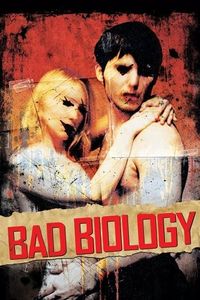
  • Bad Biology (2008)

    Bad Biology (2008)

    (In French, On Cable TV, August 2021) There are times when I wonder if I’ve become too jaded and seen too many movies. (Especially after shrugging off a gory but dull horror film.) But then there’s something like Bad Biology to remind me that, no, I’m just jaded enough to sit through stuff like that. Because Bad Biology, from noted cult shlockmeister Frank Henenlotter, is clearly designed to upset viewers. Its first few minutes, after all, don’t just feature an abnormally libidinous young woman (with seven, ahem, pleasure centres) who has one-night stands violent enough to kill her partners, but has a biology so outlandish that every tryst is followed hours later by the birthing of a deformed fetus. All of it graphically portrayed. It’s not just that kind of film — it’s the kind of film where the protagonist directly turns to the camera and tells viewers to deal with it or stop watching. And there’s more to come, as the film then turns its attention to a tortured young man with a disembodied phallus who’s just as sex-obsessed as the female lead we just met. They don’t know each other yet, but clearly the intent of Bad Biology is to deliver a twisted love story of extreme characters. But it’s also a film in which the third act features a sentient, autonomous male organ smashing through walls in order to assault young women. Clearly birthed from the gore-comedy school of horror, Bad Biology is utterly tasteless, absolutely not to be seen by mainstream audiences and… actually rather entertaining in a what-will-they-think-of-next kind of way. Charlee Danielson and Anthony Sneed are frankly fearless in their portrayal of the lead couple, and that’s exactly the kind of go-for-broke tone that’s appropriate if the film is to work. Ironically, I may actually be too jaded by everything, because my main complaint about the film is that it could have gone further and covered up some of the second-third lulls with more outlandish material. But keep in mind that, even if I didn’t completely hate Bad Biology, I have no intention of every recommending the film… or seeing it a second time.

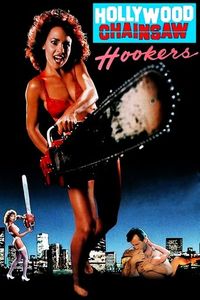
  • Hollywood Chainsaw Hookers (1988)

    Hollywood Chainsaw Hookers (1988)

    (On Cable TV, August 2021) I usually despise gore-centric horror — I’m not a fan of violence in the first place, and gore movies often put a nihilistic disregard for humans (bolstered by special effects and makeup tricks) well ahead of any traditional cinematic value. This goes double for gore-centric horror/comedies, which come across as psychopathic if they fail to build the delicate equilibrium of balancing the exposed innards with the self-aware comedy. In this context, Hollywood Chainsaw Hookers is almost remarkable for being almost likable despite featuring prostitutes gleefully dismembering their clients with chainsaws. Coming from B-movie authority Fred Olen Ray, it’s incredibly cheap and tasteless: the sets barely meet high school theatrical production standards and the actors were probably hired in seedy offices with entrances on Los Angeles’ back alleys. The plot is an absurdly lurid tale of an Egyptian-worshipping cult sacrificing victims to Anubis, with a Private Eye narrating his efforts to get to the bottom of a killing spree. Hollywood Chainsaw Hookers clearly doesn’t take itself seriously from its amusing opening disclaimer onward, as the over-the-top narration is contracted at every turn by the sequences we see, and the special “gore” effects are so terrible that they just add to the comedy. Blood sprays like red-coloured water, clunky one-liners pepper the narration and dialogue, and the women disrobe on a predictable basis… but then wield their chainsaws with a big grin. The gore component is almost completely defused by the broad comedy, and then the noir/cult plotting takes over and the film’s 75 minutes are over before we can even dare question what we’ve just seen. If you’re looking for interesting cheap low-budget films in the comedy/horror arena, Hollywood Chainsaw Hookers should be somewhere on your list (albeit nearer the bottom): it’s far from respectable, and that’s probably the best thing about it.

  • The Doorman (2020)

    The Doorman (2020)

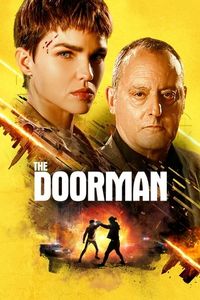
    (On Cable TV, August 2021) The spirit of Die Hard is strong in The Doorman, at least in the basics of the plot: A protagonist with action experience; an implausibly isolated building; villains out for a quick safe-cracking score and a family to protect. There’s clearly an effort here for this to be a Ruby Rose vehicle, especially given her well-regarded performances in other action films. Unfortunately, a vehicle is better when it’s based on a strong script and this isn’t it — sticking close to genre tropes, The Doorman goes from one non-surprise to another until the end but can’t manage any wit or originality. Director Ryuhei Kitamura does occasionally use a flashy trick or two, but little of those tricks actually amount to a cohesive vision for the film: they feel more like trick shots you do when you get bored more than in pursuing a specific artistic intention. Rose is not bad in the role — if the point of a star vehicle is to showcase the star, that’s more than met here. There’s some additional pleasure in seeing Jean Reno as the antagonist — once more renewing with Hollywood when it’s looking for a French heavy, even more so considering that Reno’s indeed getting heavier these days. The Doorman got stuck in the mad COVID-time rush to release everything to streaming platforms, but it’s doubtful that it would have earned anything more than a straight-to-digital release even in calmer times. It’s that generic, and it doesn’t really work even as a failed homage to better movies in the genre.