Author: Christian Sauvé

  • ¡Tintorera! aka Tintorera: Killer Shark (1977)

    ¡Tintorera! aka Tintorera: Killer Shark (1977)

    (On Cable TV, August 2021) If you ever watched Jaws and caught yourself thinking, “The shark is cool and all, but what this film truly needs is a ménage à trois,” then have I got good news for you! Melding creature horror with pretentious “erotic” melodrama, Tintorera features a British woman, two men and the sharks that love to eat them all. But there’s more: more women, more skinny-dipping and more sharks eating characters, either in part or in whole. Writer-director René Cardona Jr.’s film is supposed to be horror, but in-between so much wanton romance between the characters, it’s easy to lose track of that… especially when the execution of the horrifying bits is so underwhelming. The female characters aren’t particularly convincing (neither are the male ones, but they don’t get as much screen time) and their whole bizarre blend of libidinous vacation relationships with killer sharks is remarkably off-putting. There’s some camp value in Tintorera, but I’d rather select my cult favourites by other factors than a clunky film that doesn’t work.
  • Seven Sweethearts (1942)

    Seven Sweethearts (1942)

    (On Cable TV, August 2021) Sometimes, you don’t need plot as much as a few likable actors playing to their persona. Ask me in a few weeks about the plot of Seven Sweethearts and I’m liable to blurt something about a father wanting to marry his seven daughters in chronological order, largely dependent on the film’s log-line. But I’ll be far more voluble about what fun it is to see Van Heflin as a young romantic lead going up against S. Z. Sakall as the marrying dad and the rather wonderful ensemble of young women (including leads Kathryn Grayson and Marsha Hunt) that make up the seven titular daughters. It’s all rather cute and fun if you make it past the film’s strong paternalism, with a rather comforting embrace of middle-western values, decent work by actors playing in their wheelhouse (most especially Sakall, clearly enjoying playing a patriarch), some local Dutch-American atmosphere (it all takes place in a small town with a significant Dutch-born population and a big tulip festival) and a happy ending that is never, ever in doubt. You can see why it would play well in an anxious America then plunged into war. A few musical numbers integrated in the action help this reach musical fans, with the romance and character work doing the rest. Seven Sweetheats is not a great or particularly memorable movie by any means, but it’s pleasant enough to make anyone smile.

  • Lovely to Look At (1952)

    Lovely to Look At (1952)

    (On Cable TV, August 2021) Now that I’ve seen most of MGM’s biggest musicals of the 1950s, I’m left to track down the rest of them, and Lovely to Look At certainly isn’t one of their best. You can tell a lot about a film’s status by how it looks when it’s shown on standard-bearer TCM, and in this case you’ll have to struggle through a 1.37:1 TV-like aspect ratio (apparently the original shooting ratio) and a terrible blurry image quality that suggests that the film hasn’t been on anyone’s recent restoration schedule. Still, even a second-rate musical from the best years of the genre does have its qualities. It opens on a rather good musical number, “I’ll Be Hard to Handle” that features a splendid later-day appearance from Ann Miller in a leggy purple outfit. The cast includes not only Kathryn Grayson (almost as beautiful as Miller), but Red Skelton doing his usual comic mugging for the camera, and a feature film debut for Zsa Zsa Gabor (as “Zsa Zsa”). Vincent Minelli reportedly directed the fashion show toward the end of the film, although then-veteran Mervyn Leroy is the credited director. The premise and music are taken from the early Fred Astaire vehicle Roberta, but the details are very different from the start. Alas, this doesn’t necessarily lead to anywhere very interesting — sure, the romance and the comedy work, but little of it sparks in the way other MGM musicals of the time did. It’s still not bad (the craftsmanship, comic acting and overall tone are enjoyable no matter what), but Lovely to Look At is one of those films that’s best approached by those who have already seen better examples of the form and can appreciate the details even when the whole is lacking.

  • Bye Bye Braverman (1968)

    Bye Bye Braverman (1968)

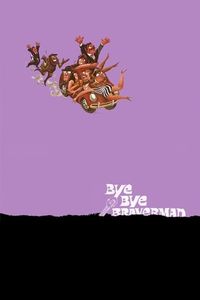
    (On Cable TV, August 2021) If you’re looking for a plot premise for Bye Bye Braverman, here it is: Four men (all writers, none happy) learn about the death of their friend, so they get together to attend the funeral, then go back to their homes. That’s it. Clearly, this (an adaptation of a novel) isn’t meant to be a narrative-heavy experience. You can even argue that it’s not meant to be particularly dramatic, as grand epiphanies are nowhere to be found, and the characters all more or less end up at the same place at the end of the film as at the beginning, with interpersonal conflicts still left intact. What’s left is dialogue, character and atmosphere: Taking place in the New York City Jewish community, Bye Bye Braverman is largely made of the four articulate characters riffing off each other, snarkily commenting on the funeral, various encounters along the way to and from the funeral, and the protagonist (played by George Segal, sometimes showing glimpses of a funnier persona) reflecting on life and death in fantasy segments. Directed by Sidney Lumet, it’s generally well-handled, but at the end of the entire thing, we’re left wondering what’s the point of the film: with adequate dialogue, low stakes, non-existent character development and mild comedy, Bye Bye Braverman struggles to justify its existence. It does a bit better as a late-1960s slice-of-life period piece taking place in the likable company of frustrated NYC Jewish writers, but not that much. Call it a piece of Lumet’s filmography if you really need to see it.

  • I Used to Go Here (2020)

    I Used to Go Here (2020)

    (On Cable TV, August 2021) I’m a forgiving audience for movies about writers, but even my best intentions left me unmoved by I Used to Go Here, a riff on the “coming home” subgenre that sees a writer struggling with an underperforming first novel and a broken-off engagement being asked to go back to the small-town campus where she was a superstar student. The film follows how she clearly enjoys the regression back to a simpler time — revisiting her old room in town, hobnobbing with younger students, and flirting with the idea of a teaching position. Gillian Jacobs (as the writer) and Jemaine Clement (as a mentor) are the two biggest names in this low-budget, low-stakes dramatic comedy. (There’s also Kate Micucci, but she’s practically unrecognizable here and not used to her fullest potential.)  I Used to Go Here is not unpleasant to watch, although the lack of self-awareness from the protagonist is grating, and the abrupt character development at the conclusion is not particularly convincing. As a movie-about-a-writer, it plays things cynically but still indulges in romanticism about writers in the post-honeymoon phase of their first novel. (Although, now that I write this, I realize that I have far more knowledge of genre writers for whom a first novel is not a capstone as much as the start of a far more prosaic and mercenary process — by the time their first novel is published, they have usually finished their second and are starting a third.)  The film could have done more to puncture the regression enjoyed by the protagonist even if writer/director Kris Rey does carry the narrative from one point to the other in entertaining fashion. There’s a great sequence in which a young man has a terrific evening enjoying mundane things with a middle-aged woman after being “caught” in some nonsense scheme — the film could have used more of that loopiness. Alas, by the time it’s over, I Used to Go Here is so inconsequential that it practically leaves no impression. Not a terrible choice, but somewhat of an underwhelming one.

  • Hausu [House] (1977)

    Hausu [House] (1977)

    (Criterion Streaming, August 2021) I should probably explain that I frequently decide to see movies based on “best of” lists. In those cases, I often have just a title and a date to go from — sometimes a director, less frequently a plot summary. In other words, I often see those films without many preconceptions other than language and date of production. So… I really wasn’t expecting the looniness of House’s blend of low-budget comedy and over-the-top horror. Working with limited means and even-more-limited special effects technology, this is a film about seven schoolgirls going to a mysterious house possessed by an evil spirit. The plot details and mechanics are inconsequential to the mounting sense of dread and showpieces in which the schoolgirls are killed by the evil spirit — by the time a piano eats a girl’s fingers and then swallows her whole thanks to special effects that are now more hilarious than scary, we’ve attained the maximum of what House is going for. It was never intended as a serious film — the acting is amateurish (appropriately so, considering that most of the actors had no professional experience), the tone is deliberately light, the special effects are intentionally lousy, and the details are ridiculous. Still, the film is even funnier now considering how slap-dash the cinematography can be, with a handcrafted artificiality that only reinforces the surrealism of it all. It will take a more knowledgeable scholar of Japanese comedy/horror to confirm, but I do have the impression that House is the grandfather of the entire splatter-comedy genre that only the Japanese do like they do — that there’s a straight line from House to The Machine Girl and its ilk (not to mention the Anglosphere side-trip through Raimi and Jackson’s early work). Needless to say, that wasn’t what I was expecting when I saw that House was the next film on my list and it was available from the very serious Criterion collection — I was expecting something like Ozu, but clearly didn’t have a clue what to expect from director Nobuhiko Obayashi.

  • The Owl and the Pussycat (1970)

    The Owl and the Pussycat (1970)

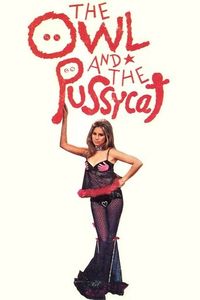
    (On Cable TV, August 2021) As a romantic comedy premise, it’s hard to get more down to the basics than The Owl and the Pussycat, with two mismatched people forced together and then into romance despite their differences. Of course, the details are what makes or breaks the result. Fortunately, there’s quite a bit to chew on here, starting with the grimy atmosphere of circa-1970 New York City at a time when it was clearly deteriorating. The rain, dirt and seedy atmosphere act as background as a bookish writer (George Segal, playing the snobbish intellectual with a certain flair) causes a part-time prostitute to lose her apartment and ends up with her taking over his life in retribution. Of course, the real appeal here is the female character — played with a lot of vitality by Barbra Streisand (who has seldom looked better even in a multi-decade career), who really takes the film over from her male co-star. It’s all in good fun even as the film does through the now-standard motions of a romantic comedy. Some potential is left unrealized, but the dialogue (as befit a theatrical adaptation) is fast and vivid all the way to an expected ending. The familiar tropes aren’t necessarily a problem when they’re handled as gracefully as they are here, with the period detail adding even more interest to a film that works almost solely on dialogue and a modest amount of physical comedy. Streisand looks amazing, Segal realizes his comic potential and New York City looks suitably dangerous — all assets adding much to something that already works quite well on the page. You can even see here the paths that led Streisand both to her comic dervish role in What’s Up Doc?, and her turn as an older escort in Nuts.

  • Giù la testa [Duck, you Sucker aka A fistful of Dynamite] (1971)

    Giù la testa [Duck, you Sucker aka A fistful of Dynamite] (1971)

    (On DVD, August 2021) It really doesn’t take a lot of time to understand that Duck, You Sucker isn’t your typical western — after all, it opens on a quote from Mao and immediately jumps in an opening sequence that takes aim at post-revolution “elites” mocking the lower classes, followed by violent retribution. Clearly having something to say about the false romanticism of revolution (“Revolution is confusion” is a key expression), this last Sergio Leone spaghetti western feels disjointed at times, because it seems intent on having a lot of fun before bringing the hammer down to achieve its dour thematic objectives. Much of the film’s immediate appeal comes from the interplay between Rod Steiger as a Mexican bandit and James Coburn as an explosive-dispensing Irish renegade. Coburn is all cool here, and the film wisely features plenty of stuff blowing up real good considering that it has an explosive expert as a protagonist. There’s a lot of banter between mismatched leads, and an ironic arc in seeing a cowardly character stumbling into heroism. Much of the film’s first half feels like a pleasant, entertaining romp, helped along by using a western look in a much later period (1913), allowing for cowboys and locomotives but also motorcycles and German-issued military equipment. (If you’re looking for a halfway-plausible cowboy-versus-Nazi film, this is still your best bet.)  But Leone has a much more dispiriting destination in mind, and so the second half of Duck, You Sucker gets darker both visually and narratively, leading to a conclusion that clashes with the comic first half. It’s also, very much in the Leone tradition, quite a bit too long for its own good. (Also, that “Sean-Sean” song? Eh.)  It’s still quite an unusual film — I’m not sure there’s anything quite like it elsewhere in the traditional Western filmography (the closest example that comes to mind is the South Korean “kimchi western” The Good, the Bad, the Weird). It does feel substantially different from the other Leone Westerns it’s usually bundled with — misleading marketing aside, don’t go in there expecting a fourth Fistful of Dollars.

  • Monkey Business (1931)

    Monkey Business (1931)

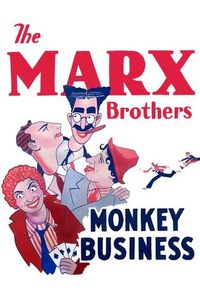
    (On DVD, August 2021) I’m predisposed to like Marx Brothers films, especially their more anarchic Paramount period before they got hired and steamrolled by MGM. Monkey Business is their third film — their first shot in Hollywood rather than in New York City, their first original script rather than a collection of vaudeville routines, and their first without Margaret Dumond (sorely missed). Somewhat awkwardly sandwiched between Animal Crackers and Horse Feathers, it doesn’t quite have the memorable sequences from other Marx Bros films of the period. Oh, it’s funny enough — and it begins on a very recognizably 1930s setting, which is to say on an ocean liner crossing the Atlantic to the States. Subsequent bits of business (after the brothers are identified as stowaways by the ship’s crew) involve mobsters and saving a girl. Zeppo plays the romantic lead, Groucho talks smart, Chico talks fast and Harpo doesn’t talk. Some of the usual setpieces are there (Groucho insulting an older woman, Harpo harping, etc.) but again it’s hard to find highlights. The Maurice Chevalier imitation scene is distinctive and drags on too long (although it remains an intriguing glimpse at the stature of Chevalier back then.), which is a common failing of many other scenes. Oh, it’s fun enough and there’s enough for Marx fans to see. It’s also far more overly comic than the MGM films. But compared to its immediate predecessors and successors, Monkey Business feels a bit flat, undercooked and easy — although what’s underwhelming by Marx Brothers’ standards is still quite funny compared to other films of the time.

  • Over the Top (1987)

    Over the Top (1987)

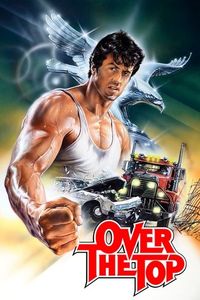
    (On DVD, August 2021) For those of you trying to differentiate one 1980s Sylvester Stallone film from another, Over the Top is the one in which he’s a truck driver who reunites with his snotty military academy-educated son and then goes on to win an arm-wrestling tournament. Alas, there isn’t much that’s over the top in Over the Top: it’s a crash between two separate formulas (reconciliation, plus a sports tournament) that plays things incredibly safe. Of course, it’s partially written by Stallone and directed by Menahem Golan — neither of whom are known for anything but playing to the crowd. Directed in a straightforward way (except for some behind-the-scenes footage of the arm-wrestlers echoing more modern reality-TV conventions), Over the Top is wholly unsurprising. I suppose that the film does have some capsule charm in aping mid-1980s trucking and arm-wrestling conventions complete with footage from authentic arm-wrestlers of the era, but that’s really not enough to make Over the Top in any way distinctive. Even among other Stallone films of the time, it takes a distant place back, given how it appeared between the far more, er, over-the-top Cobra and Tango & Cash.

  • An American Tail (1986)

    An American Tail (1986)

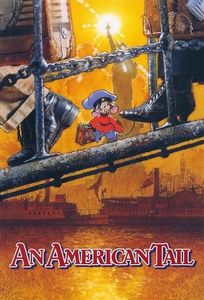
    (On DVD, August 2021) It takes a certain audacity to recast the American immigrant experience mythology in the mould of an animated kid’s film. On another level, it does make some sense — Co-conceived by Steven Spielberg and animation upstart Don Bluth (who was explicitly taking on Disney), you can see the strong narrative threads aimed at the younger set — chiefly being separated from one’s family in a strange land. But then again you have pro-American criticism of Soviet occupation and antisemitism, many Jewish cultural references, call-backs to the massive immigration of European refugees and plenty of other things that are best appreciated by an adult audience. The result is simultaneously dark and cute, with mice fighting against cats, raising a golem robot along the way. Also songs, even though “There are no cats in America” sounds a lot like West Side Story’s “America.” There are also strong parallels with the Maus graphic novel for the literate set, although the metaphor is not quite so fully realized in the film. Still, the result isn’t too bad — while the proliferation of low-budget sequels (none of them involving Spielberg or Bluth) has retrospectively tarnished the series’ original, An American Tail does hold up rather nicely today, although it’s recommended to older audiences than usual for that kind of film.

  • Psycho II (1983)

    Psycho II (1983)

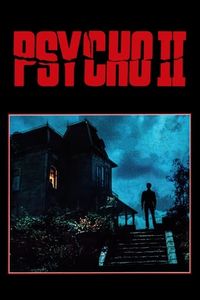
    (On DVD, August 2021) Considering that Psycho II was a sequel released twenty-two years after the nigh-untouchable Hitchcock original, considering that it was made at the end of the slasher boom of the early 1980s, considering that horror sequels at the time were at best uninspired rethreads, it’s perfectly understandable not to expect too much out of the result. It may also help explain why the sequel is far more interesting than expected. As it begins, even the large time-skip between the first film and its sequel is an integral part of the plot: Norman Bates (played by Anthony Perkins looking as if he has barely aged during the interim) is released from prison after purging a lengthy sentence and demonstrating good behaviour. His release is not well-received at all by the families of the victims, and yet he goes back home to an eerie house and a decrepit motel. A few scenes later, it becomes clear that some characters have a vested interest in flipping the protagonist over the edge into homicidal mania, even as he resists and reminds himself that he’s a reformed man. It’s that kind of somewhat unusual plotting dynamic that raises Psycho II over the morass of slashers whose popularity was waning at the time. The filmmakers were able to go beyond just offering a rethread of the original, and staked out their own territory, interesting both as a sequel but also as variation on a subgenre where you actually have some emotional stake in the protagonist’s moral struggle. (And I’m skipping over some of the wilder third-act revelations, not strictly necessary but also interesting in their own right.)  It helps that Perkins remains a likable boyish actor — you want him to avoid murdering anyone else, even as the logic of the genre clearly leads somewhere else, including a rather great final image. I expected the worst and got a nice surprise — I’m still not a fan of slasher, but Psycho II is more ambitious than the vast majority of them, and does not completely dishonour its lineage.

  • Far and Away (1992)

    Far and Away (1992)

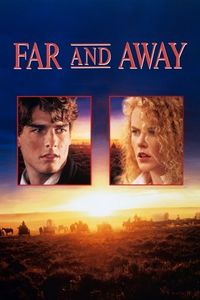
    (In French, On Cable TV, August 2021) There’s something ever so slightly… off in Far and Away. Oh, the building blocks of the film are strong: The Irish immigrant experience as seen from a belligerently romantic couple made of a plucky lad and an upper-class woman, climaxing in the very cinematic Oklahoma land rush. It’s a throwback to a successful Hollywood formula, a good framework on which to hang a straightforward narrative and strong visuals. But in practice, as handled by director Ron Howard and co-starring Tom Cruise and Nicole Kidman, Far and Away ends up feeling derivative and disjointed, a pale copy of better epics. The humour is slightly too strong and overpowering, with the romance displacing potentially more interesting material. It still works — Howard is an efficient director, Kidman looks magnificent, and I haven’t yet seen an Oklahoma land rush sequence that I haven’t liked yet. But the lavish recreation is undermined by a then-contemporary take that is now starting to sound dated. Watching the film in French fortunately spared me from the apparently strange accents of the original, but otherwise couldn’t quite fix other nagging issues with Far and Away.

  • The Spy Who Came in from the Cold (1965)

    The Spy Who Came in from the Cold (1965)

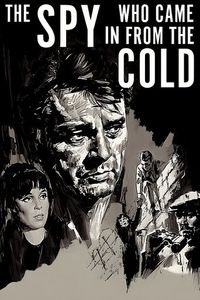
    (Criterion Streaming, August 2021) I used to dislike John Le Carré’s stories when I was younger, but I’m apparently somehow growing up because I have enjoyed his movie adaptations a lot more in the past decade or so, and The Spy Who Came in from the Cold goes join Tinker Tailor Soldier Spy and The Constant Gardener in the big list of great spy movies. Newcomers should know that Le Carré isn’t writing James Bond escapism — his perspective on the spy business (as a former practitioner) is jaded, wary, even exasperated. He often talks contemptuously about the “little grey men” of the secret service as bureaucrats with delusions of heroism in a sordid business that means far less than everyone thinks. This world-weariness is on full display in The Spy Who Came in from the Cold, a film adapted from his breakout novel that now plays as a brutish throwback to the Cold War era. Richard Burton is utterly convincing as a rumpled alcoholic asked to play double agent in “defecting” to the Soviets. That would be a fascinating enough premise, but it turns out that Le Carré has far more devious twists up his sleeves, and as the film quietly picks up momentum, it all builds to a great (if grim) conclusion. Call it spy fiction for adults, maybe: there’s not a single power fantasy in sight, except perhaps for the protagonist’s last remaining delusions. Martin Ritt directs with a matter-of-fact tone well-suited to the film, with sober black-and-white cinematography that’s quite appropriate to the subject matter. It’s for everyone — indeed, you have to remember that The Spy Who Came in from the Cold came out at the height of Bondmania, with four Bond films in four years to launch the series and plenty of imitators looking to cash in on the trend. This offered a welcome counter-argument, and it has aged remarkably well as a period piece. Burton even delivers, three-quarter into the film, a remarkable rant on “seedy squalid bastards” that still acts as a powerful warning against exactly the kind of spy fiction that we still see too often.

  • Cruising (1980)

    Cruising (1980)

    (Criterion Streaming, August 2021) In Hollywood history, Cruising is notable for its contribution to queer cinema… and that’s not often meant as a compliment. Featuring Al Pacino as a (heterosexual) policeman asked to go undercover in New York City’s gay community to draw out a serial killer, the film created a storm of controversy upon release. The then-risqué subject matter was attacked as cheap exploitation by conservative pundits, but gay commentators also saw it as a terrible representation of NYC’s gay community as being dominated by BDSM enthusiasts. Cruising’s most admirable legacy, in fact, may have been to lead indirectly to the creation of The Celluloid Closet in an attempt to address Hollywood’s troubling legacy in portraying homosexuality on-screen. I’m clearly not well-placed to discuss the topic, but even to me, Cruising is an exemplary lesson in showing the importance of diversity. In-universe, it’s a lurid thriller set in motion largely because the NYPD doesn’t have what it takes to effectively investigate a serial killer preying in a specific community. (You can ask anyone in Toronto about a real-world tragic example of this.)  Out-universe, there are clear signs that the film suffers from being made by outsiders looking in: The BDSM leather aspect goes from a potential visual leitmotif to being central to the way the community is portrayed, and this freak-show aspect carries over to plotting that gets very confused the moment it could explore more interesting issues. As Cruising gets closer to its conclusion, it seems to go into a gay panic of its own and passes off ambiguity as a climax. (Have a look at this rather terrific analysis for more.)  A 2021+ remake of Cruising from gay filmmakers would be far more satisfying because it would be able to be more honest and go beyond the “wow, look at that!” freak-show factor in order to get to what’s interesting about the story. Right now, though, that 1980 version of Cruising is more interesting as an object of debate than as a thriller in its own right: Even writer-director William Friedkin can’t paper over the wrongness of its conception with his customary better-than-average execution.