Author: Christian Sauvé

  • Bud Abbott and Lou Costello in Hollywood (1945)

    Bud Abbott and Lou Costello in Hollywood (1945)

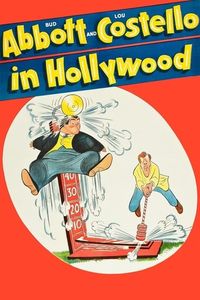
    (On Cable TV, August 2021) You know exactly what you’re going to get with an Abbott and Costello film, and so Bud Abbott and Lou Costello in Hollywood delivers on what fans are looking for. I, myself, was watching because I’m a sucker for everything Hollywood does about Hollywood — not necessarily because I’m a fan of the comedy duo. Although the result is definitely light on Hollywood satire, it’s very much a showcase for the comic pair. (Indeed, it’s the first of many of their movies to have their names in the title.)  The premise has something to do with barbers stumbling into becoming talent agents, but much of the film is about stringing together comic routines. It works, but as someone who was watching to get a sense of how Hollywood worked back then (even as a caricature), I’m left disappointed. Sure, there’s a big sequence about one of the duo being used as a prop for a stunt sequence… and yet, the number of celebrity cameos is low, with the film regularly goes for gags that could have taken place anywhere but in Hollywood. I probably would have enjoyed it more if I was a bigger fan of the duo — but maybe it’ll make more sense once I start digging into their filmography.
  • The Notorious Landlady (1962)

    The Notorious Landlady (1962)

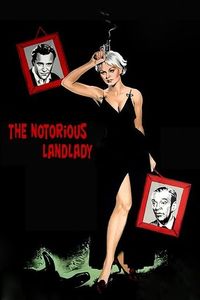
    (On Cable TV, August 2021) Sometimes, a good cast is all you really need. While the script for The Notorious Landlady is decent enough, it’s the presence of Kim Novak, Jack Lemmon and Fred Astaire (in a non-dancing, non-singing role) that really makes the film a joy to watch. It begins as an American diplomat newly arrived in London goes flat-hunting and finds a rather nice place at a good price — although there’s clearly something off in the way the neighbours treat the landlady. With Novak as the landlady, Lemmon as the diplomat and Astaire as the diplomat’s superior, the cast is well-aligned to the script’s blend of comedy with just a bit of suspense: what has the landlady done, and is it likely to happen again? Disappointing shot in black-and-white at a time when that kind of light-hearted film had no reason not to be in colour (indeed, director Richard Quine’s films prior and following this one were both comedies shot in colour), The Notorious Landlady does make the most out of its cast playing roles well-suited to them. Lemmon is instantly likable as a do-gooder diplomat, while Novak is clearly not the monster that her neighbours whisper about, while Astaire is funny on his own as a senior official stuck with a very visible situation he doesn’t want. (He has the film’s best quote, one that I can see myself using at the office: “Gridley, you will learn that the higher your position, the more mistakes you’re allowed. In fact, if you make enough of them, it’s considered your style.”) The script, co-written by future-comedy-superstar director Blake Edwards, blends a fair amount of comedy, romance and criminal suspense. The Notorious Landlady is a solid film, not something that ranks as a classic, but something fit to be appreciated as a decent unassuming studio product, aimed to entertain. (I suspect that the film would be more widely appreciated had it been shot in colour, but that’s something else.)

  • The Taming of the Shrew (1967)

    The Taming of the Shrew (1967)

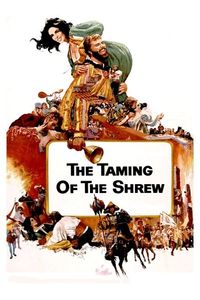
    (On Cable TV, August 2021) I’m reliably not the best audience for Shakespeare movie adaptations, and The Taming of the Shrew is an even rockier prospect given its theme of female subjugation (although the more you look, the less this stays true). But there are a few good times to be had in the 1968 Franco Zeffirelli adaptation of it, largely because it happens to feature Elizabeth Taylor and Richard Burton in the lead roles. At the time, both were the best-known couple on the planet: both exceptional actors, having begun their relationship in scandalous circumstances and often playing opposite each other in films. In here, Burton plays an uncultured lord who comes to town and sets off to tame the headstrong woman played by Taylor. Perhaps the best moments of the film are those early ones when we see the extent of her uncontrollable nature, furiously berating those around her and throwing things. Despite the doubly-dated nature of a Shakespearian play executed in mid-1960s style, there’s an unnerving contemporary quality to the loutish discourse among the male characters as they discuss their designs on the female characters. It builds up to a conclusion that plays ironically, with a speech on submissiveness undermined by a dramatic exit and a chase. Director Zeffirelli keeps things generally accessible for modern audiences, but it’s really Burton and Taylor (plus Michael York in a supporting role) who get our interest.

  • The Curse of Audrey Earnshaw (2020)

    The Curse of Audrey Earnshaw (2020)

    (On Cable TV, August 2021) I’m sensing a budding horror subgenre of historical witchcraft, building off the success of The VVitch and the evergreen low-budget fascination for small communities in rural settings. Even in this subgenre, The Curse of Audrey Earnshaw clearly aims for atmosphere over concision or plot — taking place in a suitably out-of-time 1970s small village that could be anywhere in North America, untouched by period details, it tells us about a mother, a daughter, and accusations of witchcraft. After a very leisurely setup, it eventually moves in toward shocks, gore and horror in time for a more entertaining finale. Writer-director Thomas Robert Lee is clearly working toward something there, and it’s perhaps inevitable that a segment of the audience may be more frustrated than charmed by the results. Even at barely more than 90 minutes, The Curse of Audrey Earnshaw feels long, oppressive and repetitive. Still, it’s an honourable effort: the atmosphere is cleverly built and it avoids cheap genre pitfalls by a wide margin. The failings of the film are closer to those of a moody and overly florid period drama than most horror films, and that’s telling in itself.

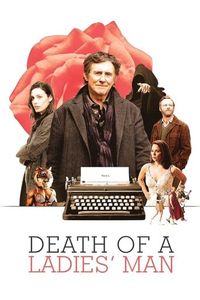
  • Death of a Ladies’ Man (2020)

    Death of a Ladies’ Man (2020)

    (On Cable TV, August 2021) There are many, many reasons why Death of a Ladies’ Man should be a terrible film. Even the premise (a middle-aged man learns he’s got cancer and rekindles his joy for life by hooking up with a girl half his age) is trite and borderline obnoxious, with not a single cliché left unturned. I mean: Gabriel Byrne plays an Eng. Lit. college professor, for goodness’ sake — is there a demographic group whose middle-age anguish has been more excruciatingly described than white male college professors? The more you describe the film on purely narrative grounds, the less interesting it becomes — all the way to the ironic finale in which, having regained a lust for living, our protagonist ironically gets — aaaah, I don’t even need to spill this because you know where it’s going. But it’s often in the details that Death of a Ladies’ Man gets more interesting. Because (brain tumour being involved) our protagonist doesn’t quite have a full grasp on reality any more. When his dead father shows up for a chat, it’s not magical realism as much as the writer literalizing his inner dialogue. Various other fantasy sequences pepper the film, all the way to a rather great shot of dragons flying over downtown Montréal. Because, oh yes, this is not just a Canadian film, but an Anglo-Montréalais film to its core. You’d swear it comes from the Mordecai Richler factory, so credibly does it portray Montréal’s bilingual peculiarities to the sound of a Leonard Cohen-dominant soundtrack. Accordingly, this Canadian/Irish production does lose quite a bit of steam one it flies off to Ireland for a lush green retreat. (This is also the point where the woman-half-his-age enters the story.)  It’s also not surprising that the film is much better when it’s in its protagonist’s head rather than the underdeveloped supporting cast. Considering those issues, it’s a wonder that Death of a Ladies’ Man does actually stay compelling to the end: Byrne keeps it together, and the heights of the fantasy sequences are strong enough to propel the film over its lulls. I won’t give an unqualified recommendation to the result (as another reviewer has mentioned, this film could have been far more interesting had it featured a female lead), but it’s just good enough to avoid a lack of interest.

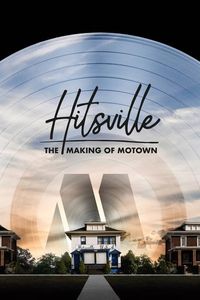
  • Hitsville: The Making of Motown (2019)

    Hitsville: The Making of Motown (2019)

    (On Cable TV, August 2021) There’s no need to introduce Motown or explain the epochal contribution that the label made to American pop music — even fifty years later, some of their songs are instantly recognizable by everyone. What Hitsville: The Making of Motown does is take us back to “the Detroit years” of Motown, before it moved to Los Angeles and lost its distinctive identity. Detroit-based Motown was a family affair — talent being gradually developed, with a strong core group that defined Motown’s musical identity and relied on in-house musicians to produce hit after hit. Charmingly located in a residential neighbourhood (where a museum now stands — and you can be sure it’s on my list of things to do in Detroit), Motown was a local business and a tangled web of relationships, with friends marrying each other along the way. Motown could only come from Detroit, as the city’s factory-line ethos made its way to producing hit records. As a documentary, Hitsville effectively mixes interviews with relatively sophisticated animation and infographics to make its points, adding a big dose of terrific musical snippets along the way. It’s a wonder that so many of the principals are still around sixty years later to talk about that 1958–1970s era (and in one case recall the company song!), with some stunning period footage to provide additional material. The social aspect of Motown, as a black-owned company churning out massive pop hits, is certainly not forgotten along the way, even if the reward for that success was to move to Los Angeles, lose a few stars, and dilute the peak Motown identity. I strongly suspect that Hitsville doesn’t quite completely portray the truth about the era — it’s self-congratulatory, unwilling to poke at some grey zones (such as the turmoil that followed the move to L.A., or the growing political engagement of its stars despite the record executive’s wishes) and sings from the same music sheet. Still, the charming nature of the narrative is compelling and it’s impossible to highlight just how good the music is here — complete with a look at how some anthemic pieces were put together. Hitsville may or may not be the entire truth, but it’s a great watch.

  • Just Add Romance (2019)

    Just Add Romance (2019)

    (On TV, August 2021) I’ll give a shot to any Hallmark romantic comedy if the premise has a good hook, and food-related premises are one of the most reliable ways to get me to tune in. In Just Add Romance, we find ourselves in a fantasy world of a cooking competition in which two ex-flames find each other again, and encounter various obstacles on their way to a happy ending. Narratively, there isn’t much going on here: true to form, the film is intensely predictable from the get-go, two leads are already nuzzling each other by mid-movie and the only suspense during the third act is to wonder which contrived crisis will temporarily emerge to extend the film’s running time. You mean only one of them can win the first prize required to open a restaurant?! I hope they eventually realize they can collaborate as a couple! Disappointingly enough, the cooking aspect of Just Add Romance is treated as an afterthought — there isn’t much cooking here, and the cooking competition runs on clichés almost all the way through. The leads are likable without being particularly memorable (another Hallmark convention finely upheld) and neither the writing nor Terry Ingram’s direction are anything special. It’s not much in terms of a movie, but it’s certainly watchable while doing other things. Miss five minutes? Not a problem — you don’t even have to rewind to see what you’ve missed. A film menu can include empty calories.

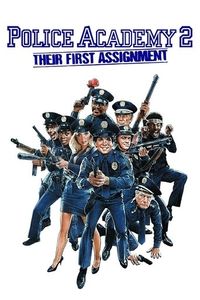
  • Police Academy 2: Their First Assignment (1985)

    Police Academy 2: Their First Assignment (1985)

    (Second or Third Viewing, On DVD, August 2021) There was a time (back when I was, like, nine) when I thought the Police Academy series was one of the best things in movies, only second to Star Wars. Well, that time is long gone, and watching Police Academy 2: Their First Assignment is now sometimes an exercise in teeth-gritting exasperation. The first film in the series still works, and if my memories don’t betray me too much, the fourth one has its moments. But this sequel has a harder time getting any respect. Loosely picking up after the training of the first film, this follow-up sees the motley crew of ridiculous police officers on their first assignment in a crime-ridden area of the city. Much of the cast is back alongside Steve Guttenberg, with some significant introductions, such as Bobcat Goldthwait in the role of a gang leader who would later become part of the police crew. The story is a loose frame on which to let all of the actors play their comic shtick. Some of it is more successful — anything with David Graf’s Tackleberry is usually fun, for instance, whereas anything to do with Art Metrano’s Mauser isn’t. What’s perhaps most frustrating about the result is not necessarily the juvenile repetitiveness of the jokes as much as uneven levels of absurdity. The good absurd sequences are funny (such as the various security systems deployed in the opening sequence, or the “disrobing guns” scene), but they come sandwiched between long stretches of very mild jokes. Coupled with the generally low-brow humour level, it doesn’t completely work, and leaves viewers asking for more. Now let’s see if my memories of the third instalment are similarly destroyed…

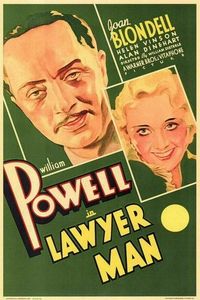
  • Lawyer Man (1932)

    Lawyer Man (1932)

    (On Cable TV, August 2021) Anyone interested in William Powell’s career should have a look at Lawyer Man: an early-career effort, it first presents him at odds with his usual screen persona, only to gradually have it snap in focus by the end of the film. We first encounter Powell as a modest but ambitious lawyer who hits the big time with a landmark case, and gets hooked up with high society elements both good and bad. When his integrity leads him to rebuff offers from semi-criminal bosses, his fall is rapid. But wait, because there’s an entire third act to follow, and that’s when we get our typical Powell: Confident, eloquent, righteous and always in control. That’s the Powell that audiences were expecting! Calling Lawyer Man an origin story for Powell’s screen persona is ignoring many previous films making good use of his talents — it’s best to see this as a modest departure from his persona only to reaffirm it by the end of the film. It all works out rather well despite the technical clunkiness of this early-sound era film. At 68 minutes, it doesn’t have a lot of time to spend on non-essentials (although the horseshoe on the wall is a nice touch), so expect the narrative pacing to be at a breakneck speed. I liked it, although it’s hard to say whether I liked the film, or I just like Powell in general — suffice to say that Layer Man is still watchable without effort, and it does have a good satisfying character arc for the lead.

  • Their Big Moment (1934)

    Their Big Moment (1934)

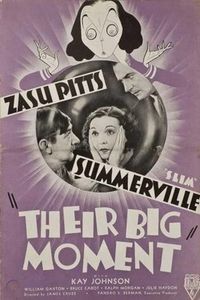
    (On Cable TV, August 2021) We’re getting deep in the weeds of 1930s cinema with Their Big Moment, a 68 minute (!) mystery involving séances, revelations from the afterlife, a comic relief turn from Zasu Pitts (in a film not generally meant to be funny) and some murder shenanigans. It’s not great art — you can feel the perfunctory effort in how the film blends its elements, but there’s a charming period atmosphere to the way they take their séances seriously, how Pitts is being used for a few laughs (she’s really a supporting player here) and how the 1930s archetype of amateur sleuths is deployed without amazement or irony. Their Big Moment is certainly watchable, although not worth obsessing over.

  • The Man with One Red Shoe (1985)

    The Man with One Red Shoe (1985)

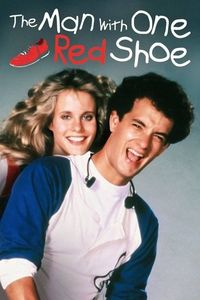
    (In French, On Cable TV, August 2021) It took me too long to realize it, but The Man with One Red Shoe is very much a remake of Le Grand Blond avec une chaussure noire, and for all of the good we may think of Tom Hanks in the lead role as a mild-mannered man thrust into spying intrigue through no fault of his own, he’s not quite Pierre Richard. Hanks is intensely likable, but he doesn’t have Richard’s manic goofiness nor his slapstick chops. Fortunately, the American version realizes that and dials back the physical comedy in favour of reaction shots whenever Hanks’ character finds himself in situations he’s ill-equipped to handle. The mid-1980s atmosphere is almost overpowering, taking place in a Washington, DC, demimonde of spies trying to one-up each other through the use of an unwitting stooge. Contrivances naturally run high in a film of that nature, with the void left by Richard’s performance felt most acutely in the film’s very mild humour. It’s not a terrible film, but it doesn’t quite reach the level of other Hanks comedies of the era. The period atmosphere of the film is getting better as time goes by, and young Hanks is always interesting to see the more you know about his later career. As a remake, The Man with One Red Shoe is disappointing—so don’t watch it too close to the original.

  • Illicit (1931)

    Illicit (1931)

    (On Cable TV, August 2021) I’m always a bit amazed at the way 1930s films, either pre-Code or post-Code in a comic mode, treated the so-called institution of marriage: People got married on a whim, divorced quickly and filled the in-between with bickering, adultery, cynicism and everything that movies then spent decades downplaying. Illicit isn’t all that different from other Pre-Code films, but the biting (if theatrical) dialogue is still mordant. Barbara Stanwyck’s first starring role gets quite a bit of attention considering the risqué subject matter: two long-time lovers seeing their relationship sour after finally marrying, and straying far apart before ultimately reconciling. At times venomously cynical about marriage, Illicit doesn’t quite hit all of the right notes, but it does match enough of them to still be eyebrow-raising even for Pre-Code fans. This being said, let’s not be too enthusiastic about it: It’s not that scandalous (as per him having an affair and not her), and the conclusion seems remarkably unconvincing in its sudden espousal of traditional values. Coming from the early-1930s, the staging is sadly too theatrical, and the subject matter suffers the sad fate of being daring, but not daring enough for us viewers ninety years later. Still, Illicit can be worth a watch for a frank treatment of shifting social more before the Production Code infantilized American cinema.

  • Johnny Eager (1941)

    Johnny Eager (1941)

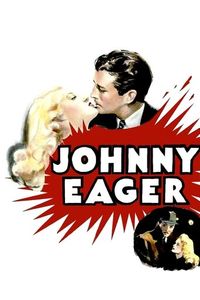
    (On Cable TV, August 2021) Not quite film noir yet but more than gangster films of the 1930s, Johnny Eager does begin on a strong note, with a charming ex-con managing to keep the authorities convinced that he’s back on the straight path, even as he’s back to controlling a good chunk of the metropolitan underground—and being utterly ruthless in doing so. Things get far more twisted when he gets an occasion to seduce the daughter of an influential district attorney. The plotting gets to be a lot of fun after that, with romance, crime and thrills thrown into the mix. Still, the highlight here is Van Heflin in an Oscar-winning performance as an alcoholic intellectual with florid dialogue, the only person able to talk back to the protagonist and get away with it. Robert Taylor is also quite good as Johnny Eager himself, both charming and homicidal. Meanwhile, Lana Turner does her best at, well, being Lana Turner. As a criminal melodrama, Johnny Eager isn’t particularly respectable, but it moves quickly, features a few good performances, and wraps everything up in some well-crafted irony.

  • Latin Lovers (1953)

    Latin Lovers (1953)

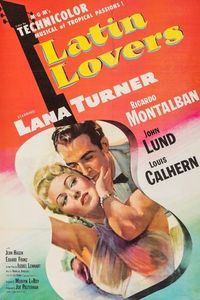
    (On Cable TV, August 2021) Watching older films is a minefield if you’re particularly sensitive to social equality — as a straight white male, it’s a privilege to watch those movies describe a world built by (and often for) people like me, but even I have my limits and Latin Lovers ends on a note fit to give dry heaves to everyone. And yet, at the very same time, you have actors like Lana Turner and Ricardo Montalban being as charming as they can be, taking much of the edge off but not entirely. The plot, as thin as it is, has our wealthy heroine (an heiress) doubting she can attract men uninterested in anything other than her wealth, which explains her dating an even richer man. Her courtship is humdrum, so it’s no surprise if a trip to Brazil means her meeting and falling for a dashing Latin lover (Montalban, in fine form), at which point the question of money comes back to the forefront. After a few shenanigans, her solution is to give all the money away… to him. Now, it’s possible that this is a wry commentary on how wealth distorts love — after all, the script is from Isobel Lennart, who had (despite an early death) a long list of very good and not-so-misogynistic scripts to her credit. Maybe there’s a satirical intention here that I’ve missed. Maybe the script is simple enough and frothy enough that it invites excessive attention to this flaw. Maybe it’s a romance and I should worry about it all that much. But for all of the colourful pageantry of the film’s trip to Brazil and the romantic comedy of the women, I found Latin Lovers empty until the moment it becomes unpleasant, and then merely unpleasant because that’s how it ends.

  • The Conqueror (1956)

    The Conqueror (1956)

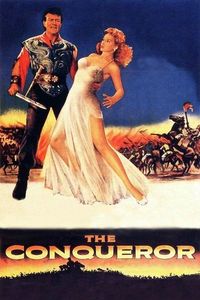
    (On Cable TV, August 2021) Some films have become infamous for all the wrong reasons, and if you polled various cinephiles for their examples of worst miscasting, The Conqueror’s inexplicable decision to hire none other than John Wayne to play Genghis Khan would still be ranked near the top of the list even more than half a century later. It’s not just whiter-than-white Wayne playing a Mongol warrior, it’s everything else in the film seemingly bowing to Wayne’s refusal to adapt anything of his habits to the requirements of the role. Simply put, Wayne shows up here like he’s in a western (something facilitated by much of the film being horseback riding and fighting barbarian tribes) and doesn’t change a single thing about his approach. The film feels stuck with him with no way out — florid dialogue is pronounced with a pronounced American accent and the same nasal intonation that Wayne uses in other cowboy roles. Even the film feels afraid to truly show what it’s about: far too many sequences seem taken straight from a western, almost entirely negating the attempt at Mongolian drama. But Wayne remains the weakest link in The Conqueror — playing a grander-than-life historical figure not with theatrical grandeur but with aw-shucks cowboy stoicism, woefully ill-equipped for the requirements of the role. As someone who can’t stand Wayne (and that’s putting it mildly), I’m surprisingly gleeful at seeing him stray outside the limits of his acting talent, and being derided for it: it’s not because you’re a star that you’re a good actor and there comes a point where talent and wit are about recognizing your own limits. Otherwise, it plays world-wide on screens big enough for generations to see.