Reviews

  • Dead End (1937)

    Dead End (1937)

    (On Cable TV, July 2020) As much as I’d like to be more positive about Dead End, it just ends up being a fairly dull New York crime drama. It does star an ascendant Humphrey Bogart in one of the 1930s roles most suited to his later persona (albeit as a villain), plus a leading role for Joel McCrae. The plot is perhaps a bit more sedate than you could expect: it’s based on a theatrical play, spends a lot of time on social issues class commentary on gentrification and doesn’t quite capitalize on its assets—or maybe just isn’t interested in telling anything but a drama opposing high class characters and low street urchins. Director William Wyler does have a few impressive camera moves, especially in the film’s opening moments. Alas, that’s not enough to make Dead End any more distinctive—the plot is uninvolving, and even Bogart’s supporting turn can’t save it completely.

  • Paris When It Sizzles (1964)

    Paris When It Sizzles (1964)

    (On Cable TV, July 2020) It would have been enough to put together a romantic comedy starring Audrey Hepburn and William Holden, set in Paris, and have him play a burnt-out writer on a deadline being helped by a winsome assistant. It’s not an original premise, yet it’s more than enough to be fun. But Paris When It Sizzles goes quite a bit further into charming ridiculousness, by presenting the result of their collaboration (a thriller called The Girl Who Stole the Eiffel Tower) on-screen with them playing the main characters, and throwing in not just plenty of Hollywood in-jokes, but cameos from notables such as Tony Curtis, Mel Ferrer, Marlene Dietrich and Frank Sinatra. The romantic narrative is predictable (would you believe the writer falls in love with his assistant?) but it’s the very funny metafictional game that holds audience interest as the reality of Paris When It Sizzles keeps going back and forth between the writers’ struggles and the imagined movie. Hepburn is in her element in a romantic comedy—and once again back in Paris. Fans will note one scene in which she has her long hair down—wow. Meanwhile, Holden is quite good as well—he looks like Tom Hanks at times, and like an authentic action hero at others. While many of the references can only be appreciated by Classic Hollywood fans, Paris When it Sizzles has aged well with its metafictional conceit and main stars. It’s a lot of fun even if the ending doesn’t provide complete closure. (Am I the only one who likes it when protagonists meet their deadlines?) But then again, that may be the point—the film is intent on making audiences happy even when it doesn’t make sense. As a romantic comedy set in Paris, how could it be otherwise?

  • Kurenai no buta [Porco Rosso aka The Crimson Pig] (1992)

    Kurenai no buta [Porco Rosso aka The Crimson Pig] (1992)

    (Netflix Streaming, July 2020) Only writer-director Hayao Miyazaki could get away with the strange blend of elements to be found in Porco Rosso. After all, you wouldn’t necessarily expect animation to take on mid-1920s Italy as a setting, nor to complicate things even further by featuring seaplanes, air pirates, the lingering weight of war a few years after an armistice, a character aspiring to Hollywood stardom, a rich heiress, and a hero magically transformed from pilot to anthropomorphic pig. It’s a lot to take in, but much of the first half of the film is delightful considering how it just keeps throwing elements of its bizarre imagined universe at the viewer. There’s a lot of romance here for early aviation, an affection for its Italian characters, twisted loyalties (as the protagonist is pursued both by pirates and the US government), a loyal female sidekick and a host of other characters. It’s difficult to describe and it sounds utterly ridiculous on paper, but it works well once the film gets going. It all comes down to an aerial race, and then a bloody fist-fight in thigh-deep water. There is considerable and unlikely charm to Porco Rosso, far more so than the sum of its components. But that’s part of the Miyazaki magic, creating entirely fresh universes at each film in order to tell us a story that escapes neat patterns and genre distinctions. Liking it takes a backseat to being very impressed by it.

  • Le cercle rouge [The Red Circle] (1970)

    Le cercle rouge [The Red Circle] (1970)

    (YouTube Streaming, July 2020) Oops. Oh, I can recognize that Le Cercle Rouge is a good movie. Directed with clinical precision by Jean-Pierre Melville, it’s about a robbery put together by a group of men, one of them played with typical cool by Alain Delon. It’s about a criminal on the run, pursued by a dogged police officer. It’s about the mixture of existential musings and criminal genre plotting so typical of Melville. It’s about 1970 Paris, all leading to a very long robbery sequence executed without dialogue or music. The ending is suitably punishing for the criminals. But here’s the unfortunate thing: I have been seeing a lot of black-and-white heist movies lately, many of them with groups of criminals coming together for an extended robbery sequence shot without music or dialogue, and not only are they blurring together, they’re making it harder to keep my interest while watching Le cercle rouge. Haven’t I seen this before? Don’t I have a really good idea of what’s going to happen? Unfortunate, but perhaps inevitable given that other of those other films was the very similar Rififi, which obviously influenced this one. I’ll give Le cercle rouge a cautious recommendation (albeit tempered by my impatience with Melville’s usual languid pacing and existential excesses), and give it a while before I try watching it again.

  • The River Wild (1994)

    The River Wild (1994)

    (On TV, July 2020) As much as I’m as surprised as anyone else to see the Grande Dame of drama movies Meryl Streep have a go at an action movie in The River Wild, I can’t help but imagine her sneaking into her home theatre late at night and spinning this one. “Look at those toned shoulders,” she must be thinking, “Look at that fierce expression, that scowl, those squinting eyes. That’s right—I can kick ass as well as any other actress.” And then she puts it away, satisfied that she managed one action movie at her physical prime, just to show everyone else that she could. The River Wild is not that good a movie—it’s equally predictable and far-fetched, concerned as it is with a family being pursued down a fast-running river by a pair of robbers eager to escape justice and leave no witnesses behind them. Streep plays the mama bear of the family, experienced in white-water rafting and ready to lead the way during their family vacation. There’s some perfunctory business about her husband (David Strathairn, similarly managing a transition from a refined screen persona to an action hero) being distant and her initially flirting with the escape criminals. It does help that those criminals are played with prime-era Kevin Bacon and an early role for John C. Reilly as a none-too-bright sidekick. Still, much of The River Wild’s impact comes from the terrific white-water rafting sequences, still impressive twenty-five years later due to in-your-face camera shots and tight editing thanks to then-ascendant director Curtis Hanson. There are a few white-knuckle thrills along the way, and a gripping back-and-forth between family and criminals. It’s a decent-enough thriller, made all the more remarkable through some clever casting.

  • Xi you ji zhi nü er guo [The Monkey King 3] (2018)

    Xi you ji zhi nü er guo [The Monkey King 3] (2018)

    (On TV, July 2020) Considering that I’m coming to The Monkey King 3 without having seen the first two films, take this review with a grain of salt—or at least filter it through my overlapping ignorance of the series, the Journey to the West mythology on which it’s based, and the inevitable cultural specifics of a Chinese film. There are a few good things here—as a high-fantasy adventure set in mythological times, it’s executed with a heavy emphasis on CGI. Visually, at least, there are a few things to see—even if the character design (carried over from previous films, I’m guessing) may strike many as grotesque. But the film as a whole has some serious tonal problems, with a comic first section that turns far more uncomfortable midway through as a character decides to abort other characters’ sudden pregnancies (it’s all unplanned magical stuff, but still: yikes!) After that, the film gets weirder, slower, far less lighthearted and never quite recovers the pacing of its first half. I haven’t even mentioned the incongruous musical moment. Maybe The Money King 3 will make more sense if I ever see the first two; maybe another look will smooth out some of those atonal incongruities, or maybe I will not revisit the series at all.

  • Barbary Coast (1935)

    Barbary Coast (1935)

    (On Cable TV, July 2020) It feels weird to talk about Barbary Coast as a western, considering that it takes place in the largely urban setting of 1850s San Francisco. But it does feature many elements of the western thanks to the gold rush that serves as its backdrop. There’s an air of a wild frontier to it all, as much of the action initially takes place in a saloon of sorts, then runs out for life away from the city in a gold mining camp. So, let’s call this an “urban western” and try not to think too much about the contradiction. As such, it’s not bad: this two-fisted thriller shows life in San Francisco during the gold rush, with a wealthy villain (Edward G. Robinson) running the town while everyone else cowers. Director Howard Hawks brings his characteristic touch to the result (not as refined as his later films, but still effective) and the whole thing is rather fun to watch even as it deals in clichés and rough plotting. While technically of the Production Code era, the script still has enough echoes of innuendos to stay interesting. Even if some of the characters can be cartoonish, Barbary Coast is still a convincing trip to a specific time and place. Watch it as a double feature with 1936’s San Francisco disaster film for a wild Hollywood dive into the city’s history.

  • Goosebumps 2: Haunted Halloween (2018)

    Goosebumps 2: Haunted Halloween (2018)

    (On Cable TV, July 2020) It’s amusing to see how Jack Black has carved himself a niche in children’s fantasy film over the past few years, and he’s back as no less than R. L. Stine in Goosebumps 2: Haunted Halloween. It’s a small, late role for him but it does highlight the self-referential nature of this horror-lite film for young kids. Here, a Goosebump book is opened and brings to life all of the monsters of the franchise in a small town on Halloween night. This is not something made to be scary—it’s content simply remixing Halloween icons for a short 90-minute spooky time. The inclusion of Nikola Tesla is amusing, much of the film taking place at the Wardenclyffe Tower he designed and built. Also worth a mention is a bit of fun on how fiction can turn to real life and vice versa. Despite this, Haunted Halloween is not bad but not good either: it’s just inert, and the kind of stuff the kids can watch for thrills, while the adults keep their own harder horror films for themselves.

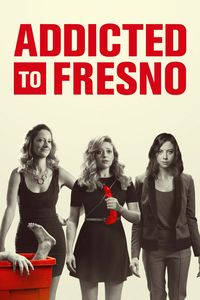
  • Addicted to Fresno (2015)

    Addicted to Fresno (2015)

    (On Cable TV, July 2020) The weirdest stuff pops up on cable channels once in a while, especially when focusing on those smaller movies without strong genre elements—it’s not rare to see a direct-to-video movie on steady rotation years later, as it’s rediscovered by a programming director looking for more unusual titles. So it is that Addicted to Fresno made it on Canadian Cable TV channels this month, featuring a can’t-miss cast headlined by none other than Judy Greer and Natasha Lyonne. Any of those two would warrant a look as far as I’m concerned, but the two of them playing sisters in a dark comedy? Yes, I will definitely watch that. But the cast doesn’t stop there: With such notables as Aubrey Plaza, Ron Livingtone (playing a very Ron Livingtonesque role), Fred Armisen, Molly Shannon and a short but memorable turn by a then-lesser-known Kumail Nanjiani, it’s the cast that keeps on giving throughout the film. Greer and Lyonne are also interestingly cast against persona, with Lyonne as the cheerful level-headed one and Greer as the flighty unstable sister. Addicted to Fresno spares no moment in establishing its raunchy (but fully clothed) brand of dark humour with the language alone earning the film’s R-Rating. But it’s fun, and seeing these comic actors bouncing against each other is fun as well. Director Jamie Babbit keeps things going in a straightforward fashion, and if the actors aren’t all up to the task (while I like Plaza a lot, her deadpan style can’t quite stretch to accommodate her character) there’s a good-natured sweetness that emerges from its initially irremediable characters right in time for the conclusion. Addicted to Fresno won’t set the world afire nor will it find a large audience—the humour and characters can be off-putting. But it’s a nice example of a little character-driven comedy and the ending does wrap things up nicely. Stay for the few outtakes at the end, including a reprise of Lyonne’s can’t miss “Cousin Itt” moment.

  • Coopers’ Camera aka Coopers’ Christmas (2008)

    Coopers’ Camera aka Coopers’ Christmas (2008)

    (On Cable TV, July 2020) Coming from the depths of the Canadian film back catalogue emerges Coopers’ Christmas, a surprising, moderately entertaining dark comedy. Here, sour Christmas humour meets the found-footage genre, as a “1985” Christmas is filmed with a “VHS” video-camera. (It’s clearly not, but that’s a good thing—the real thing would be unwatchable in SD.) The dysfunctional nature of the family gathering quickly becomes apparent, and so does the coarse sense of humour of the film in which even killing kids while drunk driving is a laugh line. Our characters are almost all spectacularly flawed, and those issues all come to the surface during a tense Christmas Eve. You have to have some innate misanthropy to appreciate the results, especially as the humour gets raunchier and weirder with mixed parentage and misgendered characters. The actors are all up for it, with special mention to Dave Foley for a comic performance that’s as exposed as it’s brave in some ways. Coopers’ Christmas is not for everyone, and the ending doesn’t quite pull everything together. Nonetheless, it’s not a bad entry in the dark humour Christmas genre, and it’s well worth dusting off once in a while—considering its Canadian nature and restrained distribution, you’ll be lucky to find anyone else who has seen it.

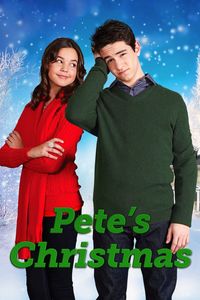
  • Pete’s Christmas (2013)

    Pete’s Christmas (2013)

    (On Cable TV, July 2020) Hallmark Christmas movies get a bad rep as repetitive repetitions of familiar clichés and empty platitudes, and I’m sure most would agree that we don’t need more movies repeating the premise of Groundhog Day. Maybe that explains why Pete’s Christmas ends up being a small pleasant surprise. As you may guess, the central premise is to have Christmas Day on repeat, seen from the perspective of an overlooked middle child teenager who, at least at first go, has the most terrible holiday anyone could ask for. Some vague supernatural shenanigans later, the loop begins. If you’ve seen Groundhog Day, the overall arc will feel intensely familiar: disbelief, understanding, random mischief, hedonism, then slow accretion of good actions to improve others’ lives, followed by the end of the loop. Then you combine it with the usual Christmas movie clichés—snow, food, song and family values—not to mention flat directing and low-budget production values. It shouldn’t work, but it does: even in its mechanistic repetitive fashion, Pete’s Christmas slowly builds charm and the amount of indulgence that it needs to run over a sometimes-rough script and obvious plot hooks. Zachary Gordon does turn in a fine lead performance, with Bruce Dern and Molly Parker most noticeable in supporting roles. The gradual resolution of the many issues is handled in non-chronological fashion (or at least that’s how I choose to interpret it, the alternative being a much less satisfying script), with the various characters getting a chance to explain themselves and for the protagonist to walk further along in his path to self-enlightenment. Pete’s Christmas does keep the Buddhist spiritual undertones of its inspiration, although I’m not sure if that’s by design or carryover accident. Still, as far as Christmas movies go, it combines two formulas to end up with a nice little spin. Not what we’d call a great movie, but something a bit better than average if you’re expecting just another Hallmark holiday special.

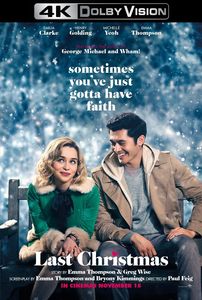
  • Last Christmas (2019)

    Last Christmas (2019)

    (On Cable TV, July 2020) My resentment has been building for a while and it’s unfortunate that Last Christmas has to bear the brunt of it, but here we go and I’m not sorry for the spoilers: I’m done with the modern trend of inserting imaginary characters in movies for the sake of a twist. Twenty years after Fight Club, there’s now a spate of movies that feel that it is somehow impressive to have a character coming out of their protagonist’s imagination. I’m looking at you, Onward and 47 Deep below. And I’m really looking at you, Last Christmas, for pulling that trick. Now that we’ve combined the imaginary character with the Christmas movie genre, we’ve reached the end of the road. It’s time to stop. It’s especially true given that it doesn’t make Last Christmas any better as a movie—the film is fine as a romance, it’s even better as a story of a woman pulling herself together after a long period of aimlessness and persona trauma. The imaginary character muddies the water and feels as if the film depends on a gimmick more than its own honest values. (Or maybe it betrays a lack of confidence in the material.) It’s a bit of an issue considering that some of the film actually works well. I’m grown a bit warmer about Emilia Clarke’s acting and her non-Games of Thrones screen persona with each subsequent film, and she actually manages to handle the transformation of a character from an irritating screwup to something approaching adulthood. Michelle Yeoh is a delight no matter the movie—and she’s no exception here, along with relative newcomer Henry Golding in a thankless role. There’s an appealing multicultural quality to the characters in this London-set film, and there are a few other good moments stuck in the middle of the film. Now, if Last Christmas could have found any other way to resolve its climax without an imaginary character, we would have been left with a far better film.

  • Escape Plan 2: Hades (2018)

    Escape Plan 2: Hades (2018)

    (In French, On TV, July 2020) The first Escape Plan wasn’t so great, so the idea of a sequel leaves one wondering—Where to go? With another escape? And that indeed ends up being the case, with another better prison and another (not necessarily better) plot to escape. The original had the distinction of teaming up Schwarzenegger with Stallone, but this time around only Sylvester Stallone remains to look tough in retirement age. The bare-bones plot (good guys escape from bad guys’ prison) thinks that more characters equals complexity, but ends up creating more confusion than interest from the result. At times, Escape Plan 2 seems to be throwing random plot elements in the mix just to see what would happen (Chinese entrepreneurs! Hackers! Private for-profit prisons! Robots!) and the result feels overstuffed with useless material. Some faux-philosophy is thrown in narration, but the film doesn’t deserve whatever patina of intellectualism that those suggest. Despite some attempts at stylish presentation from director Steven C. Miller, the result is almost instantly forgettable, except when it’s ridiculous (such as having Stallone go hand-to-hand with a much younger opponent). The climax is underwhelming (We’re in a hole in the ground in Atlanta! Wow! Who cares?) to the point of feeling less impressive than the following end credit sequence. Escape Plan 2 is passable background filler considering that you don’t really have to pay attention to the nonsense in order to follow the plot. Not essential viewing for anyone, including fans of the first film—but don’t worry, the end promises another sequel, which was actually released in 2019 as Escape Plan: The Extractors.

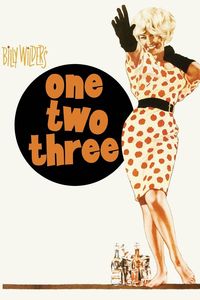
  • One, Two, Three (1961)

    One, Two, Three (1961)

    (YouTube Streaming, July 2020) The legendary Billy Wilder wrote and directed so many great films that it’s easy to forget about even his second-tier efforts, and so it took me a curiously long time to get to watch One, Two, Three. A comedy set in Berlin that heavily plays with the Cold War obsessions of the time, it also lets James Cagney have one of his last roles be a comic showpiece as a Coca-Cola executive dealing with Soviet contacts and the flighty daughter of an influential superior. As usual for Wilder movie, the screenwriting is front and centre, with Cagney spitting dialogue at a blistering pace as a fast-thinking professional used to get his way even under adverse circumstances. The comedy gets crazier and crazier, picking elements from Wilder’s own Ninotchka and bringing them forward to a newly-fractured Berlin stuck between communists and capitalists. One, Two, Three is very much a fascinating time capsule of its era, because it seems able to laugh contemporarily about things that you think would have been best dealt with retrospectively as a period piece. The film does get funnier as it goes on, and Cagney keeps his maniac pacing from beginning to end. There’s quite a bit of mordant cynical humour from Wilder’s pen, but it all leads to a nice wrap-up. For Wilder, One, Two, Three will always be overshadowed by a filmography that includes classics such as Double Indemnity and Some Like it Hot, but it’s a very enjoyable film nonetheless.

  • Portrait de la jeune fille en feu [Portrait of a Lady on Fire] (2019)

    Portrait de la jeune fille en feu [Portrait of a Lady on Fire] (2019)

    (On Cable TV, July 2020) Hmmm. Let me check the list of what makes reviewers flip over a movie these days: Historical setting, great costumes, foreign-language production, careful directing, deliberate pacing, progressive ideals, non-heteronormative rethinking of familiar stories… yes, Portrait de la jeune fille en feu is almost custom-designed for critical acclaim. Too bad I couldn’t get into it. The pacing is too slow, the production too measured—even the subject matter felt like a rethread of The Favourite… and I never expected to mention The Favourite as “my favourite” of anything. I’ll be the first to say that the film isn’t geared for me, and that I shouldn’t keep harping on its case—but I’ve seen, by now, far too many of what seems to be the same movie playing on the same chords in more or less the same way. And that’s fine—Portrait de la jeune fille en feu ended up as an instant classic, a critic’s favourite, and received an almost-instantaneous consecration into the Criterion pantheon. But it’s not a movie for everyone: If you’re looking for sustained pacing, an unpredictable story, or red-blooded character work that doesn’t seem to belong on a museum’s wall, this isn’t the right pick. Far too long in telling us something that can be predicted almost every step of the way (at least, if you’re familiar with that subgenre), Portrait de la jeune fille en feu is probably a bull’s-eye for some, but it will struggle to get out of that subgenre.