Reviews

  • New in Town (2009)

    New in Town (2009)

    (In French, On TV, November 2020) It doesn’t take more than five minutes for New in Town to establish without ambiguity that it fully intends to follow the most obvious of romantic comedy formulas. As a young ambitious urban executive (Renee Zellweger, at the end of her pouty-squinty period) is transplanted from Miami to Minnesota to take over an underperforming manufacturing plan, she meets-cute the union shop steward and falls under the irresistible spell of the local community. You can write the rest of the script yourself, so little surprise does it contain—at one point, you can scream, “show me the tapioca!” and be richly rewarded by a close-up of said tapioca bowl in a fridge. It’s that kind of film. The same film produced ten years later could have gone political, but this one seems content with spouting off feel-good homilies about small towns, the heartwarming nature of tough winters and the evils of hands-on corporate ownership. Zellweger is not bad in the lead role, although Siobhan Fallon Hogan has a plum role here as the voice of the locals, and Harry Connick Jr. plays the love interest with a decent amount of charm. Don’t get your hopes up in hoping for a militant union film, though — this one scrupulously avoids anything beyond the usual bromides of dubious corporate overlords versus hardworking Midwestern folks… and only the strict minimum at that. New in Town wears its adherence to formula as a badge of honour, so it’s not really clever or insightful to point out how predictable it can be—the real fun of the film is in the set-pieces (such as how to survive being stuck in a snowstorm), the atmosphere of a small snowbound town (it was shot near Winnipeg, Canada) and some of the expected plot points. It’s perhaps best seen as cinematic wallpaper—something to put in the background, fit to be picked up ever few minutes as the film plays on a strictly predictable schedule.
  • Missing in Action 2: The Beginning (1985)

    Missing in Action 2: The Beginning (1985)

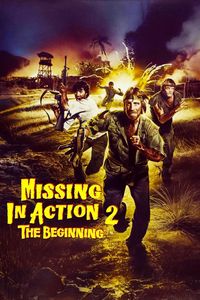
    (In French, On Cable TV, November 2020) As its production history goes, Missing in Action 2: The Beginning was filmed at the same time as the first film in the series, and was originally intended to be the first of the two films released in theatres. When the sequel ended up becoming a better film than its planned predecessor, it became the first one to be released, followed by this “prequel” that was not intended as such… but ended up aping Rambo: First Blood even more than just being the rumoured inspiration for the story. Of course, we’re far, far away from James Cameron’s Rambo script here, and the film feels like ninety minutes of misery closely following years of captivity for Chuck Norris’s character. Delighting in showing us the atrocities of interment in a Vietnamese POW camp, Missing in Action 2: The Beginning is far more exploitative than educational or inspirational: it’s about seeing the protagonist stoically endure as much suffering as possible (the screaming is done by the supporting characters) before being able to take revenge on the sadistic camp officer and wreaking complete havoc on the camp along the way. It’s not meant to be subtle, and we can clearly see here the “anger” phase of Hollywood’s dealing with the grief of the Vietnam War. This really isn’t the best film on the topic, but it was meant for quick cash rather than posterity. Norris is equal to himself –who was really surprised by the rat-in a-bag scene? Missing in Action 2: The Beginning plays on obvious emotional chords, and the result is about as formulaic as could be imagined. If nothing else, it’s going to satisfy fans of the first film.

  • Rockabye (1932)

    Rockabye (1932)

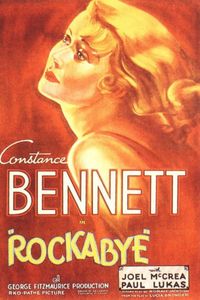
    (On Cable TV, November 2020) There’s something just a bit off about Rockabye that I can’t quite grasp—I suspect it’s a mixture of contrived plotting, unconvincing dialogue, outright melodrama, an intentionally frustrating ending and changing social mores during the Pre-Code era. (Reading about the film’s production, it also looks as if the film was significantly re-shot midway through, adding even more chaos into the mix.) Even from the onset, as an actress is separated from the child she wanted to adopt after testifying at an unsavoury trial, the film goes for big emotional beats that don’t quite resonate. The miseries quickly pile up upon our heroine, as nearly nothing goes to plan and the film delights into taking away all of her successes. As a showbiz drama, it features actresses, writers and impresarios in the main roles, breathing in the Broadway scene of the time with gusto. An early leading role for Joel McCrea has him trying to inject some sympathy into a character with some really unlikable moments. The Pre-Code nature of the film is obvious in its depiction of an affair between the heroine and a married man. Constance Bennet is stuck with a tough role and does what she can with it. But Rockabye really isn’t all that compelling—there are many, many moments where the emotional reactions of the leads defy any understanding, or seem unusually muted. I could still find a few nuggets of interest here and there, but there are many better movies in this mould.

  • Land of Doom (1985)

    Land of Doom (1985)

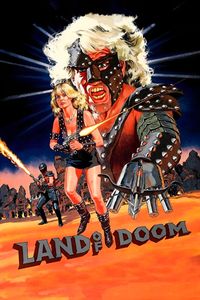
    (On Cable TV, November 2020) Looking at the way 2020 is unfolding, with people making the worst possible decisions based on crackpot theories and self-harming ideology, there’s an argument to be made that terrible post-apocalyptic movies may be one of the few things dissuading us from willingly triggering said apocalypse. I mean, if life after the big catastrophe is going to be so bland and awful as Land of Doom, we should keep modern civilization going as long as we can. A big dump of familiar clichés, it’s a film with very few ideas and no visible scruples at stealing from other movies. Set in the generic desert, it features a man fighting for honour, justice and the predictable secret oasis of survivors. While, at first, Land of Doom seems to be leaning toward a female protagonist (Deborah Rennard), that idea is eventually abandoned in favour of supporting the male intruder (Garrick Dowhen), who quickly becomes the real main character of the film. Generic battles and plot points quickly follow, never made any more compelling through any kind of originality: It’s all punk gangs throughout. Dialogue is dull, acting is bad, directing is unimpressive, production values trend toward the low-budget end, and everything that the film does brings to mind the much superior Mad Max movies or, for that matter, any random half-dozen post-apocalyptic movies of the time. Hey everyone, let’s take lessons from terrible movies: Let’s make it through the current bad patch and avoid the apocalypse, because I’d hate to live in a full-blown cliché.

  • I guerrieri dell’anno 2072 [The New Gladiators aka Warriors of the Year 2072] (1984)

    I guerrieri dell’anno 2072 [The New Gladiators aka Warriors of the Year 2072] (1984)

    (On Cable TV, November 2020) While it’s terrible and derivative in almost all aspects of its production, there’s an occasional ambition to parts of The New Gladiators that almost make it worth a look. An Italian film from celebrated shlockmaster Lucio Fulci, it seems happy to regurgitate Rollerball, Deathsport and Death Race 2000 with added dollops of very light cyberpunk elements. The story features a futuristic fatal reality TV show manipulated by its producers to bring in a likable main character (stop me if you’ve heard this before). Clearly written by people without any experience or interest in science fiction, the script blends together conspiracies with super-powerful AIs, and echoes other movies before and after it. (I found unusually strong echoes with 1987’s The Running Man, for instance.) The production values are shoddy, and there isn’t a whole lot of fun to be found anywhere. Occasionally, though, you do get a few rough unpolished ideas—they act as beacons of interest and dissatisfaction, since the film does nothing with them. There are some surprisingly ambitious special effects (the Blade Runner-inspired miniature portraying a futuristic Rome is more interesting than expected, for instance), a few intriguing plot points and an imposing performance from Fred Williamson. But even the most interesting elements aren’t handled with any interest, and the result is almost instantly forgettable.

  • Houseboat (1958)

    Houseboat (1958)

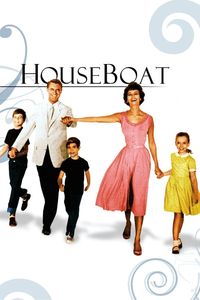
    (On TV, November 2020) Cary Grant and Sofia Loren. That’s it—that’s the reason to see Houseboat, and I don’t have to add anything more. But for the form: Houseboat is a romantic comedy featuring a newly-widowed government officer (Grant), who ends up with three unfamiliar kids in his small Washington apartment. Looking for relief, he ends up hiring what he thinks is an Italian nanny in need of a job (Loren), without quite understanding that she’s the daughter of a famous musical figure wanting to escape a difficult situation. The remaining key to Houseboat’s plot comes when they decide to get out of Washington for the summer and go live on a houseboat that ends up being far less luxurious than expected. Silver-haired Grant is in fully charming form here as the slightly befuddled dad and romantic interest to two women. The romance is messier than expected—despite the inevitability of the final pairing, I can’t help that the film made the wrong choice along the way. Still, it’s a rather fun film, with the expected doofus-daddy antics, the romantic charm and the often-interesting period depiction of late-1950s Washington, DC. Behind-the-scenes, Houseboat is famous for having been written by and for Grant’s second wife Besty Drake, with a role quickly recast and rewritten for Loren after she started an affair with Grant on the set of another film… an affair that ended before shooting wrapped on Houseboat—the perils of Hollywood dating! It doesn’t make the film any better or worse, although you can detect some remnants of other plans in the sometimes-zig-zagging script. I still liked Houseboat, but it isn’t a first-tier Grant.

  • Jamaica Inn (1939)

    Jamaica Inn (1939)

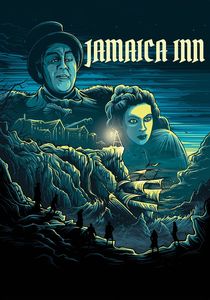
    (On Cable TV, November 2020) I like Alfred Hitchcock and I like Charles Laughton, but if my understanding of Jamaica Inn’s troubled production history is correct, the on-screen result is what remains after a spectacular clash of egos. As the story goes, Hitchcock took Daphne Du Maurier’s novel (the first of three adaptations of her stories, followed by Rebecca and The Birds), but had trouble with Laughton-the-producer-and-actor, who wanted to transform a dreary gothic novel into something funnier, more eccentric and not quite some faithful to the original. The result is, for lack of a better word, often weird. The still-unnerving premise (an innocent woman discovering that she’s in the middle of a village of marauders, attracting ships to a treacherous coast where the ships run aground, then, killing the survivors and selling the cargo) runs into a semi-comic performance by Laughton and bizarre touches of humour. The film can’t quite make up its mind about whether it has revelations to tell us, and the ending just gets more and more ludicrous, as the heroine is kidnapped by a lusty villain because… well, there’s no real good explanation, since his plan is untenable from the get-go. This is really not top-tier Hitchcock, and probably not second-tier either—while the film was a commercial success and stands as the last of Hitchcock’s British period before going to Hollywood with Rebecca, it’s weaker than many of Hitchcock’s other 1930s films. Aside from the always-interesting Laughton, special mention should be made of the heroine being played by Maureen O’Hara in one of her early leading roles. The 2014 Cohen Media Group restoration of the film is nothing short of terrific—great image quality and clear sound make this a joy to watch — if it wasn’t for the content!

  • I Married a Witch (1942)

    I Married a Witch (1942)

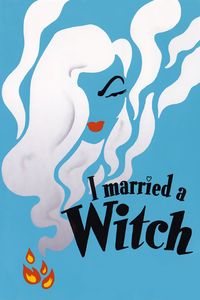
    (On Cable TV, November 2020) There are a few wonderful surprises buried in Hollywood film history, and I Married a Witch certainly feels like it. A fun blend of comedy and witchcraft, it features a father-and-daughter pair of sorcerers burnt at the stake in early New England and imprisoned in a tree until the 1940s, when they are freed by a lightning strike and eager to wreak vengeance on the descendants of the man responsible for their immolation. That doesn’t quite sound so much fun (and some of the dialogue from the historical antagonist is downright psychopathic), but I Married a Witch is very much presented as a comedy, and everything is in the execution. The daughter is played by Veronica Lake, and while Lake is extraordinarily beautiful to begin with, she also gets to play her characters with impish humour that adds much to her sex-appeal. Meanwhile, Fredrick March is the straight man of the story, bewildered at all the right moments and indignant at the others—he’s meant to be outshined by Cecil Kellaway as the warlock who’s not held back by anything like romantic love. The modern witchcraft angle is rare in classic Hollywood (feel free to pair it with Bell, Book and Candle fifteen years later), and the special effects are still decently effective. Still, it’s the great mixture of humour, romance and political satire that works much better than anything you may imagine from reading I Married a Witch’s plot summary. Don’t miss it!

  • Torpedo Run (1958)

    Torpedo Run (1958)

    (On Cable TV, November 2020) As far as submarine movies go, Torpedo Run is slightly more melodramatic than most, harping on revenge through a WW2 submarine captain (Glenn Ford) explicitly gunning for the ship responsible for the death of his wife and children. The audience stand-in is his lieutenant, played by Ernest Borgnine, as he voices the doubts that the audience may be having as to his suitability for a task of such personal gravity. While this element drives Torpedo Run’s plot, much of the film itself is a fairly standard submarine film—executed with the cooperation of the US Navy and executed through then state-of-the-art special effects (nominated for an Academy Award). The mechanics of WW2 submarine life take a bit of a backseat to the drama, but this is otherwise an average war film, competently executed but overly familiar at times. Thematically, it still feels like a WW2 propaganda film even a decade and a half later—the personal vengeance is atypical (and would not have flown as a movie premise during WW2) but dovetails into the government’s war agenda, and the crimes of the enemies include shielding a warship with a transport filled by non-combatant prisoners of war. Ford and Borgnine do bring a bit of character work to the proceedings, and fans of the actors should be pleased by their performances. Otherwise, Torpedo Run ends up being a decent but unspectacular WW2 submarine movie—better than bad, more dramatic than most, but not as striking as others.

  • Les mémés cannibales [Rabid Grannies] (1988)

    Les mémés cannibales [Rabid Grannies] (1988)

    (In French, On Cable TV, November 2020) With a title like Les mémés cannibales / Rabid Grannies, it’s no surprise if the film has become a minor cult classic reference. One notes, however, that the title lies twice (no grannies, no cannibalism/rabies), considering that the story features two aunts acting as possessed conduits of violent revenge over a greedy, ungrateful brood from an outcast family member. The production pedigree of the film is a multi-national mess that barely makes more sense than the plot, but so is the nature of low-budget schlock horror more concerned about gory effects and over-the-top marketing hooks. The image quality is poor even by the lax standards of the grainy TV channel I watched it on, and the soundtrack is just as terrible. If you’ve seen other similar movies, you know what to expect: perfunctory exposition, and then a steadily whittled-down cast as they all perish in over-the-top violent fashion. Rabid Grannies is not a good movie, and it falls short of even its own standards. But it’s not quite as boring, disgusting or pointless as I expected: There are a few good lines here and there, some worthwhile characters and the pacing is not that bad. That’s low praise indeed, but considering that the film is now best known as a Troma fan favourite, that’s probably quite enough.

  • Maria Chapdelaine (1983)

    Maria Chapdelaine (1983)

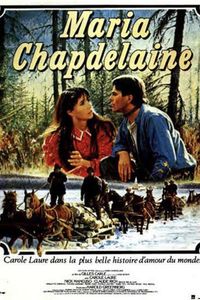
    (On TV, November 2020) As I grow older, I suppose that it’s inevitable that I would come back to claim ownership of my own culture. My French-Canadian family tree is made of farmers and lumberjacks dating all the way to the 1600s, and the older I get the more I’m delighted to accept that lineage as my own cultural history, equally folkloric and interesting as other ethnic lines. In parallel, I’m also rediscovering depictions of this heritage, made easier by Québec’s longtime insistence on highlighting its rural roots. This brings us to Maria Chapdelaine, a minor French-Canadian classic with a storied ancestry of its own—the original novel written by Louis Hémon, a newly arrived French Immigrant who died before the novel became a major success in Europe. The 1983 version of Maria Chapdelaine is the third adaptation of the film, but the first that was made in Québec by French-Canadian filmmakers for a local audience—previous versions being made by and for Europeans. The nice thing about this atmospheric period piece is that it has aged quite well—it credibly portrays frontier life in the early 1900s, with plenty of period details, rural joual and wilderness shots. Carole Laure plays the beautiful Maria, with a supporting cast that includes half a dozen French-Canadian actors who would become household names later on—including future politician Pierre Curzi. For French-Canadian viewers, there’s added comedy in how writer-director Gilles Carle would later return to a similar frontier-village territory with the far more ribald La Postière. But as for Maria Chapdelaine itself, it feels like a shot of pure laine tropes: you’ve got the hardy colonizers, the three suitors each representing facets of the French-Canadian character, a deep respect for winter, quasi-caricatural expressions and historical recreation… it’s the Québec often being sold (erroneously) as “the true Québec” from a certain traditionalist perspective and it’s interesting to watch. The romantic suspense of having three suitors for the heroine becomes its own kind of suspense veering into political commentary. In other words, I found quite a lot to contemplate in Maria Chapdelaine… but I acknowledge that you practically have to be among the characters’ notional descendants to get as much out of it.

  • The Rezort (2015)

    The Rezort (2015)

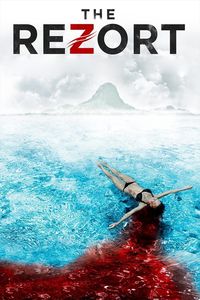
    (In French, On Cable TV, November 2020) Much as movie zombies end up transforming varied people into the same monster, zombie movies often end up transforming a wide variety of premises into what feels like the same film, with zombie hordes, protagonists being bitten and not much beyond headshots and gore. The Rezort does have an initial spark of interest, as it takes us to a park created in the aftermath of a global zombie apocalypse: After the death of two billion people, someone somehow ended up creating a park where zombies can be hunted for sport. Faster than anyone asking if this was a really a good idea, faster than questioning the numerous similarities with Jurassic Park, the park is sabotaged and our human characters are thrown in the middle of a hungry group of zombies. The rest of the film plays more or less the same as similar movies, leaving the impression that the film is almost exactly the same damn thing as any random zombie film that you can catch on late-night Cable TV. It’s not much of a legacy, even though there were a few elements that could have been developed into something interesting. The sad truth is that zombie movie watchers are a bit like zombies themselves: they see the zombie label, they watch the film—anything going beyond trite zombie movie clichés is far too risky to be contemplated by filmmakers.

  • Ray Harryhausen: Special Effects Titan (2011)

    Ray Harryhausen: Special Effects Titan (2011)

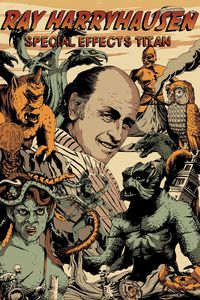
    (On Cable TV, November 2020) Usually, I prefer written biographies than the bite-sized filmed ones, but there’s something so innately cinematic about Ray Harryhausen’s stop-motion animation that it would be impossible to do justice to his work without showing it on-screen. Clearly an authorized biography completed by friends of his, Special Effects Titan digs deep in interviews, archival footage and new-for-this-documentary material to pay homage to his work, from his early inspirations to the CGI legacy he has left. Most (if not all) of his films are mentioned, commented and shown. Heavy hitters of spectacle-driven cinema such as Spielberg, Jackson, del Toro, Cameron and Lasseter show up to pay tribute, and the film clearly highlights the friendship between Harryhausen and writer Ray Bradbury. The stop-motion work is described and commented upon, with frequent praise being that his stop-motion puppets had acting character of their own. At 95 minutes, Special Effects Titan is a quick, clean summary of Harryhausen’s life and work, well worth a look for anyone even slightly interested by his legacy.

  • J’ai tué ma mère [I Killed My Mother] (2009)

    J’ai tué ma mère [I Killed My Mother] (2009)

    (On TV, November 2020) Seeing J’ai tué ma mère after nearly every other film in the Xavier Dolan filmography, I have the impression that I’ve found the origin myth of his career. If you compare this directorial debut to his other movies (and you almost have to, considering the repetition of themes and stylistic affectations), it’s markedly weaker—it feels like a first draft of Mommy and everything that Dolan would revisit in his next half-dozen movies. It doesn’t stand up very well on its own now that Dolan has done better, and the rough production values only hint at what he went on to do with bigger budgets. But, of course, it should not be seen under such a harsh retrospective glare—Dolan was literally a teenager when he wrote and directed this semi-autobiographical story about a difficult mother/son relationship. He certainly doesn’t come across as likable here, but after a one-sided start, you also come to understand why he hates his mother so much. Beyond the themes, J’ai tué ma mère also shows the stylistic quirks that would also grace Dolan’s later films—pop music, montages, idiosyncratic directing, etc. But it doesn’t quite hold up as well now that Dolan has fulfilled the promises created by this first film—in literally every aspect, he has improved and done better in later movies. This makes J’ai tué ma mère best suited for a somewhat specific public, more eager to dig into Dolan’s filmography than appreciate the film at face value. Let’s just say that if you can recognize the landlord character as a split-second cameo from Dolan’s father (legendary singer and actor Manuel Tadros), then you’re ready to see it in its ideal context.

  • Dead Ringer (1964)

    Dead Ringer (1964)

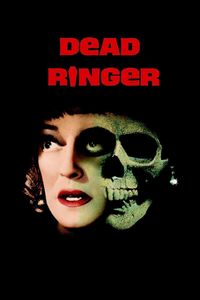
    (On Cable TV, November 2020) Amusingly enough, Bette Davis played twin characters twice during her career—first in 1946’s romantic comedy A Stolen Life, and then in 1964’s late-noir thriller Dead Ringer. Two Bette Davis for the price of one ticket? All right! This being said, the Bette Davises in Dead Ringer were more than 18 years distant from the ones in A Stolen Life—Davis aged visibly (What Happened to Baby Jane, still the best known of her later-career movies, was released two years prior to this one), and much of what she brings to her roles here is in portraying a woman on the decline, eager to secure something on her way down. That “something” here ends up being her own estranged sister’s identity, following a dark web of money, murder and unsavoury associates. The plot is best kept at arm’s length, though: the best thing here is Davis and the atmosphere of the film, and the multiple hooks to earlier eras of the film. The noir influence here is clear, but it’s mutating into something else. Directed by former Hollywood star Paul Henreid, it features the same cinematographer as A Stolen Life, improving upon the special effects to make us believe in twin Davises. It does work, and partly because it manages a good hybridization between crime thriller and romantic drama, allowing some fine character work without quite losing sight of the plot driving the entire film. I quite liked it, although I suspect that the film is best appreciated in the Hollywood continuum than as a single film—there’s quite a bit more weight to give to the film once you know about Davis and Henreid and noir and A Simple Life. Keep it in reserve after you know more, maybe—call it a 201-Hollywood history-grade film.