Reviews

  • Yours, Mine and Ours (1968)

    Yours, Mine and Ours (1968)

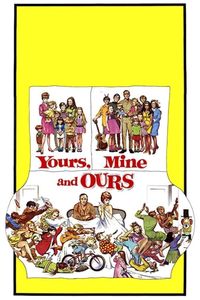
    (On Cable TV, July 2020) It may be based (somewhat) on a true story, but the premise of Yours, Mine and Ours is comic gold: A widower with ten kids meets a widow with eight of her own and, well, chaos ensues. Henry Fonda plays the patriarch, Lucille Ball (aging, but still funny) the matriarch, and an ensemble cast’s worth of 18 kids fills out the rest. The film feels as if it has two halves—a more sedate beginning in which the adults get together, and then a higher comedic pace once the family moves together and modern logistics have to be used to wrestle control over a household of 20. While clearly a mainstream 1960s comedy with the expected exaggerations, minor conflicts and gags, it does have a fair amount of character development and heartfelt emotion toward the end. Yours, Mine and Ours is clearly not a great or refined film, but it does hit its comic targets. While there’s a 2005 remake that may be slicker and more attuned with modern values, this one now has a definitive historic charm to it.

  • The Vikings (1958)

    The Vikings (1958)

    (On Cable TV, July 2020) There’s certainly a spectacular aspect to The Vikings that makes it interesting to watch: Kirk Douglas going toe-to-toe with a bearded Tony Curtis as they debate the leadership of a Viking colony. Made at a time when historical epics were trying to lure audiences away from the TV, it has lavish production values and some credible outdoor scenes and combat—with longboats! Plus: Ernest Borgnine and Janet Leigh looking a bit weird in non-contemporary setting. It may not be as well-remembered as some of the Roman epics of the time, and the lack of big Viking movies lately is a bit of a wonder by itself (wasn’t the latest one the motion-captured Beowulf from 2007?) Still, let’s not overstate things: The Vikings is not that interesting and even gawking at the stars in unusual turns or the scenery isn’t quite enough to make up for the tepid pacing and overall lack of interest in plot or dialogue. Fortunately, director Richard Fleischer creates a lot of bombast here to keep things afloat.

  • Uno sceriffo extraterrestre… poco extra e molto terrestre [The Sheriff and the Satellite Kid] (1979)

    Uno sceriffo extraterrestre… poco extra e molto terrestre [The Sheriff and the Satellite Kid] (1979)

    (In French, On Cable TV, July 2020) Days after watching its sequel, here is The Sheriff and the Satellite Kid to make it all make sense. No, that’s not true—Bud Spencer family movies are not exactly mazes of deceptive plotting, and so this is pretty much getting in 95 minutes what was summarized in the first moments of the sequel. It’s not much more than a cute kids’ adventure featuring Spencer acting as a teddy-bear sheriff protector to an alien incarnated as a likable boy. There’s nothing deep or challenging here, but it can be watched readily enough thanks to Spencer’s fuzzy-bear charm. The numerous comic stunts and silly fights find their intended public. Don’t go looking for Science Fiction in this comedy film chasing Close Encounters of the Third Kind box office numbers. Things are made slightly weirder thanks to the comical use of an alien gadget—and also for having the very Italian Spencer play an American sheriff in Georgia. This being said, the budget for The Sheriff and the Satellite Kid is visibly low, so don’t expect a polished presentation even by 1979 standards. At least it thrives on a rough kind of authenticity.

  • Framing John DeLorean (2019)

    Framing John DeLorean (2019)

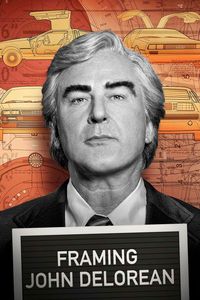
    (On Cable TV, July 2020) The premise of Framing John DeLorean (“Why hasn’t there been no movie about John DeLorean given the dramatic elements that it contains?”) is now dated since the release of 2018’s Driven (featuring Lee Pace as DeLorean), but that doesn’t stop the film from being a compulsively watchable overview of DeLorean’s life from his heydays at GM to the aftermath of his bankruptcy and legal proceedings. The intelligible and absorbing talking-head format is considerably enlivened by fictional recreations of events featuring a heavily made-up Alex Baldwin happily delving into the role, and another excuse to see a glamorous Morena Baccarin on-screen as DeLorean’s wife. Unusually enough, there’s quite a bit of footage about the making of those sequences, and the actors are asked to expand upon their thoughts on the character they play… which works better than expected. Interview subjects include his kids (who are not happy about the way their family was destroyed by his hubris), Back to the Future producer Bob Gale to talk about the cultural impact of the film on DMC, and various people who were involved in the company at the time. The film pulls no punches in highlighting that even if DeLorean was not sent to prison, he still lost his company, his Fifth-Avenue Manhattan residence and his family, and ended up living the last few years of his life in a one-bedroom apartment. I liked Framing John DeLorean quite a bit more than Driven—it’s more entertaining, far more detailed, significantly more even-handed in its depiction of the character and delves into a fun metafictional game, as it allows Baldwin and others to influence DeLorean’s fictional depiction. The ultimate impact, however, does remain one of a classical tragic downfall—arrogance leading to bad luck leading to a desperate attempt to save it all that backfired.

  • Hamilton (2020)

    Hamilton (2020)

    (Disney Streaming, July 2020) Like everyone else, I couldn’t escape the critical acclaim for Hamilton the musical back in 2015–2016. Still, it took me a surprisingly long time to have a listen at the soundtrack. My reaction to the songs of Hamilton was very much in-line with everyone else: Holy Washington, this is really good. The blend of historical material (even acknowledging the deviations from reality—Broadway is no place for historical accuracy) with catchy modern music made for an addictive experience, and my expectations ran high for a professional recording of the show given the high unlikeliness of seeing (or being able to see, of being able to afford to see) the show live, especially after the end of its initial run. The announcement that the recording would be released on digital to coincide with Independence Day was a rare bit of good news in an otherwise dismal 2020. My expectations ran high as I settled down to stream the film, and even they were amply exceeded. Seeing the show adds an extra dimension in the songs and my typically non-hyperbolic self feels justified in labelling this as a work of genius. Much of the credit goes to Manuel-Lin Miranda, whose book, music and lyrics are perfectly executed. I’m not that familiar with live theatre, so much of the typical touches of the form (the ensemble, the musical quotes, the staging) feel fresh and inspired, and make perfect sense in reinforcing the aspirational fantasy of the content. While Miranda couldn’t have done a better job in creating the show, its interpretation rests on a strong cast with few weak points. Leslie Odom Jr. is particularly good as Aaron Burr (to the point of barely feeling like a villain despite, well, shooting the protagonist), Jonathan Groff is a comic highlight as King George III, and Renée Elise Goldsberry is spectacular. Other players get their spotlight in the second act: Daveed Diggs is very funny in a pair of Francophile roles, Phillipa Soo gets more attention as the story goes on and Christopher Jackson is imposing as Washington himself. The video credits are a nice touch—especially for the much-deserving ensemble. The songs I liked best on the soundtrack (My Shot, The Schuyler Sisters; You’ll be Back; Ten Duel Commandments; The Room Where It Happens) are equally good here, but the staging (and accompanying body movement, much of it sarcastic) elevates some numbers far above their audio-only component: “Satisfied” become heart-wrenching as it rewinds time, “The World Turned Upside Down” is a triumphant new favourite with rolling guitars and bombastic dancing, “What’d I Miss?” has some great comic staging, both Cabinet Battles are fantastic (they were already great as songs) and “The Election of 1800” is fun and dramatic at once. The concentric turntables are used to good effect during the duels and the eye-popping Hurricane sequence, with the dramatic climax of the entire production hinging on simulated bullet-time summation of a man’s life as he gets shot. If I’m effusive in my praise, it’s because Hamilton is a rollercoaster and I was on-board for every laugh, every cry, every killer line and dramatic twist. I strongly suspect that much of this intense reaction comes from living-in-July-2020, measuring an authentic piece of Americana at its best against the vertiginous decadence of the United States over the past few years, with an incompetent leadership embracing corruption, authoritarianism, and intentional division to the point that it cannot handle a crisis killing citizens by the tens of thousands (soon the hundreds of thousands: Oceans Rise, Empires Fall)—the exact opposite of the values embraced and demonstrated by Hamilton’s appealingly multicultural cast and moral outlook. While I’m looking forward to a cinematic version of Hamilton in a decade or so, this June 2016 live recording is a striking time capsule and a reminder that many Americans do have their heart in the right place. As we wait for an end to the current catastrophe, Hamilton couldn’t have come at a better time—and despite not being much of a movie in traditional terms, it looks as if it’s going to be in the running for best-of-year contention. I would be surprised if I had a bigger emotional reaction this year to anything else but a landslide repudiation of the current administration on election night.
  • Two for the Road (1967)

    Two for the Road (1967)

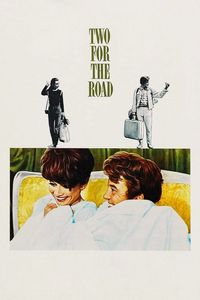
    (On Cable TV, July 2020) There’s something very unusual in Two for the Road’s premise, as it shows the evolution of a marriage (with its ups and downs) through the conceit of following the couple along a road trip from England to the south of France—repeated five times over twelve years. The narrative jumps in time as landmarks take the couple back to their courtship, early marriage and later breakdown of the relationship. It ends up being a very satisfying romantic comedy (even if the comedy does get thin at times) about a bickering couple. While Albert Finney is good with bon mots and debonair wit, Audrey Hepburn is the star here—it’s interesting that, to portray her at her youngest, the filmmakers gave her long hair opposite her usual gamine hairstyle—and we even get to hear her speak a few lines of French as well. There are a few dramatic moments later on, but this being a comedy reassures that it will conclude on a sunny note. Director Stanley Donen’s approach feels unusually modern through its mixed chronology structure, which allows us to go back and forth as the characters evolve and react ironically to similar situations. The film does sport a variety of humour from the high concepts to the low physical stuff. It’s all quite fun and not overly dated except for the party scene toward the end that powerfully reminds us that it was filmed in the mid-1960s after all. While likely to be a hit with a wide audience, Two for the Road will be a special treat for Francophiles, Hepburn fans and fans of good romantic comedies.

  • The Bang Bang Club (2010)

    The Bang Bang Club (2010)

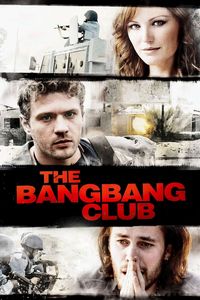
    (On TV, July 2020) Quantum physics suggests that there’s no such thing as an observer without effect, but you don’t need to get quite that small to see the principle applied to journalists—and even more so combat zone photojournalists risking life and sanity to capture images of terrible things. It’s a ripe terrain for a film, and The Bang Bang Club does at least grasp the basics of the assignment. Ryan Phillippe and Taylor Kitsch both turn in unusually dramatic performances as two of four photographers covering the end of the apartheid era in 1990–1994, and the violence that accompanied the time. The film credibly (if Hollywoodly) portrays the camaraderie and toil between conflict photo-correspondents— a band of brothers in difficult situations, unable to do anything except witness. It’s clear from the get-go that, despite a few scenes, this is not going to be a fun film. As the conflicts and ethical dilemmas and questions of guilt at being passive observers start to weigh on the characters, the film becomes heavier to take in. Writer-director Steven Silver captures a few striking moments and images, and finds a way to dramatize events effectively, but somehow can’t quite extract the full potential out of what it has at its disposal. The famous photo sequence, for instance, does underline the same point long after it has been made, blurring its effectiveness. This is very dramatic, very visual, very cinematic material and yet The Bang Bang Club can’t quite do more than the average in showing how the observer himself can be the most affected by what they see.

  • The Jesus Rolls (2019)

    The Jesus Rolls (2019)

    (On Cable TV, July 2020) There’s a lot to explain if we’re going to tackle The Jesus Roll. We can talk about how this is John Turturro’s return behind the camera. We can say it’s a remake of a 1974 French film. Or we can say that it’s also a The Big Lebowski spinoff focusing on a minor character. Of those things, let’s make it clear that the link between the classic 1998 Coen Brothers film and this one is one of marketing more than theme or character, because once you’re past a few surface characteristics, what we have here is a flat and perplexing crime comedy. Turturro hams it up as a lustful Latin Jewish character, but makes the mistake of believing that an acclaimed supporting character is tolerable as the lead. The Jesus Rolls does have a few highlights—mostly in the cast, which (briefly) includes such notables as Christopher Walen, Audrey Tautou, Jon Hamm, Susan Sarandon and others. There’s also a strange unpredictability in the way the film becomes a road movie, then a sex comedy (ish) with libidinous characters (ah, there’s the French influence) then ends on a whim with no real conclusion. (Or rather—it keeps going for a minute after what would have been a conclusion, just long enough to reassure us that the characters lived.) It all makes for a mess of a film—and one that’s not funny, not fun and not interesting. The comedy is sparse and pointless—while writer-director Turturro seems to be having a blast, it’s in service of a piece so personal that it might as well be rebarbative. The contrast with The Big Lebowski couldn’t be clearer.

  • Chissà perché… capitano tutte a me [Everything Happens to Me] (1980)

    Chissà perché… capitano tutte a me [Everything Happens to Me] (1980)

    (In French, On Cable TV, July 2020) Bud Spencer comedies could get a bit out there, and Everything Happens to Me is at the outer end of what he could get away with: It’s a silly kid’s comedy in which Spencer shares screentime with a young boy playing an extraterrestrial. If the beginning feels unusually rich in plot and efficient in characterization, it’s because it’s a sequel to another movie. Spencer is his usual charismatic teddy-bear self in acting as a protector to the boy and getting into comic action scrapes throughout the film’s herky-jerky plot. It’s all clearly meant to be a succession of set-pieces at the expense of believability—and the low-budget production values don’t help at all. It does get less fun, as the film moves away from broad real-world comedy to more science-fictional content, which cannot be sustained by the budget or the tone of the film. Still, Everything Happens to Me can be fun if your expectations are low, although the film does rely on Spencer’s considerable likability.

  • Dolan’s Cadillac (2009)

    Dolan’s Cadillac (2009)

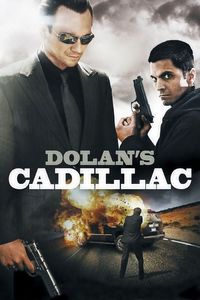
    (On Cable TV, July 2020) Surprisingly enough, Dolan’s Cadillac is a faithful adaptation of a Stephen King story, in which a grieving man plans an elaborate revenge scheme that culminates in a tense standoff on a deserted road. The premise is fine, the third-act concept is intriguing (if overdrawn—just bulldoze the dirt on top and call it a day) and Christian Slater has a chance to chew scenery by the mouthful as the villain. Curiously, the Canadian prairies stand-in for a Nevada/California highway. (The film being a Canadian production, it’s a frequent rerun on Canadian cable channels even a decade later.) Where Dolan’s Cadillac falters is in trying too hard with its dialogues and direction—even by neo-noir standards, Slater’s dialogue is unnecessarily verbose and the protagonist’s narration isn’t much better. Some cuts would have done wonders here—the best lines would have been even better without the surrounding clutter, and even Slater’s magnificent monologues would have been more memorable with a bit of culling. Still, Dolan’s Cadillac is a fun little film, and a nice change of pace in seeing King go from northeastern settings to the American southwest. (Although there are plenty of such examples in his oeuvre, from The Regulators to The Stand.)

  • Jeux interdits [Forbidden Games] (1952)

    Jeux interdits [Forbidden Games] (1952)

    (YouTube streaming, July 2020) Kids and war movies make an excellent combination if you’re reaching for posterity, and if this sounds flippant to you, it’s probably because I’m overdosing on the notion at the moment after seeing Come and See, Grave of the Fireflies and such in close proximity. French film Jeux Interdits takes the trope in a slightly different direction (being much heavier on kids than on the war), and operates on a slower, duller, arguably funnier gear. The story has to do with a war orphan being adopted and befriending their boy, then both of them turning to strange hobbies (from pet burial to religious artifact thievery) to pass the time. War almost becomes incidental along the way, as we associate closely with the limited view of the child protagonist (one of them played by Brigitte Fossey, who would have a career in French cinema as an adult). Much of the film’s power comes with opposing things that we know as observers, versus what the children don’t realize. Alas, the ending reasserts reality in a profoundly sad way—especially after the mild humour of much of the film. Perhaps a bit too hard-hitting for some, Jeux interdits is not light entertainment—steel yourself.

  • Footloose (2011)

    Footloose (2011)

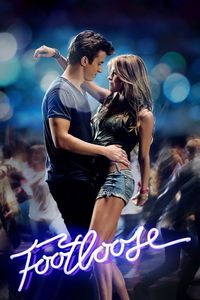
    (On TV, July 2020) Remaking Footloose for another generation isn’t necessarily the worst idea in the world, but it’s not the best either: While the original has Kevin Bacon and Kenny Loggins’ irresistible song, it’s fun but not necessarily good. There was then an opportunity here for 2010s filmmaking to catch up. Whether it did is very much up to the beholder’s eye… or maybe generation. There are very few narrative differences between the two films, with barely a touch-up job made between the two. Craig Brewer’s direction, on the other hand, is a clear step up from the original—more visually stylish, certainly more energetic, but sometimes a bit too much so: the quick-cutting during the dance sequences, in particular, doesn’t give room for the dancers to show their stuff, and bring to mind a music video more than a movie musical. The acting is not bad, but it depends on who you compare it: Kenny Wormald is fine but no Kevin Bacon in the lead role, while Miles Teller is pretty good as comic relief, Dennis Quaid does well in an ingrate role, and in-between Andie MacDowell and Ziah Colon I really can’t complain about the film’s sex appeal. If you’re going by precedent, you could argue that the original had some freshness that the remake mechanistically copies—and that the 2011 film is even more detached from the 1950s-style plotline than the 1984 version was. But the remake is still easy to watch: The dance numbers pop, the small-town energy isn’t bad, and it plays like a cover version. I suspect that those who encounter the 2011 film first may have a harder time going back to the 1984 one.

  • The Fury (1978)

    The Fury (1978)

    (In French, On Cable TV, July 2020) As someone whose skepticism came of age at a time when parapsychology still had a semi-scientific veneer of plausibility, it actually gives me great pleasure to be able to watch films such as The Fury and wonder at the dated psi-power nonsense contained therein. It’s not necessarily a condemnation of the material itself—it takes a director with a flair for the crazy, such as Brian de Palma, to give full force to the kind of wackiness that the material requires, and at its best The Fury is a rollercoaster ride of special effects, crazy ideas, unrestrained plotting and over-the-top performances. The plot has to do with a CIA agent (Kirk Douglas!) using a young girl with psychic powers to find his missing son from the clutches as an evil ex-colleague (John Cassavetes), but don’t worry about the plot when the film is one set-piece after another, ending up with exceptionally violent imagery by the end of the film. It’s all handled in typically over-the-top fashion by late-1970s Brian de Palma. It would be a splendid double feature with Firestarter or Scanners for reasons too obvious to explain. Frankly, The Fury is crazy in good ways, and even more enjoyable now that parapsychology has been relegated to a proven heap of nonsense.

  • Anthropocene: The Human Epoch (2018)

    Anthropocene: The Human Epoch (2018)

    (On Cable TV, July 2020) Don’t watch Anthropocene: The Human Epoch if you want to feel any better about the human species’ mindless ant-like appetite for consumption. A striking visual collage of various places around the world where humans are altering—nay, terraforming—the natural landscape, this is a film meant to surprise and sadden. Among the film’s biggest asset is some great footage, made even better by the shock of discovering those faraway places where the landscape itself is being altered in unrecognizable ways. The copious use of drone footage is an asset — “what am I looking at?” is a frequent question for viewers, leading to amazing answers. It does fit with the Koyaanisqatsi-inspired genre of visual documentaries, even with its voiceover (usually a dispassionate enunciation of depressing statistics) and far fewer lyrical moments. It’s definitely worth a look, but it is made for people who already understand that environmental issues are important. There’s a bit of hope at the end… but not that much.

    (Second viewing, On Cable TV, October 2021) It probably doesn’t bode all that well for Anthropocene: The Human Epoch that I didn’t remember seeing it in the first place—it’s only in rewatching the film that many of its striking images got me thinking (and confirming) that I had, in fact, seen it once already. But I wasn’t coming to the film at the same angle for this second viewing—this was the third in my self-imposed viewing program of documentaries by Jennifer Baichwal and Edward Burtynsky, here jointed by Nicholas de Pencier. Having seen the progression of their technique from Manufactured Landscapes to Waterways and now Anthropocene, I was far better primed to appreciate the result. The visual splendour of the film is even more striking this time around, using drone photography to truly show the magnitude of the images shown here. The theme is familiar (perhaps too familiar, contributing to my memory lapse) but the execution is terrific. Here are awe-inspiring examples of how humans are transforming the planet to suit it to our needs—from a colossal open-air coal mine in Germany to lithium drying pools to forest razing to vast dumps of industrial waste. Not that this is a new thing for humans, as the vertiginous pullback of the Carrera marble open mine made clear. I’m also a bit less bothered by the environmental message here—in fact, some of the images had me feel a weird sense of special pride for what humans can do when enough of them throw themselves at a specific problem—and if we are able to shape the planet to our specifications in the name of resource extraction and waste, can we do the same to ensure our survival? In other words, Anthropocene is worth a second look.

  • The Executioners (2018)

    The Executioners (2018)

    (On Cable TV, July 2020) An ugly movie both in content and in presentation, The Executioners scratches the bottom of the barrel when it comes to inspiration: four women in an isolated house, three men invading the house, sexual assault, rape and vengeance. If you think you’ve seen this before, it’s because you have—this specific plot has been in use for decades now. Not that writer-director Giorgio Serafini does much with it: his work is amateurish and thus complements the terrible acting from the entire cast. While the film would like you to believe it has a few twists in store, that’s not really true nor does it raise the level of the film: the idea of victims taking revenge on their aggressors is not a twist, and the film’s preposterous closing moments make a mockery of everything else. (Serafini’s idea of “foreshadowing” is having a character call out the ending in the first ten minutes.) None of it makes a difference given the drawn-out middle section in which the female characters are put through a horrifying ordeal—this is a male-gaze exploitation film and none of it is redeemed through execution. The low-budget visual polish of the film is unconvincing, and the staging doesn’t make sense either. I’m not sure there’s anything worth salvaging from The Executioners—even the “clever” ending fails in roughly five different ways the more you think about it. There’s an evergreen audience for exploitation films, but even they are likely to be disappointed by this one.