Reviews

  • Dragonheart Vengeance (2020)

    Dragonheart Vengeance (2020)

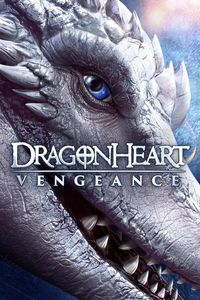
    (On Cable TV, July 2020) No one will blame you for not knowing that Dragonheart Vengeance is the fifth movie in the Dragonheart series, considering that all sequels to the theatrical film have been released straight-to-video. By this point, they’re less sequels than shared-universe entries. Unfortunately, that doesn’t mean much: the script is sparse, yet filled with very familiar fantasy elements (an orphan, a dragon, a quest for vengeance) thrown together without much conviction. Director Ivan Silvestrini’s work is made worse by a visibly limited budget that barely allows the film to exist in its chosen epic fantasy subgenre: the special effects are disappointing, the storytelling is dull and the production values rely more on the viewer’s indulgence than anything else. If you feel that Dragonheart Vengeance is dull just by reading its logline (“Lukas, a young farmer whose family is killed by savage raiders in the countryside, sets out on an epic quest for revenge, forming an unlikely trio with a majestic dragon and a swashbuckling, sword-fighting mercenary, Darius.”), then you won’t be any happier with the final product. Rachel Weisz voices the dragon, but wisely doesn’t appear on screen. Good for her—I hope she enjoyed the paycheque, and she won’t have to worry too much about any bad reviews because I can guarantee you that we will all forget Dragonheart Vengeance’s existence within a few weeks.
  • Nuts (1987)

    Nuts (1987)

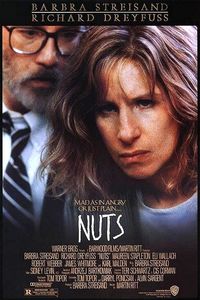
    (In French, On TV, July 2020) Either I saw Nuts before (likely!) or the plot points are now commonplace, because I had a strong impression of déjà vu while watching this courtroom thriller. Featuring Barbra Streisand as a quick-to-anger high-class prostitute who is accused of murder, much of the film consists in determining whether she is apt to go on trial. Perhaps its biggest assets are the two headliners: Streisand is watchable no matter the circumstances, and Richard Dreyfus was seemingly everywhere at the time that Nuts was shot and his performance shows why. (On the other hand, having Leslie Neilsen in one of his last dramatic roles as an abusive john definitely doesn’t play as well to later generations used to his comic roles.) There are a few good moments here and there (although the big “click” in the lawyer’s head definitely felt predictable and formulaic), but Nuts doesn’t have a clear focus on what it’s trying to do. For one thing, it plays with the question of craziness or not, but in flashbacks it seems all too ready to reassure the audience that there is no question there. Troublingly, the morality of the film revolves around Streisand’s protagonist, because it insists that she’s a good person even though the way she behaves would not be tolerated in any family, workplace or friendship. I wonder how much the passing of years has exposed the weaknesses of the film, since much of the stuff here seems fairly familiar: contemporary reviews called Nuts daring, whereas it feels more like a movie of the week now.

  • Peckinpah Suite (2019)

    Peckinpah Suite (2019)

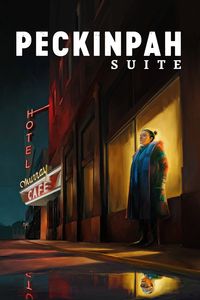
    (On Cable TV, July 2020) If you’re looking for an overview of Peckinpah’s movies and career, documentary Peckinpah Suite is not the ideal film. It’s best approached by Peckinpah fans who want to know more about a specific moment in his life—namely, the period during which he retired from Hollywood and went to the small Montana town of Livingston to stay at the Murray Hotel (in a room since renamed the “Peckinpah Suite”) and then a mountain cabin. The viewpoint character here is Peckinpah’s daughter, who travels to Livingston in an attempt to retrace her father’s steps and reconnect with his memory. The pretext is thin (the site’s suite has been remodeled to cover the director’s bullet holes, and his cabin has changed owners a few times—what can possibly remain of Peckinpah?) but it’s not a bad excuse to hear about Peckinpah from his estranged daughter. It ends with a semi-elegiac overview of Peckinpah’s death. Visually, the documentary does feature good visual material, especially in its use of drone footage for sweeping overhead shots featuring the natural beauty of Montana. While it provides some interview footage and an overview of Peckinpah’s influence (through interviews with local film students), Peckinpah’s Suite belongs to “for the fans” category rather than a standalone piece.

  • Ford v Ferrari (2019)

    Ford v Ferrari (2019)

    (On Cable TV, July 2020) I’m not a car guy in real life, but I can play one when I go to the movies. It sure helps that Ford v Ferrari is so enjoyable—even if you don’t like the idea of a film focused on Ford’s drive to win the 1966 Le Mans race, there’s still quite a bit to appreciate in the clash of oversized personalities inherent in this kind of quest. Matt Damon (who looks better as he ages and gets heavier) is his usual dependable self as none other than the legendary car designer Carroll Shelby, while Christian Bale turns in another great character performance as the abrasive overconfident driver Ken Miles. Great special effects put us in the middle of the action, which leads to credible race sequences. There is some suspicious irony in having audience cheer for Ford (of all companies!), although it does play with this by having us cheer for individuals within Ford overcoming the corporate interests. Still, Ford v Ferrari remains a breezy good movie, fun until the sobering end when the real facts catch up to the dramatization.

  • Juste la fin du monde [It’s Only the End of the World] (2016)

    Juste la fin du monde [It’s Only the End of the World] (2016)

    (On Cable TV, July 2020) Families imploding is a traditional topic matter for theatrical pieces, and Xavier Dolan’s Juste la fin du monde follows in the footsteps of such great pieces as Osage County in revealing a progressively dysfunctional group of people. Alas, Dolan puts too much trust in the original theatrical material in his film adaptation because it comes across badly and over-stylized. The syncopated dialogue, the overly aggressive characters and the glum subject matter are from the play and they may have been better left there, because they come across as artificial. Then there are the other things that torpedo the film. The constant close-ups of the characters’ faces approach a near-parodic rhythm during the initial introduction scene, and the universality of French-European accents in a story clearly set in French Canada is weird enough to be disorienting. I do like Marion Cotillard, Léa Seydoux and Vincent Kassel a lot, but they have unbelievable characters here, with Cassel’s character being a simply unbelievable cauldron of constant fury—even the characters get tired of him. Juste la fin du monde plays in caricatures and, by the end, seems almost entirely meaningless. There are the usual Dolan thematic obsessions—gay protagonist, mother-son relationships, blunt use of pop music and difficult topic matter—but they seem mishandled and ultimately don’t lead anywhere.

  • Tom à la ferme [Tom at the farm] (2013)

    Tom à la ferme [Tom at the farm] (2013)

    (On Cable TV, July 2020) Amazingly enough, there are still a few people out there that hold that genre fiction is “easier” than straight drama—that anything with crime, fantasy or extrapolation is somehow less respectable than strictly mimetic realism. That kind of attitude often leads to spectacular misfires when those creators finally deign to try their hands at those “lesser” forms of creation, as they clearly don’t understand what makes genres tick. Most of my go-to examples are from literature (and science-fiction literature at that), but I was reminded of those misfires in tackling Tom à la ferme, which feels a lot like a thriller in which the writer can’t be bothered to thrill. It’s a good thing that I’ve seen other better Xavier Dolan movies before this one, because it feels like an indulgent semi-parody. As a gay protagonist (check) goes back to rural Québec to meet his dead boyfriends’ mom (check) to the sounds of insistent pop music (check), we also meet the dead boyfriend’s brother, who’s also gay (check) and unusually violent (check). I don’t recall slow motion (not check), but there are enough sustained shots of the protagonist’s face against a variety of backgrounds that it actually makes more sense to learn that Dolan plays the protagonist and writes and directs himself. But my biggest issue with Tom à la ferme is that it builds the antagonist to fearsome levels but doesn’t actually go through any payoff—the characters run away, they find evidence that the bad person did a bad thing and the credits roll—if you want a damming illustration of the film’s lack of climax, try reading the Wikipedia plot summary cold: it’s accurate, intensely anticlimactic and it clearly illustrates the film’s inability to conclude. While the film does have its dramatically intense moments, they don’t really lead anywhere. There’s a genre bait-and-switch here, and I don’t like it. Fortunately, Dolan has done much better elsewhere.

  • Bad Girls (1994)

    Bad Girls (1994)

    (In French, On Cable TV, July 2020) There were a surprising number of revisionist westerns in the 1990s, each one poking and prodding at various aspects of the classic Hollywood western tradition. The male domination of the genre is clearly the thing that Bad Girls wants to discuss, but there had to be a better way of doing it. With Madeleine Stowe, Mary Stuart Masterson, Drew Barrymore and Andie MacDowell, Bad Girls attempts to upend the usual western clichés by making the prostitutes the heroines of their own stories, taking revenge over bad men. It’s not a bad premise, but the way the film goes about it feels subservient to a male gaze in its execution. (Not to mention rape as a near-omnipresent plot device.) Our heroines are often scantily clad, going for titillation as much as empowerment. It really does not help that the film is executed flatly, with little in terms of wit and grace in the dialogue and situations. Director Walter Scott seems content to play with the images of the genre without doing anything much with them. Even in presenting women as western heroines, the film errs in caricatures. I still think that the premise holds a lot of potential, and I am a bit surprised that a quick search for “feminist western” doesn’t reveal any well-known successors. But Bad Girls doesn’t set much of an example—it simply doesn’t know what to do with its potential, and wastes almost all of it along the way.

  • The Death & Life of John F. Donovan (2018)

    The Death & Life of John F. Donovan (2018)

    (On Cable TV, July 2020) Expectations ran high about French-Canadian wunderkind Xavier Dolan’s English-language debut The Death & Life of John F. Donovan, especially considering the calibre of the Hollywood cast that joined the project. But it doesn’t take all that much time to realize that the whole thing is a misfire. Emotionally fake and yet self-satisfied with itself, it features characters doing either implausible things (such as having an eleven-year-old being pen pal with a troubled star actor) or being amazed at their own actions when they’re fairly standard stuff (i.e.: a journalist being seduced by a rather humdrum story). The film quickly undermines its own internal coherence, as it mixes a framing device with two other previous plotlines, except that the framing device can’t even be aware of much of the previous timelines—it’s a bit of a mess and it rings hollow the way that other similar pretentious movies as The Goldfinch also did. The Death & Life of John F. Donovan is slick all right—and you don’t have to look all that deeply to spot Dolan’s usual cinematographic tics or thematic obsessions. I’m always lenient toward movies that take a poke at celebrity and filmmaking, but even considering that, The Death & Life of John F. Donovan is a disappointment, taking itself far too seriously from the title onward.

  • Mommy (2014)

    Mommy (2014)

    (In French, On Cable TV, July 2020) Any look at Xavier Dolan’s filmography has Mommy near the top of his critical notices and while the film is flawed, it does have some undeniable strengths. After a clumsy opening text that could have been handled in two or three lines of dialogue, we’re off to the races: A mother/son relationship (in keeping with Dolan’s obsessions) featuring a deeply aggressive young man kicked out of a specialized school and coming home to make life hell for his mom. If you’re looking for a nice, fun, comforting film, this isn’t it: there are a few scenes here that are excruciating to watch, and Mommy makes a bold bet in making a main character out of an irremediably despicable young man. The conclusion is forgone, and the way to get there is just as difficult. Dolan’s artistic choices are sometimes questionable—such as filming in 1 × 1 aspect ratio and justifying it as “intimate” when generations of filmmakers have presented domestic dramas in more standard formats. Anne Dorval is terrific as the titular mommy, while Antoine Olivier Pilon is perhaps too good as the hateful son. Also remarkable is Patrick Huard in a markedly more serious and less admirable role as usual. Mommy is certainly not easy to watch nor perfect, but there are a handful of scenes with tremendous dramatic intensity, and it’s executed better than usual.

  • “Crocodile” Dundee II (1988)

    “Crocodile” Dundee II (1988)

    (In French, On TV, July 2020) If you have a box office hit with a good premise, the best and easiest way to make more money out of it is to deliver another slight variation. Since the main attraction of the Crocodile Dundee series is both Dundee’s character and his fearless reactions at being out of his element, sequel Crocodile Dundee II keeps the character but inverts the structure: While the film begins in Manhattan to show more of Dundee’s antics in the urban jungle, familiar criminal plot mechanics soon bring the action back to the Australian outback, with Dundee playing with deadly opponents on his home turf. The result does feel a bit more Hollywoodish than the original—a bigger budget polishing the rough edges of the original Australian production, with an interest in reaching a bigger, less indulgent audience. The criminal plot is perfunctory, just expansive enough to bring the protagonist in contact with deserving targets all the way home. The point of Crocodile Dundee II remains Dundee’s character, and that does carry over the film. The result is not bad, and neither is the series star Paul Hogan, but it doesn’t reach for sophistication and does feel like much of the same.

  • Camping sauvage (2004)

    Camping sauvage (2004)

    (In French, On TV, July 2020) French-Canadian cinema has a decent tradition of going for big crowd-pleasing comedies, and Camping Sauvage is clearly set in this tradition, helped along by input from a number of the defunct but not forgotten Rock et Belles Oreilles comedy troupe—Yves Pelletier and Guy A. Lepage showing up in key roles, André Ducharme helping write the script and fan-favourite Sylvie Moreau playing the lead female role. The premise isn’t meant to be high art, as a Montréal financial high-flyer witnesses a criminal act by a mob figure and is immediately sent packing in a witness protection program until the trial. Which means being given a new lowest-of-the-low identity working in a camping establishment, with a biker gang headquarters right across the street and a policeman contact more interested in romantic jealousy than professionalism. Camping sauvage is slickly directed by most standards, although the humour is very French-Canadian in patois and cultural reference. Still, it’s a pretty good time—pair it with De Père en Fils (either the original or the sequel) for similar material.

  • Laurence Anyways (2012)

    Laurence Anyways (2012)

    (In French, On Cable TV, July 2020) Amazingly enough for a self-professed Canadian cinephile, I had managed to avoid watching any of wunderkind Xavier Dolan’s movies until now. Fortunately, here are CanCon requirements flying to the rescue, with a national movie cable channel broadcasting no less than five of his films for Canada Day. First up, one of his earliest: Laurence Anyways, arguably his critical breakthrough. From the evidence presented by that film, it’s easy to see what the fuss about Dolan is about: a difficult topic treated with panache and sensitivity, as a transgender woman has romantic issues with a longtime partner after her transition. The director’s work is made obvious through flourishes such as extended montages set to blunt-force pop music, slow-motion shots and clear shifts in tone and rhythm—it’s showy work, but it clearly shows fluency with the tools of the trade. The actors do good work (especially Melvil Poupaud, in a dual-gender role, and Suzanne Clément as the long-suffering girlfriend) and the result clearly exceeded my moderate expectations considering the film’s intimate, non-genre premise. The quebecicity of the film is zigzagged through the protagonist’s mid-Atlantic accent. Still, despite my overall good impression of the result, Laurence Anyways can sometimes be a bit too much, as the two-plus-hour running time isn’t fully deserved—simply avoiding the slow motion would significantly improve the film’s running time.

  • Thirteen Days (2000)

    Thirteen Days (2000)

    (In French, On Cable TV, July 2020) As I watched Thirteen Days, I was struck not so much by the familiar story of the Cuban Missile Crisis of 1962, but by how any movie that sets out to explore a presidency’s response to a crisis will be instantly measured against the administration in place. As of mid-2020, with more than 125,000 Americans dead from a global pandemic, an impeached (but not convicted) president, an incompetent administration and a current of urban unrest lingering from protests worsened by the federal response, this is the kind of film to twice underline how important it is to have capable leadership in place when things go wrong. It is very much a heroic presentation of the crisis, as seen by a protagonist close to JFK. Thirteen Days does manage to find creating ways to pump up its action quotient, most notably by going to the forefront of the not-quite-conflict in following reconnaissance jet pilots are they get potshots while surveying the Cuban countryside. There are touches of techno-thriller tropes in the way the film spans the chain of command from the president to the pilots, and slightly fetishizes the technology of the time. Political brinksmanship also comes into play as the president’s people try to figure out how to de-escalate the situation with the Russians. Thanks to the professional work from director Roger Donaldson, the film moves at the briskest pace it can afford while still offering a nicely package summary of the action—within the usual Hollywood indulgences, most notably in what the lead character does or knows. Kevin Costner plays that protagonist well, while Bruce Greenwood succeeds in the tough assignment of playing John F. Kennedy. The portrayal of the events is credible, playing into our preconceived notions of serious men in shirtsleeves, looking at documentation late in the night and bouncing ideas off each other to try to resolve the crisis. Of course, this is far more poignant now in 2020 than it would have been in 2015 or (hopefully) in 2021: the current president has proven more competent in creating crises than dealing with existing ones—he will be a blot on the presidency, and we can only be thankful that he will be replaced with good people in charge.

  • Fathers’ Day (1997)

    Fathers’ Day (1997)

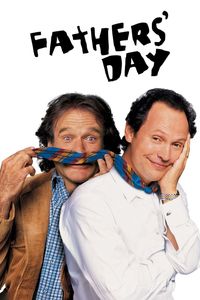
    (In French, On Cable TV, July 2020) Some movies are about as forgettable as their titles, and so it is that Fathers’ Day is about as generic as its titular holiday. The premise does have a bit of interest to it, as a woman separately manipulates two ex-suitors into believing that they have a hitherto unknown son… and that he needs to be found. It wouldn’t be nearly as funny if the two men didn’t meet and share notes at some point, which does happen once the action gets underway. Of course, such material needs strong comic actors, and so perhaps the one thing that most people will remember from the film is that it’s Billy Crystal facing down Robin Williams as two very different father figures. The generic Hollywood comedy star vehicle approach means that the script leaves many opportunities for Crystal and Williams to mug at the camera and do what they do best. Williams is his usual hyperactive polymorphous persona as a dramatic drama teacher, while Crystal gets to punch an unusually large number of people in the face in a lawyer’s role. The picaresque adventure takes them on the road across California to find out what happened to their son, taking us from scenes shot in Los Angeles, San Francisco and Reno (at least one of those cities doubling for Sacramento) along the way. Much of the film is very generic once you get past the lead actors, although seeing late-1990s Julia Louis-Dreyfus is fun, and the atmosphere (specifically the overwhelming music) is starting to date the film as a period piece. I didn’t hate Fathers’ Day as much as some other reviewers did, but neither did I find it all that compelling.

  • Doctor Sleep (2019)

    Doctor Sleep (2019)

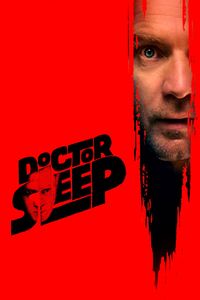
    (On Cable TV, June 2020) The recent second-generation re-ignition of interest in Stephen King’s adaptations is a beautiful thing to watch: I like King and I think that history will have great things to say about him, but it’s good to see the consecration happen in real time. With Doctor Sleep, director Mike Flanagan is at his second King adaptation and he continues to prove his suitability for the material. After several well-received low-to-medium films, Flanagan is now working in the big-budget leagues, and this translates into an increased ability to play with strong unusual images (the snake-like overhead shot of a caravan sticks to mind). For Doctor Sleep to rely so much on its association with The Shining is not necessarily a good thing at first, as it puts the bar too high for the film to ever reach—and it’s a bit of a bait-and-switch in that the essential plot of the movie has little to do with The Shining. No, here we’re tracking down a bunch of evil soul-stealers as they go kidnapping and harvesting psychic energy from unusually gifted children across the United States. Against them we have Terrence (returning from The Shining decades later) and another gifted child. While Doctor Sleep is imperfect, it does have quite a few things going for it. Like many of King’s adaptations, it’s a horror film that goes well beyond the boring monster features that so often pass for horror—there’s a little bit more to it, and parts of the film bring to mind more recent TV shows that use horror as a blend in their magical realism mix—at times, especially at first, there’s a cross-country Americana vibe to the film that could have been interesting in its own right… but here it’s a prelude to a good-versus-evil battle featuring flawed characters and unusual powers. Ewan MacGregor has a good role here, helped along by a large supporting cast. In many ways, Doctor Sleep does feel like the culmination of something that has been brewing in earlier episodes. Some clever set pieces are a highlight, such as when the bad guy has tables turned on them by one of the protagonists acting like a horror movie monster. The return to the Overlook Hotel at the end doesn’t quite work—again, too strong a reference to a previous work without hope of attaining it, with a payoff that is slightly disappointing. Still, the result is worth a look, especially in how it steps away briefly from what could have been a far more conventional story. We can thank King for that, and Flanagan as well.