Reviews

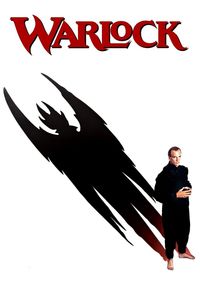
  • Warlock (1989)

    Warlock (1989)

    (In French, On Cable TV, May 2020) By the standards of late-1980s horror, Warlock is both different and somewhat sedate. It follows the titular warlock (Satan’s son, we’re told) as he’s propelled from 18th-century Boston to circa 1989 Los Angeles, pursued by a witch hunter. While some of the details used in the narrative (the use of salt, notably, or some fish-out-of-water comedy from the two 18th century characters in modern times) are lively and show some imagination from screenwriter David Twohy, much of the film is a shrug-inducing battle between good and evil involving spells, magic artifacts and incomprehensibly end-of-the-universe high stakes. What does work well, however, is Julian Sands’ very charismatic performance as the warlock. While not horrible and tastefully restrained in matters of gory violence, Warlock is a bit of a snooze—it doesn’t come together as anything more than a middling fantasy/horror. It probably would have done better had it leaned more into comedy, or drama, or horror—but not in its current indecisive state.

  • The Reckoning: Hollywood’s Worst Kept Secret (2018)

    The Reckoning: Hollywood’s Worst Kept Secret (2018)

    (On Cable TV, May 2020) Surely, I can’t be the only one who’s uneasy watching ripped-from-the-headlines crime documentaries? Oh, I’m fine with seeing powerful Hollywood figures finally facing justice for their crimes and terrible actions. And I’m fine with victims telling us their stories—truth will out, and truth cleanses. What I’m not too enthusiastic about is the idea of a documentary produced so soon after the events—before the verdicts, before the dust falling down, before being able to take a look at all of it and extract lessons and conclusions from it all. Veteran documentarian Barry Avrich takes on a topic that’s both touchy and obvious in The Reckoning: Hollywood’s Worst Kept Secret—starting with Harvey Weinstein in exploring a culture of sexual abuse within Hollywood. I say “obvious” because it’s been impossible to take in entertainment news since 2017’s #MeToo hashtag and ignore that several high-profile actors, directors, comedians and producers have been accused of sexual harassment and worse. Barely a few months later, The Reckoning is jockeying for relevance, with newspaper headlines still revealing details about the many accusations and ongoing investigations. At the same time, it’s a live wire of a topic—it illustrates not only the criminal actions of the accused, but also the bad behaviour of those around them that enabled, tolerated or ignored the sordid actions of the aggressors. But what we get is a sketch of what will eventually become the final story: As of this writing, Weinstein has just been convicted in New York state, and awaits another trial in California—meanwhile, other investigations are still pending on other accused abusers. As to what this means in general, we don’t know: the optimists believe this will help purge Hollywood of its offenders, while cynics state that the rot will always be there. Whoever’s right will only be determined much later, possibly in a documentary with more facts and conclusions at its disposal. Until then, The Reckoning, even as good as it is, feels like a newspaper—vital upon publication, but increasingly obsolete every following day.

  • Natalie Wood: What Remains Behind (2020)

    Natalie Wood: What Remains Behind (2020)

    (On Cable TV, May 2020) Considering the richness of Natalie Wood’s life (the films, the forty-year-long career, the child star, the beauty, the men she dated, the family, the clashes with the studios, the awards) and the tragic circumstances of her death in 1981, any documentary about her has an embarrassment of material to showcase. Documentarian Laurent Bouzereau chooses a middle path in Natalie Wood: What Remains Behind, trying to strike a balance between the film that her daughter Natasha Gregson Wagner (the film’s defining voice) wanted to see as a celebration of her mother’s life, and the more sensitive discussion of her death, which is what most viewers are interested in. After the rapid-fire overview of her career, the film moves to a climax of sorts when Gregson Wagner interviews her stepfather, Robert Wagner, about what happened on the boat the night Wood died. While Wagner’s responses are emotional, they’re also incomplete and don’t reveal anything new. While clearly designed to exonerate Wagner of any wrongdoing, the film ends up being this semi-hagiographic, semi-regurgitated look at Wood that packages her life and one version of her death into content fit to feed into the streaming maw — but does not bring any new light on the topic. So, Wood fans, keep your expectations in check and take the documentary for what it is—a reminder of a vivacious screen presence gone too soon, a celebration of her less-visible facet as a mother, and a public statement by her family. Considering that of the four people that were on the boat that night, two are dead and the two others are Christopher Walken and Robert Wagner, maybe we’ll eventually get a more satisfactory answer. But then again, maybe not. One thing’s for sure—if you’re looking for a more even-handed approach to Natalie Wood’s life and death, read a book.

  • Tirez sur le pianiste [Shoot the Piano Player] (1960)

    Tirez sur le pianiste [Shoot the Piano Player] (1960)

    (On Cable TV, May 2020) Many cinephiles think the world of François Truffault’s debut feature Les 400 coups, but for me he starts hitting his marks with Tirez sur le pianiste, where (having said what he had about his childhood in his first film), he starts playing with the topics that he would then revisit over and over in his career—Hollywood homage to crime films with gangster subplots and a murder somewhere in the narrative; complex unglamorous relationships between his protagonist and women; the stylistic hallmarks (jump cuts, guerilla-style shooting, voiceovers, nonlinear storytelling) that would mark the French cinema for the next two decades. Tirez sur le pianiste explicitly looks at the United States for inspiration (film noir for style, an English-language novel for the plot) and blends it into its own execution. The mixture of crime thriller and talky French romantic drama is in line with the entirety of French cinema, from poetic realism to the impending nouvelle vague. A young Charles Aznavour (yes, him) is remarkable as the protagonist, a piano player trying to escape his dark past. Amazingly enough for French Canadian viewers, the soundtrack features some Felix Leclerc! While not flawless (it’s long, sometimes dull), Tirez sur le pianiste is generally better than many similar examples of French cinema at that time, and clearly announces Truffaut as the director he wanted to be.

  • Mixed Nuts (1994)

    Mixed Nuts (1994)

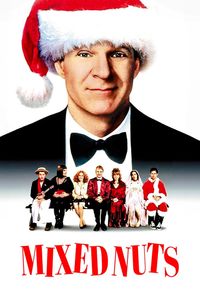
    (In French, On Cable TV, May 2020) I’m somewhat nonplussed by Mixed Nuts. It’s a weird, very Americanized adaptation of the pitch-black French Christmas comedy classic Le père Noël est une ordure (which I haven’t seen in ages), set in snowless Los Angeles on Christmas Eve. Much of the weirdness is due to it being pulled in two different directions—the very dark comedy of the original (which ends with body parts of a serial killer being wrapped up in Christmas packaging and fed to zoo animals) and the innocuous audience-friendly style of writer-director Nora Ephron. I mean—this doesn’t feel like an appropriate match, and it isn’t. What were they thinking? This is the kind of premise (dark comedy hijinks at a suicide prevention hotline on the day before Christmas) that calls for a low-budget anarchic approach, not a glossy Ephron-style comedy. This is nowhere as dark as it should be, and it’s wrongly engineered for guiltless Christmas cheer. The high-budget slick approach also ensures that the film is made to be safe, and that, in turns, means that its approach to two sensitive topics—mental health and transgenderism—now feels half-outdated rather than transgressive. (It’s not as bad as it could have been—Liev Schreiber’s transwoman character is treated with some respect—but it clearly wouldn’t be remade the same way today.) As a result, the comedy feels both forced and neutered, and the laughs usually take the form of mildly amused smiles. But even then, as the film’s title jokes on my behalf, Mixed Nuts is also a grab-bag of other, more interesting bites: The cast is admittedly impressive, with a mixture of names that were familiar at the time (dark-haired Steve Martin as the hotline director, Rita Wilson as the attractive co-worker with a crush, Juliette Lewis, Madeline Khan and Rob Reiner), and other ascending actors used in sometimes small roles (Adam Sandler doing ukulele, a Steven Wright cameo, Parker Posey and Jon Stewart as rollerbladers, Haley Joel Osment and others.) Martin and Wilson, in particular, get nice roles even in the middle of a confused comedy. Still, The biggest takeaway I’m getting from Mixed Nuts is that I need to re-watch Le père Noël est une ordure soon.

  • The Price of Everything (2018)

    The Price of Everything (2018)

    (On Cable TV, May 2020) You would think that having watched another feature-length documentary about the modern art world (Blurred Lines: Inside the Art World) two weeks earlier would have been an issue in appreciating the similarly-themed The Price of Everything to its full value. But no—it speaks to the insanity of the modern art market that there is more than enough space for two, three or even more fascinating documentaries about it. This one takes a gently confrontational approach in interviewing artists about what they think of the bull run on their artwork, then goes on to show what’s happening at auctions with art critics, curators and collectors. The field’s remarkable absurdity is highlighted by the contrast offered between the artists (most of them far humbler than you’d think) and the ludicrous amounts of money thrown at one auction after another. (In one of the film’s best moments, it gets a live aghast reaction from an artist being shown how her art was essentially “flipped” in speculation.) Director Nathaniel Kahn gets access to two opposite artistic heavy hitters—corporate Koons, unpolished Poons—and uses their work as a springboard to examine the question of expensive art, bought for millions and stored away from the public, only reappearing to be sold as investments at higher prices, safely out of reach of all museums. Other talking heads span the spectrum from collectors, salespeople (oops; “gallery representatives”), and commentators. There are some intriguing juxtapositions in the way The Price of Everything’s material is presented, perhaps none as hard-hitting as the end-credit sequence in which art is taken down from a gallery wall, driven to an off-Manhattan storage facility and unceremoniously stored in an anonymous high-security storage locker. Completely fascinating—I have a feeling I could line up a day’s worth of modern art documentaries, and they would all be great.

  • L’âge des ténèbres (2007)

    L’âge des ténèbres (2007)

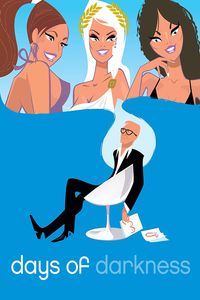
    (On TV, May 2020) There are movies that I probably should have seen earlier, and L’âge des ténèbres is one of them—a major French-Canadian movie, featuring a roster of circa-2007 working actors and with substantial science fiction plot elements tinged with dark comedy. It takes place in 2007’s near future with striking similarities to present-day 2020, what with technology-obsessed people and facemasks in schools and public transit. Its story revolves around a bureaucrat beset by middle-age ailments and escaping into reveries à la Walter Mitty. Denys Arcand is not subtle at all in presenting a non-stop carnival of modern problems and evidence of the fall of civilization—I normally wouldn’t be impressed by yet more suburban malaise, but there is something impressive and often hilarious in the completeness of Arcand’s vision. It gets funnier and funnier, as even the fantasies start turning against our protagonist. Lead actor Marc Labrèche is very good in the lead role, with a hangdog expression complementing an undeniable comic fluidity. Some of the background details are very good—although they may be lost on non-French-Canadian audiences, such as the dubious wisdom of setting up a government office in the Olympic stadium with its falling concrete beams (although this is alluded to). It’s fascinating that the protagonist would find an antithesis in incarnating fantasy to its fullest by going to a Renaissance Fair. Still, I’m not sure about the ending—I’d like to see at least once a film about midlife crisis that didn’t necessarily end with the protagonist quitting his job, trashing his car, leaving his marriage and ending up in a shack (admittedly one with a great view of the Saint Lawrence). Surely, there are ways to achieve a better synthesis of how to deal with modern ailments than to reject all of them. On a more serious note, L’âge des ténèbres is probably the movie that best represents (even with large discrepancies) the lowest point of my adult life around 40—fortunately, things are better now, and despite thinking that I should have seen it earlier, I’m actually happy that I’m seeing it today rather than a few years ago when I was in the thick of it.

  • Affairs of State (2018)

    Affairs of State (2018)

    (On Cable TV, May 2020) The duality of political thrillers is that they can be very cerebral affairs dealing with the abstract, even lofty ideals essential to the fabric of the state… or they can be trashy sordid affairs mixing petty transgressions and crime magnified by the whiff of power. Affairs of State reveals its true salacious colours early on with a sex scene featuring Mimi Rogers, and then the congressman having the affair goes on to also have sex with her daughter (but not at the same time, that would be too much). The rest of the film is this fantasy of American politics as being a mush of blackmail, affairs, hot sex, corruption, murder, coverups, people shouting at each other and more hot sex. (I listed hot sex twice because I like what I like.) Directed efficiently by Eric Bross, Affairs of State is at its best whenever Mimi Rogers is on-screen, or failing that whenever it’s wallowing in its own trashiness as if there was no tomorrow. Conversely, it’s at its weakest whenever it tries for loftier political statements, like a new conservative party somehow being viable. David Corenswet does well as the oversexed protagonist—but he’s not going to do well if he sticks to those low-budget potboilers. The ending, unfortunately, doesn’t quite cap off the wild ride to get there and feels as if Affairs of State ends on an anticlimactic letdown.

  • After Darkness (2014)

    After Darkness (2014)

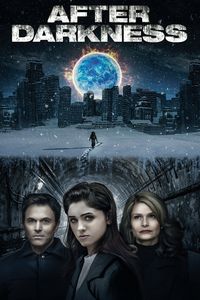
    (On Cable TV, May 2020) Before getting into the meat of this review, let’s clear up one thing: What some movie sites call After Darkness (2019) (sometimes 2018) is known as After Darkness (2014) on IMDB, so that’s what I’m going with—it’s not rare for disappointing low-budget movies to be widely released in the United States a while after production, but the five-year gap between its 2014 Singapore DVD release and 2019 US video release is significant enough to cause confusion. What’s even more unfortunate is that this release delay is by far the most interesting thing about After Darkness, an almost-theatrical dining table post-apocalyptic drama about a rich family cooped up in their mansion while waiting for rescue after the extinction of the sun. The mansion is well lit and temperatures seem to be holding up nicely considering the now-eternal night, but if you’re looking for scientific rigour here, you’re going to be disappointed when elementary plausibility itself seems to elude the filmmakers. While the impending apocalypse means a definitive ending to the film, this isn’t anywhere near von Trier’s similar Melancholia in terms of dramatic tension: as the script throws in the expected tropes (family tensions, last-minute relationship rifts, crazy mom, additional guests, home invasion, home birth, extinguished hope), it doesn’t feel intense as much as perfunctory. Sure, the overprotective father is a worse threat than the blown-out sun or armed intruders, but so what? Everyone’s going to die, and while After Darkness does some crazy tap-dancing to avoid showing the inevitability of the ending it’s pursuing, it’s still not particularly edifying nor enjoyable. It’s directed with a certain comfy elegance by Batán Silva, except when the matter turns nasty and unpleasant. Still, I go back to the conclusion as proof of After Darkness’s creative hollowness: if your point is to show how characters crack under the worst pressure imaginable (the inevitable end of everything), then go with them to the final moments—don’t chicken out with a narcotics-induced hallucination that makes everything falsely pretty. If I want existential depression, I’m going back for von Trier next time. At least he knows what he’s doing. And his movies don’t get shelved for years before being released.

  • Jue di tao wang [Skiptrace] (2016)

    Jue di tao wang [Skiptrace] (2016)

    (In French, On Cable TV, May 2020) The weird pairing at the heart of Chinese action blockbuster Skiptrace—Jackie Chan plus Johnny Knoxville!—isn’t so weird once you realize that both have a comic daredevil persona, and that their differences (Chan as the affable one; Knoxville as the abrasive one) work pretty well as counterbalance. The film’s slight story has them embark on a travelling odyssey while pursued by the mob across Asia (especially Mongolia—when was the last time you saw a film set in Mongolia?), but the point is getting them into one action-comedy set-piece after another. Of course, there’s now a limit to how much bone-breaking behaviour both of them can engage now: They are both getting older and can no longer quite defy the insurance requirements of a major scripted film production. This means action-lite material for Chan (although he can still bring it—the collapsing river houses moment is fun), and largely an observer role for Knoxville, thankfully more subdued than you’d expect. (In another universe, Knoxville could have become an action-movie leading man, and this will show you how.) While the result isn’t one for the history books, Skiptrace nonetheless becomes and remains watchable—it’s amusing and pleasant, even if the climax doesn’t have much grandeur. Renny Harlin directs with professionalism in what’s getting to be the “international action director-for-hire” phase of his career. Of note to action movie fans is how the film deals with globalized mayhem, and relies on Russian mobsters for antagonist—is this going to become a fixture for Chinese movies from now on?

  • The Domestics (2018)

    The Domestics (2018)

    (On Cable TV, May 2020) If you’re looking for a strong Science-Fictional reasoning behind The Domestics’ post-apocalyptic worldbuilding, hah, don’t bother: The opening visual of B-52s chem-bombing the United States is a great opener, but it’s explained more by the film’s cartoonish plot requirements than anything else. Years after a massive die-off, we’re to believe that American society has neatly divided itself in five violent gangs and the “domestics” trying to remain good Americans without the Mad Max cosplay. More of a horror road movie than anything else, The Domestics features a couple of ordinary Americans going from one thrill to another as they try to travel back to her parents’ place and reconcile through the mutual killing of enemies. Cannibalism, deadly games of Russian roulette and the likes are the film’s stock-in-trade, and while writer-director Mike P. Nelson’s execution is at least competent, it’s not a lot of fun, not likable, not uplifting, not pleasant to look at and not really interesting. Kate Bosworth looks out of central casing as the generic blonde lead and doesn’t bring much to the result. The Domestics hits its best moments whenever Lance Reddick is on-screen—otherwise it’s a lazy, cheap, tedious half-hearted attempt at post-apocalyptic fiction that will disappear without a trace.

  • Driven (2018)

    Driven (2018)

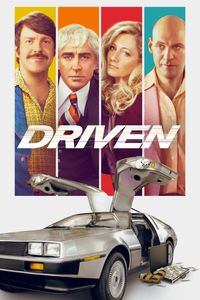
    (On Cable TV, May 2020) Considering the outrageous nature of John DeLorean’s story in founding DMC at the beginning of the 1980s, it’s a wonder that a film about his life hasn’t been made earlier. But maybe some distance helped, as suggested by the darkly funny tone taken by Driven as it fictionalizes the incredible crime story that transformed DeLorean from a car maven entrepreneur to a convicted felon. Wisely, the film doesn’t focus on the grander-than-life DeLorean as much as one of the supporting characters in his story—the man who would eventually become an informant for the FBI and expose DeLorean’s drug deals to finance his company. It’s all very entertaining, but take everything with a grain of salt, of course—Driven isn’t interested in factual accuracy as much as its breezy, very seventies atmosphere and comic approach. A bunch of likable actors help make the film even better—Lee Pace as the very tall, white-haired DeLorean, Jason Sudeikis in the lead role, and notables such as Judy Greer and Corey Stoll in supporting turns. Despite the comic intent, the film does demonstrate the reasons why DeLorean turned to drug dealing for last-resort cash, and even finds some empathy for the doomed character stuck in ambitious schemes that could not come to a happy conclusion. While very watchable, Driven does come with a few warnings—there’s an undercurrent of sadness behind it all, the film isn’t too sure of how far it should push the comic tone, and it’s very distant from the true story of what happened. [July 2020: If you’re interested in the facts, take a look at the documentary Framing John DeLorean, which is even better than the fiction.]

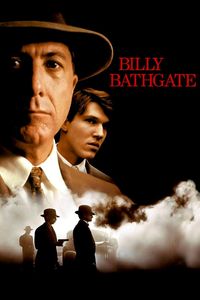
  • Billy Bathgate (1991)

    Billy Bathgate (1991)

    (In French, On Cable TV, May 2020) At first glance, Billy Bathgate looks like the kind of slam-dunk entertainment that 1990s Hollywood made so well—a mixture of coming-of-age drama set within a fascinating gangster context, with a little bit of romance to sweeten the whole thing. Throw in the 1930s period recreation, a bestselling source novel written by EL Doctorow, a strong cast of actors, plus story elements so familiar that they become comfortable, and Billy Bathgate looks like a ready-made audience pleaser and potential awards contender. Except that it didn’t turn out that way.  Production of the film was marred by endless rewrites, significant cost overruns and Doctorow distancing himself from the adaptation. Things didn’t get better upon the film’s release, as critics savaged it and audiences ran away. Now a largely forgotten relic of a decade now long past, Billy Bathgate has become a curiosity. It hasn’t improved with age—the blend of coming-of-age drama with gangster thrills is still awkward, and curious creative decisions keep haunting the film and making it duller than it should be. On the other hand, it does have some nice period detail, a fun episode set in a small upstate New York town, a rather amazing cast made of then-known names (Dustin Hoffman, Nicole Kidman, Bruce Willis) and people who would later become far more prominent (Stanley Tucci, Steve Buscemi), as well as far more nudity from Kidman than you would expect from the nature of the film. For film reviewers, it’s not a bad idea to go back in time to see not only the classics, but also the failures like Billy Bathgate. Decades past the media pile-up that often happens in such cases, it can be instructive to look at the wreckage and wonder—well, what happened here?

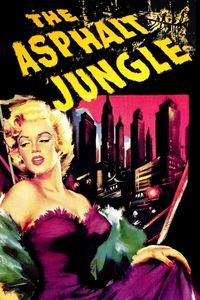
  • The Asphalt Jungle (1950)

    The Asphalt Jungle (1950)

    (YouTube Streaming, May 2020) There is something both familiar and comfortable in the very enjoyable film noir heist movie The Asphalt Jungle. It was a bit of a sensation at the time—a film that stripped away the glamour of Hollywood to approach cinema-vérité and spent more of its running time with the criminals planning a heist than the policemen hunting for them after the crime. Those are now standard features of crime movies, of course—and this may mask some of the impact of the film as it was perceived back then. Fortunately, John Huston’s direction here is masterful and has aged very well. While The Asphalt Jungle can’t escape a certain scattered effect in the midway section, it tightens up in time for the conclusion. The mid-century Midwest atmosphere is very convincingly rendered, and it’s supplemented by the corrupt characters and unescapable fatalism so beloved of the film noir genre. Sterling Hayden turns in one likable lead performance in an otherwise fairly grim cast—although there’s an early turn by Marilyn Monroe to make things even more interesting. The Asphalt Jungle makes for compelling viewing even with the familiarity of its narrative—when something works, it works well enough decades later.

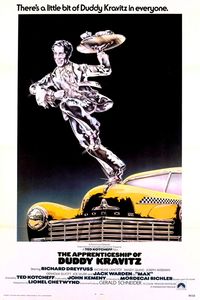
  • The Apprenticeship of Duddy Kravitz (1974)

    The Apprenticeship of Duddy Kravitz (1974)

    (In French, On Cable TV, May 2020) Mordecai Richler’s The Apprenticeship of Duddy Kravitz is a classic of Canadian literature (widely acclaimed, often cited on best-of lists, taught in schools, etc.), and its reading is almost mandatory if you want to claim that you know anything about CanLit. The film adaptation is along the same lines for Canadian film, perhaps even more so given that it was one of the first commercially and critically successful films that blended regional themes and settings to produce a film that was unquestionably Canadian. For modern viewers, there’s some added attraction in seeing a very young Richard Dreyfus in the leading role, Dennis Quaid in a supporting role and (for French-Canadian film fans) a young and surprisingly attractive Micheline Lanctot. The Apprenticeship of Duddy Kravitz takes us, as did the novel, into Montréal’s anglophone Jewish community. It’s uneven, and almost frustrating by design (it is, after all, blatantly about a young man’s coming of age and these things don’t always go smoothly) but it does have a few high points—including a comic set-piece about an exceptionally pretentious bar mitzvah video documentary. The French-Canadian dub has a weird mixture of formal and informal French, which makes sense given the setting (and how Micheline Lanctot dubs her own lines in her very distinctive voice) but still rings a bit weird to viewers used to a more consistent level of language.