Reviews

  • Five Star Final (1931)

    Five Star Final (1931)

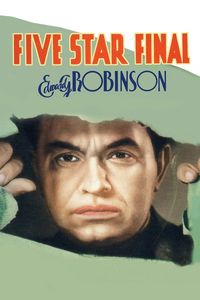
    (On Cable TV, August 2020) Considering today’s issues with social media, it’s either comforting or dispiriting to realize that every era has had its problems with then-new communication mediums… and that cinema has been there to chronicle the issues since the 1920s. Five Star Final takes us in the heated tabloid newspaper scene of the big city 1930s, when newspapers published multiple editions per day, and raced hard to outdo the competition in circulation. If sleaziness was the way to boost readership, then the answer was obvious. Here we have Edward G. Robinson as a two-fisted newspaper editor, not comfortable with the sensationalistic direction that his publisher requires, but reluctantly dragged into a sordid tale of public shaming with real consequences. Boris Karloff also appears in a few scenes as a menacing reporter. The film, being from the everything-goes pre-Code era, is markedly more interesting than many newspaper movies of later decades (and I say this as someone with an inordinate fondness for newspaper movies)—not to spoil anything, but characters don’t necessarily make it out alive of this story, and the attitude toward tabloid journalism is decidedly critical. Mervyn Leroy’s direction is relatively fast-paced, and there are a few flourishes here and there—most notably the use of split screen and fancy special effects at the time. It does make for a compelling movie, more for its time-capsule experience than a story that has been done in more recent years (albeit not from the Code years from 1935 to 1955) but still interesting, and not simply because it was nominated for a Best Picture Oscar.
  • And then there Were None (1945)

    And then there Were None (1945)

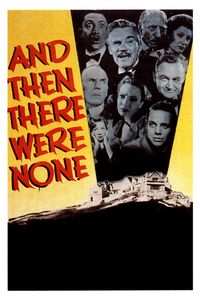
    (On TV, August 2020) As someone for whom Agatha Christie’s And Then There Were None was one of the Big Reading Experiences of High School, I’m always a bit weirded out by the movie adaptations that spare the characters at the end—wasn’t it the point of the book that, well, then there were none? Still, that’s the tack that Christie herself preferred, and it does make the ending surprisingly happy for fans of the book. Both the 1971 and the 1945 versions use more or less the same blueprint, although the 1945 version of And then there Were None is understandably in black-and-white. What’s perhaps more surprising is that this earlier version is a bit funnier than its later example—in typical stiff-lipped British humour, the film has touches of dark humour and characterization. I’m perhaps a bit too familiar with the plot to comment on anything but its deviations from the novel, but the premise does remain timeless and of interest to modern audiences. It’s not directed too badly; there are a few exteriors chosen to open up the film from studio interiors, and it’s short enough not to overlay its welcome—which isn’t bad considering the number of characters to kill before the end.

  • The Sunshine Boys (1975)

    The Sunshine Boys (1975)

    (On Cable TV, August 2020) In movie history, The Sunshine Boys is famous for reviving the career of George Allen, a vaudeville veteran whose first film career ended in 1939 before making a comeback decades later as (what else?) an elderly vaudeville veteran. He’s paired with Walter Matthau as the other half of a legendary duo now unable to even stand the sight of each other. After eleven years, a TV special appearance orchestrated by a well-meaning agent/nephew brings them together again, but it’s not a given that they’ll make it out of rehearsals. As with most movies directed by Neil Simon, there’s a powerful sense of place and time in The Sunshine Boys: Here we are in mid-1970s Manhattan in the universe of Jewish comedians (named deli sandwiches included), but always harkening back to the glory days of vaudeville. I’m fascinated by the history of American comedy, and The Sunshine Boys certainly delivers when it comes to showing how a declining elderly comedian lives his last years. Matthau has played some curmudgeonly characters during his career, but few are as spectacularly ornery as here—he effortlessly plays a character twenty years older than him, and oozes the kind of unrestrained crankiness that some old men develop. The beginning of the film can be trying if you’re not in-tune to the atmosphere—both elderly characters seem borderline senile, unable to deal with any normal social situation any more. It’s only when they come together that their minds sharpen up, even if it’s to trade insults. Allen is remarkable as the other half of the duo, with good comic timing and canny instincts: the sketch sequence does have its share of honest laughs, and the Oscar he won for the role wasn’t merely a reflection of a comeback story for the ages. (Allen would then go on to outlast several other actors by maintaining an active movie career until 1994, and keeping up appearances until shortly before his death as a centenarian in 2001—I’m old enough to remember when his name was synonymous with any joke having to do with elderly celebrities who would never die.) In the hands of a veteran playwright like Simon, The Sunshine Boys also slowly trade off jokes and insults for honest affection for the characters. There’s a point in the third act where the film seems to derail and get locked in a single room, but it eventually claws its way back to comedy and, happily, a bit of heart.

  • The Major and the Minor (1942)

    The Major and the Minor (1942)

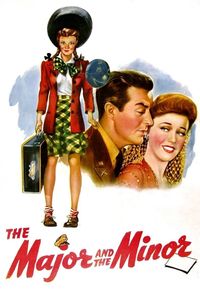
    (On Cable TV, August 2020) I’m on a long road to see most of writer-director Billy Wilder’s movies, so it was inevitable that I’d eventually make my way to his English-language debut feature sooner rather than later. After all, The Major and the Minor is a perfectly entertaining romantic comedy, featuring none other than Ginger Rogers and Ray Milland. The fun gets started when the twentysomething protagonist, out of cash for a ticket home, dresses up as a little girl and doesn’t convince the ticket takers. Chased through the train, she finds refuge in the cabin of an officer and, from there, follows him to the military academy where romance blooms. While this was the first American film directed by Wilder, it was far from his first script, and his comfort in writing good, zesty yet comfortable material shines through: Despite a premise that doesn’t really hold up (there’s a limit to how much two tresses can make Rogers pass as a twelve-year-old), the dialogue is great and even the familiar engine of romantic comedies feels rejuvenated. The Major and the Minor is quite funny, and it does wait its own sweet time to deliver the romance promised throughout the picture—the mark of a great filmmaker.

  • Witchboard (1986)

    Witchboard (1986)

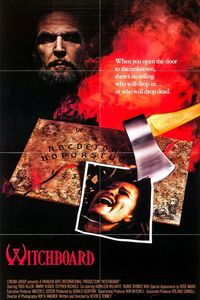
    (On Cable TV, August 2020) The 1980s were a weird time for movies, as the science of taking fads and making weird movies out of them was still being perfected. In Witchboard’s case, the fun begins when our characters grab a Ouija board and start messing around with messages from beyond. The heroine gradually gets possessed by an evil spirit, and it all naturally leads to more murders and a climactic confrontation with her boyfriend. Tawny Kitaen looks great in the lead role (she’s not much of an actress, though), while writer-director Kevin Tenney does manage to avoid a few typical flaws of low-budget films—notably by sticking to a straightforward execution plan and avoiding gore. This doesn’t necessarily make Witchboard a better film—but it’s not terribly irritating even as it slashes away at its characters and trods familiar ground. Saying that I didn’t hate it may strike many as damning praise, but it’s not—have you even watched other low-budget 1980s horror films?

  • Two-Faced Woman (1941)

    Two-Faced Woman (1941)

    (On Cable TV, August 2020) What a strange, strange idea—to put famous can’t-laugh Greta Garbo as the lead of an ordinary romantic comedy. Sure, the film has a pedigree—with George Cukor directing, Two-Faced Woman at least has some baseline quality. But Garbo? She’s miscast so badly—in the role of a woman who pretends to play her own (fictional) twin sister in order to get her husband back—that she retired after this film. (Her retirement wasn’t completely due to Two-Faced Woman’s commercial flop—but it did not help.) This being said—ah, how can I say—I liked the film anyway. For one thing, the classic oh-so-serious Garbo isn’t my favourite; and for another thing, I’ve always had a soft spot for silly over-the-top comedy. Combine those things, and Two-Faced Woman isn’t so bad after all. Sure, the film is a bit mishandled (some of it due to hasty reshoots to placate censors) a bit broad, a bit inconsistent. But it’s still a high-concept romantic comedy, and this is one of the rare films where being unfamiliar (or unsympathetic) with the filmography of its star may be a benefit. I do think that another comedienne would have been better (as in: looser, funnier) than Garbo, but the film itself is worth a look and a few chuckles.

  • Lola (1961)

    Lola (1961)

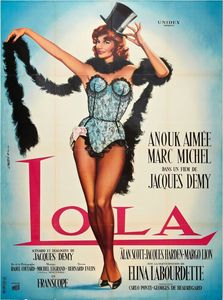
    (On Cable TV, August 2020) I’m not a big fan of writer-director Jacques Demy, and going back to have a look at his first feature Lola doesn’t endear me any further to him. A characteristically unfulfilling romance with a twisted cast of characters, it’s about a young man falling in love with his ex-girlfriend, except that she pines for her own ex, and another man also pines for her. At least, with Anouk Aimée in the lead, we can understand how that character can have three lovelorn men revolving around her. The rest of the film is considerably fuzzier, which should not be a surprise to anyone with a good knowledge of Demy’s filmography. It’s quite French Nouvelle Vague, except without much of the playfulness found in other comparable films. Romantic, for sure, but not comforting at all.

  • Chopping Mall (1986)

    Chopping Mall (1986)

    (On Cable TV, August 2020) In retrospect, it was inevitable that someone would seek to combine the 1980s robot movie craze with the slasher horror of the beginning of the decade. Of course it had to be from Roger Corman’s production company. In Chopping Mall (retitled from Killbots), we head back to the very recognizable Sherman Oaks Galleria for a night of terror as three couples of teenagers sneak into the mall for a night of horizontal mattress bouncing. Alas for them, the mall has just introduced robot sentries and a freak thunderbolt has just switched the robot’s main directive switch from “apprehend” to “KILL, KILL, KILL.” The rest of the film plays out like your typical horror movie, as the number of remaining characters dictates how close we are to the ending—and how sexual activity will doom some characters sooner than others. The low-budget nature of the film is most clearly seen in the inconsistent staging of the action, the wobbly robots or the slap-dash way the script doesn’t even stick to the specifications it posits for its killbots. There are some unintentional moments of mirth, but a few very deliberate laughs as well. One of the highlights of the film comes early during a demonstration of the robot (anticipating Robocop’s ED-209 sequence by a year) in which we’re treated to a short cameo from Paul Bartel and the ever-cute Mary Woronov as their own Eating Raoul characters, cracking wise at the product demonstration in front of them. Otherwise, there isn’t much to Chopping Mall than a memorable but not exceptional techno-horror movie: ridiculous, cheap, short but with just enough distinction for it to be easily remembered. “Oh, yeah, that movie where robots kill teenagers in a mall…” Yeah, that’s it. Cinematic immortality of a sort. Also, a really catchy main theme.

  • Reign of the Supermen (2019)

    Reign of the Supermen (2019)

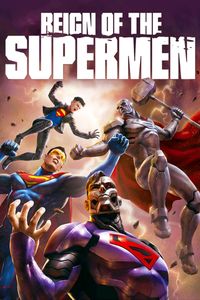
    (On TV, August 2020) Superman’s death can’t be left alone no matter the medium, and so the animated Reign of the Supermen follows the animated Death of Superman as if it had been planned all along. In the aftermath, four different supermen rise up, each claiming to be the successor to the Man of Steel (who, meanwhile, is regenerating in his Fortress of Solitude). But that’s not enough—we also need a new threat that the four supermen can fight, and for the real one to come back and prove that he’s the real thing. Considering that Reign of the Supermen is only 87 minutes long, that’s a lot of stuff to cover in a film and the pacing has this crazy go-go-go speed not helped in the slightest by contrivances and trite dialogue. As is often the case in those episodic DCAMU, the biggest fun is to be found in the details—such as, in this case, Lois Lane and Wonder Woman bonding over the disappeared Superman. It’s probably a mistake to see this as a distinct film— it’s really the conclusion to Death of Superman and watching it in any other context just feels unsatisfying. It’s not quite as good as its predecessor, but at least it concludes the narrative arc.

  • Swag Inc. (2019)

    Swag Inc. (2019)

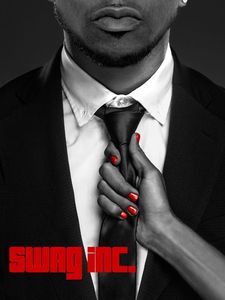
    (On TV, August 2020) In keeping with many BET+ original movies, Swag Inc. is a mixture of low-low-low-budget filmmaking, apprentice actors, threadbare production means, quirky screenplay (due to lack of experience, not deliberate subversion), humdrum directing, beautiful actresses, amateur narrative structure and some undefinable but real charm. The threadbare plot has young men founding a dating service, then getting embroiled in professional and romantic complications, but since the film constantly zigs and zags uncontrollably from one tone to another, it can be hard to follow along. It’s not particularly good—the screenplay can be torn to shreds, the cinematography is utilitarian, the dialogue trite and the actors think a bit too much about what they’re doing. But, and that too is a part of the BET+ original movie experience, I kind of liked it. It’s not terribly ambitious cinema, but it delivers eye candy, smirks, romance and success for the characters. My expectations were low for Swag, Inc. and they were met. I can’t guarantee the same, however, if you go into this one as your first BET+ original movie.

  • Burke and Hare (2010)

    Burke and Hare (2010)

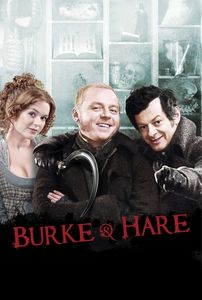
    (In French, On Cable TV, August 2020) As of this writing, a decade later, it looks as if Burke and Hare is going to remain John Landis’ last film—and it doesn’t inspire regret as much as good riddance. That’s quite a statement considering that Landis’ early filmography contains such classics as An American Werewolf in London, The Blues Brothers and Trading Places. But he peaked early: A fatal accident on the set of The Twilight Zone got him tried but acquitted of manslaughter, an ordeal from which his career never really recovered. After a major hit with 1988’s Coming to America (a film whose true paternity is very much attributable to Eddie Murphy), Landis gradually retreated throughout the 1990s, directing flop after flop after flop until the movies got much smaller and less distinguishable. Landis’s filmography then focused on TV directing to such an extent that Burke and Hare was itself Landis’ first theatrical film in over a decade. It’s not a flop, but it’s not much of a success either: Taking on the real-life facts of 18th-century serial murderers for a fanciful spin, it’s a film that tries to make dark comedy out of morbid themes (cadavers-for-cash turning into a lucrative serial killing business), and it doesn’t succeed all that well. This is despite a good cast that includes Simon Pegg, Andy Serkis, Isla Fisher and others. But what can a cast do when the script isn’t up to the task? Despite the natural fit of the source material for dark comedy, Burke and Hare ends up feeling as if it’s one single joke stretched over the entire film, without much to keep things interesting. Maybe a straight thriller would have been better if a comic approach can’t get laughs. Maybe a zanier romp would have made this funnier. Or maybe this was just an ill-begotten project in the first place. While Landis gets to play with a credible historical recreation and some talented actors, Burke and Hare rarely shines. On the flip side, Landis now seems to accept what he should have done in 1990—retirement’s not too bad, and far preferable to undermining a filmography with a long tail end of flops and misses.

  • The Gate (1987)

    The Gate (1987)

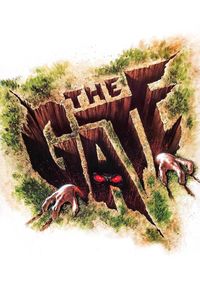
    (In French, On Cable TV, August 2020) There is a fascinating core to kiddy-horror film The Gate that disappoints more than it satisfies. It does have a lot of the same elements that made such a success out of Poltergeist: the numerous special effects imaginatively rendered, (including plenty of stop-motion) the sense of dull suburban reality collapsing against supernatural assault, the down-to-earth characters and the increasing dreamlike weirdness of the thrills… this should have been much, much better than it is. But the script and director Tibor Takács end up focusing so much on the young protagonists that, in doing so, they handicap the film to a milquetoast result that pleases no one. The kids will find it too spooky, the adults will find it too tame, and we end up far away from Poltergeist with similar material. I mean, sure, you can always show it to 12-year-olds to hook them up on horror, but such younger-audience fare should also be watchable by the entire family and there’s something in The Gate that simply doesn’t click as well as it should.

  • Pootie Tang (2001)

    Pootie Tang (2001)

    (On TV, July 2020) I’m about a generation too late at the Pootie Tang party, and a lot of it has to do with its reputation as a terrible movie. It’s not wholly undeserved, but the film itself is a great deal funnier than expected. Stemming from sketches from The Chris Rock Show and directed by then lesser-known Louis C.K., Pootie Tang is the kind of absurd satirical comedy that either falls flat or strikes a chord. It’s ingeniously dumb, as it revolves around a character (Pootie Tang!) meant as a parody of multi-hyphenates artists in the wake of the blaxploitation era. Pootie Tang (and please decline any drinking game in which the mention of the name is a trigger for alcohol consumption) is a rapper, actor and positive role model whose appeal is largely inexplicable to viewers but deeply felt by the characters in the film’s reality. Lance Crouther is pretty good in the lead role, while Robert Vaughn deliciously shows up at the antagonist, Jennifer Coolidge and Wanda Sykes provide some decent sex appeal, and Chris Rock goofs around in a variety of roles—plus many cameos big and small. Pootie Tang is almost aggressively stupid at times, but darn if I didn’t giggle during a good chunk of it: I liked the anti-corporate message, the semantic tour de force presented by the title character’s dialogue and the unapologetic weirdness of its humour. Don’t go in Pootie Tang expecting an ordinary, let alone good movie: you will know within moments if the absurdity of it all will grab you.

  • The Setup (1949)

    The Setup (1949)

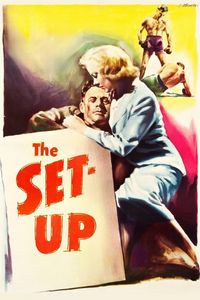
    (On Cable TV, July 2020) Somehow, boxing and film noir often go hand in hand, or maybe fist-to-fist: The subgenre is filled with sweaty gymnasiums, high-stakes bouts, boxers attempting to go straight and shady promoters eager to fix matches. What works really well in boxing thriller The Setup is its attempt to tell, in real time, a story of sports manipulation and personal redemption, as a boxer trying to retire ends up fighting against the orders of his manager to lose. There’s a strong sense of verisimilitude and intensity coming from the work of director Robert Wise here—not only the cranked-up tension of a real time 70 minutes, but the atmosphere of a boxing ring, the struggles of the boxer and the way the camera moves through the environment. It’s quite admirable even for those who don’t really have an interest for boxing. The simple plot is not a disadvantage, as it allows the filmmakers to focus on the way to tell the story. The Setup is quite admirable, but it also anticipates a slew of other later boxing films (notably Raging Bull) that would move away from realistic aesthetics in telling ringside stories.

  • Maniac Cop 2 (1990)

    Maniac Cop 2 (1990)

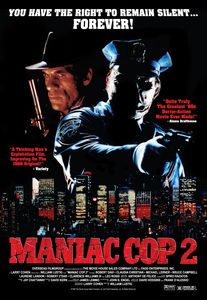
    (In French, On Cable TV, August 2020) Considering my low opinion of slashers, it’s a bit surprising that I ended up moderately enjoying Maniac Cop 2. Interestingly enough, it’s a sequel that assumes the best parts of its predecessor, and strategically maximizes a few elements in order to get even larger audiences. For one thing, it takes as granted the supernatural nature of its titular Maniac Cop brought back from the dead. For another, it frequently trades gore for action with more stunts than the previous film. The iconography of the killer cop is also maximized, which is nearly always a good thing in creating great visuals. (There is one great fire-stunt shot that’s so good I’m wondering why it hasn’t been stolen by later generations of filmmakers.) Best of all, though, is how writer Larry Cohen and director William Lustig stick to their B-movie guns: Maniac Cop 2 is wall-to-wall entertainment, clearly dedicated to being a pure thrill machine. Claudia Christian has a starring role, and Bruce Campbell is back for a brief encore. This being said, this does remain a B-movie bordering on slasher exploitation—keep your expectations in check.