Reviews

  • Benny & Joon (1993)

    Benny & Joon (1993)

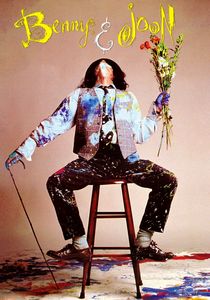
    (In French, On Cable TV, May 2019) By now, I’ve seen enough movies about mental illness that I’ve grown immune to most of the usual ways the topic can be approached. But not every film about mental illness has to be a tear-jerky emotionally disturbing drama, and that may explain my tepid liking for Benny & Joon: While there is something to be said about its occasionally twee take on two non-neurotypical people finding love, it does dare to try something else. Much of the film rests on the very different performances from its lead actors, from Aidan Quinn’s quiet Benny to Mary Stuart Masterson as the schizophrenic Joon, but especially Johnny Depp’s impressive performance going through silent film-inspired comedy routines. The rest of the cast features many known actors even in small roles, from Julianne Moore (playing an ex-exploitation film actress), to Oliver Platt, C. C. H. Pounder, Dan Hedaya and William H. Macy. It can also rely on a charming small-town atmosphere, even when things aren’t going so well for our characters. Soundtrack fans should be aware that Benny & Joon does a lot of mileage to the very familiar tune of “500 Miles.”  After a bit of a romantic fantasy, the film eventually confronts the reality of living with a schizophrenic person, but in a way that ensures it will end well. Which, which optimistic, is not a bad message on which to end those kinds of movies.

  • Dying Young (1991)

    Dying Young (1991)

    (In French, On Cable TV, May 2019) A good old-fashioned weeper, Dying Young is built on a premise that has been made before (Dark Victory, gender-switched) and after (Me before You)—it’s an entirely unsurprising caretaker-falling-in-love-with-a-dying-person film, executed with very 1990s style and period-appropriate stars. Clearly relying on its star power, the film features Julia Roberts as a nurse and a then-slim Vincent D’Onofrio as the ailing patient. In terms of plot, that’s pretty much it—it goes through the motions of its predictable plotting, but slowly enough that you start being exasperated at both the speed and the obviousness of it all. Both actors are worth a look, though: D’Onofrio has some good material to rely on, and circa-1991 Roberts, fresh off her meteoric breakthrough role in Pretty Woman, was spectacular to behold. Unfortunately, the movie really isn’t as good as its actors—despite good production qualities, it feels on autopilot from beginning to end, especially if you’ve seen any of the many similar movies. The soundtrack will feel very familiar to those of us who were 16 in 1991. Otherwise, there’s really not much to say about Dying Young—it’s almost exactly what the plot summary tells you.

  • Gorky Park (1983)

    Gorky Park (1983)

    (On Cable TV, May 2019) It’s clear that we will never quite experience Gorky Park like Western audiences perceived it back in 1983 (or in reading the original thriller novel by Martin Cruz Smith two years earlier). 1983, after all, is the year where the world narrowly avoided nuclear war between the USA and the Soviet Union, in the middle of Reagan’s first term and the years before Gorbachev’s détente. Back then, the idea of a crime thriller set deep behind enemy lines was novel and interesting by default—how would familiar genre elements work under the Soviet regime? Now, of course, the number of Hollywood movies shot and set in Russia has exploded, so we’ll never quite see Gorky Park with the same extra-narrative interest as audiences upon its release. But what’s left today is a decent thriller—not spectacular, not terrible, but engrossing enough in its depiction of a multiple murder whose investigation quickly goes to the top, with side glances at an espionage subplot. The synth music occasionally feels modern and then almost immediately dated. John Hurt is not bad in the lead role, as a disgraced police officer getting embroiled in intrigue. After a remarkable first half-hour, Gorky Park then loses steam the longer it does on, ending with the expected shootout knee-deep in the snow. The romantic story is a bit dull, especially compared to the rich atmosphere—Gorky Park may not have been shot in Moscow, but it presents a credible approximation of it. One lingering question remains, though: Did it accurately present Moscow at the twilight of the Cold War, or is it a Westernized idea of it, complete with the blatant pot shots at the regime in place? It’s left to interpretation, although the solid nature of the film isn’t up for discussion.

  • Mr. Destiny (1990)

    Mr. Destiny (1990)

    (In French, On Cable TV, May 2019) There’s a surprisingly strong subgenre of movies exploring what it would be like to rewrite your own history and see the outcomes of different choices. From the angels-driven plot of It’s a Wonderful Life to the more recent examples justified by quantum mechanics mumbo-jumbo, you can see the appeal of the plot device in order to deliver a statement on the human condition. But it’s the execution more than the premise that will determine the impact of the film, as Mr. Destiny clearly suggests. Clearly made for a mass audience, the film’s hackneyed approach to alternate realities for our everyman protagonist isn’t particularly impressive, nor is its cavalier approach to respecting the integrity of the parallel timeline (helpfully pointed out by the magical character, asking our protagonist if he isn’t behaving reprehensibly by wooing another woman than his now-wife). Moral issues aside (and it’s tough to put them aside, because they are significant and do lessen the impact of the lesson the film think it’s teaching us) Mr. Destiny’s biggest problem is the complete and unvarying predictability of the result as it goes through the expected paces. It doesn’t help that two of the headliners are Jim Belushi and Jon Lovitz, two actors who are obnoxious on their best days and actively irritating on all others. More fortunately, Linda Hamilton and Rene Russo are sights to behold, but they’re not quite enough to make the film interesting—and their place in the plot, as mere prizes to be juggled by the white male protagonist having a not-even-mid-life crisis, betrays some ugly scripting issues. Michael Caine is perhaps the only likable character, but he comes across as ineffectually pointing out basic problems caused by the protagonist’s selfishness before it doesn’t matter and we get out of the dream sequence anyway. There are some far better movies tackling more or less the same issues out there—there’s no need to even watch Mr. Destiny.

  • The Dreamers (2003)

    The Dreamers (2003)

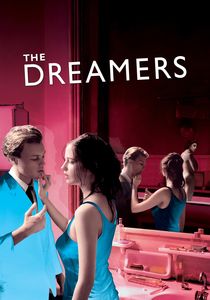
    (In French, On TV, May 2019) No matter which culture you’re from, Paris exerts this irresistible pull as a travel destination, or better yet as the place to go for a coming-of-age experience. I’ve now seen movies from countries as far away as America and China purring over French culture, and Anglo/French/Italian co-production The Dreamers certainly plays into that trend. Our initial anchor is a young American man travelling to Paris to study French in the late 1960s, during which he gets involved with very close twins that invite him to stay at their apartment, the arrangement eventually becoming a form of romantic triangle. They don’t do a whole of formal classroom study during the course of the film, going instead for lengthy discussions about life, love, cinema, politics and runs through Le Louvre. Right at the moment when it seems it won’t end well, the 1968 Paris protests begin and the film ends on a thoroughly romantic note. This heavily romanticized vision of studying in Paris has attracted a lot of attention for its copious nudity (much, but not all of it from Eva Green, who has since made it one of her trademarks) but is most interesting for its portrayal of three young cinephiles exchanging classic cinema references (many of them illustrated by clips) and living life in 1960s Paris. Writer-director Bernardo Bertolucci clearly wanted to create a belated French Nouvelle Vague movie, so specifically does it associate with this movement and quote its inspirations. The result does seem in the same vein, although (cinema having changed since the 1960s), some elements of The Dreamers would appear closer to titillation than homage. But that’s Bertolucci for you…

  • Invasion U.S.A. (1985)

    Invasion U.S.A. (1985)

    (In French, On Cable TV, May 2019) It’s not really fair to say that every Chuck Norris movie is terrible —there are a few mild exceptions. But Invasion U.S.A. is not a likely candidate for the honour: Made to lowest-common-denominator purposes by B-movie factory Cannon Films, it takes anti-Soviet paranoia to new depths by supposing an invasion of the United States by Soviet and Cuban guerillas intent on causing as much damage as possible. I’m told that the novelization actually transforms the film’s ludicrous premise into a workable terror plan, but none of this is apparent in the movie. Instead, we have unseen attackers acting like mischievous gremlins, doing not-so-lethal things at random while being constantly thwarted by that rascally Chuck Norris. It even takes places at Christmas for those heartwarming seasonal moments where communists blow up family Christmas trees. No, but really: Invasion U.S.A. was badly conceived from the start, and executed even more badly. Norris is a wooden block of anti-Soviet action, stuck in incompetent filmmaking—it’s so incredibly stupid from beginning to end (wait until you see the school bus sequence) to the point of not being all that much fun. While it gave the world the iconic image of Chuck Norris brandishing Uzis submachine guns, Invasion U.S.A. doesn’t even qualify for so-bad-it’s-good status.

  • The Rite (2011)

    The Rite (2011)

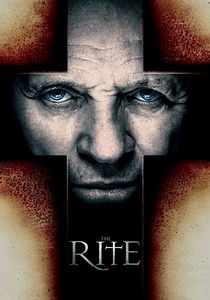
    (On Cable TV, May 2019) Any movie that takes on Catholic exorcism is measuring itself against the obvious heavy-hitter in the genre — The Exorcist. Fortunately, The Rite is aware of that precedent, and seems built to go beyond the tropes of the 1973 film. Featuring a young priest protagonist asked to undertake exorcism training, the film takes us in an enjoyable conspiratorial view of the Catholic Church in which demonic possession is seen as something to be managed through rigidly defined protocols. While Colin O’Donoghue is bland as the protagonist, it doesn’t matter very much given that Anthony Hopkins is the real driving force of the film. He hams it up as a renegade priest who happens to be the best in dealing with possessed souls—until, predictably, he is possessed himself. As a horror film, The Rite is merely serviceable at best—the horror is small-scale, the frights are familiar and the entire thing does live in the shadow of many similar films. But it does have its share of good moments as well: a protagonist written as having his doubts, a relatively credible portrayal of the Vatican’s most extraordinary people and quite an anchor in Hopkin’s portrayal. I suppose it could have been much worse.

  • Singles (1992)

    Singles (1992)

    (In French, On Cable TV, May 2019) It’s remarkable what difference a few years can make at some crucial junctions. If you’re not a kid at a time when a kid’s movie is released, the film will not reach you in quite the same way. The same goes for other movies aimed a very specific age group even later on. As a late and reluctant member of the Gen-X generation (my parents were boomers, so I’m clearly obviously “Echo” rather than the forgotten cohort in between Generation X whose definition keeps changing … but don’t get me started on generational cohorts), I often feel as if I was slightly too young to fully appreciate the classic Gen-X movies as they were released. Singles, for instance, features actors ten years older than me playing characters roughly five years older than me—and that can be a significant difference as a teenager if you’re using university as a significant dividing line. All of this to say that I never saw Singles in theatres, and never had any real desire to see it since then. But now that I’m systematically investigating 1990 movies, Singles stands as a beacon of sorts—widely recognized as a major movie of its generation (I can effortlessly find no less than five “defining movies of Gen-X” lists that mention it, usually in the top ten). It certainly captures a defining time and place—Early-1990s Seattle, with grunge set against an endless backdrop of coffee stores. Our titular “Singles” means both the ensemble cast and a central apartment building not geared toward couples or families. The plot is conventional in the romantic comedy vein, but more interesting than usual in its execution. Writer-director Cameron Crowe was hitting his peak cultural relevance at the time, and his eye for hipness certainly carries throughout the entire film from fashion to musical choices. Obviously, it’s all romanticized, almost fetishized—but at least it’s absorbing enough to keep our interest throughout. It helps that the film features pretty actors—Kyra Sedgwick is Julia-Roberts-level good-looking here, and in between a very cute Bridget Fonda, Campbell Scott, and Matt Dillon the film has enough eye candy to catch anyone’s eyes. There is a place for movies that firmly (even consciously) mark a definite time and place, and I suspect that the specificity of Singles, having crossed over to period-piece status, will keep acting as a time capsule of sorts for a specific generation … even if it happens to be not quite mine.

  • French Kiss (1992)

    French Kiss (1992)

    (On Cable TV, April 2019) There’s an entire book to be written about Hollywood’s continued fascination with France, which seems consistently overrepresented relative other non-Anglosphere destination from the very beginning of the art form (which makes sense considering France’s early role in the development of motion picture technology). This can be seen in the frequency in which France and Paris become destinations in Hollywood movies, the porosity of French actors with Hollywood careers (from Maurice Chevalier to Gerard Depardieu, Jean Reno and Léa Seydoux) and the generally positive French stereotypes as vehicled in films (even throughout the spectacularly dumb “Freedom Fries” years). As a French-Canadian, I’m not complaining! But it’s in that context that French Kiss is to be considered—even as it seems determined to revisit every cliché of Franco-Hollywood, it exists in a much wider historical continuity. It’s not a perfect fit: the decision to cast Kevin Kline as a Frenchman is a weird one (the role was originally intended for Depardieu, which would have been much better), especially considering that while Kline can do English with a French Accent, his French is mushy with a strong British-English accent. But we’re not supposed to care, as French Kiss is supposed to be this kind of cute reality-adjacent romantic comedy with a dash of deception as an American woman semi-willingly conspires with a Frenchman trying to purchase a vineyard. The French element is indissociable from the script, even if familiar romantic tropes are deployed throughout the film. Still, director Lawrence Kasdan takes a few steps beyond romantic comedy to have a (brief) look as some character-based drama. Is it enough? Maybe—This is one of the films that ensured that Meg Ryan would be called the queen of romantic comedies throughout the 1990s but also the kind of film that fades out when put alongside stronger ones. It’s cute, it’s not a waste of time and it’s certainly nowhere near the worst of what Hollywood could do at the time, but there’s a reason why it’s been forgotten twenty-five years later. Unless you’re an American Francophile, in which case it’s going to exactly fit the bill.

  • Hereditary (2018)

    Hereditary (2018)

    (Netflix Streaming, April 2019) Look, I’m certainly aware of Hereditary’s enthusiastic critical reception, and I can even see why it earned such rave reviews. It’s an uncompromising, hard-hitting horror film that gets many of its ideas and gravitas from dramas about grieving families, then cranks up the weirdness quotient until it becomes a full-blown nightmare of occult horror, with plenty of gore to go around. From a structural perspective, it plays masterfully (if unusually) with foreboding elements of dread, creating creepy and sharper-than-average visuals. Terrifyingly wrong images and sequences make the film hard to watch even for jaded horror fans, and there’s no denying writer-director Ari Aster’s skills in bringing all of these elements together. It’s the kind of horror film that highbrow fans of the genre would like to see more often, so clearly does it have more ambitious goals than the usual monster of the week. The thing is: I don’t care, because I disliked the characters from the get-go. I found them so irritating that wanted all of them to die, and I suppose I got my wish by the end of the film. The film felt like nails scratching on a blackboard all the way through. I will acknowledge the possibility that Hereditary is simply too horrific to be liked—at a time when most “horror” films are weak repetitive material that can be dispatched with rolled eyes and a shrug, this is one film that isn’t afraid to be too horrifying for its own good, killing off an entire family to make a point. And it’s not as if horror films have any duty to be likable. Still, my point remains: I don’t like Hereditary. And I can’t bring myself to recommend it on the same level as I was enthusiastic about such recent contemporaries at The Babadook or Get Out.

  • Avengers: Endgame (2019)

    Avengers: Endgame (2019)

    (In Theatres, April 2019) The longest MCU movie may warrant the shortest review: It delivers on its promise to be a decent capstone to a 22-movie series. What else is there to say? Well, okay, maybe a bit more. Such as saying that Avengers: Endgame can’t be evaluated on the same kind of criteria as other films—it’s essentially incomprehensible without having seen its prequel, Infinity War, and unlocking most of its details would involve something like 10–20 previous films. As such, the expectations regarding the film are different, and the way it goes about fulfilling them is different as well. At a weighty three hours and change, it’s not surprising if it feels like four films smashed together. The first is a dour and surprisingly slow-paced exploration of a post-Snap world, deprived of half its population. It could have been a series, but the point here is to see the heroic figures of the series defeated, depressed and despondent. The next hour is somewhat more fun, as the MCU doubles upon itself to travel back in time and give fans some quality call-backs—it’s unequally interesting, but it does offer a few good moments. A gigantic 30-minute battle follows, with nearly the entire cast of the series so far back for an encore, a few crowd-pleasing bits and a few payoffs. Then we wrap things up with twenty minutes of various epilogues concluding the Thanos cycle in a rather satisfying (and in some cases, definitive) fashion. Not all of it is perfect—ask too many questions, and you won’t like the answers. But as a logistical exercise in trying to deliver as much payoff as possible to the fans, it’s really quite impressive. It’s not the end (obviously, since the MCU moneymaking machine is so profitable) but it’s an ending of sorts. Of course, the next question is whether the MCU can keep it up—it’s going to have to cultivate another batch of heroes, a new menace and yet keep some of its bewildering complexity in check as it goes harder on the complexities of its comic book origins, especially now that Disney owns the X-Men and Deadpool, and Sony is still trying to keep a spider-verse going. But what would an MCU film be without some meta-fictional content to keep up wondering?

  • My Left Foot: The Story of Christy Brown (1989)

    My Left Foot: The Story of Christy Brown (1989)

    (On Cable TV, April 2019) There’s a well-known formula to inspiring films about people overcoming disabilities to achieve their potential, but I’m not sure any film has done it better than My Left Foot: The Story of Christy Brown. Adapted from a real story, it describes events in the life of a man who, born with cerebral palsy, is unable to walk or talk but can use his left foot to paint or write. Even decades after its release, My Left Foot remains a showcase for Daniel Day-Lewis’s acting, as he delivers an unbelievable performance that goes beyond human behaviour to deliver a striking result. He won an Oscar for it, and deservedly so. But his performance caps a great script that consistently delivers good character work, avoiding the false sainthood that some of those roles often get to. (By the time the protagonist instigates a bar brawl, yes, he’s flawed.)  The film, even when working on familiar grounds, becomes an awe-inspiring story of determination despite severe disabilities. The working-class origins of the protagonist are depicted with gut-wrenching grittiness, adding even more interest to the results. Generally speaking, My Left Foot is a film that gets better as it goes on, or at least more rewarding for its protagonist as he manages to gain independence and audaciousness. Effective even for jaded viewers, it remains well worth watching.

  • Dodsworth (1936)

    Dodsworth (1936)

    (On Cable TV, April 2019) Much of the interest in exploring classic films is not only experiencing solid movies that have wowed past audiences, but measuring them against our own modern standards, and seeing how some of them still make an impression even through decades of changes. Dodsworth is a more interesting case than many—it clearly reflects the standards of the 1930s, but it still manages to surprise through some unusual character work that goes beyond clichés and easy stereotypes. The story starts once a small-city mogul sells his company, with the hazy goal of doing nothing for the rest of his life, spending time with his wife and visiting faraway destinations. That’s already an interesting character (even though he’s warned by others that he won’t like a loafing retirement), but the situation becomes even more complex once his wife makes it clear that she does not approve of that plan. As is often the case, retirement doesn’t suit the couple, who steadily drift apart in many ways (none as simplistic as “he wants this, she wants that”—these are multifaceted characters, and so are their conflicts) until a mutual breakup that ends up confirmed by the end of the film. Walter Huston stars as the title character with Ruth Chatterton taking on the ingrate role of his wife, and small appearances from Paul Lukas and David Niven as suitors. Some 1930s tropes are indissociable from Dodsworth—the romance of long-distance cruises as the best way to cross the Atlantic, the details about the early decades of the automobile industry, the lingering remnants of the European class system as intertwined with the aristocracy, and the cut-and-tried gender roles of an American marriage: There’s a supposedly playful line said from the wife to her husband, “Will you beat me?” that betrays a whole lot. At the same time, there’s no clear gender stereotype here between the husband wanting to step away from workaholism, and the wife gladly lusting after other men. The characters are strong enough to avoid clichés, and I have some respect for the way Dodsworth makes the wife a gradual villain without quite becoming misogynistic. (Viewers are clearly meant to identify with the fun-loving husband rather than the wife increasingly revealed to be an arriviste.)  There’s also something intriguing in the way director William Wyler ensures that the story—adapted from a theatrical play, even if that filiation is nearly obscured by the film’s globetrotting settings—makes upper-class ennui relatable by asking itself what would happen if people would be free to do that they wanted without artificial obstacles, and letting things play out. There are plenty of timeless lessons here even for modern couples, and it’s such things that ensure that Dodsworth remains relevant and interesting even after eight decades.

  • Breaking Away (1979)

    Breaking Away (1979)

    (On Cable TV, April 2019) As far as small-town quirky dramas go, Breaking Away certainly has a few elements to distinguish itself. The most distinctive of them must be our colourful protagonist, a bicycle-racing enthusiast obsessed with all things Italian (to the point of picking up the language and culture, and passing himself off as an exchange student to woo a girl). Everything takes place in a small Indiana city with a university, leading to town-and-gown problems that are used in clever ways. Much of this cute, unpretentious coming-of-age film (which eventually turns into a sports underdog third act) is about the usual themes for recent High School graduates: girls, future, friends. But it’s handled with some wit, a knack for memorable sequences and sympathetic acting work. Dennis Christopher leads, but there are early supporting performances here from Dennis Quaid, Daniel Stern and Jackie Earle Haley. Breaking Away doesn’t try to change the world, but it manages to give it a good time.

  • Manhattan Murder Mystery (1993)

    Manhattan Murder Mystery (1993)

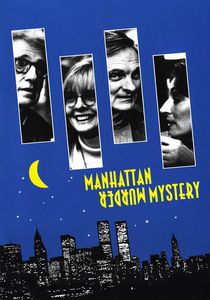
    (On Cable TV, April 2009) Stop me if you’ve heard this one before: Woody Allen riffing on the upper-class Manhattan lifestyle, with rich bored couples going out on the town daily and developing fancy theories of … murder? Well, yes: that’s what happens in Manhattan Murder Mystery when you get bored with arthouse movies and the rest of New York City culture. Allen doesn’t necessarily make things easier on himself by featuring borderline unlikable characters—the so-called protagonists do themselves no favours even during their introduction by criticizing their boring neighbours. Allen being Allen, this is a low-key remix of familiar murder mystery tropes, from Double Indemnity (explicitly show on-screen) to Rear Window and others. There are also other familiar tropes from Allen … most notably having a somewhat younger wife (albeit “only” ten years younger) but most amusingly by getting a few choice one-liners and rambling self-deprecating mumblings. (“This is a neurotic’s jackpot!” is pretty good.)  He also plays his usual nebbish character at a reduced level. What starts out as a forgettable trifle eventually becomes weightier as late-middle-age ennui leads the lead couple to spend a lot of time with other people indulging their obsessions. Some other noteworthy roles include Diane Keaton and Angelica Huston playing dark and sultry unusually well. The film gets wilder and wilder as it goes on, with people seemingly coming back to life, re-dying and so on. Meanwhile, our lead couple grows closer due to the therapeutic power of sleuthing. Stylistically, there’s nothing much to report except numerous long handheld camera shots, but well-executed to keep focusing on the action. Manhattan Murder Mystery is a trifle, but a fun one (Upper-class Manhattan living is an aspirational atmosphere for many viewers) even if a subplot of marital alienation may have had much to do with Allen’s own marital issues at the time. Allen did much worse throughout the 1990s, so might as well enjoy this one as middle-tier Allen.