Reviews

  • Mr. & Mrs. Smith (1941)

    Mr. & Mrs. Smith (1941)

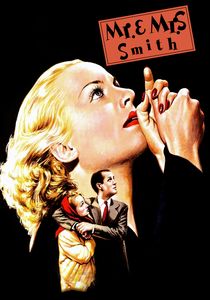
    (On Cable TV, April 2019) There are plenty of good reasons to watch Mr. & Mrs. Smith, but one of the best has to be able to drop “You know, Alfred Hitchcock once did a screwball comedy” in conversation knowing fully well what you’re talking about. Bonus points given for the incredulousness of convincing people that the 1941 Mr. & Mrs. Smith has nothing to do with the 2005 spy-versus-spy action comedy even though you would think that Hitchcock would have been a good fit for that kind of material. No, this version of Mr. & Mrs. Smith is about a happily arguing couple that goes through a crisis of un-marriage, romantically bickering in fine screwball comedy fashion until they make up at the end. It feels very similar to other “comedies of remarriage” of the time (allowing the thrill of quasi-adultery without actually having adultery in the eyes of the Production Code) although that comes with a caveat for twenty-first century viewers: Even if the banter is equally distributed between female and male protagonists, the film clearly plays on very 1940s assumptions about gender roles and contrivances. Today’s viewers almost have to be trained to get over some of the material in order to enjoy the rest of it. If you can get past that hurdle, it’s quite a bit of fun: Carole Lombard is quite good here in one of her last films before her untimely death, while Robert Montgomery is a good foil throughout it all. The likable look at upper-class New Yorkers in their apartment, offices and privileged romantic squabbles is very much in-line with the rest of the screwball comedy genre. It’s not always convincing, though (even if you accept its contrivances), and the conclusion is a bit abrupt, but it’s not as if the reconciliation wasn’t already a forgone thing. Mr. & Mrs. Smith is goofy fun, though, and that’s more than you’d expect from Hitchcock.

  • Here Comes Mr. Jordan (1941)

    Here Comes Mr. Jordan (1941)

    (On Cable TV, April 2019) Everyone has their own irrational film dislikes, and one of mine is 1978’s Heaven can Wait, in which a lunk-headed football player is given another chance at life. It’s a manipulative, insulting piece of nonsense that doesn’t even work on a scene-to-scene level and one of my questions in approaching its original inspiration Here Comes Mr. Jordan was whether those flaws were inherent in the concept, or specific to the remake. (This seems as good a time as any to point out that 1941’s Here Comes Mr. Jordan was remade as Heaven can Wait [1978], even if there was a different—and much better- 1943 film called Heaven can Wait. But that’s not all! Here Comes Mr. Jordan had a sequel in 1947 called Down to Earth, which was also the title of a third 2011 Hollywood remake of Here Comes Mr. Jordan. All of these can trace their origin to a 1938 theatrical play called Heaven can Wait but originally titled It Was Like This. If you’re not confused, it’s because I haven’t included a diagram.)  The best thing I can say about the original is that it’s not quite as irritating as the remake. Robert Montgomery plays a boxer sent to heaven too soon, and then sent back to earth in another body.  The titular Mr. Jordan has the good luck of being played by Claude Rains, with Evelyn Keyes as the love interest.  But it’s still irritating: The protagonist is still an idiot, and the film still becomes ludicrous in its attempt to make an unsatisfying concept work. I understand the need to underscore unusual premises by clearly explaining to the audience, in triplicate, what’s happening—but a common failing of both versions is to dumb things down so much that the protagonist’s idiocy becomes grating and pile on one arbitrary rule on top of another until they don’t really matter anymore because angels. Speaking of which, there are much better angel movies—going from It’s a Wonderful Life to Here Comes Mr. Jordan feels like a downgrade. Or maybe I just don’t like the very idea of these films.

  • Once Were Warriors (1994)

    Once Were Warriors (1994)

    (On TV, April 2019) There’s a good reason why Once Were Warriors remains a landmark of New Zealand cinema even twenty-five years later: It’s a harsh -at times unbearable—film, but it makes a few fundamental points about cultural disconnection and how social policy failures can have real, personal, and violent impacts. The story revolves around a Maori couple that leaves their village to go live in Auckland, but (eighteen years later) find themselves in desperate circumstances with the father of the family unemployed and alcoholic, his rage often manifesting itself in physical violence against his wife. Tough but compelling, it’s a film that hasn’t really aged, and remains relevant well outside New Zealand—as a Canadian, it’s impossible to watch the film and not feel the social indictment of government policies (some of them well-meaning, other decidedly less so) that end up separating First Nation people from their culture. It’s only, suggests the film, by reconnecting to traditions that there is hope. Once Were Warriors is extremely difficult to watch: the very realistic scenes of domestic violence are infuriating and nausea-inducing at once, with even worse material coming up later on. I’m impressed at how director Lee Tamahori was able to make a film that’s expressionistic and realist at once, combining impressive cinematic sequences with very humble moment showing familiar patterns of broken promises, commonplace abuse, casual use of violence and aimless lives. With all due respects to Rena Owen who plays the anchor of the story, this is Temuera Morrison’s film: he embodies charm and violence in a character that’s as magnetic as repellent. The film does have a strange relationship with violence, though—one of Once Were Warriors’ final scenes has a villain getting a much-deserved comeuppance, and now we’re cheering for the blows to land hard. Still, there’s a lot to digest in terms of themes and wider implications: it’s fast paced, seldom boring and some good visuals along the way. You will seldom see a film as hard to watch yet compelling and even admirable.

  • The Great Outdoors (1988)

    The Great Outdoors (1988)

    (On TV, April 2019) When I say that The Great Outdoors is about taking a trip, it’s not necessarily in the way reflected by the plot of the film. Yes, sure, it’s superficially about two brothers and their families spending a week at a lake cabin, and the various tensions between the brothers playing themselves out. But in more significant ways to twenty-first century viewers, The Great Outdoors is a trip back in time, to an era with a very specific aesthetic when it comes to dumb comedies. Written by John Hughes, directed by Howard Deutch, starring John Candy and Dan Aykroyd, you can clearly associate the film with the mainstream of mid-to-late-1980s American comedies. For anyone on a steady diet of more modern films, it’s a different experience watching a dumb 1980s comedy, with its painfully obvious plotting, shot dumb gags and abandoned emotional arcs. (I’m not saying modern movies are smarter—but the stylistic conventions are different.)  But dumb 1980s films can be reasonably fun, so if you can tolerate the expected gags and predictable third-act plot developments, the end result isn’t too bad—especially considering how The Great Outdoors does a lot of mileage on Candy and Aykroyd’s pure comic talents, with Candy as a goofy dad and Aykroyd as a fast-talking urbanite. (Meanwhile, Annette Bening’s screen debut here is probably an early shame considering her later body of work.)  There are a few things I really liked—notably the use of “Yakety Yak” at the beginning of the film, and the very funny scenes featuring subtitled raccoon talk. The Great Outdoors is not a great film, but it does have an amiable quality to it: if nothing else, it’s not mean-spirited at all in showing some heartwarming family moments.

  • United we Fan (2018)

    United we Fan (2018)

    (On Cable TV, April 2019) One of the consequences of having so many outlets for film in this streaming era has been the rise of the niche documentary. With comparatively lower production costs and an insatiable appetite for content (not to mention the clickbait potential for some documentary topics compared to fiction), there are more documentaries than ever on ever-specialized topics. (And if you happen to be a Canadian Cable TV network looking for Canadian content to meet your CRTC license broadcast requirements, Canadian-produced documentaries are a bonus.)  So that partially explains United we Fan, a Canadian documentary using examples of fan campaigns to save TV shows (starting with Bjo Trimble’s letter-writing campaign that got Star Trek its third season), as a springboard through which to talk about organized fan movements and, much more generally, fannish behaviour in the modern media landscape. Writer-director Michael Sparaga packages the result as an inspiring power-to-the-people kind of film, highlighting how it allows communities to connect, to take direct action beyond watching a show and talking about it, even allow people to realize their personal potential through organization, communication, and so on. (It doesn’t take much for the film to make the link between saving TV shows and social justice to which I’m thinking: Hmmm.)  Many of the interviews are with fans convinced of their self-righteousness, critics/commentators bolstering the film’s claims, and grateful creators/actors of fan-revived shows who know better than to be anything less than grateful to the fans. But as someone with fandom experience dating back to the mid-1990s, I’m curiously ambivalent about the United we Fan documentary—While the film does a good job at presenting and exploring its subject matter, it’s curiously curt about some second-order implications of fan devotion. To put it simply, there’s an entire commercial aspect to “saving TV shows” or other fannish obsession in support to lucrative interests that doesn’t get a lot of discussion here—for all of the nuts sent to a TV network to save Jericho, it’s still consumption in service of consumption, serving the interests of others. If you want inspiring stories of fans achieving more, take a look at those who transformed an interest in consuming media to producing media. But that doesn’t quite have the hook of Star Trek and other TV shows, right? As someone who spent time in the fannish trenches (most notably for Babylon-5), I’ve gone there and back—I’m more interested in critical explorations of how fan energy is co-opted as yet another marketing tactic in service of corporate interests. It annoys me that I have to ignore that dimension and clap along at another self-serving fannish documentary in a growing list of uncritical, superficial essays. But that may also be another lesson in approaching documentaries in general—they may be cheaper to produce than scripted dramas, but they still take time and effort, and it’s not clear if anyone would invest so much in criticizing actions that feel good in a limited perspective, but prove problematic in a wider context. All documentaries are trying to convince you of something, even if that something can be a carefully channelled “rebellion” that results in bigger profits for someone else.

  • Crazy Rich Asians (2018)

    Crazy Rich Asians (2018)

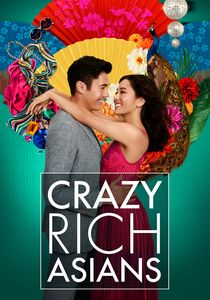
    (On Cable TV, April 2019) Upon its release in theatres, Crazy Rich Asian was widely hailed by its publicists as a turning point in Hollywood history; the first studio-led big-budget film featuring an almost entirely Asian cast, heralding a new landmark for mainstream cinema inclusivity. I remember not quite getting the fuss, having seen a whole lot of Kong-Kong pictures, being able to cite precedents all the way to the admittedly problematic Flower Drum Song, and having tracked China’s growing influence over Hollywood throughout the 2010s. But of course, it’s different. No amount of bringing up The Joy Luck Club or Better Luck Tomorrow actually lessens Crazy Rich Asians’ achievement as a box-office and cultural success. But here’s a lot to unpack here, from the nagging feeling that this is another nail in America’s global dominance to the cross-cultural appeal of well-worn romantic comedy tropes, most notably the crazy wish fulfillment of marrying into a rich family. It’s great to see Michelle Yeoh back in a leading role as the family’s matriarch—she’s perfect for the role. The film is remarkably warm and funny, gradually easing American audiences into the titular craziness through a variety of western-educated viewpoint characters. Constance Hu headlines and does well, but Awkwafina steals every scene she has as a crazy Westernized friend who proves to be the protagonist’s sole reliable ally. You can argue that Crazy Rich Asians uses well-worn plot elements and merely dresses them up in new surroundings, but that’s the entire point of the exercise. Much of the film’s sheer sense of fun and accessibility can be attributed to John M. Chu’s excellent job directing, as he snappily brings together the experience he gathered while directing previous musical comedies and big-budget action blockbusters into something immediately compelling. He is certainly an efficient filmmaker—for a film about crazy rich Asians, the film does manage to put a lot of money on-screen, one of the set pieces being one of the most memorable wedding scenes in recent memory. No matter my qualms about the film’s publicity and meaning, I enjoyed it thoroughly. In fact, Crazy Rich Asians is so much fun that I was sorry to see it end so soon. Sequels? I’ll be there.

  • Crossfire (1947)

    Crossfire (1947)

    (On Cable TV, April 2019) 1947 was an interesting year when it comes to social-issues drama films at the Academy Awards. Two films in nomination for the Best Picture Oscar were squarely about antisemitism—a bold statement at the time. One of them, the serious and finely controlled major studio picture Gentleman’s Agreement, won the award. But it’s the other, Crossfire, that clearly exceeded expectations. A production of a major studio (RKO) but clearly intended as a B-movie in the disreputable crime thriller genre (now identified as a film noir), the picture went beyond its strict murder-and-investigation formula by tying it to a sensitive social issue—the victim having been the victim of an antisemitic hate crime. (Tellingly enough, the film is based on a novel where the victim was homosexual rather than Jewish.)  It is, in many ways, more overly hard-hitting than Gentleman’s Agreement—the price to pay for discrimination being death rather than social ostracism. Its execution may be less refined, but it’s well in the norms for a film noir—a darkly-lit tale of murder and the investigation to find not only the killer, but his motive. Crossfire is merely one in a long line of crime dramas being used to illustrate deeper issues, but it has the distinction of being the first to punch through the Academy’s prejudice against genre films to earn a handful of nominations. It’s still quite watchable today even if you don’t care about the historical context: Robert Mitchum stars as a police detective, making the film just a bit better every time he’s on-screen. Director Edward Dmytryk keeps things moving through a tight 86-minute running time, delivering a very satisfying film that exceeds noir motifs to deliver a stark and still relevant discussion of hate-fuelled murder. You may watch Gentleman’s Agreement and find that it has aged poorly in its well-mannered depiction of prejudice, but Crossfire will still grab you by the throat.

  • Penny Serenade (1941)

    Penny Serenade (1941)

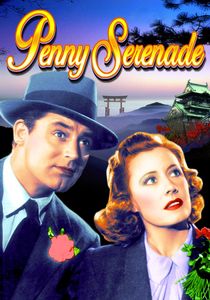
    (On Cable TV, April 2019) I didn’t think it was possible to dislike a Cary Grant film, but here I am, looking at Penny Serenade. Oh, it’s not virulent hatred, nor wall-to-wall dislike. It’s just … not that enjoyable. Part of it has to be that in trying to show the first few years of a marriage, the film becomes an episodic melodrama, meant to make people sob and then rebuild them back into happiness even if it doesn’t quite make sense. It could have worked had it been executed well, but it’s not: instead, there’s a jerky-jerky rhythm to the plot that stops and goes and throws in tragedy instead of plot development and then caps it off with a cheap resolution that doesn’t actually resolve anything. Some of the early moments showing the courtship between our male lead (Grant, in a role with more serious moments and emotional range than many of his other roles—he was nominated for an Oscar for it) and our female lead (the beautiful Irene Dunne, at ease playing Grant’s on-screen wife for the third time but limited by a very traditional script) base their courtship on vinyl records. But the cavalcade of misery that awaits our characters at every turn gets increasingly ludicrous. Raking my brain for a way to make it make sense, the best I came up with was having a secondary character (played by Beulah Bondi) being an actually supernatural fairy godmother—at that point, Penny Serenade makes some kind of plotting sense rather than a collection of drama. Alas, I’m sure that this wasn’t the intended meaning of this melodrama. Unfortunately, that means that the ending (in which a new baby is meant to make everything all right) is hollow and unconvincing: It feels as if Penny Serenade had lasted twenty more minutes, the new kid would have died, some other tragedy would have tested our protagonist (place your bets on WW2!) and we’d be back at the starting point with yet another kid on the way. There are a few good moments along the way—and a few good bits of direction from George Stevens, as ham-fisted and obvious as they may seem to us. But Penny Serenade was never meant to be an audacious film—it’s old-school Hollywood mawkishness, and it’s not unusual that it would feel too broad, too on-the-nose for twenty-first century audiences.

  • Honey, I Blew up the Kid (1992)

    Honey, I Blew up the Kid (1992)

    (In French, On Cable TV, April 2019) You’ve seen an absent-minded scientist shrink the kids, now watch him blow up a toddler to the size of a skyscraper in Honey, I Blew up the Kid. Yes, Rick Moranis returns as an endearingly clueless inventor, this time turning the size dial the other way in enlarging his two-year-old son. It’s a Science Fiction comedy, so there’s no need to be concerned. The spectacle is quite ambitious for an early-1990s film—including having a gigantic kid run amok through downtown Las Vegas. The special effects are definitely limited by the technology of the time, but there are plenty of them, and some actually work really well. Moranis is equal to himself, with some fine supporting work from other actors—including a teenage Keri Russell doing her big-screen debut here. On a plotting level, I was pleasantly surprised to see that, after an opening that portends strife between the teenager heroes and their parents, the script chooses to have the teenagers remain likable, be resourceful and work in collaboration with their parents to resolve the film’s conflict. This, plus the rather charming visual impact of seeing a two-year-old rampage through the Nevada scenery, does all lead to a very cute ending. Honey, I Blew up the Kid is not quite as attention-grabbing as its predecessor and doesn’t have as many ideas to go around, but it’s a solid high-concept executed in competent fashion.

  • The Mechanic: Resurrection (2016)

    The Mechanic: Resurrection (2016)

    (On Cable TV, April 2019) Despite liking Jason Statham quite a bit, I have no regrets whatsoever in watching The Mechanic: Resurrection three years after its release, so average and undistinguished is the result. If you were to rank all Statham films, this sequel would probably be at the exact median—nothing special, but without the pretentious existential musings of its prequel, and with a few decent action set-pieces. This sequel dispenses with the more ambitious fluff of the original film to focus on another retired-hitman-brought-back-to-the-business plot with few bells and whistles. The schematic plot is built around three globetrotting set-pieces, with director Dennis Gansel doing his best to make each segment visually distinctive. He doesn’t do particularly well on the rest: the action is intelligible without being spectacular most of the time, a result of a frenetic editing style that doesn’t give a lot of room for the action to breathe. Statham is up to his usual standards, while Tommy Lee Jones looks like he’s having a tiny amount of perceptible fun playing an arms dealer. I have mixed feeling about Jessica Alba and Michelle Yeoh as supporting characters: on one hand, yay, on the other they don’t have much to do except being kidnapped. The vague videogame-like plot is all about providing Statham with a chance to do his usual tough-guy thing, and arranging action set pieces in increasing levels of difficulty. (The best remains the mid-film pool sequence, so clearly contrived it becomes funny … but with the panache necessary to be remembered long after the rest of the film has quickly faded away.)  Fortunately, only arm dealers and their henchmen are killed along the way. Even in its schematic mediocrity, I prefer The Mechanic: Resurrection to its nearly unrelated prequel (or New Hollywood-era original): it’s less dour, more colourful and features Statham in good form. He’s capable of much better, but he has also starred in worse movies so it all evens out to a median-tier film, largely for his fans.

  • The Accused (1988)

    The Accused (1988)

    (In French, On TV, April 2019) You wouldn’t necessarily expect a tough subject matter film to create a compelling viewing experience, but The Accused still carries quite a punch even three decades later. As a procedural legal thriller following the consequences of a rape in a small-town bar, it’s not meant to be fun or comforting—but the twists and turns ensure that it remains a gripping viewing experience. While Kelly McGillis headlines the film as the attorney, it’s Jodie Foster’s showy role as the victim that still earns all the attention. Foster, who won an Oscar for her performance, does have a difficult role, one that impresses even now given that it doesn’t quite fit her later upper-class screen persona. Despite being focused on a courtroom trial, the script cleverly keeps its harshest moment for late in the film—after an opening that takes place after the mass rape central to its premise, it proceeds for a solid three-quarter of its length before flashing back and taking the audience kicking and screaming through the entire traumatizing experience. This is not a unique structural trick, but by this time, the film has already established the sympathy for the character, and its bona fides as a serious and non-exploitative film. (Also, not to put too fine a point on it, the sequence has audiences watching a rape in the context of a trial about witnesses who watched a rape, after creating sympathy for the victim.)   The Accused made quite a stir back in 1988 (Even as a teenager, I recall some of the chatter) and it’s still remarkably effective today—even if you think you know what the film is about, its execution is excellent, with director Jonathan Kaplan creating that elusive scene-to-scene “I wonder what’s going to happen next?” quality. It feels more entertaining (if that’s the right word for it for a film with such an unbearable sequence) than a strictly social-issues film. And it does feature a high-intensity sequence that remains exceptionally effective even today.

  • Mamma Mia! Here We Go Again (2018)

    Mamma Mia! Here We Go Again (2018)

    (On Cable TV, April 2019) “Here we go again” is indeed the point of Mamma Mia! Here We Go Again as it tries, and succeeds better than expected, at recreating the in-your-face fun factor of its 2008 predecessor. This time, the timeline splits into a prequel and a sequel, showing a mother/daughter pair of stories with parallels to each other. Clearly, the novelty factor of the original (if such a thing could exist considering its adaptation from a long-running touring musical) is no longer there, replaced by comfort at the premise. The large ensemble returning cast is made even larger by the duelling timelines, and features both better vocal performers and a somewhat more judicious use of those returning actors with limited vocal ranges. Everything is shot in a comfy colourful way meant to evoke happy memories and sun-drenched holidays. While this Mamma Mia sequel is watchable to those who haven’t seen the original (or don’t have specific memories of it), it’s clearly meant as an encore for fans. The film deftly plays on its own self-awareness, blending allusions to itself and its actors in a way that’s unapologetically meant to be fun—just witness the buildup to Cher’s arrival in the film and the mass prostration that follows. It’s all great good fun like the original (and perhaps even more so, given better vocals, more ambitious cinema-specific scripting and bigger slicker numbers), even though the constraints of sticking to the ABBA catalogue mean diminishing returns in terms of big anthems. It does reach a crescendo during the final number, blending timelines in a big celebratory number. In the grand spirit of musicals, Mamma Mia! Here We Go Again is not meant to be intricate, but there are a few nice touches along the way. But perhaps best of all, it’s utterly unrepentant about the kind of musical comedy it means to be.

  • Lost Horizon (1937)

    Lost Horizon (1937)

    (On Cable TV, April 2019) There’s something dreamlike and romantic about the idea of lost Eden, and Lost Horizon certainly milks that notion for all it’s worth—it’s a compelling fantastical adventure in which various lost travellers stumble upon Shangri-La and deal with the promise of paradise on Earth. There’s some dodgy material here about white people bringing civilization to Tibet, but perhaps the most interesting thing about the film is how it studies the effect of paradise on its characters—some are initially reluctant and then get into it, whereas others never take to it and convince themselves they have to leave (leading to the film’s third act). Helmed by Frank Capra, Lost Horizon naturally runs a bit long once the inspirational speeches are included (especially the restored version, which replaces a few minutes of missing footage with still pictures of the production) but it’s still an interesting premise for a fantasy film, and well executed as well. If you really want to see what overlong feels like, have a look at the terrible 1973 musical remake—which brings further credence that some ideas, some stories are best fixed in time, like some lost utopia.

  • Umberto D. (1952)

    Umberto D. (1952)

    (On Cable TV, April 2019) I may be indifferent to Italian neorealism after all: Umberto D, as a story of an old man sliding from poverty to despair, is very long and unsparing in its downward spiral. An ending that offers a temporary respite can’t keep up from imagining what’s coming up days later. It does share a lot of similarities with director Vittorio de Sica’s other best-known work—like Bicycle Thieves, it takes place in lower-class Rome, featuring desperate characters trying to secure a future for themselves and (spoiler, I guess, even though plotting isn’t the point of neorealism) not succeeding. The cinematography is often accidental, with non-professional actors playing most roles. While I may admire Italian neorealism for a few things (including showing another way of making movies compared to the glossy Hollywood standard), I don’t respond well to non-plot-driven material—and I suspect that watching two such movies on successive days did not do much for the second one.

  • Atlantic City, USA (1981)

    Atlantic City, USA (1981)

    (On Cable TV, April 2019) Cultural decades never end on December 31st of their tenth year—they linger on for a while and in retrospect often begin before they chronologically do. This is even truer for “The Seventies” in cinema, often used interchangeably with “New Hollywood”—a period in which American filmmakers understood that they could say anything without being beholden to the censorship of the Production Code or the aesthetic standards of glamorous Classic Hollywood. There was plenty of innovation during that decade, but also a lot of depressing and ugly films. Atlantic City, USA feels like one of the last echoes of that period, and another one of the reasons why the 1980s placed emphasis back on entertainment and spectacle. In it, director Louis Malle delivers a decidedly unglamorous vision of Atlantic City in the early eighties, focusing on an ensemble of characters eking out a meagre living in the shadow of the casinos. He does work with a great pair of lead actors at very different stages of their careers: Burt Lancaster and Susan Sarandon. Much of the story has to do with small-time scams and criminal enterprises—and not in a flashy film-noir way but as a disreputable grimy drama. Many of the characters are deluded in their own ways, leading to a very depressing result. While there are a few moments of comedy, it’s not fun to watch and not meant to be fun to watch. Given the film’s origins as a Franco-Canadian production, there are a surprising number of Canadian and French references in the story (starting with a lead character coming from Saskatchewan!), as well as Canadian actors in supporting roles. The film certainly has its fans—It figures on a few best-of lists, earned a few Academy Awards nominations, and got added early on to the National Film Registry. Still, Atlantic City, USA is perhaps best seen as one of the last statements made by New Hollywood before it got replaced by a far more commercial crowd-pleasing aesthetic. I’ll let others mourn for it.