Reviews

  • In a Lonely Place (1950)

    In a Lonely Place (1950)

    (On Cable TV, April 2019) While In a Lonely Place would be a great film noir no matter who was cast in the lead role, seeing Humphrey Bogart as an impulsively violent screenwriter embroiled in a sordid murder plot does add a lot to the result. Many critics with a good knowledge of Bogart’s career will single out his performance here as the closest to Bogart’s real-life personality and an underrated critic’s choice. The metareferential aspects of the story set in Hollywood are enough to recall Sunset Blvd and All about Eve, also released in 1950. But it’s the execution that shines. The direction and set designs are straightforward, but the dialogues, characters and plot more than make this a great watch. (Some acting is a bit off, but it has to be measured against the looser standards of the time.)  It ends on a tragic note in the classic sense, as the protagonist’s flaws prevent him from getting what he wants. (It’s more optimistic than the original scripted ending, but no less heartbreaking.) Bogart is quite good here—while he doesn’t really come across credibly as a screenwriter, he definitely manages to portray the violent impulses of the character more efficiently than another actor would. Twenty-first century viewers will be quick to identify this as a look at toxic masculinity decades before the term was coined, and does so with Humphrey Bogart—who exemplified its characteristics in a glamorous fashion. While sometimes presented as a film noir without qualifications, In a Lonely Place earns a second look in part because it pulls back from noir at the last moment, ending in a way that is far more relatable than the usual everybody-dies-then-goes-to-prison conclusion that other comparable film would have taken. Sometime the harshest prisons are the one we build for ourselves, and there’s no better tour guide that Bogart’s haggard look.
  • The Magnificent Ambersons (1942)

    The Magnificent Ambersons (1942)

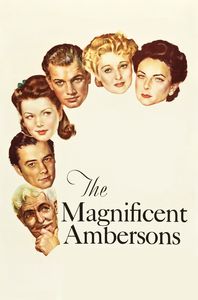
    (On Cable TV, April 2019) If Citizen Kane is Orson Welles’s biggest hit, then The Magnificent Ambersons is the one that got away—a favourite of those willing to start digging into the filmography of the famously difficult writer-director and see where, arguably, it all started to go wrong. What’s on screen is easy to admire. There’s something admirably modern in the way the story begins, with directing and editing well in advance of its time with voiceovers, visual segments and droll vignettes combined in order to adapt a novel on-screen in an efficient, dynamic fashion. This is really Orson Welles at his best, immediately following on the success of Citizen Kane. The Magnificent Ambersons rolls on good acting, good themes, exceptional direction and great sets, with the camera moving into them to track the characters in long shots. But there is a catch: the ending really isn’t as satisfying as the beginning, and trying to understand why it is will quickly get you reading about Welles’s clashes with the studio—a pattern that would repeat itself for the rest of his life. Perhaps more has been written on what’s missing from the film than what remains, but what remains is impressive—even though the unsatisfying and rushed ending clearly demonstrates the meddling even to those uninterested in reading about the film’s production.

  • Keeper of the Flame (1943)

    Keeper of the Flame (1943)

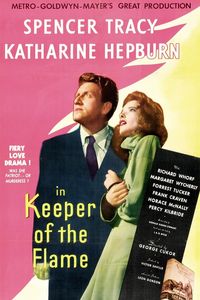
    (On Cable TV, April 2019) Cukor, Hepburn, Spencer—it didn’t take much more than that to get me watching Keeper of the Flame without even taking a look at the plot description or any of the material about the film. I just knew that I’m on my way of seeing all of the nine Hepburn/Spencer movies (this being my sixth) and also (eventually, maybe) seeing all of George Cukor’s films. If you were expecting a romantic comedy, the first minute of the film will set you straight as a famous man dies in a car crash and the entire nation mourns. Tracy Spencer plays a journalist who wants to get the story behind the death, his primary objective being meeting the deceased’s widow (Katharine Hepburn). What he discovers will go far beyond anything he (or we) could have imagined. The film is structured along the lines of a mystery, with enough sombre hints to get us hooked on the promise of something sinister. Hepburn is at her best here: still looking like a gorgeous ingenue, but acting with the strong will of her later matronly roles. But I defy anyone from guessing how the film ends. By the time it does, the female lead effectively becomes the woman who looked forward in time and stopped American fascism in the nick of time. The second half of Keeper of the Flame does have issues: the romantic drama slows down, and the delivery of the film’s secret is done through a ham-fisted fashion that weighs down the film’s laudable intentions and daring premise with inelegant exposition that never stops unspooling well after the point is made and too densely to be satisfying—certainly more could have been done to prepare viewers for the revelations. Keeper of the Flame remains relevant well after it served its purpose as an anti-fascism call to arms against the axis, and its lack of contemporary success can be squarely attributed to the public revulsion at even considering the possibility of homegrown American fascism. We twenty-first century viewers know better.

  • Henchmen (2018)

    Henchmen (2018)

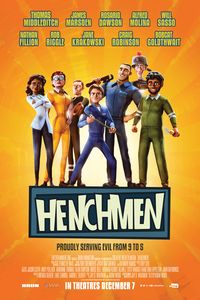
    (On Cable TV, April 2019) Chances are that you haven’t seen low-budget Canadian animated superhero film Henchmen and that’s too bad: while hampered by production constraints and an undercooked script, it does show off an exceptional art style, some good ideas and a certain energy within its short 89-minute running time. The shortcomings of the film are apparent early on with slap-dash worldbuilding sloppily introduced, an opening action sequence that doesn’t quite know how to juggle its two protagonists or how to ease us into the film’s atmosphere. The crass pun-addicted opening villain doesn’t help either. The production limits of writer-director Adam Wood’s film also become obvious early on, with lush matte painting acting as background to much of the cell-shaded 3D-animated action: To its credit, the integration of both works very well, but the static nature of the 2D backgrounds becomes obvious with time. The scriptwriting is uneven—I’d like to praise the protagonist’s occasional temptations into evil, but I’m not sure they’re controlled all that finely. Still, Henchmen becomes better and better as it advances, taking a slightly different outlook on superhero tropes and not being particularly taken with super-heroism as a way of life. It’s still sloppy in how it doesn’t explore its own ideas, and has redundant or annoying characters taking far too much space. It’s still a bit of a pleasant surprise, especially given its perceived budget (you’ll notice that the credit sequence is markedly shorter than other animated features). It even keeps some money in store for a few party anthems—”Ballroom Blitz” never gets old, the “Falling Free” sequence is good, and while “Sweet Home Alabama” is a great song, I’m not sure it’s used all that wisely here. If you keep your expectations in check and can make it past the first twenty minutes or so, the rest of Henchmen is a nice little surprise, and one that should be seen more widely.

  • Le notti di Cabiria [The Nights of Cabiria] (1957)

    Le notti di Cabiria [The Nights of Cabiria] (1957)

    (In French, On Cable TV, April 2019) Getting through writer-director Federico Fellini’s filmography is a bit like balancing the meat-and-potatoes (with early neorealist films) with the far more exciting desserts (his later, more expressionist material). The Nights of Cabiria is one of the duller meat-and-potatoes courses. It’s neorealism à la Fellini, following the adventures of a prostitute throughout heartbreak, murder attempts and complete destitution. While the tone can approach comedy at times, the unbelievably cruel ending is tough to watch despite last-ditch attempts to show joy. It’s clearly not as oneiric as later Fellini; in fact, it feels closer to other early neorealists like De Sica and that’s not necessarily a good thing when it comes to liking the result. I can’t say whether I liked the great performance by Giulietta Masina’s performance and the somewhat dispiriting depiction of mid-50s Roman slums—both are top-notch, but both made the depressing film even worse. That lack of enthusiasm also explains why the film feels overlong, with multiple episodes that keep on going long after any patience has worn thin. Still, the ending won me over, perhaps more out of beaten-dog sympathy than anything else. If you like Italian neorealism, you know it and you know if you’re going to like The Nights of Cabiria.

  • Gentleman’s Agreement (1947)

    Gentleman’s Agreement (1947)

    (On Cable TV, April 2019) For all the flack that Hollywood social-issues drama films often get as insincere, award-begging performative exercises, they certainly can help chart the social evolution of the United States throughout the decades. Gentleman’s Agreement, having won a Best Picture Oscar (albeit being one of the most obscure winners of the award), can be considered a successful A-grade social-issues drama, and it does make for intriguing viewing. Gregory Peck is in fine likable form as a writer who, as an assignment in a new city, tells everyone he’s Jewish. Antisemitism being the topic of the film, you can imagine how well that goes: Ostracism, prejudice, snide remarks, exclusion, fights with his girlfriend and so on. Taking place in upstate New York fine society makes it more infuriating. By focusing as much on the bigotry than on the duty to stand up to bigotry, the film remains effective despite a few naïve moments and on-the-nose messages: nobody likes to think of themselves as bigot, but it’s not as obvious to be against bigotry, especially given the so-called “grown-up” desire to get along and not be perceived as a troublemaker … as happens to the protagonist here. It’s not a perfect film: the romantic ending seems to come out of nowhere—especially since the film seems to play with presenting a suitable alternative to the proudly prejudiced fiancée. It’s also a bit unlikely that a man of the world such as the lead character would be initially surprised at the prejudice he encounters as a self-proclaimed Jew—the film becomes more effective once it dispenses with the first few early scenes to show the tension in being part of that social circle and yet making sure that it is restricted from “these people.”  Finally, there’s the issue of “temporal inconvenience” that has dogged majority representation of minority issues, but let’s stop there—Gentleman’s Agreement was daring enough in 1947 that it should be assessed kindly. Few other actors than Peck or director Elia Kazan would be able to pull off the righteousness of his protagonist without coming across a sanctimonious and that ultimately is what separates Gentleman’s Agreement from other, less successful films. (There’s also the prestige A-list star treatment to help make sure this was the winning pick rather than the same year’s film noir Crossfire, but that’s an entirely different review…)

  • Kalifornia (1993)

    Kalifornia (1993)

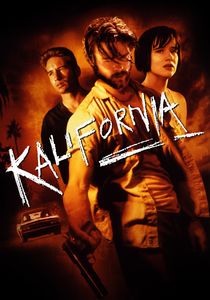
    (On Cable TV, April 2019) Some movies are far more interesting in retrospect than during their initial release. Maybe they feature filmmakers and actors who became big later; maybe they anticipated or helped create a cinematic movement; maybe they reflect their time so well that they become period pieces. And maybe sometimes all three, like Kalifornia. The marquee appeal of the film is obvious in hindsight—David Duchovny as a journalist travelling across the United while visiting serial killer shrines, offering a ride to a young couple played by Brad Pitt and Juliette Lewis who end up being serial killers themselves. While Lewis’s performance echoes the one in the following year’s Natural Born Killers, Pitt plays against type as a manifestation of pure id, uncouth and violent and absolutely fascinating to the protagonist. Kalifornia does feel very much of its time in content and presentation—the early 1990s were heavy on serial killers, and this film certainly tries for a meta-commentary on the trend. There’s probably a link between this film and the rise of the Tarantinoesque black comedy subgenre, built on a foundation of neo-noir plotting and stylish direction. The visual style here is very assured—director Dominic Sena makes his debut here, but he would later go on to direct two very stylish thrillers for Jerry Bruckheimer toward the end of the decade (and then two more rather ordinary films in 2009–2011, but that’s another review). Still, for all of the fancy camera moves and studied images appealing to pseudo-profundity, there isn’t a whole lot to the result beyond being yet another serial killer exploitation film—well shot but hollow. There’s no real understanding of the antagonist’s murderous motivation beyond simply being a cinematic psycho, and for all of the film’s superficial attempts at contemplation (such as the climax taking place on a deserted atomic test site), it doesn’t really lead to anything profound. The script fails to back up its own themes with anything beyond dull voiceover musings. Still, Kalifornia has aged better than many of its contemporaries—its enduring popularity is clearly linked to its lead actors, but it does remain a flavourful thriller with some visual style. It is more interesting than average … but not by much.

  • She’s Having a Baby (1988)

    She’s Having a Baby (1988)

    (In French, On TV, April 2019) On paper, She’s Having a Baby has the simplest story in the book, or perhaps the one that takes place years after the credits roll on any high school romantic comedy, as two high school sweethearts get married and try to figure out what to do as grown-ups. But the twist here is that our protagonist is a writer, which gives to the film both an ironic narration and multiple flights of impressionistic fancy that take the film in between reality and pure imagination. It feels a lot like an overly literal literary adaptation, even though it’s an original film from noted writer-director John Hughes. The result, with its tonal and cinematographic shifts, is still a lot of fun to watch today even though the result is significantly uneven: some of the (day)dream sequences are very funny, while others feel out of place and not especially insightful or funny. Still, Kevin Bacon is good as the protagonist, and a bunch of capable actors surround him. (This being one of Hugues’s late-1980s movies after a string of hits, he was able to arrange for several noteworthy cameos in the ending credit sequence.)  The 1980s soundtrack is dated, but thankfully not overexposed. The danger is having a film that leaps from reality to fantasy in such a way is that it creates a sense of unfulfilled potential, as whatever we can imagine doesn’t measure up to what the film gets up to. So it is that She’s Having a Baby leaves us slightly disappointed, perhaps wanting more, perhaps disappointed at the lack of surprises (making the fantasy even more important), perhaps feeling as if the film never reaches its potential. Still, it’s not a bad watch—and if my notes are correct, this was the last Hugues-directed film I hadn’t yet seen.

  • La Bamba (1987)

    La Bamba (1987)

    (In French, On TV, April 2019) It happened more than a decade and a half before I was born, but I’m still surprisingly mournful about The Day the Music Died — The February 1959 plane crash that killed Buddy Holly, Ritchie Valens, and “The Big Bopper” J. P. Richardson. Much of the story has been told in another film (1978’s The Buddy Holly Story), but La Bamba focuses on the life of Richie Valens, who died just as he was gathering attention as a rocker. The film is thin but satisfying, spending a lot of time on the rags-to-fame aspect of Valens’s life, occasionally delivering a musical number along the way. From a story perspective, it’s not much and not particularly uplifting (the film, knowing that many viewers already know the end of the story, heavily prefigures its ending by focusing on Valens’s fear of dying in a plane crash even from the first scene), so much of the appeal depends on the film’s musical numbers. Fortunately, there are a few high-powered numbers along the way, not only from Valens (“Donna” but especially his rock-and-roll take on the until-then folk song “La Bamba”) but also other musicians from the early rock-and-roll era in its fun and carefree atmosphere. The centrepiece of La Bamba, of course, is Lou Diamond Phillips’s first on-screen role, a tough part that requires good acting and performing skills. Fortunately, Phillips nails it—his stage performances are very enjoyable once he hits the big time in the film’s second half, with some underrated support from Esai Morales as his brother and Elizabeth Peña as his sister-in-law. While La Bamba isn’t perfect (I would have liked to see more time spent with the musicians) and seems cut short just as dramatically as Valens’s own career, it does have a few strong moments and its credit sequence, after a sombre ending, ends by highlighting its biggest strength once more—an uncut shot of Phillips performing “La Bamba” one more time.

  • The Lost City of Z (2016)

    The Lost City of Z (2016)

    (On Cable TV, April 2019) Considering that I really liked David Grann’s non-fiction book The Lost City of Z when I read it shortly after its release in 2009, I was certainly looking forward to its movie adaptation. Alas, for reasons that I can’t quite figure out, the film itself simply fails to launch. There’s a faux-philosophical leadenness to it all that didn’t move me, a ponderous rhythm that doesn’t even come close to capturing the danger and adventure of deep-jungle expeditions. The film does itself no favour with a deliberately super-processed colour grading that actually takes away from the beauty of the natural wonders discovered by the explorers. The film lacks a clear buildup, going from one expedition to another, then off to war. Director James Gray is ambitious, but the result of his efforts doesn’t take off. Another underwhelming factor is Charlie Hunnam in the lead role—time after time, Hunnam proves himself to be one of the most uninvolving leads of the last few years and while I believe he could be fine as a character actor, he seems determined to somehow overwhelm audiences through sheer ubiquity. As with other cases where a film simply “didn’t do it for me” absent obvious issues, I can chalk my reaction to an unreceptive mood … but I don’t think it’s that simple. At nearly two and a half hours, The Lost City of Z is a serious sit, and one I’m not eager to repeat. I’d rather re-read the book.

  • Chaplin (1992)

    Chaplin (1992)

    (In French, On TV, April 2019) Considering the influence that Charlie Chaplin had on cinema, it’s obvious he deserved his own big-budget glossy Hollywood biography. Not the warts-and-all one, though: the mononymous inspirational one: Chaplin. It begins, at it should, with an enjoyable look at early Hollywood history, from filming Keystone Cops shorts to hanging at parties with Douglas Fairbanks to going backstage at the first Academy Awards. Robert Downey Jr. ends up being an inspired choice to play Chaplin throughout his adult years, along what feels like a who’s who of early-1990s actresses (including a very young Milla Jovovich). The flashback-heavy structure of the film keeps things interesting, but there’s no denying that this is an old-school, lavishly executed biography with the pitfalls inherent in trying to cram decades within two hours. The film very lightly touches upon Chaplin’s least savoury personality traits such as his fondness for younger women, infidelities and cruel treatments of past lovers, but shies away from a full understanding of the character, and barely mentions the business savvy (including re-editing silent pictures as audibly-narrated ones, or his co-founding of United Artists) that contributed to his enduring popularity throughout the following decades. Having spent the past few years diving head-first in the archives of Classic Hollywood and seeing many of Chaplin’s best-known films along the way, I got quite a bit more out of the film than had I seen it a few years ago. But despite the lavish production means and Downey’s incredible performance playing Chaplin (especially toward the end of his life), there’s something missing here. Especially in the second half of the film, increasingly focused on Chaplin’s legal problems, exile from the United States and creative slowdown. Chaplin tries to put on a happy face on a life that doesn’t quite fit the pattern, and the tension is noticeable. Perhaps a slightly better film would have stopped earlier.

  • Thinner (1996)

    Thinner (1996)

    (On Cable TV, April 2019) One of the most wonderful things about Stephen King is he has written so much that you can have yourself a weeks-long marathon of King film adaptations, with a wide variety of quality from the grotesque to the sublime. In that Stephen King Cinematic Universe, Thinner is likely to go unnoticed. Not that it doesn’t have a good hook on its own—what with an obese lawyer accidentally killing a gypsy woman, and her father putting a fatal thinning curse on him. But good hooks aren’t rare in the King oeuvre—what’s more important is the care with which they’re executed and that’s where Thinner loses points. Clearly looking like a mid-tier 1990s film, it’s a horror film made like a horror film, with little intention to aim for anything more. There’s also a very specific aspect to the story’s requirements—the makeup—that would at best be weird, and here feel simply grotesque. Simply put: any story that has a 300-pound man thinning down to skeletal proportions was a tough special effects assignment without top-notch 2010s digital wizardry, and there’s no going around that much of it looks unconvincing, especially in the later stage where makeup is applied to lead actor Robert John Burke’s face in order to create hollow depressions. Then there’s the script, noticeably sillier than other King adaptations even when it does a fine job adapting a weird story. But those things combine make Thinner feel like a minor work—an extended Twilight Zone episode with enough filler required to make it to the end, the point of the film being in the ironic ending. Not unlike the novel, really—King wrote it as Richard Bachman at a time when he was still aiming for airport-grade potboilers. I still enjoyed it, but as a B-movie with a number of excesses rather than a better kind of film. This being said, there’s a lot worse in the King Cinematic Universe—being forgettable isn’t all that bad.

  • BlacKKKlansman (2018)

    BlacKKKlansman (2018)

    (On Cable TV, April 2019) You can’t really tell a creator like writer-director Spike Lee what to do. But with BlacKKKlansman, there’s a feeling that he’s back at his activist best, delivering a ferociously engaged film that does not compromise on its entertainment value. Loosely adapted from a true story, it focuses on a black FBI agent (played by John David Washington, son of Denzel but on his way to a stardom of his own) who works with a Jewish co-worker (Adam Driver, also quite good) in order to infiltrate a local KKK group. The clear activist intent of the film is made even better through a considerable amount of comedy, suspense and scene-to-scene interest: this is probably Lee’s most purely entertaining film since Inside Man, and it’s a welcome return to form for him, as his last decade-and-change of filmmaking has been erratic or eclectic. The result is one heck of a movie—funny, compelling, heavily ironic, pulling no punches against racists and ending with a coda that really drives the point home that this may be a story from the past but not a past story. Great performances also show Lee working at his best—It’s hard to miss with Driver, but Washington establishes himself as a compelling lead, and we get a supporting performance from black activist legend Harry Belafonte (!) and an eye-catching turn from Laura Harrier. I really liked BlacKKKlansman, and its existence says much about the state of black filmmaking in the 2010s—telling its own stories, being matter-of-fact affirmative, processing ongoing irritation with the current state of American society and having the power to draw in large audiences to buy into its uncompromising message. The Academy make a mistake when it gave the Best Picture Academy Award to the inferior Green Book.

  • Passion (2012)

    Passion (2012)

    (In French, On TV, April 2019) I only watched Passion because I’ve been hitting the vintage Brian de Palma catalogue a lot lately, and had been wondering what he’s been up to in recent years. This happens to be almost exactly the best state of mind to tackle this film, as it eventually makes its way to classic de Palma grand-guignol with murder, lust, affairs, twins, nightmares (meaning no less than two catapult awakenings) and bad people doing bad things to each other. It’s quite a bit of fun if that’s what you’re looking for. The beginning can be deceptive, though: the introduction of two marketing agency executives feels a bit too clean, too modern, too fun to be de Palma, but just wait—it doesn’t take long for the ugliness to come out, and the silliness as well. Perhaps the standout sequence has to do with a ballet, split screen, three characters and a final murder. This may not be great de Palma, but it’s definitely de Palma and that will be enough to please its audience. Rachel MacAdams is fine here as a grown-up Mean Girl, whereas Noomi Rapace is good enough as her antagonist (or protagonist—it’s that kind of movie). The ending doesn’t make sense, but it’s a good cap on an increasingly demented ride. While billed as an erotic thriller, don’t expect too much of Passion on that front: it’s got explicit situations, but no significant nudity nor extended erotic sequences. While there’s a sense that de Palma is churning familiar material, who can fault him for one last go to the same sources of inspiration?

  • Adjust Your Tracking (2013)

    Adjust Your Tracking (2013)

    (On Cable TV, April 2019) Even though I have a sizable DVD collection, I never really collected VHS tapes: They were expensive at a time when I had no money, and their self-destructive nature made it a dumb investment compared to optical discs. Adjust Your Tracking is not for people like me: It’s a documentary about VHS collectors, who keep accumulating vast libraries of obscure films (most of them in the horror genre) in spite of the medium’s obsolescence. At its best, the documentary is good fun, touching upon the thrill of collecting and of rummaging through old and potentially unsafe shops in order to find the rare collectible. I particularly liked the spotlight on a collector who has transformed his basement into a credible recreation of a video store as a way to showcase his collection. Other highlights include a few minutes talking about The Quadead Zone, an obscure film that nonetheless established records for eBay VHS sale prices. Some of the segments are illustrated through rough comic panels. If you know the horror community (and I have attended enough several consecutive years of the World Horror Convention to qualify), you can recognize its rough humour and familiar call-outs (such as referring to “pre-sellout Craven”). The film does get much weaker when it tries to extol the innate virtues of VHS (as if computers can’t be set up to lower DVD resolution and insert scan lines); but stronger when it points out that a significant fraction of those low-budget VHS films have never been re-released in digital format. Writers-directors Dan M. Kinem and Levi Peretic do well when they delve into the collecting impulse, finding echoes of other hobbies in the pursuit. I’m really not a fan of VHS as a format, but my congratulations go to all of those interviewed in Adjust Your Tracking—and I’d be really, really curious to get an update on the various projects outlined here.