Reviews

  • Marooned (1969)

    Marooned (1969)

    (On Cable TV, March 2019) Considering that I really like the subgenre of space disaster thrillers, I’m more favourably predisposed than most toward Marooned. On the one hand, it’s an early example of the space thriller, and you’d be surprised at the numerous parallels that this 1969 film has with both the 1970 real-life Apollo 13 incident and its 1995 movie depiction. The close cooperation that director John Sturges got from NASA helps the film’s credibility, and in turn helped it age remarkably well—the Cold War period feel is a glimpse into how such premises played out at the end of the 1960s, and give a fascinating patina to the result. The film won an Oscar for best Visual Effects, and much of the miniature work is still quite good—and there’s a lot of it. Acting-wise, the film can depend on the great Gregory Peck, Richard Crenna and a young Gene Hackman. On the other hand, there’s a reason why the film was also featured on Mystery Science Theater 3000—it’s stoic to the point of being bloodless, almost unbearably dull even in the middle of the suspense. The realism is pushed to an extreme that prevents it from being truly involving. Marooned can’t quite figure out the difference between displaying steely-eyed upper-lip stiffness and between allowing its characters to feel endangered. Later movies of the subgenre, from Apollo 13 to Gravity, would fare much better.

  • Die Büchse der Pandora [Pandora’s Box aka Loulou] (1929)

    Die Büchse der Pandora [Pandora’s Box aka Loulou] (1929)

    (On Cable TV, March 2019) I have enough trouble with 1920s American silent dramas that going for a German one is just adding an additional degree of difficulty to the process. But Pandora’s Box is considered a classic of Weimar Germany cinema, and since I’ve seen many of its contemporaries, I thought I’d boldly charge forward. As it turns out, despite its punishing two-hour-plus length, Pandora’s Box has just enough naughtiness to keep things interesting. A film about a young woman brazenly using her seductive charms to eke out a living, it features a kind of strong self-driven female character (a frank performance from Louise Brooks) that would not be seen again for decades. It’s still a struggle to get through the film thanks to its rough technical aspects, melodramatic excess, endless title cards and tepid rhythm, but it does have enough strengths to be striking. The depiction of female sexuality (especially as it’s leveraged for money and comfort) is provocative, although the film cannot resist final moralism with a finale so gratuitously bleak that it becomes almost caricatural. Pandora’s Box is not interesting enough to leap from the historical-interest list to a more accessible status, but it’s really not as dull as I feared it would have been.

  • The Longest Yard (1974)

    The Longest Yard (1974)

    (On Cable TV, March 2019) Coming to the original The Longest Yard after seeing the Adam Sandler remake only underscores how the original was rougher and tougher. Stemming from the dark and gritty New Hollywood 1970s when even the heroes were criminals, the story multiplies premises by sticking an underdog football comedy inside a prison, with Burt Reynolds leading a team of inmates for a not-at-all-rigged game against the prison guards. I don’t care for either prison or football, but even I have to admit that there’s something intriguing in how the codes of two familiar subgenres are combined, then refocused as a star vehicle for Reynolds. The outlaw blue-collar comedy aesthetics of the 1970s make for a distinctive atmosphere, and do heighten the stakes in a way that the newer sanitized remake couldn’t manage. Reynolds himself is quite good: the film makes good use of his charisma, even when he shaves off his moustache for the role. Ironically, The Longest Yard stumbles in its last inning, as the climactic football game drags on interminably. But then again—I understand far less about football than I do about prison, and the film’s last-act indulgence in pure sports mechanics feels more like a sop to football fans than anything else. While both the 1974 and the 2005 versions share a surprising number of plot points, there’s no denying that the original is grittier, harsher and far more politically interesting as a stick-it-to-the-man transposition of social power dynamics onto the football field.

  • The First Purge (2018)

    The First Purge (2018)

    (On Cable TV, March 2019) Every Purge instalment takes more care in detailing its premise, and each one has fewer and fewer interesting things to say about it. Prequel The First Purge takes us to the origins of the first purge, but has nearly nothing to say that hasn’t been covered yet. There is something almost interesting in how the series has been slowly shifting from having white to black protagonists in four instalments—and this one doesn’t pull any punches in having black heroes fighting white supremacy. Alas, this is the point that the last few movies have already made, leaving little thematic gas in the tank. Otherwise, though, this is all routine stuff, repugnant and boring at the same time. Describing the first purge is a mistake from series writer-producer James DeMonaco (not directing this time around) when the film’s not nearly as clever as it thinks—the portrayal is less interesting than what the back-story had left to the imagination. The First Purge starts grating very early on, to the point where I actually didn’t care for Marisa Tomei’s character—which is nearly a first. Everything is as nihilistic as dictates the box-office returns of the series—there will be purging as long as there is commercial potential to the series (and then two or three “final” instalments). There is something else at play, though—the first Purge was released at the tail end of the Obama years, back when it was possible to fool ourselves that things were getting better and the movie was over the top. Now we’re knee-deep in one of the most overtly mean-spirited presidential administrations in history, and the series premise hits too close to home. At this point, we don’t need any more entries in the Purge series—we need to pay attention to the newscasts and prevent it from happening.

  • Under Siege 2: Dark Territory (1995)

    Under Siege 2: Dark Territory (1995)

    (Second Viewing, In French, On TV, March 2019) One wouldn’t expect Under Siege 2: Dark Territory to have a special place in movie history, but it does! Back in 2005, SFX trade magazine Cinefex printed a long roundtable article discussing the state of the industry, and one SFX luminary mentioned the film as the first one in which “invisible” digital special effects were used to simulate a film being shot aboard a train, launching a now-commonplace technique. Re-watching Under Siege 2 today, most of those “invisible” effects hold up—it takes a conscious effort to realize that they’re shooting on a studio set. More spectacular effects are noticeable later in the film, but by that point we’re already onboard. Alas, while Under Siege 2 remains enjoyable on a purely 1990s action movie way, it could have been much better. The main problem, as usual for a Steven Seagal movie, is Steven Seagal himself. His limitations as an actor (emotionless, devoid of personality) aren’t as big a problem as his pride preventing his character to ever be made vulnerable: The Seagal style is to never acknowledge that the protagonist can be put in jeopardy, and that ends up taking away a lot of audience sympathy. The result is an action movie that’s literally on rails, whether we’re talking plot or narrative approach. It’s very much an exemplar of the mid-1990s Die Hard imitators, although better than many. The rhythm and premise of the film is very much of its era, with director Geoff Murphy playing with military technology, regularly scheduled action sequences, and a rather good over-the-top villain played by Eric Bogosian. You can spot Katherine Heigl in an early role as a sullen baby-faced teenager. The action climax of the film is actually pretty good, but it would be much better if it wasn’t for Seagal jogging through it without a care in the world, confident that nothing will dirty his suit or muss his hair. But as I said—no one expected this film to be anything more than a footnote in movie history.

  • Alpha (2018)

    Alpha (2018)

    (On Cable TV, March 2019) For all the smack talk that movie reviewers and jaded viewers say about Hollywood and its propensity to always do the same thing, there’s always a stream of odd deviations from the norm if you know where to look. Alpha is most definitely not a major studio-backed film, but it was released by Sony—albeit with a year-long delay that may betray the uneasiness of its marketing department. After all, how do you sell a movie set 20,000 years ago, without supernatural or science-fictive elements, and not even featuring a modern language? These complications approach art-house territory in terms of audience appeal and you have to admire the audacity of writer-director Albert Hughes in even proposing the project. But that’s underselling the strengths of Alpha, which is (at its best) a rousing adventure story, featuring a boy and his proto-dog trying to get back to his tribe after they’ve left him for dead. The film is a roller-coaster ride of prehistoric action sequences. Aptly balancing realism with action-movie thrills, it’s an intriguing glimpse at the kinds of heroics that were required by our ancestors. The heavily processed cinematography is terrific, making use of IMAX-grade image quality and numerous virtual sequences. It says a lot without that many subtitles. The Big Idea here is to depict how human domesticated wolves into becoming dog companions, so I expect Alpha to strike a chord for dog lovers of all stripes. (I wonder how a similar film about cats domesticating humans would go. Probably an animated comedy set in Egyptian granaries.)  While I do think that Alpha’s appeal remains limited (I found long stretches of it very long to sit through), I like that a film taking so many chances and yet sticking to a certain realism exists: we need more than the usual formulas in order to keep things fresh, and it’s this difference that makes Alpha special.

  • Doc Hollywood (1991)

    Doc Hollywood (1991)

    (In French, on TV, March 2019) You don’t watch Doc Hollywood for deep insights in the human condition. You don’t watch it for the twists and turns of the plot. You don’t watch it for a ferocious critique of modern society. You watch it because it has prime-era Michael J. Fox as an L.A. doctor marooned in a small Midwestern town, and all of the expected hijinks that will ensue. You watch it because it’s an intensely familiar premise executed according to the best practices of the breezy and fun formula. You watch it because you can see the entire character arc unfolding from the first few minutes, and even because the “rebirth” symbolism is so on-the-nose. You watch it to catch early glimpses of Woody Harrelson and Bridget Fonda. You watch it because Fox can’t be anything but sympathetic, and because Julie Warner is very nice as the love interest. You watch it because some have compared the film to Cars, but it’s more fun comparing it to U-Turn. You watch it because it’s comforting in its predictability both at the micro and macro level (who would have thought that a film set in a small city would feature a town fair sequence?!)  You watch it to decode the hypocrisy in having Los Angeles-based filmmakers try their hand at a film praising small-town living. But, perhaps more than anything else, you watch Doc Hollywood because it’s what Hollywood prescribes best—a small, unassuming, entirely expected comedy that delivers what it’s meant to do and leaves the heavy lifting to others.

  • Forever Amber (1947)

    Forever Amber (1947)

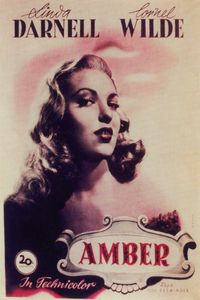
    (On Cable TV, March 2019) Historically, Forever Amber was the anticipated Great Blockbuster of its time. Billed as the next Gone with the Wind, adapted from a salacious blockbuster, showcasing actors that the studio was grooming for stardom, it was Fox’s most expensive film at the time … something not help by a troubled production that saw incredible delays, director Otto Preminger taking over the ongoing shoot, and multiple actors (including its female lead) replaced midway through. It set opening week box-office records, although the overall returns for the film remained in the red due to the very high budget. All of this is immaterial to modern viewers encountering the movie absent from its production context. Fortunately, enough of the budget still shows up on the screen to impress. As a costume drama cranked to ten, Forever Amber benefits from its lavish colour cinematography, amazing costumes and a lead actress, Linda Darnell, who looks amazing in red hair and very detailed dresses. The stylized nature of the film, set in late 17th century England, helps it age gracefully as a historical recreation (albeit filtered through the lenses of the 1940s). George Sanders is also remarkable as Charles II. Plot-wise, the film isn’t quite as impressive: the melodrama is extreme (a lot of people die, all things considered), although the amount of not-so-softened sexual content is surprising coming from a film of its time—but it does make the film feel more modern than it is. (A curious facet of the Production Code years is that filmmakers could get away with more risqué material if they were adapting a best-selling novel.) The plot, as per the original book, is not meant to end well. Still, Forever Amber remains an impressive spectacle if you like costume dramas and enjoy the kind of overwrought style of Golden-age Hollywood.

  • Grand Prix (1966)

    Grand Prix (1966)

    (On Cable TV, March 2019) As I continue my exploration of classic Hollywood cinema, I have a growing fondness for those movies that manage to capture something that existed then and doesn’t now. Movies with a big enough budget to fulfill their goals of immersing us in a world unlike our own. Movies such as Grand Prix, which takes us right in the middle of mid-1960s Formula 1 racing. Hop in the cockpit of a fast car, because we’re going for a ride! Director John Frankenheimer here manages the stunning feat of presenting an entire F1 season through distinct races, augmented by some stunning cinematography designed by none other than Saul Bass. Several sequences have an authentic feeling of speed and danger as we sit next to the driver, fly in helicopters, or witness impressively staged accidents. Even today, the racing sequences impress—and it’s amazing to realize that this was shot for real without CGI trickery—it would be almost impossible to restage Grand Prix with its period feel today (although Rush did come close), making it something that can never be surpassed even with today’s means.   It may not come as a surprise to find out that the narrative connective tissue between the races is far more conventional. There are only so many permutations of classic racing subplots, after all, and Grand Prix only has to put up enough connective tissue to get the next race with a bit of dramatic context. There is some serious acting talent on display here. Yves Montand is quite cool in a leading role, as is a young James Garner. None other than Toshiro Mifune makes a cameo as a Japanese racing team owner. Meanwhile, Jessica Walter is jaw-dropping beautiful as the romantic lead. Movies with intermissions usually have me wishing they were shorter, but not Grand Prix: this one is worth the near-three-hour running time. What an incredible film, even half a century later.

  • Battleground (1949)

    Battleground (1949)

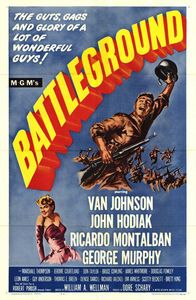
    (On Cable TV, February 2019) Hollywood produced a lot of war movies during WW2, and most of those movies were a conscious propaganda effort to raise morale and justify support for the troops. Predictably, this drive almost vanished as the war wound down. (1946’s The Best Years of Our Lives was a sobering capstone to that period.) Hollywood soon turned to other matters, but within a few years the drive to portray the sometimes-heroic, sometimes-frightening experiences of World War II was once again a moneymaker. Battleground, freed from the constraints of propaganda, was ready to explore a slightly more nuanced territory. While it’s clearly from the “war is an adventure” school of thought rather than the “war is hell” viewpoint, it’s free to have soldiers being occasionally less than heroic—expressing fear, a desire to run away or simply slack off in the face of the enemy. Still, this is an old-fashioned war movie, and frankly charmingly so: characters die, but most of our protagonists make it through, and the level of violence and trauma is definitely on the lighter side. Don’t think of this as a bad thing: in historical context, Battleground is actually fun to watch: its ground-level portrayal of the Siege of Bastogne from a soldier’s point of view is sympathetic and somehow appropriate. While not nihilistic to the degree we’d see in the 1970s, it does acknowledge soldiers as vulnerable and scared. While there are obvious comparisons to be made through subject matter between Battleground and the much better-known Battle of the Bulge, this early lower-budgeted effort comes out ahead in several areas—most notably in more accurately depicting the bad weather and forest backdrop to the events. In other words, it’s still worth a look today, both as a link in the evolution of WW2 in film, but also as a now-stylized portrayal of men in combat.

  • Desk Set (1957)

    Desk Set (1957)

    (On Cable TV, February 2019) As an Information Technology professional, I have a bigger interest than most in the place of computers in movies, and Desk Set manages to bring together that interest with another one—seeing Spencer Tracy and Katharine Hepburn playing off each other in a romantic comedy. Set at the dawn of corporate IT, this film takes the burgeoning anxieties of the era and recasts them as fuel for a workplace comedy with a big dose of romance. As the story begins, Hepburn is the manager of a research library for a TV network—her staff can answer any question anyone could have. But in walks Tracy as a mysterious eccentric eventually revealed to be an “efficiency expert”—tasked with bringing a computer in the building to complement the work of the research staff. This being a comedy from the early days of computing, madness ensues. In one of Desk Set’s funniest scenes, the quasi-magical computer ends up firing everyone in the building, something swiftly ignored as the staff learns to get along with their computerized assistant. Said computer ends up taking over most of the set and the plot, leading to a high-energy finale. In the meantime, we do get some good romantic sparring between the whip-smart Hepburn and the ever-affable Tracy. It’s not a great movie, nor is it a great romance, but it does work well enough as a comedy. The dialogue is nice, and the increasing absurdity of the film does work in its favour as it hits its finale. The romantic plot is never surprising, but the bits and pieces along the way are fun. This is later-day Tracy/Hepburn (she wears her gray hair consistently pinned back), but the first of their movies shot in colour. Still, Desk Set is fun and fun is what it aims for. Contemporary IT professionals should get quite a kick out of the mid-1950s look at the potential and perils of computers in the workplace.

  • Evil Toons (1992)

    Evil Toons (1992)

    (In French, on Cable TV, February 2019) There’s some really weird stuff if you start looking in the late-night lineup of your Cable TV channels, and I was really amused to find Evil Toons on the schedule of French-Canadian horror-focused Frisson TV. It’s not exactly a well-known film. It’s not a good movie. It even stretches the definition of a “fun to watch” film. But it’s certainly weird enough to warrant a look. The premise is one that I find immensely charming, being about a few young women asked to clean a house that—obviously!—turns out to be haunted, possessed and just plain old evil. David Carradine shows up to looks spooky and deliver some exposition, but he’s not the main draw here. That would turn out to be pornographic actress Madison Stone in a relatively rare mainstream role, first as a funny sex kitten and then as a threatening vamp. The weirdness doesn’t stop there, as the antagonists of the film are realized as hand-drawn cartoons integrated in the live-action footage. Writer/director Fred Olen Ray has a checkered career in low-budget films (most of his movies don’t even have a Wikipedia page), but I’m sure that Evil Toons represents a career high of sort. Now, I wouldn’t want to overhype this—Evil Toon’s potential vastly exceeds what it ends up delivering. We barely scratch the surface of the naughty horror comedy that it could have been in better hands. Budget oblige, the toons barely show up … and the script can’t even be bothered with a few choice pieces of dialogue that even a marginally better comedy would have delivered without breaking a sweat. There’s no subtlety, the story’s development is lame and the characters have a tendency to under-react to sights that would have more realistic (heck, most comic) characters screaming their heads off—how dumb are these people? The end-credit music is catchy, though, and Evil Toons manages to go without nudity for a full twenty minutes. What we’re left with is still a weird movie, albeit with Madison Stone doing her best. It could have been quite a bit better but somehow, I can’t bring myself to condemn the result.

  • The Sundowners (1960)

    The Sundowners (1960)

    (On Cable TV, February 2019) There is a weightiness to The Sundowners that makes it both respectable and a burden to watch. The story of a nomadic family trying to make ends meet in outback Australia, it’s a character study (adapted from a novel) of a man unwilling to settle down, something that his wife finds increasingly untenable. Robert Mitchum stars in a very manly role, with Deborah Kerr as his long-suffering wife—despite the mostly happy marriage banter between the two, much of the film’s central conflict is about whether or not they’ll be able to reach an accommodation, and the ending is far less definite than many would have wanted. But the real reason to watch the film may have less to do with plotting and more with the impressive colour cinematography—unusually enough for 1960, much of the film was shot on location in deep Australia, featuring plenty of koalas, kangaroos, sheep and sheep-shearing. Peter Ustinov makes an impression as a refined older man somehow found in the outback. It’s a solid drama that was eventually nominated for five Academy Awards (including Best Picture), but don’t expect much in terms of resolution.

  • Beach Blanket Bingo (1965)

    Beach Blanket Bingo (1965)

    (On Cable TV, February 2019) Every decade in Hollywood history has its own incredibly specific subgenre, and one of the most charming ones I can think of is the spate of 1960s teenage beach movies. Taking aim at the then-developing teenager market segment (Hello Boomers!), it weaved the youth obsessions of the time—surfing, singing, dancing, partying and motorcycling for the bad boys—around a few musical numbers and cartoonish villains. Beach Blanket Bingo was the fifth of the seven mainline “Beach Party” movies, and arguably the best known of them. (With a title like that, no wonder!) Frankie Avalon and Annette Funicello once again stars as the all-American teenage couple at the centre of the film’s antics. This time around, the plot has to do with publicity stunts, skydiving, a mermaid and a kidnapping. No less than Buster Keaton shows up in a comic role, deftly keeping up with the youngsters. There are plenty of funny moments, even with comical Nazi biker antagonists. To modern eyes, Beach Blanket Bingo is intriguing in how it plays into teenage interests but not too much—it scrupulously avoids any unpleasant subjects in favour of a universe in which fun on sunny beaches are the norm. (Heavens forbid our lead couple would do more than just kiss.) Still, it’s a lot of fun, and definitely entertaining despite the superficiality. I don’t recommend watching more than one of those movies every few months, though—they all blur together even if you’re paying attention.

  • San Francisco (1936)

    San Francisco (1936)

    (On Cable TV, February 2019) One of my working hypotheses in my Grand Unified Theory of Hollywood is that everything was invented during the 1930s, and we’ve been running variations on a theme ever since. San Francisco is another validation of that statement, as it credibly sets up the template that later disaster movies would follow closely. Set during the 1906 earthquake, San Francisco features no less than Clark Gable as an atheistic saloon owner and gambler. Then popular singer Jeanette MacDonald is the love interest, while Spencer Tracy has an early role as a Catholic priest fit to act as the protagonist’s conscience. Much of the early film is spent showcasing the city as it existed at the turn of the century and setting up the dramatic conflicts that will be settled definitively by the earthquake. For modern viewers, there’s also another kind of suspense: How, exactly, are the filmmakers going to portray the impending disaster on-screen? Is it going to look effective to our modern CGI-jaded eyes? That question is answered convincingly two thirds of the way through with an utterly thrilling sequence in which real-world sets are split apart. It’s a long and still-impressive moment in the movie as characters scream, building crumble and even the era’s limitations in special effects technology can’t quite diminish the importance of the moment. Once the disaster is over, it’s no surprise if our atheistic character had found God and his love interest, affirming San Francisco’s Phoenix-like endurance. The slightly historical nature of the film, looking backwards twenty years, actually gives it an interesting weight that the speculative disaster films of the 1970s can’t quite match. While primitive by today’s SFX standards, I found San Francisco surprisingly enjoyable when it gets on with the show, and prescient as to how it creates a template for an entire subgenre to follow.