Reviews

  • Boeing, Boeing (1965)

    Boeing, Boeing (1965)

    (In French, On TV, March 2019) If you’re looking for a uniquely specific example of 1960s sex comedies, you probably can’t do much better than Boeing, Boeing, which wallows in the atmosphere of the then-trendy jet-set in order to set up a classic French bedroom farce with stewardesses getting in and out of doors with split-second timing. As the film begins, we find ourselves in swinging Paris as our Lothario protagonist (a perfectly well-used Tony Curtis) is a journalist who has figured out how to keep three girlfriends going at once: Thanks to a thorough knowledge of airline schedules and operating procedures, he’s able to have them in and out of his apartment like clockwork. Everything comes crashing down when the airlines get faster planes, and as a colleague (Jerry Lewis, less annoying than usual) comes to stay for a while, completely wrecking the careful scheduling and bringing all the spinning plates crashing down. Adapted from a French theatrical play, much of Boeing, Boeing is in the tradition of bedroom farces, one difficult situation escalating into an even more complicated one with some great bits of physical comedy along the way. Alas, the disappointing ending cuts away to a retreat that takes away the moment of reckoning and spares the protagonists getting their full comeuppance. If Curtis and Lewis get good roles, one can’t say the same for their female co-stars—aside from the much-funnier matron played by Thelma Ritter, all of the female characters are cut from the same 36-24-36 mould and are practically undistinguishable save from superficial physical attributes. Still, Boeing, Boeing itself remains fascinating: the period atmosphere alone is terrific, and the film reflects the evolution of social mores in the past sixty-five years—thankfully, few movies today would dare include the measurements of its female stars on-screen as part of the opening credits!

  • The Nines (2007)

    The Nines (2007)

    (On Cable TV, March 2019) It took me twelve years to make my way to The Nines, and I’m glad I eventually did. I guarantee you won’t guess where it ends from where it begins, as it starts with Ryan Reynolds playing an actor on house arrest, but then becomes weirder as clues accumulate that we shouldn’t take that reality for granted. Eventually, we end up in science-fiction thriller territory, with three stories crashing into each other in ways that are increasingly strange. It does make sense in the end, even though the final impact is lesser than could have been anticipated twenty-five minutes in. One good reason to watch The Nines is the number of pre-stardom actors showing up: Reynolds lends his charm to three linked roles, while Octavia Spencer uncharacteristically shows impressive cleavage, and most notably Melissa McCarthy shows up here as a rather sweet character before her post-Bridesmaids screen persona settled (at least temporarily) on an abrasive nature. Her stripped down, classically traditional performance will make converts of those who couldn’t stand her in the 2010s. Taking a step back, there’s a quite a bit of fun in putting the various said and unsaid layers of the story together—the “Nine” symbolism isn’t hard to see (although 9 as “I, X” or if you prefer “I, an unknown” isn’t dwelled upon) but the film has fun blending together acting, writing and videogames into a panopticon of assumed identities. I’m a bit annoyed that it took me twelve years to see The Nines—while it’s not the greatest film ever made, it’s a happy discovery and one that may play better now than in 2007 due to the rising fortunes of its stars and how we perceive them … adding another layer to writer-director John August’s film.

  • Running Scared (1986)

    Running Scared (1986)

    (In French, On TV, March 2019) So, there was apparently an effort in the mid-1980s to make Billy Crystal an action-comedy star? Well, why not: it was his biggest decade on the big screen, and who can blame studios for trying all sorts of things? He certainly won’t be remembered for Running Scared, a standard 1980s buddy-cop film in which our two cowboy cop heroes go around Chicago shooting and blowing up everything the producers could afford. It even comes with all the banter, police brutality, car chases and Uzi-toting drug dealers they could round up. Casting is hit and miss: While Crystal is fine with the banter, his limitations as an action hero are apparent, while the well-matched Gregory Hines does very little tap-dancing but feels significantly more rounded both on the comedy and the action side. Still, there’s enough blood and mayhem to prevent Running Scared from being a pure comedy: With Jimmy Smits on drug dealer role duties, the film does often feel a bit too spread between its successful comic dialogue (even awkwardly translated in French) and its less-successful action beats. Director Peter Hyams makes good use of the Chicago setting with a chase sequence involving the El, but on the flip side he ends up using some of the worst snow ever put in a studio film. There’s little point in getting incensed about it, or any other aspect of Running Scared’s production: the film feels forgettable even as you watch it, and it probably would have been completely forgotten if it wasn’t for Crystal headlining.

  • Our Town (1940)

    Our Town (1940)

    (On Cable TV, February 2019) I had a surprisingly sentimental reaction to Our Town, this classic of American theatre that doesn’t simply delve into the life of its small American town, but does so from beyond the grave, as the undead reflect on the richness of life and how much they miss it. The portrait of small-town America is doubly nostalgic by now, being a 1940 production looking back upon 1901. It’s not interested in the kind of critical social commentary we’d get from Peyton Place and its imitators later on: it’s more given to combining the mundane with the cosmic, using its very high and all-knowing perspective to reflect down-to-earth concerns. By the third act, we have a full-blown reflection on the afterlife that’s far more poignant than I expected. The nostalgia is tinged with timeless commentary, with a charming performance by the “stage manager.” I discovered after watching the film that the original theatrical play by Thornton Wilder was (and probably is still) a popular choice for high school theatrical productions and I can see the appeal—from the metatheatrical addressing the audience to the surprisingly deep reflections on life and death. In fact, I’d be rather curious to attend a revival.

  • The Band Wagon (1953)

    The Band Wagon (1953)

    (On Cable TV, February 2019) As a seasoned cinephile with thousands of reviews filed on this very web site, I’m far too jaded to start saying things such as “an instant personal favourite!” … but The Band Wagon is something different. Sometimes billed as “everyone’s second-favourite movie musical after Singin’ in the Rain,” it lives up to the hype: filled with striking numbers, bolstered by a cast headlined by Fred Astaire and Cyd Charisse, directed by Vincente Minnelli and produced by Arthur Freed, this is as good and as fun as musicals ever got. Astaire anchors the film in a role that smirks at his own personal situation at the time—coming out of retirement to play an entertainer looking for a comeback picture. Opposite him is Charisse, and romantic dance duets don’t get any better than their “Dancing in the Dark” with two of the greatest-of-all-time dancers playing together. But that’s a rare serious/romantic moment in an otherwise comedy-filled picture. “That’s Entertainment” is a pure earworm classic with plenty of sight gags, while “Triplets” is a darkly funny number that will surprise a few and “Shine on Your Shoes” gets Astaire dancing up a solo storm. Still, my favourite number has to be “Girl Hunt Ballet” which mixes two of my favourite movie genres—musicals and film noir—into an incredible, consciously over-the-top result. The theatrical setting of the story (in which a Broadway troupe rallies together to rescue a failing show) allows for plenty of show-business in-jokes and commentary, in keeping with the best musicals of the time. I’m not so happy at the 23-year age difference between Astaire and Charisse, but which fifty-something actor/dancer could hope to keep up with a talent as singular as Astaire? It’s a small blemish on an otherwise incredibly compelling picture—I’ve already watched The Band Wagon twice before writing this review, and—indeed—I’m placing it right under Singin’ in the Rain as one of my favourite musicals.

  • Looking for Mr. Goodbar (1977)

    Looking for Mr. Goodbar (1977)

    (In French, On TV, February 2019) One of the niceties of being a French-Canadian cinephile is having access to channels that work on very different standards than the Anglosphere. Such as the one filling its Thursday late-night movie slot with racy material from cinema’s crazier years, often dipping into little-known oddities that have probably been forgotten by nearly everyone else. (I suspect that there’s a filter effect to the necessity of showing dubbed movies—some decent films have never been dubbed while bad ones have been, and you can guess from which catalogue the programming director makes their selection.)  Which brings us to Looking for Mr. Goodbar, a dark and depressing exploration of the perils that await a young woman as she sinks in ever more extreme levels of hedonism, regularly bringing back strange men to her apartment. The biggest surprise here is the casting, with Diane Keaton (looking a bit like a young Juliana Moore or Nicole Kidman) playing the lead role in an utterly off-persona performance as a schoolteacher by day, drug-sniffing party girl by night. Other familiar (but young!) faces include Richard Gere, Levar Burton and Tom Berenger as the big villain of the movie. Looking for Mr. Goodbar is not a fun film to watch, as it comes straight from the gritty New Hollywood era and keeps heaping more and more abuse on its heroine until an utterly bleak ending that takes everything from her. Richard Brooks’s direction can be intense at times, with numerous pulls into the character’s inner life and fantasies without warning, and a strobing red-and-black colour scheme that brings on the extreme violence of the ending. It’s quite an unpleasant film, with disco music being the least of it. Chicago nights are scary in this film, and the script (adapted from a novel) adds some heavy-duty family drama to make things seem even less pleasant. There’s plenty of nudity and viewers will pay the price for it: in the 1970s, nobody was allowed to have fun at the movies on either side of the screen. I’m glad that I got a chance to catch Looking for Mr. Goodbar, but I’ll be even gladder to let it fall in obscurity.

  • Anthony Adverse (1936)

    Anthony Adverse (1936)

    (On Cable TV, March 2019) While Hollywood literary adaptations have been a constant in cinema’s history, there is a definite flavour to 1930s movies based on famous works of popular English literature: By then, Hollywood had sound technology and enough experience to fully realize costume dramas without breaking a sweat, and such films were the next best thing to a sure commercial bet given that novels were the only other popular entertainment game in town before the explosion of new media. (Even radio wasn’t all that common coast-to-coast.) There are some great movies in that subgenre, and then there are films such as Anthony Adverse. Adapted from a monumental 550,000+ words novel (five times the length of an average novel) by now-forgotten Hervey Allen, this film is equally lengthy at 141 minutes and it feels like it. Telling us about the adventures of one young man living through Napoleonian Europe, bouncing between continents as the unusually melodramatic events of his life make things even harder for him. (Napoleon himself appears, with La Marseillaise hilariously used as an ominous leitmotif.) It’s a big multi-decade historical drama, complete with multiple title cards throughout to explain even more of what couldn’t fit in the film. And yet, despite the length and the often-unbelievable accumulation of plot turns, Anthony Adverse itself feels badly paced, rushing through some things and languishing on others. It takes a long time for the film to even show its main stars Fredric March and Olivia de Havilland: Director Mervyn LeRoy did much better before and after, but trying to compress too much in even a generous two-plus-hours running time is asking for trouble—in modern days, this would become a miniseries. The number of plot points that come up by sheer coincidence is your biggest indicator of the film’s extreme melodrama. I won’t be too harsh on the result—after all, Anthony Adverse does have its charms if you do like melodramatic Victorian-era plot devices and/or the glamour of 1930s Hollywood trying to deliver a period drama. But be prepared for a long, sometimes frustrating sit.

  • The Big Sky (1952)

    The Big Sky (1952)

    (On Cable TV, March 2019) Even relatively minor works from Howard Hawks can be interesting, and The Big Sky is the kind of big-budget western shot on location (in black-and-white, alas) that is worth a look even if you don’t like westerns. It’s more of a pioneer movie than a traditional cowboy western—taking place in the Pacific northwest, it features explorers and traders as they head west to befriend natives and establish trading posts. (As such, it’s already more palatable than many horse operas where natives were solely portrayed as bloodthirsty killers.) Much of the film’s action comes from the considerable enmity between the trading companies and the rival native bands. True to facts, there’s a substantial French-Canadian presence here, notably though the character of Jourdonays—although one notes that the actor playing him, Steven Geray, mumbles incomprehensible phonetic French even as the secondary characters speak decent, but European-accented French. Visually, The Big Sky is interesting to look at, and Hawk’s qualities as a sheer entertainer means that there’s almost always something to keep us interested in the film. There’s an interesting romantic arc featuring the ethnically native Elizabeth Threatt in her sole film role. (There’s plenty to quibble in the “native princess kidnapped as a pawn in a trade negotiation” arc, but by 1950s standard this was almost progressive material—the legendary Hawksian woman reinterpreted in that context.)  Acting-wise, the film features Kirk Douglas and Dewey Martin, but all the attention goes to the arresting Threatt and Arthur Hunnicutt’s Oscar-nominated role as a Daniel Boone -type character. On a structural level, the film is slightly less successful, with the last act of the film being an anticlimactic coda after an earlier action climax. Still, it’s worth a look: more interesting than your average 1950s western, The Big Sky indeed opens up possibilities for the western genre that were not often followed up.

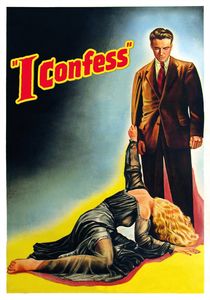
  • I Confess (1953)

    I Confess (1953)

    (In French, On Cable TV, March 2019) In some ways, it makes sense that I wouldn’t readily know about Alfred Hitchcock’s I Confess: After all, it’s definitely in the second tier of his filmography (perhaps even third tier once you exclude his early British films), and it only seldom plays on TV considering the much better choices available in his filmography. On the other hand, come on: A 1950s film (Hitchcock’s best decade) entirely taking place in Québec City? I’d be a poor French-Canadian if I didn’t see the film as soon as it popped up on my radar. So it is that I ended up catching a broadcast on (where else?) a French-Canadian classic movie channel. Truth be told, there’s a reason why this isn’t considered top-tier Hitchcock: It’s a return to the straightforward thrillers that he did in the 1930s rather than the more sophisticated fare that he was accomplishing in the 1950s: Black-and-white cinematography, little discernible humour, somewhat contrived situations without even a layer of plausibility. As far as I can tell, I Confess is set in Québec City because pre-révolution tranquille Québec City was the strongest North American bastion of Catholicism and he wanted a thriller built around the Catholic seal of confession. While the film does have some very nice black-and-white cinematography of 1950s Québec City, it really does not capture anything specific about the Québec City that I know, nor any of the city’s distinctive aspects. While I can’t be sure due to the French-language dub, there doesn’t seem to be any acknowledgement of language issues—Québec City has a solid history of an English presence, but that’s not a factor here. The plot isn’t particularly believable either (I would expect a dutiful priest to discuss matters of ethics and theology with superiors, for instance) and there’s a big chunk of on-the-nose exposition in the middle of the movie. None of this adds up to anything more than a curio. I Confess is still worth a look if you want to know what Québec City looked like in the early 1950s, but I suspect that it won’t be anyone favourite Hitchcock film—even among French-Canadians.

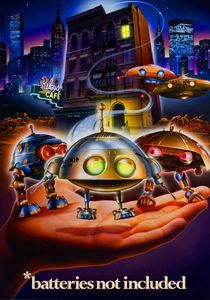
  • *batteries not included (1987)

    *batteries not included (1987)

    (Second Viewing, On TV, March 2019) I must have seen *batteries not included as a teenager in the early 1990s, and remembered a strange mix between special effects work and unabashed sentimentality. As it turns out, that’s not too far away from an impression left by a second middle-aged look at the film, as the film blends then-top-notch special effects work with a script that wears its heart on its sleeve at multiple levels. The premise focuses on an old building in the middle of an area cleared for high-rise development. As you’d expect, the villains are real estate developers doing their best to force the tenants to move out. It just so happens that alien creatures then enter the picture, nesting on top of the building and helping with minor repairs and good actions throughout the building. The rest goes on from there, with no one really being surprised at how it ends. Director Matthew Robbins keeps a good balance between special effects showcases (some of them still quite effective) and more humanistic moments. The film is built on a nice unity of place, to the point where it feels off-putting when the action eventually leaves the apartment block. It’s sentimental for sure, but it’s difficult to dislike a film so optimistic—although the “baby alien” creature is pushing things. For cinephiles, what’s perhaps most remarkable about *batteries not included is the number of known names from different eras assembled for the occasion: It’s one of the last recognizable roles for veteran actor Hume Cronyn, a decent performance from his wife Jessica Tandy, a rather young Elizabeth Pena, and a screenwriting debut for Brad Bird. Predictable but not bad, *batteries not included still works as a film for the entire family.

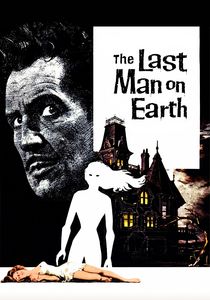
  • The Last Man on Earth (1964)

    The Last Man on Earth (1964)

    (On Cable TV, March 2019) Considering that no less than three well-remembered films (1964’s The Last Man on Earth, 1971’s The Omega Man and 2007’s I am Legend) all came from the same 1954 Richard Matheson novel I am Legend, it’s tempting to keep comparing all three adaptations to each other. While my favourite is probably The Omega Man, it’s not by a wide margin and you can certainly argue that The Last Man on Earth is fast acquiring a patina of almost quaint charm, so artificial does it now feel compared to modern standards or later adaptations. This is clearly Vincent Price’s movie, so central is he to the action and how thoroughly comfortable he seems to be in the role. It’s a bit cheap and shot in Italy to save further costs, but the ideas are there and developed relatively well—despite the familiarity with the story, I still found the finale a bit surprising. Of course, much of The Last Man on Earth will feel humdrum to modern viewers considering that its premise has been mined and remade left and right. Still, it’s not a bad beginning for the novel’s string of adaptations, and it’s definitely worth more than a historical look.

  • The Hills Have Eyes (1977)

    The Hills Have Eyes (1977)

    (In French, On TV, March 2019) The 1970s were a turning point for low-budget gritty horror grindhouse movies, and it’s hard to get trashier than The Hills Have Eyes, which often feels shot by high school students on a summer break. As with other landmark horror movies of the era (I’m thinking Texas Chainsaw Massacre, but especially Last House on the Left, which was The Hills Have Eyes’s director Wes Craven’s first feature film), there’s no gloss, no spectacle, just matter-of-fact horror in the middle of nowhere featuring desert hellbillies. The topic matter is just as dead simple, with a suburban family being targeted by cannibal mutant psychos. It’s really not a likable film, but it’s somewhat effective … if you like that stuff. Unsurprisingly far less slick than its 2010 remake (although not quite as humourless), but somewhat dull once you get past the rawness of the production. Of course, films like The Hills Have Eyes are made for a specific kind of viewer—those who shy away from grotesque and decadent horror may choose not to apply.

  • Bugsy (1991)

    Bugsy (1991)

    (On Cable TV, March 2019) There is such a heady brew of elements in Bugsy that I wonder why I’m not so happy with the result. It is, after all, a mixture of crime, Hollywood, gambling and empire building, as a mob enforcer goes to Los Angeles in 1940, discovers the allure of Classic Hollywood, and starts dreaming about building a big gambling town in the Nevada desert. It’s easy why the role of “Bugsy” Siegel would have some attraction for Warren Beatty: a mixture of a powerful criminal, decisive lover, futurist dreamer and Golden-Age Hollywood glamour—a fast-talking con man with the ruthlessness to back it up. Plus, the lead female role belonged to Annette Bening, whom he met during shooting and eventually married. Technically, the film is solid: great production values, veteran director Barry Levinson at the helm, and good actors in the main roles. But Bugsy isn’t quite as slick as its components would suggest. The script shows some contempt for its character by titling itself after a nickname he hated. The pacing is unhurried, quite unlike the character it portrays. The ending is as obvious as it’s drawn out. And so the film’s highlights (such as a visit to a movie set) are drowned in so much minutiae that the entire thing feels lifeless in comparison to its subject. Maybe I’ll revisit Bugsy someday and see if I was just in a bad mood, or if the film does not align with its own centre.

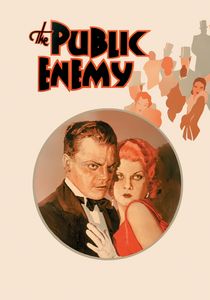
  • The Public Enemy (1932)

    The Public Enemy (1932)

    (On Cable TV, March 2019) At times, it can be fascinating to go back in history to see how the modern shape of cinema came together—how the elements we now take for granted were assembled over decades of small refinements and audience reactions to various experiments. It’s obvious that The Public Enemy is a formative work of crime movies—it’s often mentioned in histories of the genre, and even casual cinephiles are likely to have encountered critical commentary about James Cagney’s prominence in gangster movies of the 1930s. The Public Enemy is framed as a semi-realistic depiction of gangster activity at a time when America was still hungover from Prohibition and pre-Code cinema was trying to figure out the balance between good taste and audience thrills. As such, it’s definitely intriguing—you can see when the filmmakers are trying to get a rise out of the audience (hence the domestic abuse scene featuring a grapefruit in Mae Clarke’s face, still as shocking now as it was then), but also how they ensured that the criminals repented and were punished for their actions. This being said, it hasn’t always aged particularly well, even though its filmmaking techniques were decent for the time and director William A. Wellman used a number of unusual shots. It’s not the film’s fault—it’s that we’re used now to what was novel and exciting then. If you’re watching The Public Enemy for entertainment rather than cinema history, don’t be surprised to find it a tepid viewing at best, and at worst kind of dull.

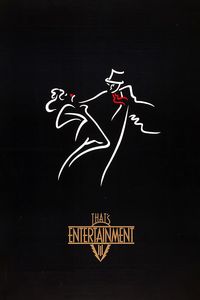
  • That’s Entertainment! III (1994)

    That’s Entertainment! III (1994)

    (On Cable TV, March 2019) Third instalment in the now-classic anthology series, That’s Entertainment! III is farther away from its 1950ish source material than its predecessors and consequently much less reverential. It innovates by featuring behind-the-scenes footage, cut numbers (some of them better than those that replaced them), a focus on lesser-known stars (such as my favourites Ann Miller and Cyd Charisse—who looks amazing in her sixties as she presents a segment of the film) and some attention to non-white performers (with Lena Horne even acknowledging that Hollywood wasn’t ready for them). Under this new focus, there are plenty of things to wow about: Eleanor Powell’s dancing remains as astonishing at the techniques used to film it, a wonderful ditty sung by Horne in a bathtub, and a split-screen comparison of a Fred Astaire routine performed several weeks apart shows the amazing control that he had over his performances. On the other hand, I’m not a big fan of the stupidly racist Judy Garland bit “I’m an Indian Too,” which should have stayed buried in the vaults. As with the other films of the series, That’s Entertainment! III can be revisited at several stages in a classic movie cinephile’s evolution: As an introduction to some terrific movies and performers, as an exploration of a few familiar favourites, or as delightful complements to one’s existing knowledge of the era. No matter how you choose to see it, it’s a great anthology movie, and it’s well-worth watching alongside the others.