Reviews

  • Zulu (1964)

    Zulu (1964)

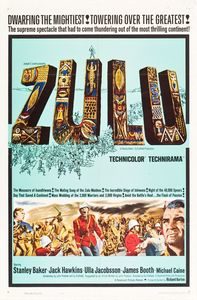
    (Snagfilms Streaming, October 2018) Social standards of acceptability change over time, and movies such as Zulu can illustrate these shifts with blinding clarity. It is, after all, a film in which a small band of British soldiers defend an outpost against a far more numerically numerous groups of Zulu warriors. Featuring Michael Caine in one of his earliest roles, it’s a war movie with an expansive scope: The battle sequences are inspired by American westerns (which bring up a whole other bag of issues to consider), and they take up the full widescreen. Of course, from our perspective, the film is about something else that we’re not quite as fond of seeing: imperial forces killing native populations. Yet at the time of its release, fifty-five years ago, Zulu was perceived as both a stirring tribute to British imperialism, and as unusually respectful depiction of the Zulu warriors: They are portrayed as clever, organized and deadly. Alas, the film does show its clear allegiances later in the film as the Zulus pay tribute to the resisting Englishmen, once again going back to the increasingly ridiculous trope of having marginalized characters affirm the nobility of our (white, male, etc.) protagonists. This being said, Zulu still plays rather well for most of its duration. Modern sensibilities about seeing groups of humans slaughter each other don’t quite manage to dampen the stirring combat sequences, the heroic sacrifices of the English-speaking characters and the good old last-stand theatrics. I do have a number of issues with the result, but Zulu is what it is.

  • Never Say Never Again (1983)

    Never Say Never Again (1983)

    (Second viewing, On DVD, October 2018) There aren’t that many good creative reasons for Never Say Never Again to exist. It’s a movie that owes its existence to a rift between the original James Bond movie creators, resulting in the rights to the Thunderball story and Spectre as a plot element being given to someone other than Eon Productions. Money is a powerful motivator, and so we ended up with a legal James Bond movie not made by the usual Bond people, but somehow starring Sean Connery in one last go at the character, graying temples and all. The story itself is a blatant remake of Thunderball, not only with stolen nuclear weapons being used as a plot driver, but with similar narrative stops at a health clinic and fancy yacht, not to mention similar character names. While the film’s pacing sharply improves upon Thunderball-era Bond, most of the “updates” affirm the early-eighties origins of the film more than anything else—there’s a particularly funny sequence involving Bond battling it out with the villain not on the casino table, but in a video game with deadly controls. That part really hasn’t aged well. But what did age well is Connery himself—there’s a real treat in seeing him, obviously older, taking up the character once more. Speaking of aging well, it’s also fun to see Kim Basinger in an early role (sheer aerobics jumpsuit and all), but it’s a reminder that she looks just as fine today than back then—and she’s now a far better actress too. This being said, Barbara Carrera is often more striking than Basinger, with a villainess role that she embraces with a relish rarely seen from other Bond girls. Klaus Maria Brandauer is not bad as the film’s overall villain, and Rowan Atkinson shows up in a small bumbling role. While Bond’s sexual conquests are still dodgy, they do feel like a step up from the original Thunderball, and the film is notable for suggesting that Bond will live happily ever after in a committed relationship. It ends up being a decent swan song for Connery, far better than the ludicrous Diamonds are Forever. While Never Say Never Again is not part of the official Bond continuity (and probably won’t ever be, even if the film’s rights are now owned by MGM) it does fit in a Bond completist’s viewing order: It’s not a great Bond, maybe not even a good Bond, but it’s worth a look especially if you’re going through the entire series.

  • Sherlock Jr. (1924)

    Sherlock Jr. (1924)

    (Hoopla Streaming, October 2018) When I consciously decided to explore older movies, I semi-arbitrarily set 1920 as my limit—I wouldn’t actively seek out any movie earlier than the 1920s, and even that was going a bit past my preferences given my lack of enthusiasm for silent cinema. But there are a few silent movie stars that I really, really like and Buster Keaton is high on that list, even beating out Charlie Chaplin. Films like Sherlock Jr. illustrate why some silent 1920s are well worth watching even today. The first half of the film is a bit messy, as a young man working as a movie theatre usher daydreams about being an ultracompetent detective. It’s a set-up for various gags and the slow accumulation of the plot’s bare-bones: The girl, her unpleasant suitor and the protagonist’s rich imagination. But then the second half of Sherlock Jr. comes by, and all the brakes come loose. Suddenly, it’s not just a great pool-table sequence; it’s a wildly imaginative trip through cinema by a hero entering the movie screen and it’s a terrific chase sequence that has us both laughing and grabbing our armrests. The special effects are still amazing, and so is the dreamlike logic of the film’s second half, abandoning strict realism for sight gags and an imaginative build-up taking advantage of movie magic and, crucially, the power of editing. The film is around 50 minutes long, and it sometimes feels even faster thanks to the pace of the editing. Keaton suffered for this film (not only was he severely injured on-set, but he also experienced the failure of the film’s then-modest commercial and critical success) but the results more than speak for themselves. Sherlock Jr. is still a wild ride and a literal joy to watch.

  • Italianamerican (1974)

    Italianamerican (1974)

    (On Cable TV, October 2018) Martin Scorsese takes a camera back home in Italianamerican, a look at his parents’ history and daily lives in the early 1970s. If you’re not a Scorsese fan, the film won’t mean as much as it does to those who are curious about the celebrated director’s origins. We get a solid look at the family history as Italian immigrants in New York City and young Martin’s living conditions, but it’s the look at an old married couple bickering affectionately that remains the film’s highlight. Mama Scorsese tells us about her meatball recipe as she argues with her husband. As a capture of a specific kind of people at a specific time, it’s quite heartwarming and charming even if you don’t know anything about Scorsese-the-Director. Italianamerican is short (it was made as part of a larger project), but it’s the kind of thing you leave on while doing other things, simply to eavesdrop on another family having its own discussions.

  • Von Ryan’s Express (1965)

    Von Ryan’s Express (1965)

    (On TV, October 2018) The 1960s were a strange time for war movies, as they (influenced by the Vietnam debacle) steadily evolved from the war-is-an-adventure tone of the 1950s to the war-is-hell tone of the 1970s. Von Ryan’s Express is an unsatisfying mid-way point along that evolution: While it does present itself largely as an adventure in which WW2 Allied POWs escape the clutches of the Nazis thanks to complex train-bound shenanigans, it also features a rather depressing ending that cuts short any willingness to cheer all the way to the ending credits. This ending (reportedly motivated by star Frank Sinatra’s desire to avoid sequels) is all the more maddening because it’s not quite tonally consistent with the rest of the film, which is a good old-fashioned outwit-the-Nazis romp on rails in the closing days of the war. Sinatra is dependably charismatic in the lead role, with a decent ensemble of supporting character actors. The production values are high and so is the verisimilitude of the results. The tension runs high, and Von Ryan’s Express does, up until its last few moments, seem aimed to become a sure crowd-pleaser. But then there’s the ending … which I’ve already discussed.

  • Harsh Times (2005)

    Harsh Times (2005)

    (Netflix Streaming, October 2018) The measure of great actors can often be seen at how they elevate standard material, and so we have Christian Bale single-handedly making Harsh Times a worthwhile watch. Well, OK, that may be overstating things. After all, this film is another one of writer/director David Ayer’s take on the seedier side of Los Angeles (his first as a director after a good run as a screenwriter) as it follows two young men, one of them a troubled combat veteran (Bale) as they attempt to do better with their lives. That’s easier said than done when jobs are scarce, police work isn’t for those with troubled pasts, and a tangled web of obligations holds down both men. As this wouldn’t be an Ayer film without tense gunplay and impossibly tragic choices, Harsh Times does not head in a happy direction—the third act becomes a dramatic ordeal to watch. Interestingly enough, the film has gained a bit of sustained attention in the decade-or-so since its direct-to-DVD release: the star power of Ayer and Bale (and Eva Longoria, here with a thankless role as a girlfriend trying to bring her husband back to respectability) have ensured that the film continues to get attention today. The uneasy mix of graphic violence and emotionally stunted characters may not make for an easy watch, but Harsh Times holds its own as a sombre LA crime film with good performances and a strong atmosphere.

  • Au hasard Balthazar [Balthazar, at random] (1966)

    Au hasard Balthazar [Balthazar, at random] (1966)

    (Kanopy Streaming, October 2018) I have a parody version of French New Wave movies in my mind that has been fed by other parodies, by early unpleasant encounters with the genre and by various readings about the Cahiers du Cinéma/Rive Gauche crew. My theoretical parody is a wholly unfair funhouse version of a valid artistic movement, and I’m astonished to find a movie that surpasses its absurdity. That would be Au hazard Balthazar, a movie about a donkey. A real donkey as a protagonist. A donkey whose life, from birth to death, is followed by the film as an illustration of humanity as it gets new owners—some nice and others not-so-nice. But wait: the absurdity doesn’t stop there, as a donkey protagonist means that we’re stuck in rural France for the duration of the film. But wait! There’s more! Under writer/director Robert Bresson’s instructions, the actors do not emote even in the fiercest of conversations, giving an intense feeling of detached alienation to the proceedings, something that the mostly static camera and stripped-down surroundings definitely heighten. I’ll be the first to admit that this kind of cinema isn’t for me. Really; an emotionally-dampened movie about a donkey?! But then again I’m only beginning to dip seriously into the pool of sixties French cinema. Maybe I’ll revisit Au hasard Balthazar in a few years. In the meantime, I’m afraid I won’t be afraid to use the movie as an example of how absurd Nouvelle Vague cinema can be. A movie about a donkey and emotionless humans. Really.

  • Les parapluies de Cherbourg [The Umbrellas of Cherbourg] (1964)

    Les parapluies de Cherbourg [The Umbrellas of Cherbourg] (1964)

    (Kanopy Streaming, October 2018) You would think that I, being a francophone fan of musicals, would be a natural audience for Les parapluies de Cherbourg, perhaps the best-known musical to emerge from 1960s France and a major influence over films such as Damien Chazelle La-La Land. But I reserve the right to have idiosyncratic reactions, and as it turns out I’m this close to loathing writer/director Jacques Demy’s Les parapluies de Cherbourg. For one thing, it’s a downer musical. For another, it’s a wall-to-wall musical: The characters can’t stop singing even in dialogue scenes when there is no song, no rhymes, no arrangement, no accompanying choreography, no reason to sing. The effect is profoundly irritating. It sounds like incessant meowing for no reason and if I don’t like it from my cat at six o’clock (well, at least she’s hungry—it’s for a reason), I don’t necessarily like it from my TV screen for an hour and a half. Les parapluies de Cherbourg drove me crazy in a way that most musicals don’t, seemingly magnifying everything that usually annoys people about musicals. The reason why I can’t quite bring myself to kick this movie in the trashcan is that it does have some charm once past the meowing. The story is simple and while it ends in a not-so-happy way (well, the guy is happy and the woman isn’t so much and the audience least of all), it does feel rather endearing during its first act, especially before the unrelenting singing becomes unbearable. It’s also immensely colourful, with a portrayal of late-1950s small-town northern France that is affectionate and stylized at once. The ending sequence, as melancholic as it can be, is beautifully shot and doesn’t forget, through a signed “Cherbourgeoisie,” to put its class message front and centre. Given that I followed Les parapluies de Cherbourg by the absurdly ridiculous Au hazard Balthazar, it’s even far from being the worst movie I’ve seen that day. Maybe I’ll revisit it eventually. But maybe I’ll wear earmuffs. [January 2019: I’m happy to report that Les demoiselles de Rochefort, Jacques Demy’s follow-up musical to Les parapluies de Cherbourg, is a far more enjoyable film.]

  • The Post (2017)

    The Post (2017)

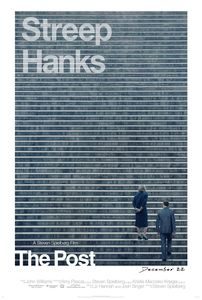
    (On Cable TV, October 2018) There’s something quietly amazing in how Steven Spielberg, now that he has mastered the filmic form, can go from wide-screen spectacle to a far more restrained drama and deliver said smaller movie in the time it takes for the bigger movie to complete post-production. As the story goes, Spielberg read The Post’s script in February 2017, started shooting in May, wrapped up editing in November and the film made it to theatres in time for the December Oscar season—all the while blockbuster Ready Player One underwent post-production and release. That’s ludicrously fast, but you can understand the urgency while watching the film. After all, The Post is a full-throated defence of the power of a free and independent press unafraid to aim for the biggest targets—something very much needed considering the authoritarian behaviour of the current American administration. It specifically tackles the story of the Pentagon Papers, and specifically the decision of The Washington Post to publish from the papers at a time when it wasn’t clear if this was an illegal act. You know how it’s going to end, but the script wisely focuses on then-new owner Katharine Graham as she wrestles with the decision to publish, balancing legal and business exposure with journalistic duty. With Meryl Streep playing Graham and Tom Hanks as the legendary Ben Bradlee, Spielberg can rely on screen legends to deliver the drama, and the film is never quite as good as when it features characters batting around big ideas as they relate to their current situation. It’s an inspiring film, perhaps a bit too rearranged to suit dramatic requirements but not outrageously so. Spielberg’s direction remains satisfying even when there are no car chases, supernatural creatures or fantastic landscapes to behold—this is one of his tight dramatic films that would have been released straight to video had it not featured his producing and directing skills. The Post also explicitly positions itself as a prequel to All the President’s Men and generally sustains the scrutiny created by the association. I’d call it essential viewing in these troubled, often truth-alternative times, but I fear that the only people willing to watch the film are those already convinced of its righteousness.

  • The Gold Rush (1925)

    The Gold Rush (1925)

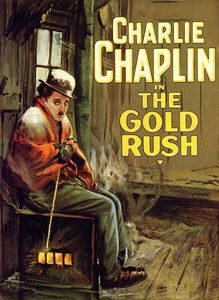
    (Kanopy Streaming, October 2018) As one of Charlie Chaplin’s classics, The Gold Rush scarcely needs any introduction—this is the one where Chaplin goes to the Klondike, eats his shoes and has a delightful dance number with dinner rolls that many have imitated in real-life. (Unless that’s just me.) But what I found most interesting about the version of The Gold Rush that I saw was that it was the 1942 re-cut version, with narration from Chaplin himself. It’s not quite a silent film and not quite a talking one either, but it does illustrate one of my persistent annoyances with silent cinema: length and pacing. The original The Gold Rush ran for roughly 95 minutes (it’s sometimes hard to tell with silent movies), whereas this talking one runs a significant 23 minutes shorter. Some of this is due to, ahem, artistic choices (such as Chaplin cutting out a kiss with an actress with whom he was involved in 1925 but not in 1942), while other cutting consists in taking out title cards and replacing them with spoken narration in Chaplin’s English-accented voice. It clearly illustrates the difficulties in the pacing of silent movies for modern viewers, even ones in which the title cards aren’t the focus of the film. In comparison, this version feels as if it flows more smoothly, even when the narrator is intrusive and merely keeps describing what we can perfectly grasp from the images. (But then consider that Chaplin was doing assistive audio before anyone else.) As for the film itself, I do like The Gold Rush better than some of Chaplin’s other movies such as The Kid or City Lights—its sentimentalism is under control, and the film does seem focused on being a comedy rather than a collision between intense drama with comic interludes. It’s one of the relatively rare 1920s films still worth a look today, even if I’d recommend the 1942 version over the original one.

  • La battalia di Algeri [The Battle of Algiers] (1966)

    La battalia di Algeri [The Battle of Algiers] (1966)

    (Kanopy Streaming, October 2018) Using docu-fiction to report on recent history is always a delicate exercise, especially if you’re going to attempt a level-headed description of a civil conflict. I’ll be the first to note that as a twenty-first century Canadian I’m probably missing the vast majority of the cultural context that makes The Battle of Algiers so poignant: I wasn’t around for the Algerian War and have no patriotic opinion on the matter. But the film itself speaks loudly as it describes the 1954-57 Algiers uprising and the efforts of the French government to quell it. The Battle of Algiers follows both the insurgency groups and the government responses, and proves remarkably even-handed in describing both their objectives and their reprehensible tactics. Writer/director Gillo Pontecorvo conceived the film as a docu-fiction exercise and as a result its atmosphere is raw and immediate. There’s a credibility to the execution that bolsters the quasi-documentary script. Neither French nor Algerian come across as being particularly noble, and it’s a wonder that the film is able to construct an understandable narrative out of a complex urban warfare situation. At times, it almost acts as a primer on how to rise against occupying forces and on how to counter the uprising. As a result, The Battle of Algiers can (and has) been lauded by a strange assortment of commentators from all political factions, used in military training academies and in insurgency training as well. I watched, fascinated more often than not. It certainly earns a place as one of the most striking films of the 1960s, a decade rich in other defining movies.

  • The Music Man (1962)

    The Music Man (1962)

    (On Cable TV, October 2018) It actually took me two attempts to get into The Music Man. Made at a time when the Hollywood musical had been defined, achieved and was nearing its degenerative phase, it’s a musical that knows it’s a musical and relies a lot on audience expectations in order to achieve its effects. This is most clearly seen in the rough opening sequence where the sounds of a train provide inspiration for an oddly syncopated and arrhythmic first number that will have more than one viewer wondering what the heck is going on. (Cue my second attempt to watch the film.) Things sharply improve once The Music Man hits the sheer singalong hilarity of “Ya Got Trouble” and then on to “Marian the Librarian” and “Shipoopi.” Once you understand what the film is aiming for, it becomes far more enjoyable. Lead actor Robert Preston certainly helps—his distinctive voice is a joy to listen, and his ease with the role (which he performed for a few years on Broadway) shows in the practised charm of his performance. He certainly lends a lot of his comfort to the story itself, which consciously goes back to early-twentieth-century Midwest small town for its atmosphere and plot devices. By the time the story wraps up with (what else?) a big parade, The Music Man has become a musical classic, easily ranking among the best 1960s musicals. I can envision replaying this one for the sheer fun of the musical numbers. If the lead character feels familiar to first-time viewers, it’s probably because of the classic Simpsons “Marge vs the Monorail” episode, in which the huckster character coming to town is very clearly modelled on Preston’s archetypical work here.

  • For Your Eyes Only (1981)

    For Your Eyes Only (1981)

    (Second or third viewing, On Blu-ray, October 2018) I saw For Your Eyes Only in theatres when it came out! This definitely deserves an exclamation point given how, as a kid, I never went to the movies. My parents weren’t rich enough to take us out regularly, the nearest theatre was more than twenty kilometres away (in fact, more like thirty at the time—closer ones were built some time later) and since we only spoke French in an Anglophone province, going to the movies would have been an exercise in frustration for everyone. We did watch a lot of movies on TV, though, and if I recall correctly, we happened to be visiting relatives in the greater Montréal region when everybody (including a six-year-old boy) agreed to go to the theatre to watch the latest James Bond film. In French. I distinctly recall the scary underwater sequence from the theatre—I suspect that most of the rest of my childhood memories came from watching endless reruns of the film on Radio Canada TV. Now that I’m going through the entire Bond series in order, For Your Eyes Only does take on a very different feel. Coming down from the giddy silliness of Moonraker, it’s a film that goes back to the roots of the Bond character with far more restrained stakes, clearly echoing both From Russia With Love and On Her Majesty’s Secret Service to produce the best of the Roger Moore movies. Bond calms down with the indiscriminate sleeping around: the main female character (played quite well by Carole Bouquet) is strong enough to create some real tension between the two, the secondary Bond girl has her own agenda, and there are some laughs in seeing Bond fend off the advances of an overly pushy teenager. There are other highlights beyond the more grounded approach: Plot-wise, there’s a nice twist midway through, and the film’s standout action sequences involves an underpowered Citroen 2CV. After the space adventure of the previous film, taking up a Cold War-themed thriller mostly set in Greece is a welcome change of pace. But here’s the thing: For all of the talk about a more down-to-earth Bond, For Your Eyes Only doesn’t skimp on the action sequence – there’s a new one every few minutes, and they take us from the mountains to the Mediterranean and then back up again. There’s also some variety to the action in between impressive helicopter stunts, a winding road car chase, downhill ski thrills, underwater action and tense mountain-climbing. It all wraps up in a highly satisfying Bond film that manages to find difficult balance (well, other than the pre-credit sequence) between Roger Moore’s debonair charm, Bond’s tougher roots, competent plotting and hair-raising tension. There was a lot of behind-the-scenes drama in the making of For Your Eyes Only (Moore being unsure if he’d take the role again, and numerous crew changes) but the result ranks as an upper-tier Bond movie.

  • Star Trek: The Motion Picture (1979)

    Star Trek: The Motion Picture (1979)

    (Second or third viewing, on Blu-ray, October 2018) I remember being fascinated by Star Trek: The Motion Picture as a kid in the early 1980s. To me, it was the epitome of high-gloss science fiction and sense of wonder. I watched it a few times on VHS. Another viewing right now has me jumping over to the camp calling it “Star Trek: The Slow-Motion Picture”: Not a whole lot happens over the more than two hours running time of the film, and the pacing makes a bit more sense knowing that it started life as a TV series pilot given a budget boost in the footsteps of Star Wars’ blockbuster success. While I still like much of the film’s concept (including a rather elegant tie-in with the then-topical Voyager space exploration probes) and do have some affection for seeing the original Enterprise crew back again for adventure (including a visibly older William Shatner), Star Trek: The Motion Picture definitely sputters on execution. Note: The Blu-ray version seen here is the original theatrical version, not the reportedly snappier 2001 re-edit with new special effects. As such, the 1979 picture shows its age: there are a lot of effects and they haven’t aged very well: It really doesn’t help that the entire film dwells on those visuals, allowing plenty of time to notice its imperfections. (That wormhole sequence … ew.) The pacing does introduce two other issues—early in the movie, the drawn-out overflight of the USS Enterprise was meant as a loving homage to a ship beloved by its audience, but now comes across as overdone fetishism for an audience that has since seen much better. (I’m an Enterprise-D fan myself). Second, the lengthy overview of the alien ship (especially during Spock’s ill-conceived solo outing) now comes across cut-rate attempts to replicate 2001: A Space Odyssey’s trippy third act. Does it work? Well, yes but probably only for an audience already receptive to Trek’s basic explore-and-empathize ethos. As I said: good concept, but sputtering execution. Star Trek: The Motion Picture is now best seen as the financial reason why the much-better Star Trek II exists.

  • Failure to Launch (2006)

    Failure to Launch (2006)

    (On Cable TV, October 2018) I you want to hear me at my cantankerous best, just get me started on the hyperbolization of language and (in parallel) the tendency of ironic catchphrases to get normalized to clichés. Never mind my person crusade to teach everyone the deadly origins of the expression “drinking the Kool-Aid”: one of my current bugaboos is how perfectly good middle-ground descriptive words have been perverted into value judgments. “Mediocre” means “ordinary,” but most people now take it to mean “bad.” “Exemplary” means that something is a perfect example of something, and not necessarily among the best. So when I say that Failure to Launch is an exemplary mid-2000s romantic comedy featuring Matthew McConaughey (not as small a sample size as you’d think), then I’m just saying that it’s representative, not a superior example of the form. The plot is the kind of high-concept contrived nonsense that was a staple at the time, this time about a relationship specialist (Sarah Jessica Parker) who can be hired to boost the self-esteem of young men staying at their parent’s house long after they’ve overstayed their welcome. It’s not prostitution, insists Failure to Launch in the rare moments when it actually cares about the implications of its premise, except that parents do hire her to send their boys away from home. The plot built upon that premise is executed by-the-numbers, but as with many examples of the genre the charm of the film lies in the execution, the subplots and the supporting characters. The charm of the leads is considerable (there’s a reason why McConaughey found a niche in romantic comedies for so long—he nearly overpowers the material), and there is a lot of fun to find in the more interesting romantic B-story featuring Zooey Deschanel and the film’s obsession about animal bites. Bradley Cooper and a pre-hair implant Steve Carell show up in minor roles. There’s a funny subplot about a mockingbird. Despite its familiarity, Failure to Launch is not a difficult film to watch: it’s not exceptional, but it’s well-made enough to be entertaining.