Reviews

  • Rocky II (1979)

    Rocky II (1979)

    (On Blu Ray, September 2018) It’s interesting to see how hard Rocky II works at both following its limited protagonist in the aftermath of an unexpected success, and then again to remove much of the pleasant ambiguity of the first film. Whereas Rocky ended with a moral victory and a technical defeat, whereas it presented Carl Weathers’ Apollo Creed as an opponent but not as an antagonist, here comes the sequel to show (rather reasonably) the evolution of Creed’s egomania in feeding his turn to a darker side, and to thus justify a clear-cut victory by the end of the picture. It does feel like a natural follow-up, picking up five minutes before the end of the first film and going on naturally to the consequences of the final fight, from the hospital stay to the commercial endorsement, the overspending, the growing realization that a rematch is necessary for the fighters to truly settle their scores. Meanwhile, a pregnancy heightens the stakes even as Rocky confronts the fact that he’s only good for one thing. Again, the film isn’t any more subtle than its predecessor, but it does manage to deliver exactly on expectations. Sylvester Stallone is fine in the title role, and his direction is mostly unobtrusive. There are signs that Rocky II is self-aware, but not distractingly so. It does make for a good sequel that doesn’t tarnish the original and arguably even heightens it.

  • From Russia With Love (1963)

    From Russia With Love (1963)

    (Second viewing, On Blu Ray, September 2018) I could have sworn that I had seen all the James Bond movies as a young teenager, but watching From Russia with Love has me doubting, because at the exception of the last five minutes, I remembered almost nothing of the film. Maybe I only caught the end of it when I was young. Maybe I saw it and didn’t care, because compared to other Bond movies, this one ranks much lower on the ludicrousness scale. I wouldn’t exactly call From Russia With Love realistic or subtle (there’s still SPECTRE, serial seductions and fancy gadgets to keep things interesting), but there’s a down-to-earth quality in Bond’s attempt to bring a Soviet “defector” home with a decoding machine that keeps it grounded. It feels dull compared to the excesses of other movies in the series, but it’s a rather good film from a dramatic perspective—especially considering that Bond’s enemies at least attempt to use his own weaknesses (the arrogance, the seduction) against him. Sean Connery is, once again, a delight as the debonair agent, with Daniella Bianchi being OK in a generic way as the main Bond Girl. (Eunice Gayson is a happy surprise, reprising her role from Dr. No.) With this second instalment, the James Bond formula gets a few more upgrades: Q and his gadgets show up, the credit sequence gets a naked dancing woman, Bond gets looser with the one-liners and the exploitation factor ramps up with a gratuitous catfight. While the spy plotting is much stronger in From Russia With Love than most entries in the series, the overall effect is duller than expected. (The lengthy prologue doesn’t help.) It does hint at a possible alternate reality where Bond movies would have stayed grounded in some kind of recognizable reality … but then the follow-up was Goldfinger.

  • Rocky (1976)

    Rocky (1976)

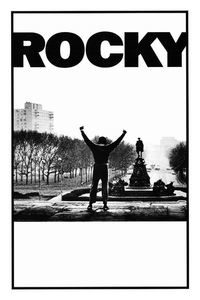
    (On Blu Ray, September 2018) Intriguingly enough, Rocky is one of those movies that you think you’ve seen even if you haven’t: It was a massive success, earning both an Oscar and great box-office returns. It made Sylvester Stallone an icon, complete with iconic visuals (arms raised over Philadelphia) and sounds (“ADRIAN!”) It spawned a series of sequels still going forty years later, and is often used as shorthand description of just about every underdog sports drama out there. I may have seen Rocky as a kid, but not, to my recollection, as an adult. Remedying to that, I was struck by how (contrarily to many other movies so popular that you think you’ve seen them even if you haven’t) Rocky is darker than expected yet almost exactly what it says it is. It follows a declining not-too-bright boxer as he’s given a second chance, pursues a girl and dislikes his job as a loan-shark “collection agent.” Stallone is at his Stalloniest as Rocky Balboa, playing a simple character with some nobility. If it works, it’s because Rocky’s sports aspect takes a visible back seat to the character-driven drama: even the premise of a champ giving a chance to an unknown is purely arbitrary, albeit cloaked in good work from Carl Weathers. Talia Shire is cute enough as Adrian, with one good scene toward the end of the film being enough to elevate her role above being simply the romantic interest. Some of director John G. Avildsen’s visual touches are interesting—while most commentary about the film’s visuals focus on the “Rocky Steps” training montage, I was more impressed by a quiet static neighborhood shot showing Rocky hiring his manager, with a train passing in the background as a flourish. Rocky is not subtle, and it’s not sophisticated, but (much like its eponymous character), it’s tough and can absorb a lot of punishment. It holds up, and not just for those who like boxing.

  • Dr. No (1962)

    Dr. No (1962)

    (Second viewing, On Blu Ray, September 2018) I watched all Bond movies as a young teenager (Radio Canada used to play them, one after the other, each Saturday of the summer), so why not do it again as a middle-aged man? Dr. No is where it all begins, with a fully formed character from Ian Fleming’s series of novels. As a first instalment, you can see the general outline of the celebrated Bond formula although it’s not yet in focus nor as finely balanced as later instalments would be. The gadget sequence is a simple gun swap, the action isn’t as fetishized as subsequent movies (fights are over in an instant, although that speaks more to the evolution of the action genre than anything special about this first film) and the plotting is still very much within the realm of the plausible. The film is now fifty-five years old, and it shows in the technology, the cars, the billowing clouds of cigarette smoke, as well as the casual racism and sexism (including Miss Monnepenny’s harassment) built within the fabric of the story. Still, it works because the fundamentals are solid. Sean Connery is splendid as a slightly darker Bond than we’re used to (shooting a guy for no reason, etc.), establishing the character in an instant even as the film feels obliged to play his leitmotif at the slightest occasion. The location shooting is splendid, with plenty of local Bahamian atmosphere and colour. While some editing does feel leisurely, much of the film has the beat-to-beat pacing of modern movies (especially compared to some other early-sixties thrillers). Perhaps Dr. No’s biggest criticism is that, even and perhaps especially for a Bond film, it does feel perfunctory. The formula not having been perfected, the plot is a linear mad-scientist-and-his-lair thing, with a wholly optional Bond Girl (Ursula Andress, looking good in a fairly generic way) along the way. Choosing a non-aligned SPECTRE flunky as an antagonist rather than the more obvious Soviet menace is intriguing, but the film does drop minor characters and subplots like crazy, overplaying some suspense sequences (tarantulas are rather innocuous as venomous threats) while mishandling others such as the Dent face-off. Dr. No, perhaps inevitably, also suffers from uneven pacing—I found the first hour more interesting than the second, but that may have more to do with 1962 anthropology and spending time with Bond in real-world surroundings rather than the more generic infiltrating-the-lair focus of the second half. Still, truth be told, I did have a good time watching Bond’s first outing—it’s fun, the character is strong, and the period feel, almost reaching back in the fifties, is wonderful.

  • Battle of the Sexes (2017)

    Battle of the Sexes (2017)

    (Netflix Streaming, September 2018) Five or ten years ago, I would have naively dismissed Battle for the Sexes’ lack of subtlety, its ham-fisted moral values and its obvious plotting. In resurrecting a 1973 TV spectacle pitting an older male player to a younger female one, the movie gleefully gets to recreate the social arguments of the time, not only discussing second-wave feminism (cleanly associating male chauvinism with grifting, laziness, and a bit of anti-Semitism) but also throwing in an LGBTQ feel-good bromide along the way. But looking at the resurgence of reactionary sentiment in (North-) American society in the past few years, I’m done with naïve cynicism—no amount of repeating the basics of human decency is enough and if that means going back to basics and calling a male chauvinist pig a male chauvinist pig, then so be it. It does help that Emma Stone is effortlessly charming at Billy Jean King, facing off a Steve Carell who commits himself fully to the role of a sexist opportunist. The plot is familiar, the caricature of the antagonist is underlined twice to make sure we can’t possibly misunderstand the stakes, and the morals are obvious to anyone who doesn’t wear a red cap in their leisure time. Still, the period feel is convincing, the film does score a few comic highlights, Alan Cumming has one of his most Allan-Cummingest roles to date (complete with a “Hear that, 2017?” coda) and the entire thing is entertaining enough to watch. If Battle for the Sexes feels a bit too on-the-nose, then it may mean that there’s still work to do.

  • The Space Between Us (2017)

    The Space Between Us (2017)

    (Netflix Streaming, August 2018) The good news, I suppose, is that the Young Adult Science Fiction field has grown tired of endless dystopias and now seems ready to take on other clichés. Things like star-crossed romance between a Martian-born teenager and his earthling pen pal. Considering the focus here on teenage protagonists and the romantic pretext to the film, it’s really no surprise to see that The Space Between Us doesn’t hold up as serious Science Fiction: the mistakes start early and get increasingly implausible with time, and even the knowledge that we’re not supposed to worry about those in a film made for romance aren’t enough to bring us back into the story. Then there’s the severely formulaic and forgettable nature of the film’s plot, including its buddy robots, dumb plot-driven choices, fish-out-of-water comic bits and lovers on the run. It’s all not just familiar, but done without much grace nor wit. It ends with a conclusion that you could have guessed after seeing the poster. Good supporting actors (Gary Oldman and Carla Gugino, for instance) can’t save the film from terminal boredom. Granted, I’m more than twice the age of the target audience for The Space Between Us … but still: would it be too much to ask for a minimum of competence even for younger audiences?

  • Daddy’s Home 2 (2017)

    Daddy’s Home 2 (2017)

    (Netflix Streaming, August 2018) Once you’re settled Daddy’s Home‘s daddy-versus-step-daddy conflicts in the first film (with Mark Wahlberg battling it out with Will Ferrell), what’s left to do? Bring in their fathers, of course. Following a surprisingly similar course to Bad Moms 2, this sequel brings in veteran comic actors to act as the fathers to the first film’s protagonists, while moving the story to the Christmas season to heighten the stakes. Of course, the fathers are even more extreme version of their sons, meaning that there’s a whole new level of embarrassment to be achieved. As far as family comedies go, Daddy’s Home 2 is pretty much the living embodiment of the usual formula. The situations are generic, the characters are superficial and while there is some fun to it all, it’s very familiar material throughout the entire film. While Mel Gibson and John Lithgow do get their moments, John Cena once again ends up stealing every scene he’s in. Otherwise, there isn’t much more to say about it—if you’ve seen and enjoyed the first film, then this is the same with added complications.

  • The Babysitter (2017)

    The Babysitter (2017)

    (Netflix Streaming, August 2018) If you had asked around 2005, McG would have been identified as an up-and-coming director capable of handling big blockbuster productions: After Charlie’s Angels and its sequel Full Throttle, McG had proven his ability to deliver the kind of action comedy that Hollywood can never get enough. But then his movies got worse. Never a prolific director (one every three years), his career suffered the back-to-back-to-back blows of Terminator Salvation, This Means War and 3 Days to Kill, neither of which were particularly well received nor did much box-office business. So what’s a Hollywood outcast to do? Turn to Netflix, of course, and that’s where we find The Babysitter, a smaller-scoped action comedy in which a teenager discovers that his babysitter leads a demonic cult and intends to sacrifice someone. Like, while he’s supposed to be sleeping. The next hour or so has the predictable running-around-the-house, ganging-up-with-the-neighbour, taking-down-the-Demonists stuff, handled with a nice little edge of self-awareness and fast-paced frame-breaking. The blend of comedy and horror is generally successful, although the film occasionally feels a bit too vulgar and gory for its own good. McG’s fluid direction is a return to form for him, while Samara Weaving does just fine as the titular babysitter. The Babysitter is not a respectable or profound film—but it’s exactly the kind of exploitation horror comedy that popped up in the more self-aware 1980s, and it’s quite a bit of fun to watch.

  • A Ghost Story (2017)

    A Ghost Story (2017)

    (Netflix Streaming, August 2018) “Haunting” is the cheapest adjective you can affix to any ghost story, but there’s a fair case for it in trying to describe A Ghost Story. For one thing, it’s a slow, methodically paced, nothing-moves-too-quickly story from the point of view of the ghost. As our protagonist dies, he remains trapped into the house, seeing his wife mourn (by eating an entire pie) and then leave. He’s not too fond of the next owners and does his best to scare them. Then, well, who knows: We travel in a future metropolis presumably built upon the space occupied by the old house. Then back in time for the first settlers on the site of the house. This circular trip in time achieved, the ghost comes to grip with his nature and can let go, leaving his bedsheet behind. A Ghost Story sounds insane when summarized (and the trailer makes it look like the most ridiculous thing ever made with the bedsheet-with-eyeholes ghost) but I found it unexpectedly effective upon watching. Soothing, even. There’s an unexpected profundity to writer/director David Lowery’s film that even surprised me—considering that I usually strongly dislike these kinds of films, I was surprised to be swept along with the wordless narrative. The time loop is what wraps the entire film in a nice little bow, giving it the necessary push in otherworldly status. I’m not sure I’d recommend A Ghost Story (and even after watching the film I still see how silly it looks) but it does feature great images and a unique atmosphere.

  • The Ritual (2017)

    The Ritual (2017)

    (Netflix Streaming, August 2018) Oh no, four guys go hiking in the woods in another country! Oh no, one of them gets injured! Oh no, they take a shortcut off the map! Oh no, they see weird things! Oh no, strange people surround them! Oh no, I don’t think this is going to end well! … that’s right, The Ritual is just about the most ordinary film about the most ordinary horror elements you can think of. Rafe Spall stars, David Bruckner directs and the audience endures. There’s a whole lot of nonsense in the film that makes it hard to care about any of it—the moment that hallucinations come into any horror movie, then it’s a free license for the filmmakers to do anything and everything, considerably lowering the stakes. A description of this film’s monster ends up causing a big “so what”. The Ritual isn’t that scary, isn’t that funny, isn’t that anything. It’s thoroughly mediocre in the most average sense of the word. I suppose it will do the trick for those looking for familiar thrills—I mean, it’s not that bad—, but it doesn’t really doesn’t go anywhere beyond that.

  • Good Time (2017)

    Good Time (2017)

    (Netflix Streaming, August 2018) I won’t try to soft sell it or mince my word: I strongly disliked Good Time. A dirty muddy crime drama featuring Robert Pattinson as a small-time crook trying to get his developmentally challenged brother out of trouble, it’s the kind of movie that is so unpleasant that you can’t wait for it to end. While I’m ambivalent about the film’s plot (rereading the summary on Wikipedia had me thinking that a good movie could be made from it), it’s the nightmarish execution that grates on my serves. The images are muddy and ugly; the camera can’t step away from the characters and ends up constantly in their faces. The trip through the low-class Queens underworld is more unpleasant than exhilarating, and the irritating music score doesn’t help. Just about the nicest thing I can say about the film is that, for the first time, I saw Pattinson on his own as an actor rather than being reminded of his earlier more famous role (you know the one)—With his thug attitude and facial hair, I could see the distinctive character rather than the actor. On the other hand, I’m really not that happy with the Safdies Brothers’ direction or writing—Good Time all seemed so pointless that I couldn’t wait for it to end.

  • The Snowman (2017)

    The Snowman (2017)

    (On Cable TV, August 2018) If, while watching The Snowman, you find that the plot makes no sense, then don’t worry about whether you’re having a stroke—rest easy knowing that according to the film’s director, its troubled production meant that a good chunk of the script was never shot. The film, as released, was cobbled together from incomplete material. How that happens (if that’s what happened) is a fascinating question as of yet unanswered, which is somewhat amazing considering the impressive pedigree of the cast and crew. And yet no one, not director Tomas Alfredson, not Michael Fassbender, not Charlotte Gainsbourg, not J. K. Simmons, not Toby Jones, not pretty Swedish landscapes can actually make the film any good. Not that missing narrative pieces are the film’s sole or biggest problems: Even the best production schedule still would have led to a silly and implausible film in which yet another serial killer gets off on making snowmen after killing his victims. (Actually, as a Canadian with substantial snowman-building experience, I’m somewhat dumbfounded by the whole snowman-after-killing shtick—snowman weather is very specific, and it only happens a few days per year, unpredictably linked to the weather. Any budding serial psycho building his killing schedule around near-zero-degree snowstorms would face near-impossible logistical challenges.) The Snowman gets worse the deeper you go in its details and subplots, as many of them don’t get any kind of resolution … and at some point you have to confront Val Kilmer’s terrible, overdubbed performance. Interestingly enough, the film’s botched handling of now familiar but still overdone thriller elements lay bare the ludicrousness of modern written thrillers, as they endlessly remix the whole troubled-detective, crazy-killer, sordid-society elements. It takes a ham-fisted interpretation of the formula to make us realize how stupid the whole thing has become. On the upside, The Snowman was such a derided failure (both commercial and critical) that we will be spared any further entries in the series.

  • All the Money in the World (2017)

    All the Money in the World (2017)

    (On Cable TV, August 2018) Some movies become famous because of the actors that are in it, but All the Money in the World is a rare reverse example, famous for who’s not in it. Namely Kevin Spacey, whose sexual misconduct became widely publicized in the short span of time after his important supporting role in the film as J. Paul Getty was shot but before the film was released. Rather than shrug their shoulders and release the film as-is, the producers, along with veteran director Ridley Scott, decided to take another riskier path: Recast the Getty role with Christopher Plummer and reshoot all the scenes involving the character. This isn’t quite as insane as it sounds, considering that the character is mostly confined to mansion rooms in one of the film’s subplots. And it worked: Not only was Scott able to replace one significant actor in a ridiculously short amount of time while the film was nearing its release date, but you really can’t tell in the finished product: It’s as if Plummer had been there the entire time, and his performance is rock-solid enough that he ended up nominated for an Oscar. In comparison to the production drama, the story in All the Money in the World seems almost pedestrian, portraying the kidnapping of the grandson of one of the richest men in the world back in the 1970s. There’s an intriguing re-creation of mid-seventies Italy, dark machinations by an incredibly rich man not inclined to negotiate with kidnappers, and some funny business between the kidnapped man’s mom (Michelle Williams, better than usual) and the specialist hired to get him back (Mark Wahlberg, rather ordinary). The drama is solid even though the film itself feels sombre, ponderous and overlong in the middle. Perhaps the most interesting thing about the finished result is a demonstration of the way excessive wealth alters the world around it, twisting human relationships, corrupting individuals (the Getty patriarch is really not a nice person) and inviting predators to make their moves. Alas, not quite enough time is spent on this idea, as the film flirts with romance and spends a lot of time kidnapped by its own subplots. (It doesn’t help that the film has numerous deviations from the historical record.) It’s not a bad movie, but it could have benefited from a lighter and shorter touch. But then again there’s Plummer delivering yet another great performance.

  • Shot Caller (2017)

    Shot Caller (2017)

    (Netflix Streaming, August 2018) Prison movies hold an everlasting fascination, and perhaps the biggest thrill for law-abiding audiences is to be placed in a situation where an ordinary guy is sent to prison, and then learns how it works well enough to succeed inside the walls as well as outside. So it is that with Shot Caller, we follow an ordinary guy who, thanks to some fatal drunk driving, is sent to prison for a short while. Unfortunately, he has the bad luck of being sent to prison in the late-2000s, a time of supermaxes, racist jailhouse gangs and reprisals on the families of convicts. Meaning that once he gets on the treadmill, he has no choice but to go the distance. It gets dark. Darker than Felon (2008), although not as dark as the stomach-churning Brawl in Cell Block 99 (2017). Nikolaj Coster-Waldau impressively handles the transition between architect intellectual and muscle-bound prison gang leader. Unlike prison movies of an earlier era, Shot Caller depicts a sordid environment that worsens its inhabitants but doesn’t seem to call for reforms, letting the story speak for itself. It’s familiar material (as I’ve said: there have been a lot of prison movies over the years) but it’s handled competently and the ending manages to find just the right spot between tragedy and hope.

  • Gerald’s Game (2017)

    Gerald’s Game (2017)

    (Netflix Streaming, August 2018) I first read Stephen King’s Gerald’s Game decades ago, but I was able to remember a surprising amount of it while watching its straight-to-Netflix adaptation. Thanks to writer/director Mike Flanagan (following up on a series of increasingly successful horror movies), the adaptation is surprisingly faithful, a feat made even more amazing given that the novel is as interior-driven as anything else in King’s biography. After all, how can you portray a woman being chained to a bed and left alone with her husband’s corpse for days? What Flanagan does, aside from the obvious use of flashbacks, is to literalize the heroine’s fantasies and delirious visions: Suddenly, the deceased husband gets up, talks to her and gets her to express her feelings. And then, later, there are other, more tangible horrors: A dog, then something else… And still, throughout, the terrors of being left to die alone. The thirst, the cold, the isolation. Carla Gugino is near a career-best performance in the lead role, being on-screen for almost the entire duration of Gerald’s Game and being asked to carry a wide range of emotions. Bruce Greenwood does get a mention for his not-so-brief time playing a not-so-good husband. The film is so close to the novel that it does share a few issues later on, namely the collision of a good-enough premise with a serial killer story that doesn’t entirely serve the rest of the plot. I was dubious about it when I read the novel so long ago and I’m still dubious about it now. Still, it’s the kind of thing that doesn’t add much, so what is left of Gerald’s Game is still remarkable. Flanagan has done much with little (the film has only barely a dozen roles in a largely single location), delivering quality chills and thrills in a compelling package. This is probably his best film yet, and it suggests even better things in the future.