Reviews

  • Patriots Day (2016)

    Patriots Day (2016)

    (Netflix Streaming, August 2018) It’s too easy to point out that after Sole Survivor and Deepwater Horizon, this is Peter Berg’s third Mark Wahlberg-starring movie in a row tackling recent events in American history. It’s true, and kind of amusing, and so what? It does help that for all of its right-leaning American-uber-alles posturing and warm-headed rewriting of history toward a common safe consensus, Patriots Day is really well made and has its share of strong moments. It is about, obviously, the 2013 Boston Marathon bombing, concatenating events of a particularly tense week into a coherent storyline spearheaded by Wahlberg’s composite character. (It’s a bit much to ask for him to be there at every significant event in the chronology, but once you accept that conceit the film becomes easier to enjoy.) As you may expect, there’s a strong “you messed with the wrong city” attitude in the final results, which can be inspiring considering that it doesn’t mutate into jingoism or xenophobia. The film is, by most accounts, remarkably accurate once you forgive the lead composite characters, which makes some late sequences appear even more amazing, such as the western-style shootout set in suburban Watertown. J. K. Simmons doesn’t have a lot of scenes, but he makes every single one of them count. The same goes for Khandi Alexander, a favourite of mine who gets a terrific one-scene presence as a canny interrogator. Downplaying Wahlberg’s there-at-every-moment role, perhaps the most stirring element of Patriots Day is seeing a city, a system, an attitude rally behind a common violent intrusion and dealing with it adequately. (And I say this with incredible fondness for Boston, the American city I’ve visited more often than all others.) The crisis response is reasonable, effective and free of petty rivalries. But beyond re-creating the event more faithfully than most Hollywood movies, Patriots Day also benefits from solid filmmaking—while it’s by no means an action movie, it has a few suspenseful sequences and manages to re-create an intensely surreal period (such as seeing all of Boston empty for a few days) with some skill. Patriots Day can’t escape justified accusations of taking place too soon after the events, but I suspect that its appreciation will grow over time as one of the few early takes that wouldn’t necessarily have been better had it been completed later.

  • Fences (2016)

    Fences (2016)

    (Netflix Streaming, August 2018) It’s always interesting to see what actors with strong screen personas choose to take on when they direct a movie. Here we have Denzel Washington, of the old-school stoic tough-love tradition, picking the historical drama play Fences as his inspiration for his third outing as director. As we may guess, it’s a strong actor-driven project exploring themes of black experiences in urban America, facing prejudice and individual failings along the way. Washington himself gets to play a hard-headed patriarch—but certainly not a perfect one. Actors such as Viola Davis and Jovan Adepo have good roles here, with family conflict building up as a dramatic force throughout the film. While Fences is not particularly strong on sheer cinematic qualities, the acting is, as one expects, very good—with many of the players, including Washington and Davis, reprising award-winning performances from a 2010 theatrical revival. It’s not a spectacular nor overly memorable film, but it’s solid, thematically successful and a wonderful capture of a play, a time and place and a certain hard-fought working-class attitude. It certainly does much to bolster Washington’s credentials as a surprisingly effective voice for a certain segment of the African-American community, not only by what he chooses to play, but also what to bring to the screens.

  • Hunt for the Wilderpeople (2016)

    Hunt for the Wilderpeople (2016)

    (Netflix Streaming, August 2018) On paper, the premise of Hunt for the Wilderpeople sounds like it leads directly to the dullest film imaginable—some kind of heartwarming bonding thing between a disaffected teenager and his foster father set in the woods of New Zealand. But it’s all in the execution, and considering that it’s from writer/director Taika Waititi (who has achieved considerable name recognition lately thanks to This is What we Do in the Shadows and Thor: Ragnarok), it deserves a good look. The first few minutes aren’t that impressive, with a disaffected teenager being welcomed on a farm by a couple of older foster parents. But the film does get crazier and funnier at it goes on, as the teenager’s attempt to run away gets more complicated when his foster father tracks him down, gets injured and the whole thing becomes a national manhunt. The climax is straight out of action blockbusters (albeit tempered by a limited budget), which is not necessarily something that we could have predicted from the quiet onset. There’s a unique comic sensibility to the result, not necessarily based on slapstick or one-liners (although “Skuxx life!” does have its charm), but on off-beat gradual character development and a strong emotional arc. Sam Neill is up to his usual high standards as the foster father, while Julian Dennison is a revelation as the teen protagonist, and Rachel House is hilarious as an overzealous child services officer. It’s another strong comedy from the New Zealand scene—and I was gobsmacked, having spent all of four days in the country, to actually recognize the Auckland train station. It’s a surprisingly engaging film, and a quiet little success in its own right. [March 2019: … and now I see the similarities with Waititi’s earlier Eagle vs. Shark]

  • The Square (2017)

    The Square (2017)

    (On Cable TV, August 2018) There’s an upsetting mixture of funny and troubling moments in The Square that makes it impossible to recommend as anything more than a collection of dark comedy sketches about the management of a modern art museum. On the positive side, there’s some biting satirical material about the hypocrisy of art marketing in an age that feeds on outrage (how far is too far when satire and reality blends?) On the other hand, wow—writer/director Ruben Östlund really isn’t interesting in delivering anything like a film with a beginning, development and conclusion: Dramatic and comic arcs are proposed, abandoned, settled within two scenes, revived-but-not-really, and then drawn out at the expense of more interesting material. Worse; the film positively delights in humiliation comedy and never knows when to quit a scene on a high note. Much of what’s strong about the film is usually inseparable from its worst qualities: The Man-Ape sequence (featuring Terry Notary), for instance, is unforgettable as much for its conceptual hilarity than for the excruciating experience of watching it play out over several very long minutes of acute discomfort. The lack of an ending is perhaps the film’s worst sin—after its wild ride, The Square doesn’t offer anything like a satisfying resolution, just dropping its plot threads one after another. Perhaps that’s part of the joke … but it won’t work as well on all audiences.

  • The Circle (2017)

    The Circle (2017)

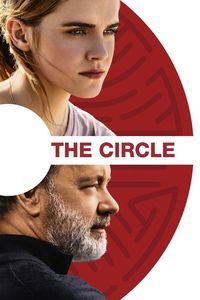
    (Netflix Streaming, August 2018) There’s something really weird at play in The Circle, and I’m having a bit of trouble untangling my exact issue with it. I think that it has a lot to do with its unimaginative techno-skepticism, as it follows a young woman who starts working for a (fictional) tech giant and becomes gradually disenchanted by the disconnect between its lofty public ambitions and the less-than-positive impact it has on her life and society at large. It’s not a bad premise on which to base a film, but The Circle does itself no favours by being lazy and trite about it. There is a surprising lack of interest from the film in spelling out what exactly is so awful about the company for which our character works: it seems to rely more on common assumed notions about the evils of Facebook, Google, Apple, et al. There’s a conspiracy angle to the film that never goes farther than two senior executives saying to each other, “Oh no, we’re in trouble now!” when their emails are leaked. Paradoxically, the crutch of using viewer’s anti-tech prejudices also points at why the film feels so useless—so it simply confirms those awful suspicions about the evils of tech giants? That’s it? Nothing more? Why bother watching the film when I can just look at my favourite newspaper and read articles that go far beyond The Circle‘s freshman-level musings? Even the dumb moral at the end of the film feels badly under-thought. It doesn’t help that the film doesn’t have much in terms of energy or paranoia. Writer/director James Ponsoldt has done much better in the past. Poor dull boring featureless generic actress Emma Watson looks annoyed for ninety minutes or however long it takes to make it to the end of this ordeal. Tom Hanks seems to have fun playing the sinister CEO visionary, but there’s—again—nearly nothing of substance behind the vague menace he’s supposed to present. What a dull movie. What a hypocritical movie. What else is on?

  • Dangal (2016)

    Dangal (2016)

    (Netflix Streaming, August 2018) I’ve been working at expanding my knowledge of Indian cinema beyond the usual masala clichés, and Dangal is a good reminder that there’s a lot more to it than song and dance. Under Aamir Khan’s supervision (he didn’t write or direct, but he produces and stars in the film, and there’s a clear link between this and his other recent movies), Dangal tells the story of a family in crisis over several decades: an ex-wrestling star father despairing over having two daughters, and then in seeing his girls go on to have success in his own chosen sport, upsetting a number of expectations along the way. (The film is considerably messier in practice, concatenating roughly three plot arcs in a single film and expanding its running time far beyond what we’d consider appropriate in more focused western sports film, but that’s how it goes.) The film is heavy on female empowerment from the perspective of an older man, an imperfect viewpoint but one that probably echoes the current inner fault lines within Indian society as more egalitarian values are challenging a traditionally conservative society. To be fair, Dangal‘s use of familiar tropes doesn’t break expectations (training montages being the least of them, although they are noteworthy for being where the film’s musical numbers are integrated in a semi-natural fashion), but its execution is nicely done. For western audiences, Dangal does feel like a throwback to an earlier kind of gently pro-feminist cinema but everything has to be graded on a curve appropriate to the producing country: what may seem old hat to Canadians may be radically progressive in India. [November 2018: After seeing a few more of Aamir Khan’s films available on Netflix and especially Taare Zameen Par, I’m struck at how many of his recent films adopt western conventions to tell stories of social issues digested in North America two or three decades ago but relatively progressive by Indian standards.] Aamir Khan turns in a convincing performance as a flawed, aging character (a feat made even more impressive by looking at the ripped heroic roles he played in other movies made a few years before Dangal), and the actresses playing the two daughters are quite good as well. Length of the film and multiple peripheral dramatic arcs aside, I had a relatively good time watching Dangal—it’s meant to be a rousing inspirational drama and it works as such.

  • Silence (2016)

    Silence (2016)

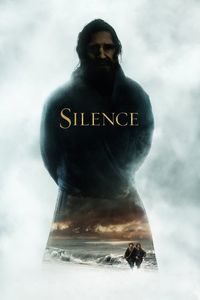
    (Netflix Streaming, August 2018) Martin Scorsese’s Catholicism has always informed his movies, but seldom as much as in Silence, the story of two missionaries travelling to Edo-era Japan to spread the gospel and being persecuted for their beliefs. While such a plot summary would suggest a dull drama, Scorsese keeps even a slow-paced story moving through good performances and a focus on a period of history that usually gets short thrift in western cinema. Along the way of the protagonists’ suffering, Scorsese also gets to play with themes that are dear to him and inspiring in their own way—how closely you adhere to your beliefs can be measured to how much pain you’re willing to endure for them, even as others may reach accommodations with persecution. Andrew Garfield is quite good in the film’s main role. It’s worth noting that there is seldom any explicit discussion in Silence of the absurdity of religious oppression: it exists, immovable, and can either be resisted on a personal level (at the risk of destruction) or surrendered to. In Scorsesian terms, this is a pure passion project and far closer to his spiritual biographies than his crime drama—it’s certainly not as flashy or purely entertaining as other films, but it may be more important to him than others. I approached Silence with some skepticism (I’m really not in the target audience for the film) and dread at the film’s advertised characteristics (length, setting, subject matter…) and yet ended up appreciating the result far more than I expected.

  • The BFG (2016)

    The BFG (2016)

    (Netflix Streaming, August 2018) While The BFG was a box-office disappointment, I think it will modestly endure as a decent family movie thanks to some solid directing from Steven Spielberg: He’s been making popular entertainment for so long that he gives the impression of being able to direct them on autopilot and still deliver the same level of quality. Here, his roving camera once again takes centre stage as he tells the story of a young girl and her Big Friendly Giant friend as they fight against less friendly giants. The queen, and then the British military eventually get involved. I’m not going to pretend that The BFG is a hidden gem: there are some basic issues with the film that hold it back—notably the somewhat repulsive character design, non-jolly discussion of children being eaten, some uncanny-valley issues in presenting almost-human CGI characters, the exasperating malapropisms and many of the cheaper jokes. On the other hand, the direction is superb, the special effects are very well done, and the film’s second half becomes wilder and wilder in terms of plotting and incidents. Newest Spielberg muse Mark Rylance is quite good as the titular BFG, while Ruby Barnhill sustains a lot of attention as the teenage protagonist. Meanwhile, my inexplicable crush on Rebecca Hall continues unabated thanks to a minor but solid supporting role. While there isn’t much to the film’s plot, the wall-to-wall special effects are used wisely to heighten the fairy-tale nature of the film and create characters from motion-capture technology. Considering The BFG‘s disappointing box-office returns, it’s likely that we won’t see anything similar for a while … so let’s appreciate what we’ve got.

  • Teenage Mutant Ninja Turtles: Out of the Shadows (2016)

    Teenage Mutant Ninja Turtles: Out of the Shadows (2016)

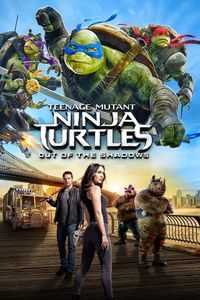
    (Netflix Streaming, August 2018) It’s actually amazing, these days, how much effort and resources can go in making movies that barely make a blip on the cultural radar. We’re told that Teenage Mutant Ninja Turtles: Out of the Shadows cost $135M, a reasonable amount for a live-action film featuring CGI characters on-screen for nearly its entire duration, and dynamic action sequences—including one in the Amazon River. The film made nearly twice its budget back, which today means that it’s not nearly enough to offset marketing and other expenses. As a result, this is likely the end of the road for this third Teenage Mutant Ninja Turtle movie series—a reboot is likely to follow at some point. And yet, and yet, Out of the Shadows itself is often too uninteresting to be memorable. While it’s slightly better than the original—at least in terms of presenting a halfway-intriguing premise—, the film is practically a case study in 2010s blockbuster cinema and how, once the shouting and the explosions are over, it can be instantly forgotten. Out of the Shadows, like its predecessor, really comes alive during its action sequences: The highway chase sequence, the Brazilian river sequence and the Technodrome ending sequence are director Dave Green’s three claims to viewer enjoyment and excitement. When the film stumbles is in what’s probably a too-gross antagonist in a PG-13 film: Krang is executed as a Lovecraftian nightmare of exposed viscera and tentacles, which is in-keeping with the source material but executed too vividly to be purely enjoyable without a side order of nausea. But Out of the Shadows doesn’t, in the end, amount to much—if you’re a Turtles fan, you got your sequel. Otherwise, you got yet another CGI-heavy spectacle forgotten a week later. Such is the norm today.

  • The Founder (2016)

    The Founder (2016)

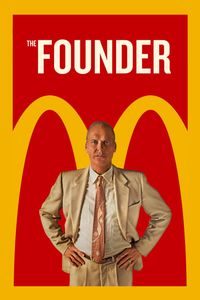
    (Netflix Streaming, August 2018) I’ve known about McDonald’s colourful history even since reading the unauthorized corporate biography Behind the Arches, so it’s a treat to finally see the story being told on-screen in The Founder. McDonalds is an American institution, so it makes sense that its history would expose the more sinister underbelly of that other American institution of capitalism. The entire film revolves around Ray Kroc, who begins the film as a middle-aged salesman having trouble making ends meet. His business trips eventually bring him to the first McDonald’s location, the product of two brothers’ ingenuity in speeding up restaurant service. Fascinated by the innovation, Kroc invests in launching a franchise operation, then another, then another … until effectively taking control of the company and forcing the original McDonald brothers out of the business, reneging on a handshake agreement along the way. Kroc is not written as a good guy in The Founder, but having Michael Keaton incarnate him is a stroke of genius in making our reactions to his action more ambiguous: Keaton is such a compelling actor and playing such a convincing salesman, how could any of this being bad? Except that, well, it was the essence of unshackled capitalism and the pursuit of the American dream—complete with a trophy wife—at the expense of the values and ethics that led the McDonald brothers to create what Kroc dearly wanted for himself. It’s a story worth contemplating and even if the script isn’t without its issues (not spending much time on Kroc’s persona life) nor anachronisms (McDonalds did have a bit of an identity crisis when it discovered that it was as much a real estate company as a restaurant business, but that happened closer to the 1970s) it’s a convincing historical re-creation and a magnificent showcase for Keaton’s skills. Far from being a corporate hagiography, director John Lee Hancock’s The Founder actually zeroes on a familiar yet always-interesting paradox: What if dodgy ethics were a requirement for phenomenal business growth?

  • xXx: Return of Xander Cage (2017)

    xXx: Return of Xander Cage (2017)

    (Netflix Streaming, August 2018) Sometimes, you don’t fully appreciate what you’ve got until it goes away, and that’s a bit how I feel about xXx: Return of Xander Cage considering that it’s a blatant throwback to the kind of silly overblown action movie that they were making in the early 2000s with the original xXx and xXx: State of the Union. Those movies kind of went away while we weren’t looking, replaced by grittier, meaner, shakier but not necessarily better Bourne knockoffs. And now here are Vin Diesel and xXx: Return of Xander Cage, unapologetically renewing with the style and content of the first two films. Our xXx hero, as it turns out, never died despite misinformed reports to the contrary: He just travelled around the world and stands ready to be reluctantly recruited once more when hacky-wacky mumbo-jumbo stuff needs fixing once again. However, this time he gets to team up with slightly-less grandiose archetypes in order to fight for freedom and all that good stuff. So it is that we don’t just get Vin Diesel, but the always-watchable Ruby Rose as a sharpshooter, action sensation Tony Jaa, Nina Dobrev in a very cute nerdy-girl role, Toni Colette and Samuel L. Jackson walking on and off the screen to make sure the plot mechanics are set up properly, and none other than Ice Cube back in a return engagement through an absolutely classic introduction featuring his own music. If you’ve read this far without realizing that xXx: Return of Xander Cage is not a great movie, I question your attentiveness. It is, however, an increasingly enjoyable film especially if you saw its predecessors. Diesel and Cube both try to out-surly each other, while the supporting cast knows that they’re not going for subtlety. The action sequences are just fine thanks to director D. J. Caruso’s competency with the form. (It had been a while since he helmed good genre movies; it’s good to have him back.) Of course, the conscious decision to ape the original film’s methods means that xXx: Return of Xander Cage does feel like a throwback to 10–15 years ago. But there’s no school like the old school, and as a fan of that particular era of action filmmaking, I truly had unexpected fun watching it all happen again. I’m not necessarily demanding another sequel, but I’d be good with it.

  • Power Rangers (2017)

    Power Rangers (2017)

    (Netflix Streaming, August 2018) Given that I have no prior history of watching Power Rangers as a kid, I was expecting the worst from its big-screen movie adaptation. While the result isn’t awe-inspiring, I was surprised at how enjoyable much of it could be. The film’s first half, for instance, is a serviceable YA science-fiction film, as four mismatched teenagers discover a hidden alien spaceship and learn to control their new superpowers. It’s executed with a certain attention to realism and the dialogue isn’t too bad: There are clear links here between this film and director Dean Israelite’s previous Project Almanac. Plus—and this is important—it doesn’t immediately go for the in-jokes and dumbest characteristics of the original TV show. There is also a sense of achievement in the way the characters learn to control their superpowers—it’s not an automatic thing, and they still make mistakes along the way. It helps that the actors are a sympathetic bunch—there are clichés here, but they’re likable clichés. Things get less interesting in the final act, as we move to an action climax that leans hard on the TV show conventions what just look dumb to first-time viewers. While the final battle nearly levels the downtown area of a small city, it also relies on elements that fans remember from the series and aren’t quite as believable as the rest of the film. There are, of course, sequel hooks—whether they will be followed is up to financial results. Let’s just say that I would not be completely opposed to the idea if they can keep much of what made the first half of the film so interesting.

  • The Disaster Artist (2017)

    The Disaster Artist (2017)

    (Netflix Streaming, August 2018) The question of whether good art can arise from bad art is sophomoric (of course it can; just as surely as good art can come from bad things) but it does seem to be central to the critical reaction to The Disaster Artist. It is, after all, a successful dramatization of the making of the terrible movie The Room. If you haven’t seen The Room, well, you really don’t have to: It’s an incoherent romantic drama that has become a modern ironic reference for fans of bad movies. The reasons why it’s bad are far more interesting than the film itself, and The Disaster Artist correctly focuses on that aspect of the story in showing how a young actor (Greg Sestero, who authored the book on which this film is based) is befriended by an enigmatic man (Tommy Wisseau) who somehow has the money to finance an entire film. Alas, when means exceed talent, strange things can happen and so it is that The Room is a singular vision from a man who doesn’t seem to be entirely human. The Disaster Artist hits its stride when it portrays the real-life story of how The Room was shot, with the crew practically rebelling against the director and yet trudging along despite the results. The Disaster Artist can practically stand alone as a filmmaker’s insider movie of what can happen during shooting. Fortunately, it’s as funny as the event themselves, as we see the Franco brothers (James and Dave) play off each other, with some assistance from Seth Rogen, Alison Brie and half a dozen cameos. The narrative doesn’t always correspond to the real-life story, but director James Franco’s recreation of The Room‘s ineptness is striking and, as the credits sequence shows, matches The Room‘s footage really well. It’s a fascinating story, ridiculous and yet endearing at once. After all: Tommy Wisseau got to make a movie seen by millions … which is more than almost all of us can claim. Now the terrible The Room has spawned the Oscar-nominated The Disaster Artist … a remarkable feat even by Hollywood standards.

  • Baywatch (2017)

    Baywatch (2017)

    (Netflix Streaming, August 2018) There are times when, watching a movie, you get a glimpse at the confusion that must have gripped its production. So it is that Baywatch doesn’t quite know what to do with itself. It certainly understands that it’s an adaptation of a widely derided TV show with ironic elements. In fact, it has a character (played with increasing likability by Zac Efron) that seems dedicated to reminding us of all of the logical potholes that such a pedigree implies. Alas, the movie seems determined to become a hard-R comedy with copious grossness and overdone violence. How did we get here from there? The superior example of 22 Jump Street looms large over Baywatch, by showing how it’s possible to lampoon source material without bashing it or ending up with something completely unlike the source. What appears on screen feels like an incredible waste of talent. Dwayne Johnson does his best work at the PG-13 level: burdening him with swearwords and gross-out gags runs counter to his persona. Actresses such as Priyanka Chopra, Ilfenesh Hadera and Alexandra Daddario outdo Pamela Anderson in sheer sexiness but aren’t given anything to work with—even though Daddario does get a few self-deprecating jokes. Hannibal Buress is also wasted, although David Hasselhoff does get chuckles in yet another one of his self-aware extended cameos. The main problem is that the film just isn’t funny, and pushing the R-rated envelope actually makes it less comic and more pitiable. As far as I’m concerned, perhaps worst is that Baywatch‘s R-rating is used for gross jokes, swearwords and male nudity rather than maxing out the original series’ male gaze on curvy lifeguards. Seriously, what’s up with that?

  • I, Tonya (2017)

    I, Tonya (2017)

    (Netflix Streaming, August 2018) Some biopics are more complex than others. It’s one thing to present a universally loved person … but how do you make a movie about someone widely loathed? That’s the bet taken by I, Tonya, a biography of early-nineties skating villain Tonya Harding. The easy approach would have been to explain that Harding had a tough upbringing, that she never fit within the glamour image of figure skating, that she was surrounded by people with poor judgment and that (she says) she was never involved in the infamous knee-capping incident with Nancy Kerrigan. But that would smack far too much of a basic Lifetime movie with added excuses. What I, Tonya does is far more interesting: Using a collage approach where the main narrative is supplemented by fake interviews with the main players and split-second flashbacks undercutting (or at least seriously questioning) interview claims, this is a sympathetic biography that doesn’t quite manage to bring itself to exonerate its subject. It often breaks the fourth wall with no shame, and even calls out the viewer for their voyeuristic interest. It honestly portrays both Harding’s point of view and tries to match it with the public perception of the events, and while it does correct the record, it remains skeptical about Harding’s version. The result is, frankly, far more entertaining than anything we could have expected from such a project. There’s comedy, empathy, drama and a strong actor’s showcase for both Margot Robbie (completely convincing as Harding, doing a complete 180 on her usual glam persona) and Alison Janney (playing a character in the running for the title of worst mom ever). Screenwriter Steven Rogers and director Craig Gillespie each bring a fascinating sensibility to the project—this isn’t your grandparents’ biopic, as is zips from scene to scene and seems to operate on skeptical irony throughout. And yet, and yet, we can’t help but feel some amount of understanding for Harding’s version of the story. It’s not a simple story and it’s not a simple film either—But I, Tonya is an exemplary case study in how to present tricky material on-screen with plenty of style.