Reviews

  • Robocop 2 (1990)

    Robocop 2 (1990)

    (On TV, April 2017) Robocop 2 doesn’t have the best reputation, and it’s easy to see why: It almost entirely re-creates the thematic points of the first film, sometimes in more entertaining ways but never quite going beyond what had been settled in its prequel. Worse yet, the script doesn’t quite know what to do with its most daring ideas (such as the underage killer) and puts them all away during its last act, dumbing down everything to a fairly dull combat sequence that keeps going and going. This being said, there are a few interesting moments in this sequel (The body horror, the over-programming interlude, etc.)—in fact, some of those moments are good enough that a truly decent remake would pick and choose scenes from the first and second movie to be able to create something much stronger than the result of either film. But we have what we have on-screen, and the best thing we can say about Robocop 2 is that it’s more of the same, except not as smart. The violence remains excessive, the special effects have a charming 16-bit quality, the humour isn’t always well-handled and director Irvin Kershner can handle the mayhem efficiently, even though he can’t elevate the material like Paul Verhoeven did. Belinda Bauer is deliciously evil as an amoral psychologist, Wanda De Jesus has a small role and Peter Weller is fine as Robocop, even though the scripts frequently asks him to step out of character. As a sequel, it’s passable … but viewers are advised to avoid the dreadful third installment.
  • Heaven can Wait (1978)

    Heaven can Wait (1978)

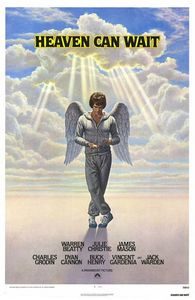
    (On Cable TV, April 2017) Some movies hold up better than ever, but Heaven Can Wait isn’t one of them. The problem isn’t with the period detail, Warren Beatty’s performance or any of the 1978-specific aspects of the film. The problem is the annoying way in which its premise is executed. Beatty plays a lunkheaded football player who dies before his time and is sent back to Earth as a rich man with ongoing problems of his own. But what could have a sprightly fantasy ends up dragged by a script as dumb as its protagonist. Our dimwitted hero has trouble accepting that his football player body is gone, and keeps insisting that he’s going to play the SuperBowl anyway. The movie eventually obliges, in one of the most blatant instance of contrived plotting ever put on film. But the way from Point A to point B is made even worse by the moronic character, adding empty minutes to a film that should move much faster. There is a particularly egregious five-minute scene in which our protagonist laboriously recaps the film for the benefit of a friend, leaving viewers gnashing in exasperation. If the movie was reaching for a grand message on life and its preciousness, it’s more than muddled by the protagonist’s bull-headed insistence on not changing a thing. The body-switching aspect is more painful than amusing (see above about the stupidity of the script) and the laughs are few and far between in what’s supposed to be a comedy. If you haven’t seen it yet, Heaven can Wait can definitely wait.

  • Jaws 3-D (1983)

    Jaws 3-D (1983)

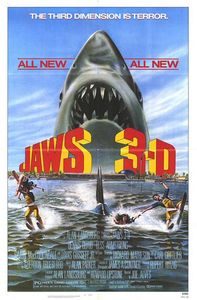
    (Netflix Streaming, April 2017) If the original Jaws was at the top of good movies and Jaws 2 is at the bottom of good movies, then Jaws 3-D is at the top of bad movies (and I’m told that Jaws: The Revenge lies at the bottom of bad movies.) It dull, gimmicky, familiar, forgettable and not terribly interesting. Whatever interest the basic theme-park premise might have held in 1983 (and I suspect that even then, people made comparison to Westworld) is completely gone now that other movies (Piranha 3D and 3DD, cough-cough) have more or less recycled the premise. We know what’s in store: big shark, multiple deaths and a plucky hero saving the day (this time with a grenade). The addition of 3D elements (since Jaws 3-D came out in the middle of the early-1980s 3D revival) is often ridiculous seen on a flat screen, clearly showing the technical and artistic limits of the approach at the time. It’s sort of fun to see a young Dennis Quaid thrown in the mess, but that doesn’t really make the film any better. Se it if you must, but you may not remember it the day after—there’s not much of interest here.

  • Elizabethtown (2005)

    Elizabethtown (2005)

    (TubiTV streaming, April 2017) In talking about Elizabethtown, it’s almost essential to talk about aliens and angels. Aliens, because the leading theory to explain what happened to writer/director Cameron Crowe between Jerry Maguire/Almost Famous and Elizabethtown/Aloha is that he has been replaced by an alien with imperfect understanding of human behavior. Elizabethtown professes to be about life, love, laughs and other wholesome sentiments, but even from its first five minutes, it seemingly takes place in a reality with limited similarities to our own. Reading the late and lamented Roger Ebert bring in angels to explain the behavior of the female lead character is a testimony to how far we have to go in order to even make sense of the film. I’m usually good to mention one or two particularly dumb moments in my capsule reviews, but Elizabethtown has so many nonsensical bits that it would take too long to do them justice. Orlando Bloom is sort of bland but still effective as the grieving suicidal lead, while Kirsten Dunst is bubbly as the entirely improbable love interest. “Manic Pixie Dream Girl” was invented to discuss Elizabethtown as one of the few rational responses to such a character. I could go on and on about how the film may be a fever dream or a fantasy written by aliens whose only exposure to humanity has been through romantic comedies, but Elizabethtown is frankly just that weird. It even becomes oddly endearing after a while, once it’s clear than anything goes here. The Free Bird/Firebird sequence is amusing (if, again, directed so poorly as to be ludicrous), there are a few laughs here and there and odd resonant piece of dialogues. Alec Baldwin shows up too briefly as a Big Boss, while I always enjoy seeing Judy Greer and Jessica Alba even in minor roles. Still, Elizabethtown seems to belong in a category of its own, a blend of outsider and performance art, perhaps. In that light, I’d be doing a disservice to tell you not to see it.

  • Jaws 2 (1978)

    Jaws 2 (1978)

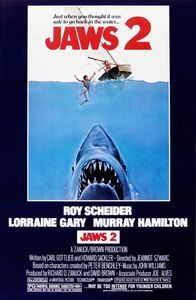
    (Netflix Streaming, April 2017) It would be easy to be too hard on Jaws 2 for not being as good as its predecessor. But given that the predecessor was one of the most famous movies of its era, helmed by a young and hungry Steven Spileberg, it’s not a dishonor to say that Jaws 2 is merely a competent blockbuster film. It doesn’t mess with the formula set by the first movie, what with its sadistic shark steadily cranking up the death count, and a third act largely set on water. There’s a nearly-interesting bit about Roy Scheider’s character being driven mad by the same situation happening all over again, but that’s largely avoided in the last third of the film. Less interesting is the film’s insistence on featuring teenage characters as protagonists and shark chum—part of the first film’s appeal was its adult nature, and targeting it to teenagers does smack of commercialism. Even as a step down, though, Jaws 2 holds up decently today. Cut away some of the dumbest, most overdone sequences (including the final shark fry, but also the shark-versus-helicopter moment) and it’s still a reasonably good blockbuster film. Ultimately, though, it avoid greatness, and that’s part of the game in coming up with a sequel.

  • Twins (1988)

    Twins (1988)

    (On TV, April 2017) I managed to avoid most of the Arnold Schwarzenegger early comedies the first time around, but now that I’m checking off the last few titles in his filmography, I can’t say that I feel as if I truly missed something. After being underwhelmed by a first viewing of Kindergarten Cop and a second look at Last Action Hero, here is Twins to underwhelm me once more. The basic premise is actually amusing: What if Schwarzenegger played an impossibly perfect guy who suddenly discovers that he’s got a fraternal twin brother played by… Danny Devito. The two offer a striking visual contrast, and their respective styles of comedy are also an interesting match. Unfortunately, once you get past the poster, Twins doesn’t have much more to offer. There’s a bog-standard plot to move things along, but nothing truly interesting other than a clothesline on which to hang the expected comic bits. Some of the humour isn’t tonally consistent—the climactic chain gag seems to belong in another film. It doesn’t help, I suppose, that by 2017 (or, heck, by 1994’s True Lies, four comedies later) we know how Schwarzenegger can actually play comedy—the shock value of seeing an action star mugging for laughs is considerably diminished. I’m not saying that there’s nothing to see here: There’s a funny moment in which Schwarzenegger measures himself against a Stallone poster, Kelly Preston is very likable as half the love interests and DeVito does manage to get a few laughs of his own. But the movie itself is a bit dull and unfocused. Twins still holds interest through its high-concept premise, but the execution isn’t quite up to its own requirements.

  • War Dogs (2016)

    War Dogs (2016)

    (On Cable TV, April 2017) I had too-high hopes that War Dogs would be another strong entry in my pet geo-sardonicism subgenre—geopolitics treated with a good dose of sardonic humour as a way to make sense of an increasingly unlikely world, an updated Lord of War for the post-Iraq generation. I half-got my wish. For one thing, War Dogs is, indeed, a comedy taking on geopolitical issues: namely arms dealing and the unlikely profits coming from the unintended consequences of well-meaning government procurement policy changes. Miles Teller is the narrator and protagonist of an incredible story (partially based on real events) in which an underachieving young man ends up putting together multimillion dollar deals for the government’s war efforts. His patter, especially in the film’s first half, is interesting and damning at once. War Dogs starts out well with a first half filled with comedy, rags-to-riches incidents, and incredible war stories. It plays a bit like one of Ben Mezrich’s American-hustler books. Director Todd Philips knows how to present a film with pop and irreverent energy, and Jonah Hill does bring a degree of uncomfortable energy to the proceedings. Alas, this sugar high doesn’t last as the movie predictably settles into something far less fun in its latter half. War Dogs has to punish its villains, and those include our two protagonists. Their adventures get a great deal less fun as they turn on each other, renege on deals and get caught up in a federal investigation. There is no triumphant ending in store—at best, a soft (ish) landing. Still, War Dogs is a delight for those moment in which it does works. If the film’s not quite successful, then so be it—I’d rather see an imperfect take on procurement corruption than a more successful vapid comedy.

  • Jaws (1975)

    Jaws (1975)

    (Second viewing, Netflix Streaming, April 2017) When people point to Jaws reprovingly as the one movie that changed cinema (for the worse) ever after by introducing the concept of the blockbuster, I usually have to smile. I was born almost exactly three months after Jaws’ release date, and for a cinephile such as myself it feels amusing to think that my year of birth was the year that cinema changed. Après moi le deluge, or something like it. Still: Jaws is Jaws, the very definition of an iconic film, from its musical theme to the poster image to a handful of classic quotes and shots. As an action movie, Jaws shows its age, but as a suspense film, Steven Spielberg still knocks it out of the park—and that’s still true even after four decades of shark movies inevitably compared to granddaddy Jaws. Rob Scheider is the likable everyday man, while Richard Dreyfuss turns in a likable performance as a dedicated scientist. Jaws has the added particularity of having very distinct halves—the last act dispenses with nearly everything coastal to focus on three men in a boat and a shark around them. It still works. It really still works: the terror of the shark is still visceral, and the joy in which the final explosion is greeted rivals the Death Star’s explosion in Star Wars. It’s a compulsively entertaining crowd pleaser, but it’s also crafted with care, and reflects the mid-seventies in a way that seems almost quirky today. As a kid, I remember being half-terrified by the film’s occasional showings on TV—I don’t remember much of the rest of the film, although I do note that its original PG rating is ridiculous—it’s at least a PG-13 now, bordering on R due to gore. But no matter how you see it, Jaws remains a great movie.

  • The Big Chill (1983)

    The Big Chill (1983)

    (On Cable TV, April 2017) It’s interesting to read that writer/director Lawrence Kasdan interprets the meaning of The Big Chill as the disillusionment that hits thirtysomethings once they trade young ideals for practical realities. Watching the movie, I was most struck by the way is comfortingly presents a small group of friends spending a mostly relaxed time together—i.e.: chilling. But, hey, it’s his film, and a fascinating aspect of The Big Chill is how, nearly thirty-five years and two generations later, it remains intelligible as an expression of friendship, drama, love, lust, regret, grief and mid-thirties reflections. It remains engrossing despite having few laughs and even fewer thrills. Part of its enduring effectiveness has to do with the actors assembled for the occasion. These are early roles for notables such as Glenn Close, Jeff Goldblum, William Hurt, Kevin Kline and Meg Tilly. (Pay attention, and you will even see Kevin Costner’s hairline.) The nearly all-hits soundtrack is also quite good. For a movie that wrestles complex relationships between no less than eight people (that’s 28 different relationships, if my math is OK), the story remains relatively clear at most times. Perhaps most surprising is how somewhat unusual things (hitting on your dead pal’s girlfriend at his funeral, a wife arranging for a friend’s natural insemination by her husband, insider trading, an adulterous affair while the husband’s away with the kids, etc.) are portrayed as being no big deals. The ending is weak, but there’s an upbeat wistfulness (if such an expression isn’t oxymoronic) that permeates the final moments of the film. The Big Chill couldn’t possibly have been more reflective of the late baby-boomer generation, yet it remains relevant today. And despite all the icky things in the movie, it still feels heartwarming and relaxed. Go figure.

  • Teen Lust (2014)

    Teen Lust (2014)

    (On Cable TV, April 2017) The prototypical teen sex comedy pitch usually has to do with losing one’s virginity, and Teen Lust flips that simple premise on its head by specifying that our protagonist is a Satanist headed for sacrifice … unless he can get himself laid quickly. (There’s also something about 1000 years of global damnation as a result of the sacrifice, but that part’s easy to forget.) Simple. Effective. Almost exactly perfect for a Canadian low-budget movie that barely reaches a duration of 80 minutes. The main reason to see the film is the banter between lead Jesse Carere and his best friend as played by Daryl Sabara (who, like in many other movies in his filmography, ends up stealing most of his scenes). The laughs aren’t hilarious, but there are a few chuckles along the way, and the script does wring a few good plot developments out of its premise. (If you go into the film completely cold, the revelation that the protagonist’s “going to church” is actually Satanism is good for a laugh, and the movie does acknowledge that there is at least one potential non-conventional solution to the whole “two friends looking to get laid” dilemma.) Teen Lust is not a great movie. It may not even be a particularly good movie. But as far as mandatory CanCon filler material on cable TV, it’s better than most and successful in how it reaches its intended objectives.

  • Ferris Bueller’s Day Off (1986)

    Ferris Bueller’s Day Off (1986)

    (Second viewing, On DVD, April 2017) We can probably agree that a character like Ferris Bueller is a malignant sociopath who would be toxic in real life, but that doesn’t make Ferris Bueller’s Day Off any less than a success as a teen comedy. Issued by the John Hughes mid-eighties teen comedy factory, this is nonetheless a film that escapes from the usual formulas of the subgenre, taking an unconventional approach and defying caution in its ultimate objectives. Bueller himself is a memorable piece of work, manipulative and reckless yet almost immediately charming in the way he directly addresses the audience to gain their confidence. A gifted con artist, he is the driver but not the protagonist of the story, as he brings enlightenment to friends and siblings during the course of a single day off school. Matthew Broderick manages the heroic task of keeping Bueller likable, but it’s Alan Ruck who gets the film’s most dramatically significant role as a perpetually depressed friend shaken out of his rut by Ferris’s actions. Mia Sarah (in a dull role) and Jennifer Gray (in a far better one) are fine in the two female lead roles, although I’ve never quite warmed to Jeffrey Jones’s principal character. Then there is Chicago, lavishly showcased through most of the movie from the perspective of suburban teens heading downtown for fun. Surprising bits of philosophy pepper a script that breaks the fourth wall and attempts a few unconventional objectives. (Everyone likes “Life moves pretty fast. If you don’t stop and look around once in a while, you could miss it,” but I’m more partial to “The question isn’t ‘what are we going to do’, the question is ‘what aren’t we going to do?’”) The humour often veers from its good-natured realism to outlandish absurdity (as in the escalating “Save Ferris” moments), but it’s rarely mean-spirited even in its harshest moments. It’s fascinating that writer/director John Hugues both created a mold for the teen comedy and then broke it with this film—many people have imitated The Breakfast Club or Sixteen Candles, but Ferris Bueller’s Day Off remains sui generis even today. I saw this film at least once decades ago, but it more than holds up today. Despite the easy and often cheap appeals at defying authority, there’s a countervailing element of living life moment-by-moment that’s hard to ignore.

  • Les Misérables (1998)

    Les Misérables (1998)

    (In French, on Cable TV, April 2017) The most famous big-screen version of Victor Hugo’s novel Les Misérables has to be the 2012 film which adapted the musical on the big screen. I thought it was annoying, boring and exasperating, but I’m far more upbeat about the straightforward 1998 version. Featuring no less than Liam Neeson and Geoffrey Rush in the lead roles (with some assistance by Uma Thurman and Claire Danes, plus a blink-and-you’ll-miss-it minor role by a then-unknown Toby Jones), Les Misérables cleverly focuses on the essential aspects of the original, convincingly re-creates the historical period and manages to wring a lot of emotional impact out of its dignified treatment of the subject. It’s not exactly a thrill ride, but it unfolds at a steady pace for a historical drama, and it doesn’t overstay its welcome through repetitive musical numbers. While the 2012 version does have a few more spectacular moments (helped along by the state of special effects circa 2012 versus 1998), the non-musical version feels more focused on the story and more satisfying as a result.

  • After Hours (1985)

    After Hours (1985)

    (On Cable TV, April 2017) If anyone ever wonders what Martin Scorsese’s version of a comedy would look like, remind them of After Hours’ existence. It starts on a note familiar to countless teenage sex romp, as a young man heads to a strange woman’s apartment in hope of, well, you know. But the odds are against our hero as he loses his money, meets increasingly hostile people, suffers the worst luck imaginable and seemingly can’t manage to get himself out of trouble. It may be a comedy, but it’s shot like a horror thriller and written even more darkly. There are a number of deaths in the film, to the point where it’s the kind of film where you can comment “the murder was funnier than the suicide” and not feel like a complete psychopath. After Hours is a very strange film, compelling on the sole basis of seeing how bad things will get for the protagonist, yet repellent in content and unsatisfying in its abrupt conclusion. (To be clear: the last shot of the conclusion is just about perfect, but what leads to it seems arbitrary and far too quickly resolved to feel right.) Griffin Dunne is oddly sympathetic as the justifiably paranoid protagonist; meanwhile, Linda Fiorentino shows up in an early role as a kinky artist, Teri Garr is amusing as a vengeful waitress and Roseanna Arquette as a young woman with an entire newsstand of issues. (New York City also plays itself in its most alarming state, as a dark labyrinth in which everyone is out to get you.) If After Hours is Martin Scorsese goofing off, they maybe we should be thankful that he hasn’t made more pure comedies … or that his far funnier films usually belong to other genres.

  • Rogue One (2016)

    Rogue One (2016)

    (On Blu-ray, April 2017) As much as I fear that Disney’s plans to release one Star Wars movie a year for forever will dilute the impact of the original trilogy, I’m relatively happy with the results so far. While neither The Force Awakens nor Rogue One are great movies, they’re decent films and, in the case of Rogue One, actually try something somewhat ambitious. As a putatively standalone story (but a backdoor prequel to the original film), Rogue One plays with big icons and sets a war story within the context of the Star Wars universe. It’s far from being perfect: the characters are rather dull (although it’s nice to see a Zatoichi homage in the Star Wars universe), a lot of plot-building moments are merely serviceable and there’s a scattershot nature to the plot that may be explained by the rumoured production difficulties of the movie. There are far too many dull moments where we’re waiting for the next thing to happen—and the longer you think about some of the set-pieces, the less they make sense. On the other hand, there’s a lot of stuff to like. The battle of Scarif repurposes iconic images in a tropical context and makes them feel fresh again. Many of the special effects are terrific. The production design and cinematography make impressive efforts (down to the grainy film stock) to deliver a conclusion that fits seamlessly with the 1977 original. The diverse cast is a welcome evolution. I also like the daring of using an entire film to bring further dramatic heft to the original film, transforming a few vexing plot holes into plot engines along the way. The attempt to digitally re-create two actors of the original film is admirable, even though the result doesn’t look quite right. Diego Luna, Donnie Yen and Alan Tudyk deliver good performances—I wish I could say the same about Felicity Jones, but her character is written so flat as to be playable by just about anyone. Director Gareth Edwards obviously has some fun as an ascended fanboy, but I look forward to later editions of the film detailing the reshoots and arguments whispered about. Rogue One certainly could have been significantly better (tighter, punchier, wittier) in other hands, but what actually made it to the screen is surprisingly effective in its own way. Despite stiff odds, it looks as if Disney knows what it’s doing so far with the Star Wars series—now let’s see if other standalone stories will be as effective.

  • Sex and the City 2 (2010)

    Sex and the City 2 (2010)

    (On Cable TV, April 2017) When I say that my pet name for Sex and the City 2 would be “Middle-Aged Women Wish Fulfillment: The Sequel”, I’m not being as dismissive as you may think. For all of the middle-aged male wish fulfillment out there (and 2011 did have its own gender-flipped Dubai-set fantasy in Impossible Mission: Ghost Protocol except no one called it “male wish fulfillment”), there is a need for other kinds of escapist fantasies in cinema. Sex and the City 2 is aimed at a particular audience, and in that context I encourage it to be as pandering as possible given that I’m already getting plenty of pandering for my own demographic subset, thank you. This being said, I can’t in good conscience let the film skate away on the highly problematic sequences that it contains. Never mind the length of the movie, low-octane romantic stakes, general faux pas in making romantic sequels, first-world problems and over-privileged heroines: There’s a lot worse to be found in the way our four protagonists head over to Dubai on someone else’s dime, are lavishly served by indentured servants, flaunt local conventions like ugly Americans and are shocked when there are consequences to what they do. There is a particularly baffling sequence toward the end that has Kim Cattrall’s character acting out in ways that aren’t just offensive to hardline conservative but to anyone with the slightest bit of sense and respect. Sex and the City 2 tries to have it both ways as well, first as vicarious living in luxurious quarters, then by acknowledging the ugly underside of this luxury, then portraying its protagonists as victims of the trouble that they themselves get into. As much as I’d like to like the film (snip away much of the third quarter and it becomes far more palatable), at worst Sex and the City 2 tries to impose its own artificial materialistic/hedonistic values on a clearly identified Other and at best settles for an obnoxious fantasy. And I say this as someone who likes Sarah Jessica Parker, Chris Noth and the others. What a let-down.