Reviews

  • Pee-Wee’s Big Adventure (1985)

    Pee-Wee’s Big Adventure (1985)

    (Second viewing, On TV, March 2017) It had been a very long time since I had watched Pee-Wee’s Big Adventure and while some of it stuck (Large Marge, obviously, but also a chain-pulling gag that’s sadly not visible in the widescreen version) much of it hadn’t … and that’s not even talking about the ultra-whimsical vision of the film. Paul Reuben has a checkered history by now, of course, but time softens all scandals and it’s certainly possible to watch this big-screen feature without too much baggage. It helps that the film is so joyously eccentric, from the opening Rube Goldberg machines to the final flip into metafiction. In-between remains, well, a road movie leading to a Hollywood satire. What a program. While Pee-Wee’s Big Adventure may not be strictly hilarious, it is steadily odd and charming at once. It’s a movie almost entirely without peers—a rare quality whether we’re talking about 1985 or 2017. Paul Reuben is unique as Pee-Wee Herman, almost perfectly matching Burton’s vision for the film. It makes for a strong first feature for Burton and one that has aged remarkably well since then.

  • Band Camp aka American Pie Presents: Band Camp (2005)

    Band Camp aka American Pie Presents: Band Camp (2005)

    (Netflix Streaming, March 2017) Direct-to-video American Pie series spinoff Band Camp is not what we’d call good … but it does follow the basic elements of the series from which it’s inspired. Tad Hilgenbrink turns in a Stifleresque performance as, indeed, Stifler’s younger brother, proving just as mischievous as his role model and ending in Band Camp as punishment. What follows is a typically neutered version of an American sex comedy: heavy on juvenilia and humiliation, low on actual nudity or eroticism. It’s crude and innocuous at once, happy to wallow in low jokes and idiot plotting. As background noise while doing other work, it’s almost perfect—you just need to perk up once in a while whenever Eugene Levy shows up as a camp counselor or whenever something funny threatens to happen (it seldom does, but it’s important to give the film a chance). It may or may not be noteworthy to remark that twelve years after its release, you practically can’t find any known name in the cast—for all that I liked of Crystle Lightning’s presentation as an uncommon ideal of beauty, much of the film’s cast has since, at best, peaked in TV shows. But such is the life of a direct-to-video film—Band Camp wouldn’t have a tenth of its current awareness had it not been branded as part of the American Pie series. One the flip side, I’ve seen much, much worse before.

  • Friday the 13th (2009)

    Friday the 13th (2009)

    (On Cable TV, March 2017) I went in the Friday the 13th remake with low expectations, conditioned by half a dozen horror remakes on what to anticipate. Generally speaking, the result does not disappoint—for best or for worst, this remake is roughly equivalent to the many other horror remakes of the time: slick production values, buffed-up young leads, adherence to the iconography of its predecessors but not much in terms of wit, soul, humour or anything but mechanical suspense. It’s a rote exercise, singularly uninteresting if you’re not already a convinced horror hound. The death grip that genre conventions hold around the film’s throat makes it impossible to become anything but a pale imitation of a celebrated predecessor. The only area where this Friday the 13th holds surprise is, curiously enough, in its depiction of nudity—while the ’80s horror originals usually came with a generous side order of nudity, most 00s remakes usually didn’t. But this one is the exception, maybe too blatantly so—by the time the characters themselves comment each other on their splendid bodies, it doesn’t matter if we agree with them. Alas, there’s a lot more violence than flesh here, and it quickly blurs into the usual exasperating fights with predetermined outcomes. Saddled with an overlong prologue, mechanistic structure and stomach-churning glorification of its villain, Friday the 13th isn’t worth much more than checking off a box on some completist cinephile list. It’s dull and there are many other better horror movies out there. But then again, I already suspected that going in—I got what I was expecting.

  • A Cinderella Story (2004)

    A Cinderella Story (2004)

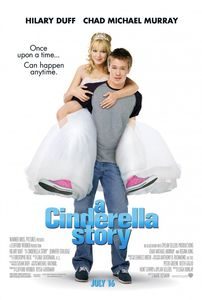
    (On TV, March 2017) A modern take on the Cinderella story seems like a sure-fire premise—how difficult would it be to screw up? But as A Cinderella Story proves, there are no certitudes in life, especially in movies. Landing with a thud even by teen-movie standards, this film can’t be bothered to care about the main elements of the Cinderella myth, limps along without much grace and frequently becomes irritating rather than entertaining. Hilary Duff isn’t bad as the heroine of the tale and Regina King does manage to get out of a meager role with her dignity mostly intact, but the rest of the cast can’t do much to save a lifeless script with little in terms of style, charm, wit or grace. Jennifer Coolidge is particularly ill-served as the wicked step-mother: despite doing her best, her character is actively unpleasant without the panache we’d associate with the best incarnations of wicked step-mothers. The male cast is largely forgettable—although Simon Helberg does make an impression for a few scenes. At a time when there are a few serviceable versions of the Cinderella story floating around (including 1997’s Everafter, which wasn’t that good and yet still better than this), I can’t imagine a situation in which A Cinderella Story would be preferred over any other version. It mishandles great material and ends up delivering an instantly forgettable result.

  • It’s Kind of a Funny Story (2010)

    It’s Kind of a Funny Story (2010)

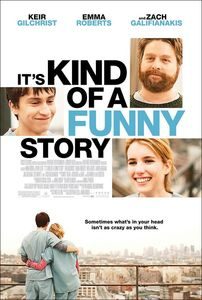
    (Netflix Streaming, March 2017) From its first few off-beat moments, It’s Kind of a Funny Story finds strong kinship in the kind of modest teen dramedies adapted from novels that would become so popular in the 2010s. The literary origins of the script make for a more unusual premise and issues (namely: depression and institutionalization) that hit harder than the average teen movie. Keir Gilchrist is fine as the mostly-mopey protagonist, a depressed teenager who voluntarily checks into a psychiatric hold after a suicide attempt. It doesn’t spoil anything to say that he gets better over the course of the film, encountering friendship and possibly love along the way. Zach Galifianakis in fine form is the wildcard of the story, while Emma Roberts is cute enough as a likely love interest counterbalancing Zoe Kravitz’s more superficial false flame. Otherwise, it’s a movie perhaps more notable for the fractured way in which the first half-hour is handled, leading to a more conventionally heartfelt conclusion. It’s good without being great, although it does hold up decently as a teen drama. Likable, hopeful, occasionally good for a few laughs, It’s Kind of a Funny Story lives up to its title but don’t expect much more.

  • Romeo + Juliet (1996)

    Romeo + Juliet (1996)

    (On DVD, March 2017) Going into Romeo + Juliet, I only knew two things: I usually like director Baz Luhrmann’s work (I usually love the first half-hour of his movies); and I have a lot of trouble with Shakespearian dialogue. Despite my best intentions, I bounced off hard from the recent contemporary reimagining of Coriolanus and Much Ado About Nothing: my brain can’t process that language even with subtitles to help. In that context, Romeo + Juliet’s central conceit, to reimagine Shakespeare’s best-known romantic play with the same dialogue but in a mid-1990s Californian-ish context with warring crime families using fancy guns rather than swords, seemed like courting trouble. Fortunately, Luhrmann’s typical verve was enough to get me over the initial hump. The opening sequence of the movie not only indelibly imprinted IN FAIR VERONA in my mind, but was stylish and action-packed enough to get me interested in the (more sedate) rest of the film. Leonardo DiCaprio is fine as Romeo, while Claire Danes makes for a fair wide-eyed Juliet. Able supporting presences by actors such as John Leguizamo, Pete Postlethwaite and Harold Perrineau (plus a very young Paul Rudd) complete the already wild portrait. Add to that Luhrmann’s usual energy and visual flair and the Shakespearian dialogue becomes far less important—knowing the basic beats of the classic story means that we’re free to appreciate the adaptation rather than the words, and so Romeo + Juliet comes alive. While much of this energy dissipates in the latter half of the film, there are enough elements of interest in the modernization of the story (complete with car chases, helicopters and news media commentary) to keep watching until the end. As pure piece of style, this is a film that is both precisely dated in mid-nineties aesthetics yet timeless because of them. It’s breathless, witty, just sappy enough to qualify as a true version of Romeo and Juliet, and an experience in itself. Maybe I’m getting ready to take another look at Coriolanus and Much Ado About Nothing

  • The Pink Panther 2 (2009)

    The Pink Panther 2 (2009)

    (On TV, March 2017) The law of diminishing returns is fully operative in discussing The Pink Panther 2, second in a reboot series starring Steve Martin as Inspecteur Clouseau. Much of the surprise of the first movie is gone, replaced by an expansion of the story that, to its credit, doesn’t try to ape the first film too much. Here, a genius thief named The Tornado is stealing precious artifacts around the world—it’s up to a team of criminal investigators, including Clouseau, to catch the villain. But bigger doesn’t necessarily mean better, and as the investigation goes to Rome and then back to Paris, The Pink Panther 2 struggles to remain interesting. It pains me to say that, as much as any movie with Aishwarya Rai is like a little bit of sunshine, she doesn’t bring much to the movie—and neither do reliable performers like Alfred Molina or Andy Garcia. Even returning players such as Jean Reno and Emily Mortimer aren’t given much to do … although John Cleese may be a little bit better as Kevin Kline’s replacement. Few of the gags in this sequel are as inspired as some of the ones in the first movie, and while the rather good conclusion also does much to focus the film’s impression, it does come a bit too late to be truly effective. Eight years later, it does seem as if the Steve Martin Pink Panther reboot series ended there and I’m not seeing anyone bemoaning that fact.

  • The Pink Panther (2006)

    The Pink Panther (2006)

    (On TV, March 2017) The dangers with slapstick comedies are numerous. Badly handled, they become juvenile, offensive, repetitive and annoying. Well-done, preferably combined with other kinds of humour, slapstick can bring a lot of energy in a comedy. The Steve Martin remake of The Pink Panther doesn’t avoid the worst pitfalls of its subgenre, but it generally succeeds more than it fails, and crucially gets significantly better toward the end. The point of the movie is the character of Inspecteur Clouseau, often bumbling, usually disaster-prone but (this is important) someone who can eventually piece together the mystery in the end. So it is that the first half of The Pink Panther accumulates all of the problems of slapstick. It’s brought down to a kids’ movie worst-common-denominator level, has little subtlety or wit, keeps doubling-down on gags that aren’t funny in the first place and often skirt discomfort at the physical violence of some jokes. Clouseau’s antics are more likely to make audience cringe than laugh. But here and there, we can see signs that the film knows what it’s doing. A few recurring gags and over-the-top madness combine to have a cyclist crash into a newsstand that then explodes, earning the first laugh of the film and reassuring us that the filmmakers are truly going for excess. As the movie goes on, we get to understand its sense of humour better and succumb (at least occasionally) to it. The ending, during which Clouseau pieces everything together in a dazzling sequence of deductions, does quite a bit to endear us to the movie, even as flawed as it is—it’s one thing to have a completely incompetent hero, but it’s much better to see them pull it together in the end. Martin is decent as Clouseau—my memories of Peter Sellers as the original Clouseau are so far away that I don’t have a lot of material for comparison, but he sells both the verbal and the physical comedy. Meanwhile, Jean Reno has a rare (and imposing) clean-shaven role as a sidekick, Kevin Kline has the sadistic-boss role wrapped up, Emily Mortimer is unusually cute as the romantic interest (she gets two or three of the film’s best scenes) and Beyoncé Knowles shows up in a bid to be taken seriously as a comic actress, with middling results. Jason Statham and Clive Owen also very briefly show up in too-small roles. The Pink Panther isn’t particularly good, but it is occasionally effective, and its dedication to slapstick makes for an unusual entry in today’s comedy styling.

  • Stardust Memories (1980)

    Stardust Memories (1980)

    (On TV, March 2017) As a filmmaker spends an entire movie being confronted by fame and the way fans bemoan his “earlier, funnier movies”, it’s hard not to read Stardust Memories as Woody Allen’s own commentary on his career at the time. Despite his noted denials that the film is autobiographical, it’s clearly influenced by his experience, even as a funhouse version of it. The scenes in which he’s bombarded by one request after another remain brutally effective as a distillation of what life as this level of celebrity must be. There’s quite a bit of Hollywood satire as well, as the studio keeps meddling with his latest work and as nearly everyone (even aliens) seem to agree that his earlier movies were funnier. As to whether Stardust Memories is good…. Well, the movie is acknowledged as divisive among Allen fans, and it’s easy to see why: shot in black-and-white, jumping seamlessly from reality to fantasy and from present to past, it’s both a meditation on fame and a film about romantic choices. It’s self-reflective, maybe self-indulgent and there’s a melancholic quality to the movie that coexists with the various jokes. There’s even some contempt for the audience to make thing even more layered. I found it interesting but not gripping: I certainly laughed unexpectedly at a few spots (and I’m not talking chuckles or grins, but real barks of laughter), which is more than I can say about most so-called comedies out there. At the same time, this is obviously not just a comedy, and given that I’m still piecing together a coherent picture of Allen’s career, I feel reasonably confident in saying that I don’t yet have all the information I need to process Stardust Memories to its fullest extent. I’ll give it a cautiously positive rating so far, subject to revision whenever I’m able to speak knowledgeably of Allen’s early and mid-career.

  • What About Bob? (1991)

    What About Bob? (1991)

    (On TV, March 2017) There’s an exceptionally tricky balance at the heart of What About Bob? that would have been easy to mishandle. Making a comedy about a blatantly annoying protagonist taking down a respectable professional sounds terrible as a premise—how to balance the humour and the darkness? Fortunately, this is a movie with Bill Murray and Richard Dreyfuss as assets, and a pretty good sense of structure in the way the script is put together. The initial impression are that the patient (Murray) is an annoying pest while the psychologist (Dreyfuss) is a competent family man. But as the story progresses, things start shifting. Our annoying pest proves resourceful, kind and entertaining. Our competent psychologist turns out to have issues of his own, alienating much of his family. (Along with a crucially-important couple of neighbours). When the two clash, the patient progresses and the psychologist regresses, all the way to an explosive climax. What About Bob? wouldn’t be what it is without the combined acting talents of its lead (with Julie Hagerty turning in a small but very enjoyable performance as the voice-of-reason.) To its credit, it also becomes funnier as it goes along—the first thirty minutes are a bit too awkward and off-kilter to be truly enjoyable, but the film ensures that it becomes more and more acceptable to laugh along as it progresses. While I’m not sure that What About Bob? is a classic, it has aged pretty well in the past 25 years, and manages to play with some tricky material.

  • Jurassic Park (1993)

    Jurassic Park (1993)

    (Second viewing, On DVD, March 2017) If memory serves me right, I saw Jurassic Park on opening night, which happened to be my last day of high school classes. A fitting anecdote for a movie that pretty much redefined the modern blockbuster, with top-notch special effects, near-perfect direction by Steven Spielberg and iconic performances that are still references even today. Revisiting Jurassic Park nearly twenty-five years later is not unpleasant. The movie holds up far better than most of its contemporaries—the blend of practical and digital effects is still largely effective and the pacing of the movie remains exemplary. In-between Sam Neill, Laura Dern, peak-era Jeff Goldblum and Richard Attenborough (not to mention Samuel L. Jackson in a minor role!), the movie benefits from an embarrassment of thespian riches. Still, the star here is Spielberg—Other than Jaws (which I’ll revisit soon) I’m not sure he’s directed a better suspense film than Jurassic Park—the T-Rex sequence is an anthology piece, but the Raptor climax is really good, and there’s something justifiably wondrous about the first glimpse at the dinosaurs (ba-ba-baaa, ba-ba). Ironically, the thing that dates the film most are the glimpses at the computer screens—the CGI itself, save from some imperfect compositing, is still pretty good. It helps a lot that the script is so slick at what it does—from the “Mr. DNA” exposition sequence to the great way in which the script improves upon Michael Crichton’s original novel (which was quite a bit more scattered and needlessly dark), David Koepp’s work on the script remains exemplary. Jurassic Park is the complete package: great lines, great actors, great direction, great scenes, and great special effects. It remains a landmark for a reason, and could be the best movie of 1993 if it wasn’t for that other Spielberg film Schindler’s List. Two near-perfect movie in a single year: peak-Spielberg time.

  • The Wedding Planner (2001)

    The Wedding Planner (2001)

    (On Cable TV, March 2017) It’s sad when capable actors are stuck with dull material, and The Wedding Planner is a case study in how that happens. Here, the always-appealing Jennifer Lopez and Matthew McConaughey (in the early rom-com phase of his career) do their best with a script that combines dumb situations with uninspiring dialogue. Their natural charm (plus good contributions from the always-interesting Judy Greer and Justin Chambers) is just about the only thing that keep the film together as it moves through the usual story beats of the romantic comedy formula. The first half-hour is quite a bit better (as in; interesting, less predictable, quirkier, looser, hotter) than anything that follows—it eventually becomes a romantic comedy so cynical that it practically forgets about the romance, so preoccupied it is with ritually moving its plot pieces through the expected episodes leading to the climax. The Wedding Planner is not much of a comedy and it’s not much of a romance either—at best, it does the strict minimum, lets its stars carry the film and calls it a day. Too bad.

  • Snowtime! aka La Guerre des tuques 3D (2015)

    Snowtime! aka La Guerre des tuques 3D (2015)

    (On Cable TV, March 2017) The first 1984 live-action La Guerre des Tuques was a major cultural touchstone for French Canadians of my generation. “La guerre, c’est pas une raison pour se faire mal !” (“War isn’t a reason to hurt each other!”). I first saw it at school, because that was the movie you showed to a crowd of bored kids during the winter. It certainly had its share of magic: seeing kids “build” a gigantic fort during their winter holidays was the most awesome thing we could imagine, and the gut-punch of the climax (hint: the book’s title is “The Dog That Stopped the War”) was good enough to make everyone cry. Nearly thirty-five years later, the release of an animated 3D remake took full advantage of this nostalgic feeling: Not only was Snowtime! marketed in Quebec as heavily as any other Hollywood blockbuster, it came with its own extensive line of toys, plush figures and such. For a market as small (6 million, give or take) as French Canada, it was hard to avoid the film’s marketing footprint. But nearly 200 word in this review, we still haven’t talked about the film itself and that’s nearly inevitable given that it is so … average. While seeing it in English strips it of its French-Canadian dialogue (even though officially the film is listed as an English-language production … go figure), there’s a bit of small-rural-town romanticizing in the way this remake is presented. Characters are hammered in distinctive archetypes (action figures, anyone?), the story is handled linearly and big chunks of the film seems to have gone through the big filter that makes nearly all animated movies the same. But there’s worse in the very nature of making this an animated movie: For one thing, seeing a massive snow fort isn’t as impressive as a whimsical digital creation as a real live fort. Then there’s the CGI dog: for all of the advances in technology and artistic skill in animating a CGI dog, it’s never going to get as visceral a reaction as a real life dog. Now, I will freely acknowledge that my memories of the original La Guerre des Tuques are probably enhanced and polished by the fact that I haven’t seen the film in three decades. It’s highly likely that I’d be disappointed by the original if ever I watched it again. But the CGI remake, as entertaining as it can fitfully be, doesn’t quite capture the imagination as live-action can. This being said, I’d be churlish not to recognize the qualities of the film—the animation style is quirky enough to be interesting, the character beats are often unconventional and it does recapture most of the essence of the original down to its heavily pacifist message. It was also a resounding success not only in French Canada but in the country as a whole—It ended up being the year’s most widely-seen Canadian film of 2015, grossing 3.4 million dollars along the way (2.8 million of that in Quebec alone, plus another 1.2 million in France). Not bad, not bad … and you can count on grouchy old guys like myself to complain about it not being the original.

  • The Karate Kid Part II (1986)

    The Karate Kid Part II (1986)

    (On TV, March 2017) The first ten minutes of The Karate Kid—Part II do something very obnoxious and then very interesting. It starts with a TV-show-style recap of the previous episode (ugh), but then follows-up by delivering the epilogue that the first movie so clearly lacked. Then, in the next ten minutes, it draws up a fantasy of a quiet summer spent chilling and training … only for adventure to beckon. From that moment, it’s off to exotic Okinama (actually Hawaii, but the change of scenery is significant) for an adventure in foreign lands, flipping the agency of the story from the younger protagonist to the older one. As a “here’s what I did during my summer vacations” story, it’s pretty good despite odd missteps along the way: the ending is ridiculously overdone, with elements that wouldn’t pass muster even in a less demanding kid’s movie. (I was particularly disappointed by the whole “let’s lift a beam” shtick, and even less convinced by the subsequent “I will run away and threaten a girl” follow-up. Still, the charm than made The Karate Kid is mostly intact, and this sequel at least has the advantage of not redoing the first film’s plot verbatim. Much of the strengths of the film can be traced back to likable performances by Ralph Macchio and Noriyuki “Pat” Morita, even though the latter’s character does lose a considerable amount of mystery as his history is detailed. Still, as a sequel, it’s decent enough—not quite as iconic at the first movie, but worthy of being watched by fans of the first film.

  • Wimbledon (2004)

    Wimbledon (2004)

    (On Cable TV, March 2017) The secret of romantic comedies isn’t that hard to piece together. Give us likable protagonists and a competent execution, and who cares if you’re telling the oldest story in the world? Of course, it’s nice if you can set the plot in an interesting environment, add witty dialogues, showcase some directing style and depend on good actors. Fortunately, Wimbledon manages to get all of these right. From casting Paul Bettany as an aging tennis player, to Kirsten Dunst as a top contender, to setting the story over a Wimbledon tournament, to funny dialogue (including worthwhile voiceovers) and directing flourishes, Wimbledon cleverly combines underdog sports comedy with romance and the result is surprisingly good … even for those who know next to nothing about tennis. The film quickly zips by, carried by the charm of its leads and Richard Loncraine’s sure-footed direction. There are issues with the film (it’s clearly told from the male lead’s point of view, often marginalizing the agency of the female character) and a few longer moments, but generally speaking Wimbledon is a big bowl of unassuming romantic comedy, unsurprising but satisfying nonetheless. I like it quite a bit better than I expected from the plot summary and found myself more engrossed in the characters than I thought. Not bad. For more ridiculous fun, follow this film with 7 Days in Hell as an absurdist Wimbledon chaser.