Reviews

  • Time Lapse (2014)

    Time Lapse (2014)

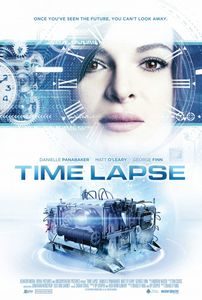
    (Netflix Streaming, January 2017) I tend to become oddly protective of some low-budget films, and Time Lapse is the kind of small-scale SF movie that I want to tell people about. It’s certainly not a perfect film. The limits of the budget are clearly delineated by the few sets, limited cast of characters, indifferent acting and muddy cinematography. But at the same time, it does have quite a bit of charm in the way it tells an unusual time-travel story, based on a camera that can see 24 hours in the future. The intimate but tight script eventually deals with get-rich schemes, artistic inspiration, predestination, curious criminals and intimate betrayals. At the end, it feels like a classic Science Fiction short story that could have been published in the genre magazine at any time since the 1970s—a rather high compliment for a low-budget movie. Writer/director Bradley King cleverly makes the most out of what he has at his disposal, and the result is a pleasant surprise—especially compared to some movies of the same budget/genre. Danielle Panabaker isn’t bad as the secret protagonist of the story, while Matt O’Leary and George Finn are blander as the other main characters. Ingenious, surprising and more finely controlled than many other time-travel films, Time Lapse classifies as a hidden gem. Keep your expectations low and you may be pleasantly surprised.

  • Synchronicity (2015)

    Synchronicity (2015)

    (Netflix Streaming, January 2017) As far as low-budget time-travel science fiction thrillers go, Synchronicity is pretty much an average example of the form. It maximizes its limited budget through a limited cast of characters, a few locations, screenwriting ingenuity and cinematography dark enough to hide plenty of details. Time travel is nearly always a good low-budget SF premise, as the magic of movies allows for big SF ideas on next to no extra investment. The flip side, unfortunately, is that most time-travel thrillers tend to repeat themselves. Weirdness accumulates until we realize that the main character has been meddling in his past and we nearly always have to run through the same scenes twice. Writer/director Jacob Gentry plays the game competently but can’t completely avoid the lowlights of the form. It doesn’t help that the characters are largely stock (the genius scientist hero, the wacky sidekicks, the femme fatale, the corrupt businessman) and that Synchronicity seems very fond of its noir backdrops without quite making the most out of it. At least Chad McKnight is suitably sympathetic as the lead character, with Brianne Davis bringing the heat as the woman who may or may not be an instrument of the antagonist. It’s comfortable, watchable and satisfying without quite going beyond the basics. There are a few better examples of the form out there (Prisoner X, ARQ, even Paradox) if Synchronicity isn’t quite enough.

  • ARQ (2016)

    ARQ (2016)

    (Netflix Streaming, January 2017) As far as low-budget Science Fiction movies go, ARQ is quite a bit better than similar movies. The first SF movie to be released as a Netflix original (having acquired the rights to the film like any other studio), ARQ is cleverly written, professionally directed and features decent actors. The premise stems from familiar guideposts, as a man wakes up to criminals invading his house for money, dies and finds himself stuck in a time loop. But writer/director Tony Elliott then has fun playing with the premise, as someone else joins the protagonist in the time loop and bigger mysteries are revealed. The somewhat bleak ending is divisive (much of it falls into a big plot hole), but the film itself is intriguing, satisfying and slickly executed. Robbie Amell makes for a suitably sympathetic hero, while Rachael Taylor has a more complicated role than what initially appears to be his girlfriend. The result is perfectly watchable despite a small cast, limited locations and low-budget aesthetics. ARQ is even more interesting as a “Netflix Original”, suggesting that the streaming company may be able to inject some good genre original programming in its line-up.

  • Howard Lovecraft and The Frozen Kingdom (2016)

    Howard Lovecraft and The Frozen Kingdom (2016)

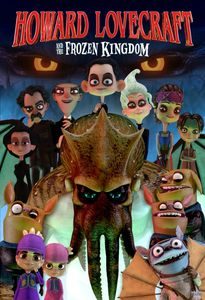
    (On Cable TV, January 2017) A summary of Howard Lovecraft and The Frozen Kingdom either reads like a validation of how geek culture is now mainstream, or a big practical joke. Consider this: An animated kid’s movie in which a young HP Lovecraft travels to another dimension, befriends Cthulhu to become his funny animal sidekick and saves a kingdom from nefarious plans to bring back the Old Ones. Yes, this movie actually exists. Whether your mind is broken or twisted by the revelation is immaterial: Here we are. There it is. It may or may not help to learn that the film is a low-budget Canadian production and that it’s in the lower tier of what’s happening these days in kids’ animated features. Much of the film is clearly dull. The blocky visual design and primitive animation doesn’t have the polish of what’s considered the current standard for computer animation. The story and dialogue are similarly bland, simply moving the action along the lines of a typical kids-fantasy plot with predictable plot points, sidekicks, allies and villains. The bizarre intention to make a children’s film using Lovecraft falls between two chairs: Few kids know Lovecraft enough to care, and the adult fans who enjoy Lovecraft’s antediluvian, loathsome, tenebrous prose won’t sit still for a bargain-basement kids fantasy. (But of course, a substantial number of Lovecraft fans never even tried to read one of his stories.) Howard Lovecraft and The Frozen Kingdom is a remarkable film for the bizarre nature of its premise, but it’s not a good one in terms of execution or moment-by-moment joy of watching. Knowing that it exists is enough.

  • Swiss Army Man (2016)

    Swiss Army Man (2016)

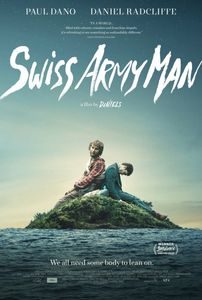
    (On Cable TV, January 2017) I’m the kind of viewer that should be open to weirdness in movies, but that’s not always true and Swiss Army Man clearly shows the limits of what I can tolerate. To be clear, the idea of a man using a farting corpse to escape from a desert island ranks as quirky and faintly cool. But it’s when Swiss Army Man gets deeper into “explaining life as if to a child or alien” that it steps from weird to twee and loses me along the way. By the time the ending of the film attempts to blur the lines between dream-logic and magical realism, imposes some kind of moral conclusion and crafts a magical soaring coda, I have checked out. The film, literally and figuratively spends too much time in the woods for me to care, and it’s not the frank language, candid looks at humanity or piled-upon weirdness that help the film along the way. To be fair, Paul Dano is almost perfectly cast as the protagonist, while Daniel Radcliffe has a terrific turn as a corpse gradually coming back to life while revealing prodigious capabilities. Sometimes, a film’s details don’t matter as much as the way it’s put together, and it’s that overall atmosphere that annoyed me so much about Swiss Army Man. Perhaps I wasn’t in the right mood for twee, or perhaps I’m just far too much of a square to tolerate the kind of questions asked by the film. All I know is that I found the film far less interesting than its hype suggested.

  • The Shallows (2016)

    The Shallows (2016)

    (On Cable TV, January 2017) There is a welcome high-concept simplicity to The Shallows that sets it apart from so many other humdrum efforts. Here, a surfer is injured and stranded on a small island in an isolated bay, with an unusually tenacious shark circling her for food. It sounds like a thin premise even for a 90-minute movie, but the script does have enough in the tank to sustain the film to the end with a minimal amount of flashbacks outside the claustrophobic situation. Blake Lively stars in a film that features her (and only her) for most of its running time—a demanding physical role in which she’s battered, bled, driven to madness and showing a fairly wide range of emotion for a single-location film. Still, the most valued player here is director Jaume Collet-Serra, bringing his usual madness to a script that benefits from his kind of excessive showboating. On-screen text messages are familiar by now, but it’s when Lively is stuck on the rocks that Collet-Serra gets at his best, cleverly establishing a good sense of place before letting loose with a surprising variety of action sequences. The Shallows earns a special place as a minimalist premise maximally executed: It’s quite a bit of fun to watch, and there is seldom a dull moment. The shark makes for an implausible antagonist, but every great movie can use a great villain, so that’s the role it plays. Lively is quite good in a tough role (no wonder she’s emerging as one of the most capable actresses of her cohort—also see what she could manage in The Age of Adaline) and the film’s conclusion is suitably grandiose. The Shallows is a nice surprise find, especially for those who assumed this would be just another shark movie.

  • Open Range (2003)

    Open Range (2003)

    (On DVD, January 2017) I don’t normally have much patience for westerns that last two hours and a half, and there’s no denying that Open Range could have benefited from a more aggressive editing pace. Still, this is a Kevin Costner western, and after Dances with Wolves and The Postman, we all know what that means: Expansive vistas, rough-hewn charisma from its stoic hero, tepid pacing and melodramatic filmmaking. Open Range is in-line with his earlier work: good without being perfect, with enough old-fashioned charm that should appeal to an older audience. Costner gets to play his own archetype, but the film’s standout role has to be the “Boss” played by Robert Duvall: the saving grace of the film’s 139 minutes is having the chance to hear Duvall crunch down on folksy tough dialogue, the kind of which we easily could have used fifteen more minutes. Otherwise, there’s a refreshing realism to the way the story evolves, with casual violence when necessary, an unforgiving environment and tough guys trying to keep what’s theirs. There’s even a grown-up romance thrown in the mix, and it doesn’t feel too out-of-place. Open Range may not sound particularly exciting on paper (or in the middle of the two hours and a half), but some of its moments stand out, including a gritty gunfight where we can honestly fear for at least one character. Not a bad choice, not a bad western.

  • The Girl on the Train (2016)

    The Girl on the Train (2016)

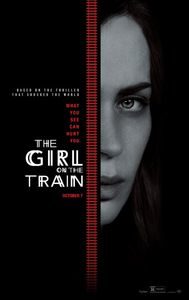
    (Video On-Demand, January 2017) Anyone looking for a dark thriller should be pleased by The Girl on the Train, but I don’t think anyone will remember it six months later. The story of a damaged woman who is revealed to be embroiled in a complex web of obsession, abuse and guilt, this thriller has so much fun raising all sorts of false leads and dark portents that by the time the conclusion comes, it’s almost a linear let-down. Still, Emily Blunt brings a studied vulnerability to the lead character, and the film doesn’t settle for any easy hero/villain classification when even the protagonist suspects herself of being a murderer. Events get impressively twisted in the second half, with the gloomy cinematography not helping lift the sombre veil hovering over the film. Unfortunately, the pile-up of memory games and criss-crossed relationship eventually blurs into a gray fog—much like the blacked-out drunk heroine, it’s a challenge to explain the plot even a few days after seeing the film. For that reason, I expect that The Girl on the Train won’t have much of a long shelf life other than being an adequate watch-and-forget thriller. It could have been worse but, on the other hand, there’s no use trying to compare this with Gone Girl or other better thrillers of late.

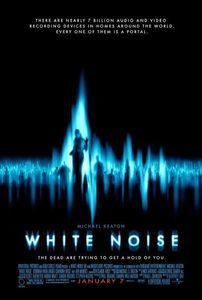
  • White Noise (2005)

    White Noise (2005)

    (On Cable TV, January 2017) For such an underwhelming horror movie, White Noise does have the distinction of an unnerving trailer—a trailer so good, in fact, that it managed to make me seek out the film even twelve years later. This being said, let’s be honest: Critics savaged this film upon release, and time hasn’t been kind to it since then. For all of the energy and sincerity that Michael Keaton can bring to a character fascinated by supernatural electromagnetic phenomena, White Noise has a far better premise than what it can limply show on-screen. Far too often settling into familiar horror clichés, this is a film with few surprises in store, starting with the tired “communicating with the dead brings back evil spirits”. The mythology of the film is muddled, and there’s a far too arbitrary nature to the script as it manipulates its protagonist toward a specific third act. From a promising beginning, White Noise gradually loses its effectiveness to the point when its tragic ending only elicits a shrug. Too bad—but the trailer (which doesn’t feature much footage from the movie) still has a kick to it.

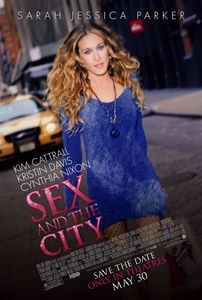
  • Sex and the City (2008)

    Sex and the City (2008)

    (On TV, January 2017) You could retitle Sex and the City as “Wish Fulfillment for Middle-Aged Women: The Movie” and I’m not sure it would be entirely dismissive. But I’m being too harsh: I’m not in the target audience for the series to which this is a follow-up, and even I have to admit that there is a contagious enthusiasm to the movie’s most entertaining moment. Shopping, trips, contentment and inner peace—what’s not to like, even though the details may differ? Watching this as someone with only the barest knowledge of the TV show (to the point of: “Wow, I did not expect that much sex/nudity in a movie called Sex in the City!”) is strange—while the film doesn’t forget to have a plot, it’s often bare-bones in the way it presents its characters or moves them through the motions of their dramatic arc. There are lengthy digressions simply to scratch the wish fulfillment of its audience. It boldly sets off to hyper-consumption for no other reason than it can do so. And yet, and yet … it works. It’s a good time. It’s the kind of movie that reassures you that there is good in the world, even though it may be more easily attainable with a credit card with a ludicrously high limit. Sarah Jessica Parker is very likable in the main role despite odd script-dictated behaviour, and Kim Cattrall remains the most interesting of the three other main cast members, while Chris Noth remains the ultimate Mr. Big. Sex and the City may be a wish fulfillment film, but then again so are most big-budget movies—and for some strange reasons, few movie critics ever mention how we should be dismissing action films as power fantasies of seeing average guys shooting terrorists in the head to save the world/wife/kids. From that perspective, Sex and the City is a welcome complement.

  • The Accountant (2016)

    The Accountant (2016)

    (Video On-Demand, January 2017) “Jason Bourne meets Rain Man” is just about the laziest way to describe The Accountant, but it sort-of-works at explaining the high concept at the heart of the movie—an autistic man officially working as a top-notch accountant who happens to be unusually skilled at assassination. Cue the complications. Ben Affleck is surprisingly effective as the titular character—it takes a lot of charisma to make an affectless character sympathetic, and it works for him. Anna Kendrick is cute enough in a generic role, but the film sort of loses interest in her character after a while, leaving her more or less out of the third act and never making her a love interest. There is a quirkiness to The Accountant that’s not to be dismissed—after all, how many movies manage to make forensics accounting seem thrilling? But as an action thriller, it’s more or less forgettable once we’re back to the action classics of guys shooting at each other. The distinctiveness of the film is found in their quieter moments, even though the treatment of autism is old-hat by now. There are a few plausibility problems in how a wandering assassin (ready to move away at a moment’s notice) could sustain a living in a profession such as accounting, but never mind—from the premise on, it’s obvious that The Accountant isn’t meant to take place in reality. It does offer a new (ish) kind of hero, though, and that’s already more than most other big-budget thrillers these days.

  • Ich seh ich seh [Goodnight Mommy] (2014)

    Ich seh ich seh [Goodnight Mommy] (2014)

    (On Cable TV, January 2017) I had reasonably high hopes for Austrian horror film Goodnight Mommy—positive word of mouth had this one pegged as a worthwhile import, to the point where I was looking forward to its appearance on the cable TV movie channel’s schedule. Unfortunately, the film doesn’t measure up—and it may not be a case of hype exceeding the content as much as the film itself being repellent and confused. Something is up from the first few moments of the movie, as two twin boys suspect that something is wrong with their mom as she comes back from surgery with her face bandaged. But, as it turns out, this is a misdirection of what’s really wrong here… For much of its first two thirds, Goodnight Mommy plays as effective and intriguing low-budget horror—three people isolated in a big modern house, slowly suspecting themselves of the worst. The film then veers off in a very different and repellent direction once it turns the tables and makes the twin boys as sadistic villains—it leads to a torture scene that almost unbearable to watch. (And, in a real-life darkly amusing twist, my non-horror-fan wife walking in on the scene with me being unable to defend the film’s rapid descent in bloody torture horror.) Then it’s a rapid sprint to a downbeat ending in which the film obliquely resolves itself, explaining [what] was [what] the whole time and leaving a few mysteries open that I don’t really care to explore. I’ll admit that the torture scene is effective—if only because it plays differently (and more viscerally) than in most horror films that relish goriness: by this time in the movie, the characters have been well established, and what happens between them carries some dramatic weight. On the other hand, too far may be too far, and there’s no law forcing me to like what happens at that time. I certainly can see the resemblance between this and The Babadook: the grief, the perspective-switching, the importance of the mother-and-son dynamic … but there’s no contest in my mind as to which is the vastly superior film … and it’s not Goodnight Mommy.

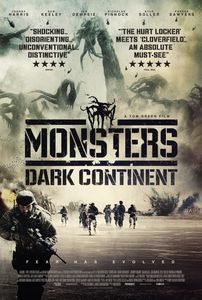
  • Monsters: Dark Continent (2014)

    Monsters: Dark Continent (2014)

    (On Cable TV, January 2017) What a disappointing follow-up to a quirky breakout movie. Monsters wasn’t perfect, but it had great scenery, an interesting take on the alien invasion theme and a low-budget charm. This sequel, which abandons the dynamics of a couple’s trek in favour of a desert-bound military thriller, is just … dull. It doesn’t look too bad, but it’s simply boring in ways that its premise suggests it shouldn’t. Domesticating the alien means that deadly threats are reduced to a beautiful light show, and the story doesn’t seem to go anywhere. The links to the original film story are tenuous (same creatures, different part of the world but the background information doesn’t seem to hang together) but whatever story is put forward in this follow-up doesn’t go beyond the usual Iraq war movie clichés. The aliens are barely part of the plot. It doesn’t amount to much either, barely pushing the first film’s mythology forward and even regressing in some ways on the “alien as infection” angle. The only actor of note here is Sofia Boutella, showing up briefly to save the film from an excess of testosterone and being distinguishable from a cast that largely looks the same. While it’s possible that Dark Continent may be after the same themes of futility and hopelessness engendered by the American experience in post-liberation Iraq, there’s very little depth and even less interest in the result. File this one under “DTV sequels to avoid”.

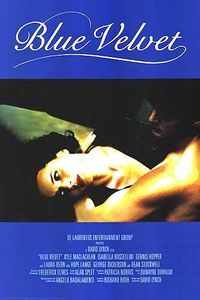
  • Blue Velvet (1986)

    Blue Velvet (1986)

    (On Cable TV, January 2017) I have resigned myself to the fact that David Lynch and I will never enjoy a harmonious filmmaker/moviegoer relationship. Case in point: Blue Velvet, often acclaimed as one of his most representative films and almost a bona fide classic thirty years later. For all of my good intentions and Blue Velvet’s overall accessibility compared to other Lynch films, I found myself watching the film in a fairly detached manner, unwilling to try to make too much sense of it given the quicksand trap examples established by his other movies. I’ve never been particularly eager to play the mind games of Lynch’s movies, and found that my best viewing mode for them is purely contemplative, not expecting the plot to make sense. Even in that state, though, I have to admit that Dennis Hopper’s performance is ferociously good: His character, all id and swagger, thunders on-screen and has his way with characters like a tornado. We can only, like the film’s protagonist, watch in awe and hope that he doesn’t notice us. Blue Velvet has, at its core, a long sustained sequence of abuse and voyeurism that can’t easily be forgotten. It’s by far the standout segment in a film dealing with crime and violence in a small town. Kyle MacLachlan is fine as the viewpoint character and Laura Dern does have a few good moments (in-between this and Wild at Heart—perhaps my less-disliked Lynch film—, a substantial part of her best filmography owes much to Lynch) but it’s Isabella Rossellini who earns her acting acclaim in this film as Hopper’s souffre-douleur. It makes, in typically Lynchian sense, for a big surreal ball of moviemaking, although I note with some comfort that there is a level of superficial understanding here that’s not necessarily possible in other more enigmatic Lynch films. When I say that Blue Velvet ranks highly among Lynch’s best films, keep in mind that I’m grading on a curve.

  • Brick by Brick: How Lego Rewrote the Rules of Innovation and Conquered the Global Toy Industry, David Robertson and Bill Breen

    Crown Business, 2013 (2014 reprint), 320 pages, C$23.00 hc, ISBN 978–0307951618

    You may think that Lego (the brick, the toy, the brand!) is as eternal as anything else. After all, the Lego brick has existed in its current form since 1958, and we’re now seeing fourth-generation Lego fans putting together their first Duplo sets. Thanks to the movies, the videogames, the omnipresent sections in Wal-Mart, Toys-R-Us and every single other toy retailer, Lego appears permanent, immutable—a comforting island of stability in our ever-changing world.

    But hang around Lego-related forums long enough, and you will hear a variation on the following story:

    In 2003, Lego was six months away from bankruptcy. They’d brought in some MBA CEO to boost profits, but they didn’t know what they were doing and started doing things that weren’t even related to Lego. They had so many different pieces that they sold sets for less than they cost to make. So they booted out the CEO, got back to their roots and Lego became profitable once again.

    (A more detailed account can be found on/r/lego/)

    It’s a nice story. But it’s never mentioned in official hagiographies such as Dorling Kindersley’s The Lego Book. It’s barely mentioned in more generalist overviews such as A Million Little Bricks: Even in so-called histories of the company, people would rather read about the fun factor of toys than be serious about how Lego lost its way and almost went out of business.

    That’s too bad, because there’s a big box of lessons to be learned from Lego’s near-death experience. It’s a complicated story (far more than the above tidy summary may suggest) with elements of irony, comeuppance, resilience and cognitive breakthroughs. Fortunately, David Robertson and Bill Breen took it upon themselves to dig deep into Lego’s recent corporate history and tell us about it in Brick by Brick.

    So here’s the longer summary of the story of Lego’s near-death experience: In the late nineties, after a bad 1998 in which Lego posted its first-ever losses, the company took a look at the state of the toy industry and got very worried. Experts were telling them that with the rise in videogames and the shortening of childhood, physical toys such as Lego were doomed to irrelevance. Boys wouldn’t want to play with bricks to build stuff in a creative way: they wanted immediate gratification, stories and game-inspired play. So Lego did what nearly every reasonable business does: it followed the experts and bought heavily into the innovation mantra. They decided to launch several major game-changing projects at once. In doing so, they de-emphasized the Lego brick in favour of action figures, videogames, and simpler construction sets.

    It didn’t work. Fans rebelled against the Znap, Primo, Scala and Gallidor lines. The first videogame went nowhere. Lego bet big on Star Wars and Harry Potter sets in a year when new movies in those series weren’t even released. Toy retailers told Lego that the company was arrogant, didn’t listen and didn’t know their own business as well as the people selling Lego sets. A financial study of the company showed that Lego itself did not know how much its playsets cost to make, and that its parts inventory was unmanageable. By 2003, compared to traditional investments, the company had lost “half a million dollars per day, every day, for ten years” [P.68]. While “six months to bankruptcy” is nowhere to be found in Brick by Brick, there’s a passage making it clear that within months, the company was expected to be sold to a larger toy manufacturer: “We didn’t know if we would make it through the year.” [P.99]

    But then something remarkable happened: Lego started facing up to its own problems. A relatively new hire from the world of management consulting, Jorgen Vig Knudstorp, was tasked to write a report on the problems faced by the company and then, in an improbable twist of fate, was named as co-CEO during the difficult period in which corrections were made. Things did not get better overnight—Lego had to eat a lot of crow in the years following its transformation. Innovative projects were scrapped; assets were sold; people were fired. Traditional Lego strengths, such as its perennial “City” sets, were brought back to the spotlight. Star Wars and Bionicle sets, which kept the company going even during the worst years, taught the company lessons that it hasn’t forgotten.

    The aftermath made Lego into the company it is today: It started listening to its retailers, bolstered relationships with adult fans who made an increasingly big part of its business (hence the modular Creator sets that have become essential purchases for AFOLs), made a multimedia strategy template on which its own new franchise could be launched (e.g.; Ninjago, Chima, Nexo Knights), learned how to best invest in videogames and yet managed to keep a wholesome atmosphere around the company.

    AFOLs should be forewarned: This is primarily a business book rather than a book by/from Lego enthusiasts. The authors are business experts and academics—they are not fans or bloggers and there’s a nakedly didactic intent to much of the book. In classic business-literature style, every chapter is neatly structured so that it begins by telling you what it’s going to be about, details its main idea, and then wraps up by repeating once again what the chapter was about. This is a style suited for harried executives looking to quickly extract business lessons from the book rather than for casual readers. It may annoy those who aren’t necessarily used to this form. On the other hand, Brick by Brick is pretty good on the details of Lego—there are only a few places where the text doesn’t feel quite right while still being factual, almost as if the authors were speaking with a slightly different accent that the one shared by Lego fans.

    From a strictly business perspective, the message of the book is a refreshing change of pace: Robertson and Breen’s big takeaway is that innovation has to be managed, and that it should remain a complement to the company’s core activities—Lego being renowned for its bricks, anything that challenged the brick should have been seen as a bet and treated accordingly. For businessmen reading the book, the lesson seems to be “innovate cautiously”: don’t launch yourself in every direction. Listen to your employees and stakeholders. At a time when galloping Internet innovation fever is finally calming down, it makes for a relevant message.

    It’s also worth noting that as much as the slightly longer story of Lego’s near-death experience is more nuanced than the capsule summary told in Lego forums, Brick by Brick does impose a sometimes disjointed narrative on a messier set of events. Robertson and Breen want to sell you their experience and their view on the events, but those are sometimes undermined in the text or by events following the release of the book. Much is made about Bionicle, for instance, and how its approach to building a franchise original to Lego saved the company—while ignoring that Bionicle alone accounted for a sizeable portion of Lego’s ballooning part inventory problems. (Today, Bionicle remains a semi-active footnote in Lego history—few of the parts developed for that theme are still used, even though it led to further “buildable action figures” sub-themes.)  The authors spend a lot of time talking about Lego’s revolutionary entry in board games as the next big thing … except that by 2016–2017, Lego board games are already a mere footnote in Lego history.

    (It’s not the only subsequent development that the authors missed, albeit of no fault of their own. One of the biggest stories of Lego’s past five years, for instance, has been the introduction of the “Friends” and “Disney Princesses” lines aimed at girls: sets just as challenging as anything produced for boys, but made of vivid colours, featuring more attractive mini-dolls and backed up by a strong story component, reflecting the slightly different way girls play compared to boys. Speaking Legolese, I am a confirmed Friends fan, and not just because it’s an essential complement to City’s overemphasis on cops-and-robbers sets.)

    Such contradictions and blind spots are why Brick by Brick’s conclusions and sequence of events are often to be taken with some skepticism. Far more interesting are the facts of Lego’s bad years and the journalism work that was required to interview enough Lego employees to be able to present such a complete overview of the events. I’ve been reading a lot of Lego books lately, and none have delved into this topic as comprehensively as Brick by Brick. While the book’s business aesthetics can be annoying, while their story often structures itself out of shape in trying to support its unifying theory, while it feels incomplete given the past five years in Lego history, it’s nonetheless a book worthy of a spot on any serious Lego fan’s bookshelf. If nothing else, it will make you appreciate even more the place that Lego occupies in the mind of anyone who’s ever played with those building bricks … and what it takes to stay a permanent reference for  generations.