Reviews

  • No Country For Old Men (2007)

    No Country For Old Men (2007)

    (In theaters, November 2007) One of the least-useful conflations out there is the idea that familiar genre structures go hand-in-hand with inferior work. That ignores the lengthy tradition of genre storytelling, the centuries of experimentation to find out that yes, audiences are happier when the story ends with a nice bow and flourish. Mess with these expectations at your own peril and cranky comments. So it is that for 90% of its duration, No Country For Old Men is crackling crime drama film-making, up to the Coen Brother’s own best standards. The pace is measured, the story takes interesting twists and turns, the cinematography is almost perfect and the characters are interesting enough. As one character tries to escape with a suitcase full of money and an implacable killer decides to grab the loot for itself, there are a few terrific suspense scenes, and the film itself is simply mesmerizing. But then there’s the ending. In an effort to stick as closely to the Cormac McCarthy novel as possible, the Coen Brothers deliberately send the film spinning out of control, leaving the plot threads dangling loose as the conclusion dissolves in ever-less-relevant scenes. There are several points at which the film would have been better had it stopped there: hope for equipment malfunction at the right moment. Which is a shame, because otherwise No Country For Old Men ranks as of the the better Coen films. Oh well; nothing perfect.

  • Michael Clayton (2007)

    Michael Clayton (2007)

    (In theaters, November 2007) When a top lawyer comes to realize that he’s working for evil and evil starts hitting back, it’s time for the fixer to take care of himself. The plot summary may sound like a thriller, but the title suggests otherwise: Everyone in this film is flawed, and that includes the titular fixer with problems of his own. Character study? Oh yes. But that’s not all: George Clooney has been going some pretty cool things on both sides of the camera lately, and this soft-paced, elliptically told film finds a place alongside other socially-conscious films like The Good German and Good Night And Good Luck in telling tough stories about today’s world. Clooney’s performance is enjoyable (the monologue he gets at the end is terrific), and reinforced by good supporting turns by Tom Wilkinson as a unhinged motormouth manic-depressive and Tilda Swanton as an executive clinging to self-control. What doesn’t work so well are a few coincidences, some redundant time-shifting and a well-controlled pace that doesn’t seem interested in hurrying up. Nonetheless, it’s an entirely respectable film, and another one of those recent thrillers where even rampant cynicism can eventually allow a glimmer of hope.

  • Lions For Lambs (2007)

    Lions For Lambs (2007)

    (In theaters, November 2007) The particularity of this film isn’t as much in what it says that in how it says it. Sure, this is one of the boldest examples of 2007’s crop of movies asking “that war in Iraq wasn’t a good idea, wasn’t it?”, but the way it reflects upon the past few years is what sets it apart. While the trailer promises an action/adventure survival thriller partly set in Afghanistan, this aspect ends up forming a thin slice of the film, most of which is spent in a pair of conversations. First up is an interview between a journalist played by Meryl Streep (atoning for her turn in Rendition) and an unctuous senator played by Tom Cruise. The second conversation takes place between an ageing university teacher (Robert Redford, who also directs) and a student played by newcomer Andrew Garfield. Both conversations are battles for the souls of the people involved: Cruise is terrific as a senator selling a political stunt as a bold policy proposal, and gets one of the film’s best moments as he thanks the media for being complicit with government policies. Streep ends up being the one in the hot seat as she has to wonder where her ethics have gone. Meanwhile, Redford is trying to shock his student into doing something worthwhile with his life, with direct resonance for the audiences of the film. The give-and-take between the actors is good, and one could easily see this script being adapted for the stage theatre without much trouble. But as good as the dialogue is, Lions For Lambs falls short as a piece of cinematic entertainment: The static nature of the film isn’t patched by the tense Afghanistan segments that tie the two other conversations together. Those who enjoy a bit of philosophical discussion and talking-head films will get a kick out of the film, but audiences unwilling to play along may be bored out of their skulls. Still, it’s an unusual film, top-heavy with acting talent, and it finds a neat place in the national discourse. At a theatre otherwise dominated by Fred Claus and Bee Movie, that’s already not bad at all.

  • Soon I Will Be Invincible, Austin Grossman

    Pantheon, 2007, 287 pages, C$29.95 hc, ISBN 978-0-375-42486-1

    Superhero revisionism is in. Which is in keeping with the times, really: Following the success of the first X-Men movie in 2001, superheroes jumped from the comics page to mass pop-culture consciousness, leaving open the door for reinterpretations of the concept from the execrable MY EX-SUPERHERO GIRLFRIEND to the instant-classic THE INCREDIBLES. But true superhero revisionism waits for no movies, going back to Allan Moore’s Watchmen and Robert Meyer’s Superfolks, if not earlier to DC’s own self-parodies. Austin Grossman’s Soon I Will Be Invincible is the newest brick in that particular wall.

    I’m not going to go over the plot: Once you know that it’s going to be a superhero novel, you can guess that this will boil down to the classical ur-plot about a madman taking over the world.

    But what Grossman tries to do here is to meld the sensibilities of hip mainstream fiction with the kind of overblown plotting we usually in superhero comics. Alternating between the viewpoints of super-villain Doctor Impossible (he’s not evil, just deranged) and super-heroine Fatale (she’s not just cannon-fodder, honest), Soon I Will Be Invincible takes the superhero world as given and then tries to make it sound credible.

    Which isn’t the same thing as parody. In fact, one of the novel’s best feature is how it works both as a pastiche and a homage, depending on the baggage you bring to the book. Those who already find superhero comics to be the dumbest sub-genre on the face of the planet will find plenty of ammunition for their disdain here; others with a forty-dollar-a-week habit at the local comic book store will just enjoy the book as a prose version of their favourite stories. Everyone in-between will be able to find some satisfaction in Grossman’s work.

    Certainly, the prose style is amusing enough to make this book a fast read. Both characters are an excellent excuse to explain the super-hero world in all of its unsavoury details. Being a super-villain isn’t as much fun as one would assume, and being converted from an ordinary woman to a super-powered cyborg carries along its slice of psychological trauma.

    For comic-book fans, part of the fun is in finding where Grossman’s mythology is meant to intersect with existing superhero canon. Superman, Batman and Wonder-Woman are predictably easy to spot, but don’t think that this is just a JLA story under a new name: Grossman’s modified mythology allows him to have more fun that could have had if he had set out to write a straight parody. Doctor Impossible’s biography is crammed with the kind of eventful memories that can only result from a monthly publication schedule, but trying to map a specific Marvel/DC super-villain to his past isn’t helpful: He’s an archetype for all super-villains, including the usual grandiose plots and unnerving escape abilities.

    Fatale, on the other hand, is a far more specific superhero, a superhuman cyborg with a shady past that too-conveniently turns out to be related to the matter at hand. Her role isn’t as active as Doctor Impossible, and it’s partly because she doesn’t work alone: Through her viewpoint, we get to learn all about “The Champions”, the team of superheros trying to track down and stop Doctor Impossible before he does take over the world. It’s a lively bunch, especially when past squabbles keep bubbling to the surface.

    Unfortunately, Grossman’s approach carries along it own problems. The structural decision to go back and forth between Doctor Impossible and Fatale is often problematic, especially at the end of the book where a more sweeping perspective on the climax would have been more helpful. Instead, Grossman has to cut his chapters more closely, which results in a conclusion where we almost miss what’s happening. Another problem is that Doctor Impossible’s viewpoint is generally more interesting than Fatale’s characters, which doesn’t sustain the pacing of the novel very well. On the other hand, Doctor Impossible often sounds annoyingly emo, in a whiny “I was beaten up in school; I will take over the world” fashion. Through a powerful message against bullying, it does smack of an easy rationale for turning irremediably evil.

    (On the other hand, Grossman’s integration of technological, noir and fantastical elements reminded me that comic-book superheroes may have been the first and dominant form of slipstream, or genre fusion, for decades now. Now that’s an insight I wasn’t expecting from a comic super-hero romp.)

    But little of that matters in the novel itself, which is fun and hugely enjoyable to read. It may not be as good as it could have been, but it’s still a terrific piece of entertainment for anyone with any awareness whatsoever of the rules of super-hero stories. Which, given the resurgence of such movies, may very well be all of us by now.

  • Gone Baby Gone (2007)

    Gone Baby Gone (2007)

    (In theaters, November 2007) It’s become fashionable to beat up on Ben Affleck for poor career choices, but this adaptation, co-written and directed by Affleck, should mark the end of that particular fad. It’s not a particularly memorable film, but it’s quite good at it what it tries to do, and it does try to do difficult things. It starts like many other crime thrillers: someone has disappeared, and someone else is hired to find them. But the story, adapted from Dennis Lehane’s novel, quickly starts picking at sensitive issues with a story about children abuse, what parents should be, and how to atone for past mistakes. The story takes unexpected twists and turns, only to end on a choice without happy alternatives. The ending is more thoughtful than conventionally satisfying, but at least it clearly shows its cards early on, and as such doesn’t betray the intent of the film. The direction doesn’t call attention to itself, but does well in presenting the story simply and without a fuss. The only exception are the action scenes, which show more confusion than skill. But the rest of the film is pretty good, although Michelle Monaghan’s role seems underwritten given its place in the plot. Not a classic, no, but definitely a film that will remain with viewers a while longer than most of what’s out there.

  • Beowulf (2007)

    Beowulf (2007)

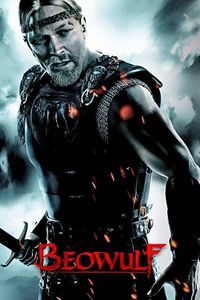
    (In theaters, November 2007) Hollywood can make dumb mincemeat out of everything, and classical English literature is no exception. High School teachers everywhere will be devastated to see one of their favourite form of Olde Englishe torture defanged forever by an adaptation that reaches for low comedy, high action and cheap 3D effects. That last item, incidentally, is why the movie is best seen on an IMAX 3D screen: Director Robert Zemeckis is so naively obsessed by the technology that he crammed his film with arrowheads, spires and people being flung at the (virtual) camera, all of which look silly on a regular 2D screen. But they’re far from being the silliest element of a film that borrows from Austin Powers in order to present a naked hero fighting a monster. Yet little of this is as annoying as the not-quite-there quality of the CGI actors, which suffers from the Uncanny Valley cliché as they stutter without grace from one mo-capped pose to another. Pieces of the second Grendel battle are so jerky that they look like a deliberate homage to Harryhausen stop-motion claymation. But if we’re going to list all of the bone-headed ideas of this film, we’re going to be here a while: What about Angelina Jolie’s kinda-naked scene, complete with high-heeled feet and Transylvanian accent? Perhaps the biggest disappointment of the film is the way John August and Neil Gaiman’s script ends up feeling silly, clumsy and forced: Their intended mythical gravitas ends up swept under the carpet of a generic fantasy film with 3D effects. The only enjoyable part of the film comes late, as the elderly Beowulf fights off one of the finest dragons yet seen on-screen: the action beats are numerous, well-designed and completely thrilling. But then the 3D effects kick in again, and the film flops on a series of meaningful glares that leave us uncertain as to whether the film was supposed to be a comedy or not. In any case, it’s miscalculations upon miscalculations for a film that has more value as a technical showpiece than an actual plotted story.

  • American Gangster (2007)

    American Gangster (2007)

    (In theaters, November 2007) Sometimes, it’s a relief to watch a film and realize that it’s made by professionals for a wide audience. This dramatic biography of 1970s-era drug kingpin Frank Lucas may take a few liberties with the truth (read the original article to spot a few of them), but it’s a slick piece of cinema that never feels too long despite clocking in at a touch more than two and a half hours. Chief among the film’s assets is the unflappable Denzel Washington, always the coolest guy on-screen despite the strong presence of Russell Crowe as his policeman antagonist. Washington is so compelling that it’s hard to think of him as a bad guy, even as he shoots people in the forehead or beats an associate with a piano. The other big star of the film is the period re-creating of early-seventies New York, completely convincing even as it avoids flashy set-pieces. American Gangster deserves its iconic title, and if the result isn’t quite up to Goodfellas or Scarface, it’s close enough to warrant a passing comparison. Without insisting on it, it actually portrays a thick mess of police corruption, criminal economics, easy racism and power relationships. The careful construction of the story makes it irrelevant that the two lead actors don’t meet face-to-face until a few minutes before the end: few moments are wasted along the way. While I’m not sure that the film will sustain multiple viewings as the other best-of-class movies in the gangster category, it’s good enough to deserve at least one good look.

  • Lost Light, Michael Connelly

    Little Brown, 2003, 360 pages, C$36.95 hc, ISBN 0-316-15460-1

    Many readers expected things to change with Michael Connelly’s newest Harry Bosch novel. Bosch, after all, resigned from the police force at the end of City of Bones, and having him investigate anything without official support would be a break from Connelly’s well-oiled police procedural mode. But Bosch fans may not be ready for a far more dramatic change: Having Harry narrate his newest investigation.

    That’s right: For the first time, we get into Bosch’s head, and it may be a bit too close for comfort. It’s not the first time Connelly has shown us his best-known detective through another viewpoint: In A Darkness More than Night, Harry appeared filtered through the perception of another investigator and the result was a far scarier Bosch than usually portrayed by the sympathetic third-person narration.

    But this first-person POV allows no distance between what Harry thinks and what he does, and the result is perhaps a bit too revealing. Bosch, after all, is a taciturn introvert. His thoughts and his actions often differ dramatically. Who would expect one of mystery fiction’s great tough guys to say:

    “I am fifty-two years old and I believe it. At night when I try to sleep but can’t, that is when I know it. It is when all those pathways seem to connect and I see the people I have loved and hated and helped and hurt. I see the hands that reach for me. I hear the beat and see and understand what I must do. I know my mission and I know there is no turning away or turning back. And it is in those moments that I know there is no end of things in the heart.” [P.3]

    But let’s give Harry a break: After all, he’s retired. At the beginning of Lost Light, he takes on a private investigation out of boredom and a sense of unfinished business. Years before, Harry investigated the murder of a young woman and never solved it: now he wants another crack at the case. But unsolved mysteries have a history of blossoming into complex and unpredictable adventures for Harry, and this case in no exception. Before long, we’ve touched upon the movie industry, money counterfeiting, covert video surveillance and that newest gadget in the mystery toolbox: homeland security.

    Harry, of course, is working without official protection. He may bluff his way around like a veteran policeman, but he’s on thin ice and that never gets more obvious than when the FBI decides to rough him around after too many impertinent questions. From the guy who books criminals, Harry finds himself in a holding cell at a place that is barely officially acknowledged. He doesn’t appreciate the experience, and few things could have highlighted the added difficulties of operating without a badge.

    As far as Connelly whodunits go, Lost Light is a capable entry in the Bosch series, ending with a spectacular shootout the likes of which we have rarely seen in the series. It does seem to suggest a transition of sorts for Harry, who may or may not go back to the uniformed life after a while on the civilian side. Bosch, as has been obvious since the first Connelly novel, distrusts authority but can’t operate outside a hierarchal structure. Add to that the difficulties in dealing with his ex-wife, and there’s still plenty of juice ahead for dramatic complications in Bosch’s life.

    After the disappointing City of Bones, Lost Light feels like a better-controlled novel and welcome evolution in the Bosch saga. I’m not sure that the P.I. model is sustainable, but Connelly is able to play upon a few crucial differences in Bosch’s status as a retired cop and that brings an added layer of interest in this particular investigation. Harry as a narrator is a risky conceit, but the Michael Connelly Reading Project (“one book by month, until we’re done”) is proceeding apace. Who knows what surprises await Harry in the next novel?

  • The Quorum, Kim Newman

    Pocket, 1994, 311 pages, £4.99 mmpb, ISBN 0-671-85242-6

    It takes some skill in which to write a satisfying horror novel in which no one dies.

    (This isn’t a spoiler as long as you remember that there are fates worse that death.)

    Most people, after all, entertain a vague idea of karmic retribution: Do good, and good things will happen to you. But what if, through supernatural intervention, this wasn’t true? What if the persecution of a specific person could ensure success and happiness? If you’re intrigued by the idea, mull on this: What if you were the persecuted person?

    Such is the Faustian bargain at the heart of The Quorum, a wholly unconventional and unnerving horror novel from Kim Newman. At times, it looks as if the unpredictable Newman excels at everything he does, and it’s not The Quorum that will diminish his consistently brilliant reputation. It works as a horror novel, as a time-capsule of Britain between the sixties and the nineties, as social satire and as a mesmerizing page-turner.

    From the second chapter (past a creepy prologue introducing Derek Leech, the game-player behind the scenes of this novel), we understand that things aren’t right. As three childhood friends spend their time talking about a schoolmate’s bad luck, we’re led to understand that there is a connection between all of them. And so the first section of The Quorum describes how four friends meet at a boarding school, go through the usual trials of an English education, and end up splitting up on a winter night. One of them is left in a car; the three others as seduced in making a chilling deal with Leech: success against misery. Their success, their friend’s misery.

    There are rules, but the intent is horrifyingly simple: As long as their friend suffers, the three other men will succeed. As the book begins, one’s a comic-book artist, another is a television star and the third one is a well-regarded novelist. (Some resemblance with Newman’s contemporaries may not be accidental, but is definitely not mean-spirited.) Meanwhile, their victim struggles through life after disastrous romantic affairs, a series of mysteriously terminated jobs and a higher-than-average run of bad luck.

    One of The Quorum‘s best aspects is how it naturally leads to a contemplation of luck and the flow of lives. The little accident that lead to big decisions, the small inflexion points where someone could play dirty tricks. The ways in which another person’s life can be made unbearably miserable.

    This having been established, The Quorum moves into another phase as the more supernatural elements of the tale are revealed. Derek Leech is a devil with a purpose, and his victim-by-proxy has a specific place in his plans. But is it possible to torture someone eternally? What happens when there’s no more suffering to extract?

    The last section of The Quorum is dramatically weaker than the other ones: The conflicts have been more or less settled, all that’s left is retribution. How quickly can success turn sour? And yet, through this triple descent into madness (literally, in most cases), it’s Newman’s wit that holds the novel together. It’s seldom been more fun to see deserving people fall from grace. In fact, Newman does it so well that we can’t help but feel a bit of compassion for the new victims, regardless of their absolute cruelty in the first sections of the book.

    While the English cultural references can fly thickly, The Quorum remains a deceptively smooth read, with a surprising amount of narrative momentum given that the dramatic apex of the book takes place two-third of the way through. After an initial muddle of “M”s, all characters are clearly defined and go through their own dramatic arc. There’s even a solid romance to sweeten the whole book, and a happy ending for some.

    This isn’t your typical horror novel, and it’s definitely more successful because of it. At time vertiginous in the way it deals with lives and luck, The Quorum is yet another example why Kim Newman remains a solid choice despite a body of work that seems to sprawl everywhere.

    (Sharp-eyed readers will even spot that Derek Leech narrates another of Newman’s book, Life’s Lottery. The links between the two novels aren’t accidental, although Life’s Lottery places the reader in the position of the torturer who makes the choices manipulating the book’s protagonist for simple entertainment.)

  • The Rising and City of the Dead, Brian Keene

    Leisure, 2004-2005, ??? pages, C$??.?? mmpb, ISBN Various

    The Rising: 2004, 321 pages, C$8.99 mmpb, ISBN 0-8439-5201-6
    City of the Dead: 2005, 357 pages, C$8.99 mmpb, ISBN 0-8439-5415-9

    One of my goals in attending the 2007 World Horror Convention in Toronto was to learn more about the field of horror, and to which authors I should pay attention. As it turned out, one of the most interesting panels of the entire convention was a round-table discussion about zombies starring writers such as David Wellington and Brian Keene. Wellington’s work still awaits in my stack of books to read, but if it’s anything like Keene’s debut novels, I’m in for a treat.

    At first glance, there’s not much to distinguish The Rising from other traditional horror fare: Evil has escaped, the dead are coming back to life and the survivors must band together against evil. We’ve seen this story before.

    But we haven’t seen it quite like Keene had in mind. Because Keene has seen those movies. He’s read those books. He’s familiar with those clichés. So what we get is a self-aware, hyped-up take on zombie mythology. Keene has been credited with part of the recent resurgence in zombie horror, and The Rising‘s full-throttle forward drive shows what a clever writer can go with that material.

    It helps that there’s a strong plot-line at the heart of the story, beyond the usual “civilization falls!” atmosphere. In The Rising‘s first chapter, Jim Thurmond receives a cell phone call inside the makeshift bunker where he’s holding off the undead hordes. It’s his son, a few states away, calling for help. There’s no chance that Jim will make it there alive and even less of a chance that his son will still be intact when he does. But he has to try, and The Rising is the story of this quixotic quest.

    There are complications, of course. One of Keene’s innovations is that the zombies retain a good chunk of their intelligence, leading to car chases, firefights and ingenious traps. Worse yet, humans aren’t the only ones coming back from the dead: anything bigger than a mouse is also trying to get a chunk of living humans, and that makes THE BIRDS look like a prologue.

    Thanks to a good cast of characters (including a scientist who, like those poor saps in so many science-fiction stories, opened the gateway to hell with high-energy physics experiments), we get a sweeping view of the post-apocalyptic landscape, of the desperate bands of survivors trying to figure something out, and of the chilling organized threat that the zombies represent. There’s a delicious whiff of military techno-thrillers and science-fiction in The Rising, another sign that Keene is aware of the tropes he’s playing with.

    There’s also enough gore, drama and action throughout the book to satisfy everyone. Despite a few lengths, most of The Rising is a solid horror thriller and a spectacular debut for Keene. Yet nearly every single review of the book has to mention the ending, which steps back from the abyss and remains suspended in mid-air. It’s not that it’s a pessimistic ending; it’s that it’s not an ending. But even Keene admits the problem in interviews, and got the chance to fix it with City of the Dead, which uses The Rising‘s epilogue as its first chapter. Don’t make the mistake of reading the first book without having the second one in reserve.

    While City of the Dead isn’t as intense as The Rising, it gets points for a number of amusing set-pieces (including a man with a carnal interest in zombies), and for ending like The Rising should have ended. The mythology behind the zombie uprising gets a massive upgrade, which allows Keene to get chills from plants moving on their own.

    But both of those books, as entertaining as they are, are early example from Keene’s career. The author’s biography now includes over a dozen books, from publishers known and less-known. The folks at the World Horror Convention weren’t just mentioning him in panels to be nice; they were simply talking about one of the genre’s hottest writers. Expect more reviews of Keene’s work here soon.

  • Dread Empire’s Fall: Conventions of War, Walter Jon Williams

    EOS, 2005, 677 pages, C$10.99 mmpb, ISBN 978-0-380-82022-1

    I may be one of the few who still remembers that in the wild and woolly days of 1997, Walter Jon Williams launched a short-lived on-line SF criticism magazine called “Hardwired”. It was meant to be by and for working SF writer trying to advance the state of the art and warn against the perils of commercial publishing. The second issue was dedicated to Fat Fantasy, the pernicious tendency of fantasy to be spread over lengthy volumes. (The magazine disappeared from the web in 2005, but The Internet Archive remembers everything!)

    But fast-forward ten years later, and even the snarkiest writers can do things that their earlier selves might have found ironic. So it was that between 2002 and 2005, Walter Jon Williams saw the publication of a space-opera trilogy called Dread Empire’s Fall. A big straight-to-paperback 1,500-page trilogy.

    There are probably excellent reasons for this. Despite William’s continued brilliance, he has never completely caught fire commercially. Brilliant early-nineties novels like Aristoi might have anticipated the post-human SF craze that gave rise to Charles Stross’ Accelerando by a good thirteen years, but they haven’t made Williams a best-selling SF writer. The post-Aristoi phase of William’s career was marked by attempts to broaden his scope as a writer, but those efforts didn’t pan out as planned: His ambitious fantasy trilogy begun with Metropolitan remains unfinished (a victim of publishing industry reorganization, we’re told), and the fat disaster novel The Rift (by “Walter J. Williams”) wasn’t followed by any further attempt at the mainstream thriller market.

    What we got next was Dread Empire’s Fall, a trilogy going after the same military-SF audience that have made David Weber a bestselling author. Clever career move? Maybe. As a reader, I’m only qualified to say that the trilogy felt less interesting than Williams’ previous novels, and the thing that fascinated me the most about it was how it wobbled more than what it did well.

    I haven’t reviewed the first two volumes of the series in part because they seemed a bit light: The plot-to-page ratio felt closer to Fat Fantasy than to most contemporary SF. As Williams set up his universe, his characters and his plot, the trilogy seemed stuck in one set piece after another.

    (For reference, a nutshell summary of the trilogy: The last of the galaxy-controlling aliens dies, plunging the “Dread Empire” in a civil war that’s roughly humans-against-nasty-aliens. Against that backdrop, competent but badly-connected captain Gareth Martinez falls in love with the ruthless pilot Caroline Sula. Numerous complications due to the highly rigid nature of their society make their love difficult and their military career dangerous.)

    The good news is that Conventions of War delivers a satisfying (albeit not happy) conclusion to the entire trilogy, and that it ties up the subplots that took so long to set up in the first two thirds of the trilogy. Williams writes entertainingly no matter what he does, and so Conventions of War is a pleasant diversion from beginning to end. His characters alone are worth the ride: Martinez is sympathetic yet beholden to an awful system, whereas Sula is a force of nature that’s as deadly as she’s worth cheering for.

    But the series feels like a badly-controlled experiment, and the third volume is worse than the others in reinforcing that feeling. At roughly 50% longer that the first two volumes, Conventions of War physically gives the impression of a story that has sprawled out of control. The move away from space battles into ground-side resistance and shipboard murder mystery also smacks of a runaway plot: in order to give interesting alternating chapters as he flips between his two protagonists, Williams finds himself spreading the story thin. And, throughout, the same thoughts bubble up: Is there a point to making this story 1,500 pages? Couldn’t this have been done in a single volume?

    Because even with the triumphant space battles at the end, even despite the amusing details about a society engineered to be rigidly hierarchical, Dread Empire’s Fall feels like a minor work, a writer playing games on his readership. The society described here feels too stunted to survive long (it does change during the trilogy, though not enough to preclude further volumes) and the overall feel is closer to a comfort fantasy trilogy than an authentic work of extrapolative science-fiction. But, then again, this is meant to be a military space-opera, and as such, Dread Empire’s Fall is more interesting than most examples in the genre. Williams certainly earns point for delivering an uncomfortable conclusion that remains true to the emotional arc of the characters.

    Not having access to Bookscan numbers, I can’t say whether this side-trip in Fat Space Opera has been fruitful for Williams. It’s certainly not a complete artistic success despite good moments here and there. But that only makes my anticipation for his next book even bigger: What will he try next?

  • Ender’s Shadow, Orson Scott Card

    Tor, 1999, 379 pages, C$34.95 hc, ISBN 0-312-86860-X

    Over the past few years, it has become acceptable in some Science Fiction circles to deride Orson Scott Card as, to put it bluntly, a homophobic pro-Bush religious nut who -as a side cheap shot- doesn’t write anything worth reading anymore. Look on the web (better yet, search for “Orson Scott Card” and any of these keywords) and you will find a deep and widely-shared assessment that, at the very least, Card doesn’t write novels like he used to. The glory days of Ender’s Game and Speaker of the Dead are long past, and Card’s latest work doesn’t seem to appeal to the largely left-wing secular SF constituency.

    This makes 1999’s Ender’s Shadow fascinating for all sorts of reasons: Billed as a “parallax novel”, it follows more or less the events of Card’s classic Ender’s Game, but from the perspective of another character rather than Ender Wiggins himself. Cynics like me are usually quick to see the lucrative possibilities of such a novel and hindsight proves us right: the built-in name recognition automatically attracted attention and virtually ensured best-selling numbers. Ender’s Shadow even made it on the New York Times’ famed hardcover bestseller list. At a time where the only ways to sell SF books seems to be to capitalize on sequels, series, media tie-ins or celebrity names, a “parallax novel” seems like just another way to make a living.

    So you can say that I came to Ender’s Shadow with low expectations. But the surprise is that, even with a number of significant annoyances, this is a novel that ends up working well, and meshes better than you may think with the existing framework of Ender’s Game.

    It’s partially a triumph of emotional manipulation. Card’s success has often felt grounded in cheap deliberate stunts that leave little room for interpretation: By touching upon taboos, stock situations and easy unpleasant sentiments, Card has often been able to exploit built-in prejudices in his audience. Ender’s Game itself seemed like a product deliberately designed to appeal to the Science Fiction readership: The archetype of a poor misunderstood super-genius hero who ends up saving the day despite himself is, shall we say, deeply comforting to a number of SF fans.

    And if it worked once, well, it can work again: Card doesn’t seem to have any scruple in making Bean an even smarter and even punier protagonist than Ender Wiggins. This is often pushed to a ridiculous extent: Bean isn’t just a small smart kid: he’s a genetically modified ultra-genius who escapes from an eeevil lab at an age when he crawls better than he walks. Then it’s the life of a homeless kid in a hellishly socialist Europe for him, where he’s eventually saved by a nun and packed off to meet Ender Wiggins in orbit… but not before encountering yet another exceptional genius who will give him trouble later on.

    From afar, Ender’s Shadow teeters on the edge of credibility. But Card hasn’t become a New York Times best-seller without some writing skills, and the biggest surprise of the book is how readable it remains even as it covers familiar events with a slightly skewed perspective. It goes without saying that Bean, being a super-genius and all, figures out the “twist” to Ender’s Game long before Ender, which scatters the cards somewhat for the readers who come into the book already knowing the outline of the story. But it works, and the characterization holds together so well that when I went back to re-read the original “Ender’s Game” novella, Bean’s role still fit perfectly well with the extra knowledge of Ender’s Shadow.

    Which isn’t to say that it’s a particularly good novel. The religious rants from “Sister Carlotta” are tedious, and the smarter-than-Ender shtick wears thins. Ender’s Shadow remains a stunt for everyone who would pay again to relive Ender’s Game: Comfort fiction meant to push the same buttons than the previous experience. But as derivative products are concerned, this one is better than most. Better yet, it marks a significant notch in Card’s decline as a favourite writer of the SF crowd. In retrospect, you can see hints of the opinions he would loudly adopt during the Bush presidency; Ender’s Shadow may have been Card’s last acceptable book before his entire mental framework turned inside-out.

    [January 2008: Alas, the trilogy that follows Ender’s Shadow gives further comfort to the “Card can’t write anymore” crowd: After making my way through Shadow of the Hegemon and Shadow Puppets, I’m not particularly motivated to read, much less pay any kind of money to get any further book in the series. The focus of Ender’s Shadow is gone, and what’s left is basically a game of Risk starring teenage protagonists and an increasingly sillier view of geopolitics. The bad traits of Ender’s Shadow are magnified, and there’s little to make up for it. Neither the prose nor the characters rise above the dull plotting, and the increasingly strident echoes of Card’s obsessions do much to leaden the reading experience.]

  • Axis, Robert Charles Wilson

    Tor, 2007, 303 pages, C$29.95 hc, ISBN 978-0-7653-0939-6

    Robert Charles Wilson fans anxiously waiting to pounce upon this sequel to the Hugo-nominated Spin may want to temper their enthusiasm, take a deep breath and maybe even wait a year or two. Axis is a follow-up to a book that didn’t need one, but it’s obviously the second volume in what could be a trilogy and unlike Spin, it feels like it’s setting up something else.

    It begins much like Spin. The echo of a young boy witnessing an extraordinary phenomenon at night carries from the previous volume, even though in this case it’s ash falling rather than the stars disappearing that causes concern. Things get more interesting when the ash fall is revealed to be made of decayed alien machinery which crumble to dust. Clearly, the mysterious alien influences that drove the events of Spin are still being felt, and it’s up to the human characters to figure out what’s happening.

    They are not the same characters that we followed in Spin. At one exception, this is a new generation of explorers, obsessives and drifters that have ended up on the new world where humans are struggling to understand their new place in the universe. The colony’s government isn’t completely benign, the question of the genetically modified Fourths continues to be controversial and the mystery of the alien presence continues to float above the plot.

    But never mind the ideas, because the emphasis here is on characters. The woman looking for the truth that made her father disappear. The boy who discovers his superhuman abilities. The man who’s got nowhere else to go but the frontier. The elderly Fourth who hopes to avoid repeating the mistakes that still haunt her. Axis throttles back on the density of ideas and keeps up the emphasis on the people living through it all, a move that recalls Wilson’s first few novels. It’s no coincidence if Axis feels like a much smaller book than Spin.

    The result, unfortunately, is also a novel that feels emptier than its predecessor. There isn’t as much to discuss, and whatever is in the novel seems to be waiting for the third volume before blooming to its fullest. The conclusion itself reads like a muddy abstraction, enough to mark the end of the novel but not clearly enough to provide much closure. It’s a frustrating state in which to leave readers, and I suspect that this wait-and-see attitude won’t reflect well on the novel until the next book comes out. As it stands, Axis doesn’t hold up very well without knowledge of Spin, and it feels unfinished. It would have been nice for the marketing geniuses at Tor to acknowledge a “second volume in a trilogy” mention somewhere on the book, but they haven’t done so yet on other novels, so why should they start being honest now?

    Fortunately, there are other good reasons to read Axis: The characterization, as previously mentioned, is up to Wilson’s best standards, and so is his prose. Wilson’s matter-of-fact writing is just as accessible as it’s ever been, and the storyline is just compelling enough to lead from chapter to chapter. But this is definitely a novel that leads into the next one, so don’t expect a satisfying reading experience until you have the sequel on-hand.

    Don’t expect much critical consensus on this novel either. This is Wilson’s first attempt at a series, and even if Axis is up to his prose standards, it doesn’t succeed as a standalone book and will depends on its as-yet-untitled sequel to satisfy reader expectations. In the meantime, there just isn’t much to say about the book. It’s like trying to decide the worth of an entire novel after reading a particularly uneventful middle third.

  • Halting State, Charles Stross

    Ace, 2007, 351 pages, C$30.00 hc, ISBN 978-0-441-01498-9

    I love the feel of sizzling neurons in the evening.

    People read Science Fiction far various reasons. I’m in it for the rush I get when SF knocks a few new ideas in my head, links them to the world at large and asks if I’m ready to deal with them. It’s a cognitive pleasure that is seldom seen elsewhere in fiction, and Charles Stross excels at it. Even when he’s dealing with occult horrors or dimension-hopping economies, Stross is never too far from the “use the future to think about the present” ethos of the best SF. With Halting State, Stross attempts the most dangerous game imaginable for SF writers: a near-future thriller.

    It’s a risky dare, because it carries along its own metric for failure. Never mind that Stross isn’t attempting to be a futurist: a surprisingly large number of falsely sophisticated readers will read his novel as a grab-bag of predictions and pass judgement on how closely his extrapolations will match our real-world 2010s. And there are no ways to win at this game: The slightest errors will be highlighted, and what does survive may not be detectable from the then-mainstream. (There are surprisingly few rewards for being prescient in SF.) Halting State is a novel with an ever-closer examination date.

    It seems, at first glance, like a departure from Stross’ three existing strands of fiction. It’s not far-future post-Singularity SF like Accelerando, it’s not occult horror/thriller like The Atrocity Archives and it’s not a fantasy of finance like the series launched with The Family Trade. But look closer, because the links with his other fiction are all over the place.

    First, Stross is still fascinated by how economics shape our societies. The trigger to Halting State is theft. Virtual theft, as an attack on a bank set in a virtual role-playing game results in a police and insurance investigation. This may be virtual money theft, but it quickly has real-world consequences as the lead investigative team is assembled: A computer expert who knows on-line gaming, an insurance investigator who wields a mean sword and a police investigator who finds herself bemused by the whole case. These three characters each get alternating viewpoint chapters, rounding out our perspective on a case that becomes more complex than anticipated. Because this isn’t just a game.

    And this is where Halting State takes off, as it riffs on the nature of reality and fantasy like the best of Stross’ SF work so far. The theft is the tip of a much deeper business, one that has links to the setting of the novel. As it turns out, Stross doesn’t set his novel in a newly-independent Scotland just for the local atmosphere. SF used to dream about how the real could shape the virtual, but the current crop of genre fiction (including William Gibson’s surprisingly similar Spook Country) is busy describing how both the real and the virtual interact until it all becomes one single augmented reality.

    But this vertiginous realization comes with the understanding that virtual universes have been with us for a long time, and that “The Great Game” keeps extending its reach as computers end up forming part of our identity. That’s the point at which Halting State is revealed to be tightly linked to Stross’ “Laundry” espionage/horror series, and where his usual mixture of horror, humour and speculation finds its ultimate expression.

    Stross keeps on getting better with each novel, and Halting State is a tour de force in many ways: Stylistically, it’s more audacious than it has any right to be with a second-person narration, but even that works after a while. Thematically, it vigorously explores Stross’ usual preoccupations. Narratively, it features a number of strong scenes and carefully-measured revelations. Conceptually, it proves that high speculation is not incompatible with near-future settings. It’s a good thing that Stross is able to temper his extrapolations with a heavy dose of humour, because some of the speculations in here are enough to drive anyone to full-blown paranoia (an approach explored in Ken MacLeod’s not-dissimilar The Execution Channel.)

    So who said that SF was running out of future? There are more fresh ideas in this “near-future thriller” than in most “far-future science-fiction” published this year. Stross made a dangerous bet in looking at a future well within the lifetime of most readers, and it looks as if he’s well-placed to win. Even if reality catches up to this novel (and I’m hardly the only one who caught recent news of virtual bank thefts in Second Life), doesn’t it suggest that you too should read this novel as soon as possible?

  • Shake Hands With The Devil (2007)

    Shake Hands With The Devil (2007)

    (In theaters, October 2007) Enough earnestness can carry any film over rough patches, and so it is that the first act of this bio-drama about Canadian general Romeo Dallaire’s experiences during the Rwanda genocide is clunky beyond belief, filled with rookie screenwriter mistakes and graceless film-making. The good intentions are there, but the entire film feels strained and amateurish. This feeling dissipates as soon as the violence begins, and as the situation becomes as fragmented as the film itself. Roy Dupuis completely disappears into Dallaire’s role, and some scenes really stand above others in terms of impact. It doesn’t become a faultless film (the framing device in the psychologist’s office, in particular, isn’t particularly well handled), but it improves and eventually packs a heck of an emotional punch. It also becomes something of a purely Canadian film: not only is it naturally bilingual, but it tells the story of an enormous failure, the only comfort being that at least someone tried to do something. (Dallaire fires his weapon in anger only once, and it’s portrayed as a deeply wrong moment.) I’m not sure that an American version of the same story would have been so honest. Viewers familiar with the far better-handled Hotel Rwanda will nod in recognition at the point during which the two stories briefly converge.