Reviews

  • His Majesty’s Dragon, Naomi Novik

    Del Rey, 2006, 356 pages, C$9.99 mmpb, ISBN 0-345-48128-3

    There is something in the DNA code of science-fiction and fantasy readers that makes Napoleon-era nautical adventures irresistible. C.S. Forrester’s Horatio Hornbower, Patrick O’Brien’s Jack Aubrey… those series seem to reach the same pleasure centres stimulated by good SF&F. You can find SF&F readers who haven’t read either author, but you’ll have a harder time finding SF&F fans who didn’t like those books.

    So seeing Naomi Novik pick the Napoleonic era as a setting for a dragon-enhanced alternate history series isn’t too much of a stretch. The era is appealing, and her likely readership is reasonably familiar with the historical period, whether through Forrester and O’Brien, or through Austen, Trollope and other contemporary writers. Having the series follow in the wind of the Hugo award-winning Jonathan Strange & Mr. Norrell doesn’t hurt either.

    So, yeah: The Napoleonic war with dragons. Simple enough, right?

    But Naomi Novik is one of the first of a new kind of writer: those who have honed their skills in the on-line trenches of fan-fiction. As such, her writing is eager to please and structured around a series of sharp hooks and short dramatic loops. His Majesty’s Dragon starts right off with action and mystery: After a naval battle between a French frigate and an English warship captained by Will Laurence, the victorious English soldiers discover a dragon egg in the hold of the French ship. A dragon egg ready to hatch.

    Before anyone can ask what a valuable dragon egg is going in the hold of a frigate travelling without escorts, the entire English crew is scrambling to bring the ship back home and make sure that the dragon is properly hatched. Given how a dragon imprints on the first human it sees, it’s crucial that the right man for the life-long commitment be there when it happens. Alas, that man turns out to be Laurence: within moment, his entire comfortable naval career is jettisoned: Forever attached to the dragon, his arrival in England sees him shunted to His Majesty’s Air Force. Far too old by novice pilot standards, Laurence quickly finds out that his dragon isn’t normal either. Temeraire, as the dragon is called, can speak like most dragons, but is of a very rare breed with above-average capabilities. Most of His Majesty’s Dragon is a novel of discoveries, as Laurence discovers how to behave like a pilot, and as everyone discovers what Temeraire truly is.

    Cleverly written and engagingly plotted, Naomi Novak’s first novel is pure reading joy. It reactivates the dormant “swashbuckler” gene in SF&F readers’ DNA and delivers solid adventure, absorbing prose, good scenes and the first glimmer of a long-running series. Even those who think they don’t like dragons will have trouble stopping reading after a few chapters.

    Novik has done her research and understands the lineage of dragon-themed stories: There are a few playful pokes at Anne McCafferey’s Dragonrider series, along with a good eye for practical concerns. Novik’s combat dragons are huge and require an entire support crew to man effectively, and that’s not even mentioning the sheer quantity of meat required to fuel those dragons.

    This attention to detail, on the other hand, highlights the biggest conceptual trap in Novak’s conceit: The contradiction between a well-established historical era and an alternate world where dragons are an integral part of history. Surely their power would have been recognized and exploited earlier? Surely the entire geopolitical map would have been altered early on by air power and fast reliable communications?

    On the other hand, alternate history is a game about how early the departure point should be. Too late, and pickier readers start to kvetch. Too early, and the series’ entire high concept goes away.

    More serious is the short-dramatic-loop structure of the novel. While it’s rich in instant gratification and early story hooks, it eventually leads to a lack of continuing tension. Laurence ostracized by his fellow pilots? Resolved within pages. Laurence and Temeraire having a spat? Resolved within pages. A potential traitor within the ranks? Resolved within pages…

    But even with those short loops, the novel does a fine, fine job at setting up the world and its characters. By the end of the book, a number of mysteries are kept in reserve, and everyone’s looking forward to the next adventures of Temeraire. By-the-numbers, perhaps, but nonetheless effective. It’s a good thing I bought the entire series so far…
  • Trojan Odyssey, Clive Cussler

    Berkley, 2003, 463 pages, C$10.99 mmpb, ISBN 0-425-19932-0

    I may not respect Clive Cussler’s fiction, but I do admire his chutzpah. It takes a special kind of audacity to perfect a thriller-writing formula and keep re-using it volume after volume, decade after decade. It takes even more self-confidence to to farm out that formula to a bunch of other writers, to found an oceanographic research institute, to write books about one’s adventures and yet keep on writing ever-more ludicrous thrillers. Every time I wonder why I keep reading Cussler’s novels, I just have to stop and remember that he seems to be the happiest author on Earth. Certainly the one who’s having the most fun with the money given to him by readers.

    His latest non-bylined novel, Trojan Odyssey, is more of the same for Cussler, though with a couple of inevitable twists that suggest a new direction for the series. Fans of Cussler’s “Dirk Pitt” will remember the improbable revelation at the end of Valhalla Rising, when a couple of Pitt inheritors just walked out of the woodwork. Well, this development seems here to stay and endure, as the younger Pitt siblings take on a significant part of the action this time around.

    The setup of the action will be instantly familiar: After two optional historical prologues that set up latter portions of the plot, yet another nautical disaster looms on the horizon: A fancy new nautical establishment is being threatened by a hurricane that doesn’t seem to know where it’s going.

    (Have a look at Page 52 of the paperback edition: “Hurricane Lizzie is moving due east and accelerating.” Then have a look at pages 53: “Lizzie was also moving at a record pace westward across the ocean.” Later, on page 104, “Lizzie is still heading due east as if she’s travelling on a railroad track.” Later still, on page 116: “Hurricane Lizzie had moved westward to continue casting her death and destruction on the Island of the Dominican Republic and Haiti…”: “My thanks to the previous owner of my paperback edition, who underlined those passages before chucking the novel to a used-book sale!)

    But have no fear, because Al Giordino, Pitt the elder and Pitt the youngers are on the case. The hotel is saved and the plot is free to start. A mysterious brown tide is causing all sorts of environmental mischief, and it’s up to the whole NUMA crew to discover something that is apparently invisible to everyone else. But don’t worry, because no one would quite believe the cause of the brown tide.

    Despite a problem that could be solved with a couple of well-targeted Tomahawk missiles, it’s again up to all Pitts and friends to stop the menace, fight a reclusive multi-millionaire, go against a neo-primitive cult and still save the day for everyone involved. Oh, and discover the real location of Troy. (Because apparently, this kind of detail can be lost after a few thousand years.)

    It amounts to an adventure that is not less ridiculous and yet no less satisfying than previous instalments. It has taken me, mind you, a long time to re-calibrate my ludicrousness sensors to Cussler’s looser standards of reality. But once you get to roll with the improbabilities, it’s hard to stop reading. There’s a panache, almost a wilful daring to Cussler’s method that would be unacceptable in any other context and yet ends up charming his long-time readers.

    What’s more serious is the end of the novel, which suggests a pretty definitive passing of the torch from the elder to the younger generation of Pitt explorers. Only time, and the next novel, will tell whether the trademarked Dirk Pitt will be satisfied with a series of supporting cameos or will take a more direct part in the continuing saga of Cussler’s novels. I’m almost tempted to stop reading and leave him to his well-earned nuptial retirement.

    But naah; how else would I get my fix of pure Cussler craziness?

  • A Gentle Madness, Nicholas A. Basbanes

    Owl Books, 1995 (1999 revision), 638 pages, C$29.95 tpb, ISBN 0-8050-6176-2

    I’ve got the sinking feeling that I’m going to justly appreciate this book in a few years, once I’ll qualify for inclusion within its pages.

    Yes, I accumulate books. I’m not sure that I can call myself a “collector” yet (collecting usually implies a selective focus, and I don’t have much of one unless it’s “stuff I like”), but I like the feeling of being surrounded by books, I like what they represent and I know far too much about resale value factors to claim a mere casual interest in them. Let’s face it: I love looks. I’m a bibliophile.

    But even a three-thousand-book collection is chicken feed compared to the monsters of bibliomania that Nicholas A. Basbanes studies in A Gentle Madness, a lengthy examination of book collecting through the ages.

    A book about book-lovers, A Gentle Madness starts a long way back. At the time before the concept of books was invented, as a matter of fact. It won’t surprise anyone to realize that there have been collectors since the days of papyrus scrolls, and that the printing press has only popularized the affliction. A Gentle Madness takes a very long time to get to the twentieth century. Along the way, we get to learn about the Pepys collection, about the earliest book-dealers and about the way a bibliophile gave his name to Harvard. Basbanes has done his research, and this dry section of the book shows it most clearly: Often, the pages blur with an accumulation of names, dates, book titles and monetary figures.

    My interest in the book picked up as it came closer to the twentieth century. It helps that many stories get more interesting as we get closer to the nineties. Beyond historical research, Basbanes has turned himself into an investigative reporter to witness high-priced book auctions, interview library representatives or rub shoulders with convicted book criminals. A Gentle Madness gradually turns into a gonzo documentary in which Basbanes himself becomes a small part of the narrative. And there are some seriously fascinating stories around the book world. I defy anyone, for instance, to read the chapter on the mysterious (and curiously well-financed) Haven O’More and not look on-line for more information. It’s not for nothing that he gets a chapter by himself (“To Have and to Have No More”), along with an addendum in the preface tantalizing us with the promise of an unsolved enigma.

    As soon as the book lets go of historical time-frames, the writing style is clear and detailed. Basbanes walks a fine line between vulgarizing his subject and including enough information to fascinate. There are numerous digressions on a variety of topics. I was amused by the description of “List Collecting” (being guilty of trying to collect all Hugo Awards winners myself), and got a kick out of a not-so-complimentary description of Forry Ackerman’s sci-fi collectible collection.

    But most of all, reading A Gentle Madness often felt like a warm and comfortable bath of similarly-minded ideas. Book collecting has never been more popular, and the variety of collectors interviewed and described by Basbanes is enough to make any book-lover feel a lot more normal for accumulating stacks of printed material. There’s a pernicious aspect to A Gentle Madness, especially when using the extreme examples in the book as a yardstick to say “See, I’m not too bad!”

    But I suspect better. Midway through reading A Gentle Madness (and at its length, “midway” can be a looong time), I attended a panel on book collecting and told myself that I should really make an effort to build an electronic index of my stacks of books. Weeks later, I found myself purchasing a special book-collection software, along with no less than two different bar-code readers. The time to say “I’m not a collector” has passed: I’m definitely in the game.

    I hope to avoid being featured in any of Basbanes’ follow-up books.

    [August 2007: Not an auspicious sign: I’ve just completed an email interview with a writer putting together a “virtual panel” about book collecting for the French-Canadian Solaris magazine. The issue should be available in stores in December 2007.]

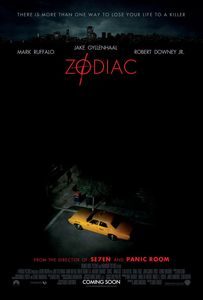
  • Zodiac (2007)

    Zodiac (2007)

    (In theaters, March 2007) The tag-line of this film says it all: “There’s more than one way to lose your life to a killer”. That’s both the film’s thematic statement and the reason why Zodiac feels fresh after a spate of other serial killer movies. For one thing, it’s well-handled by David Fincher, whose welcome return is a breath of cinematic talent after so many incompetent directors. Fincher know what he’s going, and his mastery of cinematic technique is only exceeded by the skill with which he understands the delicate balance between suspense and cheap thrills. Zodiac sticks close to reality, with all of its ambiguities and doubts, and in doing so attains a higher level of meaning. Meanwhile, we watch the lead character practically drive himself crazy with the unsolved mysteries of the case, obsessing over something he simply could have ignored from the beginning. The period detail is convincing, the special effects are used judiciously and the film has the detail-oriented heft of a good book. While some scenes can drag and there’s a manipulative element to the way the film suggests a solution to a mystery that’s still officially unsolved, Zodiac makes a confident entry as one of the first good films of 2007.

  • Shooter (2007)

    Shooter (2007)

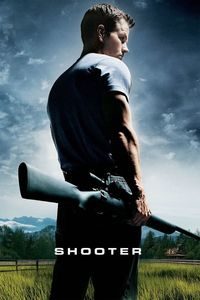
    (In theaters, March 2007) There isn’t much more here than a good little conspiracy thriller, but don’t let that be a problem: Director Antoine Fuqua is back in shape after a trio of underwhelming films, and the result is competent enough to satisfy. Updated from Point of Impact, an original novel by film critic (!) Stephen Hunter, Shooter amps up the conspiracy angle of the book to include an entire machinery of government and industry (riffing off the waning power of truth and decency during the Bush administration), yet can’t resist a vigilante-like conclusion. Don’t worry: The protagonist will escape his pursuers, find the real story, prove it to the right people and get the girl. It’s the way in which it’s done that’s worth the ticket, and here Shooter does everything well. Cool supporting characters (including an old man with a historically significant shovel), nice action set-pieces, big explosions and a little bit of courtroom showdown are all we need. The updated references immediately make the film fit in the twenty-first century and mark Shooter as a solid thriller with a bit of a wider vision than is usual in movies of its type.

  • The Last Mimzy (2007)

    The Last Mimzy (2007)

    (In theaters, March 2007) Never mind Lewis Padgett’s much-beloved original short story: The Last Mimzy is the perfect example of how an adaptation can misunderstand the story’s fundamental theme and jam it into a generic template. From an original beginning, the film inevitably converges with the plot of just about half of the SF/fantasy films out there. Thematically, the original story was all about superhuman intelligence as a goal in itself and how it doesn’t allow you to come back to normality. The adaptation turns super-intelligence into a minor affliction that makes the afflicted kids help other people and soon goes away to let them go back to normal. But that’s nothing compared to the woo-woo subplot about the crazy Tibetan prophecies, or the way it suddenly turns into a Homeland Security thriller, or the way the conclusion is another one of those “don’t fall in the CGI vortex” cheap stunt. There are, however, still a number of things to like about this film, from the likable kid actors to some of the special effects, to the way that is all comes together acceptably well. It’s certainly not a classic, but it ought to please to most of the family, and that’s already not too bad.

  • Malicious Intent, Mike Walker

    Bancroft Press, 1999, 399 pages, US$24.00 hc, ISBN 1-890862-05-3

    Say it, and say it loud: This book is trash, and it makes Mike Walker proud!

    What else did you expect from a self-described “weekly gossip columnist for the National Enquirer” whose jacket biography boasts that “He’s done more Geraldo episodes than any other guest”? Walker isn’t a rocket scientist: he’s a fifty-foot shark in the Hollywood trash mag pool.

    So when he sets out to write fiction, don’t expect the Great American Novel. Don’t expect a strident denunciation of current American society. In fact, don’t expect much more than a string of salacious anecdotes and passable grammar, because Malicious Intent is what his debut novel is all about. If you’re wondering what a tabloid “writer” would churn out given four hundred pages of prose, this is it. Sex, drugs, and Hollywood.

    It starts with a murder and ends in violent death, but don’t make the mistake of taking any of this seriously. This is a thriller where journalist can be two-fisted heroes, where young actresses have older men wrapped around her most tender areas and where everyone’s got a spectacular perversion to hide. Resemblance with reality is strictly optional, but readers of gossip mags will feel right at home.

    Malicious Intent‘s so-called plot revolves around Charmain Burns, an up-and-coming actress with a sordid past who will stop at nothing to climb the Hollywood power ladder. As the novel begins, her actions cause the death of a tabloid reporter. As she tries covering up her involvement in the crime, further events are set in motion. Meanwhile, Walker’s narration takes a break in order to explain how Charmaine got to Hollywood, and the trail of broken bodies she has left in her wake.

    But as much as we love to hiss at an antagonist, we need a hero to go through the motions of a plot. Enters Cameron Tull, a square-jawed street-smart reporter for the “National Revealer” who won’t accept the death of his colleague. Launching his own parallel investigation into the case, he quickly finds out who’s pulling all the strings… and the only question is whether he’ll be able to resist her.

    But never mind the plot, because it’s all structural framework for tawdry titillation, cheap Hollywood caricatures and saucy anecdotes which just may have something to do with real-life Hollywood. It takes merely twenty pages to get to the book’s first S&M orgy. And you haven’t seen the straight-razor castration, the psycho stalker calling himself Randak 2000 or the deaths by immolation.

    Oh yes: sex, violence, money, romance, beauty and celebrity: it’s all in here, slathered with double helpings of every deadly sin. Unflappable Cameron Tull gets his girl (though to make it easier, it turns out to be a long-lost love), fights temptation, sets things right and rides off in the sunset under a killer headline. Meanwhile, we get a look at the fairyland underbelly of Hollywood, learn entirely misleading information about the glamour of gossip magazines and mentally relax for four hundred pages. This is perfect beach-side reading as long as you leave the red pencil home. It’s nearly impossible to stop reading once it gets going.

    Even the clunky style of Walker’s prose gets in the act. Clearly, no editor at the lower-tier Bancroft House (“Books that Enlighten”) has dared suggest that a professional writer shouldn’t overuse narrative ellipses, written accents and SHOUTING ALL CAPS like that. No one dared suggest that the clichés and ethnic stereotype (“[they arched] their backs to accentuate that most devastating Latin male magnet: the big, shapely ass.” [P.192]) was a bit too much over the top. And why would they? If you’re going to knock down the markers of good taste, you might as well hit all of them.

    The result certainly won’t be remembered for anything more than a very guilty pleasure, an instantly-forgettable piece of raunchy trash and beautiful sleaze. If we must judge books on their objectives and how well they fulfil them, then Malicious Intent is a complete success. It hits the centre of the target and stays embedded there. Mike Walker may have little writing talent and a complete lack of literary ambition, but he knew what he was doing in writing his novel, and he ought to be proud of the result… in his own way.

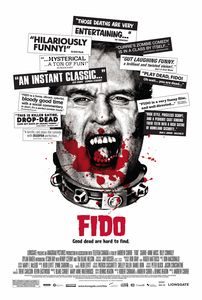
  • Fido (2006)

    Fido (2006)

    (In theaters, March 2007) With time, I’m learning that everything is possible, including seeing my tax dollars finance a zombie comedy. A good one, even: Like the best zombie films, Fido understands the satirical social relevance of zombies, and starts off strongly with a critique of suburban America mixed with a metaphor for slavery and/or racism. The alternate-history nature of Fido is clever and amusing, and so is the first act of the film, which plays off zombie archetypes against a brightly-coloured suburban background, with a plot that seems inspired by Douglas Sirk . At times subversive and amusing, gruesome and wholesome, Fido is a great deal better than you’d expect from a B-movie. Sadly, the imagination of its creators seems to run out at the same time than their budget, leading to a flat conclusion that is visibly hampered by shoestring film-making: the climax is a muddle, with no great thematic denouement and hesitant staging that can often feel more ridiculous than suspenseful. But three-quarter of a good film is better than none, and so Fido earns a marginal recommendation on the strength of being better than expected. That Carrie-Anne Moss has a leading role certainly doesn’t hurt.

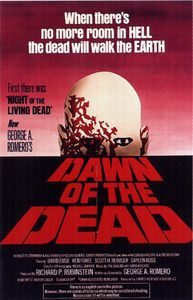
  • Dawn Of The Dead (1978)

    Dawn Of The Dead (1978)

    (On DVD, March 2007) Nervous nellies who think that remakes destroy the original work can relax a little: I’m one of those weird people who have seen the Zack Snyder remake before the original Dawn Of The Dead, I can reassure everyone that the original remains unspoiled and enjoyable on its own term: It’s a tight and terrific horror film that shares a premise with the remake but almost none of the plot. The satirical intent is certain clearer here than in the 2004 version: The idea of the mall both as a fortress and a gathering point is amusing, and the very idea of running around a mall for weeks on end smacks of wish-fulfilment. But the horror scenes also work well, and the mounting dread of the zombie apocalypse going outside the mall is frightening enough. Decades later, some pieces aren’t as successful: the introduction takes up too much time, the truck-running sequence is flabby and the character balance feels wrong. (All of which were improved in the remake.) Still, Dawn Of The Dead remains a pretty enjoyable film even today, and there aren’t a lot of films from 1978 who can still claim that.

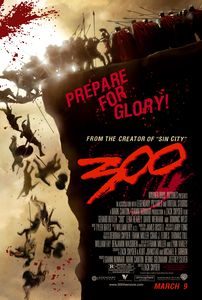
  • 300 (2006)

    300 (2006)

    (In theaters, March 2007) Prepare to be overwhelmed by manufactured cool! This fantasy action film is a rarity in how it glorifies war and aggression by making it look neater than it’s ever been. Even splatters of blood are used as design elements in a film that’s more a series of violent tableaux than a sustained narrative. (The credit sequence alone is wonderful.) The images, almost all post-processed digitally, show how it’s now possible to film even a wide-screen war epic in a warehouse. The effect is a bit claustrophobic, but the film won’t let you realize that until far too late: the rest of the time, you’ll be pummelled into submission by the loud soundtrack, macho sound bites, constant special effects and almost unbearable self-importance. There’s certainly something here for all the boys and the girls: naked torsos, dripping violence and simple subplots will do much to compensate for the quasi-constant decapitations, shaky-cam cinematography and dumb anachronistic details (such as, ahem, a pre-Roman mention of the month of “August”). It’s all very loud and big and impressive, but I can’t help but reflect that 300 is now a watershed of sorts in my evolution as a moviegoer: For the first time, I’m feeling left behind by a marketing effort addressed to the younger ones. I was never cool, but this film drives the point that I’m forever leaving that particular demographic behind. I’m not sure I’m sad about it if the alternative is movies like 300.

  • Chasm City, Alastair Reynolds

    Gollancz, 2001, 524 pages, C$26.95 tpb, ISBN 0-575-06878-7

    There are killjoys out there who will argue, at length, that the modern word processor has killed the novel as it ought to be. Those spoilsports will keep saying that the ease with which modern writers can just keep typing and editing without physical consequences (that is: sore fingers and the consumption of draft paper) has made it too easy to overuse words. These entirely fictional straw men (er, “older curmudgeon whose opinion I claim to have heard”) will tell you that real men once hacked out fifty-thousand words in stone tablets with a chisel, and that even Hemingway was a big softie for using a typewriter.

    It’s a silly argument, but it’s hard not to think about it when looking at Alastair Reynolds’s brick-sized novels. Helped along by Gollancz’s habit of using thicker paper stock, Reynolds’ books intimidate well before they’re cracked open. So many words! The story inside has to be important: Other writers have described the rise and fall of the Roman Empire in fewer pages!

    Yet Reynolds’ novels are nothing but good old-fashioned space-opera with modern polish. Solid thriller plots with SF twists and alien locales. In Chasm City, this means another man on the run from dangerous criminal forces: hardly the stuff that justifies a book an inch and a half thick.

    Of course, that means that you get a whole lot of thrills for your money. Expect to spend at least a week of reading time in Tanner Mirabel’s company as he first pursues an assassin, then finds the chase turned against him. His trip eventually leads him to a nightmarish alien environment: the eponymous Chasm City in which humans are prey and stranger forces lie beneath the mist… and that’s not even counting the other story interleaved between Tanner’s run: What could possibly be the link between those subplots? As Chasm City goes on, little blips in the narration lead us to a bigger revelation that conveniently twists the usual certitudes of a thriller.

    It’s long, it’s overwritten and it can get pretty exasperating at times, but Chasm City is a solid middle-of-the-road SF thriller. Those looking for a good example of genre fiction could do much worse: this one has good dollops of sex, action, violence and grimness: Reynolds isn’t afraid to pull punches, and the atmosphere of his books has little to do with the shiny futures once imagined by Science Fiction. The prose is verbose but well handled. Although a shorter book may have strengthened our grasp of the novel’s universe (rather than diluting it with sheer verbiage), this one does a pretty good job at carrying the reader from start to finish. The events keep piling up, Tanner is a tough protagonist, and the mystery of the intersecting plotlines is enough to keep anyone reading.

    Readers of Reynold”s debut novel, Revelation Space, will get a related novel that’s just as competent, dark and intriguing than its predecessor. Despite my constant harping about the length of Chasm City, it’s more focused than Reynolds’ first novel, with more consistent bursts of action. It amounts to a prototypical example of the “New British Space Opera” at the turn of the century. There is strong kinship here with other writers such as Richard Morgan and Neal Asher: Reynolds may use twice as many words in making his atmosphere noir and his aliens squishy, but the feeling is similar.

    All isn’t lost, though: Latter Reynolds novels, post Absolution Gap, show clearer signs of self-control –at least when it comes to page length. His last two novels, for instance, don’t even crack a comparatively slim 460 pages. (The Prefect is even down to 410 pages.) Since the length of Reynolds’ work is just about the only thing worth complaining about, you can bet that I’ve got his entire oeuvre on my shelves… even though I’m understandably reluctant to pick up one of his tomes when shorter books beckon. But we’ll get there eventually. Hopefully before retirement age.

    [January 2008: I’m not even going to review Redemption Ark at length, as disappointed as I am with the way Reynolds has blown up a perfectly enjoyable space opera into an interminable slog. The conclusion wraps it up together decently, but there’s some serious fat to be trimmed off this novel.]

  • The Einstein Papers, Craig Dirgo

    Pocket, 1999, 388 pages, C$9.99 mmpb, ISBN 0-671-02322-5

    Sometimes, I can’t even figure out why I’m reviewing a book. Craig Dirgo’s The Einstein Papers is a perfect example: Today, eight years after its publication, I doubt that even the author cares about it. It’s the exemplary paperback thriller, literally made in the Clive Cussler mold of action-adventure novels. It has no deep message, no memorable scenes, nothing beyond an intent to entertain its reader well enough to convince him to buy the next book in the series.

    In fact, the publishing matrix in which this novel is set is far more interesting that the book itself. For years, Clive Cussler has been shaping the thriller field with a series of formulaic novels that are never particularly exciting, but always consistent. The formula works in that it provides the framework for the witty dialogue, exciting action sequences and silly premises that form the texture of the modern American beach thriller. Even when followed to the letter, the formula still manages to entertain. Heck, Hollywood is based on the same concept. It may not be good art, but it’s great business in this age of extruded entertainment products.

    This brings us to Craig Dirgo’s Einstein Papers insofar as the novel is Dirgo’s attempt to file off the serial numbers of the Cussler formula and run with it under his own name. (Don’t think that Cussler doesn’t approve: they collaborated on two books before The Einstein Papers, and two more after that.) The rugged middle-aged hero, John Taft, is nothing but Dirk Pitt under a new name (indeed, several in-jokes make the filiation abundantly clear. At the end of Chapter 23, when questioned about his name, Taft answers “Dirk Pitt”.) His job as an anti-terrorist expert is designed to sustain a series of books —though the underwater aspects quickly pops up again in the finest NUMA tradition. Even the relationship he’s got with a team of supporting characters, including the requisite sarcastic non-WASP sidekick, is nothing but setup for handy helpers in book after book. Obviously, Dirgo has learned from the master.

    But what Dirgo still hasn’t figured out is the formula. The book begins with a too-long set-piece deep in China, an escape sequence which acts as a stuffy prologue to the book’s real story: a hunt for papers left by Albert Einstein, papers which (predictably enough) could mean a terrifying new weapon. Less terrifying should it stay in the hands of the United States, more terrifying should it go to those all-purpose-evil Chinese. The papers are discovered, fall into the wrong hands, and the chase begins. Meanwhile, the Middle East is once more thrown in chaos. The action starts and sputters, finally going along merrily to its expected end.

    (There’s also some silly subplot about the weapon being developed while waiting for the crucial papers, as if scientific research could hop along on government funding and a missing theorem. But if you’re reading The Einstein Papers for an accurate portrait of the scientific/military establishment, boy have you got the wrong book in your hands. And oooh, let’s not talk about the geopolitics of the novel. No, let’s not.)

    It all amounts to, well, an ordinary beach thriller. Nothing crazy, nothing wild, just the equivalent of an action film bound in a paperback format. It passes through the brain like a breeze, temporarily displacing lighter concerns but ultimately leaving no trace. As a piece of literature, it’s a non-entity. I can’t imagine that it took much more than a few weeks to write: certainly, the editing appears to have been completed in minutes.

    As a piece of Dirgo’s career, it’s may remain a failed experiment. Though he has recently written another solo John Taft novel (Tremors), most of his latest books have been “collaborations” with Clive Cussler. It’s a career, I suppose, somewhere in the gravitational pull of another author, unable to escape even when writing solo novels. I may not be able to figure out why I’m reviewing this novel, but I hope there’s at least five digits on the reason why Dirgo wrote it.

  • Identity Crisis, Brad Meltzer

    DC Comics, 2005, 256 pages, C$19.99 tpb, ISBN 1-4012-0458-9

    I’m both the best and the worst kind of reader for this particular super-hero comic book.

    Worst because frankly, I’m not much of a superhero comic book fan. I know the archetypes, but I never had a steady weekly habit at the comic book store, never followed the history of the characters and don’t care much about them either. Identity Crisis is many things, but it’s partly a homage to an entire era of comic books, the Sixties’ “Silver Age” in which many of the conventions of the genre were refined in time to reach the baby-boomer generation. So when the story starts messing around with the lives of particular C-list characters, I’m left on the sidelines going “Oookay, whatever.”

    But this same detachment also makes me a member of another audience for the book. Identity Crisis, I’m told through its Wikipedia entry, was a major event in DC comics continuity. It upset a number of conventions, changed the lives of several characters and -best of all- messed with the heads of comics fanboys. It made the DC universe a slightly uglier place and brought some consequences and realism to a stunted sub-genre that was doing very well without them.

    Written by thriller author Brad Meltzer (whose Zero Game wasn’t bad at all), Identity Crisis is set in motion by the violent murder of a superhero’s wife. In a terrific first chapter, Meltzer establishes the characters right before the crisis and sketches the first few consequences to the crime by hopping back and forth in time around the “now” of the corpse’s discovery: it’s some of the finest comic-book writing I’ve read so far in my admittedly meagre experience.

    The victim was carefully chosen (I’m told) among the most innocuous characters in the DC repertory. But the death sets in motion a number of even more shocking developments, including a revision of classic superhero history that will make most readers squirm in their seat. During Identity Crisis, the DC universe’s carefully limited spectrum of good versus evil was nudged toward the “evil” side: murder and rape became possibilities against which the superheroes themselves weren’t immune, and even the least-dark characters became complicit in shared shames. (Ironically, it’s Batman, dark anti-hero par excellence, who becomes a victim of the least-heroic moment of the series.)

    And that, frankly, is the reason why I’m so satisfied by Identity Crisis despite its loaded baggage in the field. I don’t need to be told how this miniseries was carefully engineered for monetary purposes. I have read the infamous “the rape pages are in” essay, and I don’t disagree with its conclusions. But the darker turn marked by Identity Crisis represents an identity crisis of sorts for the entire superhero industry, and it’s about time that it starts to confront its own schizoid nature.

    Summarily put: Superhero comics are made for retarded teenagers and their commercial viability has meant that for decades, the surest way to keep printing the dollar bills was to make sure that nothing changed. The essence of melodrama is that despite the tears and the screams and the flying plates, nothing ever chances. Think about it: Superman is an archetype. For all of the various plot developments, he hasn’t changed much in decades, so that the commercial potential of the character remains intact across all potential profit-making ventures (in comic books, yes, but also in movies, books, posters and lunch-boxes). Superman is doomed, by marketing fiat, to remain static. This means that he can never be too affected by any story. This means that the stories themselves have to be superficial. The very kernel of story-telling (“characters undergo events that change them forever”) is absent from superhero comic-books.

    Now repeat the same reasoning for all characters in the superhero stable. They are archetypes, not evolving creations. Even if marketers agree to mess around with the characters, fans start frothing at the mouth, unable to cope with the end of their comfort reading.

    Dramatically satisfying stories are almost impossible in that locked format; all that remains is a stunted type of sideshow where city blocks get destroyed but nobody gets killed, because true consequences are feared by both the marketing geniuses who advertise the product and the fanboys who keep buying them. Perfect deadlock, leading straight down a spiral of ever-loonier denial. If that’s the way the superhero comics industry has to be, I’d rather see it crash and burn. Perhaps, after, things wouldn’t be so bad.

    But there’s an alternative, and Identity Crisis is part of it. Raise the stakes. Face the consequences. Get rid of the fans who can’t take it. It doesn’t mean rape and murder on every page: it means a comic book field that grows up and starts responding to a wider segment of the population. Imagine if written novels had to be tailored toward the type of fan who buys comic books…

    Timidly, I see that the post-Identity Crisis comic book industry has started to evolve. Not much, and it remains to be seen how much of it is driven by marketing decision … but it’s a step in the right direction. (The recent Civil War story arc was interesting, but not quite handled elegantly enough: part of the problem was that the story arc couldn’t be confined to a tight story and had to sprawl in all nooks of the DC universe. Once again, marketing screws up storytelling.)

    These considerations aside (to go back to the subject after the longest tangent on record), Identity Crisis is worth a look because it’s a well-written, well-drawn miniseries. I’m disappointed about the identity of the killer, and it’s obvious that I’m not getting even a quarter of the references in the series, but those inconveniences are more than outweighed by what’s good and impressive about the story. The only superhero battle in the entire book is handled in a very unconventional fashion, the storytelling is fully exploiting the possibilities of the comic form, there are a few terrific moments and images (I’m very fond of the close-up on Batman’s faux-printed photo) and there’s almost a conceptual breakthrough in how Meltzer re-uses a hoary “body-switching” event as a hair-raising imperative for indefensible moral choices. He almost highlights the absurdity inherent to superhero comics, but then turns into something that leaves a bitter taste of reality.

    And that, in the end, is why I can’t help but respect Identity Crisis. As stated in the book’s afterword, it’s a story that takes something silly (the whole concept of secret identities) and justifies them. It’s both an intricate homage and a step forward. Of course, it could end up meaning nothing. There’s nothing quite as meaningless as “a comic book death”, especially in a field where continuity is always adjusted retroactively. But for the span of 256 pages, it’s a mean new world for superhero comics, and I’m both the least and most appreciative of readers for that type of thing.

  • Cusp, Robert Metzger

    Ace, 2005, 517 pages, C$36.00 hc, ISBN 0-441-01241-8

    Some novels don’t have to be good if they’re completely insane.

    Case in point: Robert Metzger’s Cusp, the type of book for which craaazy has been invented.

    Consider the prologue: Thunderstorms! Earthquakes! Entire continents torn asunder! One billion deaths! When the dust clears, Earth’s geography has been forever altered: It’s now circled by two massive rings of what looks like reactors, their tip reaching above the atmosphere.

    That’s the prologue. Eleven pages into the novel.

    Then twenty years years pass before the first chapter begins and things get even craaazier.

    Trying to give you an idea of the subsequent plot would be a challenge of van Vogtian proportions, so let me tease you with some buzzwords: Lemur-evolved Aliens. Bill Gates as a dinosaur. Planets used as engineering components. Humans “punching through” the singularity. And many, many more, including familiar SF tropes: Police state America, AI-augmented brains, robot servants, spaceship to Mars, evidence of time-travel, etc. A glossary of terms would have been helpful. Cusp is crammed with cool ideas and big-scale thinking: if only for that, the novel ends up with a marginal recommendation.

    But readers may have to struggle through entire chapters of unconvincing developments in order to get to those ideas. One of Cusp‘s most visible signs of craaaziness if how it flips back and forth between a pretty big cast of characters, arbitrarily sending them from one planet to another in order to keep the plot moving forward or sideways. The demands of the plot pieces outweigh the character development: it’s all a frantic rush through five hundred pages.

    I have alluded to van Vogt above, and the most pleasing quality of Cusp is indeed the way it never pauses for consideration. Absent an editor and most common-sense, it just keeps slamming along, adding even more elements to the mix regardless of how appropriate they are to the entire story. Sometimes it works: For every few artificial plot point, there are a few spectacular scenes that really focus the novel. A scene in which a woman manages to go post-singular is both vividly described and completely terrifying. Another action set-pieces involves an AI-augmented cop surfing down a rain of debris from an exploding air vehicle. Things turns spectacularly nasty at the end of the book as characters outdo themselves in order to engineer a pre-ordained tragedy. And through it all, readers will be left wondering how much craaazier this is going to get.

    The answer is very craaazy. By the time planets are moved around like billiard balls to complete (or thwart) million-year-old plans, veteran SF readers will be too exhilarated to care about the suspicion that the plot makes no sense at all. Rings to move the Earth around? When a simple earthquake can destroy an entire countryside? What’s the point? In many ways, Cusp is high-tech fantasy dressed up in Hard-SF wording. And I’m not even going near the character motivations. Though it is satisfying to see Bill Gates get his head bashed in. Sort of.

    (On the other hand, the grimness of the novel almost ends up working against it: You can forgive practically everything to an author who keeps smiling, but it takes a lot more fortitude to stay nice to those who pile bodies up like cord-wood. Not that this is quite Cusp‘s problem, of course…)

    In more competent hands, Cusp would have been a blockbuster. In Metzger’s hands, though, all it’s got is its craaaziness. Despite the high-fructose energy of the plotting, the book itself can be tough to read and even harder to follow. This isn’t Metzger’s first novel and it’s not Metzger’s first disappointment either: his Picoverse was similarly dogged by undisciplined writing and outlandish plot developments. Cusp is just a bit better, but still a fair distance away from satisfaction. If seasoned SF readers will stick through it for the cool visuals and the demented plotting, casual readers are likely to swear off the whole thing after a few incoherent pages. I’m not blaming Metzger as much as I’m surprised Ace wasn’t able to find an editor good enough to reign him in. Because, as much fun it is to find van Vogt-level craziness in twenty-first century science-fiction, it would be even better to be able to read a good SF book and not feel guilty about it.

  • Map of Bones, James Rollins

    Avon, 2005, 523 pages, C$10.99 mmpb, ISBN 0-06-076524-0

    The runaway success of Dan Brown’s 2003 thriller The Da Vinci Code had terrifying consequences: an entire cohort of copycat novels. Suddenly, mixing history with big thrills (preferably with a side order of religious conspiracies and high tech gadgets) was the genre’s favourite recipe. A number of new authors appeared on the scene with trunk novels that just happened to catch the right wave, while other veteran authors suddenly found themselves encouraged to write a certain type of novel.

    It’s presumptuous to link James Rollins’ Map of Bones directly to The Da Vinci Code: Without priviledged access to the author, who can really say that Rollins saw Dan Brown climb up the charts and decided he could do just as well? The only thing we have to go on are the right dates (allowing for a two-year publishing cycle, Map of Bones could have been written as a response to Brown’s early success), explicit cover blurbs and eerily similar thematic elements.

    Consider this: A terrorist attack on a German catholic church with supernatural overtones. Another terrorist attack on an American military base with a high-tech secret. A scientific investigation that reveals historical clues. A top-secret organization within the Vatican. Another shadowy organization that seeks ultimate power beyond organized crime. Maps with secret clues. Gunfights and chases down subterranean structures. Tons of “factual” details. Oh yes: Even if Rollins was never inspired by Dan Brown’s success, his marketers aren’t shy about making the comparison twice on the back cover, and readers will definitely feel similar thrills.

    The irony is that I may be harping about the novel’s derivative nature, but Rollins has seldom written anything better. His first few novels felt like standard-issue thrillers, sometimes a bit too ludicrous to be taken seriously. But with Map of Bones, Rollins finally finds his way to a superior thriller. The action is tighter, the characters are more distinctive, the details are more interesting and the pacing never flags. The union of historical clues with high-tech gadgets is well-handled, and Map of Bones simply rockets forward. As a result, it easily rockets to the top of my list of his novels.

    You can even say that it’s better written than Brown’s novel… although that’s not saying much, of course.

    It’s not perfect, of course. The scientific justification for the quasi-supernatural elements that rocket the plot forward is almost painfully stupid and won’t earn any bonus points from anyone with at least high-school physics. Worse, though, is the novel’s conclusion, which resorts to the hoary “there are things man isn’t meant to know, yadda-yadda” cliché to refuse its readers a world-shattering explanation even though the entire novel’s been building toward it. We’re left with a bright flash, a few lines of pseudo-lyrical description and a hole in the ground: another triumph for the small-mindedness of thriller writers looking to the sequels.

    Of course, there are sequels. Rollins is now up to his third “Sigma Force” novel, The Judas Strain, proving to the world that he has absolutely no shame left in exploiting flash crazes. Good for him: if we’re lucky, we’ll even get a passable novel out of the lot. Heck, I didn’t expect much from this one and ended up pleasantly surprised. If he can keep it up, maybe I’ll have to stop making all of those Dan Brown references.