Reviews

  • Gridlinked, Neal Asher

    Tor, 2001, 423 pages, C$10.99 mmpb, ISBN 0-765-34905-1

    Even since his 2001 debut, Neal Asher has been part of a new generation of British Science Fiction authors with ideas to burn and no mercy to spare. Along with other writers such as Alastair Reynolds or Richard Morgan, Asher has been busy putting thrills back in SF action novels. His fiction has only recently made it over this side of the Atlantic thanks to Tor’s reprints of his first few novels. Clearly, it was time to see what the fuss was all about.

    Starting from the beginning means going back to Gridlinked, the first novel in the “Polity” sequence that has so far tied together most of his work. The book works well as an introduction, even though its own introduction may be the best thing about it.

    Fans of hard-boiled espionage thrillers will feel right at home throughout the first few pages, as protagonist Cormac is revealed to be an agent for the interplanetary human government. Within a few pages, he efficiently dispatches a rebel threat to the Polity, blows up a part of the city and escapes with his life. It’s all good fun, packed with fast-paced action and a bit too much dripping violence.

    The real story then starts rolling, as the Polity sends Cormac on a primitive planet far away from the Grid in which our protagonist has been plugged for too long. A destructive act of sabotage may not be an accident –and it’s up to Cormac and his team to make sense of it. Meanwhile, the mindless action prologue turns out not to be so meaningless when a grieving man decides to hunt down Cormac wherever he is, bringing along some very scary friends…

    As setup, the first half of Gridlinked works beautifully. Despite some awkward language (“runcible” may have some appeal to native English-speaking readers, but it doesn’t carry much emotional weight for me), the Polity universe is efficiently introduced, with plenty of details to keep us interested. Civilization spans the galaxy, Hyper-intelligent AIs run everything, bioengineering is common and there are troubling signs of long-lived aliens. As if that wasn’t enough, Asher comes up with Mr. Crane, an insane, indestructible and very homicidal brass android. Killer robots are a dime a dozen in SF, but to see an schizophrenic one travel with a briefcase of meaningless toys is something else. (It’s no coincidence if the latest Asher novel is titled Brass Man.)

    But for all the cool toys and the fun stuff, the expansive playground and the thrill of good old action-adventure, Gridlinked seems to run out of steam midway through. Even weeks later, I remember a number of elements from the beginning of the novel, and almost nothing of the end. Not so coincidentally, I do remember a deep feeling of let-down at the point where the Dragon is revealed to be part of the novel’s plot rather than an amusing side-detail.

    The rest of the novel plays like a standard chase thriller with stranger pursuers and faster vehicles. Asher doesn’t to much with the un-gridlinking of his protagonist and spends too much time with the antagonist. After a while, it just becomes a big blur. You’ll keep reading to see what happens to a few characters, and sigh in slight exasperation as one miraculous escape follows another.

    I’m still not so sure why my interest evaporated so quickly: this is the type of novel that I’m supposed to like, and yet it just fell flat. The book as a whole runs significantly too long, leaving the impression that it’s overwritten. The mundane eventually overwhelms the interesting. Even the answers to the original mystery don’t seem so urgent by the end of the book. I found myself wondering when I’d be able to get my hands on Richard Morgan’s next novel.

    But I’m not giving up on Asher. He’s clearly part of Cyberpunk 2.0, and likely to grow into a more skillful writer: the memorable elements of Gridlinked clearly show that he’s not to be dismissed lightly. My dissatisfaction with Gridlinked may just be a freak accident of public transportation distraction, or it may be the result of a first novel’s lack of control. Whatever the reason, I’m likely to have a look at Asher’s other work… in due time.

  • Deception Point, Dan Brown

    Pocket, 2001, 557 pages, C$11.99 mmpb, ISBN 0-671-02738-7

    Books seldom get a second chance. Most of them surface in bookstores, don’t sell all that well and disappear in a whimper, never to resurface. In lucky cases, they may be reprinted after a movie adaptation or a runaway bestseller by the same author. In Dan Brown’s case, his publisher didn’t just get one mega-seller with The Da Vinci Code: It got three bonus best-sellers by reprinting Brown’s previous novels, none of which had sold all that well during their first print runs. (The good news is that if you’ve got one of those first editions, you can pretty much pay for your next holidays by selling it to collectors.)

    And so that’s how Deception Point re-emerged in bookstores three years after original publication, granted a second life by the boffo success of Brown’s fourth novel. For fans of The Da Vinci Code or Angels & Demons, how does Brown’s third novel stack up?

    The least one can say is that there is consistency to his method, even though the atmosphere of the book is different from the “Robert Langdon” thrillers. Deception Point is more political (not partisan, mind you, but with a number of power-playing politicians as characters), more action-oriented and, in some respects, closer to a typical techno-thriller than Brown’s best-known works. For those who complained that The Da Vinci Code was all talk and little action, have a look at this one.

    It starts in Washington D.C., as protagonist Rachel Sexton is sent to an Arctic glacier on behalf of the president. Her mission: validate a revolutionary scientific find that you won’t have any trouble guessing ahead of time. But things aren’t so simple, of course. For one thing, Rachel is the daughter of another politician with excellent chances of taking over the White House. For another, there are three Delta Force operatives buried in the snow, making sure that everything goes according to plan…

    No doubt about it: Deception Point is a full-bore, straight-ahead thriller that faithfully understands the rules of the genre. Exotic facts, clear characters, steady forward momentum and unobtrusive writing are the norm here, and it’s not hard to imagine Brown asking himself “How can I juice up this storyline?” over and over again. As a result, there are the usual nick-of-time escapes, chases, explosions, fancy deaths and ruthless operators. It’s formulaic, but it works really well in sucking the reader from one tight chapter to another. While the literary and religious world have united in condemning Brown’s success, faithful thriller readers can only appreciate that Brown is just doing what he’s supposed to do. NRO, nuclear submarines, oceanographic research, high-tech weaponry, White House operational details, woo-hoo!

    It’s not all good, of course. A number of errors here and there spoil the effect (somehow, I don’t think that an entire meteorite can be heated up by a focused laser), but not as much as a few outrageous developments. In his quest to amplify the impact of his storyline, Brown often overreaches, and the reader is abruptly reminded that this is only, after all, a particularly sophisticated thrill machine. (This impression gets worse as the book nears its end and lasts just a bit too long.) Brown does himself disservice by swearing up and down that technologies described in the book all exist: knowledgeable readers will roll their eyes at the ways he stretches a number of point. His sources of inspiration are also obvious: Echoes of 1996-1998 Bill Clinton are obvious in at least two separate plot threads.

    Worse yet for Brown fans is the way he repeats himself from one novel to another. Never trust his mentor characters! What’s both amusing and infuriating is the way Brown is willing to take on sacred cows (the Vatican, CERN, here NASA) in his quest for ever-more fantastic antagonists: While it may be interesting to read about, it also sends a generally muddled message –assuming messages are what Brown wants to send.

    Otherwise, well, this is another solid thriller from a writer suddenly hyped beyond any reasonable chance of fulfilling expectations. It may or may not be better, from a technical perspective, than The Da Vinci Code, but it’s sure to offer what people are looking for when they’re picking up a thriller. It seldom slows down during its 550+ pages, and neither will readers.

  • The Curse of the Were-Rabbit aka Wallace and Grommit In The Curse Of The Were-Rabbit (2005)

    The Curse of the Were-Rabbit aka Wallace and Grommit In The Curse Of The Were-Rabbit (2005)

    (In theaters, October 2005) Expectations were high for this first feature-length Wallace and Gromit film after the success of their previous short animated films and the boffo Chicken Run. Fortunately they’re all met with stylish wit in this animated horror film parody. Once again, the staff at Aardman studios is in full mastery of their art: Grommit’s silent performance is astonishing, and not just because it’s coming from a staff of dozen. A number of surprisingly audacious gags (featuring religious imagery, or produce-driven innuendos) pepper a solid script that will appeal equally to kids and adults. The deliberately rough claymation “with fingerprints” is a debatable artistic choice, but the rest of the film is almost perfect. Don’t miss it: it’s sure to become a DVD classic.

  • The Republican War on Science, Chris Mooney

    Basic Books, 2005, 342 pages, C$32.95 hc, ISBN 0-465-04675-4

    Faithful readers of these reviews (if any) already suspect my distinct lack of enthusiasm for the Bush administration in particular and modern Republicanism in general. If there was plenty to admire in the traditional Republican model (fiscal restraint, promotion of civility, determination to use force when necessary), the newer post-Goldwater Republicanism has forged an alliance between religious conservatives and big-business interest that’s simply too dangerous to condone. Especially when its starts messing with science.

    In The Republican War on Terror, science journalist Chris Mooney takes aim, as the title clearly indicates, at the steady pattern of anti-scientific behaviour from Republican politicians. While acknowledging early on that political abuse of science is a bipartisan affair, Mooney thinks that there is particular cause to single out Republicans (not just the Bush administration) as the worst offenders. They, argues Mooney, have a long history of deliberately misrepresenting research, shutting down independent enquiries and financing their own brand of contrarian research through ideological think-tanks. After reading the book, you’ll be hard-pressed to disagree.

    The problem stems from the modern Republican Party’s two biggest constituencies: The Religious Right and Big Business interests. Neither of them are particularly interested in the objective assessment processes of science, nor in factual conclusions. Mooney takes us back to the Reagan years, with a look at the Goldwater campaign, to demonstrate the long history of anti-intellectualism within the Republican Party. Then he works his way forward, showing the damage caused by both of those factors.

    Big Business, of course, has a number of business models to protect. Anything that suggests health impacts from industrial activities directly threatens those business models. Hence the tobacco companies’ efforts at discrediting links between cigarettes and lung cancer. Hence the efforts to finance studies by ideologically-driven institutes to disprove or dismiss evidence of Global Warming. You can expect industry lobby to say these things, but when Republican members of congress parrot the same lines, (allowing the “moderate” Bush administration to say “well, there’s doubt out there”), it’s clearly not the same game.

    The Religious Right, on the other hand, has realized that strictly moral points aren’t “sellable” by themselves and so resorts to false science in order to “demonstrate” its ideological values. Can’t argue that abortions are immoral? Just manufacture proofs that abortions offer health risks. Can’t deal with the reality of condoms? Just say they don’t work. Studies that suggest that abstinence-only sexual education programs are ineffective or that needle-exchange programs work are dismissed not because they’re flawed, but because they don’t agree with the conservative social agenda. Again, you would expect church leaders to make those claims, but when carefully-chose federal officials start messing with research funds in order to eliminate dissenting research, it’s time to ring the alarm bell.

    Mooney shows, over and over again, a steady pattern of scientific abuse, dismissal, politicization of government agencies, anti-intellectual trends, attack mechanism that the anti-science agenda of the Republican party becomes more than obvious. (And we haven’t even said anything about the “Intelligent Design” nonsense.) Particularly revealing is the pattern through which politicians can influence scientific research through spin or budgetary manoeuvres. It’s impossible to claim an interest in the modern scientific research process and ignore this book. (And lest I be accused of cheap anti-Americanism, it’s true that Canada’s own federal research infrastructure has known its share of controversy. Search around for “Shiv Chopra” for the details.)

    The Republican War on Science is certainly not a pleasant reading experience. It’s infuriating, depressing, mind-boggling and completely convincing. Mooney has spent a lot of time and effort proving his thesis: Of the book’s 342 pages, eight list interview subjects and over sixty are made of notes and sources. A dozen-page index makes this a great reference source. The main text itself is clearly written and utterly damning. The thin appendix suggests a few solutions, but the problem itself seems formidable. Maybe it’s time for our American friends to clean their House?

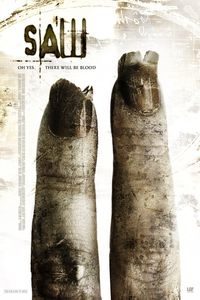
  • Saw II (2005)

    Saw II (2005)

    (In theaters, October 2005) While no classic, the original Saw at least played with a very unnerving idea: The thought that someone could put you in a situation where your only chance at survival would be to do extreme violence to yourself. Simple idea, fairly well executed despite a number of misfires. Unfortunately, the shell of this concept seemed to have been lost in this sequel, which ignores the horror of puzzle boxes to instead rely on a bunch of fairly unlikeable people thrown together as for an extra-gory reality TV show. The murderer is once again an all-knowing, all-powerful villain: his unlikely influence on the events is a bit too much to consider seriously. Overall, the film sputters without much of a clue: even the end’s climactic mutilation seems more dumb than horrific. (Use mirrors, dude!) Oh well; as exploitation horror sequels go, I’ve seen much worse.

  • Madagascar (2005)

    Madagascar (2005)

    (In theaters, October 2005) Dreamworks Animation Studio has perfected the art of B-grade computer animated films for kids (see A Shark’s Tale), but Madagascar is unlikely to do much to raise their non-Shrek profile. Cursed with unappealing character designs and even more unappealing characters (though Alex the Lion gets a pass on account of his pentagonal mane), Madagascar is just unpleasant to watch and not much more fun to follow. The tortured plot seems forced, and we’re left to contemplate over and over again if there’s a reason for this film to exist. The animation is fairly good, but can’t do much to overcome the shackles of the character design. Give me cute and cuddly! The penguins are a rare bright spot in an otherwise unremarkable film. It’s hard to watch without thinking that something just isn’t working properly.

  • The Legend Of Zorro (2005)

    The Legend Of Zorro (2005)

    (In theaters, October 2005) I really do love the original Mark Of Zorro, but my patience was tested by this wholly unnecessary sequel: While it’s cool to see Antonio Banderas and Catherine Zeta-Jones once more in the roles that made them famous, this sequel seems to have forgotten the sense of fun that made the first one so enjoyable. Here, Zorro struggles through divorce and alcoholism while we whistle a country tune and wonder when are we going to be done with the boring part? Alas, things get moving quite late in the film, with maybe twenty minutes of physics-defying action left in the story. Meh; I was entertained, but certainly not thrilled.

  • Magnificent Desolation: Walking On The Moon 3D (2005)

    Magnificent Desolation: Walking On The Moon 3D (2005)

    (In IMAX theatres, October 2005) It had been a long time since I’d stepped inside an IMAX movie theatre, and this was a fine way of doing it: a short documentary about moonwalks, with a careful CGI recreation of the experience and musings on when we’ll go back. Nicely narrated by Tom Hanks, this film suffers from being too short: It would have been nice to see some more of that IMAX-resolution CGI. Otherwise, there isn’t much to say: Good usage of archival material, good script (which even acknowledges the whole moon-mission-hoax nuttiness) and even the sentimentality doesn’t seem out of place: I want humans to go back on the moon as badly as everyone involved in the making of the film seems to be.

  • Looking for Jake, China Miéville

    Del Rey, 2005, 303 pages, C$21.00 tpb, ISBN 0-345-47607-7

    After the highly atypical success of Perdido Street Station and the two subsequent “Bas-Lag” novels, China Miéville now has a short-story collection on the shelves: Looking for Jake. Unlike other authors with drawers full of short fiction, this collection took a fair time to assemble because of the scarcity of material to reprint: Miéville is a long-distance writer, and his predilection for writing long means that his short-story output has been comparatively slight, and late in coming: Of the 14 stories in Looking for Jake, only two date from before Perdido Street Station. This anthology will allow readers to answer an interesting question: We know that Miéville can write novels, but is he as good with his short stories?

    At first, the answer is reassuring. Cherry-picking the collection for its best material, one quickly settle on a few noteworthy short stories. “Reports of Certain Events in London” is a natural choice, given how it was nominated for a 2005 World Fantasy Award. Much like most of the other tales in the volume, it features unusual storytelling (a writer named “China Miéville” telling us about a package mistakenly received) and an original idea (migratory street-fighting!). “Foundations” tells us about buildings thirsting for sacrifice, with a political twist. “Go Between” is about a man asked to bring things (discovered in the strangest yet most ordinary locations) to other places, with no idea what or who he’s working for and even less of an idea if his work (or refusal to work) is doing anything at all; a fine tale well-told. “The Ball Room” packs a mean chill as a horror story told from within an IKEA-like store, though you’ll have to squint at the table of contents to discover that it was co-written with Emma Bircham and Max Schaefer.

    Clearly, Looking for Jake shows that Miéville, for all of his critical acclaim, remains a horror storyteller first and foremost. “The Tain” and the title story may be exquisitely written, but they remain post-apocalyptic stories with mean beasties lurking in the background. (In “The Tain”, as the title suggests, mirror reflexions take over “our world”. The scene revealing the idea is deliciously shocking.) I may not have cared too much for “Familiar”, but it features plenty of gruesome and grotesque content. Miéville even allows himself some faint Lovecraftian overtones of someone who has clearly Seen Too Much in “Details”. Unwelcome vision also plays a part in “Different Skies”, which brings to mind a riff on the classic “Slow Glass” concept.

    But there isn’t just horror in Looking for Jake: Miéville is a funny fellow in conversation, and so a few humorous stories pepper the anthology. The most obvious of them is “’tis the Season”, a holiday tale (first published in no less a venue than Socialist Review) set in a future where Christmas™ is only available to those with the means to license it. “Entry Taken From a Medical Encyclopedia” re-prints Miéville contribution to the Thackery T. Lambshead Pocket Guide to Eccentric & Discredited Diseases: It’s impossible to summarize, but it’s both spooky and hilarious. “Jack” may not be a funny story, but it’s a fine nod toward fans of the Bas-Lag universe, with a twist. “An End to Hunger” is a dot-com tale halfway between humour and horror, though its overall impact is muted.

    Not that it’s the only misfire in the collection. Tastes will differ, but I myself couldn’t make myself care for “Familiar”, “Details” nor “Different Skies.” I still can’t make much sense of “On the Way to the Front”, a short graphic short story (with illustrations by Liam Sharp) that’s heavy on mood but light on meaning. In the same vein, a number of stories bury their central idea in too much distraction, with “The Tain” being perhaps the most obvious example.

    On the other hand, “The Tain” is the story with the best characterization, which is no accident given how it’s three times as long as the other stories. Miéville’s talent for well-written invention shines through his short stories, but it’s obvious that he needs the space offered by a novel to develop his visions. Still, Looking for Jake offers plenty of thrills for Miéville fans, and plenty of chills for all readers. In fact, it’s a decent introduction to his work for harried readers without the time to read any of his massive novels. The writing is good (if not exactly tight) and the ideas are there. It’ll probably take five years before Miéville writes enough short stories to fill another collection, but Looking for Jake will do until then.

  • A History Of Violence (2005)

    A History Of Violence (2005)

    (In theaters, October 2005) “Cronenberg does Charles Bronson” would have been an interesting log-line if it wasn’t for the end result, which feels a lot like “Charles Bronson on Valium”. The simple, simple story of a man sucked back in violent acts after years escaping his past, A History Of Violence is pretty thoroughly spoiled by its trailer, and not even a radically different third act actually deviates from the story act suggested in the first half hour of the film. The performances are nicely understated and the director consciously avoids any glorification of action, but this doesn’t play as well as you would think: The film rather feels like swimming in molasses, ruminating over the same points over and over again. The last twenty minutes of the film feel like a replay of the previous forty, with the protagonist doing pretty much what he has to do in order to solve the problem. Again. The tepid pacing doesn’t help much: we’ve seen this story dozens of time before, in B-movies that at least had the decency not to take themselves too seriously. But Cronenberg does, A History Of Violence does, and this valiant attempt to bring grind-house plotting to the geriatric set does no one any favour.

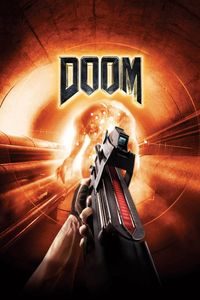
  • Doom (2005)

    Doom (2005)

    (In theaters, October 2005) It takes a heck of a lot of work to adapt a first-person shooter into a dull movie that completely ignore the game’s plot. And yet the geniuses behind this movie (including director Andrzej Bartkowiak, whose Exit Wounds and Cradle 2 The Grave weren’t bad at all) found a way to neuter Doom‘s hellish theme and make a movie whose middle hour is one uninterrupted stretch of boredom. Nice going, Mensa candidates (golf clap). The movie isn’t without its good moments (the opening zoom shot; the BFG; and boy-oh-boy isn’t Rosamund Pike a cutie?) but they’re like droplets of cool water in a scorching inferno of dull movie-making. Karl Urban and Dwayne “The Rock” Johnson both do fine as macho heroes (even graphically illustrating the original meaning of fragging), but the rest of the film can’t really rise above the level of a dull Aliens ripoff. Except when it comes to scientific verisimilitude, in which case Doom gets beaten up by every zombie film ever made, including the first Resident Evil. As one of the original 1993-vintage Doom fans, I can recall then-rumours of a movie project with amused bemusement: “What? An hour and a half of a first-person view running through corridors?” And yet the neatest ironic twist on that wisecrack is that the best sequence of the film is indeed five minutes of a first-person view running through corridors. Showing both technical skills and amazing audacity, this sequence rises far above the rest of the film. Well, except for the end credit sequence, in which a first-person player shoots away the names of the film’s cast and crew. Nice touch. Eerily appropriate, given my mood at the end of the film.

  • Domino (2005)

    Domino (2005)

    (In theaters, October 2005) After Man On Fire, one could reasonably wonder if director Tony Scott had gone insane. This question is decisively settled with Domino, a garish experiment in cinema grammar that’s as glorious as it’s completely out of control. Nominally a story “sort of” adapted from the life of a real posh-chick turned bounty hunter, Domino quickly abandons any pretence at realism to dive boldly in the abyss of digital colour manipulation. Looped lines, tricky chronological structure, trippy visuals, incoherent over-editing and fancy subtitles are only a few of the tricks unleashed on what could have been a fairly enjoyable story. But everything here is drenched in saturated colours, brought to the limit of coherency by a director more interested in pushing the envelope than he is in delivering a good story. The result is a blast, but it’s as exhilarating as it’s disorienting: Few will have the stomach to last through a gratuitous Jerry Springer episode, a gruesome amputation and Tom Waits as a mystical desert stranger. Bad by most objective standards, but still fascinating in a ghastly kind of way. Much as I loathe to admit it, I’m really looking forward to Tony Scott’s next film.

  • The Salmon of Doubt, Douglas Adams

    Pan, 2002, 284 pages, C$10.99 mmpb, ISBN 0-330-32312-1

    There is a lot to be said against the type of book exemplified by Douglas Adams’ The Salmon of Doubt. It is, after all, a posthumous collection of Adams’ shorter pieces. The very idea of a bundling of scraps ready to be sold to hordes of grieving readers is borderline distasteful. Literary necrophilia is one way of calling it; fan exploitation is another. It’s the sort of thinking that leads to authors being more prolific after death (hello, L. Ron Hubbard) through a homoeopathic publishing technique in which more and more of the original content is distilled away by hired ghostwriters.

    Fortunately, The Salmon of Doubt manages to please fans without too much of an aftertaste. Offering the closest thing to a Douglas autobiography, it brings together several short magazine pieces, interviews and columns. More unusually, it bundles everything with a short story, a barn-burning speech on artificial intelligence and eleven chapters of Douglas’ unfinished last Dirk Gently novel, the eponymous Salmon of Doubt.

    Ignore, if you will, the ghoulish foreword in which the knowledgeable editor describes how he had Douglas Adams’ hard drive mirrored and rescued from the digital abyss. Most of The Salmon of Doubt is made of previously published material (a lot of it available online) previously scattered over thirty five year’s worth of publication. There’s nothing evil in bringing together this material. It’s even a service to Adams fans who want to complete their collection of material. What’s more, it allows Adams to speak for himself, a fascinating prospect given the breath of his intellect.

    And so we get to the book’s first section, “Life”, which collects autobiographical material. From Douglas’ first published piece (a 1965 letter in Eagle and Boys’ World Magazine) to essays about his schooling, his work, his nose and so on. A number of interviews are here collected, giving a glimpse in the number of passions that Adams pursued. The inimitable Adamsian wit is in full display throughout the section. (As far as I’m concerned, the following quote is worth the price of the book: “Every country is like a particular type of person. America is like a belligerent adolescent boy, Canada is like an intelligent thirty-five year old woman. Australia is like Jack Nicholson.” [P.45]) Two lengthier travelogues complete the picture, representing Douglas’ love of exotic places.

    The second section, “the Universe”, deals in weightier topics and lengthier pieces. Computers are discussed in general, and Apple computers in specific. Also reprinted is Douglas’ famous interview with American Atheists magazine in which he claims his desciption as a “radical Atheist”. Newspaper and web columns make up the bulk of this section and portray Adams as a visionary, a deep thinker and a playful philosopher. The cornerstone of the section is the reprinted impromptu lecture “Is there an artificial God?”. Extemporaneously delivered and fortuitously recorded, this lengthier piece studies man’s place in the universe thanks to the “four stages of sand” metaphor, tying together an awe-inspiring number of concepts and ideas dear to Douglas. I’m not sure how much of it was truly spontaneous, but it’s an exceptional speech that is well-worth reading. It, fittingly enough, is also widely available on-line.

    But the real selling point of The Salmon of Doubt is the last section “and everything”, which bookends eleven reconstructed chapters of Douglas’ last manuscript with a number of bits about his creative process and the short story “Young Zaphod Plays it Safe” (reprinted in some omnibus editions of The Hitchhiker’s Guide to the Galaxy) Readers will quibble about the value of the material: I myself was never Dirk Gently’s biggest fan, but the excerpts here were enough to warm me in anticipation for a full novel that will never exist. Which may be the biggest let-down of the whole thing: We’ve been handed the first part of an unfinished novel.

    But the rest of the book is no let-down. As an act of posthumous fan plundering, it’s a good and deserving one: Douglas’ memory is well-served by the pieces collected in The Salmon of Doubt, and so will his readers. Enjoy this last trip down the galaxy of Douglas Adams’ imagination.

  • Foley is Good, Mick Foley

    Harper Torch, 2001, 592 pages, C$10.99 mmpb, ISBN 0-06-103241-7

    I’m not a wrestling fan. And yet, thanks to the pervasive turn-of-the-century pop-culture complex, it’s nearly impossible to avoid even a cursory knowledge of sport-entertainment superstars. Vince McMahon? The Rock? Chyna? Yup. I’ve never seen a single wrestling match, but I’ve read Dwayne “The Rock” Johnson’s autobiography, seen Chyna on “Third Rock From the Sun” and enjoyed the BEYOND THE MAT documentary. Knowledge of the small wrestling pocket universe seems to be spreading by osmosis, without any conscious effort from my part.

    I even think that Barry W. Blaustein is right in BEYOND THE MAT when he says that wrestling is real. Yes, the outcome of matches is fixed. But so are movie fights, and that doesn’t take away anything from the talents of stunt people. What’s more, stunt people aren’t usually asked to create characters, and do live fights in character every second evening for weeks at a time. Injuries are real, and so is the talent of the performers, however unusual that talent may seem to you.

    So that’s how you could find me in September 2005, reading the second autobiography of a wrestler. In one of those “oh, what the heck” second-hand book purchases gone horribly amusing, the book’s time in my to-be-read pile was up.

    And you know what? I really enjoyed it. Mick Foley’s writing skills may or may not be artificially enhanced by a team of copy-editors, but his raw honesty is real. A follow-up to Have a Nice Day!, Foley is Good (a slight deformation on the “Foley is God” fan posters) tells the story of Foley’s last few years in the wrestling world. (If “last” is a concept that applies in a universe where one can have a dozen retirement matches.) At a hefty 592 pages, this book aims to tell all and then tell a little bit more. This isn’t just an autobiography, but also an answer to media critics decrying wrestling. In enjoyable but overlong segments, Foley takes some pleasure in disproving conservative groups’ charges against wrestling (hard task, that…) and doesn’t miss an opportunity to point the finger at other sports in the violence department. While his points are often over-articulated (don’t be surprised if you start flipping the pages after muttering “enough is enough”), it makes for an interesting position paper. Foley, of course, has been through the media wringer a few times, and he doesn’t shy away from claiming that “the real world is faker than wrestling”.

    You may or may not want to take that last affirmation with a grain of salt, but what’s far less disputable is Mick Foley’s joy in being, well, Mick Foley. In spending time with his family, indulging in theme-park rides, talking movies and ragging on his usual gallery of comedy targets. BEYOND THE MAT showed him as a reasonable family guy doing an unusual performance job. This book does little to dispel this impression, crammed as it is with scenes from Foley’s home life. It’s intended to be very likable, and it is.

    What’s not as likable, but perhaps more honest, is the description of how wrestlers are just ordinary schmoes with regular jobs. Travelling from hotel to hotel for weeks, away from family, being forced to deal with constant pain and injuries –wow, no thanks. To add fiscal insult to real injury, the wrestlers themselves aren’t particularly well-paid, certainly not at the level their fame would suggest. At some point, Foley shrugs off soft-drug consumption by saying essentially –they’re bruised, they’re alone and they’re not even home: what do you want them to do? Ouch.

    Non-wrestling fans may feel a lot of this material flying well over their head. The lingo is specialized, the feuds are layered and the basic assumptions are… unusual. Compounding the difficulty is that Foley is Good is a sequel to another book. And yet, despite the lack of background knowledge, this is a very accessible autobiography. Better yet, it’s impossible to stop reading once you’re into it: Foley’s chatty style is enough to make you want to read just one chapter before calling it a day. At the end of the book, I’m still not much of a wrestling fan… but darn if I don’t find the whole circus a lot more interesting.

  • Tomahawk, David Poyer

    St. Martin’s, 1998, 371 pages, C$33.99 hc, ISBN 0-312-17975-8

    I remember reading David Poyer’s The Gulf a long time ago. I also remember not caring too much for it: not enough action, ambiguous ending, bad plotting and useless subplots. That certainly explains why it took me so long to read another of Poyer’s books. This one is better than The Gulf. Not by much, but it’s better.

    Tomahawk is a novel in the same “modern Navy” series than The Gulf which stars career Navy protagonist Dan Lenson. As this novel begins, sometime during the late eighties, Lenson is recalled to Washington to work on the development of the Tomahawk missile. Confronting Lenson is a career that’s not going anywhere, growing doubts about the morality of military force and the last tatters of a painful divorce. As he falls for a peace activist and indications of a spy start swirling around the office, what’s Lenson to do? Quit his career or keep working in something with which he doesn’t agree?

    I certainly wasn’t expecting much from Tomahawk. Late eighties setting? Pulse-pounding procurement action? Musings on the nature of force? Give me a break: I read military fiction for other reasons. Heck, I read military techno-thriller for fun. Give me something interesting.

    Even the beginning of the novel doesn’t inspire confidence, showing a Lenson sinking deeper in self-doubts, stuck in a project attacked from all sides. You can throw as many spies, peace activists and journalists as you want in the mix, there aren’t too many ways of making a weapon development process sound sexy. (Although Stephen Coonts came damn close in The Minotaur)

    It’s almost amusing to see Poyer try everything he can think about in order to juice up his inner-beltway storyline. Sometimes, it works: One of the book’s standout sequence show our protagonist surviving a terrible Canadian snowstorm. Another highlight comes later in the book as an espionage sting goes spectacularly wrong. But Poyer isn’t perfect, and so other attempts to inject artificial interest in the material don’t fare as well. A random death comes as a convenient shock (it’s later revealed not to be so random, but still convenient), but the vigilante reaction of the protagonist comes as a dumb idea made even dumber by a secondary character’s lack of self-preservation sense. Being a military fiction writer isn’t easy when readers expect you to shoot, blow or trash something every hundred pages, and Poyer copes only moderately well with the challenge.

    Most of Tomahawk isn’t nearly so interesting one way or another. The stale atmosphere of the late eighties isn’t overpowering, but it’s certainly there. Lenson goes to meetings, briefs people, follows night classes, goes to parties, learns how Washington works, deals with his growing doubts and generally experience a mid-life crisis for the benefit of the book’s readers. Yet the novel dares to be something more, something closer to a character study. It is simultaneously more and less ambitious than other military thrillers, almost taking the book in mainstream fiction territory at times.

    The surprise is that even with its low-octane content and misguided high-energy spikes, Tomahawk ends up deserving some attention. The various controversies surrounding the testing of cruise missiles in Canada has long since abated (it’s hard to argue with a completed, successful project), but Poyer brings them back in the forefront, along with the palpable sense of a genuinely new revolution in weapon-making. We’ve had fifteen years to get used to the idea that an American president can point at any point on the map and say “destroy this” without endangering any human life in the process, but that is a very new development in warfare, and this book shows a slice of this revolution.

    I found myself absorbed in Lenson’s adventures and the way Poyer describes the Washington power game almost despite my most sarcastic intentions, regardless of the sometime sketchy plausibility of the book’s developments. Military fiction may be about people shooting at each other, but there’s a decision-making component in military strategy that ought to be explored more often like Poyer does. Don’t be fooled: Tomahawk won’t make me rush to grab every single Poyer book in existence. On the other hand, I just became far less averse to the though of picking some of them up at the next second-hand book sale.