Reviews

  • Rules Of Engagement (2000)

    Rules Of Engagement (2000)

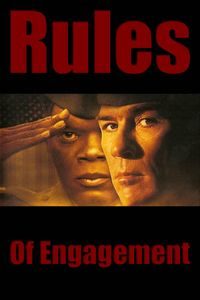
    (On VHS, August 2001) Egawd. If you’re going to make a thriller, at least make sure that there are a few thrills in it. If you’re going to make a drama, make sure there’s drama in it. Heck, if you’re going to make a movie, make sure there’s something in it that might interest me. Rules Of Engagement throws a little bit of this (a Vietnam prologue that might seem incredibly important, but really isn’t and might have been taken care of with one of two extra lines of dialogue), a little bit of that (like a big action scene that is not interesting. At all.), some more of this (ooh! Government conspiracy!) and some more of that (Rrrr… Courtorrom drama). That the film withholds crucial information isn’t even a cheat; it becomes only a pale irritant when you don’t care at all about what’s happening. Oh, and the cathartic shot of the little girl holding a gun… got a huge laugh from the three Sauvé siblings, assorted with cries of disbelief at the blatant manipulation. Even if Tommy Lee Jones, Samuel L. Jackson and Guy Pearce all do a good job, they just can’t save this borefest. Checking the credits, it’s no surprise to find that this is an original story by James Webb, author of one of my least favorite military thrillers of the nineties, Something to Die For. Now he strikes again, this time on movies. Gawd, viewers, just go watch something else, okay?

  • Repossessed (1990)

    Repossessed (1990)

    (In French, On TV, August 2001) Well, add another sad case to the group of failed “parody” comedies of the nineties. Apart from the two Hot Shots!, almost nothing came close to the rollicking humor of the classic Airplane!-style movies of the eighties. This one is a little more painful to watch than most, given the low production values, a terribly unfunny Leslie Nielsen (at the beginning of his bad self-parodying phase) and the whorish presence of Linda Blair. Yes, she’s “re-possessed” by the devil. Cue green vomit gag. Hey, a few jokes work, but the average is just so very, very low. Oh, and the awful musical segment… argh. The film runs on far too long, drawing an interminable conclusion at a point where everything should happily work toward a snappy ending. Not worth the bother, unless you’re particularly bored.

  • Apaches, Lorenzo Carvaterra

    Ballantine, 1997, 368 pages, C$8.99 mmpb, ISBN 0-345-42251-1

    What is a “structural problem” in the context of a book review? What is “structure”, anyway? Is it easily identifiable? Are you even interested? And why am I asking these questions at the beginning of my review of Lorenzo Carvaterra’s Apaches?

    Definitions first: I’d argue that “structure” is the way the story is put together. It’s neither the premise nor the writing. It’s akin to plotting, but not quite, as you can tell a same story in many ways. Structure is how the author makes a transition from the overall story he’s trying to tell to the mechanics of how to tell it. For instance, the premise might be “farmboy takes over as king”, structure might be “farmboy learns about the world, makes friends, raises an army, attacks the castle and kills the king” while plotting might be the various general events that fill in the structure: “he makes friends by paying them beers and triumphing at a snooker contest”.

    Structural problems arise when, for a reason or another, something prevents the story from being told in a satisfying fashion. This, obviously, is all in the reviewer’s mind. But consider: the movie PEARL HARBOUR puts its most impressive sequence -the attack on Pearl Harbour- right in the middle of the film, padding it on each side by an hour of miscellaneous stuff. Wouldn’t it have made more sense to put it at the very end of the film, during which all the conflicts are resolved at the highest moment of dramatic tension? Or, more interestingly, begin the film with the attack and end it after the battle of Midway, when Americans win a sizeable victory over Japanese forces? That is a structural problem.

    On a straight paragraph-to-paragraph level, Lorenzo Carvaterra’s Apaches is a pretty good read. Heck, even in chapter-to-chapter, it’s sufficiently interesting. He writes clear prose, adequate characters and isn’t afraid to be truly nasty when depicting evil characters. (Two stomach-turning words will suffice: Dead babies) In fact, rip out the first half of Apaches, and you have a fair thriller.

    The structural problem comes up when you consider the first half of the book. Not the first chapter, mind you, an effectively heart-wrenching depiction of a kidnapping. But right after, as “Book one” of Apaches (chapter 1-6, P.7-132) introduces, chapter after chapter, the six main protagonists of the novel. While the chapter-stories are interesting, they’re either too long or to concentrated at the start of the novel at a point where the reader is justifiably asking himself why he should read on.

    There are ways of handling the same material more carefully. In Icon, Frederick Forsyth introduces his main protagonist in the story only midway through. However, the first half of the book interleaves the main plot and the protagonist’s personal history in such a fashion that the protagonist’s backstory is completed just as he enters the stage. That’s good structure and that’s what should have been done here, introducing one character at a time along with their backstories.

    Okay, I’ll admit it; it’s not such a big problem. You can get past it and enjoy Apaches as what it is, a story of hurt ex-cops banding together to rid the world of an evil criminal, shoot’em-up style.

    A word of caution, though: Apaches is one mean book. Each of the protagonists has a violent tale to tell. The villains are truly completely evil. Even our heroes, once they get their mandate to get rid of the scums, are uncomfortably closer to vigilante justice than to law and order. Apaches does some mileage out of an examination of the line between good and bad, righteousness and revenge. Almost by definition it can’t be a pleasant tale. The high body count doesn’t really help.

    But in the end, chances are that you won’t be able to shake off the feeling that somehow, this could have been an easier, a more powerful tale. That’s when abstract notions such as “structural problems” suddenly become compelling.

  • Rat Race (2001)

    Rat Race (2001)

    (In theaters, August 2001) The premise isn’t fresh (strangers in a contest to find a huge amount of money; think Mad, Mad, Mad, Mad World.) but it’s fresher than most recent so-called “comedies” in recent memory. The end result isn’t totally satisfying, but it’s a pleasant diversion. You might be attracted to the film for its cast, but in the end, it’s two near-unknowns (Brecklin Meyer and Amy Smart) who will keep your interest, as John Cleese and Whoopie Goldberg simply go by the numbers and Rowan Atkinson grates nearly every time he’s on screen. (I still can’t say anything even remotely nasty about Seth Green, though.) Not every plot thread is equally funny, but they all have their moments. The gags are good an plentiful, but what’s most interesting about them is the intricate build-up of outrageousness, often sustained throughout several minutes as a funny situation steadily gets funnier. That Hitler gag… oh my… (The bets placed by the bored millionaires are also a steady hoot) The conclusion has the problem you’d expect, as the script tries semi-successfully to find a way to make everyone win. Much like the viewers, who’ll enjoy it equally, but not completely.

  • Jesus Christ Vampire Hunter (2001)

    Jesus Christ Vampire Hunter (2001)

    (In theaters, August 2001) As an Ottawa-born cinephile, I have a duty to be indulgent about any hometown product. And there’s a lot to be indulgent about with this nano-budget film (think Blair Witch Project, except even lower) shot on 16mm film. Blurry image, atrocious looping, unpolished editing, bad acting… it just goes on. Cheap to the point where the title graphics look better than the rest of the film. The sound is especially bad in a movie theater, though home viewers won’t have to struggle as much to hear what’s being said on-screen. If you look past the flaws, however, there’s a lot to like in Jesus Christ Vampire Hunter. The weird sense of humor is the film’s biggest selling point, from the premise implied in the title, to the opening MacGuffin (someone’s killing all the lesbians in the Ottawa area! Edge festival threatened!) to the use of Mexican wrestler Santos as a main character—along with an unexplainably amusing sexual harassment joke involving his assistant. But beyond that, look even closer and you’ll find some compelling fight choreography (!) with an imagination rivaling Jackie Chan’s usual antics. The musical numbers are also pretty enjoyable (“It’s okay/it’s all right/Everybody gets laid tonight”) despite the lousy sound, and even feature local-area bands. Storywise, it holds together as well as other kung-fu films, even though the end Jesus/Doctor battle is somewhat too tasteless to my liking. I’m still not sure if I’d recommend the film to anyone else, but I had some fun watching it, Ottawa scenery or not.

  • Jay And Silent Bob Strike Back (2001)

    Jay And Silent Bob Strike Back (2001)

    (In theaters, August 2001) Non-Kevin Smith-fans probably shouldn’t even bother watching this fifth film in the Viewaskew Universe. Not only do it feature cameo bits from nearly everyone in the first four Smith films, but it also plays heavily upon the elements that made the series so endearing to fans and repulsive to others. A Road Trip film at heart, Jay And Silent Bob Strike Back is easily of the funniest films of the year, boldly skewering Internet fandom, Smith’s own films, Planet Of The Apes, homophobic rhetoric and a laundry list of element to numerous to contemplate here. Harsh language, off-color gags, simple stupidity and a lot of pantomime: it’s all there and more. There are annoyances beyond the usual Smith quirks, though: The film slows down considerably whenever there’s a monkey on-screen (a usual sign of creative bankruptcy, if you ask me) and that also includes Will Ferrell, completely unlikable here. There’s also an annoyance related to the Silent Bob character: In Smith’s first films, Silent Bob was silent because he didn’t need to talk; Jay handled the talking. He wasn’t this buffoon-like character gesticulating madly or overreacting at every gag. But, never mind that, Smith fans will love this final send-off to their beloved characters. Be sure to stay for the credits (always interesting to read) as in the charming post-credit clip, God herself closes the book on the Viewaskew Universe.

  • Ghosts Of Mars (2001)

    Ghosts Of Mars (2001)

    (In theaters, August 2001) You know, it might be heresy to say so, but aside from 1995’s In The Mouth Of Madness (the finest Lovecraft story ever filmed), I don’t think I’ve ever truly enjoyed all of a John Carpenter film. While his B-movies sensibilities make him a fan favorite, they’re also an impediment to technical polish and sophisticated entertainment. Ghosts Of Mars is a step down from even the lackluster Vampires: While the opening credit sequence and the final minute are all quite good, what’s in between barely registers on the interest scale. Did we truly need another zombie story, especially if it’s brought forth so -you’ll excuse the pun- lifelessly? There is nary a chill in the vision of KISS-like undead rampaging through a Martian town. Heck, there isn’t even a chuckle to be found in this wasteland. I tried to care, I really did… but in the end, this ugly, boring, meaningless film simply refuses to be liked. Repeat after me: Waste. Of. Time.

  • Child’s Play (1988)

    Child’s Play (1988)

    (On VHS, August 2001) Cheap B-grade horror film that is nevertheless not quite as cookie-cutter as you might think. After all, when dealing with a killer doll animated by the spirit of a serial murderer… well… all preconceptions are off. Effective -but slightly longuish- introduction. There is a lull in the middle third, as it just takes the expected inordinate amount of time for everyone to realize that, yes, there is a killer doll on the loose. The climax is one of those ultra-extended one, where the doll gets shot, chopped, burned and still comes back for one more go at it. Not actively bad, as far as those type of films go.

  • Child’s Play 2 (1990)

    Child’s Play 2 (1990)

    (On VHS, August 2001) Killer doll Chucky (now familiar enough to be his own catchphrase) is back, after an opening sequence in which all the sacred commandments of horror movie sequels are upheld: The doll is cleaned, refurbished, repainted and… well… obviously escapes. The setup isn’t as clean nor as fun as the first one, though the general quality of the film is higher. The deaths are also more inventive in that quasi-pornographic way I loathe to enjoy. Hey, if you liked the first film, you might as well also look at that one…

  • American Outlaws (2001)

    American Outlaws (2001)

    (In theaters, August 2001) Whee! Six-shot guns and loads of fun! Let’s not kid ourselves and pretend that American Outlaws has anything more than superficial historical accuracy: This is an out-an-out action film with virtuous heroes, hissable villains, predictable plotting and pretty darn good explosions. Our hero here is Jesse James, and of course he’s not a bank robber as much as he’s a farmer trying to save his homestead. His friends are along for the ride, fortunately, and together they make beautiful bank robberies. Oh now, what’s that? Timothy Dalton as Alan Pinkerton? Hmm! In any case, don’t be surprised if you end up calling when bad guys arrive on the scene to set fire to the houses or capture our hero. You’re just supposed to go along with the ride and whoop it up at the Hong Kong-style double-gun action. All in good fun. Don’t mind the dialogue.

  • 10 Things I Hate About You (1999)

    10 Things I Hate About You (1999)

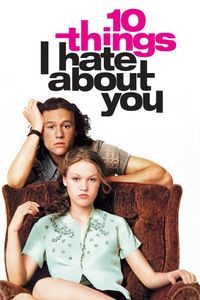
    (On VHS, August 2001) One thing I hate about teen romantic comedies: Suddenly, after a whirlwind courtship in which both participants are madly in love with each other, have confessed their deepest secrets, have spent days professing their true love for one another, one of them learns that the other’s initial motive for seduction has been less than honorable. Do they say “Hey, I’ve seen enough to convince anyone that’s not true anymore?” Do they ask for an explanation? Nope! They scream betrayal and vow never to see the other one again. Apart from that particular annoyance, 10 Things I Hate About You isn’t too bad, with added points because I’m a marginal fan of the main actors. Very loosely adapted from a Shakespeare play like so many recent teen films, which gives it an interesting plot structure. Worth a look if ever you’re a fan of the genre.

  • Fortunes of War, Stephen Coonts

    St. Martin’s, 1998, 376 pages, C$33.99 hc, ISBN 0-312-18583-9

    Regular readers of these reviews know that I have said a lot of nasty things about the current works of those who used to write great techno-thrillers in the early nineties. Tom Clancy has killed his editors. Payne Harrison suffered brain damage and turned UFO-nut. Larry Bond took too much Prozac and now writes simplistic crap. Dale Brown re-writes the same boring book again and again. Harold Coyle got lost in the Civil War and never came back.

    Compared to all of his classmates, at least Coonts is making an effort. Granted, The Intruders had problems, and I can’t discuss the formulaic-sounding latest Cuba, Hong-Kong and America trilogy without reading them first, but at the very least he doesn’t actively try to repeat himself. Fortunes of War, despite some shortcomings, is a step in the right direction. One that should be attempted by a few of the afore-mentioned authors.

    The first great thing about it is how it does not take place in the author’s flagship universe. Whereas Clancy continues to play in Jack Ryan’s increasingly divergent parallel Earth and Dale Brown re-uses the same characters over and over again, Coonts temporarily abandons his Jake Grafton alter-ego here and branches off in a new world: In the first few pages of the novel, the Japanese emperor is murdered by hard-liners, and preparations are made by the new government to invade oil-rich Siberia. Oh, and both sides have nuclear weapons…

    Shortly after Japanese troops take over Siberian cities, American pilot Bob Cassidy is dispatched to the area with a squadron of F-22s. The United States want to stop the Japanese intervention, but political pressures force them to send only pilots who will fight for the Russian air force. Of course, things are more complex once the Americans have to face a new Japanese fighter jet, and Cassidy has to fight against a friend on the other side…

    Have I mentioned the coup that drives a rabid dictator to the top of the Russian government? There is a lot of material in here, and it’s Fortunes of War‘s chiefmost problem that it attempts to cover a lot of ground in relatively few pages. Describing a war takes time unless you severely constrain your scope (see Coyle’s Team Yankee), and while Coonts focuses on a few characters, the picture still seems fragmentary.

    It doesn’t help that several pages are spent on the wrong things. Most of Cassidy’s fellow pilots are discussed more intricately during their recruitment than after. A lot of time is spent in preparation rather than the actual war itself. There are only a few glances at the ground war. At the same time, the novel flies from the pilots to the politicians. While the beginning is laborious, the ending is rushed. In short, there seems to be a lack of focus.

    There’s also, in the middle of this realistic scenario, a bit too much of war-stories dramatics. The “elite corps of competent misfits that has to fight battles on their own” motif is, by now, so over-used that even careful rationalization can’t completely excuse it. The friendship between pilots on opposite sides is interesting, but seems artificial. The Russian dictator is straight out of Central Casting.

    Still, the novel is a good read, and not an entirely unsatisfying one. There are good action set-pieces, and a few interesting characters. More of them die than you might expect. Maybe best of all, this novel doesn’t slavishly imitate Coonts’ earlier works, which have concentrated more on the Vietnam War (Flight of the Intruder), limited theater engagements (Final Flight) or more espionage-driven plots (The Minotaur). It’s his first try at a brand-new war; give him some slack. At least he’s working harder at it than his colleagues.

  • Quicksilver, Judith and Garfield Reeves-Stevens

    Pocket, 1999, 728 pages, C$9.99 mmpb, ISBN 0-671-02854-5

    Location, location, location. It’s not just a good idea for real-estate investment or the localization of a new business; it’s almost a prerequisite for a really good thriller. Look at that most meanly efficient thriller machine, the action film: DIE HARD wouldn’t be so great if it wasn’t for being set strictly in an office tower. EXECUTIVE DECISION did wonders inside an airliner. And what would SPEED be without a bus?

    The list of interesting locations in which to set a thriller has to include the Pentagon, the iconic and practical location of American military power. One of the biggest buildings in the world, the Pentagon’s myth invokes endless military secrets, fantastic security, international relevance and a primo terrorist target.

    This is where Quicksilver comes in. Ignore the great teaser about a novel super-weapon having far more destructive effects than predicted: it is, as you may expect, merely a pretext to the real meat of the book, which is a terrorist takeover of the Pentagon.

    As you may also expect, the solution to this problem will rest squarely on the shoulders of plucky underdogs; a marine-in-training, an electronic nerd and his aggressive ex-wife. Together they’ll… well, they’ll obviously triumph, but the fun is all in the pudding.

    The Reeves-Stevens husband-and-wife writing duo had, after years of undistinguished Star Trek novels, knocked out one solid book with Icefire, one of the best technothrillers of the late nineties. They’re back with Quicksilver, bringing the same creative imagination, limpid narration and uncomplicated characterization to their second technothriller. The result, as you may expect, is another steady fun read in the Clancy genre, with more invention and less useless fat than Clancy’s current work.

    The Pentagon is a fantastic setting for a thriller, if only through the discovery of the building. Relatively old (built in the 1950s) by office building standards, the Pentagon is currently being completely renovated (a “Slab-to-Ceiling” work) and the Reeve-Stevens have a lot of fun throwing random construction obstacles in the way of their protagonists. But more than that, it’s the labyrinthine layout, the security measures, the forgotten basement areas, the arcana of the building that engrosses the reader as much as the overall plot of the book. The authors make full use of their setting, as competent thriller writers very well should.

    Naturally, the various gadgets used by protagonists and antagonists alike are fun and interesting. The “Looking Glass” gadget in particular promised much, even though it’s taken out of action early on. The central MacGuffin of the book is credible, original and suitably powerful. And as for the identity of the terrorists… well, I haven’t seen anything like it in a long while. Good stuff, supported by plausible research. Hey, shouldn’t the opening diagrams be classified Top-Secret?

    Going beyond location and gadgets to the actual plot of the book, well, we can’t ask for much more, from a presidential escape to an impressive apocalyptic finale. Tension is gradually increased, and if you’re not careful you’ll end up reading much more of the book in a single sitting than you’d want to.

    In short, technothrillers fans have a lot to look forward to with Quicksilver. While a bit less original than Icefire with the standard building-taken-over-by-terrorist template, it’s a bit more mature (viz the dismissal of the UFO-nut character in Quicksilver versus the jarring references in Icefire) and focused. The edges are polished and the result is a solid, thick read that will amply satisfy countless beach readers.

    [September 2001: As with so many other novels, the September 11 terrorist attack on the Pentagon suddenly takes out a lot of fun out of this thriller. “Well”, I blackly reflected in the heat of the events, “there goes the schedule for the slab-to-ceiling renovations.”]
  • Tomcats (2001)

    Tomcats (2001)

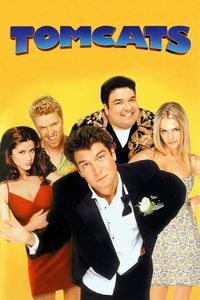
    (In theaters, July 2001) In a few years, whenever the gross-out comedy sub-genre is finally dead and buried, film historians will look upon Tomcats as the film that got fatally contaminated by the trend. In concept, it’s similar to The Bachelor‘s theme of marriage-as-trauma for single guys. (Except that Tomcats protagonist Jerry O’Connell exhibits more charisma lying unconscious than Chris O’Donnell ever did in his entire career.) In execution, most of the film is actually quite enjoyable. While contrived, the gags work well in a pleasantly charming way. Unfortunately, this is marred by a few sequences that borrow a bit too much from the latest excesses in tasteless comedy. One such hospital sequence lasts five minutes, is only tangentially related to the plot, will make every guy in the audience visibly squirm. By itself, said sequence takes off a full star from the film’s final rating. Cut it, along with a few other weak jokes, and the film suddenly becomes a marginal recommendation. Tomcats has a dynamic rhythm, appealing actors (with particular props to Shannon Elizabeth, who never struck me as gorgeous before, but really kicked in my strong-women-in-uniform fetish in this film. Oh, and I liked Bill Maher too, except in a wholly different way.), unexpected parodies (loved the Mission: Impossible 2 doves) and a few very strong individual sequences. (The standout remains the one that begins as my basic redheaded-librarian fantasy and ends up straight from my worst nightmares) It’s a shame that the stench of tastelessness overpowers the rest of the film.

  • Shadow Builder (1998)

    Shadow Builder (1998)

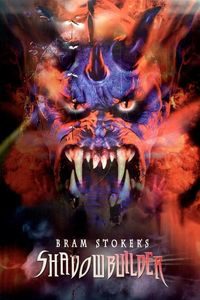
    (On VHS, July 2001) Straight-to-video release that once again proves that there are no accidents in the theater/video release rift. Granted, it’s not always bad, but then again it’s nothing worth writing about. The first few minutes hold considerable promise, as a gun-toting priest (Michael “Grrr!” Rooker) mows down a satanic sect with the help of laser sights. But right after that, we slip in an X-Files episode that flops around without Mulder or Scully and feels much longer than the 90-odd minutes running time. The creature feels less and less impressive as time goes by. It’s the kind of movie during which you can fall asleep and miss preciously little. Catherine Bruhier plays a cute female police officer, though.