Reviews

  • Sphere (1998)

    Sphere (1998)

    (On TV, May 2001) I hated Michael Crichton’s novel Sphere so much that I threw my copy against the wall after finishing it. Unfortunately, my television is too expensive to repeat the experience after seeing the adaptation. Not only does this mess of a film repeat the worst features of the novel, but it adds several brand-new terrible things that will grate on your nerves as the film evolves. Granted, the setup is intriguing; an underwater relic is discovered, which proves to be an American space ship from the future. Ooh, aah. A terrific cast of characters is assembled, here played by actors who should have read the script before they signed on. Then the trouble begins; they find sort of an alien which might or might not try to kill them all (but you know it’ll do just that) Then the script moves in Star Trek: The Motion Picture territory, with amazing leaps of logic that not only come from nowhere, but also make no sense at all in retrospect. Samuel L. Jackson’s “explanation” on how they’ll all die is a perfect example of this, made even worse by an utter lack of self-doubt. In Michael Crichton’s universe, gifted people just get it right the first time around, with no critical auto-examination. The film gets worse and worse after that, once the true plot dynamics get going. As with anything involving omnipotence and dream logic, the plot starts to unravel rapidly, eventually devolving in an ending that essentially means “it was all a dream”. Oy. The only worthwhile thing here is Dustin Hoffman, oddly solid all throughout despite some seriously brain-damaged lines. Avoid, people, avoid.

  • Shrek (2001)

    Shrek (2001)

    (In theaters, May 2001) An early contender for the Toy Story award for kid-flick-that-ends-up-being-one-of- year’s-best-films, Shrek is a full parody of classic fairy tales, handled with such wit and aplomb that kids and adults alike will love it. Most films are lucky to count one or two good scenes; Shrek has at least four, from action scenes parodies (not only The Matrix, but a screamingly-funny slow-motion escape-the-fireball shot.) to musical gags (from the exploding bird to a Jerry Lewis wink in the end “I Believe” singalong.) Good fun, and surprisingly smart too. Think of it as the film for those who grew up on the Disney animated films of the nineties, and are now ready to laugh about it. (And I haven’t talked about the great CGI yet.) And, as a bonus, there are enough unpleasant sub-themes to provide any undergraduate philosophy student with an ideal paper subject.

  • My Life So Far (1999)

    My Life So Far (1999)

    (On VHS, May 2001) A portrait of an English family between the wars isn’t a terribly compelling subject, and the film more or less delivers what we expect. Oh, it’s watchable; the script is well-written, the pacing moves with efficiency and the performances are fine. (Colin Firth is as good as usual.) But it slowly never moves beyond that, and neither will this review.

  • The Mummy Returns (2001)

    The Mummy Returns (2001)

    (In theaters, May 2001) Wheee! I’ve always been a fan of roller-coaster movies, and that certainly accounts for my irrational praise of the 1999 “original” The Mummy film, a great unpretentious blend of comedy, action and adventure. The sequel is, believe it or not, nearly as good. While not as comic as the first film, The Mummy Returns is a wonderful action/adventure thrill-ride, a good-natured spectacle that might not be in any way smart, but is certainly so well-done that you’ll ask for more. Sure, the film rips-off almost every previous films of the genre (including stealing the most memorable “domino comedy” and the “face in particle storm” images from the prequel), but as long as we’re having fun -and we are!-, it’s hard to be left unmoved. Oodles of action -so much that it might numb you, but not as repetitive as, say, the last hour of Armageddon-, a sympathetic kid, a gorgeous (and butt-kicking) Rachel Weisz, square-jawed action hero Brendan Fraser… c’mon, grab your pop-corn, already! The story is surprisingly well-tied with the first film. The special effects are nearly omnipresent, but the level of quality differs wildly, going from amateurish to flawless. A great self-knowing grand-scale B-film. A perfect summer blockbuster.

    (Second viewing, On DVD, April 2002) There is both good and bad in this sequel, but it maintains most of the charm of the original film. Rachel Weisz and Brendan Fraser are once again wonderful as the lead couple, and their matrimonial relationship is one of the film’s highlight. I was once again impressed by the film’s integration with the events of the first segment, even despite the clunky appearance of past-lives mumbo-jumbo. Some special effects are good; some other effects are surprisingly bad. The DVD features quite a few extra bonus goodies, the best of which is a fun commentary track that spends a long time pointing out flaws—though maybe not as much as the film’s detractors might like. But don’t worry; it’s still good entertainment for the whole family.

  • Memento (2000)

    Memento (2000)

    (In theaters, May 2001) The epitome of a gimmick film: Not only does the character suffers from short-term amnesia, but the entire film is told in segments that run backward, from chronological end to chronological beginning, interspaced with black-and-white exposition segments that might or might not be true. It doesn’t take much more than that to create interest, but fortunately, Memento is able to deliver a solid film wrapped around that gorgeous premise. It’s the type of film that keeps on throwing unexpected delights at you, so much that it would be ill-advised to step out for popcorn or bathroom relief lest you miss something important (and you would). Wonderful black humor, snappy screenwriting, provocative conclusion… Chances are that you’ll still be talking about the film a good ten, fifteen minutes after it’s all over. Films like this remind you, even if only momentarily, that cinema -even accessible genre cinema!- can be something more than just formulaic entertainment. The film features an exceptional performance by Guy Pearce, and good turns by The Matrix alumni Joe Pantoliano and Carrie-Anne Moss. Definitely worth a rental.

  • Los Alamos, Joseph Kanon

    Island, 1997, 517 pages, C$9.99 mmpb, ISBN 0-440-22407-1

    You might think that after a few hundred year’s worth of experimentation with the novelistic form, everything worth doing has been done at least once. And, in large part, this is true. There’s a saying somewhere about it being only four (or eight, or fifty-three) basic plots, and indeed it’s hard to find truly original works any more. Human emotions are finite, but fortunately, variations and combinations are infinite.

    Often, the joys of a novel can be found in the unison of known elements from different fields. In Los Alamos, Joseph Kanon sets a murder mystery against the fascinating WW2 backdrop of the Manhattan Project, and mixes in a romance for good measure. It doesn’t mesh all that well, but at least it’s interesting to read.

    As with so many novels set in an exotic environment, our passport to Los Alamos, with its collection of scientists, engineers, soldiers and associated family members, is a journalist named Michael Connolly. Hazily drafted from journalism and assigned to criminal investigation, Connolly is a sleuth outside the law, indeed almost outside the normal security apparatus. What he discovers in Los Alamos is our way of understanding that particular micro-society.

    A tech writer such as Bruce Sterling would have tremendous fun showing us how Los Alamos’ unlikely mix of physics geniuses, security personnel and top-notch technicians might represent the archetype of late twentieth-century geek culture, but Kanon is no geek, and his view on Los Alamos is closer to noir than to techno. Connolly is quick to become entangled in the mess of extra-marital affairs, hush-hush homosexuality, invasive security and lovelorn wives that surround the pure-science Manhattan project.

    There is, in the middle of all, a crime. A project member killed for what may be a myriad of reasons—from an illicit affair to money matters. Connolly will have to learn his job as he goes along, digging deep in Los Alamos to uncover secrets that might or might not be relevant, but that no one wants to see brought to light.

    At the same time, he falls for one of the wives, who’s gradually revealed to be rather less than pure and, inevitably, entangled in the murder. As if that wasn’t enough, there’s also an espionage thriller buried in Los Alamos, as Connolly realizes that foreign spies are smuggling secrets out of the place. Is this linked to the murder? Well, what do you think?

    In theory, all the elements are there for a crackerjack book, mixing historical, crime, espionage and romantic fiction. How can it all go wrong?

    With unnecessary gravitas, it seems. Kanon isn’t happy to have this rich palette of elements, and mixes a bit too much, too deliberately to ensure a harmonious result. As a result, various elements compete with each other, morassed in a ponderous style that seems to underscore the seriousness of it all. In attempting too much, Kanon forgets the need for genre fiction to entertain above all, and if Los Alamos is still a good read, it seems too heavy to truly rise above its base elements and truly achieve its potential. Compare and contrast this novel with the Bletchley Park sequences of Neal Stephenson’s Cryptonomicon, for instance, for an edifying illustration of two very different approaches.

    It’s also somewhat of a shame that the stereotypical romance cannot be camouflaged by the dour prose to become anything else but a distraction. Of course, he’s going to fall for her. Of course, she’ll prove to be essential to the resolution. It is, by far, the most ordinary part of the narrative, and also the weakest.

    But for readers looking for something slightly different, this shouldn’t be enough to drive them away from the subtle pleasures of Los Alamos. It would take much more than these mere quibbles to screw up such a strong premise, and Kanon proves to be good enough. It won’t stop more technically aware readers to wonder aloud at how other writers might have approached the same elements, but don’t let that stop you from reading the book as it is.

  • Hellraiser (1987)

    Hellraiser (1987)

    (On VHS, May 2001) As with many horror film, Hellraiser‘s potential exceeds its actual execution and leaves us wanting a better film. The characters are drawn in a realistic, rather than iconic fashion, but unfortunately they come across as unsympathetic, not authentic. The featured creatures are uniquely designed and their origin hint at some wild cosmology, but unfortunately, they’re used in the context of a more ordinary story that does the job without actually reaching its full potential. The early-eighties special effects are showing their age. Of more interest to horror fans and scholars, but not worth the while for everyone else.

    (Second viewing, On Cable TV, June 2019) It was time for a rewatch, after nearly two decades’ worth of additional experience in horror movie-watching. (If I recall correctly, my first viewing was affected by a very bad VHS copy that visibly degraded as I was watching it.)  It’s not that I completely dislike Hellraiser — it’s that the film never quite manages to reach a good chunk of its potential. It’s got good iconic villains, an intriguingly baroque moral system, a wonderfully perverse attitude, some truly stylish visuals, and better-than-average writing from Clive Barker. It’s also quite a bit more unpredictable than most horror films, either then or now. But despite those sizable assets, Hellraiser never fulfills its potential — it spends too much time in less-interesting subplots, doesn’t fully dig into its mythology, and doesn’t quite know what to do. The disappointment is all the more striking in that the sequels never measure up to it either. Maybe a remake will get it right some day.

    (Third Viewing, On Cable TV, February 2020) Given how I managed to get all of the first four Hellraiser movies onto my DVR, the next step was to revisit the first film once more.  In rewatch, Hellraiser is both more and less what I expected. On the upside, it’s significantly more original than most horror movies of the time. The supernatural component is always more interesting than some psycho with a knife, and this one benefits from imaginative creature design, as well as taking inspiration from extreme S&M rather than more prosaic true-crime horrors. Much is left to the imagination, which is where the film becomes lesser than remembered: not much background is given to the creatures except for a few cursory lines. Much of Hellraiser in fact, is dedicated to another plotline entirely, with a victim of the puzzle box being regenerated from the blood of his lover’s victims. The cenobites themselves are there for a few minutes—the rest is perverse family horror. I quite liked Ashley Laurence as the heroine trying to discover the strange shenanigans in her father’s attic, although that may just be my preference for curly-haired brunettes. Opposite her, Clare Higgins impresses with a deliciously evil role. But the stars of the show are the Cenobites and their barely sketched presence—no wonder the film led to a number of sequels.


  • Ginger Snaps (2000)

    Ginger Snaps (2000)

    (In theaters, May 2001) It’s hard enough to find “serious” teen horror films nowadays that it’s almost a shame to give a bad report about Ginger Snaps, a Canadian effort that at least tries to do something interesting with the genre. Like most classical horror stories of the past, Ginger Snaps weaves in social issues with the gore, in this case a statement about female teen alienation mixed with werewolf lore. It holds up decently through most of the film, in large part due to the performance of the two lead actresses. It begins falling apart near the end, where characters are quickly forgotten (mom last seen at a rave) or dispatched for no good reason. You may thing that a gratuitously happy ending is frustrating, but it’s not nearly as annoying as a gratuitously tragic ending, again proving that killing off the whole cast does not necessarily lead to artistic merit. Worth a look if only for the good old-fashioned social commentary, but not a fun ride. At least it’s better than most movies of its genre.

  • Exit Wounds (2001)

    Exit Wounds (2001)

    (In theaters, May 2001) Well, I really didn’t expect that: One of Steven Seagal’s best films. No, we’re still not talking about compelling drama or even moderate originality: this remains an action B-movie, but a really enjoyable one. (There’s even a touch of fun in seeing all of the expected plot developments taking place.) The direction is snappy and moderately dynamic, the plot mechanics are amusing and the man Seagal allows himself some latitude. The result won’t knock the socks off anyone, but constitutes a decent cheap rental.

  • Resumé with Monsters, William Browning Spencer

    White Wolf/Borealis, 1995, 469 pages, C$7.99 mmpb, ISBN 1-56504-913-6

    Dilbert meets Lovecraft.

    Dynamite concept. Too bad that’s not quite what Resumé with Monsters is really doing.

    Granted, there are satirical scenes of worker alienation in office environments. True, the book is filled with explicit references to Lovecraft and his menagerie of slithery, tentacular, unimaginable creatures.

    But don’t think that the result is a laugh riot. Or that the expected goodies are delivered in satisfying portions.

    Our protagonist is Philip Kenan, a budding writer struggling with a series of low-end job while trying to fulfil his true goal in life; finishing a massive horror novel in the pure Lovecraftian tradition. Except that the monsters are real. They’re following him around. He perceives them where others don’t see anything. But he’s not fooled. A previous encounter with them has cost him his job and his girlfriend. Now he slaves at a print shop, but the creatures are coming back…

    Let’s admit up-front that Resumé with Monsters is a very enjoyable book. Breezily written, original in scope and execution, it’s a delightfully weird romp through a modern re-telling of the Lovecraft mythos. The link between modern corporations and soul-sucking monsters that drive you insane is so obvious after the fact that it’s a wonder that no one has thought about writing something of the sort before.

    This being said, readers should be cautioned that William Browning Spencer has no aspirations at being the next Scott Adams, and while Resumé with Monsters is a comedy/horror hybrid, the emphasis here should be placed on hybrid. The funniest moments are often simultaneously the most horrific and it’s not as much a guilt-free laugh riot as you may initially think. Chills and chuckles are on the menu. Funny strange rather than funny ha-ha most of the time.

    There are a few lulls here and there, especially when our hero gets unstuck in time and bounces around for a few chapters. A few unexpected twists and turns are good for momentary disorientation. Spencer regrettably sustains the “if he crazy or is he not?” ambiguity for far too long after the reader’s indulgence is established. It still ends up gelling quite well by the end, with a curiously sentimental note that does a lot to establish the warm fuzzy impression left by the book.

    Don’t be fooled by the novel’s thickness; due to an unusually airy typography, the novel takes maybe a third more space than stories of this length. It makes the reading even easier. Not that you’ll have trouble reading “only a few more pages” of the novel; it would rank as a one-sitting book if it wasn’t for the fact that you’ll want to read it as slowly as possible in order to savour the full effect of the writing. The passages about the protagonists’ past relationship alone are worth careful reading, regardless of Lovecraftian monsters or corporate satire.

    In the end, while Resumé with Monsters reasonably exceeds most of the basic requirements for a solid, memorable read, it’s also a victim of its own cleverness. Readers with some imagination will ceize upon the office/horror connection and see possibilities that Spencer might have missed. Certainly worth a look (obviously ranking as a must-read for Lovecraft enthusiasts); but beware the inevitable let-down. After all, even the best books can’t contain everything.

  • Deliverance (1972)

    Deliverance (1972)

    (On VHS, May 2001) This hasn’t aged well. Maybe its reputation has exceeded its actual worth, or maybe the line “gonna make you squeal like a pig, boy!” has been milked by too many comedians to still be effective, but my siblings and I giggled a lot during Deliverance. I mean; weren’t those yokels hilarious? Fortunately, some of the film is still worthwhile: The cinematography remains decent, and some set-pieces are effectively directed. The pacing, on the other hand, is lethargic. The film is maybe half-an-hour too long, especially given the paucity of events happening on-screen. Of historical interest.

  • The Conversation (1974)

    The Conversation (1974)

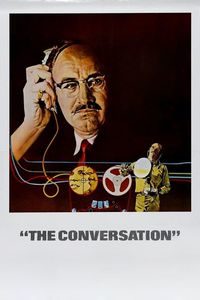
    (In French, On TV, May 2001) Unexplainably hailed as a good film, this typical seventies piece hasn’t aged well at all. Unlikeable characters, torpid pacing, a non-ending, a single simple point made over and over as is it was a brilliant piece of philosophy… it all adds up to a dull pretentious piece of tripe. For Gene Hackman completists and, maybe, the last scene. If only it had been built up by something stronger…

  • Clueless (1995)

    Clueless (1995)

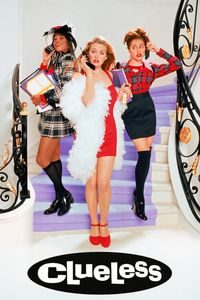
    (On VHS, May 2001) This joins the ranks of the teen comedies with crossover appeal through good writing and irresistible acting. (see Ferris Bueller’s Day Off, Heathers, Bring It On, etc…) A modern-day retelling of Emma, which already gives it a solid plot structure, Clueless plays like a quasi-demented parody of the upper-class California life we’re shown in other similar films. Great lines pepper the dialogue, and the delicious soundtrack polishes the result to near-perfection. Smarter than it appears. Constantly amusing. May unfortunately represent Alicia Silverstone’s career peak. Definitely worth a rental, preferably with other similar films.

  • Breaking Up (1997)

    Breaking Up (1997)

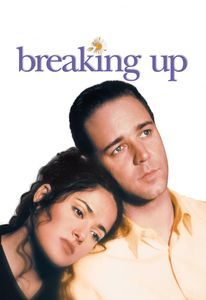
    (On VHS, May 2001) It’s hard to see where a romantic comedy could go wrong while featuring Russell Crowe and Salma Hayek on-screen for nearly 95% of its duration. The answer is that romantic comedies are supposed to be funny, and romantic. This one isn’t. Like so many independent films, Breaking Up wants to be different, and its idea of different is to foreshadow a break-up for 90 minutes, and then have it happen. Insert cries of disbelief from the audience. Not only is it unsatisfying in itself (everyone loves a happy ending), but it also pretty much makes the whole film feel useless. Fortunately, two or three things save the film from total collapse: The lead actors are completely adorable as their respective archetypes, the writing is decent and the direction has very good moments. But be prepared for one downer of a conclusion.

  • The Jericho Files, Alan Gold

    Harper, 1993, 578 pages, C$6.99 mmpb, ISBN 0-06-100894-X

    Stay away from this book. I mean it.

    You most probably read thrillers for fun. To pass time on the bus. To relax on the beach. To escape reality to a more interesting world where government are either steadfastly protecting our freedom or working hard at enslaving us.

    So you naturally want a well-paced story, protagonists you can root for, an original premise and a kicking conclusion that leaves everyone happy and the bad guys punished.

    I’m telling you: avoid Alan Gold’s The Jericho Files.

    It does start promisingly. At a peace conference where an agreement is about to be signed between Israelis and Arabs, the Prime Minister of Israel gets up, insults the whole crowd, does everything short of a snappy Nazi salute and plunges the entire proceedings in chaos. There’s no such thing as a good mystery to get the ball rolling on a novel, and this is a fascinating one.

    Then we’re inevitably introduced to our two protagonists. Miriam Davis is a tough but adorable Jewish Australian lawyer. She’s dating Paul Sinclair, a journalist. They’re a cute couple, even though they have a few problems due to religious differences. To patch things up, they visit her grandfather, who tells them a story about the Israeli Prime Minister’s past. Photographic proof in hand, he maintains that this particular Prime Minster -back in Pre-WW2 Poland- was a die-hard communist who helped to eradicate entire Jewish villages. Egawd! Could he be right?

    Well, of course he is. We’re privy to the conspiracies of an old man, who masterminds a plot for complete Russian world domination! Miriam’s grandfather is killed, Paul’s apartment is ransacked, and before long, our two intrepid investigators are on a plane away from Australia, looking for answers in the old countries.

    (Gold doesn’t miss an occasion to pump up Israel’s profile and generally make a fanfare out of Jewishness. That’s cool -I’m generally sympathetic to Israel-, but when constantly repeated over hundreds of pages, it can become annoying.)

    Meanwhile, Israel is torn apart by martial law and agents provocateurs. Our protagonists escape from the country with death teams hot on their heels and continue on to Poland, where they confirm the grandfather’s story. But everywhere they go, their witnesses and informants are ruthlessly killed shortly after having talked.

    Understand that I’m summarizing a lot, but not condensing much. Even though The Jericho Files nearly hits 600 pages, not a lot happens there. The narrative is padded with useless chatter, scenes which sap the suspense of the novel and a considerable amount of red herrings, cardboard characters, gratuitous subplots and dull moments.

    Eventually, Paul and Miriam link up with powerful Russian men who might be in a position to stop the Jericho plan. They gather their forces, prepare their counterstrike…

    …and are all killed. Paul and Miriam are taken deep inside a Russian forest and killed one after another by a bullet in the head. They’re then disfigured by sulphuric acid and buried in an unmarked grave.

    The End.

    I’m not making this up. 550+ pages for a complete failure and an unremarkable death.

    Couple this awful ending with the tepid pacing, and you’ve got a recipe for the anti-thesis of everything fun, good and sacred about thrillers. It doesn’t do to kick the reader in the head after s/he’s been patient enough to slog through 550+ pages of mostly indifferent prose to see the novel resolve itself in a big fat nothing. Stay away from this book. Now that I’ve spoiled it from beginning to end, you don’t even have a reason to go through it.

    Now, if you’ll excuse me, I’ll just go and deface my copy with sulphuric acid and bury it in an unmarked grave somewhere in my backyard.