Reviews

  • Bears Discover Fire, Terry Bisson

    Tor, 1993, 254 pages, C$27.95 tpb, ISBN 0-312-85411-0

    Bears discover fire. A huge magma “bubble” raises the Adirondacks outside the atmosphere. A blind painter is asked to draw the afterlife. A writer quits before the story is over. A toxic donut is consumed. A retired astronaut goes back to the moon.

    Welcome to the short stories of Terry Bisson.

    Bisson’s been known for a few things, some of them faintly ridiculous (He novelized JOHNNY MNEMONIC, finished Walter M. Miller’s posthumous Saint Lebowitz and wrote back-cover blurbs for HarperCollins) but always somehow evading becoming a big-time SF star. Some authors are like that.

    Fortunately, Bisson managed to convince Tor books to publish an anthology of his stories, and the book stands alone in introducing a pretty good author to the world-at-large, or at least those who can get their hands on the collection.

    As always, some stories are better than others, so here’s a quick recap of the book in not particular order.

    I found Bisson to be at his best when writing very short humorous vignettes with satiric bite. “By Permit Only” will amuse and knock you out with its I-give-up ending. “Next” shows bureaucracy gone mad with red tape nightmares. It might be fun to read “Are There Any Questions?” out loud, just to get the feel of the huckster narration. I’m still not sure if “The Toxic Donut” is supposed to be funny, but I liked the dark comedy and the pyrrhic choice offered within.

    Of course, Bisson points out in his afterword that he can also write some non-funny stuff, and “Necronauts” is a good example of that, a none-too-jolly story that nevertheless reads very well.

    Other highlights include “They’re made out of Meat”, a widely-reprinted true little classic that you might have read by accident somewhere else. (Even, in my case, as being attributed to L. Ron Hubbard!) and “Two Guys From the Future” (Bisson outdoes Connie Willis at the fluffy time-travel romance game)

    Some of the longer stories are interesting, but wounded by their insufficient bang-to-length ratio. “Over Flat Mountain” struggles with its world-building and eventually loses. It’s a fate shared by “The Shadow Knows”, which adds to it an underwhelming conclusion best left in depressing New-Wave-era anthologies.

    Then there are the weird stories I’m not sure I liked. “The Two Janets” looked like a fun concept in search of a plot. “England Underway” still seemed as whimsically inconsequential as the first time I read it in Omni. “Press Ann” reads like a draft for a shorter, funnier sketch. “Carl’s Lawn & Garden” was jammed by an extra-large dose of heavy-duty symbolism in its last sentence.

    Of course, there are misfires. The title story didn’t bowl me over as much as it convinced the various award juries. “George” seemed pointless. “The Message”, even at five pages, seemed long and laborious. And then there are the pieces I just couldn’t get into: “The Coon Suit” (Oh, so that’s the conclusion.) and “Canción Auténtica De Old Earth” (Rzzz).

    In most cases, Bisson’s writing is brisk, smooth, funny with a good dose of truth thrown in. Even with the boring stories, he delivers the goods and entertain the reader. It might not lead anywhere, but at least you’ll enjoy the trip.

    Of course, that’s the risk with any short story collection. Savor the good, take the okay and try the bad. In any case, you’ll be able to form a good picture of Terry Bisson as a writer, and he needs the attention.
  • Driven (2001)

    Driven (2001)

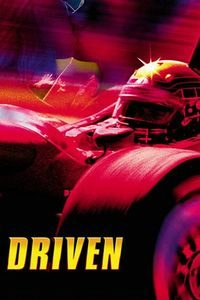
    (In theaters, April 2001) Let’s establish right away that for a racing film, the crashes are good enough. Renny Harlin is known for his action set-pieces, and Driven exhibits plenty of those, in fact enough to give the film a marginal recommendation for action film fans who might be starved for some ‘splodin’. Unfortunately, Harlin isn’t known for the quality of the scripts he chooses to direct, and Driven‘s vanity-project history shows through the story, which blends the worst sport clichés along with a special implausible showcase for Stallone. Few surprises, and even fewer original moments. The quick-cutting gets tiresome after the first few moments, and the consistent bad writing really grates, especially when considering the caricatures that pass off as female characters in this movie (there’s a Babe, a Bitch and a Brain. Why even give’em names?) As long as you go see Driven fully expecting what you’re going to get (some action without much thought), you should be satisfied.

  • Deterrence (1999)

    Deterrence (1999)

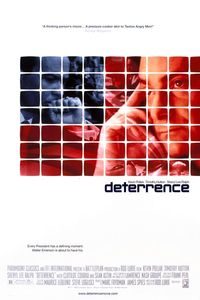
    (On VHS, April 2001) A film with too many significant flaws to be classically good, but fortunately it’s got so many fascinating elements that it’s hard not to recommend it anyway. A political thriller with global repercussions set entirely on one set, Deterrence harkens back to the theater while going for the highest possible stakes. That in itself would be sufficient to make Deterrence a curio of the highest order. Could have been a great film too, if more care would have been given to the characters and the ending. While the president is ably interpreted by Kevin Pollack (looking a lot like a live-action The Critic) and the presidential staff is mostly well written, the clients of the diner are obviously meant to represent archetypical American views, but never rise above the status of stock cliché. Take, for instance, the French-Canadian waitress; it would have been easy for that character to raise the issue of a foreign national being present during high-stake brinkmanship, or even to raise tension when doubts are raised about the French government… but nothing ever comes out of it. Other missed opportunities abound. And the ending feels a lot like a cheat, simultaneously pulling out a hidden card while ignoring the consequences of it all. (Some of said consequences having previously been raised by the characters themselves!) And, of course, the limitations of the budget are matched by the limitations of the director, who doesn’t really impress by complex camera setups. Still, even after all of the above objections, Deterrence is worth a look if only for the audaciousness of the premise; a single-set global political thriller.

  • The Cider House Rules (1999)

    The Cider House Rules (1999)

    (On VHS, April 2001) I hope that one of the sign of impending critical maturity is the ability to find value in film about which you don’t really go nuts. The Cider House Rules doesn’t include any of the elements I usually enjoy in film, whether it’s explosions, aliens or Nazis, but when all is said is done, it remains a good film worth a rental. Granted, it’s a message film: Abortion is never an easy subject, and setting a pro-choice argument during the medically barbaric 1940s is just trolling for strong reactions, but once the unpleasant first few minutes are past, the film really finds its coming-of-age narrative. (Readers should note my strong pro-choice convictions and adjust their response accordingly.) While Michael Caine won a supporting Oscar for his role, the real glue of the film is Tobey Maguire, who really holds the film together with his patented vacant stare and slight build; he might not act any different than in Pleasantville, but the performance is a good one. Compare with Charlize Theron, whose interpretation is virtually interchangeable with dozens of other young blonde actresses. In any case, the slow pace eventually settles in (weaning out everyone with Attention Deficit Disorder) and the result is a film crafted with a lot of skill, featuring good performances and a message that might not be too subtle, but should properly offend everyone who should be offended by it.

  • Cheong Wong [Double Tap] (2000)

    Cheong Wong [Double Tap] (2000)

    (On TV, April 2001) Weak action film that doesn’t spark any interest despite a solid helping of gun fetishism. It doesn’t help that protagonist and antagonist pretty much look the same. The shootouts have moments or interest, but the rest simply lies inert. Many blood squibs. At least the film proves that not all Hong Kong bullet ballets are spectacular.

  • Bridget Jones’s Diary (2001)

    Bridget Jones’s Diary (2001)

    (In theaters, April 2001) I’m all wrong for this type of film, but that shouldn’t stop me from stating that it’s quite enjoyable. No, I don’t have a lot in common with Bridget Jones, a thirtyish Londoner obsessed by her alcohol consumption, smoking, weight and impending spinsterhood, but some of my colleagues do and the film plays those strings like a virtuoso. In any case, the film is executed with all the grace, good-natured charm and technical polish so typical of British-set romantic comedies produced by Americans. Better-than-average script, sympathetic characters, funny set-pieces and a happy ending ensure that no one should feel cheated. You might not want to see it, but if you catch the first five minutes, you’ll be hooked until the end. There are problems, certainly; Renee Zellweger is incapable of looking anything worse than adorable, making her portrait of a plain girl a bit unbelievable. She does turn in one of her best performances yet, along with a solid Colin Firth and the ever-dependable Hugh Grant (who successfully manages to portray a real bastard without really deviating from his usual aw-shucks shtick.) The script is filled with a mind-boggling array of coincidences, unfortunately cheapening the narrative (At its worst, a trip to the convenience store ends up with something akin to “Oh, so you are the barrister of this incredibly important guy whom I’m trying to interview!”) A few unfortunate shortcuts also undermine the ending, which stretches believability a bit too thinly to provide a fully satisfying ending. Still, as far as romantic comedies so, Bridget Jones’s Diary is a fine one. Cheer up whenever your significant other suggests it.

  • Infinity Beach, Jack McDevitt

    Avon EOS, 2000, 510 pages, C$9.99 mmpb, ISBN 0-06-102005-2

    This is not a simple book to review. The easiest commentaries are raves or trashings, because it’s so much fun to be unequivocally of one opinion that you can just keep on writing until you’ve reached your self-imposed word count. On the other hand, books with both good and bad points require a more careful approach, which often results in a more incisive and satisfying review.

    There is another category of book, however, that’s nearly impossible to review, and it’s the type of book that arouses no interest whatsoever. Forgotten a week after reading, barely remembered when it’s time to make up best-of lists, or even representative bibliographies, these books basically have no existence outside their own covers.

    And Jack McDevitt’s Infinity Beach comes perilously close to being a forgettable book. Much like the author’s body work to date, it contains a few good ideas and a weak execution exacerbated by unneeded padding. Sure, McDevitt’s done some exciting work (The Engines of God), but he’s also responsible for a few stinkers (Eternity’s Road) and many more indifferent novels (A Talent for War, Ancient Shores). His premises are rarely matched by his development, and his characters are, more often that not, strictly perfunctory. But he keeps turning out novels, and given his average level of quality, he’ll stay in the business for a few more years.

    But it’s not novels like Infinity Beach that will help him gain new die-hard fans. In theory, it’s supposed to be a story of “second contact”, in which a murder mystery is solved by a victim’s clone-sister who, in doing so, incidentally comes to reveal the truth about a so-called “failed” contact mission.

    As mentioned previously, this actually sounds like a decent premise. McDevitt’s usual fascination for future historicals (in which his protagonists uncover historical secrets still quite in our own future) is exhibited once again. The dynamics between victim-sister/clone-investigator were promising.

    But the novel starts, after a quasi-meaningless action vignette, with a slow-as-dirt introduction of characters, universe, past events… Our clone protagonist starts investigating, slowly, and -slooowly- discovers various clues that might lead her to uncover the secret. Slowly.

    And the pace only seldom improves, losing itself in meaningless side-trips, irritating subplots and a generally frigid pacing. I eventually got the feeling that McDevitt himself wasn’t too interested in what’s happening and that I shouldn’t feel too guilty if I didn’t care either.

    Yet I’m not ready to call Infinity Beach a bad book. Looking retrospectively on the content of the novel, there seems to be everything there for me to enjoy. So why didn’t it “take”? Why did I found it boring rather than engrossing? Could it be a random fluke, result of subconscious rumblings somehow affecting a book that, at any other time, wouldn’t be so badly considered?

    Alas, I can’t even muster the intention to re-read this book in a year or two. So I’ll compromise and instead state that I will, in any case, try McDevitt’s next. Who knows? Maybe it’ll be one of his good ones!

    Note: The UK edition of the book has been re-titled Slow Lightning. No comments.

  • Boh lei chun [Gorgeous] (1999)

    Boh lei chun [Gorgeous] (1999)

    (On VHS, April 2001) I’m not familiar with pre-Police Story Jackie Chan, but in the meantime I’m quite willing to declare Gorgeous to be the worst Jackie Chan ever. (I was on the Internet within minutes registering my displeasure.) Four very average fight scenes smothered by an awful framing story that’s as inane as Chan’s other films without any of the intentional humor. Granted, Chan at least makes an effort at playing a different character, but it’s not enough to be interesting.

  • Blow (2001)

    Blow (2001)

    (In theaters, April 2001) I believe that it’s unfair to compare a film directly to another, but Blow tries so hard to be another Goodfellas that -just this time- I won’t be able to contain myself. Unfortunately, putting Blow against Scorsese’s 1990 film is a perfect illustration of the differences between an average hack job and a true masterpiece. Blow at first suffers from acute averageness, as there’s really no reason to get interested in the story of George Jung, an American kid who somehow ends up being one of the biggest drug dealers in the history of the United States. Sure, it’s fun for a while as he collects money, cars and a trophy wife, but like a sugar rush, this soon passes to let way to Jung’s downward spiral and a film that ends up hypocritically asking us to pity the poor, poor drug dealer. It’s a repulsive notion, especially when that period where Jung imported “85% of the cocaine that came into the United States” is quickly glossed over with a funny thirty second clip about storing boxes of money, without any thought to the consequences of that traffic. It gets worse, as the onscreen action becomes more and more subjective, with poor George Jung being set up by police, wife and associates in the type of narrative that blames pretty much everyone but himself. The lack of depth of Penelope Cruz’s character will remind you of “psycho ex-girlfriends” stories. Still, the film is adequate, with some entertaining scenes and a good performance by Paul Reubens, who looks a lot like he did in Mystery Men. Of course, Johnny Depp does nothing less than great work in a role that requires him to look real bad. Still, a disappointment, a customary film and a curious attempt to redeem a character that, despite everything, remains a loser. Compare and contrast to Goodfellas‘ “Paul Hill”, a winner even at the end.

  • Beyond The Mat (1999)

    Beyond The Mat (1999)

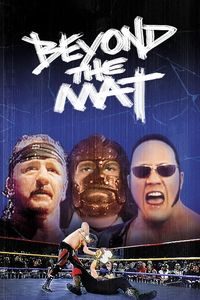
    (On VHS, April 2001) I’m not a wrestling fan, but it’s not necessary to be one to be amused, disgusted, fascinated and amazed by the wild universe exhibited by Barry W. Blaustein in Beyond The Mat. Blaustein is obviously a die-hard fan, and his film shows it, treating the subject with a brutal honesty but never a mean spirit. Not a WWF/WWE puff-piece nor a naively sophisticated exposé on how wrestling is (newsflash!!) all fake, Beyond The Mat goes past all the false pretence to focus on the people behind the wrestlers. Think it’s fake? You’ll see real stitching and real pain. You’ll see the glitz of the WWF/WWE and the scum of the bottom-feeders. You’ll see a maniac in the ring and a model father out of it. You’ll see three wrestling “archenemies” chatting up a little kid. You’ll see too much of a reunion between maladjusted dad and daughter. You’ll see the various ways a wrestler can go over the hill. Most of all, you’ll see one of the most revealing documentaries of the year, a masterful tour through the grotesque and the pathetic, the awful and the stunning. Blaustein knows how to package his subject, but most of all it’s his love for his subject that gives the film its ultimate edge. Wrestling fans will love it, but average people shouldn’t pass it up. Good stuff.

  • American Psycho (2000)

    American Psycho (2000)

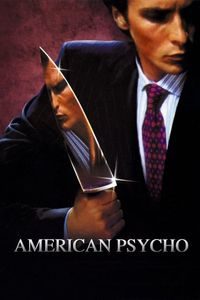
    (On VHS, April 2001) Both less entertaining and more interesting than expected, American Psycho ultimately wimps out before saying something interesting. As far as performances go, this is entirely Christian Bale’s show as he manages to credibly personify an extreme character. The axe-murder sequence remains the film’s high-point mostly because of his manic portrayal. Even though many might mistake the film as belonging to the slasher genre, it’s considerably more unnerving than your usual teen horror film, both because it’s better-written -with some social commentary- and because it is extremely violent while not seeming too exploitative. The extremely black humor of the film also works to distance it from its more routine brethren. Unfortunately, while the film had some definite potential, it squanders it by an ending that wants to have it both ways without committing. (For instance, it would have been more interesting to make the point that in this environment, even a full-blown confession might not matter.) Alas, threads are left dangling, the film defuses its own bite and the whole point of the film is lost.

  • Sea Change, James Powlik

    Dell, 1999, 481 pages, C$9.99 mmpb, ISBN 0-440-23508-1

    Hey, an oceanic thriller! No, it’s not JAWS. Tagline: “There’s a new terror under the sea with a mind and a hunger of its own.” No, it’s not JAWS. It opens with a few death, continues with a few more deaths, and features quite a few more deaths before the end comes by. No, it’s not JAWS. Though, like most aquatic monster thrillers, the comparisons are hard to ignore.

    It’s a shame, really; Steven Spielberg’s blockbuster film so definitely imprinted itself on the collective unconscious that any novel about a roughly similar situation (danger underwater!) will labor under undue expectations. But then again, it allows us critics to make easy comparisons and skimp out on actual critical content.

    Which is fortunate, given that Sea Change stands up as a particularly average thriller, JAWS comparisons or not.

    You know the drill; at least one person dies in the prologue, in a gruesome manner that can be delightfully interpreted as a supernatural event. Then the protagonist comes in, an oceanographer named Brock Garner. Fortunately, he’s described as being “renegade”, thereby qualifying to be the hero. (When was the last time you read a novel about a professional hero described as “a loyal follower”, “unimaginative” or “strictly average”?) The female sidekick doesn’t come in long after. Ellie Bridges is a doctor, easily embodying the motherly characteristics of any good love interest. (Oh yeah; she’s also a renegade doctor. Good match.)

    But that’s not all! The antagonist is a rich (uh-huh) shallow (yah) media-hungry (familiar, yet?) pseudo-environmentalist (aren’t they all?) magnate who, oh heavens, married Brock’s ex-wife. Don’t worry; she’ll come around to our stalwart hero for some much-needed true lovin’. Plus, the clueless antagonist will eventually make an ambition-driven mistake or two that will effectively seal his fate. It all comes together in the end. Natural disaster plus military conspiracy plus human conflict here and there and pretty soon, you’re talkin’ thrillah!

    Mix in the requisite evil father, capable military units, more gruesome deaths and a countdown to some major havoc, and you get the thriller that you expect. Granted, Sea Change gets better as it advances, even including a few spectacular scenes toward the ending as all means necessary are taken to stop the evil menace. (Which, predictably enough, isn’t completely stopped in the epilogue.)

    There’s a certain journeyman quality to Sea Change in that it does the job, but with no extras. If you’re stuck with the book and want to care about the characters, you will, but they won’t grab you by the throat by themselves. In much the same vein, the various incidents are interesting, but not overly so; for his next novel, Powlik could use some brush-up in convincing dialogues and sustained tension. It’s a novel whose essence is hard to isolate, liquefied as it is in a sea of averageness.

    Which would have been fine if it would have been snappy, but Sea Change isn’t, dragging along for far too long while carefully setting up the mechanics of its plot. At least one subplot (the insensitive father-figure with a secret to hide) could easily have been removed, along with many other sections that don’t really advance anything or give us something new. With thrillers of this sort, we know where we’re going; we don’t need to have our hands held along the way.

    Fortunately, few of the above should apply if all you’re looking for is decent time-wasting entertainment. Powlik hasn’t wowed anyone with Sea Change, but at least he demonstrates his ability to write a baseline thriller. The plentiful technical details are reasonably convincing (be advised that there’s a glossary hidden at the end), the monster hasn’t been seen before and the ending delivers a reasonable amount of bang for the effort invested into it. As far as nautical thrillers go, it’s no, say, Steve Alten’s Meg, but it’ll do.

  • Guilt by Association, Susan R. Sloan

    Warner, 1995, 529 pages, C$6.99 mmpb, ISBN 0-446-60306-6

    From the blurbs reprinted on the first few pages of the book:

    • ”…its climax is a tense courtroom showdown that ends on a genuine surprise” —Seattle Times
    • ”…building to a splendid and ironic surprise”—Los Angeles Times
    • ”…a conclusion that will chill you to the bone”—West Coast Review
    • “What are they smoking on the west coast?”—Christian Sauvé

    As a thriller reader, I want to be entertained. If I can’t be entertained I want to be informed. If I can’t be informed, at least surprise me. And if you, as a thriller writer, can’t do any of these three, you might as well pack your things, stay home and stop writing novels because it’s not worth the time to read your stuff.

    The back cover of Susan R. Sloan’s Guilt by Association promises a good story. Thirty years after being brutally raped, a woman takes revenge upon her aggressor, now running for the White House. Okay, sure, fine, sounds interesting, let’s see it.

    Now, a competent thriller writer would have immediately seen that the story in here is the revenge. Not the rape nor the aftermath of it, but the payback. Three hundred pages, a well-deserved conclusion, end of book and everyone goes home happy.

    But not Sudan R. Sloan. The initial rape takes place upon twenty-eight exploitative pages. Then we’re set for nearly three hundred pages of excruciatingly long setup before our two main characters meet again to kick in the revenge story.

    You see, our heroine isn’t merely raped, but utterly destroyed. Her boyfriend breaks up, her family can’t faced what happened to her, she quits school, she can’t hold a job, etc… She manages to live in a commune during the sixties and not have sex with anyone. (Obviously, that particular trauma will take pages to resolve) Page per page, we get not a thriller, but pretty much a fictional biography detailing what she does year after year in exasperating detail. Not much of this has any relevance whatsoever to the main plotline of the thriller. SKip, skip, skip pages if ever you want to remain sane. Most of the psychosocial insight in these pages is the very same stuff you can get from watching a few Discovery Channel specials on the past few decades.

    During that time, of course, the antagonist has a few kick-the-puppies scenes in which he becomes even more ruthlessly evil.

    When the revenge plot finally gets going, something very curious happens. After decades of obsessive details about our protagonist, the narrative skips over a few crucial hours.

    Now, why would that happen? Don’t think about it. Don’t even pause to consider the question, because otherwise you’ll figure out the conclusion a hundred pages before it comes up. In fact, you don’t even need to pause for it because it’s so blindingly obvious that even the dullest thriller reader will figure it out.

    As I said, if you can’t entertain or inform me…

    The ultimate result is a complete mess, a thriller so undeserving of the title that the marketing department at Warners should be fined. Guilt by Association is a boring novel with nothing new to say, a terrible structure, infuriating failed emotional manipulation, an astonishingly obvious “twist” ending and a series of stupid choices made by the author. I’d burn it in a second if I didn’t want friends to believe me when I describe what may very well be the most pretentious, most boring thriller ever.

    And don’t even get me started on so-called “professional” reviewers who were taken by the plot or surprised by the ending…

  • Halfway Human, Carolyn Ives Gilman

    Avon EOS, 1998, 472 pages, C$7.99 mmpb, ISBN 0-380-79799-2

    I usually try to stay away from novels nominated for the Lamba prize. This award, given each year to “the science-fiction or fantasy work that has most successfully investigated gender issues” usually seeks to reward works dealing with themes and issues about which I couldn’t care less. As they say, message fiction tends to be interesting only when it’s vehiculing your message; as a white heterosexual male, I don’t have a lot to say about gender or gay issues.

    But I nevertheless ended up with Halfway Human in my reading pile, halfway dreading the prospect of yet another boring The Left Hand of Darkness knock-off. Certainly the back cover doesn’t inspire confidence, talking about “Tedla is neither he nor she… an asexual class of ‘blands’… shocking truths hidden inside this sexless, tormented creature.”

    If I hadn’t already paid good money for the book, I most probably would have put it back on the shelf.

    And while that wouldn’t have been a tragedy, it would have been missing out on a decent SF novel. While Halfway Human obviously carries a message, it’s not out to stamp it on everyone’s foreheads. It’s all too easy to be carried away by the storyline and stop trying to decode what’s the real underlying theme.

    Most of the novel takes the form of a first-person narrative in which Tedla, our friendly bland protagonist, tells of his short and so far unhappy life. Colonized by humans and then cut off from galactic civilization for decades, Tedla’s homeworld has -we progressively learn- canalized its explosive population growth in the eugenic selection of males and females, assigning the remainder of the teen population to blandness—a servant class. While overly sentimental and predictably dark, it’s a good story verging on the fascinating.

    The other half of the plotline is concerned with a xenosociologist named Val, who comes into contact with a suicidal Tedla, interviews it -hence the first-person segments- and eventually tries to save it from the authorities who would like nothing so much as to ship Tedla homeside to keep their eugenic practices secret.

    The human society described in Halfway Human is separately fascinating because of its rigid control over information, where copyrights can be a prized heirdom, architectural style can be licensed, information is the only commodity that is worth its transport costs and a researcher has to be rich or employed by a gigantic corporation in order to be able to access the required literature. To myself, obsessed of late by the increasingly dangerous legal precedents in the field of intellectual property, this facet of the novel proved to be a chilling warning and an unexpected delight.

    But the core of the book, make no mistake, is with Tedla and its story. Unlike most Lambda-running fiction, Halfway Human is told in a crisp, direct, accessible style that did much to raise my opinion of the book. Gilman also remains faithful to her characters; no sudden change of heart, unexpected romances or sudden gender-switch in store here. This being said, the ending is a bit of a cheat, though almost any trick is acceptable when a happy ending is concerned.

    In short, Halfway Human is a good SF paperback novel. Not spectacular, a bit too long to be really effective but clear and steadily interesting, Carolyn Ives Gilman could have done worse as a first novel. Now let’s see how her second one will turn out.

  • The Ice Limit, Douglas Preston & Lincoln Child

    Warner, 2000, 449 pages, C$36.95 hc, ISBN 0-446-52587-1

    This is a novel about a rock. Not just any ordinary rock, mind you: For one thing, this one weighs a few thousand tons. For another, it’s most probably not from around here, being exceptionally dense, of blood-red color and unbreakable by conventional means. It’s also located on Isla Desolacion, a forsaken island in Argentinean territory. For most of these reason, this is an exceptionally valuable rock, and our billionaire-protagonist wants it for his museum. One last detail: That rock has the unfortunate tendency to zap lighting bolts into people.

    Even if you don’t really like Douglas Preston and Lincoln Child’s thrillers, you’ve got to hand it to them; they know how to come up with an irresistible premise. From the monster-loose-in-the-museum premise of The Relic to the monsters-loose-under-New-York story in Reliquary, they’ve upped the ante with each successive novel. If the expression “hack writers” didn’t have such unpleasant connotation, that’s what we could call them; they write to mass-market specifications, turning out perfectly competent thrillers with adequate characters, fluid writing, good technical details and a structure calculated to deliver steadily more shocking jolts. Hey, it’s a bestselling living.

    As it is, the plot of The Ice Limit is immediately gripping. A meteorite-hunter is hired by a billionaire in order to head an expedition to bring back The Rock to the United States. Given the unusual nature of the object, the novel then introduces one very unusual team, a wonderfully reclusive engineering business (ESS) specialized in huge-scale projects, from volcano manipulation to the re-creation of JFK’s real death. ESS is The Ice Limit‘s real delight, such an intriguing creation that I could easily a series of stories built around that company. But then again, I’ve always been a sucker for engineering fiction.

    In any case, the plan to bring back The Rock quickly sets into motion. A boat is built, then heavily modified and disguised by ILM. a sexy female scientist is introduced. Argentinean officials have to be bribed, except one who vows a terrible revenge. The teams arrives at Isla Desolation.

    More people die. Secrets are uncovered. More people die.

    It’s been said before, but a fundamental difference between techno-thrillers and science-fiction is how the author reacts to change. Science-Fiction usually adopts the attitude that “the genie is out of the bottle” and that we’d better adapt to change because change isn’t going away. Techno-thrillers, on the other hand, often shoo away the upsetting change, burying, destroying, ignoring it in the hope that the day after, everything comes back to normal.

    And, unfortunately, -without going in details-, that’s pretty much what happens in The Ice Limit, which nearly ends up being one of the most depressing thrillers I’ve read in a while. The massive body count and ultimate futility of the exercise brings to mind authors handshaking over an agreement that “some things are not meant to be known by humankind”—and that hardheaded engineers are doomed. This attitude is partially redeemed (saving the book from an awful ending) by a last-minute twist that will be familiar with the weirder speculations of British scientist Fred Hoyle. (How’s that for a literate spoiler? Don’t think too much about it.)

    Fortunately, the rest of the book is pretty good, and compulsively readable. The characters do the job for which they were created, and The Rock ensures a massive presence over the whole story. The engineering firm, as mentioned previously, is a wonderful creation I’d like to see elsewhere. It’s unfortunate that the end sucks off a lot of the novel’s energy, but feel free to skip the last fifty pages and imagine a better ending for yourself. At least that’ll entertain you until Preston and Child deliver their next thriller.