Reviews

  • Matter’s End, Gregory Benford

    Bantam Spectra, 1994, 294 pages, C$7.99 mmpb, ISBN 0-553-56898-1

    Gregory Benford’s novel-length fiction can be distinguished by two characteristics: For one thing, it’s usually packed with scientific details, lengthy explanations, a deep understanding and love of the scientific method. Through books like Cosm and Timescape, Benford has produced some quintessential science-fiction whose realism was only exceeded by masterful writing.

    Which, alas brings us to a second distinguishing characteristic: About half of Benford’s novels are overlong borefests, whose few good ideas are drowned in pretentious writing, overlong plotting and a complete lack of interest. Exhibit A for the prosecution’s case is the “Galactic Center” series, which ably spreads a novel or two’s worth of interest over seven lifeless volumes. Exhibit B is The Stars in Shroud, an admittedly early novel which distinctly has no interest whatsoever.

    Fortunately, Matter’s End is a short story collection, which effectively diminishes any length concern. The first surprise is to be found in the table of content, where 21 stories jostle to be included in 290-odd pages. Discounting the two longest stories, we’re left with 19 stories over less than two hundred pages, an average of less than a dozen pages per story.

    The variety of the style exhibited by Benford is impressive. Beyond the usual past-tense-straight-narrative, there’s a sale pitch (“Freezeframe”), first-person narration (“Mozart on Morphine”), exam questions (“Calibrations and Exercises”), a mission report (“Side Effect”), tips and hints (“Time Guide”), a radio news transcript (“The bigger one”) and one stream-of-consciousness (?) thrown in for good measure (“Slices”).

    The genre of the stories is usually science-fiction, though maybe not as hard as you may think. There’s a smattering of fantasy, some humoristical SF but mostly, some bread-and-butter SF not especially distinguished by hard scientific content. As a collection, it’s easy to get into and easy to continue reading.

    There are a few duds, mind you. Both novelettes are overlong: if “Matter’s End” eventually comes into its own a few pages before the end, “Sleepstory” made me go “Is that it?” Given that this is a collection that spans nearly thirty years of Benford’s career, it’s almost natural that his earliest stories tend to be weaker. “Stand-in” seems particularly pointless, a fate shared with “Nobody lives on Burton Street” and “We could do worse”, though the last two are also stuck in the bad pessimistic late-sixties mindframe. Finally, “Shakers of the Earth” demonstrates an occupational hazard of being an SF writer; Once you’ve seen JURASSIC PARK, it’s hard to be wowed by a 1980 story featuring -gosh!- resurrected dinosaurs. But even Benford acknowledges this last one in his afterword.

    Fortunately, the rest of the collection holds up very well. I can’t understand why “Calibrations and Exercises” hasn’t become an SF short story classic. “Freezeframe” and “Proselytes” exemplify Benford’s best witty and succinct style, by making a strong point and immediately ending the story. “Centigrade 233” is a good exploration of the social role of SF, though don’t think too hard about the title or you’ll end up guessing the end. Those who read science-fiction to find truth about science and scientists should be pleased by the title story and “Mozart on Morphine”. It’s always a pleasure to read material by a professional who knows what he’s doing.

    In this afterword, Benford makes the point that for writers, short stories are fun. And if “fun” has not exactly been one of Benford’s dominant characteristic in his novels, he’s obviously on a looser leash here. The result is a decent anthology of short SF fiction, well worth the read for genre fans, even for those who find the author to be very uneven. So’s this collection, but at least it’s unevenness on a faster scale.


  • The Dragon Never Sleeps, Glen Cook

    Popular library, 1988, 500 pages, C$4.95 mmpb, ISBN 0-445-20349-8

    It’s the sacred duty of every conscientious book reviewer to steer other readers toward books they might otherwise have missed. This duty becomes even worse, attaining messianic proportions, whenever the reviewer has also missed the book when it first come around.

    And, boy oh boy, has everyone missed The Dragon Never Sleeps. Prior to recently reading a great review of it in a magazine (a review of the French translation of the book, no less!), I had never even heard of the novel, and in fact still associated Glen Cook only with that “Black Company” fantasy series.

    Fortunately, the local Ottawa Public Library had a copy of Cook’s The Dragon Never Sleeps on its shelves (along with a few other books, which finally made me realize this was the same Glen Cook of the “Wizard” fantasy/comp.sci. series) so I could comfortably check for myself whether that rave was deserved or not.

    In short; Bring back the book in print right now, it’ll sell thousands.

    Any attempt at a plot resume would be cause for headaches for both reviewer and reader, involving such classic space-operatic props as family clans, galaxy-spanning empires, aliens, space battles, clones and political intrigue. Add a dastardly plan to destroy the galactic social order, gigantic space stations, decantable military personnel, some weird sex and age-old secrets and you’re in intensely familiar territory.

    But it’s all handled so well that you’d swear you’re reading new-millenial SF with its methodical re-use of all possible established conventions, with an extra helping of rational weirdness. The novel hasn’t aged a bit, an iota, a single little particle since 1988. Read it today, and you’ll think of Banks, Alastair Reynolds or Stephen Baxter. It’s quite a remarkable feat.

    Granted, this isn’t an easy novel to digest. The cloned versions of four characters alone almost add up to half the Dramatis Personae, and they’re seldom differentiated. It’s a fun novel to read, but it’s also devastatingly easy to miss a few crucial lines. The narrative is so dense that the information most probably won’t ever be repeated. And yet, unlike some other hard-to-read novels you might have tried, the style is not difficult or complex; it’s the sheer density of plotting that will trip you up.

    The first hundred pages won’t help, as you’re boldly thrown in a brand-new universe that doesn’t have a previous trilogy as a world-building crutch; you’ll have to assimilate all information on the fly, even as complex events are already set into motion. At least you won’t be able to predict what’s going to happen: The body count starts early and rarely eases up. It would be a sacrilege -and an undeserved marketing blurb- to compare The Dragon Never Sleeps to Dune, but… there are similarities.

    It all adds up to a darn good space opera. Vivid space battles are sprinkled throughout the book. Breathtaking betrayals abound. Grand concepts are revealed. Big fun for all, as long as you’re still following what’s happening. Plus, hey, it’s got a trilogy’s worth of material between two covers; you have to like that!

    In short, I liked it a lot, and if you can find the book, I don’t doubt that you’ll enjoy it too. It should be reprinted soon, if Cook’s current popularity -and vocal fan-base- is any indication. A little gem overlooked by most critics upon its release, The Dragon Never Sleeps deserves a good look. Certainly, I plan on re-reading it in a few years, just because I’ve got the feeling I’ve missed out on so much!

  • What Women Want (2000)

    What Women Want (2000)

    (In theaters, March 2001) It’s not easy for an actor to grow old, but Mel Gibson has done so enviably well, enhancing a tough-guy image with considerable willingness to play quirky roles and hard-won charm tempered with age. In short, he’s the perfect lead for What Women Want, a gender-driven comedy about an uber-macho with the sudden power to read women’s minds. Fantasy-lite concept handled with some rough skill, though a promising first half eventually peters out in traditional dramatic arcs, including a few long-foreshadowed life crises. It’s not even a passable script overall, with Marisa Tomei pretty much used as a one-joke character despite the overall creepiness factor. Well, at least it’s good to see her in another big-budget role again. But, overall, What Women Want is pretty much what the audience wants, and if it doesn’t really go anywhere new or fresh, at least it’s reasonably entertaining up until the last fifteen saccharine minutes.

  • U.S. Marshals (1998)

    U.S. Marshals (1998)

    (On TV, March 2001) Serviceable chase film starring Tommy Lee Jones and Wesley Snipes. Several twists and turns, most of which can be seen well in advance, including a traitor that every one can identify from first appearance onward. The directing is average, save for an exceptional long take detailing the aftermath of a plane crash. Some wholly unnecessary scenes and characters, like “the girlfriend” and the opening sequence, burden the film with unnecessary elements. A few adequate action scenes. It’ll do if there’s nothing else on TV. Otherwise, don’t bother.

  • Sugar & Spice (2001)

    Sugar & Spice (2001)

    (In theaters, March 2001) Any film that appears in the middle of January and sinks without a trace has got to be complete trash or a pleasant surprise. Such is Sugar & Spice, not a classic by any mean but a conveniently amusing comedy with a sharper sarcastic edge that you might have expected from the trailers. The low budget and deficient technical qualities (the first half-hour is marred by an inaudible sound mix) are disappointing, and so’s the quick ending, but the rest is good enough. Don’t expect much and you won’t be disappointed.

  • Wasn’t the future wonderful?, Tim Onosko

    Dutton Paperback, 1979, 188 pages, C$12.95 tpb, ISBN 0-525-47551-6

    Save for the occasional odd SF paperback, most of the books reviewed in these chronicles are easily available from libraries or used bookstores. Anything that makes it up to frosty Ottawa, Ontario can probably be acquired anywhere else in North America, so I feel safe in not boring my readers with arcane material or, worse, whipping them up in a frenzy about some obscure book they’ll never find.

    So it pains me to have to rave about a full-page coffee-table paperback published in the late seventies. Most certainly long out of print, presumably unfindable by casual readers, Wasn’t the Future Wonderful? is nevertheless a must-read, a definite curio for anyone interested in social change, science-fiction, history, futurism or what I’d call innovation management.

    Subtitled A View of Trends and Technology from the 1930s, Wasn’t the Future Wonderful? is simply a collection of the most outrageous articles published by “Popular Mechanics”-type magazines during the 1930s, wrapped in an introduction and a few follow-up notes.

    It doesn’t sound like much, a reprint of musty old mags, but when you encounter such grandiose headlines as “Explaining technocracy: A revolution without bloodshed”, “Airport in the Heart of a City Provided by Logical Design”, “Big Cities to Have COOLED Sidewalks”, “The Great Wall of China to be Motor Highway” or “Science Shows NOISE Causes Indigestion”, there’s bound to be more than nostalgic interest.

    Each article is accompanied by superb illustrations that are often more interesting than the articles themselves. As only full plates are reprinted, some pages -such as an article by the great Nikola Tesla himself- are adorned by flavor-of-the-time advertisements. Tires for $2!

    In any case, it’s certainly fascinating to peer at what the forward-thinkers of the 1930s were planning for the future. Granted, many things came to pass (like television), but in almost all cases, the end result was realized using much different means, and with far different consequences, than the idealized version.

    But it’s for the futures that never happened that Wasn’t the Future Wonderful? becomes fascinating. Nowhere is this more obvious than in the fields of large-scale engineering, where dozens of gargantuan schemes (an air-protection installation inside London, a fighter-jet skyscraper dwarfing the Eiffel tower, six-level highways, plans to radically modify intersections, etc…) are proposed without any regard as to who would want such a thing. Wasn’t the Future Wonderful? then becomes an exercise in how -or why- some things just aren’t practical.

    Granted, Popular Mechanics probably wasn’t the orthodox view of the nineteen thirties, but was it so different from today’s “Major new breakthrough!” articles published on a daily basis in our newspapers? Predictions might be more restrained, more subtle today, but it doesn’t mean they’re better, or more accurate.

    The book concludes with a wonderful article entitled “Most Scientific Fiction CAN’T COME TRUE”, in which such wacko schemes as teleportation, travels to the moon or radio signals to Mars are relentlessly debunked. I hope they’re as right about teleportation as everything else.

    In any case, Wasn’t the future wonderful? is a wonderful book, filled with surprises and unusually good at giving a sense of technical perspective. Teachers could use it to develop scientific literacy. SF Writers could use it as a guide to non-silly prediction. Artists could use it to acquire a sense of realistic craziness. Everyone else can use it to spark discussion, jog those little gray cells or simply have a good time. It’s a fun book. Bring it back in print!

  • Say It Isn’t So (2001)

    Say It Isn’t So (2001)

    (In theaters, March 2001) Well, the age of the gross-out comedy is upon us, and as if it wasn’t enough that almost all of them are There’s Something About Mary ripoffs, what really makes’em stink is that they’re just not funny. I mean, who could reasonably greenlight a comedy about incest featuring mutilation and poking fun at amputees? No small wonder the film elicits only a few forced groaners and quickly sank at the box-office. It doesn’t help that Heather Graham is upstaged in the looks department by the “other woman” character (who’s in barely three scenes), and that Chris Klein is one of the blandest romantic protagonist imaginable. (He’s interesting for maybe five minutes, during which he sports a slacker haircut that disappears almost immediately.) Unfunny, unfocused, exasperating by its willingness to always go for the obvious gross-out, Say It isn’t so unfortunately is. A leading contender for worst-of-year title.

  • Riddler’s Moon (1998)

    Riddler’s Moon (1998)

    (On TV, March 2001) Weak, slow-paced, cheap-looking made-for-TV film. Concerns a handicapped hero, a drunk father figure, a squeaky-voiced single mother (Kate Mulgrew, in-between Star Trek Voyager episodes), dumb rednecks and an extraterrestrial relic buried underground. If you fall asleep during the film, you’ll have the good fortune to miss the idiotic ending, where the rednecks help, the father-figure gets together with the single mother, the kid gets cured… oh, and everyone else’s memory gets erased for no good reason. Hm, now that you know the ending, there isn’t much point in seeing it, right? Combines fluffy science-fantasy with the low production values of a low-budged TV film to create the ultimate in cinematic irrelevance! On the other hand, it is one of the few rural SF stories I can recall. One point for originality.

  • Miss Congeniality (2000)

    Miss Congeniality (2000)

    (In theaters, March 2001) Sandra Bullock has always projected a girl-next-door image, even in her tougher roles, but films that have taken full advantage of that duality have been few and far between. Since Speed, her career has been filled with wrong vehicles (28 Days, Forces Of Nature), half-successes (Demolition Man) or films no one wants to discuss again (Speed 2). But she really gets to show her stuff with Miss Congeniality, as an “ugly” FBI agent forced to undergo a complete makeup in order to compete in a Beauty Pageant. Girls will love the fantasy; guys will simply drool over seeing her in Lederhosen, bikini and evening gown in a short thirty-minutes stretch. The rest of the film is paint-by-number fish-out-of-water scripting, with few surprises but sustained fun from start to end. Not bad.

  • Mad Max (1979)

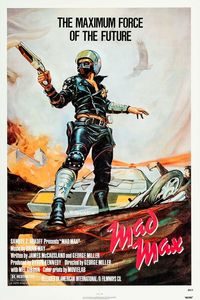
    Mad Max (1979)

    (In theaters, March 2001) Worth seeing out of historical interest, but that’s it. Doing wonders on a very low budget, this first effort by George Miller starts with a very good car chase whose energy level is sadly not surpassed anywhere later in the film. The middle section is a predictable bore, as it laboriously sets up a revenge story whose shocker comes only fifteen minute before the end of the film. A young Mel Gibson stars, looking a lot like the popular stereotype of a gay porn star. Interestingly enough, the whole post-apocalyptic thematic of the two sequels is nearly undetectable in this first film, as much a consequence of the low-budget than a lack of imagination at that stage. Often unintentionally ridiculous by its lack of funds and polish.

  • The Genesis Code, John Case [Pseudonym]

    Ballantine, 1997, 467 pages, C$8.99 mmpb, ISBN 0-345-42231-7

    I love thrillers. I read dozens of ’em per year. Naturally, I now demand more that the simple obvious plots to get me interested. The days when I could get excited about a simple governmental conspiracy are long past, unfortunately; now, if it doesn’t involve at least the mafia, the Girl Scouts and the flat-earth society, I don’t even bother reading past page 100.

    I jest, and yet I find some plots, character and situation too clichéd to be tolerable. I demand to be surprised by the author, even at the expense of realism if appropriate. If I can predict the course of a novel when I’m not even halfway through, it means someone’s not doing his job, and even though I could be wrong, I don’t think it’s me.

    So, whenever The Genesis Code opens up with an Italian priest going gonzo after hearing a confession from a highly-rated doctor, it doesn’t even take the DNA helix on the cover to figure out where this is going. Whenever the said doctor exhibits an interest in genetics and religious artifacts, it only confirms suspicions. By the time a link is uncovered between deceased women and a cute kid comes in, it’s a lot like being hit in the head repeatedly by clue-by-fours.

    Unfortunately, exhibiting all the gosh-wowedness of a first-time novelist, “John Case” (it’s a pseudonym) keeps hammering it up until the last sentence, which laboriously demonstrate what we’d been expecting for a while. In terms of surprises and originality, The Genesis Code rates as a solid, tedious dud. I’ve seen the idea explained more interestingly in several science-fiction short stories. Often.

    The flaws don’t stop there; the plot is constructed in such a way that one major character really only comes into the novel in the last third, feeling somewhat like an intruder. Many scenes drag on for far too long. The bad guys are unkillable. There’s a cute kid.

    But despite everything, The Genesis Code remains a modest success, mostly because it does what it does in a reasonably efficient fashion. The pacing moves quickly past its lulls and the writing style is all very readable. The characters are adequately defined. I was quite taken with the description of an order of elite, unstoppable Catholic assassins even though that particular concept, again, isn’t totally new.

    And in the end, it’s the old things well-described that make up most of The Genesis Code‘s definitive interest. We’re told that “John Case” is a pseudonym for an investigative journalist (though, from the laudatory passage on tabloid newspapers -see P.348 and P.362-, we can safely guess that he’s not exactly working at the Washington Post.) and his professionnalism shows in the amount of well-presented details that bolster the credibility of the novel’s mechanics. The protagonist is a security consultant, and his action do reflect this mindset, as does his investigative methodology. The more scientific/technical details also seem credible.

    Even though you might guess the end fifty pages in and see many passages as being needlessly long, there’s seldom a reason to stop reading. Granted, this doesn’t make The Genesis Code a remarkable thriller, but at the very least it won’t you make curse the (short) time you’ll spend reading it. And, who knows, maybe you won’t be jaded enough to guess the ending after a few pages.

  • Mad Max Beyond Thunderdome (1985)

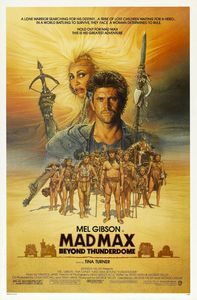
    Mad Max Beyond Thunderdome (1985)

    (In theaters, March 2001) Seeing all three Mad Max successively can be a curious experience, as the scope of each film increases dramatically each time, with lavisher sets, better technical directing and a more polished script each time. This third film opens with a helicopter shot (!) and features sets with hundreds. Despite the enjoyable “Thunderdome” sequence, it’s a mistake to keep the Mad Max character (Mel Gibson, looking a lot like a long-haired George Clooney) off his natural element; the road. Tina Turner is gorgeous, almost worth by herself the time to see the film.

  • Mad Max 2 [The Road Warrior] (1981)

    Mad Max 2 [The Road Warrior] (1981)

    (In theaters, March 2001) Much better sequel to the original film, this time taking the post-apocalyptic motif to an extreme that would be replicated in countless imitators. Obviously made with a higher budget that the prequel, and with considerably more assurance: The end action scene is a bona-fide classical sequence. Mel Gibson here looks like Russell Crowe in a career-defining bad-ass role. A shame that the script couldn’t have been more polished, because there’s a long middle stretch, and the dialogue (especially the villains’) is unintentionally hilarious. Definitely worth a rental for action fans, though. First film well-summarized in the first few minutes of the sequel.

  • Enemy At The Gates (2001)

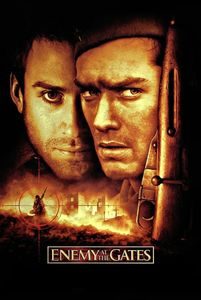
    Enemy At The Gates (2001)

    (In theaters, March 2001) The battle for Stalingrad ranks as one of the most dramatic stories of World War 2, and it was about time for a big-budget film to be made on the subject. That it ends up starring high-powered actors like Jude Law, Joseph Fiennes and the incomparable Ed Harris is just icing on the cake. The opening sequence is gripping, as is graphically shows brand-new recruits being thrown in a battle where each side can shoot at them. The rest of the film is mostly good, though by the end an ordinary love story threatens to topple the whole film. Any other film can and does include the requisite romance, so couldn’t we focus on Stalingrad some more? In any case, the images are gripping, the action scenes work well and while the cat-and-mouse game between opposing snipers could have been more focused, there’s enough of it to be satisfying. A good film made less special by a tacked-upon romance, Enemy At The Gates still stands as the first good film of 2001.

  • Dude, Where’s My Car? (2000)

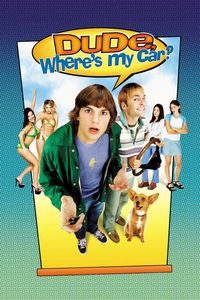
    Dude, Where’s My Car? (2000)

    (In theaters, March 2001) Once in a while, there comes a film so mind-boggingly odd that it’s a wonder it got made. That’s exactly Dude, Where’s My Car?, a delightful absurdist science-fiction comedy that’s so good that it might be hard to acknowledge the fact that it eventually has to end. You wouldn’t expect a film about two slackers trying to find their car to be so inventive, but it just keeps building to better jokes. It’s goofy, good-natured, hilarious, without an ounce of pretension and with a surprising lack of gross-out gags so prevalent in current comedies. I laughed like an idiot and predict a wide cult following. Sweet!

    (Second viewing, On DVD, August 2001) It’s remarkably easy to dismiss this film as being nothing more than a stupid stoner teen comedy, but look closer and you’ll change your mind. Oh, I’m not saying it’s smart-disguised-as-silly, but there is a considerable amount of clever go-for-broke gleefulness in the way the film just marches on and boldly goes places you just don’t expect. It’s not only a blast on a second viewing, but on the third too. The DVD includes some pointless “extended scenes” you might be hard-pressed to distinguish from the originals. I also features an audio commentary track that’s a trip of its own: It starts off in mid-laugh, continues incoherently for a few minutes, breaks off as one of them goes get beers (or goes to the bathroom) and generally presents a picture of the film being a perfect accident where serendipity had at least as big a role to play as the screenwriter. Still, it doesn’t change my mind; the film is a great little comedy with many delightful moments. See it! It’s underrated!