Reviews

  • The One (2001)

    The One (2001)

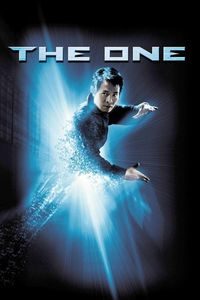
    (In theaters, November 2001) The Theorem of Convergent Movie Premises goes like this: however original and fresh any film premise is, by the time the film is over, Hollywood will find a way to make it fit in one of the few depressingly similar templates at its disposition. That’s how, for instance, Alien and The Hollow Man eventually end up with the same kill-the-monster third act, or any number of romantic comedies with seemingly disparate protagonists all end up playing pretty much the same dramatic scene. Despite an intriguing promise and the capable Jet Li, The One also ends up feeling like yet another formulaic action film with scarcely any excitement past the first few minutes. Okay, so some of the special effects are fun (the first action scene even manages to do something interesting with bullet-time effects), but pretty soon your believability sensors will start protesting at the inconsistent usage of the superpowers. Don’t be surprised if you starts picking holes in the premise even as the film is doing its best to ignore them. (My favorite is; how come don’t we have more super-powered elderly people, as their other-universes avatars die one after the other?) It’s a shame to see Jet Li once again (see Romeo Must Die, Kiss Of The Dragon, etc.) suffer at the hands of a director who doesn’t know how to film a martial art sequence. Not that the screenwriter is necessarily more competent. Once again -see Ghosts Of Mars, or better yet don’t-, I felt sorry for Jason Statham. Granted, there are nice images, from sparks-fighting to motorcycle-swatting, but the rest of the film is instantly forgettable.

  • Novocaine (2001)

    Novocaine (2001)

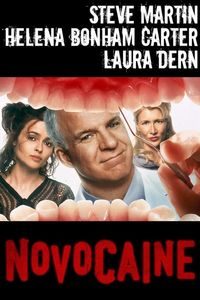
    (In theaters, November 2001) I happen to believe that there’s a place in every cinephile’s heart for the little B-movie that works, the out-of-left-field video rental that simply proves to be a fun rental on a slow evening. No top-ten material nor DVD-essential, Novocaine nevertheless proves to be a fun black comedy—a light noir film, if you like. This first feature by director David Atkins treads in the same water as 1999’s under-appreciated Goodbye Lover, with a slightly off-kilter send-up of the usual genre conventions. Novocaine is carried by Steve Martin, with Helen Hunt and Helena Bonham Carter in crunchy roles (Voyeur alert 1: Bonham Carter even takes off her clothes. Voyeur alert 2: She’s more beautiful with them on.) and Kevin Bacon’s cameo is simply hilarious. This is not a film that succeeds because of its plot: Due to the small budget, the cast is very small and the whodunit is consequently easy to unravel. But even then, the film’s sense of fun is constant, from the meta-fictional Bacon character to the several small scenes almost parodying the genre conventions. (Think escapes; the easy ones and the hard ones.) While the directing may be a bit flashy for some, special merit should be given to a pair of continuous shots inside the dentist’s cabinet, wonderful examples of cinematic technique. It all adds up to an unassuming, fully satisfying thriller that should do the job next time you don’t know what to rent at the video store.

  • New Waterford Girl (1999)

    New Waterford Girl (1999)

    (On VHS, November 2001) Anyone who grew up in a small town where they “didn’t quite belong” will empathize with the protagonist of this story, whose schemes to get to the big city become increasingly desperate. Don’t be put off by the low budget or what is initially one of the most depressing environment put to film: New Waterford Girl gets better as it goes along, and even ends on a triumphant note of sorts. Liane Balaban makes a sympathetic heroine, and the supporting cast works just as well. The script works well within the confines of the production constraints, with a few fun scenes that will stick with you. At last, a Canadian film that’s not too embarrassing!

  • The Complete Idiot’s Guide to Publishing Science Fiction, Cory Doctorow & Karl Schroeder

    Alpha, 2000, 360 pages, C$25.95 tpb, ISBN 0-02-863918-9

    One of the most unlikely publishing trends of the nineties has been the Dummies’ Guide to… series of books, along with the inevitable knock-offs, such as -surprise- the Complete Idiot’s Guide to…. Using a voluntarily provocative title as a hook for a series of excellent reference works, the publishers of these two series have moved away from the obvious computer training manuals to delve into subjects we might not have expected from dummies guides.

    Publishing Science-Fiction is one of those unlikely subjects. Few would be prompt to categorize idiots as a prime demographic for writing SF—though the jury is still out on Star Trek readers. Delve beyond the silly title, however, and you’ll find the best book on the market to teach, as it says, how to publish Science-Fiction.

    Rising Canadian SF superstars Cory Doctorow (2000 Campbell Prize Winner) and Karl Schroeder (Ventus, The Claus Effect, etc.) have put together a step-by-step guide to writing SF where the only ingredient missing is determination. This Guide starts with an introduction to the genre, of course, then moves on to the essential mechanics and techniques of SF writing. The authors don’t try to teach how to write as much as they highlight the differences between SF and other types of literature. As could be expected from a general guide, their explanations are limpid and eminently accessible.

    But the Guide doesn’t stop there. Once the stories are written, the hard part begins: they have to be sold! It’s no accident is this is a guide to publishing rather than writing SF: Doctorow and Schroeder spend more than half the book discussing how to build a professional SF-writing career, from the initial story sales to fiscal considerations whenever a significant fraction of your income comes from book royalties. While this will probably annoy any “true artist” in the crowd, very few resources actually deal with material considerations for budding authors.

    Through it all, the Guide really represents a cause for minor astonishment at market forces: Given such a niche market fed by only a few hundred authors, who could have contemplated a market for a book on how to become a pro SF writer?

    This being said, it’s not as if only budding writers will benefit from reading the Guide. By lucidly explaining the mechanics and distinctions of SF, Doctorow and Schroeder have also allowed the rest of us a glimpse at the hidden engines of modern Science Fiction. For instance, their discussion of SF character-building [Chapter 11] -and the embodiment of SF themes in events rather than characters-, will be enlightening to fans and critics of the field by explaining why SF works like it does. The first part of the guide, which introduces SF to the masses, is also invaluable in providing a succinct, but thorough overview of the field. Naturally, the glimpse in the dirty mechanics of the SF publishing industry will also help any avid fan to understand the market forces driving the field.

    The Guide is a reference book that knows how to grow with its owner. While most will initially pay more attention to the earlier parts, the latter sections of the book -on self-promotion, awards and contracts- become more important as the writer matures in his chosen profession.

    Finally, it’s worth noting that the book is a delight to read from start to finish, thanks to its efficient structure and the accessible style of the authors. Good fun, even if it doesn’t directly concern you.

    In short there isn’t a lot to dislike about the Guide. While already occasionally dated barely a year after release (Please note that the accompanying web site has moved to http://www.kschroeder.com/guide/ ), most of its advice will remain effective for a long time. Check it out at the local library if it sounds interesting to you, and definitely consider buying it if you think you want to be a pro SF writer.

  • Monty Python And The Holy Grail (1975)

    Monty Python And The Holy Grail (1975)

    (In theaters, November 2001) The advantage of a micro-budget is to provide an easy excuse for whatever technical failings a film might have; “oh, they just didn’t have the money…” And there is a lot to forgive in this movie, from the unpleasantly amateurish directing to the choppy editing. Fortunately, the script is so good -and so self-aware of its own deficiencies- that you’ll pay attention no matter what. (Except, alas, that the best lines have long since become part of pop culture) This being said, there are a few thunderingly dull moments in this 91-minutes film, though the highlights (The credits! The political discussion! The shrubbery! The rabbit!) more than make up for it. Still, the lack of technical polish hurts; though it may be heresy to suggest so, I’d like to see a competent remake someday.

  • Monsters, Inc. (2001)

    Monsters, Inc. (2001)

    (In theaters, November 2001) Computer-animation studio Pixar maintains their perfect track record with a fourth feature that will no one unsatisfied. Once again, the state-of-the-art in CGI is pushed even further, this time most impressively through a perfectly-animated furry protagonist. But Pixar’s biggest asset is to avoid letting technology become a crutch for a good story, and here too, Monsters, Inc. shines brightly. The premise is cool (a monstrous parallel universe whose energy comes from scaring “our” children), but what really makes the film compelling is the steady exploitation of this premise, seemingly wringing out every conceivable joke and gadget out of it. The voice animation is good (Billy Crystal fails to annoy) and so is directing; as Pixar acquires more experience, it gets more and more audacious in how it tells stories. The comic timing of the synthetic performers is better than most other comedies of the year. Even though aimed at the kids, Monsters, Inc. is a whole lot of fun for adults given the sharp pacing and numerous in-jokes (Harryhausen’s, anyone?) Cool scenes abound, most specially the end chase sequence, a marvel of originality that will leave you breathless. The epilogue contains a touch too much schmaltz, but it won’t matter a lot when you’re been enjoying the whole film this much.

  • The Matrix Revisited (2001)

    The Matrix Revisited (2001)

    (On DVD, November 2001) Only die-hard fans of the original The Matrix film (of which there are many) should apply for this making-of documentary. This being said, it’s one of the best making-ofs I’ve seen so far, clocking in at slightly more than two hours, including everything from conception to critical acclaim. It’s a shame that the rest of the so-called extras aren’t very interesting… but then again the in-depth main feature is cool. Fans will love it; non-fans won’t see the point. As is should be.

  • The Man Who Wasn’t There (2001)

    The Man Who Wasn’t There (2001)

    (In theaters, November 2001) Most Coen-Brothers films take at least two viewings to appreciate, but even knowing that, The Man Who Wasn’t There remains a disappointment. Oh, it starts well enough, with an unremarkable protagonist slowwwly being sucked in a web of criminal acts. But then the Brothers get weird on us, and in short order we’re asked to juggle a noir storyline with elements of aliens, oral sex and ironic punishment. I know, I know; it sounds good on paper, but doesn’t translate as well on-screen. It would be foolish to deny the depth of the screenplay, what with its constant return to the conformity of the American dream. Nor would it be useful to ignore the visual polish of the black-and-white cinematography, which gives rise to some powerful imagery. But with its languid and divergent second half, The Man Who Wasn’t There tests even the most indulgent viewer and diminishes its impact. A second viewing will be useful… but can wait a few years.

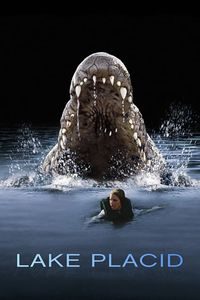
  • Lake Placid (1999)

    Lake Placid (1999)

    (On VHS, November 2001) Interesting experiment, here, as the structure of a typical monster movie is taken over by a writer with a good ear for dialogue. The result is nothing more than a monster B-movie, but the repartee is so crunchy that you’ll forgive the film a lot of otherwise unpleasant things. Such as the unlikable characters, the silly characters and the cardboard characters. Oh, but have-I mentioned that the dialogue is pretty good? In a sarcastic kind of way, of course, as the writer’s idea of “good” dialogue is verbal insults. It might work for you. The rest of the film is nothing special, though it is a cut above the usual straight-to-video monster movie.

  • Time Future, Maxine McArthur

    Warner Aspect, 1999 (2001 reprint), 445 pages, C$9.99 mmpb, ISBN 0-446-60963-3

    Looking at the recent SF production of 1999-2001, it does seem ironic that at the very turn of the century, some of the most vital novels of the genre are from non-American authors. You might even call it the revenge of the British Commonwealth, what with Britain (Alastair Reynolds, Stephen Baxter) and Canada (Robert J. Sawyer, Robert Charles Wilson) churning up excellent material. Now Australia joins the pack, with the ubiquitous-yet-unseen Greg Egan, and now Maxine McArthur. It’s much too early to say whether McArthur will establish herself as a first-rate writer, but Time Future is an interesting first novel that bodes well for her next.

    Arriving on American shores in paperback form nearly two years after original publication, Time Future comes pre-packaged with a few choice quotes and even an award, the George Turner Prize for best Australian SF novel. Try to lower your expectations, though; at its heart, Time Future remains a standard space-station-bound space-opera the sort of which Babylon-5 did so well.

    On the other hand, Babylon-5 never dropped its characters in such a prolonged nightmare: As Time Future begins, the Jocasta station’s been under siege for over a year. No transit, no supplies, not even any communication with the outside universe. No trace of a rescue attempt either. Inside the station, things are looking grim, what with a growing refugee problem, failing environmental systems, increased hysteria amongst the factions aboard the station and no hope in sight.

    Commander Halley is the one who must deal with this situation, and after more than a year, even the strongest women can falter under the constant stress. Nightmares, personality conflicts and plain desperation are her daily torments. As if that wasn’t enough, the novel piles up the difficulties: The blockading aliens want to talk to her, the alien factions inside the station aren’t helping at all, a mysterious ship is cause for more questions than answers, an alien trader is killed in an impossible fashion and her estranged alien ex-husband comes back to haunt her.

    It’s definitely not a cheerful novel. No one will be blamed if they’re tempted to fast-forward rather than slog through more than 400+ pages of claustrophobia, depression, no hot showers and constant peril.

    Through it all, though, McArthur creates a fascinating universe. Perhaps reflecting Australia’s geopolitical status vis-a-vis the United States, her humans are merely bit-players on the galactic stage. They barely rent out faster-than-light travel, own a station more through chance than merit (it’s not even human-built) and more or less acknowledge that they can be wiped out at any time. Hmm. (Someone could build a fascinating thesis comparing and contrasting this attitude against the British post-colonialism and the American hegemonism. But that’s not going to happen in this review.)

    As far as the novel itself is concerned, Time Future is merely adequate. It can be read, and eventually picks up some narrative steam, but it’s not much of a page-turner. The details are convincing but not mesmerizing. The writing doesn’t flow as easily as it should for a mystery/adventure such as this one. The characterization is well-done, though maybe more by piling up problems on the characters rather than making them sympathetic. (The protagonist herself is afflicted with yet another one of those “murdered relatives” trauma.)

    Still, it’s a relatively enjoyable novel. The mystery isn’t as interesting as it thinks it is (not all the required facts are available to the reader from the onset), but it’s fun to piece together the various parts of the narrative. Hey, it’s a promising debut.

    Finally, it occurs to this reviewer that the claustrophobic setting of the Jocasta station is in fact an ideal way to introduce the first novel in a space-opera series. Further volumes may uncover and fully use the complexity of the galaxy unveiled in Time Future, much like David Brin’s Uplift series had to wait until volume six to really expand the scope of the action. Who knows?
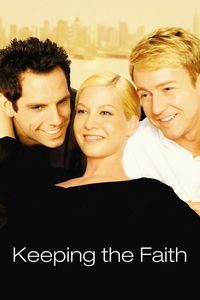
  • Keeping The Faith (2000)

    Keeping The Faith (2000)

    (On VHS, November 2001) Every single Ed Norton fan in the audience, please wave your fist in the air and cheer for the guy, who not only turns in yet another great performance, but also convincingly directs his first film with Keeping The Faith. The story sounds a lot like a bad joke (“So this priest walks in a bar, tells how he and a rabbi both fell in love with the same girl…”), but the development of the tale is anything but silly. The three protagonist couldn’t be played better than by Norton, Ben Stiller and Jenna Elfman. Fortunately, they can depend on a rather good script, which not only mixes the inevitable romantic entanglement, but also includes a pretty good comparative look at both Catholics and Jews. This chameleon-like film will play well not only with religious audience of both denomination, but also with less-devout audiences. There’s something to like for everyone, from a karaoke salesman to great shots of New York. (Plus a wonderfully cool bit with our two men of faith walking in slow-motion to Santana’s “Smooth”) Funny, smart and even poignant, you’ll be hard-pressed not to enjoy Keeping The Faith.

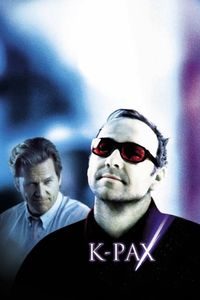
  • K-Pax (2001)

    K-Pax (2001)

    (In theaters, November 2001) I like Kevin Spacey, but ever since he’s had his Oscar, he’s been making strange choices. I mean… Pay It Forward? Now comes K-Pax, another one of those sugary dramatic treats that Hollywood does so well. Think One Flew Over The Cuckoo’s Nest. Think about that alien-comments-on-humans Starman shtick we’ve seen so many time before. Think mental-patients-are-really-sane- in-an-insane-world cliché claptrap. Better yet; don’t think, because the film bends over backward trying to make damn sure that there’s no logical solution to the problem it poses. It first tries to set up the alien hypothesis, then -through an atrociously convoluted “hypnosis” sequence- tries to build the “crazy guy” hypothesis. Naturally, by the end, we have convincing proof of both, and at the same time of neither. The film is really a showcase for Spacey (who, it is true, is rather enjoyable in the first half of the film) but beyond that, there isn’t much to like. Sure, the directing is efficient and Jeff Bridges is all right, but for those things, why don’t you rent The Big Lebowski again?

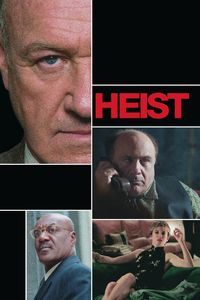
  • Heist (2001)

    Heist (2001)

    (In theaters, November 2001) David Mamet can be frustrating or entertaining, but with Heist, the emphasis is on the entertainment. 2001 has seen at least three movies about professional robbers, and Heist ends up being the film that The Score and Ocean’s Eleven so desperately tried to be. Crackling dialogue, well-defined characters and constant plot twists will bring a smile to your lips even as you recognize the usual “caper-film” structure. It all adds up to an entertaining package. It’s as gratuitously convoluted as Mamet’s previous The Spanish Prisoner, but not as annoying: you’ll hardly mind as the onscreen action unfolds in a way that would be impossible out of movies. The beauty and satisfaction of Heist over comparable movies comes mostly from the various array of clever tricks used by the thieves to con everyone including themselves. Twists, twists, twists, up to and including the final seconds. Don’t make any mistake; this isn’t a particularly noteworthy or particularly heart-felt film: you’ll recognize the mechanics and the calculations. But never mind; Heist is so entertaining that it would be a crime to dislike it.

  • Harry Potter and the Sorcerer’s Stone aka  Harry Potter And The Philosopher’s Stone (2001)

    Harry Potter and the Sorcerer’s Stone aka Harry Potter And The Philosopher’s Stone (2001)

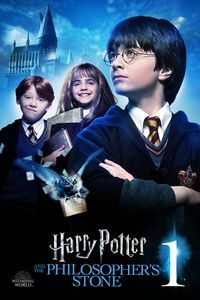
    (In theaters, November 2001) Is it possible for a movie to be too faithful to the original novel? It’s tempting to say so while watching this first film in the Harry Potter series as the second half of the film sinks in indulgent pacing and gratuitous scenes. Indeed, the film seldom exhibits signs of snappiness or extreme originality; it’s leisurely, even conventional in pure fantasy terms. Avid fantasy readers will have “seen” all of this before. But don’t let the above deter you from considering Harry Potter 1 to be one of the best films of 2001: The technical professionalism, good dialogue and acting talent of the film more than make up for any deficiencies, and the result is a long, conventional but very good film. It’s mind candy almost all the way through! Particular recognition goes to acting wizard Robbie Coltrane as Hagrid, and newcomer Emma Watson as the irresistible Hermione. In a year where most blockbusters have fallen flat on their faces (Pearl Harbor, Tomb Raider, Planet Of The Apes, etc.), this is one hyper-hyped movie event that really does deliver.

  • The Deep End (2001)

    The Deep End (2001)

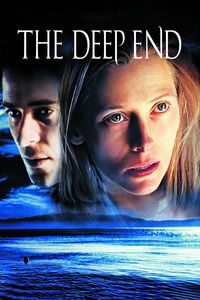
    (In theaters, November 2001) Is it an accident if motherhood and water are the two recurring themes of the film? Far from starring the usual stalwart single action hero, this thriller revolves around a harried single mother whose husband is away on naval duty. She is gradually drawn, in inimitably thrillerish fashion, in a series of increasingly criminal acts to protect her family… but then the menace starts to be seductive and everything goes wrong. Tilda Swinton cuts a sympathetic figure as the heroine, but even despite everything, the film feels a bit too forced, too calculated and definitely too slow even at 100 minutes. It’s definitely a minimalist thriller, the type that allows a few viewers to imagine themselves is similar claustrophobic circumstances. If you’ve got a long attention span, fine; otherwise, be prepared for slow stretches.