Reviews

  • Our Dumb Century, The Onion

    Three Rivers Press, 1999, 164 pages, C$24.00 tpb, ISBN 0-609-80461-8

    It always amazes me whenever someone opines that history is boring. To hear them talk, history’s just a dull recitation of dates, names and events. Don’t they realize that history can explain everything that happens today? Don’t they know that the best stories ever published don’t even equal some of the amazing stuff that has truly happened in the past? Don’t they even remember Santayana’s admonition?

    Maybe all that’s missing is a gifted vulgarizer, someone to make the study of history amusing, accessible and worthwhile. I don’t think that this is what the staff of The Onion had in mind when they set out to put together Our Dumb Century, but the result certainly makes history a lot of fun again.

    You might or might not already be familiar with the web humor magazine The Onion ( http://www.theonion.com/ ), but it doesn’t really matter; all you need to know is that Our Dumb Century‘s shtick is to “reprint” a hundred year’s worth of front pages from the Onion as a retrospective of the century. None of it is available on the web site.

    Of course it’s all made up. Headlines like 1917’s “Pretentious, Goateed Coffeehouse Types Seize Power in Russia” or 1953’s “A-Bomb May Have Awakened Gigantic Radioactive Monsters, Experts Say” should be a giveaway. But the most amazing thing about Our Dumb Century (past the funny stuff, of course) is how real it looks. The front pages from the beginning of the century look exactly like the old newspapers did, with shaky typography, badly-reproduced graphics and overstuffed layout. The graphical team responsible for the design of the book truly did their homework, and visually, there isn’t a single detail that looks out of place. It’s one of the small pleasures of the book to flip from page to page and see the evolution of “The Onion” through the century.

    All of which is considerably reinforced by the pitch-perfect style of the writing. The Onion’s writers have convincingly re-created the characteristic tone of reporting through the century, through the biased, wordy style of the 1900s to the carefully antiseptic prose of the 1990s. It may or may not be exact, but it adds a lot to the impact of the jokes.

    And what jokes they are: From 1900’s “Death-by-Corset Stabilizes at One in Six” to 2000’s “Christian Right Ascends To Heaven”, Our Dumb Century offers a century’s (and 164 pages’) worth of satire. Every page is shock-full of stuff in 8-point type, with enough nastily funny headlines to make you groan in pure sadistic delight. (How about 1963’s “Kennedy Slain By CIA, Mafia, Castro, LBJ, Teamsters, Freemason: President Shot 129 Times from 43 Different Angles” or 1937’s “German Jews Concerned about Hitler’s ‘Kill All Jews’ Proposal”?)

    Naturally, this isn’t for everyone. The level of sadistic irony can be shocking (1976: “Cambodia to Switch to Skull-Based Economy”), as can be the intentional profanity (July 21, 1969. ’nuff said.)

    Historical figures are in for a thorough irreverent thrashing, of course. There’s an alternate-universe arrest/getaway/manhunt/shootout involving Nixon (1974), a few good slams at FDR (1933: “President confronts depression with ‘Big Deal’ Plan: ‘Big Deal, I’m Rich’ Roosevelt Says”) and welcome nastiness about various great villains of our century (1977: “Idi Amin Praises Former Ugandan Defense Minister as ‘Delicious’”)

    A sense of history is, of course, as useful as a sense of humor, but while Our Dumb Century can motivate anyone to learn a bit more, it’s unclear whether a sense of humor can be developed. For those with some knowledge of the past hundred years, though, the payoff is enormous. The staff of The Onion laughs at an astonishing variety of subjects, from arts to politics, military affairs to fashion fads and you never know when your favorite areas of interest might pop up.

    The only flaw of the book that I could find was a loss of historical perspective over the last 30 pages of the book in favor of lighter pop-culture references. Maybe inevitable given the lack of perspective… or accurate given the real nineties.

    Not only is Our Dumb Century an instant classic and one of the funniest books of the twentieth century, but it’s also one of the best gift ideas I’ve ever seen for smart people. Buy a crate, encourage The Onion, distribute at will and get compliments on your impeccable taste. Easy!

  • Hard Core Logo (1996)

    Hard Core Logo (1996)

    (On VHS, December 2001) This Is Spinal Tap has proved to be a model for a series of pseudo-documentaries about musical bands, which isn’t necessarily bad. You have to wonder, though, if anyone paid attention to the fact that the original was a comedy. Hard Core Logo tries to do a lot of things, but it fails at a consistent tone, what with long dull stretches, a hallucinogenic segment and a last few seconds that take you straight in all-out tragedy. I presume that the musical references are reasonably exact, but I don’t know enough about the Canadian punk scene to say so. Two of the lead actors are initially difficult to distinguish. There are a few good lines, but you’ll have to work hard to distinguish them. A disappointment.

  • Don’t Say A Word (2001)

    Don’t Say A Word (2001)

    (In theaters, December 2001) Every month or so, studios churn out yet another unremarkable thriller. It stays a few weeks in theaters, then has an undistinguished life in video stores. Don’t Say A Word is another one of those “midlist” thrillers, adequate entertainment without being in any way memorable. Oh, the performances are fine: Michael Douglas is back in a clean-cut professional’s role, Famke Janssen is great eye-candy as the bed-bound wife and Brittany Murphy has a flashy role as a troubled teen. The first hour is intriguing, culminating in a good three-way escape sequence maybe thirty minutes before the end. After that, the film spins on itself and becomes increasingly sillier. Hey, it’s good fun without being too bad.

  • Dirty Work (1998)

    Dirty Work (1998)

    (On TV, December 2001) The best thing you can say about this film is it’s not nearly as bad as what you can expect. It’s an ideal comedic premise, really; a business where people pay to exact revenge on hated ones? Works for me, and it sure works for the gags. There are plenty of worse comedies starring Saturday Night Live alumni, and Dirty Work manages to sneak in a few good scenes and a few more good lines. (“Bet you didn’t count on my loyal army of prostitutes!”) Add many extra points if, like me, you like Norm MacDonald’s style of deadpan sarcastic comedy. The fish/shootout scene is quite good. Dirty Work‘s not a classic, but it might pleasantly surprise you on a late evening.

  • Behind Enemy Lines (2001)

    Behind Enemy Lines (2001)

    (In theaters, December 2001) Sometimes, it looks as if some Americans are happiest when they’re shooting at a clearly-defined enemy. At least that’s the lesson I got from Behind Enemy Lines, a military thriller that, in retrospect, clearly shows what kind of dangerous enemy Osama Bin-Laden woke up in September 2001: An aggressive giant with a trigger-happy finger and a thirst for a really bad guy. But then again, I’m reading way too much in what is, after all, an excuse for action sequences. As such, the film succeeds well: The aerial dogfight is one of the best such sequences I recall seeing, and there are a pair of action scenes later in the film that rival anything else seen this year on cinema screens. Owen Wilson manages to go from comedy to action quite effectively with this role, embodying an everyman quality that makes him more endearing than a actor like, say, Vin Diesel would have been. The film is directed with appropriate nervousness, though the various techniques used by first-time director John Moore eventually smack more of desperation than of inspiration. The techno-fetishist detail (like the hyper-detailed ejection sequence) is consistent with the written technothrillers. There are a few stupid moments, though, such as when an entire army shoots at the good guy… who escapes unscathered. I had a good time, but your mileage might vary given your political stance and/or your tolerance for action movies in which American military force is ultimately the best answer.

  • H.M.S. Unseen, Patrick Robinson

    Harper, 1999, 526 pages, C$9.99 mmpb, ISBN 0-06-109801-9

    There are times where I seriously wonder if reading more than 170 books a year is somehow rotting my mind. Why else to explain peculiar attachment to authors I don’t care about? H.M.S. Unseen is Patrick Robinson’s third novel and freakishly obsessive readers of my reviews will remember that I haven’t liked either Nimitz Class or Kilo Class very much. Robinson writes badly, has no gift for effective characterization, doesn’t know how to structure his stories and has a rather curious sense of global geopolitics. I might have picked up H.M.S. Unseen with the hope that he has improved, but he really hasn’t.

    The story is a loose follow-up to Nimitz Class in that the terribly anticlimactic death of the first novel’s antagonist is revealed to be the sham we suspected all along. Ben Adnam is back in action, but maybe not as smoothly as he wants to: The first few dozen pages of H.M.S. Unseen describe how the Iraqi government decides to get rid of their most troublesome agent, and how Adman escapes through marshes and deserts to join Iran’s government. His proposition? To exact revenge, he will frame Iraq for a series of devastating terrorist attacks.

    I’d say “so far so good” if it was the case, but it isn’t. Early on, all of Robinson’s usual faults come back to haunt us. He can’t write. Still. Clumsy exposition drowns out dialogue to such an extent that there isn’t any dialogue left. His sense of dramatic structure is shaky at best; events happen out of nowhere without preparation and then he’ll spend dozens of pages on the most insignificant details before kicking the plot in an entirely different direction again. The downing of the experimental plane is a perfect case in point; what could have been milked for drama simply becomes another plot point without too much importance. But, oh, Adnam’s Scottish escape becomes a marathon of tiny details we couldn’t possibly care about, given that we know he will do it.

    After three connected novels, I still can’t care about one single character in Robinson’s oeuvre. He tries to make an antihero of his terrorist villain, but it comes across as just… insipid. Late in the book, he tried to make me pity the antagonist (aw, looove… and it just so happens that the girl is now married to the protagonist of the first two novels!), but my only wish remained for the bad guy to irrevocably die so that I could move on to other things.

    More and more, it looks like Robinson simply has no clue about what makes a good technothriller, whether it’s the tiny (oh; the writing, maybe?) or the grand. On an overarching level, I just can’t believe in what Robinson does. Late in HMS Unseen, for instance, Adman encourages the United States to destroy -with cruise missiles!- a large dam in Iraq, killing thousands of civilians, setting back Iraq a few decades in hydro-electrical capacity and, oh, provoking a major international incident in the process. (The characters pooh-pooh such objections as “we’ll be caught!”) Utterly unbelievable, especially in a context where the States are already being unjustly blamed for “hundred of children dying every day because of sanctions”. Now imagine actually destroying a dam. I was practically screaming at the novel “No, you moron! Leave the civilian targets alone!” No such luck.

    The structure of the novel is even more insipid, bouncing from situation to situation without a sense of heightened stakes. The final few pages are emblematic of the problem, as the villain is dispatched almost with a yawn and a wave of the hand. Almost as if by then, Robinson hated his novel as much as I did.

    Still, you got to hand it to the guy. To be able to publish three awful novels in a row (and to get me to read’em) takes a special skill. You know what? I’m almost certain I’ll read his fourth. I might spend my time cursing at it and muttering dark promises of retribution, but at least it’ll be more entertaining than reading, say, yet another dull and tired Dale Brown B-52 fantasy.

    Egad. Maybe I am brain-damaged after all.

  • Marrow, Robert Reed

    Tor, 2000, 502 pages, C$9.99 mmpb, ISBN 0-812-56657-2

    Readers of these reviews won’t be surprised to learn that I don’t necessarily review everything that I read. Aside from my technical/reference reading, there are a considerable number of books that are either too inconsequential or too boring to review at length. Over any given period, I will review one book in three or four that I read.

    While it’s relatively easy to praise or condemn a book, it’s much harder to find ~650 words about a book that didn’t even register in the first place. Unfortunately, I also try to review every recent SF book that I buy, if only to justify my SF purchases. With Robert Reed’s Marrow, I find myself with a conflict. I want to review it because it’s recent SF. Yet I don’t want to review it because it’s such a blah book.

    It’s long. It takes place over thousands of years. It features only a dozen characters, and not many of those are of any interest. For ten Canadian dollars, you can get a much better book.

    And yet… here goes:

    Let’s start with the premise, arguably the best thing about Marrow: It all takes place in a big alien ship. A really big alien ship. I don’t exactly recall the dimensions, nor can I be bothered to dig them up, but it’s such a big alien ship that humans eventually discover a Mars-sized planet deep inside after a few hundred thousand years of occupation. Mars-sized. And they’d sort of never found it before. Big alien ship.

    Due to life-extension technology, the lifespan of our characters is virtually infinite barring any unfortunate accidents. This has two important consequences on the plot of the novel. First, these characters think nothing of waiting a few hundred years before doing something. Second, we can never be totally sure they’re dead until their individual atoms are fissioned. There are more fakeouts in Marrow than there are in an entire season of your favorite soap-opera.

    The plot involves a few hundred senior ship officers being stranded on the Mars-like planet as no-one ever goes to look for them. Thousands of years (and hundreds of pages) pass. They eventually manage to re-create a complete industrial civilization and go back to the ship, only to discover a dastardly plot to take over the ship. There’s a war in which millions of sentient beings die. There is an ending of sort. The end.

    Now milk out all the drama out of the above, add in some spurious pseudo-melodrama and let fester for five hundred pages. Your result will look a lot like Marrow; good potential, but it’s just not a lot of fun. I was lucky enough to be stuck witnessing a day-long management conference with the book as my only friend. It was probably the most efficient way to make me read a book I didn’t care too much about.

    And that, in a nutshell, is all you need to know about Marrow: I didn’t care too much about it. Certainly didn’t love it, but neither did it actively start annoying me. It just… was.

    Unfortunately, that means that your hard-won entertainment dollars (and your even more precious entertainment-time) can be spent more efficiently elsewhere. Bruce Sterling. Learning Spanish. A yo-yo. Heck, even a Hollywood movie. Oh, Reed completists will presumably love it, if they exists. Some SF critics may be tempted to read it if only to find out how some exciting ideas can be ruined by tepid writing. Many of us, though, may very well just not care. Too bad.

  • Young Frankenstein (1974)

    Young Frankenstein (1974)

    (On DVD, November 2001) Alas, years of ever-heightened comic pacing have not been kind to this satire of the first two Frankenstein films. (Which you should see in order to get a few scenes, most notably the blind man sequence.) The jokes come too slow, and sometime feel too forced. Fortunately, the actors pretty much earn our sympathy early on, and help considerably in enjoying the picture. (Particular wows go to Teri Garr, whose luscious Inga steals the show. “Vould you like a roll in ze hay? It’s fun! Roll! Roll!”) Mel Brooks fans will love it: the overall pacing is a lot like Blazing Saddles. The DVD features quite a few deleted scenes (justifiably cut for pacing, but they explain a lot. The “intellectual discussion” should have been kept in the film.) and a good making-of documentary that benefits from a comfortably-distant perspective.

    (Second Viewing, On Cable TV, March 2020) There are plenty of reasons why Mel Brooks’ Young Frankenstein is a great comedy that appreciates with time (I certainly like it a lot more now than in 2001), but my favourite one is that every top-billed actor in the movie goes all-out. Everyone has a memorable quirk to play, everyone has a few great scenes, and everyone gets to highlight something that makes them special — whether it’s Peter Boyle’s bulk, Marty Feldman’s bulging eyes, Cloris Leachman’s scenery chomping or Teri Garr and Madeline Khan’s gift for sexy comedy. And then there’s Gene Wilder (who co-write the script) – playing a neurotic character with carefully-studied cracks allowing a glimpse into the madness underneath. Better yet is that this terrific troupe of comic actors is finely controlled: unlike other Brooks films, Brooks-the-director finely keeps a handle on how to execute Brooks-the-co-writer’s script, and even keeps Brooks-the-actor from showing up. This gives to the film a deliberate nature that often feels missing from other Brooks film that never quite know when enough is enough – this one gets its laughs in, but doesn’t belabour the point. The laughs in Young Frankenstein are not always simple – a mixture of double-entendres, ironic riffs on overblown overacting, eye-rollingly dumb gags and a sophisticated pastiche of an earlier filmmaking era. The production means of the film are surprisingly good, which adds to the high comedy of the whole. Young Frankenstein is an incredibly slick production, and it’s hard to imagine it could be funnier.

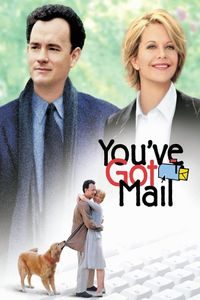
  • You’ve Got Mail (1998)

    You’ve Got Mail (1998)

    (On TV, November 2001) At first, it’s hard to see why any heartless chump would dislike this romantic comedy. Tom Hanks and Meg Ryan are free to look their cutest, the direction is suitable and New York shines through. Heck, even the story is interesting, what with a big-bookstore / independent-bookstore fight and an internet-age update of a pen-pal romance. It works… but then the film doesn’t end when it should, drags on for far too long and becomes more and more unpleasant from a moral point of view. The quasi-stalking behavior of Hank’s character is borderline creepy. The final helping of sugar helps to soften the blow, but the overall impact of the film is considerably lessened by its final 30 minutes. Still, there’s no denying that it’s a bit more interesting than originally anticipated.

  • Wonder Boys (2000)

    Wonder Boys (2000)

    (On VHS, November 2001) While we’re used to see Michael Douglas in antiseptic professional roles (Wall Street, Traffic, etc…), he’s equally convincing here as a rumpled-up English professor caught in a web of adultery, lies and creative rut. He looks like an unshaven hound-dog and mostly acts like it too. Fortunately, he proves more than adequate to carry the movie on his shoulders. Toby Maguire’s usual drowsy acting style also works well here, which is more a reflection on how well he picks his roles to suit his style rather than any stretching of his abilities. The rest of the supporting cast is one of the best in recent memory. Blackly funny, cynical and almost comforting in the way it plays on the clichés about Writers and Academics, Wonder Boys is a lot of fun. (Though it’ll work much better on said writing/academia audiences) As an added bonus, it’s well-written, occasionally clever and far from being stupid. Who could ask for more in a movie?

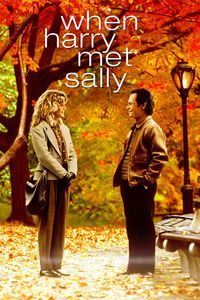
  • When Harry Met Sally… (1989)

    When Harry Met Sally… (1989)

    (On DVD, November 2001) Some movies hit you at very particular time in your life, and so I ended up seeing When Harry Met Sally at a critical juncture in mine, maybe the point where it did the most good. Don’t think that I haven’t loved it… but do wonder if it would have been as effective if I would have seen it even two months before. I ended up saying “ouch” and moaning a lot: mmmm…mmmmm…mmmm… In any case, it’s easy to see, objectively, why the film is so great: Crackling dialogue, excellent lead actors, unusual yet “real” plotting and a careful direction make this film an all-around winner. (The split-screen phone conversation alone are worth the rental) Meg Ryan has never looked more gorgeous before or since, and Billy Crystal makes the role uniquely his. A wonderful film, except for the annoying “how we met” vignettes. Hasn’t aged a bit in twelve years. The DVD features a pretty darn good making-of documentary with the added benefit of more than a decade of hindsight and cultural impact.

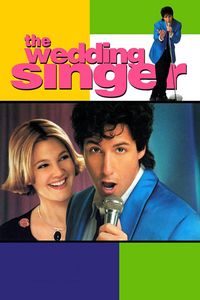
  • The Wedding Singer (1998)

    The Wedding Singer (1998)

    (On VHS, November 2001) Many people are prompt to call this Adam Sandler’s best movie. While it’s certainly not the funniest (somehow, Billy Madison works better), it’s certainly the least offensive and the least annoying. As far as the story’s concerned, though, there isn’t much to see here, with yet another pathetic Sandler character somehow getting the girl (though you might argue that they deserve each other) and winning everyone on pure “charm”. It’s not all bad, mind you; unlike other Sandler films, this one is not displeasing to watch, and the last segment end on a triumphant note, with a wonderful cameo by Billy Idol. The rest of the does preciously little to allay my dislike of Sandler’s entire oeuvre, though.

  • Sea Fighter, James H. Cobb

    Jove, 2000, 513 pages, C$9.99 mmpb, ISBN 0-515-12982-8

    Over the past year, I’ve read so many limp military thrillers (Brown’s Fatal Terrain, Rugerro’s The Common Defense, Stewart’s The Kill Box, etc…) that I had almost forgotten what it felt like to read a genuinely entertaining one. Fortunately, James H. Cobb’s Sea Fighter was there to make me believe in the genre again.

    What often happens with military-series writers is that they eventually get stale, don’t renew their premises, barely allow for character growth and simply lose touch with how to write an exciting novel. Not so here: After two similar novels, Cobb shuffles the deck with skill, and Sea Strike continues the series with sustained originality.

    The novel’s first few pages are deliciously jarring, as protagonist Garrett writes a “If you read this, I’m dead…” letter from a marine platform a few miles away from the African coast. Veteran readers of the series will be immediately concerned; where’s “the Duke”, the high-tech destroyer that starred in the first few books? What is Amanda doing, planning to lead a ground expedition in Africa?

    The next few pages lay it out for us; the USS Cunningham is in dry-dock for repairs after the events of Sea Strike, and Amanda Garrett’s been offered a post coordinating the UN forces in a nasty little war in Africa. This sets up a devilishly clever scenario where the might of the US military is handicapped by political concerns to such a degree where a battle with an African navy becomes more of a test of cleverness than a war of firepower. Garrett is forced to out-think a dangerously intelligent antagonist and win the war through unconventional means… a intellectual contest in which the biggest winner is the reader.

    From large-scale naval engagements, Garrett is forced to move to coastal tactics and gadgets. Amphibious crafts and SEAL-team tactics are in the foreground in Sea Fighter, which is a nice change of pace and a welcome renewal of Cobb’s fiction. The featured techno-gadgets here are the titular “Seafighters”, experimental armed hovercrafts that do pretty much everything including cutting and dicing. The new tactical capabilities of the “Air Cushion Gunboats” are a good excuse for new tactics and original spectacular scenes; Cobb has a lot of fun with his gadgets, and so do the readers. Now that we’ve seen the first military novel about hovercrafts, I’m waiting for one on hydrofoils.

    It’s been an axiom of mine that you can reliably gauge the worth of a military technothriller by the number of Cool Scenes it features. Sea Fighter ranks highly on that scale, with an assortment of well-narrated battle scenes, clever maneuvering on both sides of the conflict and accessible political/strategic considerations. The care with which the antagonist is established as a nuanced opponent is one of the highlights of the novel and yet another facet of Cobb’s skill.

    While war is a grim subject and current real-world conflict headlines are hardly amusing, military novels are a different things, and indeed the best of them can also be distinguished by a sense of compulsive fun. Sea Fighter understands this perfectly and is quick to establish the book’s main conflict as a chess game in which moves and countermoves alternate in a compulsively readable fashion.

    Don’t make the mistake of assuming that it’s all simplistic fluff, though; the geopolitics of Sea Strike are plausible and realistic to a degree that is far more convincing than some of its brethrens. Cobb can also rely on an impressive catalogue of historical references. Here, a raid on enemy lines isn’t presented as a cowboy manoeuvre, but a Civil War tactic adapted to modern times.

    It all adds up to an intelligent and entertaining war novel. Dig deeper and you’ll see Sea Fighter as a true example of the dirty-little-wars era military novel, where reduced stakes don’t mean a reduced interest for the reader. Grab it as soon as possible if you’re a fan of the genre. Don’t forget to pick up the rest of the Cobb oeuvre while you’re at it.

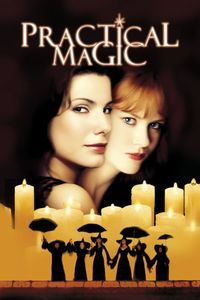
  • Practical Magic (1998)

    Practical Magic (1998)

    (On VHS, November 2001) Now here’s an exemplary chick flick: Not only are almost all protagonists of the female gender, but the antagonist is a violent male, and the eventual male love interest does zilch to resolve the problem. Whatever plot revolves on a family of witches whose lives are cursed whenever true love enters the picture. Dig deeper, and -oh- here are womyn majik undertones and definite feminist overtones. Not that there’s anything wrong with that… and hey, no matter: It’s all so sympathetic that it won’t matter. Sandra Bullock is unspeakably cute and so -to a lesser degree- is Nicole Kidman. It’s a slight but fun film, pleasant despite its silliness. I liked it, can’t figure why. Must have been bewitched.

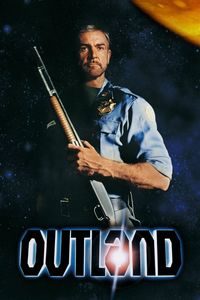
  • Outland (1981)

    Outland (1981)

    (On DVD, November 2001) This movie is famous in SF circles for representing everything that’s wrong with Hollywood Science-Fiction, most notably the tendency to use SF visuals and gadgets to tell a story that isn’t specifically SF. In this case, the charges have merit, as Outland was originally pitched to studios as “High Noon in outer space”. It sure feels every bit like a western, as a rogue sheriff (Sean Connery) has to fight corruption in his company town… er… mining station. Stupid science errors abound, from exploding bodies in vacuum to wonky “artificial gravity” babble. But guess what? It works well as an adventure film and it work pretty darn well as a futuristic thriller. It’s not a classic, but it deserves to be remembered twenty years later. The set design by itself is worth a look, embodying a full “Space 1999”/Alien techno-industrial slate-gray feel. It’s all good fun.