Reviews

  • The Last Castle (2001)

    The Last Castle (2001)

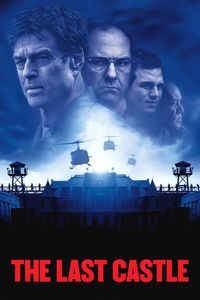
    (In theaters, October 2001) There’s nothing wrong with a good old “guy movie” once in a while. As long as you remember not to peer too closely at character motivation, logic or philosophical underpinnings. The Last Castle is set in a military prison filled with hard-edged convicts. In comes rockin’ Robert Redford (showing fully well why he deserved superstar status for so long), who sets out to give respect back to this assorted bunch of murderers, drug traffickers and rapists. Rah-rah-rah! This, of course, doesn’t sit very well with overbearing prison warden James Gandolfini, who immediately sets out to participate in a pissing match with our protagonist. It’s all a bit juvenile, but if you’re swept along with the absorbing script, it won’t matter a lot. Nor will the magically appearing weapons (a frickin’ trebuchet? How did they build that secretly?) or the plot contrivances, such as when a small fight conveniently sucks all guards out of a cafeteria. It all builds to a chest-thumping climax in which duty, honor, patriotism and blowing stuff all come to a meaningful end. (There’s one amazing action shot.) It’s sort of like The Shawshank Redemption with an exploding helicopter. I might sound snide and sarcastic, but I really liked the film as is, though the various emotional levels bothered me more and more once I had the chance to think about them. In any case, The Last Castle is a decent prison flick, a worthwhile rental whenever you want a guys’ movie night.

  • Joy Ride (2001)

    Joy Ride (2001)

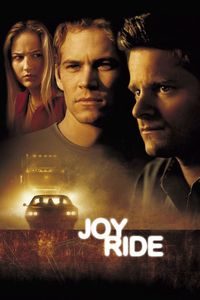
    (In theaters, October 2001) “Teen thrillers” are, nowadays, little more than marketing exercises, usually casting young stars from TV shows in order to service an unimaginative script helmed by a barely-competent director. The clearance shelves of every video store are filled with the results: I Still Know What You Did Last Summer, The In Crowd, Antitrust, etc… In this context comes Joy Ride, a teen thriller that’s not without similarities with other members of the breed, but that at least manages to be better than average. Not a lot of that quality comes from the acting, though: Paul Walker is fine but bland and Leelee Sobieski looks cute but bored, though Steve Zahn continues to excel in otherwise average roles (see Out Of Sight, etc.) The first half of Joy Ride is strictly routine, as two idiot teens make a mistake and pay for it. The fun begins as the tale twists slightly and then some more; nothing to make the jaded viewer scream out “Genius!”, but enough to keep the tension going effectively. That tension, carefully milked by a director who knows what he’s doing, is ultimately what keeps the film from sliding into silliness as the going-ons get progressively more unlikely. Once again, the unseen antagonist proves to be nearly-omniscient and quasi-omnipotent against all common sense. There’s not much identification with the characters, but at least the film succeeds in keeping our interest. As suggested previously, that alone places it as an above-average teen thriller.

  • Ghost World (2001)

    Ghost World (2001)

    (In theaters, October 2001) It is a false dichotomy to separate art and entertainment, but it’s true to say that a very personal work of art can work very well on some people and not at all on others. That’s the case with Ghost World, a film of unarguable artistic ambition that simply didn’t appeal too much to me, much like Rushmore or American Beauty. It’s not a bad film per se, but I found myself strangely unaffected by it all. At some point, I really thought the film has something to say about how cheap cynicism is nothing but artificial detachment—but that might be a case of imposing my own pet peeves on another work. Suffice to say that I’m neither a teenage girl not a middle-aged geek (yet), so any appeal a relationship between these two archetypes might have didn’t reach me. The non-conclusive nature of the ending also bothered my neat Cartesian mind. While some individual scenes are hilarious (the cinema stint, for instance), the rest of the film is more uncomfortable than interesting. At least Thora Birch’s performance is less annoying than in Dungeons & Dragons.

  • From Hell (2001)

    From Hell (2001)

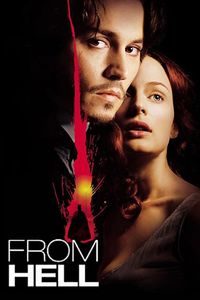
    (In theaters, October 2001) It’s obvious early on that this won’t be simply a forgettable slasher film: For one thing, it focuses on a historically-accurate representation of the grisly “Jack the Ripper” murders of 1888. For another, the visual polish of the production with its blood-red skies, suggestive violence and gritty realism takes it a full step above the cookie-cutter approach taken by so many horror films. Alas, the film tricks us into paying attention only to betray its initial promise by a ho-hum story hampered by several annoying details. Johnny Depp, for instance, is rather good as inspector Abberline, but he doesn’t achieve anything spectacular with it. It’s a Chocolat impact with a Sleepy Hollow character; he’s easily upstaged by Robbie Coltrane. (But then again, Coltrane does that to everyone). Heather Graham is pretty, too flawlessly pretty compared to the other prostitutes in the film. The film shows obvious signs of adaptation difficulties: The psychic visions of Abberline are entirely superfluous, and the signature line of the film (“Some will say I gave rise to the twentieth century”) makes no sense if you don’t know about the original graphic novel. It doesn’t help, either, that the suspect is obvious early on and that the final “twist” is painfully drawn-out. A shame, really, because the rest is pretty good. You won’t confuse the directing style with Tim Burton’s because Burton is far more polished, but it’s distinctive nonetheless. An interesting rental, especially if you’re interested in Ripper lore.

  • Ghosts of the Titanic, Charles Pellegrino

    Avon, 2000, 339 pages, C$9.99 mmpb, ISBN 0-380-72472-3

    Now that the TITANIC movie has come and gone on big screens, VHS and DVD, it seems as if everyone’s an expert on the subject, citing diagrams and expert advice on exactly how the Big Ship sank. In the wake of the film’s boffo success (biggest moneymaker ever, anyone?), shelves of books on the subject were ransacked by new catastrophe enthusiasts.

    One of those books was Charles Pellegrino’s Her name, Titanic. Faithful readers of these reviews may remember that I’ve been a Pellegrino enthusiast for some time, hence this review. Ghosts of the Titanic is a sequel of sort to Her Name, Titanic, but don’t worry if, like me, you haven’t read the first volume; the sequel is mostly self-supporting.

    Some knowledge of the Titanic disaster is essential, though, as Pellegrino wastes no time explaining the basics. (This being said, one of the book’s highlights is the illustrated timeline of events running from page 176 to 195.) In some ways, this is a post-TITANIC book, immediately accessible if you’ve seen the film. James Cameron even wrote the foreword.

    And what Pellegrino says is really “what the movie left out”: An examination of the current state of the wreck, the likely composition of the iceberg, the fire that had been raging deep in the ship’s structure during the whole trip. Pellegrino tells us stories that couldn’t fit in the three-hour movie, such as the efforts to keep the electricity running and Colonel Gracie’s narrow escape.

    Using new testimonies, computer models and scientific evidence (some of which he himself collected during his visits to the wreck), Pellegrino uncovers yet more details about the events of April 14, 1912. One of his most fascinating findings is the fate of the Grand Stairway: Contemporary examinations of the wreck have so far failed to find it—leading James Cameron to theorize that the massive wooden structure could have ripped free of the sinking wreck and floated to the surface. A finding, ironically enough, supported by his experiences while filming TITANIC, as the Stairway replica started to rip itself from the set once submerged.

    This anecdote, like many others, shows Pellegrino’s knack for finding the most astonishing things in places we wouldn’t expect. Coincidentally or not, his misfortune for being in a weird place at a weird time also pops up with alarming frequency and spine-chilling effects. (Here he describes missing TWA flight 800, and being cured of a fatal disease in extremis by one of his friends. I’m still waiting to hear more details about the nuclear device “accidental energetic disassembly” he survived, briefly mentioned here once again.)

    All throughout Ghosts of the Titanic, Pellegrino exhibits a heart-wrenching sensitivity that will put a lump in your throat. It’s not easy to publish a book on this subject without somehow coming across as an opportunistic fellow, but Pellegrino’s mourning feels genuine and the result is a book that never seems exploitative.

    Pellegrino’s polymath familiarity with widely divergent fields of study also gives him a unique expertise to slip in and out of the strict subject of the book. Perhaps the most fascinating section of the book is Chapter 5, when he examines “rusticles”, iron structures formed by the bacteria slowly eating the tons of metal in the wreck. Not only does he conclude that the Titanic will eventually disappear (there goes the end of Arthur C. Clarke’s The Ghosts of the Grand Banks!), but he also describes how the rusticles structures are evolving internal circulation systems… from unicellular organisms! As the ultimate kicker, he suggests that new medical research stemming from the study of rusticles might eventually save more lives that were claimed by the Titanic tragedy.

    In short, Ghosts of the Titanic is another success for Pellegrino, another savvy mix of science fact and good heart-felt writing. Give it a try if you’re interested in the author or the subject matter. If you don’t think you’ve had enough of that subject yet, Pellegrino promises us, in the epilogue, that Ghosts of the Titanic is the second volume in a trilogy he expects to complete in 2010-2012. Given what he managed to tell us this time around, I can’t wait.

  • Bandits (2001)

    Bandits (2001)

    (In theaters, October 2001) Bring in the editor! Meshing crime adventures and romantic comedies require skill, wit and complete mastery of the AVID editing suite. Unfortunately, the filmmakers went for “atmospheric” rather than “snappy”, and the result is a film marred by a leisurely middle section that sucks away the energy of the rest of the film. It’s not as if our protagonists aren’t appealing: Bruce Willis rocks as a cool criminal, Billy Bob Thornton is hilarious as a neurotic partner-in-crime and Cate Blanchett makes me swoon every time she dons a red wig. But the screenwriters try to cram too much of a romantic ménage-à-trois drama in too little crime comedy and the result screeches to halt as soon as our trio talks romance rather than rob banks. The non-chronological structure is initially interesting, but not much is ultimately done with it. It doesn’t help that the ending is telegraphed well in advanced. Once in a while you have a great scene, like the self-convincing paralysis. Hey, it’s not a bad film, just an unsatisfying one. It won’t be remembered six months after its video release.

  • Babe: Pig In The City (1998)

    Babe: Pig In The City (1998)

    (On DVD, October 2001) In a society where children have to be protected from anything not light and fluffy at all costs, this sequel to the good first Babe film was quickly mis-marketed and buried. Certainly, the confusion can be understood: This sequel is much darker and meaner than its predecessor, to the point where it can be extremely uncomfortable to sit through. But don’t worry; it’s a fable, and everything will come out all right at the end. Meanwhile, you’re free to enjoy the fantastic design work and the zippy direction. Maybe a bit too bleak to be unqualified fun -minus the usual penalties for using monkeys- but still interesting.

  • O (2001)

    O (2001)

    (In theaters, October 2001) The late nineties have seen a plague of classics adapted as teen movies, most of them comedies (10 Things I Hate About You, Clueless, etc…) with the occasional drama (Cruel Intentions). Interestingly enough, most of these films have been decent. The latest entry in the subgenre, “O”, is a re-working of Othello set in a high school. Completed in 1999 but held back two years in the studio’s vaults after the Columbine tragedy, “O” is an interesting reworking of a die-hard Shakespearian tragedy that pulls few punches, and ends in the expected bloodbath. Josh Hartnett is chilling as the amoral Iago/Hugo beautifully manipulating the rest of the cast like puppets. There’s a certain perverse satisfaction in seeing such a merciless character at work and Hartnett twists the knife even more by playing Hugo as someone who can’t even derive any satisfaction in destroying everyone’s lives. In any case, the end result is fascinating in part because of the great adaptation work (war as basketball: genius!), but it’ll certainly hold your interest on its own.

  • Towing Jehovah, James Morrow

    Harcourt Brace, 1994, 371 pages, C$30.00 hc, ISBN 0-15-190919-9

    The famous German philosopher (and occasional smart-ass) Frederick Nietzche once said, in his amusingly Teutonic way of his, “God is dead”. I bet he never expected anyone to take him so literally than James Morrow in Towing Jehovah.

    In it, the God actually croaks, dies, passes away (end up being no more) and his body is found floating in the Atlantic Ocean not far away from central Africa. The Catholic Church, naturally, is concerned. Not only does most of the theological corpus pass away along with Him, but the disposition of His two-miles-long remains poses a few non-trivial practical challenges. So that’s how disgraced supertanker captain Anthony Van Horne is contacted by an angel to carry God’s body to its eternal resting place; a specially-constructed tomb in the eternal ice of the Arctic Circle.

    Before long, readers are privy to such unique scenes as plotting the careful displacement of an iceberg-sized cadaver, hooking up towing chains to God’s ear bones and fighting off sharks around His body with rocket launchers. It get weirder after that, as Atlantis pops up and World War 2 re-enactment societies are hired by militant atheists to sink God’s body.

    From this fantastical premise, you would be entirely justified to expect a wacky treatment of the story, with plenty of silly hijinks and uproarious punchlines. That’s not what Morrow had in mind, however, and so the first and final thirds of the books are written in a mode that almost brings to mind the usual dry technothriller à la Clancy. (Myself, I was reminded of Preston and Lincoln’s The Ice Limit) Tons of realistic details ground the story’s initial whopper in hard believability. It’s an unusual choice, and an effective one; whenever Morrow departs from it in mid-book for the Atlantis sequence, the book loses some of its interest.

    In many ways, the fantastical spectacle of a two-mile-long body of God is weird enough to have no need for extra strangeness. Whether they’re driving across His body in a jeep, dancing in His bellybutton or try to bomb the entirety of His body, our characters are too close to insanity as it is. Not that it stops them from discussing profound theological issues in what I thought was a witty fashion. “What if you could prove that God doesn’t exist?” is one of the less-complex questions discussed.

    It’s all joyously irreverent, of course. Not only is Morrow lampooning the biggest target of all, but he also allows equal-offense time to atheists and other unbelievers through the Central Park West Enlightenment League, a dysfunctional bunch of irreducible skeptics who arrange for the disappearance of the most convincing proof faith can have. Don’t worry; whatever your own convictions, you’ll certainly find something to be offended about in this novel. And yet, even as you’re scandalized, you’ll be amused: Towing Jehovah is no constant laugh-riot, but it’s a steady giggler.

    Best of all, maybe, is that Towing Jehovah is reader-friendly to the highest degree, with limpid writing, complex characters and occasional examination of deeper issues without too much guilt. The ideas keep on coming, as do the unorthodox scenes and character-driven twists. Some late-minute appearances are contrived, but they heighten the tension quite effectively. It’s a solid and satisfying read; it’s no accident if it won the World Fantasy Award in 1994. Chances are that you’ll enjoy it too.

  • The Blind Assassin, Margaret Atwood

    Seal, 2000, 659 pages, C$11.99 mmpb, ISBN 0-7704-2882-7

    The most overwhelming impression I got from Margaret Atwood’s The Blind Assassin is how subtle it all was. Compared to this book, other novels are written with all the skill of a two-year-old kid messing around with markers. Atwood introduces, develops and disposes of her characters in such a delicate way that you only feel the cut of the knife long after it’s been pulled.

    A substantial part of this success must be attributed to the intricate structure of the novel, which takes place on roughly four continuums at the same time.

    The most immediate of those four threads is a first-person narration of Iris Chase’s life at 83. She putters around the small city of Ticonderoga, Ontario while reflecting on the nature of passing time and the fates of people she knew. Not quite a crotchety old lady, Iris still has an eye for things, and an ironclad memory of the early years of her life.

    These early years form the bulk of the novel, as Iris relates the events leading up to her sister’s death, when “Ten days after the war ended, my sister Laura drove a car off a bridge.” [P.1] That’s literally how the novel begins, and also figuratively how it ends, being the climax of Iris Chase’s life despite the fifty-odd years that would follow.

    Interleaved along this parallel narrative is a third thread, made up of newspaper articles directly or tangentially related to the Chases’s life. Gossip columns, eulogies, newspaper reports provide a dry view of what happened to them, offering an “official” view of events that is often simply fantastical.

    And, finally, as a fourth thread we get excerpts of “The Blind Assassin”, a cult-novel-within-a-novel written by Laura Chase. It’s about a woman who falls in love with a pulp science-fiction writer, but is it what it’s really about? In between the gaudy alien creatures, fantastical planets and simplistic plotting of the stories imagined by the writer, you can guess a deeper meaning.

    You might find The Blind Assassin shelved in the “general fiction” area of your bookstore or in the “mystery” section, and both would be correct locations. Even only a few pages in the novel, troubling questions appear. Besides simply seeing how everything comes together, we get troubling hints of suicide, murder and utter downfall. Why is it that Iris Chase, daughter to an industrial magnate, would end her life as a near-pauper? Is it as awful as it appears?

    Certainly, there’s something in this novel for everyone. Family portraits are always compelling, especially when they’re tragic. I was compelled by the inevitable descent of Iris Chase, even as it’s really liberation in disguise. And, of course, I couldn’t help but like the sympathetic portrait of pulp SF writers, with their imaginations being used for courtship and sustenance alike. There are beautiful phrases and memorable epigrams, as would be expected from an accomplished writer like Atwood.

    It all comes together in the end, of course. In such a beautiful way that you close the book and whisper a stunned wow of astonishment at how well the structure converges to a single unification point, at how deeply you’ve come to care for these flawed characters, at how even characterization mistakes are intentional. Don’t be surprised if you like The Blind Assassin better after you’ve read it that during an initial approach. It’s an admirable book as much as it’s a compelling one.

  • The Lion’s Game, Nelson DeMille

    Warner, 2000, 926 pages, C$10.99 mmpb, ISBN 0-446-60826-2

    Prior to September 11, 2001, I merely disliked terrorists.

    Living in good old peaceful Canada, I’ve never had any direct nor indirect experience with it. It was something that happened elsewhere. Sure, people got killed, and for this reason alone terrorists should be caught and tried… but as far as day-to-day life went, they did their stuff, I did mine, and that was it.

    That notion came tumbling down along with the World Trade Center.

    Now I simply hate terrorists. Unconditionally.

    On July 1 2001, me and me sister, while visiting New York, passed through the North-West Tower ground floor, snapped a picture and left.

    Now we can’t go back. The whole area has been destroyed. Terrorists have effectively destroyed part of my history.

    The effects ricocheted back to the present. A dear friend of mine was forced, amidst great personal turmoil, to cancel two trips she was looking forward to. And now I find that terrorists have invaded my library.

    The Lion’s Game should have been a good read. Indeed, I passed up an opportunity to buy the hardcover edition in August 2001, rationalizing that I’d read it sooner or later, so why not later?

    Later, after the WTC collapse, proved to be an atrocious idea.

    On the surface, without any outside influences, The Lion’s Game is a promising read. It brings back John Corey, the wisecracking narrator of DeMille’s good Plum Island. This time around, though, Corey has accepted a job with the New York Antiterrorist unit. As the book begins, he’s en route to the airport to pick up a terrorist in transit from Europe. So far… so good?

    Alas, any of the novel’s innocuous mentions of the World Trade Center now triggers a reflex. And that’s without counting lines such as “the quality of terrorists we get in this country is generally low… and the stupid things they’ve done is legendary… But then again, remember the World Trade Center. Not to mention the two embassy bombings in Africa.” [p.47] Later, there’s the disturbing scene on page 219-220, where our narrator stares at the WTC, reflects on the near-miss of 1993, possible worst-case scenario and the efficiency of American anti-terrorist units. Ow.

    But the worst realitymod in The Lion’s Game is the nature of the terrorist himself. The titular “Lion” acts too much like… a honorable villain. He kills specific targets to fulfill a personal objective; he doesn’t blindly strike at whoever he can kill. He is up-close and personal with his victims. He goads our narrator. He in no way acts like the monsters of September 11. He’s clearly a fictional construct.

    The resulting chase, which wouldn’t have been very good even when read “cold”, now seems more trivial than DeMille intended when writing the book. A few dead people here and there. Oh well.

    There’s plenty to say about the book in itself. How the narrator is the main attraction, and the chapters starring “The Lion” are merely filler. How the book is much too long. How the ending, as original as it is -in the sense that you probably haven’t seen anything like it before-, wraps the book in a messy fashion that satisfies no one. How Corey once again gets to sleep with a different woman. How little there is in these 900+ pages.

    But no; now, the main problem of the book is its attitude, its approach, its lackadaisical attitude toward terrorism. Scenes that now couldn’t exist. Lines that were funny, now turned sinister.

    The terrorists that killed 6000+ persons on September 11, 2001 and destroyed the World Trade Center have also invaded our libraries and video stores, turning run-of-the-mill thrillers in distasteful disappointments. They’re messing with the 1976 remake of KING KONG. They are retroactively planting bad memories in our minds. They are souring the thrills out of thrillers. They don’t even need to kill another person to do so; the damage is self-sustaining, rotting away our leisure time.

    That’s why there’s no escape, no surrender and no mercy possible for terrorists. And that’s why I hate their guts. No one messes with my library.
  • The Waterboy (1998)

    The Waterboy (1998)

    (On TV, September 2001) Limp “comedy” starring Adam Sandler as yet another brain-damaged protagonist. This time around, he’s a weakly football waterboy whose unleashed rage can overcome even the toughest enemy player. Uh-huh. Whatever. It’s no accident if wrestling plays a substantial part in the film. The main arc of the story is as unfunny as they come, with expected developments, obvious twists and… wait a minute, did I say “twists”? Sorry, was thinking about another film entirely. In any case, the rare giggleselicited by The Waterboy are of the incidental variety, mostly through sight gags (“College Football Coaching for Dummies”, a Roy Orbison tatoo, a “What are they doing without supervision?” shot) and certainly not through Sandler, who here acts as a comedic black hole sucking all fun out of every single frame he’s in. Gaah. Zzzz.

  • Sneakers (1992)

    Sneakers (1992)

    (On VHS, September 2001) Lessons in cinema can come from the most unlikely sources, and so it’s halfway through Sneakers that I finally realized something that had eluded me for so long: The true origins of hacking movies (Hackers, Swordfish, etc…) are not thrillers in general, but specifically heist movies. Granted, this is an obvious revelation after you’ve seen this Robert Redford vehicle, which was made at a time where virtual heists were still in their infancy. Here, Redford heads an elite team of intrusion artists who are manipulated in stealing something for someone. Never mind who or what or why and rather focus on the elegant mechanics by which the various stunts are executed. Even if the plot is complete hokum (and it’s not… too much), the real fun of Sneakers is in the individual scenes in which our genius-level characters are allowed to strut their stuff and overcome various obstacles. (There’s a particularly joyous scene involving high-speed driving by a blind man.) Believable acting, good pacing and fascinating details complete the picture and overcome any of the niggling flaws of this thriller. Good fun.

  • That Bringas Woman, Benito Pérez Galdós

    Everyman, 1996, 218 pages, C$12.99 tpb, ISBN 0-460-87636-8

    Through a set of circumstances too heart-breaking to explain, a good friend of mine gave me a copy of Benito Pérez Galdós’ That Bringas Woman to read. I never refuse given books, but in this case it turned into something bigger: As someone who generally reads modern genre fiction, I perceived this both as a challenge and an opportunity to broaden my literary horizons.

    And what a broadening it would become: Benito Pérez Galdós lived and wrote in an entirely different world. He was born in 1843, was educated in Madrid, traveled to Paris, witnessed the Spanish revolution of 1868 and remains widely credited with bringing the Realist novel to Spanish Literature. He died in 1920 after being “denied a nomination for the Nobel Prize for political reasons.” His 1884 novel That Bringas Woman, alas, isn’t considered to be among his finest work.

    And yet, it starts promisingly enough. The first chapter is akin to a gauntlet being thrown at the modern genre reader that I am, consisting in a long drawn-out description a picture, which we eventually find out to be made entirely of hair. It was a clear and unconventional signal that I’d better pay attention to the book, or else.

    Fortunately, I stuck with it. That Bringas Woman is a sly satiric portrait of a dysfunctional family headlined by a boring accountant who develops a quasi-morbid fascination with creating a hair picture memorial to a departed friend (“the whole thing must be done in the family hair” asks the widow [P.5]) and a woman (that Bringas woman, as it is), who is consumed with an irresistible compulsion to buy, buy, buy more and more fine clothes. All obsessions have their prices, and so is is that the Bringas man goes blind and the Bringas woman accumulates some significant debts. Only sin will save her… or will it?

    At it happened, I ended up reading That Bringas Woman concurrently with Chuck Palahniuk’s Choke. That was an invaluable exercise in perspective. Despite their different backgrounds, eras and approaches, both authors are really writing about the same things; characters consumed by their ambitions to the point of self-destruction. Palahniuk’s Victor Mancini might be a sex-addicted swindler with strong issues with his mother, but is he so different from Pérez Galdós’ Bringas, whose insatiable lust for fine things drive her to debauchery?

    Now don’t get the impression that I thought this was a fantastic novel. After a very good first half, the novel sort of settles into inconsequentiality for much of its latter portion, never fully exploiting the various tensions set up in previous portions of the novel. Several seemingly useless passages are revealed to be ultimately just that; useless. While it would have been natural to expect a dramatic humiliation for Bringas, she barely suffers for her sins, as if Pérez Galdós couldn’t make himself be too harsh on the character. The parallels between the Bringas and the royal Spanish regime are also less and less exploited, leading even more to a strong feeling of untapped potential in the novel’s promise.

    On the other hand, I can’t say enough good things about the Everyman edition of That Bringas Woman: Not only is the translation delightfully spot-on (with added modern touches, such as when the story of Adam and Eve is said to be so timeless as to be worth featuring on yesterday’s evening news), but the novel is encapsulated in enough supporting material -author biography, critical analyses, structural description, further reading, etc…- to make the novel accessible to any sufficiently-interested reader.

    In the end, I come away from That Bringas Woman with a feeling much like the one I was expecting; a few great epigrams (“Oh, children! They’re an illness that lasts nine months and a convalescence that lasts your whole lifetime.” [p.21] is one for the ages), great character descriptions (See Chapter 12 and the hilarious “triplicate” statement), a sense of deep intellectual satisfaction and, yes, an impression of broadened literary horizons. Not bad at all.

  • Serendipity (2001)

    Serendipity (2001)

    (In theaters, September 2001) An audience can forgive a lot of stupid stuff if only for two characters to end up together forever. Going to a romantic comedy built around the concept of serendipity, however, looks a lot like an invitation to be indulgent about 90+ minutes of coincidences. And, as a matter of fact, that’s pretty much what happens in Serendipity, another romance spoiled by its trailer, but first and foremost by sheer scriptwriting laziness. The fault certainly isn’t with the actors: Both leads John Cusack and Kate Beckinsale look as adorable as they should. Even the bit-players are surprisingly fun. Heck, even the first half of the film is amusing with its narrow misses, good-natured humor and general dynamism. It’s toward the end that the writer takes the easy way out. Something significant happens out of the blue, without any further explanation. Characters are gleefully forgotten out of the picture. A central romantic dilemma is never solved. Oh, and our two leads meet again in a completely non-climactic fashion. The whole film seems to lead to a big conclusion that deflates before impact. Sure, the two protagonists live happily ever after… but it’s still unsatisfying. And thus Serendipity fails Romance 101.